Saludos Amigos (1942)

2017 #161
Wilfred Jackson, Jack Kinney, Ham Luske & Bill Roberts | 40 mins | download | 4:3 | USA / Portuguese & English | U / PG

Saludos Amigos

The sixth film in Disney’s official animated canon was the first in a run of cheap “package films” that span the gap from 1942’s Bambi to 1950’s Cinderella. Frankly, if Disney hadn’t decided to make it part of their animated canon whenever that list was first settled upon, I very much doubt it would be remembered today.

It’s called a “package film” because it bundled together a handful of animated shorts, linked by live-action footage of Disney’s team on location researching the films, to form a feature-length movie (though in the case of Saludos Amigos it barely qualifies as feature-length). This particular set depict various aspects of South America, apparently in an attempt by Disney to improve US relations with its neighbouring continent during World War II. According to this item of trivia on IMDb, it worked — but thanks to the linking documentaries, not the animation: by “featuring footage of modern Latin American cities with skyscrapers and fashionably dressed residents [it] went against the then-current perception of the American audience that Latin America was a culturally backwards area, predominately rural, and mostly inhabited by poorly-dressed peasants. The film is credited with helping change the American perception of Latin America and its inhabitants.”

No stereotypes here

Viewed today, it’s largely fine — one or two parts are likeable, even — but there’s not a great deal to it. The live-action linking segments are meant to show what inspired the short animations, but sometimes that goes a little too far and they seem to convey the same Educational info twice over. And unless you’re looking into, say, North American perceptions of South America in the 1940s, there’s not a great deal of value left in it as a factual piece.

So my score errs on the harsh side, because it’s not a bad film per se, but I think it has very little to offer the modern viewer, either in terms of entertainment or education.

2 out of 5

Public Access (1993)

2017 #130
Bryan Singer | 86 mins | DVD | 16:9 | USA / English | 18 / R

Public Access

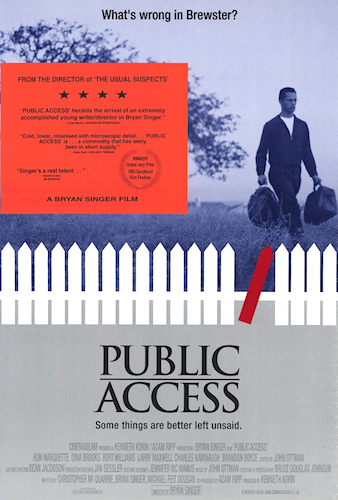
This is the feature debut of director Bryan Singer, screenwriter Christopher McQuarrie, and Singer’s regular editor/composer John Ottman, who would go on to make their names two years later when they created The Usual Suspects (for which McQuarrie even won an Oscar). Despite that — and their careers since — Public Access seems to be little-seen, with less than 800 votes on IMDb (for comparison, Singer’s next lowest is Apt Pupil with over 30,000 votes, and all his other films are in six figures).

The story sees a mysterious stranger, Whiley (Ron Marquette), arrive in the small town of Brewster and book a slot on the local public access TV station, during which he invites viewers to call in to anonymously air their grievances about Brewster and its inhabitants. Soon all the townsfolk are talking about is Whiley’s catchphrase: “What’s wrong with Brewster?”

It’s an intriguing setup for a movie. What secrets lurk beneath the surface of this pretty little town? Who is this stranger and what are his motives? How will the community react to the previously-secret complaints and possible revelations? Unfortunately, Public Access does very little to explore any of those possibilities. It actually toddles along quite nicely for a while — it’s kind of understated; slow in a good way; things appears to be building up to something; there’s some kind of mystery — and then, just over halfway through, Whiley has an incredibly cheesy dream/flashback/premonition, and then the film awkwardly swerves into serial killer thriller territory. I guess that could work, maybe, but it rushes through events, not explaining anything. Then it ends.

What's wrong with Brewster?

What shines through the poor storytelling (and the crappy almost-VHS-level transfer on the DVD) is some obvious proficiency at filmmaking from all involved. There are many bits of nice direction from Singer, a few fairly well written and performed scenes, good editing, an effective use of music, and some gorgeous autumnal orange photography… though a lot of the interiors and stuff look rather orangey too, so I’m not entirely sure if this was intentional or just that shitty transfer. Well, whether by accident or design, it looked like it was good.

Public Access was made for just $250,000, according to IMDb, so perhaps they just ran out of money to shoot everything they needed. Perhaps they were just going for a level of ambiguity that doesn’t come over properly. I was going to say “perhaps I didn’t get it”, but I’m far from alone: Variety said it was “vague about important matters as key story points, motivation and overriding theme”; Newsweek reckoned that “after an intriguing buildup […] the story self-destructs”; and the Hollywood Reporter called it “a virtuosically stylish independent feature that is as full of flourishes as it is devoid of meaning”.

There’s talent on display here, and fortunately Singer and co were given the opportunity to spin that out into the successful careers they’ve enjoyed since (well, mostly… but let’s not get into the Singer stuff right now). Public Access isn’t an undiscovered early gem on anyone’s CV, but it was interesting to see nonetheless.

3 out of 5

The Straight Story (1999)

2017 #133
David Lynch | 108 mins | TV (HD) | 2.35:1 | France, UK & USA / English | U / G

The Straight Story

“What would a G-rated Disney movie directed by David Lynch be like?” It sounds like a sketch show pitch, but in 1999, between Lost Highway and Mulholland Drive, it happened for real.*

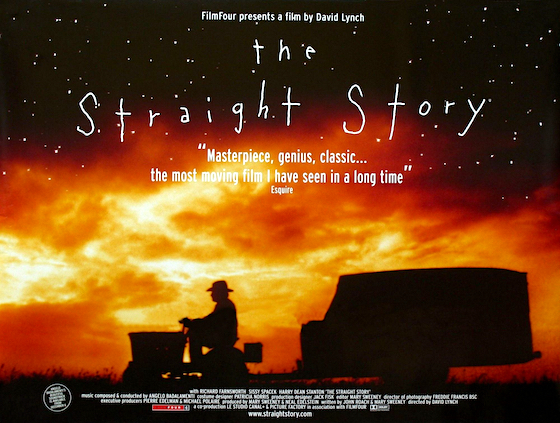
And, talking of “happening for real”, this is a true story about an old fella, Alvin (Richard Farnsworth), who decides to visit his estranged brother after he suffers a stroke. Unable to get a driving licence, he sets off on his 30-year-old ride-on lawnmower, with a maximum speed of 5mph, to make the 240-mile trip. Yes, I said it’s a true story. Of course, it’s not just 100 minutes of Alvin riding a lawnmower along county roads — through the people he meets and the stories he tells, we learn he’s certainly lived a whole life.

Such a simple, straightforward, grounded (well, relatively grounded) narrative seems so very un-Lynch-like at first, but its tale of quirky Americana, peopled by a ragtag selection of endearing oddballs, isn’t so far outside his wheelhouse. There’s a definite Lynch touch detectable in how its made — the shot choices, editing patterns, and so on. There’s even a shot of a grain silo with a background hum that feels straight out of Twin Peaks. Then there are pretty scenery shots which are less obviously him.

Lawnmower man

Lynch has called The Straight Story his “most experimental movie”, which, considering the rest of his oeuvre, probably says more about what he considers experimental than it does about the film itself. What it does demonstrate is that the director, normally known for producing movies that befuddle the mind and chill the blood, is capable of producing something understatedly human and kind of heartwarming.

4 out of 5

* In the US, anyway — other distributors released it elsewhere, including Film4 here in the UK. ^

Black Swan (2010)

2017 #128
Darren Aronofsky | 108 mins | Blu-ray | 2.40:1 | USA / English | 15 / R

Black Swan

Oscar statue2011 Academy Awards
5 nominations — 1 win

Winner: Best Actress (Natalie Portman).
Nominated: Best Picture, Best Director, Best Cinematography, Best Film Editing.


Described by director Darren Aronofsky as “a psychological thriller horror film”, Black Swan straddles the divide between classy Cinema and genre Movies as artfully as, say, a Hitchcock thriller. It’s the story of ballet dancer Nina (Natalie Portman) who’s desperate to be the lead in her company’s production of Swan Lake. She’s suited to the White Swan but struggles as its black counterpart, a role newly-arrived rival Lily (Mila Kunis) seems perfect for. As Nina pursues perfection with a monomaniacal focus, she’s pressured by the lascivious director (Vincent Cassel) and her overbearing mother (Barbara Hershey), to the point where her sanity is beginning to crack…

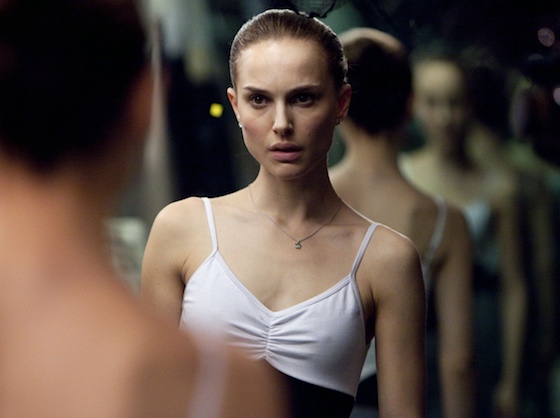
Shot handheld on a mix of 16mm and video-capable HD DSLRs, Black Swan has a documentary look, often emphasised by its editing — at times it could almost pass for a fly-on-the-wall look behind the scenes of a ballet company. That’s not to say the visuals lack artistry, however. In particular, the constant presence and use of mirrors is fantastic — both thematically relevant and visually rich. Nonetheless, the documentary-ish look serves to make the film’s unsettling parts all the more effective, especially as they take a while to emerge and continue to sidle up on you as the film goes on. The final act is where everything really kicks off — the point of the rest is to build up to that; to establish and put in place and explain everything we need for a shocking, thrilling, somewhat unguessable climax. If that sounds like a criticism, it’s not, because the movie leading up to that point certainly has worth.

Reflections

I’m not particularly familiar with Swan Lake, but it would seem Black Swan’s story echoes it — to the point, even, that all the cast are credited with both their character in the film and their equivalent in the ballet (and I don’t just mean the dancers who also play that role in the ballet-within-the-film — Hershey, for example, is billed as Erica Sayers / The Queen”). This extends outwards in other ways, like how the music of Tchaikovsky is repurposed by the film to its own magnificent effect. That’s as well as featuring a typically striking score from Clint Mansell.

Natalie Portman is brilliant as the conflicted Nina. She’s introverted and sheltered but has chosen (or been railroaded into) a career that requires she perform publicly; she’s fragile and under-confident but in a profession that invites criticism from all sides; she’s been left repressed, uptight, and virginal, which clashes with her perfectionism when trying to embody a role that is none of those things. It’s a complex role with many subtle facets that Portman negotiates skilfully. It feels like a departure from who she is — proper acting, if you like — which makes the performance all the more striking. Conversely, Mila Kunis feels more in her comfort zone as Lily, the free-spirited, lively but imperfect, almost a bit of a bitch, company dancer that Nina is inexplicably drawn to. She holds her own against Portman when required, but it’s not exactly a role of equatable complexity.

Titular terror

Depending how you want to see it, Aronofsky’s film is an arty movie about ballet and the psychological effects of perfectionism, or a slow-burn horror-thriller with almost as many jump scares as instances of introspection. Best of all, it can be both those things.

5 out of 5

Black Swan was viewed as part of my What Do You Mean You Haven’t Seen…? 2017 project, which you can read more about here.

Darren Aronofsky’s latest dark mind-bender, mother!, is released on UK DVD and Blu-ray tomorrow.

The Mummy (2017)

2017 #82
Alex Kurtzman | 110 mins | cinema | 2.39:1 | USA, Japan & China / English & Ancient Egyptian | 15 / PG-13

The Mummy

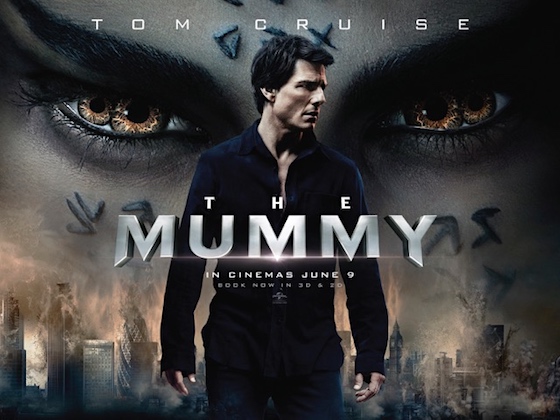
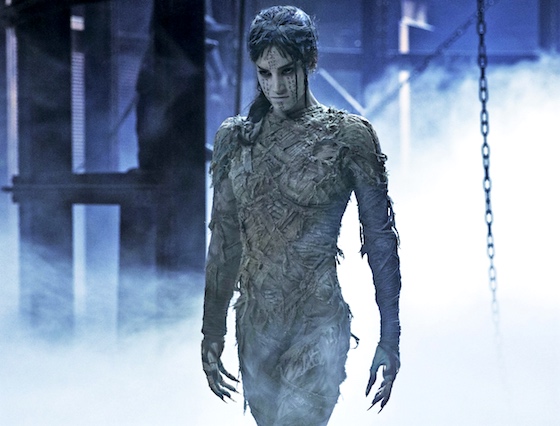
As studios scramble to emulate Marvel’s shared universe success, there are some very odd ideas being thrown around. One of the least odd, really, was Universal’s Dark Universe, which intended to mix together their various famous horror properties. At first blush that sounds as forced as most of these ideas are, but back in the day they made tonnes of “Dracula Meets Frankenstein” type movies, so why not do it again today? All of these movies were to be reboots, obviously, and they arguably played it safe by beginning with a reboot of one they rebooted before — a re-reboot, if you will. The Mummy 2017-style bears no resemblance to its popular ’90s forebear, but I doubt that was anything like the ’30s version anyway, so all’s fair in love and blockbuster moviemaking.

You’ll notice the repeated use of the past tense in my opening paragraph. That’s because The Mummy flopped, both critically and commercially, and the Dark Universe plans have been thrown into doubt. (Some say it’s been definitely cancelled, but I don’t think that’s been officially confirmed.) While I wouldn’t go so far as to call that a shame, I didn’t necessarily think The Mummy was that bad. On the other hand, it’s not great either…

Tom Cruise realises he's made a terrible mistake...

This iteration of the concept sets its scene in the present day war-torn Middle East, where Nick Morton (Tom Cruise) is a mercenary who stumbles upon a hidden tomb, inside which is the well-protected coffin of an Egyptian princess (Sofia Boutella). To cut to the chase, the dead lass wakes up, and brings all her supernatural powers to bear on destroying the world… or something. At the same time, Nick seems to have developed some kind of connection to her.

However, what sticks in your mind about The Mummy is not its eponymous villain, but all the time it spends trying to establish the aforementioned shared universe. Nick eventually comes into contact with a secretive organisation headed by Dr. Henry Jekyll — a name we all know, of course, so you begin to see the connections developing. You can’t help but feel more effort has been put into setting up this element than the movie that surrounds it, which therefore feels like little more than a delivery system for Dark Universe: Part 1.

But let’s try to judge it anyway. Primarily, it’s a tonal mishmash. It’s not exciting enough to satisfy as an action movie, but not scary enough to qualify as a horror. There’s humour, but it’s poorly integrated, feeling at odds with the dark tone. This is a PG-13 movie that kinda wants to be an R, but not so much that it’ll really commit to sitting on that PG-13/R line. Whole sequences and imagery seems to have been included just to look good in the trailer. For example, a bunch of business with a sandstorm in London — in the trailer it looked like it would be some sort of end-of-the-world climax, but it’s actually just a bit of a chase scene to get characters from one location to another.

“I’m here to talk to you about the Avenger Initiative.”

Cruise isn’t given room to display his usual charm, instead wandering through the plot being told stuff and always threatening to tip over into being the villain. This movie always seemed like an odd choice for him — getting stuck into a franchise-within-a-franchise at this stage in his career — and, yeah, it remains an odd choice. Russell Crowe phones in his Nick Fury turn as Jekyll, while sidekicks Annabelle Wallis and Jake Johnson fight against the material as they struggle to make their mark. Boutella’s part makes feints at complexity, but is ultimately no deeper than you’d expect the Mummy’s role to be in a Mummy movie.

And after all that it doesn’t even end properly. It’s not even that it’s blatantly set up for a sequel (it’s not, really), but it’s clearly aware that it’s part of a shared universe and they might want some of these characters back. Well, that’s what this is all about, don’t forget — Dark Universe: Part 1.

Despite all that, there are hints of a decent movie here: the first act is fairly good, and while the humorous moments may sit oddly with the pervading tone, they’re mostly fine in themselves. But it’s too concerned with establishing a universe when it should worry about being a good yarn in its own right, meaning it fails to do either adequately.

Mummy mia, here they go again

When I started this review I was going to end up giving it a generous 3 (that’s what it’s down as in my 2017 stats therefore), but my memories of whatever I liked enough to nudge it upwards have begun to fade. The Mummy — and the Dark Universe it was meant to kick off — could’ve been something, if not great, then at least worthwhile. Shame.

2 out of 5

Get Out (2017)

2017 #104
Jordan Peele | 104 mins | streaming (HD) | 2.35:1 | USA / English | 15 / R

Get Out

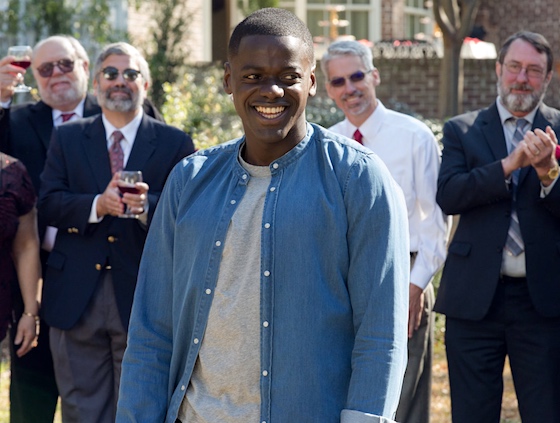
Writer-director Jordan Peele’s timely horror (or, according to some people, horror-comedy — I’ll come to that) has topped various “best of year” critics polls, including those in Sight & Sound and Empire magazines, and is now part of the awards season conversation, having been nominated for Best Musical or Comedy at the Golden Globes and is many people’s pick for an Oscar nod too. It’s a good film… but is it that good?

It’s the story of a guy, Chris (Daniel Kaluuya), going to meet his girlfriend’s parents for the first time. The only complication is that Chris is black and his girlfriend, Rose (Allison Williams), is white. But it’s okay, her parents (Bradley Whitford and Catherine Keener) are very liberal and keen to be welcoming to their daughter’s fella, even though they’ve accidentally arrived the same weekend as a large gathering of the family’s friends. And there’s something strange going on with their black housemaid and gardener too…

Get Out unfurls with a slow-burn tension, where you can’t be sure that Chris isn’t just being paranoid. Well, we can be sure, because we know we’re watching a horror movie. In terms of that genre, it’s effectively creepy without indulging in many outright scares — it foregrounds an encroaching sense of unease rather than pure terror. It’s as much about the mystery of what’s going on, and in that regard it’s neatly littered with clues that either you can piece together or, with hindsight (or a second viewing), marvel at all the little blatant hints you missed.

Everybody loves Chris

The aspect that’s attracted so much praise beyond the usual genre constraints is its commentary on contemporary race-related issues. What it has to say is clear without being batter-you-round-the-head obvious. It satirises the casual racism of white, liberal, “woke” (as I believe the kids are saying nowadays) people, with a particular view on something akin to cultural appropriation — the point where white acceptance or praise of black people and their culture runs into being racism, just not of the ‘traditional’ sort. It’s more nuanced and current than your old-fashioned KKK-ing.

It’s also where we run into the “comedy-horror” point. We usually think that satire = comedy, but Get Out demonstrates it doesn’t have to; or, at least, not in an overt, laugh-a-minute kind of way. I don’t think the comedy-horror label is accurate because, while it’s undoubtedly satirical, it’s not outright comedic. There’s a funny character/subplot about the antics of Chris’ friend Rod (Lil Rel Howery), but as he’s not actually very funny I don’t think that lends much credence to the idea this is a comedy. There’s the odd other laugh here and there, but no more than you’d expect from any movie that wasn’t concerned with being po-faced for every single second. In other words, this isn’t Shaun of the Dead.

Everything's FINE

As a film it’s mostly well made, with good performances in particular from Kaluuya, Whitford, and Betty Gabriel as the family’s maid. The most effective moment comes at the end, an aspect that was changed after the rise of the Black Lives Matter movement, which now effectively plays on the audience’s expectations for what’s about to happen. That said, while there’s the odd moment like that to praise Peele’s direction, I didn’t think it was especially striking on the whole. The film’s certainly not without glaring faults, like the grating ‘comedy’ character I already mentioned, or a deluge of exposition at the start of act three that’s disappointingly clunky.

This is why I’m not convinced by Get Out’s presence in those best-of-year conversations. Personally, I think it’s merely the timeliness of what it has to say that has put it in that position — perhaps, if we’re being cynical, even just white critics/voters being keen to signal their approval of its message. Or maybe the way it encapsulates and comments on things that are very pertinent in society right now is merit enough? Whether it’s the year’s best film or not, it deserves to be seen, not only for its commentary on contemporary issues, but simply as an entertaining horror-mystery.

4 out of 5

Get Out is available on Sky Cinema from today.

Blindspot Sci-fi Roundup

With my 2018 Blindspot and “What Do You Mean You Haven’t Seen” selections now chosen, it’s about time I got on with reviewing those from the class of 2017 that are still in my “to do” pile. Here, then, are four more reviews of my 2017 must-sees, connected (as you may’ve guessed from the title) by all being works of science fiction.

In today’s roundup:

  • District 9 (2009)
  • Moon (2009)
  • Her (2013)
  • Forbidden Planet (1956)


    District 9
    (2009)

    2017 #88
    Neill Blomkamp | 112 mins | Blu-ray | 1.85:1 | South Africa, USA, New Zealand & Canada / English | 15 / R

    District 9

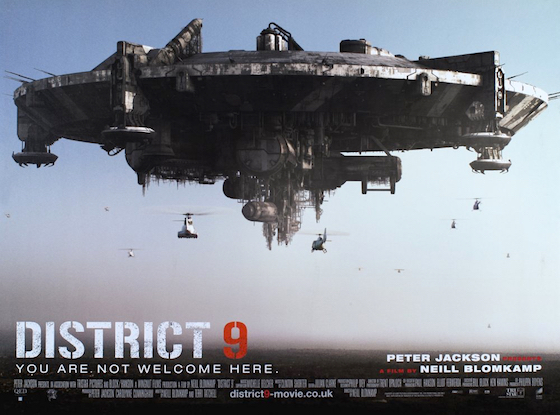
    We begin this roundup with two 2009 sci-fi thrillers that made the names of their respective directors. District 9 got the wider attention, being backed by Peter Jackson and receiving a Best Picture Oscar nomination (alongside three other nods), but I’d argue it’s ultimately the lesser of the two films.

    Although District 9 remains highly praised, co-writer/director Neill Blomkamp’s next two movies — Elysium and Chappie — haven’t gone down so well. Having seen both of those first, I feel like there are a lot of structural and tonal similarities between all three films, so it’s interesting to me how poorly the next two were received. Basically, they all start with some kind of societal sci-fi issue, explore that for a bit as the world of the story is established, then transition into being a shoot-em-up actioner.

    In District 9’s case, it starts out as a documentary about (effectively) alien refugees who live in a segregated community in South Africa. The obvious real-world parallels are, well, obvious. Then events transpire which make the idea of having to identify with those who are Other than us — of becoming affected by their culture — very literal. Then it turns into an achieve-the-MacGuffin shoot-em-up runaround. It’s done well for what it is, with some strikingly gruesome weaponry to give the well-staged shootouts a different edge, but that’s still what it is. Presumably it was all the rather-obvious allegory stuff that helped land the film a Best Picture nomination, and the fact the second half is a not-that-original humans-vs-aliens shooter was overlooked.

    Not so different. Okay, pretty different.

    For me, the clunkiest bit is the storytelling style it adopts. It’s a mockumentary… until it decides it doesn’t want to be so that it can tell its story more effectively… but then it sometimes slips back into mockumentary later on, most notably at the end. I found that distracting and formally inconsistent. I’d rather it had kept up the mockumentary act throughout or not used it at all; or, if you’re going to do both documentary and ‘reality’, have a point to it — show differing versions of the truth, that kind of thing, don’t just mix it together willy-nilly.

    All told, I found District 9 to be a mixed bag. The first half is excitingly original and interestingly ideas-driven, with allegory that is powerful if perhaps a little heavy-handed (I suppose that’s kind of unavoidable when you make a movie about segregation and set it in South Africa). The second half is just a shoot-em-up.

    4 out of 5

    Moon
    (2009)

    2017 #145
    Duncan Jones | 97 mins | Blu-ray | 2.40:1 | UK / English | 15 / R

    Moon

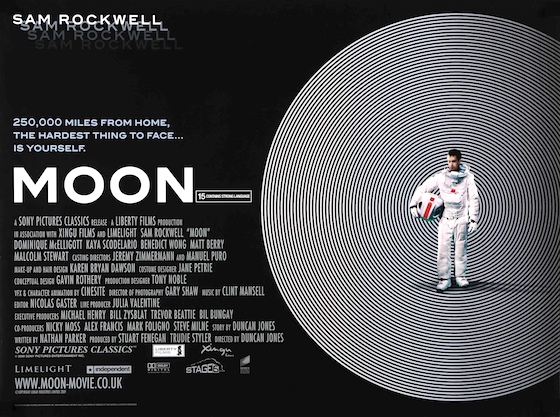
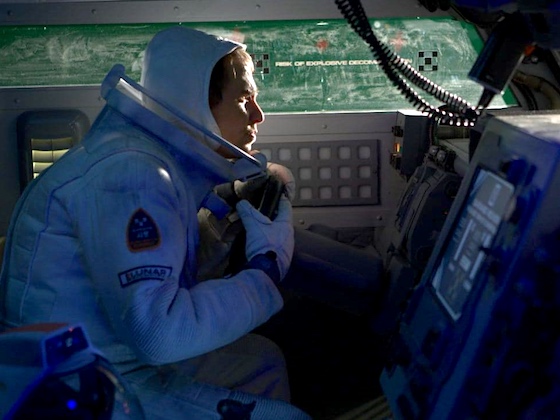
    The other 2009 sci-fi debut feature was that of director Duncan Jones. Although it received no Oscar love it did get a BAFTA, but seems to remain less seen: it has almost half as many user ratings on IMDb as District 9. Personally, I thought it was the superior film.

    It stars Sam Rockwell as the sole inhabitant of a mining facility on the Moon. As the end of his tour of duty approaches, his investigation in a malfunction unearths a startling secret. To say any more would spoil things, though Moon gets to its reveal pretty speedily. Also, you may’ve guessed it from the trailers (I more or less did). Also, it’s nine years old now and you’ve probably seen it — though, as those IMDb numbers show, maybe not.

    If you haven’t, it’s definitely worth seeking out. Like so much good sci-fi, it uses its imagined situation as impetus to explore the effect on its characters (or, in this case, character) and what the human reaction would be in such a situation. Maybe this is becoming a cliché already, but it’s quite like an episode of Black Mirror in that regard. (Isn’t all sci-fi that puts a high concept through the ringer of human experience “like Black Mirror”? Such stuff existed before that series. That said, maybe there wasn’t as much of it.)

    It's like looking in a mirror. A black mirror.

    Jones marked himself out as a director to watch with his attentiveness to character in the midst of his SF setting, but also by helming an excellently realised production on a tight budget — the moonbase set looks great and the model effects are perfect. A major reason I reckon it’s clearly better than District 9 is this consistency of style and tone. It’s a film that better knows what it wants to be and how to achieve its intended effect.

    As for Jones, he went on to make Source Code, a solid follow-up, but then seemed to throw a lot of talent away on the risible Warcraft. Hopefully his forthcoming Netflix Original, Mute, will restore the balance.

    5 out of 5

    Her
    (2013)

    2017 #165
    Spike Jonze | 126 mins | Blu-ray | 1.85:1 | USA / English | 15 / R

    Her

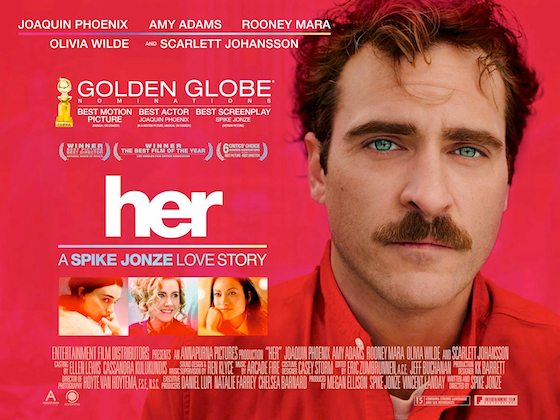
    If Moon is “a bit like an episode of Black Mirror”, Spike Jonze’s Her virtually is one. Set in a highly plausible near future — which has clearly been developed from our current obsession with our phones, iPads, digital assistants, etc — it stars Joaquin Phoenix as Theodore, a lonely chap who gets a new operating system based around a genuine AI, Samantha (voiced by Scarlett Johansson). As Samantha develops, she and Theodore soon become friends, and then more.

    People often refer to the template of Black Mirror as “what if technology but MORE”, and Her definitely fulfils that brief: “what if Siri was genuinely intelligent and someone fell in love with her?” Also like an episode of Black Mirror, it’s as much about what this reveals about humanity as it is about the crazy sci-fi concept. It’s primarily a romance about a lonely guy who was hurt in the past finding a new connection, with the fact he’s falling in love with a piece of technology almost secondary. Even within the world of the film, he’s not some kind of outcast: we hear about other people who’ve fallen for their AI, and his friends unquestioningly accept his relationship as genuine.

    Such acceptance doesn’t translate into our current world, it seems. Although Her is generally very well liked, some people struggle to engage with it at all, and from what I can tell that mostly stems from them not being able to relate to Theodore and his situation, i.e. the very concept of falling in love with an AI is too impossible for them to even imagine. I can’t help but feel that says more about those viewers (for good or ill) than it does the film, which executes the storyline with a great deal of believability and heart.

    5 out of 5

    Forbidden Planet
    (1956)

    2017 #172
    Fred McLeod Wilcox | 98 mins | Blu-ray | 2.40:1 | USA / English | U / G

    Forbidden Planet

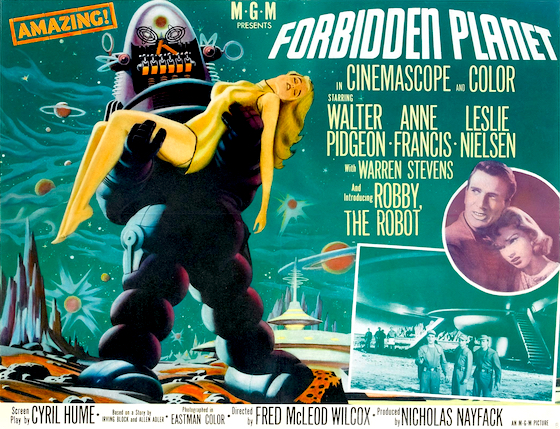
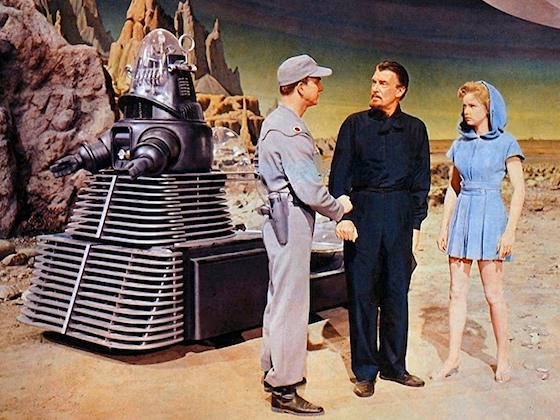
    This classic sci-fi adventure sees a spaceship crewed by blokes (led by Leslie Nielsen) land on the planet Altair IV to investigate what happened to a previous mission there. They find it inhabited only by Dr Morbius (Walter Pidgeon), his robot servant Robby, and his beautiful daughter Altaira (Anne Francis), who perpetually wears short skirts and has a fondness for skinny-dipping. Turns out the crew are a right bunch of horndogs (they spend most of their time lusting after Altaira, tricking her into kissing them and stuff like that), but there are bigger problems afoot when the planet starts trying to kill them.

    Once it gets past everyone’s lustfulness (it feels uncomfortably like watching the filmmakers play out some personal fantasies), there are proper big sci-fi ideas driving Forbidden Planet. There are also some gloriously pulpy action sequences, like a fight against an invisible monster. It’s backed up by great special effects. Obviously they’ve all dated in one way or another, but much of it still looks fantastic for its time — the set extensions, in particular, are magnificent.

    Nothing's forbidden on this planet, wink wink

    Something I wasn’t expecting (but I’m certainly not the first to note) is how blatantly the film was an influence on Star Trek. You can even map the similarities between characters pretty precisely. Switch out the spaceship models and original-flavour Star Trek is all but Forbidden Planet: The Series.

    Although its gender politics have aged even less well than its special effects, and its story occasionally gets bogged down by stretches of explanatory dialogue (it sometimes feels like you’re watching the writer invent and explain his ideas in real-time), Forbidden Planet remains a mostly enjoyable SF classic.

    4 out of 5

    District 9 and Forbidden Planet were viewed as part of my Blindspot 2017 project, which you can read more about here.

    Moon and Her were viewed as part of my What Do You Mean You Haven’t Seen…? 2017 project, which you can read more about here.

  • The Best & Worst of 2017

    Having listed all I watched in 2017 and analysed it thoroughly, it’s time for the finale: what I thought were the best films I saw last year.

    After that, a list of major new releases that I missed, thus explaining why they’re not in my best selection (i.e. because I haven’t seen them).

    But first, the less honourable list: the five worst films I saw in 2017.


    The Five Worst Films I Saw For the First Time in 2017

    In alphabetical order…

    Into the Wild
    Youthful Pretentiousness: The Movie. That it was written and directed by a 47-year-old, but seems to have gained none of the perspective maturity should afford, makes it even worse. It’s also a true story, and we should maybe feel sorry for the guy involved, but… well, he kind brought it all on himself, didn’t he?

    London Has Fallen
    You can just about enjoy this unwelcome sequel as a dumb actioner if you switch your brain off, but you really have to try to have a good time with it thanks to the cheap production values, rampant xenophobia, and furious American patriotism. If you still need putting off, consider this: I bet Trump loves this movie.

    Space Jam
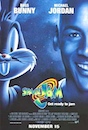
    Last year Space Jam was recommended as one of the 50 “Must See Movies Before You Grow Up”. I disagree. It’s not funny, it’s not clever, and, even allowing for the limits of mid-’90s technology, it’s not very well made. It’s joyless and flat; a waste of time and effort. Also, one of this year’s two one-star films.

    Vehicle 19
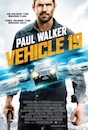
    This is the other. It’s a low-budget thriller starring Paul “the one from Fast & Furious who died” Walker as a regular guy who gets in the wrong rental car and finds himself embroiled in a political conspiracy. It’s also all shot from within the car. That’s the kind of filmmaking conceit I enjoy, but Vehicle 19 provides nothing else entertaining to go with it.

    Warcraft: The Beginning
    Writer-director Duncan Jones, who showed such promise with Moon and Source Code, wasted several years of his career making this. Apparently he was keen to live up to what fans of the franchise expected, not just produce a generic fantasy movie with a brand name. Maybe for those guys he succeeded. For the rest of us, it’s… well, to be frank, it’s just crap.


    The 17 Best Films I Saw For the First Time in 2017

    This is the top 10% of my viewing from 2017. I saw 174 new films this year, which means this year’s “top 10” has 17 films. Should you think that’s excessive, just scroll on down and start reading wherever you please.

    As always, this list is culled from all the movies I watched for the first time this year, not just new releases. However, I did watch 44 films that had their UK release in 2017, and seven of them are on my list, so I’ve noted their ‘2017 rank’ too.

    2017 #7 Luc Besson’s gorgeous-looking Euro-comic space opera is a strange, sometimes messy movie, but somehow it keeps getting better the more I think about it. (Full review.)

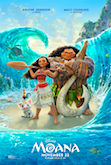
    Disney’s Polynesian princess has fantastic tunes, exciting adventure, hilarious gags, and, of course, a lot of heart. Also, a storyline that isn’t at all about finding romance. (Full review.)

    2017 #6 Matthew Vaughn’s spy sequel endured a pretty mixed reception back in the summer, but I loved it. It’s inventive, provocative, irreverent, and fun. (Full review.)

    The zombie subgenre should be played out ten times over by now, but then you get something like this. As with the best zombie flicks, it’s more about the humans than the monsters. But also it’s about the intense and suspenseful action sequences.

    This French-Danish animation delivers understated beauty in its deceptively simple visual style, and an equally subtle but strong feminist streak in its story of one girl’s mission to reach the North Pole.

    If there’s any horror creature more played-out than zombies, it’s vampires. Unless you’ve got a new angle, of course, and this fly-on-the-wall ‘documentary’ about a gang of Kiwi vamps imbues its subject with hilarity and new, er, life. (Full review.)

    Grown-up sci-fi in this thoughtful and plausible exploration of man’s first contact with alien life. Would surely make a great double-bill with Arrival. (Full review.)

    2017 #5 The latest attempt to bring the giant ape to the big screen is a creature-feature B-movie writ large, emboldened with all the CGI modern Hollywood can afford. Despite the marvellously pulpy story, director Jordan Vogt-Roberts brings a surprising amount of class to the endeavour, with some gorgeous cinematography and strikingly staged sequences. This may be 2017’s most underrated blockbuster. (Full review.)

    2017 #4 Christopher Nolan’s first non-sci-fi/fantasy movie for 15 years is ambitious in other ways, trying to condense a massive military operation into a single movie — with the added pressure of it being a story both not often told and of immense importance: it represented a massive turning point in the Second World War. He carries it off with bold filmmaking that focuses on the intensity of the experience for the men in the thick of it, which is where he places the viewer. It’s 90 minutes of non-stop ratcheting tension, with a bit of well-earned patriotic catharsis at the end. (Full review.)

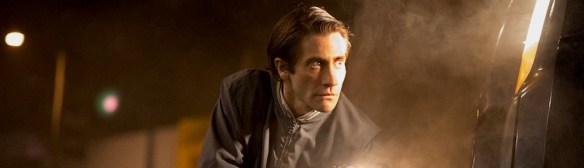
    Dan Gilroy’s neo-noir thriller foregrounds Jake Gyllenhaal’s performance as a guy looking to make his fortune by racing around nighttime L.A. filming bloody crime scenes. There’s a state-of-the-nation element in the satirisation of trashy TV news and its bloodthirsty producers, but the real star is the, er, star: Gyllenhaal’s well-measured turn as a driven, unpredictable, possible psychopath. (Full review.)

    The director of Once delivers another fable about people finding love through music. This time it’s about a gaggle of school kids, lending a coming-of-age universality and a kind of nostalgic melancholy — you don’t have to have been in a band, or grown up during the film’s 80s setting, to relate to the bittersweetness, the horrors and the wonders, of young love. (Full review.)

    I watched It’s a Wonderful Life out of a sense of duty: it’s an iconic Christmas film, well rated on polls like the IMDb Top 250, but (obviously) I’d never seen it. I set out merely to rectify that, expecting to find something a bit saccharine and twee… but, blow me down, it’s not that at all: it’s a beautiful, brilliantly made, genuinely moving film. I even got something in my eye during the (inevitable) conclusion. My only regret is I didn’t watch it sooner.

    2017 #3 I don’t think many people (if anyone) expected much when they rebooted Planet of the Apes back in 2011, but what’s followed is one of the great movie trilogies of our time. This concluding instalment could’ve lived up to its title and been an epic battle extravaganza, but that probably would’ve been a soulless disappointment. Instead, it remains focused on its characters — primarily Andy Serkis’ remarkable performance as the apes’ leader — to tell a tale that’s as much about internal battles as external ones. (Full review.)

    Empire magazine picked this as their best film of 2016, and I wouldn’t necessarily disagree with them (even though, today, I’ve ranked another one higher). The story of a young delinquent bonding with his reluctant foster father, it features the kind of quirky comedy, but with heartfelt dramatic undertones, that you only tend to get from small countries and their indie movies. It manages a perfect tightrope walk that renders it both sidesplittingly hilarious and sweetly moving. (Full review.)

    I watched Kubo and Wilderpeople back to back all the way back in January, and felt at the time they were dead certs for my top ten — and here they are, almost a full year later, side by side again in the very upper echelons of my list. I thought long and hard about that, dear reader, because I didn’t want to be placing them here on the autopilot of 12-month-old suspicions. Now, I’m sure I’m not. Kubo is a majestic adventure movie, with truly stunning stop-motion animation and a powerful story, that deserves to be recognised outside of the confines of “animation” or “kids’ movies”. (Full review.)

    2017 #2 This is the third movie in my top ten driven by music (the others were Kubo and, of course, Sing Street) — which is neither here nor there, merely a connection I literally just noticed. In this instance “driven” is the operative word, because it’s about a brilliant young getaway driver who choreographs his escapes to music blaring from his iPod. Writer-director Edgar Wright extends that conceit outward into the entire movie, with almost every key sequence perfectly underscored by an eclectic soundtrack. The action is thrilling, the dialogue is snappy, and the whole concoction is pure movie-magic entertainment. (Full review.)

    2017 #1 Talking of placing things on autopilot, here’s another I made sure to have a good think about. When I first thought, “I wonder what my #1 movie will be this year?”, my mind immediately fired back with, “Blade Runner 2049.” But I made sure to think it through, in ways I won’t bore you with, and I came fairly close to putting Baby Driver here, but in the end I settled on Denis Villeneuve’s sci-fi sequel (meaning the Canadian director tops my list for the second year in a row). I’m not even sure where to begin praising or explaining why this film is my favourite of the year, there’s just so much about it that’s perfect: the numerous thought-provoking sci-fi concepts that are carefully explored; the endlessly gorgeous cinematography (if Roger Deakins doesn’t get that Oscar now…); the way it builds out of the first movie but doesn’t entirely rely on it (as Drew McWeeny put it in his top ten article, “Blade Runner 2049 stands as a work of science-fiction that is so packed with ideas and invention and character that the single least interesting thing about it is that it also happens to be connected to another movie”)… I could go on (but that’s what my full review is for). It’s an incredible piece of work that can stand proudly alongside the classic original — which is perhaps its greatest achievement.


    As usual, I’d just like to highlight a few other films.

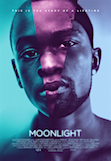
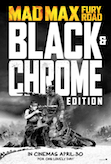
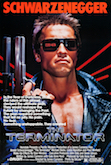
    Firstly, I can’t end this without mentioning the 31 films that earned themselves 5-star ratings this year. Already included in my top 17 we had these 13: Baby Driver, Blade Runner 2049, Contact, Dunkirk, Hunt for the Wilderpeople, It’s a Wonderful Life, Kubo and the Two Strings, Long Way North, Nightcrawler, Sing Street, Train to Busan, War for the Planet of the Apes, and What We Do in the Shadows. The remaining 18 were: The 39 Steps, Black Swan, City of God, The Conversation, Drive, The Exorcist, Ferris Bueller’s Day Off, The Girl with All the Gifts, Her, In the Loop, It Follows, Manchester by the Sea, A Matter of Life and Death, Moon, Moonlight, Nocturnal Animals, Rurouni Kenshin: Kyoto Inferno, and Yojimbo. Plus there was also full marks for the Black & Chrome version of Mad Max: Fury Road, and for two films I reviewed after watching them during my Rewatchathon, Jaws and The Terminator.

    Additionally, let’s recap the 12 films that won Favourite Film of the Month at the Arbies, some of which have already been mentioned in this post and some of which haven’t. They were all in contention for my top 17, but obviously they didn’t all make it in. So, in chronological order (with links to the relevant monthly update): Kubo and the Two Strings, Fandango, Long Way North, Ferris Bueller’s Day Off, Nightcrawler, Baby Driver, War for the Planet of the Apes, Shin Godzilla, Kingsman: The Golden Circle, Blade Runner 2049, Valerian and the City of a Thousand Planets, and It’s a Wonderful Life.

    Finally, a special shout-out to several of this year’s big superhero movies, which I enjoyed a lot but didn’t quite make it into my top 17: The LEGO Batman Movie, Logan, Spider-Man: Homecoming, and Thor: Ragnarok. I liked most of the others too (even Justice League, as my review attests) but, unlike those four, they were never seriously in the running for my top 17.


    I watched 36 movies from 2017 during 2017, including most of the big blockbusters, but that still leaves a considerable number of notable releases that I missed. As is my tradition, then, here’s an alphabetical list of 50 films that I’ve not seen and are listed as 2017 on IMDb (with a couple of exceptions for films that are really from 2017 but happened to screen at a festival or two in 2016). In many cases these ‘missed’ films are awards-y movies that aren’t actually out in the UK yet (there are “2017” movies scheduled through until at least July 2018).

    The films in this list have been selected for a variety of reasons, from box office success to critical acclaim via simple notoriety — some of these are films I have no intention of watching!

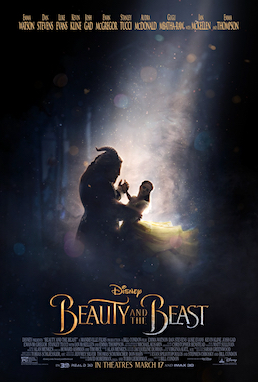
    Beauty and the Beast
    The Death of Stalin
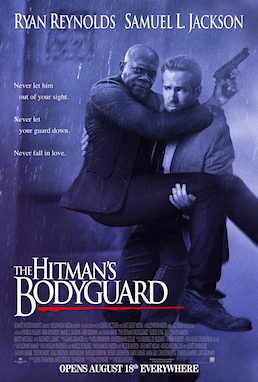
    The Hitman's Bodyguard
    Jumanji: Welcome to the Jungle
    mother!
    The Shape of Water
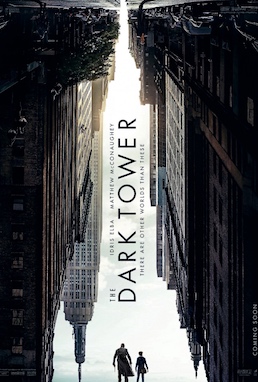
    The Dark Tower
    Fast and Furious 8
    It
    Logan Lucky
    The Post
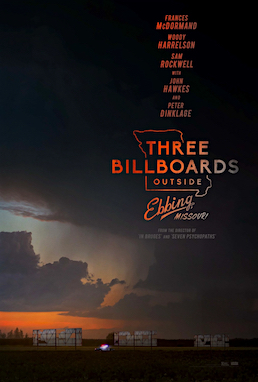
    Three Billboards Outside Ebbing, Missouri
    All the Money in the World
    American Made
    Battle of the Sexes
    Baywatch
    Beauty and the Beast
    The Big Sick
    The Boss Baby
    Call Me by Your Name
    Cars 3
    Coco
    The Dark Tower
    Darkest Hour
    The Death of Stalin
    Despicable Me 3
    The Disaster Artist
    Downsizing
    The Emoji Movie
    Fast & Furious 8
    Film Stars Don’t Die in Liverpool
    The Florida Project
    The Foreigner
    Geostorm
    The Greatest Showman
    Happy Death Day
    The Hitman’s Bodyguard
    I, Tonya
    It
    It Comes at Night
    Jigsaw
    Jumanji: Welcome to the Jungle
    The Killing of a Sacred Deer
    King Arthur: Legend of the Sword
    Lady Bird
    Lady Macbeth
    The LEGO Ninjago Movie
    Logan Lucky
    The Lost City of Z
    Molly’s Game
    mother!
    Okja
    Phantom Thread
    The Post
    Power Rangers
    The Shape of Water
    The Snowman
    Their Finest
    Three Billboards Outside Ebbing, Missouri
    Transformers: The Last Knight
    Victoria & Abdul
    Wonder

    …and many more.


    And that’s 2017 all wrapped up. Well, apart from the fact I’ve got 54 reviews left to write. That’s the worst it’s ever been. I’ll be a while getting through them yet (even if I posted one a day from tomorrow, I’d still be going in March).

    Anyway, a belated Happy New Year to you all. May 2018 bring you the viewing of many films — at least 100, amiright?

    2017 Statistics

    Yesterday I published the full list of my 2017 viewing. Well, I say “full” — I didn’t put my Rewatchathon viewing in there. I’m not going to include it in these stats either (mostly). Maybe I’ll do something differently about that at the end of 2018, but for now this all remains focused on my primary goal: watching at least 100 films every year that I’ve never seen before.

    In today’s post we do the fun stuff: look at all sorts of statistics about that viewing. Hurrah!

    In the end, I watched 174 new feature films in 2017. That’s my third highest final total, behind 2016’s 195 and 2015’s 200, though it’s quite far ahead of fourth place, 2014’s 136.

    I also watched two extended or altered cuts of features I’d seen before. They’ll be included in all the stats that follow (except the running time one we’ll get to in a sec).

    However, those 176 films are not the full story. As I mentioned in my introduction, this year I set myself a secondary goal — Rewatchathon — in which I aimed to make myself watch again at least 52 films I’d seen before. Obviously this took viewing time away from my main goal, and I became curious how 2017 would compare to previous years if those rewatches had been main list views. To keep things fair I had to go back and tot up my rewatches from previous years. Fortunately, I have complete records for that as far back as 2009 (I have a little over half of 2008, which suggests it was a good year, but not good enough to challenge the last couple). The number of films I rewatched fluctuated wildly at times (21 in 2013, 4 in 2014, 20 in 2015, etc), but unsurprisingly the biggest overall totals came in the years when 100 Films was also high. The only years that passed 200 were the last two: altogether I watched 206 films in 2016 and 223 in 2015. In 2017, I watched… 228. So, yes, this is officially my most film-filled year on record.

    (An additional bit of stats business: in previous years there was the odd rewatch that I also reviewed, meaning it was included in the stats (it’s the “other reviews” bit in the graph above). My Rewatchathon is putting an end to that. I’ve reviewed some stuff from it but certainly not everything, so it would be a bit weird to just count the handful of films I did happen to review. I could count every single film I watched for the Rewatchathon, but that feels somehow against the point. It means my stats for previous years don’t compare with 100% accuracy to these, but I was always inconsistent on which rewatches I counted anyway.)

    Additionally to all that, I also watched five short films. They don’t count in any stats… except the one they do, which we’ll get to in half a sec.

    The total running time of the 174 new features was 316 hours and 43 minutes, which (as the graph shows) is in line with what you’d expect given the number of films. Add in the two alternate cuts and five shorts and the total running time of all films was 321 hours and 59 minutes.

    This year’s most prolific viewing format was streaming for the third year in a row, but it suffered a bit of a drop: it accounted for 76 films, which was 43.2% of my viewing — down from 57% last year, and even below the 47% from the year before. Where did those percentage of views go? Well, a few different places. I’ll get onto those in a sec. Firstly: this year I bothered to count up which streaming services I used. It was all divided between the three main players on this side of the pond: Netflix, Amazon (including both Prime and rentals), and Now TV. Amazon accounted for precisely 50% (38 films), with Netflix on more-or-less 30% (23 films), and Now TV bringing up the rear on 20% (15 films). I’ve mostly used Netflix for series this year, mind, whereas I don’t think I’ve watched more than a couple of episodes of anything on Amazon (and Now TV do TV as a separate subscription).

    Second place went to Blu-ray, with 46 films (26.1%) — up from last year, but otherwise my lowest since 2012. As I say every year: I own hundreds of the things, I need to watch them more. (It’s worse for DVD, mind, but we’ll come to that.)

    There’s more of an ‘upset’ in third place, however: cinema! It’s been in last place for five of the last six years (the one exception, 2012, it was second-last), and it didn’t have a particular strong showing before that. Indeed, 2017 marks my greatest number of cinema trips in one year since this blog began, with 18 films (10.2%). In fact, that’s more than the last seven years combined. I intend for this to continue in 2018, but I don’t know if it’ll increase — it’s so much more cost effective to wait for films at home these days…

    Next, there’s a small increase for downloads, with 14½ films (8.2%) — the half because I had to download City of God when my DVD copy crapped out halfway through. It’s overleaped television, which continues its slide from dominance (it was first from 2009 to 2012) with 13 films (7.4%).

    Bringing up the rear is an even more ignominious faller: the humble once-beloved DVD, with 8½ films (4.8%) — actually a slight increase from last year! I mean, it’s up from 8 to 8½ and from 4% to 4.8%, but still…

    In amongst all that, I watched 11 films in 3D (a mix of Blu-rays, downloads, a TV rental, and one in the cinema) and 1 in 4K. I have a feeling the latter will increase in 2018, but I’ve no idea by how much.

    Which brings me to the HD vs. SD, to which I’ve added that meagre UHD offering this year. HD includes all but one stream, all of Blu-ray and cinema, all but one download, and just under a third of my TV viewings. In the SD camp there’s one streamer and one download (obv.), just over two-thirds of my TV viewing, and the handful of DVDs. The final result is 88.4% in HD, boosted by 0.6% in UHD. It’s slightly up on last year, but not a huge amount.

    In terms of the films’ age, the most popular decade was the 2010s (same as since 2012) with 114 films (64.8%). That number’s down on last year, though the percentage went up (I watched about 20 fewer films overall, remember). In second, however, the 2000s saw real gains (albeit small ones), going from 18 up to 21 (11.9%). The only other decade to make double figures was the ’90s, holding steady on 15 (8.5%).

    Below that, there were a smattering of films for every decade back to the ’20s: the ’80s clocked eight (4.6%), the ’70s reached seven (3.98%), the ’60s had four (2.3%), the ’50s only two (1.1%), the ’40s a slightly better three (1.7%), and the ’30s and the ’20s netted just one each (0.6%).

    Last year, the percentage of films I watched in English dipped below 90% for the first time. This year it was back over it, though only at 90.1%. That’s 160 films wholly or partially in English. However, there were more others than recently: 32 languages were spoken in total (plus one silent film), up from 24 in the 2015 and 2016. Distant second was an uncommonly strong showing for Japanese in 15 films (8.5%), while everything else was in single figures. Of particular note is American Sign Language cropping up in three films, and Ancient Egyptian and Pawnee both putting in appearances for the second year in a row.

    It’s the same story in countries of production, with the USA producing 138 films — 78.4%, up from last year’s 73.6%. Distant second was the UK with 42 films — that’s 23.9%, identical to last year. Again mirroring the language stats, Japan had an unusually strong showing with 14 films (7.95%), by far its best result (its previous high on record was six). Just behind were Canada and France on 13 (7.4%) each. Next was China, its nine representing a continuing increase, mostly co-productions as Hollywood continues its interests there, I’d wager. Concurrently, former co-production fave Germany is on the way down, with just six (almost half its figure from last year), which is tied with Australia.

    Running down the list, there’s Hong Kong on five (after a big bump last year thanks to a load of Shaw Brothers films, this is back to normal), New Zealand on four, and three each for Denmark and Ireland. Five more countries had two apiece, and 12 countries contributed to a single film each. That’s a total of 29 countries represented, just one down from last year.

    A total of 143 directors plus 13 directing partnerships appear on 2017’s main list. Of those, 18 had multiple credits. The man with the most was David Lynch on four — and that doesn’t even include Twin Peaks: The Return (or whatever we’re calling it nowadays). Behind him on three apiece we find Clint Eastwood and Keishi Ōtomo (the Rurouni Kenshin trilogy). Then there’s Taika Waititi, who directed two films himself plus one as co-director; and Michael Bay, who directed two films plus an alternate cut; and George Miller, who only has one main list film to his solo name, but was also behind an alternate cut and a quarter or another film. Keeping things simple with a pure two each there’s Mel Brooks, Paul Feig, Ron Howard, Duncan Jones, Shūsuke Kaneko, David Mackenzie, Penny Marshall, Tokuzô Tanaka, and Adam Wingard. Finally, Wes Anderson and David Leitch both helmed a main list feature and a short, while this blog’s most-featured director of all time, Steven Spielberg, had one new feature and a quarter of another. The rest took one each, although in the shorts we can find Luke Scott, son of Ridley, taking charge of two of the Blade Runner 2049 prequels.

    For the past two years I’ve specifically charted the number of female directors whose work I’ve watched. There were just four female directors in 2017’s viewing, with five films between them, which is 2.84%. That’s better than last year, but worse than 2015 — and none of them are very good figures in any case.

    On a brighter note (for me), 11 films from the main list currently appear on the IMDb Top 250 (or whatever it’s called nowadays). Their positions ranges from 21st (City of God) to 210th (Thor: Ragnarok). However, because that list is ever-changing, the number I have left to see has only gone down by seven, to 69.

    At the end of my annual “top ten” post I always include a list of 50 notable films I missed from that year’s releases, and continue to track my progress at watching those ‘misses’. In 2017, I’ve seen at least one more movie from every year’s list. To rattle through them (including the overall total seen in brackets), this year I watched: one from 2007 (34); four from 2008 (24); three from 2009 (29); three from 2010 (30); one from 2011 (33); two from 2012 (32); one from 2013 (32); five from 2014 (41); and four from 2015 (32).

    Finally, in the first year of watching 2016’s 50, I saw 30 of them. That’s the best ‘first year’ ever, just beating the 28 from 2015’s list that I watched during 2016.

    In total, I’ve now seen 317 out of 500 of those ‘missed’ movies. That’s 63.4%, up from the 58.4% I’d got through by the end of last year. Basically, I’m watching them faster than I add them — which is a good thing. (As usual, this year’s new 50 will be listed in my next post.)

    To finish off 2017’s statistics, then, it’s the climax of every review: the scores.

    At the top end of the spectrum, I awarded 32 five-star ratings in 2017. That’s more than last year, even though I watched fewer films, meaning the percentage was well up — 18.2% vs. 2016’s 13.2%. It’s above my all-time five-star average too, which is 16.85%. Am I getting more generous or just picking better films? Such is always the debate. Maybe it’s the latter, though, because my four-star ratings dipped to 78 films — still second place, but at 44.3% it’s well down on last year and below the all-time average of 45.8%. Commensurately, the percentage of three-star ratings were above average: those 49 films equal 27.8%, over the all-time 26.4%. All that said, we’re not talking numbers that massively outside the norm here (as we’ll see shortly).

    Rounding things out at the bottom end, there were 15 two-star films (8.5%), which is very much a normal amount, and a mere two one-star films (1.14%), which is also pretty normal (across ten years the average number is 2.1 a year).

    And so all of that brings us the average score — the single figure that (arguably) asserts 2017’s quality compared to other years. The short version is 3.7, the same as the last two years, as well as 2007 and 2009. We have to add a few more decimal places to get a precise idea, however (if we don’t, seven out of eleven years score either 3.6 or 3.7). To three decimal places, 2017 scores 3.699. That’s 0.024 higher than 2016, meaning it takes fourth place on the all-time chart, sitting just 0.031 behind 2015 in third. These are tiny margins, as always — I guess that means my scoring is pretty consistent.

    And that’s all your numbers and graphs done for another year! It’s OK, you can read them again if you want.


    More quality assessments, with my lists of the best and worst films I saw last year.

    2017: The Full List

    2017 — the 11th year I’ve been doing this 100 films challenge, and the fifth consecutive year I’ve surpassed that goal. Below is the full list of new films I watched this year, all linked up to reviews and that. (“And that” being my “coming soon” page for the dozens of films I’ve not actually reviewed yet.)

    My “Full List” post is an annual tradition round these parts, of course, but this year it undergoes its biggest change of format since 2012, when I switched from listing my viewing in chronological (aka numerical) order to listing it alphabetically, and also added the “as it happened” section. This time, however, it’s an even bigger change — the biggest change to this annual tradition ever, in fact.

    I’ve got rid of the statistics.

    “What, completely?” No, of course not — as regular readers will know, they’re the best part of the year! (They’re my personal highlight, anyway.) Now they’ll be in their own post. Frankly, I don’t know why I haven’t separated them off sooner. Tradition, mainly. Anyway, I think they belong there. Expect that post tomorrow.

    In the meantime, there’s also a new addition to this post: TV reviews. As this was the first full year I’ve run my “Past Month on TV” column, and as there’s an ever-growing consensus to consider television on an equal footing with cinema as a narrative visual art form, and as that’s a position which I broadly agree with, it felt only right that I included my TV reviewing in this big ol’ list of reviews.

    So, time to crack on with things. As this post is just a long list of words and pictures, if you don’t fancy the scroll (or the swipe, if you’re on one of them newfangled touchy-screens) here are some handy links to jump to whichever bit might interest you:



    Below is a graphical representation of my 2017 viewing, month by month. Each of the images links to the relevant monthly update, which contain a numbered list of everything I watched this year. This is also the only place where I’ve listed the 52 films of my Rewatchathon. There’s other exciting stuff in there too, like my monthly Arbie awards.


    And now, the main event…


    Alternate Cuts
    Other Reviews
    Shorts
    Alien: Covenant

    Babe: Pig in the City

    Black Swan

    Candyman

    Death Note

    Don't Breathe

    The Driver

    Get Out

    Ghostbusters

    Guardians of the Galaxy Vol.2

    Hidden Figures

    Jackie Brown

    Kubo and the Two Strings

    Logan

    Moana

    Moonlight

    New Tale of Zatoichi

    Robin Hood: Men in Tights

    Rurouni Kenshin

    Sing Street

    Star Wars: The Last Jedi

    That's Entertainment

    Twin Peaks: Fire Walk with Me

    War for the Planet of the Apes

    Your Name

    Mad Max: Fury Road - Black and Chrome

    The Terminator

    Hotel Chevalier

    .

    Across 16 ‘monthly’ columns I reviewed a significant amount of television this year, and so I thought I should include it in my wrap-up. But rather than just link to 16 posts each containing a grab-bag of programming, I thought it would be more useful to list every series I commented on and then link to the relevant post(s). That also shows up just how much TV I watch…


    Tomorrow (hopefully): analysing all of the above in exciting statistics!

    Soon: ranking all (well, some) of the above in my lists of the best and worst films I saw this year.