
If you read enough blogs, you’ve probably seen Blind Spot lists/projects/whatever manifesting on them over the last week. For readers who don’t know what this Blindspot* thing is, it’s essentially “What Do You Mean You Haven’t Seen” by another name. For readers who don’t know what “What Do You Mean You Haven’t Seen” is, it’s essentially Blindspot with a more idiosyncratic name.
And if you have no idea what any of these words mean, I shall explain: you pick 12 films you’ve never seen but really want to / feel you should have / etc, then spend the next year watching one per month.
First: my 12 picks, in order of must-see-ness. Then, a few interesting (maybe) facts about them. After that, I’ll tell you how I picked them.

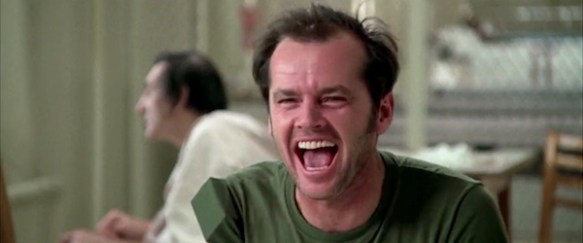
One Flew Over the Cuckoo’s Nest
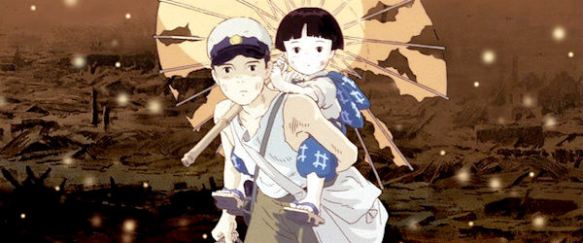
Grave of the Fireflies
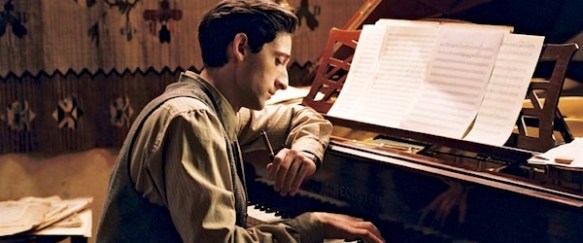
The Pianist
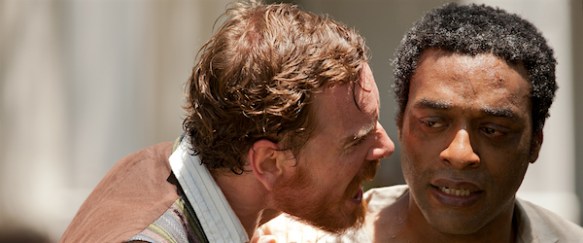
12 Years a Slave
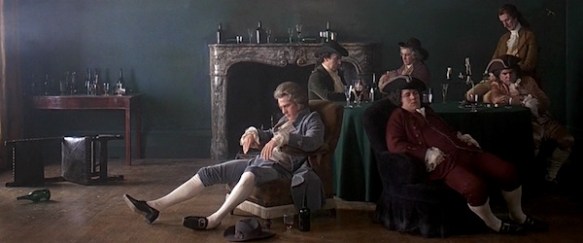
Barry Lyndon

Ben-Hur
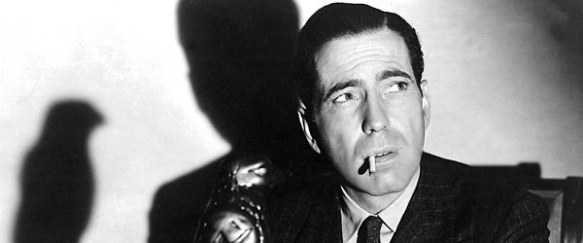
The Maltese Falcon
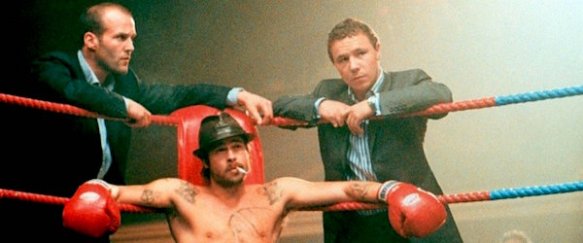
Snatch.

The Sting
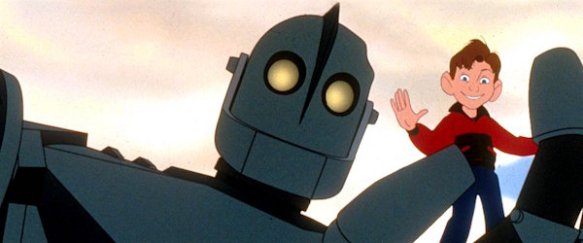
The Iron Giant

The Deer Hunter
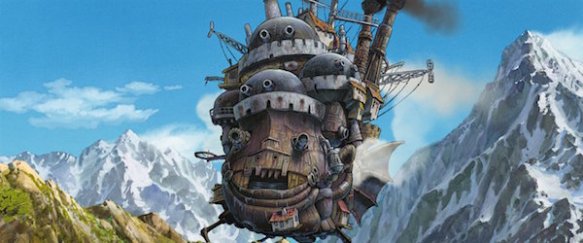
Howl’s Moving Castle
A few facts about this year’s 12:
- There’s a spread of 72 years between the oldest (The Maltese Falcon, 1941) and newest (12 Years a Slave, 2013). The latter is the most recent film I’ve yet included on WDYMYHS.
- The 1970s make up 33% of the list. The 2000s are next with 25%. There’s one film apiece from the 1940s, 1950s, 1980s, 1990s, and 2010s.
- The total listed running time is 27 hours and 3 minutes, making the average length of a film 2 hours and 15 minutes.
- 58% of the list are over 2 hours long; 25% are over 3 hours! Only two are under 90 minutes.
- The shortest is The Iron Giant (86 minutes), the longest is Ben-Hur (212 minutes).
- Just one film this year is in black & white (it was 50/50 last year).
- Just two aren’t originally in English… but as they’re anime, there’s a 50/50 chance I’ll watch them with the English dub anyhow.
- This year features only the third animated film to make it in to WDYMYHS… and the fourth… and the fifth. Previously animation has made up 5.6% of WDYMYHS titles. This year it’s 25%.
Whereas other people just seem to choose their films, I have to turn it into A System. (I’m the guy who posts 3,000 words of statistics about his own viewing every year — what did you expect?) I must admit that I was feeling a bit uninspired this year though, so my system is nothing like as complicated as the last two years (which you can read about here and here, if you like).
Essentially, I decided I fancied achieving some more awards on iCheckMovies. So I looked at all the lists I was getting close on — “close” in this case being any with 12 or fewer films to the next award (because of the 12 films on this list, y’see). That came to 43 lists. 43! Going through them, I noted down any unseen films that I own or have ready access to. That came to 209 films, of which 110 were on more than one list. Even with 43 lists, the most prolific film (One Flew Over the Cuckoo’s Nest) was on just 9, which I guess is testament to the randomness and wide-ranging spread of lists I was using.
Such low ‘scores’ meant the films were all ranked quite close together, so I also threw in that grand arbiter of film quality popularity, the IMDb Top 250, to see if it shook out a top 12. And, with the implementation of some familiar WDYMYHS rules, it did. Said rules were: no repeat directors (ta-ra, Amadeus and Nausicaä of the Valley of the Wind!), and that a WDYMYHS film I failed to see isn’t allowed on the next year’s list (cheerio, Princess Mononoke and City of God!)
At first I wasn’t quite sure about these selections, but having sat with them for a bit I feel better about them. As a whole group, they’re perhaps a bit more… mainstream (for want of a better word), and less quirky (for want of a better word), than my systems have generated in the past few years. Maybe that’s just a matter of perspective, though: there are two anime movies on there, and, though they’re both Studio Ghibli, I don’t know that we can call anime “mainstream” even now.
Anyway, there they are. Hopefully I’ll do better than 75% this year. Even if I don’t, getting round to seeing some of these is better than not getting round to any.
* No one can seem to agree if it’s one word or two. Regular readers will know how much this bugs me. ^
 Screened in UK cinemas simultaneously with its TV premiere (and coming to the big screen in various other countries over the next week or so, too), the latest episode of the BBC’s modern-day Sherlock Holmes series is actually a standalone adventure set in the character’s original Victorian time period.
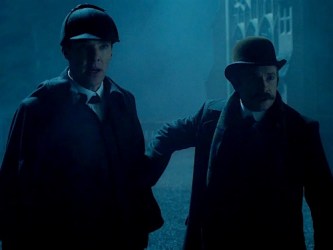 The case they find themselves embroiled in is a little more period than usual, however, with lashings of Gothic and some of the trappings of a Christmas ghost story. The episode is co-written by series creators Mark Gatiss and Steven Moffat, and anyone familiar with Gatiss’ wider work can clearly see his influence here. Moffat brings his trademark fast-paced intricately-tricksy plotting, for which individual viewers’ mileage varies greatly: some find it genius, some find it tedious. Is it clever, or does it just think it’s clever? Is it impossible to follow, or were you just not paying enough attention? As to the first question, I think it’s a bit of both; as to the second, I think the episode ultimately answers everything, but you might need to realise a few things for yourself.
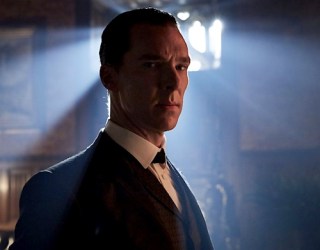 Until the last half-hour or so, anyway, when the modern version suddenly comes crashing in. At first it seems like a clever interlude; a little reminder of the true time period for this version of the characters, and a tease for season four. But it quickly transpires that, no, this episode isn’t actually a wholly standalone aside from the main series — Gatiss and Moffat have found a way to integrate it into continuity. For me, this is where the special begins to come apart at the seams; not because I inherently object to this integration, but because from that point on the episode begins to jump back and forth between the present, the imagined past, and various other dream-state asides. It’s almost entirely justified by the beautifully-shot Reichenbach Falls sequence, but a spot of cinematographic prettiness doesn’t really excuse the way the story goes a little haywire. The least successful part of all, for me, is that it calls into question the solution for the case we’ve just been presented with… but then doesn’t get round to offering another, meaning you kind of feel like the case hasn’t been solved, even though it presumably has been, with the first solution. I think.
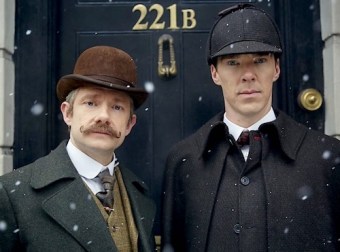 As someone who enjoys Sherlock Holmes in his proper era but is also a fan of this modern day version (I would say “a big fan”, but I’m not one of those people), I’d rather they’d played this a little more straightforward. Not a lot — it’s still under the umbrella of Sherlock after all, and the era-transposed stylistic flourishes in the first hour-ish worked very nicely in my opinion — but the mixed-up mishmash of the final act dilutes the effectiveness of the entire experience. There’s fun and thrills to be had along the way, but in another form it could perhaps have been a Sherlockian classic in its own right.
 100Films.co.uk