Spy: Extended Cut (2015)

2016 #106
Paul Feig | 125 mins | streaming (HD) | 2.35:1 | USA / English | 15
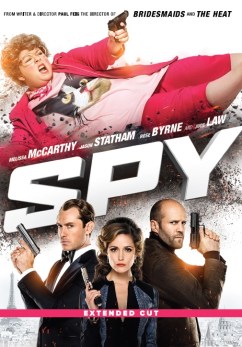
The cinema was blessed — or, depending on your point of view, blighted — by an abundance of espionage-related movies last year (see: the intro to my initial thoughts on Spectre for more on that), and even writer-director/star team Paul Feig and Melissa McCarthy got in on the act with this comedy.

McCarthy is Susan Cooper, a CIA agent who provides desk-bound support for Bond-esque super-spy Bradley Fine (Jude Law). When Fine is killed while investigating the villainous Rayna Boyanov (Rose Byrne), Cooper insists she go into the field to finish what he started. This doesn’t impress experienced agent Rick Ford (Jason Statham), who goes rogue to deal with Boyanov himself.

Technically speaking, Spy is a spy comedy rather than a spy spoof — a perhaps subtle distinction, but one that does inform the kind of comedy you’re getting; i.e. rather than a send-up that relies on you knowing the material being parodied to get the jokes, this is almost a workplace comedy… just one where the workplace is international espionage. Put another way, less Naked Gun or Austin Powers, more Kingsman with the comedy dialled up higher in the mix.

This is perhaps why it’s sporadically amusing rather than regularly hilarious; on the bright side, it only occasionally slides too far into dull toilet/gross-out ‘humour’. Similarly, it means that there are a handful of fun and/or exciting action beats scattered throughout the film, which you might not expect. They’re typically brief, but — even more surprisingly — there’s a fight between McCarthy and a henchwoman in a kitchen which is a genuinely good action sequence. It’s also surprisingly gruesome. Yes, it’s R-rated, but in the world of comedy that usually just means an overabundance of the F-word. Here we have at least one clear headshot, a dissolving throat, a knife through a hand, and more photos of a henchman’s penis than you ever needed to see. (That last one’s only describable as “gruesome” depending on your personal predilections, of course.)
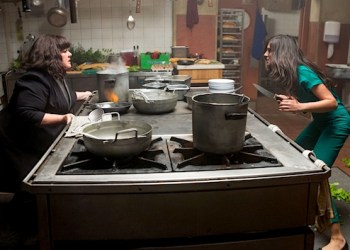
Apparently Feig is a fan of James Bond and developed, wrote, produced, and directed Spy because he knew no one would ever let him do a real Bond movie. I guess that explains why some of it does work passably well as a genuine action/thriller. Composer Theodore Shapiro does an equally good job of evoking Bond’s musical stylings throughout his score. In my experience most comedies don’t show such consistent commitment in their music. Talking of music: as I mentioned in my June monthly update, there’s a random cameo by Verka Serdyuchka, Ukraine’s Eurovision entry from 2007. That gets the film some bonus points in my book.

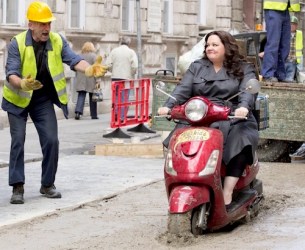
The quality of the cast’s performances are variable in ways I didn’t expect. Statham almost steals the film, playing essentially himself — but exaggerated, I’m sure. McCarthy is a solid lead, at her best when sparking off Rose Byrne, who makes anything more watchable. Miranda Hart has a large supporting role as McCarthy’s CIA colleague, but I’m not sure that her strengths are wholly played to. I guess if you like her you’ll like her here (and if you don’t…) Peter Serafinowicz’s lecherous Italian is disappointingly overplayed, however, and I’m not sure why you’d cast ever-so-British Jude Law as a James Bond type and then give him an American accent.
The extended (aka unrated) cut contains almost 10 minutes of extra material, detailed here. Reading that list really demonstrates how some bits were tightened up for the theatrical release. I’d even wager that some parts are the result of improvising to find one good line, but in the extended cut they’ve strung half a dozen of the options together. I don’t think any casual viewer would miss much by sticking to the theatrical cut. That said, despite it running to two hours, I didn’t find it to be too long. It still wouldn’t hurt if it was tighter in places, but I didn’t get that “oh dear God why is this longer than 90 minutes?!” feeling you can get from 120-minute comedies.

Amusing rather than hilarious, but with a pleasing commitment to its genre, Spy isn’t going to tap into the zeitgeist in the way Austin Powers did almost 20 years ago(!), but it does provide a largely entertaining couple of hours.

3 out of 5

Feig and McCartney’s latest collaboration, the Ghostbusters reboot, is in UK cinemas from today, and launches around the world over the coming weeks.

Grand Piano (2013)

2016 #34
Eugenio Mira | 87 mins | streaming (HD) | 2.35:1 | Spain & USA / English | 15 / R

Written by Damien “Whiplash” Chazelle, Grand Piano is “Phone Booth with a piano”. Elijah Wood plays a nerve-ridden musical wunderkind about to make his comeback when he receives a phone call ordering him to play an impossible piece of music perfectly or else his loved ones get it. Is he up to the challenge? Can he uncover and defeat his telephonic terroriser whilst also giving a piano performance to a packed house?

Running under 80 minutes before the credits roll, Grand Piano is a brisk thriller that barely has time to be anything less than engrossing. It relies on keeping you entertained with its series of quick reveals, twists, and sequences of tension, rather than meaningful themes or considered characters (though look out for some perhaps-familiar faces in supporting roles nonetheless). Director Eugenio Mira keeps things relatively classy, rather than descending into meaningless shaky-cam antics — this is a movie set at a classical music recital, after all.

The storyline is utterly preposterous, of course, though it amuses me that some people criticise it for that. I mean, it’s a genre picture — no genre picture is not preposterous. The veneer of truth they present varies, but rare is the genre movie that crafts a genuinely plausible version of real life. Die Hard would never, ever happen, but it’s still a great action movie. I’m not claiming Grand Piano is of Die Hard quality, but criticising its plot for being preposterous? It’s not so preposterous that it breaks the ‘rules’ of the thriller genre. Either you’re on board with that, or maybe you shouldn’t watch this kind of movie.
Really, there’s not much more to Grand Piano than its well-made creation of tension and thrills, and so I don’t find myself with much more to say about it. I enjoyed it very much, though.

4 out of 5

Pillow Talk (1959)

2016 #31
Michael Gordon | 102 mins | Blu-ray | 2.35:1 | USA / English | PG

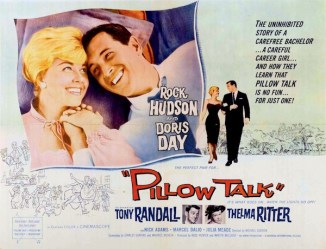
Doris Day and Rock Hudson star in this Oscar-winning rom-com hit.

The “they hate each other, will they get together?” storyline is, of course, obvious, but that’s beside the point. The leads spark off each other wonderfully, director Michael Gordon finds enjoyably inventive uses for split-screen and voiceover, and the Eastmancolor cinematography looks gorgeous in HD.

The only major downsides are a ludicrously rushed ending, and a lack of clarity that the people who share a phone line aren’t in the same building (I assumed that’s how a shared line would work!) Still, minor niggles in a film this fun.

4 out of 5

Ghosts of Mars (2001)

2016 #76
John Carpenter | 98 mins | streaming (HD) | 2.35:1 | USA / English | 15 / R

There are a good number of well-regarded John Carpenter films I’ve not seen that I could spend my time on, but I chose to expend it on this critically-mauled sci-fi-horror-Western from the first year of the current millennium. But sometimes watching poorly-regarded films pays off, because while Ghosts of Mars is no classic, it is actually pretty entertaining.

Set in a future where Mars has been almost completely terraformed, a group of police officers are dispatched to a remote mining outpost to escort a dangerous prisoner. On arrival they find the town mysteriously deserted, but soon discover the inhabitants have been possessed and basically turned into Reavers (…wait, did Joss Whedon just rip off Ghosts of Mars?!) Holed up in the jail, police and criminals must join forces to fend off their attackers. Yes, it’s basically Assault on Space Precinct 13.

It’s not just the plot that recalls older films: although the film was released in 2001, the quality of the acting, photography, sets, and effects are all like something made 15 years earlier. (In these technical aspects it reminded me a lot of Total Recall, and not just because it’s set on Mars.) It’s almost hard to equate it with other films made around the same time, and maybe that’s part of why it was so poorly received on release: it felt dated. Watched with 15 years distance, however, it’s an Old Film, so it’s as easy to mentally lump it in with stuff made 30 years ago as with stuff made 15 years ago. That doesn’t magically wipe out its other faults, but it does make me think about the level of forgiveness people are willing to apply to films based on extra-filmic knowledge of when they were made, etc. If people thought this had been made in the ’80s, would they view it as kindly as they do some ’80s genre-classics that are just as bad and/or dated?
I mean, I’m not saying it stands up to something like The Thing, which by comparison is a classy movie (bet no one in 1982 ever thought The Thing would get called “classy”!), but I don’t think it’s any less accomplished (at least in technical categories) than, say, Big Trouble in Little China. However, it’s swapped out some of the kooky fun of that film for a sci-fi-horror milieu, and maybe that’s why it doesn’t wash as well — it doesn’t have the comicalness to let the weaker aspects slide.

Conversely, if you made it today it would probably be seen as a throwback/homage and everyone would do backflips over it. They’d have a similar reaction to its diverse cast: a female lead hero, a black co-lead who’s also the cast’s biggest name (at the time), a lesbian commanding officer… If they could manage that in a studio picture 15 years ago, why does it seem to be such a big problem nowadays?

Anyway, it’s not “good”, but it is cheesily fun — and I reckon if it had been made 15 years earlier, exactly as it is, it would have a lot more fans.

3 out of 5

The Independent Monthly Update for June 2016

In? Out? Pretty sure “shake it all about” won the referendum.

(It was a toss up between a Brexit joke and a Game of Thrones one, and only one of those wouldn’t constitute spoilers. Well, depending on your definition of “spoiled”.)


#102 Cop Car (2015)
#102a Independence Day (Special Edition) (1996/1998)
#103 The Revenant (2015)
#104 Legend of the Guardians: The Owls of Ga’Hoole (2010)
#105 Beverly Hills Cop III (1994)
#106 Spy (Extended Cut) (2015)
#107 Deadpool (2016)
#107a Bambi Meets Godzilla (1969)
#108 Ip Man 3 (2015), aka Yip Man 3
#109 Steve Jobs (2015)
#110 Fantastic Four (2015)
#111 Barry Lyndon (1975)
#112 Ivan Vasilievich: Back to the Future (1973), aka Иван Васильевич меняет профессию
#113 The Bank Job (2008)
#113a The Present (2014)
#114 The Lobster (2015)
#115 Pan (2015)

.


  • WDYMYHS continues apace with Stanley Kubrick’s 7th film on the IMDb Top 250, Barry Lyndon. It’s getting a 40th anniversary theatrical re-release towards the end of July, so expect a review nearer the time.
  • #1 thing I didn’t quite get round to this month: Zootropolis, aka Zootopia. It’s not out on UK DVD/Blu-ray until the end of July, but I imported it from the US (before 37.4% of the electorate went and knackered the value of the pound).
  • The Bank Job finally carries the number of films I’ve seen from my 2008 ‘50 Unseen’ list past the 20 mark. Ridiculously, last year’s list also passed that marker this month.
  • Independence Day is the first non-main-list film I’ve watched for review this year, and Bambi Meets Godzilla is the first short film.


It’s funny: having passed 100 last month, the whole statistics / how far I’ve got / predictions for the future shebang has been much less on my mind of late (which has been more occupied with writing 100 Favourites posts, because I’m no longer far ahead on them). Nonetheless, here are a couple of observations.

With 14 new feature films watched, June bests last month’s 13 (just), but sits behind all other months of 2016. It’s also not quite as good as last June, which scored 16, but it well surpasses June’s average of 8.25. It’s the 25th consecutive month with over 10 films, too, so that’s nice — still on track for that to hold until this December messes it up, at least.

As ever, the end of June marks the year’s halfway point. With my year-to-date monthly average at 19.2, the obvious forecast places me at 232 by the end of the year, which — in almost the opposite of last year, when these predictions kept proving undervalued — I don’t expect to reach. Taking the average of the last two months as a better guide, that gets me to 196, which seems more plausible. Really, I’m only in the habit of making these predictions from the years when it took me ’til December to reach #100, and so trying to guess if I was going to do it ‘mattered’ — these days, what does it matter? I’ll get where I get.

And on that downbeat note…


The halfway point of the year also means the halfway point of my 100 Favourites. The (alphabetical) first 50 is completed by:


The 13th Monthly Arbitrary Awards

Favourite Film of the Month
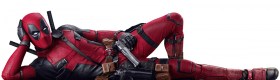
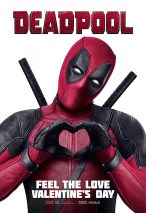
A couple of 2015 Oscar contenders caught my attention this month, and The Revenant or Steve Jobs would certainly be a worthier pick… but I called this category “favourite” rather than “best” for a reason, and dammit if I didn’t enjoy Deadpool more than a man of my age (i.e. older than teenage) reasonably should.

Least Favourite Film of the Month
I didn’t love every film I watched this month, but I did at least like the vast majority. Some may think last year’s much maligned Fantastic Four reboot would be a shoo-in here, but no, I quite liked it. So the only bad film this month — and therefore an easy ‘victor’ in this category — was unnecessary sequel Beverly Hills Cop III.

Best Moulin Rouge Rip-Off of the Month
Smells Like Teen Spirit in Pan. (Sorry if I’ve now spoiled that surprise for you.)

Most Unexpected Appearance by a Eurovision Song Contest Entrant… Ever
The word “most” feels a bit redundant here — how many Eurovision entrants have ever turned up in movies? Well, aside from Abba. Anyway, I’d never seen a Paul Feig film before, but he earns a shed-ton of bonus points (enough to wipe out Ghostbusters? We’ll see) for not only featuring Ukraine’s 2007 submission by Verka Serdyuchka in Spy, but for setting an action sequence to it too.

The Audience Award for Most-Viewed New Post of the Month
A close one this time, but it ended with victory for a 100 Favourites entry, for the second month in a row: my generation’s Star Wars, the enduringly popular Jurassic Park.


Historically, July is my lowest-totalling month, and the only month where I’ve ever failed to watch a single new film (in 2009). 2016’s iteration should do better than that, at least.

Adam (2009)

2016 #20
Max Mayer | 95 mins | TV | 2.35:1 | USA / English | 12 / PG-13

Hugh Dancy (of TV’s Hannibal) stars as the eponymous Adam, a New Yorker with Asperger syndrome who’s having to work out how to go it alone after his protective father passed way. Isolated by his condition and his struggle to cope with change, his life faces upheaval when he loses his job, but he also begins to strike up a relationship with his new neighbour, Beth (Rose Byrne). As someone once said*, the course of true love never did run smooth — especially when one of a couple has a social interaction disorder.

Inspired by writer-director Max Mayer hearing a person with Aspergers interviewed on the radio, that starting point has had the end result of Adam at times being at risk of slipping into a “this is Aspergers” documentary. Fortunately it manages to pull that back — such explanatory scenes are surely necessary for neophyte viewers’ understanding of Adam’s condition, which is naturally central to the events that follow. Dancy worked with with Mayer for a month before filming began to develop the character, and spoke with individuals affected by Aspergers to learn about their feelings, sensory issues, and interests. It clearly paid off: I imagine it must be tricky to pull off a character like that without taking it too far, but Dancy is great in the role.

As the other half of the relationship, Rose Byrne holds her own having to almost play the ‘straight man’ to Dancy’s more obvious performance. She’s a considerably better actress than some of her movie choices would have you believe, and roles like this prove that. Bonus points to the writing here for Beth not just accepting everything Adam does — that’s much more realistic than him happening across an endlessly understanding saint of a woman. But boo to the critics who didn’t buy that a privileged “daddy’s girl”-type could ever possibly fall for someone with autism — how judgemental are you?
Among the supporting cast, Peter Gallagher plays the kind of role he always seems to play: as soon as he makes passing mention of being investigated for some kind of financial crime, you know he did it (and probably more), and his daughter will find out and it’ll wipe the scales from her eyes. The only question is whether he’ll be found guilty by the court or weasel his way out of it. Talking of predictability, Mayer opts for the ‘indie’ rather than trad-rom-com ending, but that in itself is kind of predictable. Of course, when both possible outcomes are predictable (and, in a rom-com, there are only two), you can’t win.

So you can’t deny there are clichéd building blocks here, and they do hold the film back from being great, but the sweet relationship and Dancy’s performance overcome them enough to make for a likeable movie.

4 out of 5

* It was Shakespeare. It’s always Shakespeare. ^

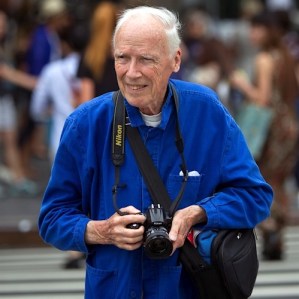
RIP Bill Cunningham

I don’t do this kind of post often/ever — as we all know, I’d’ve had a very busy year of it if I did — but the death of Bill Cunningham, New York fashion photographer, is less likely to be mentioned in the film world.

That’s with the notable exception of the documentary Bill Cunningham New York, which I reviewed in 2012 and included in my top ten for that year, too. It’s a film about one man, not only in name but in attitude — it’s a portrait more than a narrative, and the skill of the filmmaker lies in the fact you don’t notice the filmmaker’s skill.

Bill was 87 years old — “a good innings”, as we say, and consequently not the most tragic newsworthy death to have happened in this year of perpetual bitterness. Nonetheless, as I wrote in my review, Bill seemed “a fascinating, unusual, but likeable, and certainly unique, individual”. That’s why the film is so interesting, and why his loss is particularly sad.
For much of his photographic career he contributed columns to the New York Times, and so it seems most fitting to link to their obituary. As they write, he was less a mere ‘fashion photographer’ and more “an unlikely cultural anthropologist, one who used the changing dress habits of the people he photographed to chart the broader shift away from formality and toward something more diffuse and individualistic.”

If you’ve not seen the documentary, keep an eye out for it.

Independence Day: Special Edition (1996/1998)

2016 #102a
Roland Emmerich | 154 mins | Blu-ray | 2.39:1 | USA / English | 12 / PG-13

I’m not sure when I last watched ID4 (as it was so often branded and marketed, for only semi-clear reasons — sure, US Independence Day is July 4th, but other than that the “4” has nothing to do with anything), but it’s been a damn long time — my DVD copy, which I know I never watched (I have the shiny new remastered Blu-ray now), has a postcard inside advertising the forthcoming Planet of the Apes remake, in cinemas Summer 2001. The time I best remember seeing it was in cinemas on its initial release. Independence Day was a phenomenally huge deal back in 1996: it felt like that shot of the White House being destroyed was on TV on loop; there were making-of TV specials (I remember the behind-the-scenes footage of how they did those incredible, much-discussed effects as clearly as I remember anything from the film itself); I listened to the Radio 1 Independence Day UK audio drama on tape (it was… so-so), read the tie-in comic book adaptation, and also the tie-in novelisation — which was the first book I ever gave up on without finishing because I thought it was so badly written. Ten-year-old badblokebob, literary critic. The film itself was also the first 12-rated movie I went to see in the cinema, so it was even more of a big deal for me.

Revisiting it 20 years later, with a sequel imminent, ID4 obviously no longer has that attendant hype, but it does hold up pretty well in its own right as a blockbuster disaster epic. At least, it did for me — I read a review on Letterboxd from someone who watched it for the first time this January, saying that, in the age of the modern spectacle-based blockbuster, Independence Day doesn’t compete. Which feels weird, because it was all about the spectacle when it came out; but of course, things date, and what counted as sheer cinematic spectacle in 1996 is (it would seem) underwhelmingly run-of-the-mill in 2016. It’s fair to say that not all of the model effects still hold up, but there’s a physicality to them that really works. The best ones are still among the best movie effects ever.
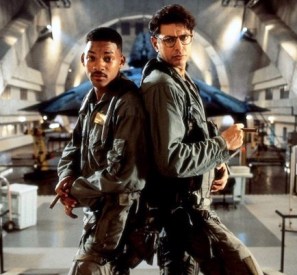
The film’s first half is superior to its second. Co-writer/director Roland Emmerich and co-writer/producer Dean Devlin conceived the film off the idea of 14-mile-wide spaceships just appearing one morning, and the realisation of that concept (and the ensuing destruction) is where the film really shines. That’s not to say there’s not good stuff after the aliens unleash their devastating destructive power — the famous presidential speech comes just before the climax, for one — but it’s from the midpoint on that some things begin to get a tad muddled, some subplots are rushed along, and other events get needlessly elongated. That said, it’s all relative: the 2016 version of this story with this many characters would surely run for five hours as it endeavoured to give them all a starring-role-level storyline and turn every effects-fuelled alien encounter into a 20-minute action sequence.

One area it really succeeds is humour. It doesn’t lose the scale or seriousness of the events, but it keeps the tone entertaining. That feels like a skill a lot of blockbusters used to have that’s gone awry in recent years, though you could use the tone of Marvel Studios’ movies to counterpoint that. Those Marvel films are definitely subject to a different criticism of modern blockbusters, however, which is their mindless destruction of whole cities. It’s a just criticism, and some of the blame for it can surely be traced back to the popularity of ID4. However, here the destruction isn’t so unfeeling: the morning after the aliens’ famous landmark obliteration, President Whitmore mulls over how many people died and how many didn’t have to if he’d made different choices. Both Marvel and DC have had to make that kind of reflection a plot point in sequels to retrospectively justify it happening in the first place.
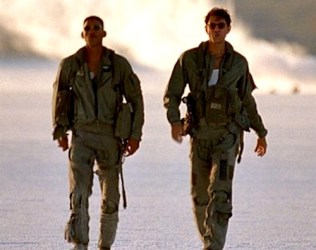
This was the first time I’d watched Independence Day’s extended Special Edition cut, and I’d advise not bothering. It adds around 8½ minutes of new material, but the scenes don’t add all that much, and some of them are so awkwardly rammed in that it’s almost irritating — for instance, several are inserted in the middle of an existing music cue by merely fading out the score immediately before the new scene, then fading it back in afterwards! They’re deleted scenes that have been shoved into the movie, with the score often fudged to make room and stuff like that, rather than it being a genuine “extended cut”. People seem to love extended cuts on disc, but sometimes a nice deleted scenes section is preferable.

With the way things are nowadays — every hit sequelised; old IPs regularly dragged up for new moneymaking opportunities — it was kind of inevitable we’d get ID4 2 eventually. I’m looking forward to it, but not insanely hyped up. It probably benefits from the 20-year wait story-wise, allowing for a drastically new status quo on Earth when the aliens return, but with blockbusters released all year round now, and CGI meaning every one is overloaded with effects shots that are far more epic than ID4 had, there’s little doubt that the sequel won’t have the same enduring impact on the blockbuster firmament. For its faults, you can’t deny ID4 that.
4 out of 5

Independence Day: Resurgence is in UK cinemas now, and is released in the US tomorrow.

The Descendants (2011)

2016 #57
Alexander Payne | 110 mins | TV | 2.35:1 | USA / English | 15 / R

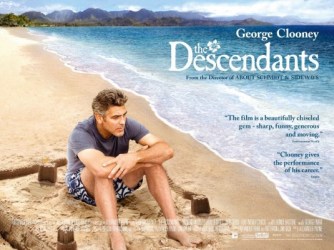
Comedy-drama starring George Clooney as a Hawaiian with family issues: his wife’s in a coma and may’ve been cheating; his daughters are unruly; and his extended family is considering a massive land sale that’s the talk of the islands.
Though marred by heavy-handed voice-over exposition (it baffles me that it won a Best Screenplay Oscar), it’s lifted by strong performances from the daughters (Shailene Woodley and Amara Miller) and Clooney, inverting his usual confident demeanour.

I guess “wry observations of middle-aged men in crisis” are Payne’s stock-in-trade. This one’s amiable, though (writing with three months’ perspective) perhaps a tad forgettable.

4 out of 5

The Boxer from Shantung (1972)

aka Mǎ Yǒng Zhēn

2016 #56
Chang Cheh & Hsueh Li Pao | 125 mins | TV (HD) | 2.35:1 | Hong Kong / Mandarin | 18

The problem with watching so many Shaw Brothers movies so close together, as I have this year, is they begin to blur into one. There’s definitely a house style to the stories, the photography, the sets — everything, really. Even the particularly good ones can fail to lodge in the memory as discrete units.
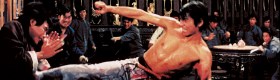
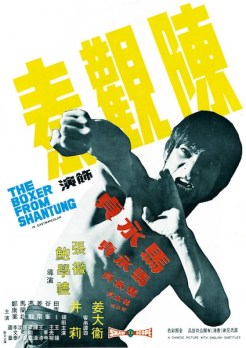
That said, The Boxer from Shantung is a particularly good one. It tells the based-(loosely)-on-a-true-story tale of Ma Yongzhen (Chen Kuan-tai), a small-town guy labouring in Shanghai. After an encounter with gangster Tan Si (David Chiang), Ma decides that’s the life for him, and sets out to climb the crime ladder.

The Boxer from Shantung displays a greater focus on plot and character than is perhaps typical for a Shaw Bros movie, but doesn’t exactly stint on action either — the sequences are a little more spread out than usual, and it results in a just-over-two-hours runtime that isn’t typical for these films. Fortunately, it’s an engrossing enough story that this isn’t a problem, even if the narrative has a rise-and-fall kind of shape that is fairly familiar in the gangster genre.

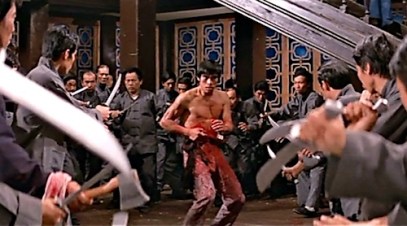
Nonetheless, where the film really comes to life is in its stonking climax — a massive brawl in which Ma kicks everyone’s ass for quarter of an hour, even with an axe embedded in his stomach. At the end of the day, tightly choreographed and expertly performed action sequences such as this are why we come to these movies; and, at the end of the day, The Boxer from Shantung doesn’t disappoint.

4 out of 5