2016 #115
Joe Wright | 111 mins | streaming (HD) | 2.35:1 | USA, UK & Australia / English | PG / PG
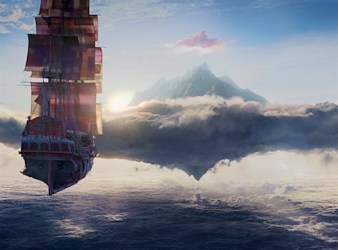
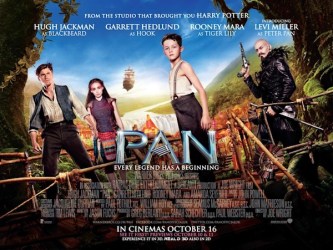 12-year-old Peter (Levi Miller) lives in an orphanage in World War 2 London… until the night pirates bungee in through the ceiling and kidnap a bunch of boys onto their flying galleon. Yes, really. From there it’s second star to the right and straight on ’til morning as the pirates take their new charges to Neverland, where they’re forced into the Mad Max-esque mining operator of Blackbeard (Hugh Jackman). When it turns out Peter can fly, a friendly chap by the name of Hook (Garrett Hedlund) helps him escape, and they head off to find Peter’s destiny, etc — he’s some kind of prophesied Chosen One, because of course he is.
For me, that overripe “Chosen One” arc is the weakest element of Pan. Even then, it’s by no means the worst example in fiction, and it’s executed with a degree of fun and commitment that keeps it entertaining. Otherwise, this is an exciting and enjoyable fantasy adventure, best commended for its inventive, well-realised visuals and colourful design, which when it really clicks can be quite incredible. I suppose that might not be enough to overcome a familiar plot for some viewers, but it eases the way in this particular example. And even if the general arc is a bit rote, there are some quite clever spots of construction and/or references to the original. For instance, Peter can’t read (because Wendy will later teach him), but that also pays off within the film when it turns out he can read the fairy language. On the downside, it doesn’t actually directly connect up to Peter Pan, suggesting someone hoped there’d be sequels — because centring a live-action franchise around a boy who doesn’t age is a great idea.
 As said boy, Levi Miller manages to make Peter not intensely irritating, which is an achievement compared to other adaptations. Some of that is surely inherited from the writing and directing, but Miller gives a strong performance too. Hugh Jackman hams it up magnificently as Blackbeard, clearly having a riot. Rooney Mara may be miscast due to the colour of her skin (for all the complaints about whitewashing, her tribe is shown to be mixed race… which doesn’t necessarily excuse it), but her actual performance is very good. I felt like Garrett Hedlund was doing an impersonation of someone but I never quite got a handle on who (the character’s definitely written to be Han Solo, but the actor’s not copying Harrison Ford). Adele Akhtar brings comedy as Hook’s chum, Sam ‘Smee’ Smiegel, there are cameos of varying purpose from Amanda Seyfried and Kathy Burke, and Nonso Anozie is always a welcome presence, here playing Blackbeard’s henchman. Cara Delevingne doesn’t act so much as provide a human reference for the CGI.
I also really liked the score, by John Powell of How to Train Your Dragon. It’s probably not groundbreaking or anything, but it’s suitably adventurous and epic-y. That said, there have been some very odd choices in the music department, like the massive Smells Like Teen Spirit sing-along. Because it’s entirely out of context (as noted, the film is set during World War 2) it plays like a Moulin Rouge rip-off. It’s also not a consistently-executed notion: there are nods at other songs, but they’re not as famous (the Ramones’ Blitzkrieg Bop, for instance, which I only know thanks to the end credits) so they don’t stick out quite as incongruously.
 Having found Pan to be a very likeable fantasy adventure, I confess to being slightly confused by the response that saw it soundly trounced by most critics and viewers. The review on Blu-ray.com makes the assertion that “today’s movie audience has become so instinctively sophisticated when it comes to CGI-enhanced action sequences that no one can predict what they’ll like”, which I thought was pretty insightful — when does “amazing spectacle” tip over into “oh my God it’s just more CGI”? I think there’s a definite bias based on what people expect of a film. Indeed, a commenter on Letterboxd asserted that most of Pan “consists of the sort of spectacle-as-sleep-inducer set-pieces you find tacked onto the end of Marvel superhero movies”, which at least criticises the sainted Marvel movies for once, but I didn’t think it made up “most of the movie”, nor did I find it sleep-inducing. In fact, I thought Pan had some of the better CGI-driven-spectacle action sequences I’ve seen in our modern overloaded-with-CGI-driven-spectacle era. It is, however, one of those films that must have been genuinely made with its 3D release in mind — as is often the case with those, it’s not the stuff poking out at you that gives it away, but the in-focus backgrounds, which can be especially awkward to navigate in fast-moving action scenes. As Blu-ray.com’s review of the 3D disc notes, “the chaos of the final battle is easier to follow when the action occurs in recognizably separate planes in space.”
Perhaps another aspect of Pan’s reception is some audience members’ devotion to the original story, which may influence how much you can buy into all the changes and adjustments made here. In many aspects it’s not terribly faithful, and if you love the original — especially a particular version, like, say, the Disney one — this might seem like sacrilege. I have no such attachment (though I’ve nothing against Barrie’s work,  or Disney’s, aside from my aforementioned aversion to the eponymous hero), so I was perhaps more open to this Epic Fantasy reimagining. (In that last respect, it definitely falls into the same bracket as Tim Burton’s Alice in Wonderland, which I wrote about in my review: classics of children’s fantasy adapted and reconfigured with a post-Potter/Rings mindset.)
So boo to the trouncers: with a bit of an open mind to its changes, and a bit of allowance for some of the ideas that don’t actually work, Pan is a colourful, inventive, fun, family-friendly adventure movie. And I’d definitely have watched a sequel.
Pan is available on Sky Cinema from today, including on Now TV.

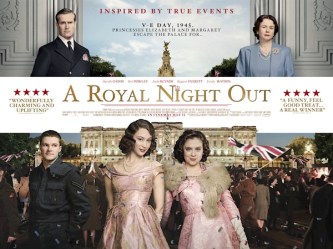 A somewhat remarkable true story gets romanticised in this likeable comedy about King Colin Firth (Rupert Everett) and Queen Olivia Colman (Emily Watson) allowing Princesses Elizabeth (Sarah Gadon) and Margaret (Bel Powley) to go out on the town on V.E. Day. When Margaret runs off, Liz teams up with a grumpy squaddie (Jack Reynor) to track her down.
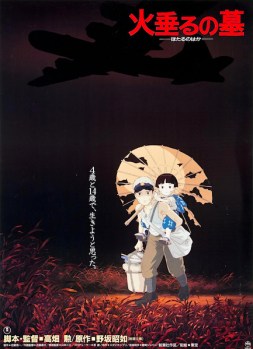 One of the most praised animated films of all time, this Studio Ghibli feature tackles grim subject matter: it’s the story of Seita and his little sister Setsuko, a pair of Japanese children who are orphaned and eventually left to fend for themselves in the closing months of World War 2. It begins with Seita dying of starvation and joining the spirit of his dead sister, so you know it’s not going to end well. A Disney movie this is not.
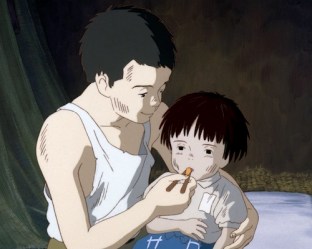 Another thing is that the film is often cited as a powerful anti-war movie, because it depicts the ravaging effects on innocents. However, director Isao Takahata insists it isn’t, saying it’s about “the brother and sister living a failed life due to isolation from society”. I’m inclined to believe him, because, from what we actually see on screen, these two kids are the only ones to be so badly affected! Okay, we do see people have died, and we’re told that food is running out… but there’s a gaggle of kids who seem to be having a fun day out when they stumble across the siblings’ makeshift shelter; or, right at the end, people who merrily arrive home and pop their music on. The film doesn’t try to claim that only these two kids suffered, but — aside from a few other destitutes at the start, and the bodies we see after the first bombing (later bombings don’t make any casualties explicit) — we don’t really see anyone else suffering. I’m not arguing that Takahata is saying no one else suffered, nor that these observations make it pro-war (I mean, any children dying, even if others are surviving, is not a good thing), but I didn’t get an anti-war message that was as powerful or as overwhelming as other viewers seem to have.
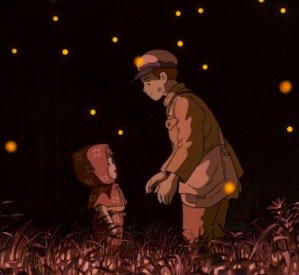 and, really, this story shouldn’t be “bearable”. That’s not to say you can’t feel an emotional connection to animated characters, but, as a medium, animation regularly deals in fantastical subjects, so with material this gruelling it does make it seem less real.
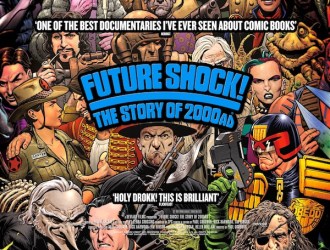 Talking heads documentary about the galaxy’s greatest comic,
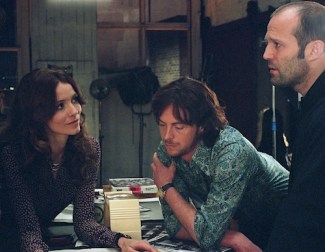
  Inspired by real events (more on that later), The Bank Job sees the British Secret Service covertly enlist a gang of crooks to rob a bank’s vault in order to retrieve some compromising photos of a member of the royal family — not that the robbers know this is what they’re up to. Unfortunately for them, the vault also contains property belonging to an organised crime boss, who isn’t too happy it’s been pilfered.
 but, most pertinently, solid TV thrillers like
 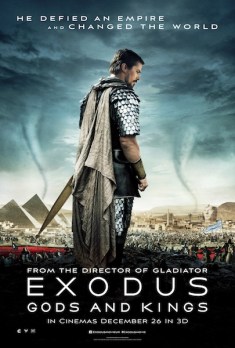 For his most recent historical epic, Ridley Scott tackles the story of Moses. It’s easy to nitpick, depending on your proclivities: whitewashed cast; lack of adherence to the Bible; Ridley’s typically flexible attitude to historiography; it was even banned in Egypt for the negative depiction of both rulers and slaves.
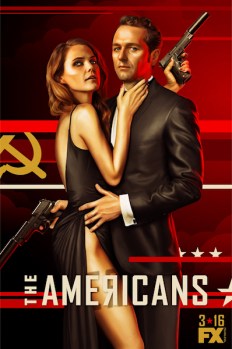 As much as I love Game of Thrones, and think
 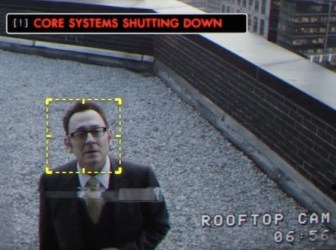 Watching this, it’s difficult to imagine anyone involved really believed they would get a sixth season — which is good, because (a) they stood very little chance, and (b) that means it wraps everything up to a nice, proper ending. My feelings on Jonah “brother of Christopher” Nolan’s cyber-thriller have oscillated over the years, and I’m a long way from agreeing with those who assert it’s actually one of the best sci-fi series ever; but for a show that started out as a fairly standard CBS procedural thriller, it did ultimately manage to play with and work around the network’s expectations to produce something superior. It’s a shame they clearly had to rush the final arc (marred further by having to hit a quota of ‘case of the week’ episodes, for some reason), but it still got to a good place. If you’ve not watched it but are interested, consider finding one of those “episodes you should definitely watch” guides (like
 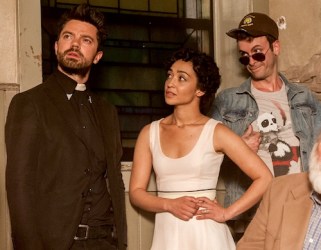 In the end, this turned out to be less of a TV prequel to the comic book series than an expanded and rejigged adaptation of the comic’s opening four-issue story arc (with some stuff from later thrown in for added fuel). As Seth Rogen explained on the post-finale chat show Talking Preacher, the books throw an awful lot of quite comic-book-y ideas at you very quickly, and TV viewers maybe needed a little longer to digest all of that. Plus extra space to develop and examine the characters, of course. It’ll be interesting to see how future seasons handle the issue of adaptation. By the end of season one, the characters are in a place to launch into something closer to the rest of the comic; but, at the same time, budget issues have already forced some reimagining, so what else will it be forced to compromise or reinvent? I think the bold, fearless barminess of the TV series has earned it the right to our attention, whether it goes further off piste or hews closer still to its roots.
 This month, I have mostly been missing… not that much, really. With the Olympics dominating the good TV channels and much of US drama on its summer hols, there doesn’t seem to have been much on. I haven’t gone crazy for Rio 2016 like I did for London 2012 (much to my surprise at the time, that was), though we’ve caught bits and pieces, not least Max Whitlock’s double gold (along with
 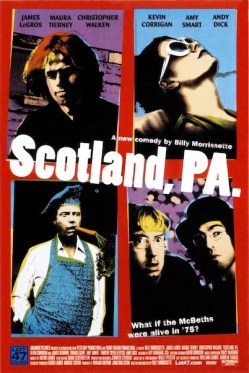 Shakespeare gets transposed to 1970s Pennsylvania in this blackly comedic reimagining of Macbeth, which converts the Thane of Glamis into a diner chef and the Scottish throne into ownership of a new concept: drive-thru.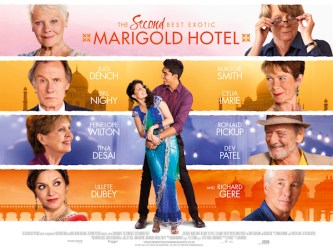
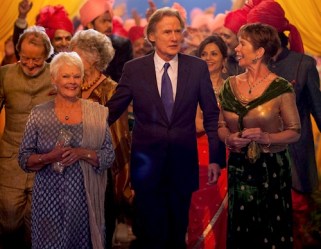 though this time there’s an added dose of romance in pretty much every plotline. It works because the cast are so darn good at delivering their material. Dev Patel and Maggie Smith are both hilarious, though everyone gets a moment to shine in the comedy stakes; conversely, Judi Dench and Bill Nighy carry the heart of the movie — though, again, everyone gets their emotional moment.
 100Films.co.uk