aka Furious Seven
2016 #52
James Wan | 132 mins | streaming (HD) | 2.35:1 | USA, Japan & China / English | 12 / PG-13
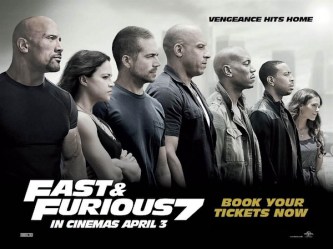 The franchise that can never make up its mind about what each instalment’s called continues with its most outrageously ludicrous entry yet.
Picking up from the events of the last one, this time our ‘family’ of car-racing heisters are targeted by their previous enemy’s brother, Deckard Shaw (Jason Statham). After Shaw’s first attempt to kill our heroes fails, they’re recruited by covert ops agent Mr Nobody (Kurt Russell) to obtain a computer surveillance program, on the promise that, if they’re successful, Nobody will help them deal with Shaw. Because when you’re in charge of a covert ops team, you don’t have your own guys for that kind of thing. Anyway, this leads us on a globe-trotting mission that involves things like parachuting cars into Azerbaijan and using cars to leap between skyscrapers in Abu Dhabi.
So yes, the action is ridiculous and implausible. Even the stuff that doesn’t seem physically impossible is overblown. But it’s so ludicrous that the film can’t possibly be trying to claim it’s real anymore, and therefore it kind of works — they’ve committed to it. Though anyone who started out enjoying this series for its broadly-realistic car-racing thrills must be pretty disappointed in it by this point.
 Despite that, the series is beginning to feel increasingly “fans only”. That’s the way of all things these days, I suppose. Long gone are the days when movie series aimed at accessibility, each entry fundamentally a standalone adventure for a popular hero. Serialisation is the new discreteness, and it pays dividends for Marvel and, indeed, for Fast & Furious: in the same year as the return of Star Wars, the return of Jurassic Park, the return of the Avengers, the return of James Bond, and the return to form of Pixar, Furious 7 was still the third highest-grossing film worldwide, and sixth of all time.
But I still find it remarkable how well it did at the box office, because while most of those other films are actually very accessible to newcomers, this is resolutely a film for those well-versed in the franchise. Its story joins the dots between several previous films — as far back as Tokyo Drift, four films and nine years ago — but seems to assume you’ll know what those dots contain, because it only shows the joins. Even as someone who knows what events are being linked (that Tokyo Drift connection has been long-awaited!), it feels a bit disconnected and piecemeal. And it doesn’t help anyone that Tokyo Drift’s Lucas Black looks like he’s aged every single day of the nine years since his last appearance…
Of course, you can’t ignore that part of the reason for the film’s financial success is the death of Paul Walker, particularly as it occurred halfway through production and the filmmakers understandably felt the need to give one of the series’ primary stars a fitting send-off. With seemingly little of his part shot, his performance is mostly faked. It was created with a mixture of techniques, many of them pioneering —  while we’ve seen computers being used to generate a performance for a deceased actor for over 15 years now (I believe Gladiator was the first), those tend to be for very short scenes and/or filtered through some other medium (like Laurence Olivier appearing on a videoscreen in Sky Captain), whereas here they’ve attempted to create a co-lead-sized role. Truthfully, the effect is variable. If you’re looking, it’s always obvious (well, I say that — if it was so good that you couldn’t see it, you wouldn’t know you were seeing it). However, if you’re not looking too hard then a lot of it is very well done… though some remains pretty glaring. At the end of the day, you know why they did it, but it still rather draws attention to itself. However, a post-climax finale is a nice send-off for Walker (again, you can’t deny that it’s more about paying tribute to the actor than writing out the character), and represents a moment of catharsis that clearly worked for the cast, crew, and the series’ die-hard fans.
The quality of other elements is rockier. Kurt Russell’s spy is a cool new character, but can’t escape the feeling he’s been introduced to play a bigger role in the inevitable sequels. Jason Statham has clearly been cast for his ability to fight, which he does well enough, but a bit more dialogue-based antagonism might’ve added some flavour. He gets a very cool opening scene, though. And while a coherent story is not likely to be at the forefront of many people’s minds when it comes to these movies, the plot is nonetheless scattered with holes. Like, the gang’s entire motivation to undertake the mission is so they can borrow the software to track down Deckard… but he keeps showing up anyway.
 But hey, what does it matter? The point is the big dumb fun of the action sequences, be they well-choreographed and -shot fisticuffs, excellent stunt driving, or computer-generated ridiculousness. Is it okay to just give a movie’s plot a free pass like that? Sometimes, I think it is. Furious 7 is an action movie, in a fairly pure sense of the term, and action it delivers.

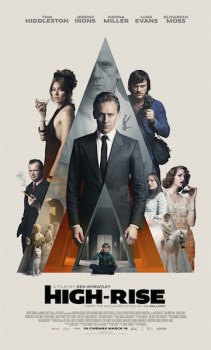 I was looking forward to this sci-fi-ish ’70s social satire, but, having let it percolate for a few months, I still have no real grasp of what it was about. I mean, it’s obviously about society, but what its point about society is… I have no idea.
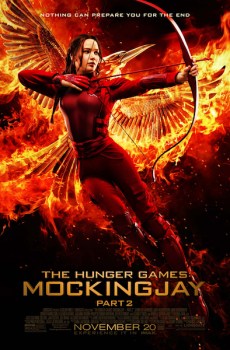 The artificially-extended Hunger Games trilogy-turned-tetralogy climaxes here. Presumably you’ve seen the first three and so know what you’re into by this point — either you’re invested or you’ve given up. Unless you want to know “does it end well?” before embarking on the whole thing, of course. While Mockingjay Part 2 is not the series’ finest instalment, it brings things to a decent head… eventually.
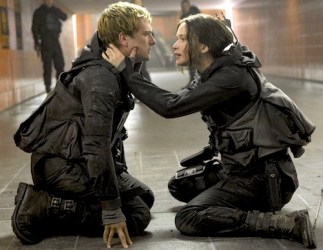 What follows isn’t perfect — in particular, the storyline could’ve done with tightening up — but it does have a lot going for it. There’s strong characterisation: Katniss is as confused, conflicted, and incapable of engaging with her emotions as ever, while Peeta’s PTSD is well-handled, with an effective device where he repeatedly makes a statement before asking, “real or not real?” There are other nicely developed thematic points too, like expanding further on the rebels not being perfect good guys (as initiated in Part 1), which plays a central role in the denouement. The action sequences are well staged and occasionally inventive, but best of all is that the climax doesn’t lean on being the biggest fight scene yet — it’s driven by the story, and the characters and their decisions, rather than being a ginormous shoot-out.
 Mockingjay Part 2 is not the best instalment of the Hunger Games, a series whose second half didn’t quite live up to the developed potential of the excellent
 The debut feature of Terrence “four films in 30 years” Malick comes with a tagline-cum-plot-description so good I’m just going to quote it wholesale:
 the leads start out from bleeds outwards into their time on the run, which Holly romanticises but feels constantly grotty. I suppose a film about killers shouldn’t be nice, but maybe this is why the time in the treehouse stood out for me — a little oasis of pleasantness; a break from the insalubriousness of the rest of the picture.
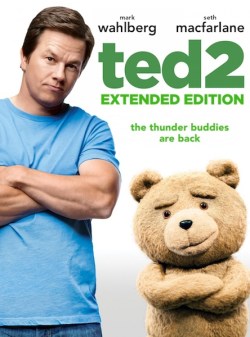 Comedy sequels often struggle, and writer-director-producer-star Seth MacFarlane’s
 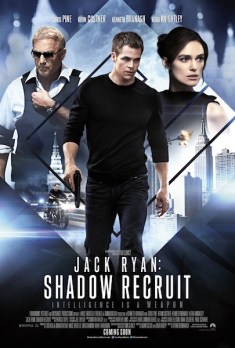 Kenneth Branagh, who once used to direct films based on Shakespeare and opera and that kind of thing, seems to have carved himself a place as a jobbing blockbuster director so far this decade: it started with a spot in Marvel’s then-burgeoning universe, adapting
 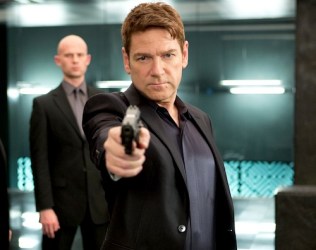 he comes up against oligarch Viktor Cherevin (Kenneth Branagh), the architect of the plan, which will be instigated by a massive terrorist attack on US soil. Unless Ryan can stop him, of course — with the help of his handler (Kevin Costner), and his fiancée Cathy (Keira Knightley), who’s followed him to Russia because she thinks he’s having an affair. I mean, he was sneaking around a lot…
 a little different to the action-thriller norm. Ryan has skills leftover from his military days, but he’s not a one-man army like Bond or Bourne — he needs help both on the ground and from tech guys behind the scenes, who play a vital role in… well, I was going to say “the climax”, but it’s “the bit just before the climax”. The climax is a chase around New York, because of course you have to end with a chase.
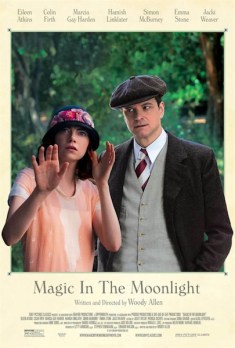 Woody Allen’s 44th film is a Sunday-afternoon-style period comedy, which nonetheless manages to touch on issues of existentialism and the meaning of life. If that sounds terribly Deep, don’t worry: Magic in the Moonlight may tickle your fancy, but it’s unlikely to tax your brain.
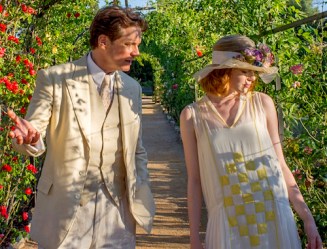 The most pleasing aspect is probably Darius Khondji’s photography. He emphasises the region’s beautiful golden light, with saturated colours emphasised by deep shadows, to create a warm and idyllic atmosphere, further accentuated by the twinkling blue ocean and stunning locales. It’s exemplary work that will likely make you long for distant times and places.
 Stoner comedies aren’t really my thing, but something about American Ultra — which is often pithily described as “
 really mean it’s funny (there are two or three laughs, tops), just that it has a less serious tone. Even if you want to claim the Bourne similarities are just one facet, the film as a whole feels generally reminiscent of any number of low/medium-budget action flicks. It’s not bad, it passes the time, but original or exceptional? No.
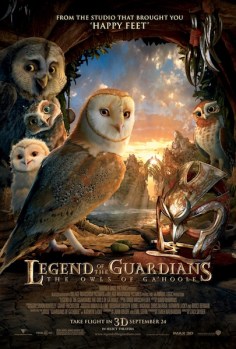 Legend of the Guardians is pretty odd.
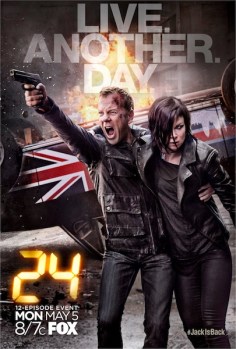 The “event miniseries” short-lived revival of a once-popular TV series is all the rage these days, with 24, Heroes, and The X-Files all trying it out in the past couple of years, Gilmore Girls doing essentially the same thing on Netflix in a couple of months, and Twin Peaks at it sometime next year. The thing that seems to have defined these revivals so far is that time has made no difference: none of them have come back radically new or changed, but have just been “more of the same” as the series they’re resuming, for good or ill. 24: Live Another Day is absolutely an example of this. It may be four years on, set in London, and only 12 episodes long, but if you didn’t know the circumstances behind production you’d be unlikely to think this was anything other than season 9 — after all, the show has always had years-long in-universe time jumps between seasons, and the last few have varied the location also (after seasons 1-6 were set in LA, season 7 was relocated to Washington, DC, and season 8 to New York). On top of that, the way the storyline drags back old characters who hadn’t been in the series for years cements the assumption that it’s a for-the-fans bonus run rather than a fresh-start relaunch attempt (which I guess next year’s spin-off, 24: Legacy, is hoping to be). All of this means that it has its good points, especially the action scenes, but some of the storytelling is overfamiliar, the dialogue at times terribly clunky, and there’s a continued half-arsed application of the real-time concept (which has been a bugbear of mine since season four or five). The fact it ends without really resolving the on-going story of Jack Bauer also feels like a daft mistake.
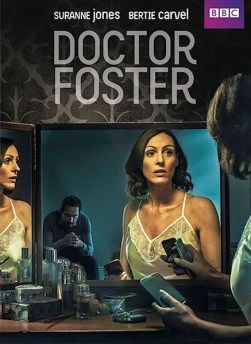 Finally got round to this popular series (from a year ago! Time, where do you go?). I was pleasantly surprised by the plot. The setup was sold as a woman (the titular GP) becoming suspicious her husband was cheating on her — is he, or is she imagining things? For whatever reason I’d presumed that would be the mystery of the entire series, and it would inevitably turn out he was cheating because there’s not much story otherwise. But actually, that’s kind of dealt with in the first episode, and then it spins off in various twists and turns. It’s exciting and unpredictable without quite descending into the easy trap of having characters make completely ridiculous decisions or take extreme actions. It’s a pretty finite story, though, so quite where the commissioned second series is going is anyone’s guess.
 A new miniseries (it only finished on Tuesday — get me, watching something when it’s actually on!) from writers Harry and Jack Williams, who penned 2014’s excellent James Nesbitt drama The Missing (which, like Doctor Foster, has an unexpected second series in production). This is a slighter affair: essentially a murder mystery, but with a few well-executed twists along the way. It starts with the murder of a young couple whose families are neighbours on isolated farms in Scotland. When the suspected murderer turns up injured at those farms on the storm-afflicted night after the murder, they lock him in the barn while they await an ambulance… and then one of them murders him. Whodunnit? And what will they tell the police? And why the hell did he kill the couple, anyway? It’s funny to think of a four-hour drama as slight — imagine thinking a four-hour film was a bit short and lacking incident — but at least it’s not slow with it, somehow. A subplot about the investigating officer’s home life has no relevance to the main story and could’ve been cut, and the final revelations are somewhat farfetched, but other than that it’s a decent little thriller.
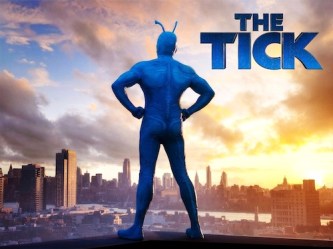 I’ve never read any Tick comics, nor seen the
 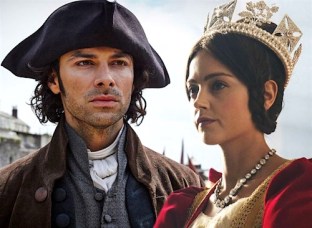 This month, I have mostly been missing Poldark and Victoria, respectively the BBC’s big period drama hit and ITV’s big period drama hope, which are currently going head-to-head on Sunday nights. For some reason I find myself not caring one iota about the latter (has it gone down well, or not? I don’t even know), but will get round to Poldark eventually.
 100Films.co.uk