
 Will Smith is the eponymous drunken vagrant, who also has the powers of Superman, in this under-appreciated superhero comedy-drama. Hated by the public for the destruction he causes while ‘helping’, and wanted by the authorities for the same — though they can’t catch him because, you know, superpowers — he gets an image makeover when he saves wannabe entrepreneur Jason Bateman. Bateman’s wife, Charlize Theron, is less sure of Hancock’s merits.
If you’ve only seen the humour-focused trailers, seeing Hancock described as a comedy-drama might come as a surprise. There’s a whole behind-the-scenes story here, it would seem, hinted at in various interviews and articles one can find scattered around. To boil it down, it seems as if screenwriters Vy Vincent Ngo and Vince Gilligan (yes, him of Breaking Bad) and, in particular, director Peter Berg thought they were making a character drama superhero movie, while studio executives were more interested in it being a superhero action-comedy. Only natural when you hire Will “Men in Black” Smith, I guess. While the marketing went all-out on the comedy angle, the film itself is torn between these two pillars, leaving viewers with mismanaged expectations — resulting in “under-appreciated”.
Tonally, it’s mixed throughout. For instance, it’s been shot with handheld close-up ShakyCam veracity, which works when it’s playing on “what if this were real?” emotional story beats, but feels at odds on the occasions it descends into comedic vulgarity. Some criticise Berg’s style fullstop, saying he’s taken a black comedy/satire and played it straight. Unsurprisingly, I don’t think that’s wholly fair. There’s a lot of stuff here that works as a serious-minded drama, suggesting Berg was on the right track, 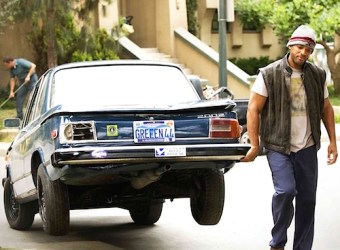 but it rubs against comedy stuff that feels like it’s from a Comedy. The extended cut includes an early sex/ejaculation joke/sequence that wasn’t in the theatrical cut because Berg thought it wasn’t funny and test audiences agreed. Goodness knows why it got put back, other than because of length — it accounts for over half of the extensions (more details here).
Essentially, I think the critics are damning Berg and co for not making the movie the critics think they should be making, and not giving them credit for making the movie they were trying to make. The marketing men are at fault here, or the audience for wanting a superhero comedy when they’ve sat down to a superhero drama. Unfortunately, it’s harder to defend when Berg’s work was indeed compromised, though by studio interference rather than by misunderstanding his own mind. Also by the fact his other films include crap like Battleship, so of course you might think he’s rubbish.
As if that wasn’t enough, there’s a controversial twist/change of direction halfway through. Fundamentally there’s nothing wrong with twists, but this engenders a bumpy transition, which initially seems not to work — the tone and meaning shift abruptly. However, if you go with it, the film settles back down and it pays off during the finale. A lot of viewers aren’t very good about trusting a movie and going with it these days, though. Again, however, occasional poor decisions make it trickier to defend. For instance (spoilers!), when Mary goes to visit Hancock after it’s revealed she has powers too, she’s dressed up like a supervillain, a complete change of style from her normal casual-suburban-mom look. Why the change? 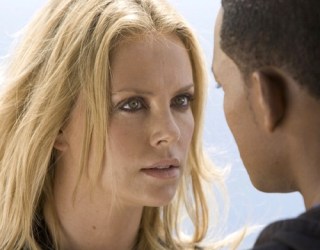 Why indeed, because a) she’s not a supervillain, and b) even if she were, why get changed?! It’s a kind of bait-and-switch: she’s made to look like a villain because we think that’s what she’s about to be revealed as, and a big hero-vs-villain fight follows too… but she isn’t. It’s not quite up there with the magically-changing Batsuits of Batman & Robin, but it’s the next level down.
While I’m bashing the film, let’s note that the CGI is appallingly weak. It’s hard to know how much that’s time passing and how much it was always weak, but considering it’s from the same year as Iron Man, I err to the latter. This may again be the result of behind-the-scenes travails, though: apparently it was supposed to contain 300 VFX shots, but actually has 525. Did anything go right on this film’s production?
On the bright side, Will Smith’s performance has garnered lots of praise, deservedly so. He could have been his usual charming self, making Hancock a funny goofball character. Instead, he plays the reality of this guy being a damaged loner. It might not make the film as consistently comedic as some would have liked, but it’s a more engaging and rewarding performance on the whole.
 The film would work a lot better on the whole if the tone had been settled on as definitively as Smith’s performance, rather than trying to have its cake and eat it by mining both the “what if this were real?” and “haha, an unlikeable drunk superhero!” versions concurrently. For my money, however, if you treat Hancock as a fairly seriously-intended movie that was forced to contain more (half-arsed) action and (misjudged) comedy for the sake of box office, it’s not a bad experience at all.

Hancock is on 5* tonight at 9pm.
* The extended version is officially Unrated in the US. Many a time an “unrated” cut would mirror the theatrical version’s certificate, if only they’d bothered. However, theatrically Hancock was a PG-13, but only after it had been submitted twice before and received an R — which is probably what this version would be, then. ^
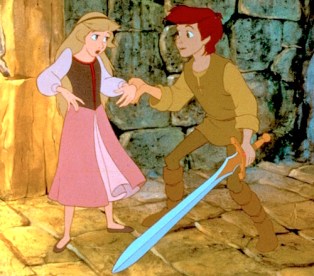
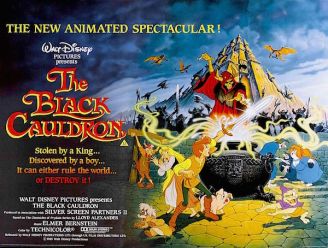 The Black Cauldron is best remembered as an intriguing footnote in the history of Disney animation. Their 25th ‘official’ film, it was the first with no songs, the first to earn a PG (after being cut — twice — to avoid a PG-13), and flopped so badly they disowned it for over a decade. Fully-animated sequences were cut after disastrous test screenings for parents, and famed exec Jeffrey Katzenberg, who came into Disney management during the film’s production, reportedly ordered 12 minutes cut, muddling the film’s story. What a mess.
 It’s always interesting when a company like Disney break outside of the norm, and it’s certainly brought them some degree of success in recent years with the likes of
 Possibly-crazy people offer definitely-crazy theories on the subtextual meaning of
  After winning the Best Adapted Screenplay Oscar for
 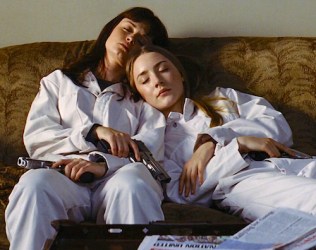 Here, Fletcher either needs to settle on one or the other, or clearly signal his intentions earlier.
 May’s films in full
 #67 Hummingbird (2013), aka Redemption

















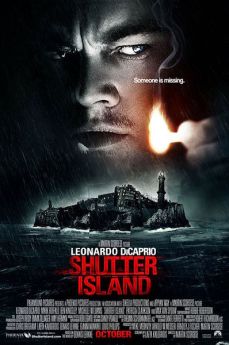 Adapted from a novel by Dennis Lehane (whose work also inspired
 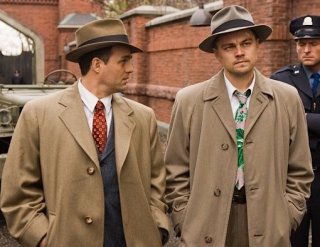 Besides, the film has other delights beyond being an elaborate guessing game. One of the things Lehane set out to do in his novel was write “a gothic”, and Scorsese and co have taken that ball and run with it. It’s overflowing with a fantastic atmosphere: unsettling, creepy, chilling, horror-movie scary when needed (some sequences are properly hair-raising); truly gothic-feeling. Every aspect of filmmaking — the direction, the photography, the editing, the sets and locations, the music — work in harmony to create a coherent mood.
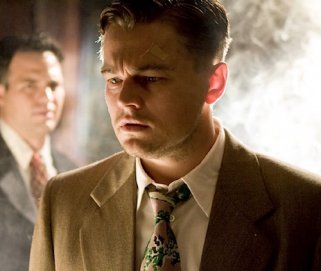 And then, after Scorsese and co have done their best to shred your nerves, in the final half-hour the pathos is immense. Quite without realising it had brought me to that point, I had a tear in my eye. This is in part thanks to some great performances, though you do need to reach the twist to fully appreciate them. Everyone reveals more levels once you know it, and indeed it’s clear a great amount of effort went into ensuring re-watchability — that if you view it again knowing the answers, you can spot things; not clues, per se, but elements in the performance, the design, the staging, that tie in to the reveal.
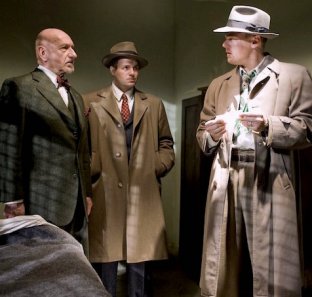 I think the more you let Shutter Island percolate after it’s over, the better it becomes. Solving the mystery and guessing at the twists occupies so much of your time on a first viewing that you almost miss the details in the characters and the world, but they build up nonetheless. There’s layers and depth here, and a plausibly realistic depiction (even according to an expert) of something that’s incredibly hard to depict in fiction. You can view Shutter Island as just an atmospheric gothic mystery chiller, and as that it’s a quality piece of work, but it’s the extra depth that mark it out as, actually, a great movie.
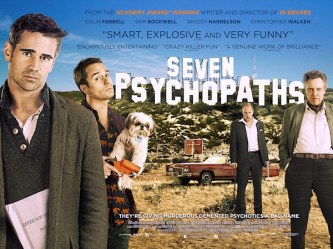 The writer-director and star of
  mainly via references to Farrell’s endeavours to pen a movie called, you guessed it, Seven Psychopaths. One wonders if there’s a hefty dose of autobiography in the writer’s struggle…
 I had absolutely zero intention of ever watching this Sylvester Stallone vehicle (which is not to be confused with John Woo’s
  Said plot all comes down to a final fight, Stallone vs Jason Momoa (of
 This year’s Best Animated Short Oscar winner is a charming little tale of a dog and his owner. I absolutely adored it, though there’s little doubt that it was helped to victory by being produced by Disney and released theatrically alongside Best Animated Film winner
  but nonetheless packs an emotional punch. Viewers have been known to shed a little tear (though fear not, dear reader: it doesn’t come via a
 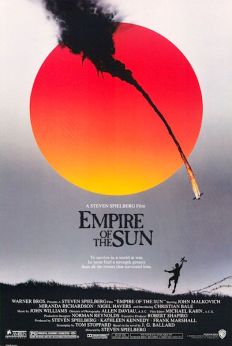 Steven Spielberg’s adaptation of J.G. Ballard’s semi-autobiographical novel stars a 13-year-old Christian Bale as Jim, the son of British ex-pats in China when the Japanese invade during World War II. Separated from his family as they try to flee, Jim encounters born survivor Basie (John Malkovich) and, when they wind up in an internment camp for the rest of the war, a cross-section of the rest of the left-behind. To Jim, a somewhat naïve but capable, confident and determined endurer, the whole thing is a big adventure; we can see the truth, though: that it’s a grim slog of life and death, and most succumb to the latter. The reality of the situation gets to Jim in the end, too… but maybe I’m getting ahead of myself.
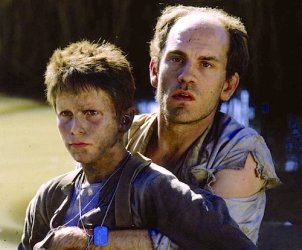 As it stands, the film is a fascinating insight into a less-often-covered aspect of the war. Even in small roles, the quality cast keep it watchable and relatable. Bale’s performance comes in just the right side of annoying — quite an achievement for a character who seems inherently brattish and prone to irritate.
 100Films.co.uk