
Richard Kelly | 115 mins | Blu-ray | 2.35:1 | USA / English | 12 / PG-13
 The writer-director of Donnie Darko and Southland Tales applies that same schtick to a combined adaptation of Richard Matheson’s short story Button, Button (previously adapted into an ’80s Twilight Zone episode), and the life story of his parents.
It’s almost Christmas, 1976, when a mysterious package is left on the doorstep of teacher Norma (Cameron Diaz) and her NASA employee husband Arthur (James Marsden). It contains a box with a button, and that afternoon Arlington Steward (Frank Langella, with a chunk of his face missing thanks to CGI) visits to explain what it means: if they press the button, someone they don’t know will die, and Norma and Arthur will receive $1 million cash; or they can not press it, and nothing happens. They have just 24 hours to decide.
It’s an intriguing “what would you do?” premise, which Matheson apparently lifted from a psychology class discussion scenario. I believe that’s about the extent of the short story too, which is all of six pages long — not exactly feature-length. Kelly has bulked it up by expanding the characters, who are now based on his parents to an almost freakish degree, and a massive back-end extension (the short story accounts for 30 to 40 minutes of the two-hour film) that heads deep into the same “what the…?” territory that he mined in his previous directorial efforts.
In the case of the former, Kelly’s dad really did work at NASA, his mum really was a teacher, and she really did have a foot disability, for which Mr Kelly Sr. and his NASA chums really did engineer a kind of prosthetic to help her resultant limp. 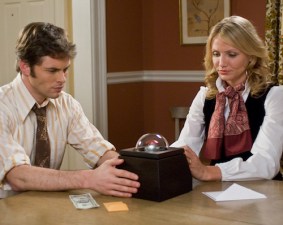 What a nice tribute to his supportive parents and their devotion to one another, eh? At the start, perhaps, but by the end of the film you may be wondering what the writer-director’s subconscious wants to do to his ma and pa…
As for what that plot entails… I shan’t spoil it. Suffice to say it’s better explained than the ending of Donnie Darko and infinitely more comprehensible than Southland Tales, even though mysteries and questions remain. That’s fine in my book (I loved Donnie Darko), but the story that leads to said inconclusions isn’t all that. To boil it down, it takes a story that was fine at its short length, and attempts to add all kinds of explanations and expansions that just feel needless. It’s B-movie schlocky.
In fact, The Box is at its best when it almost embraces that genre side. There are some fantastically creepy sequences; genuinely discomforting lo-fi scares. They’re not inherently undermined by the plodding dramatic sections or the kooky sci-fi wobbly bits (or even the bizarre, oddly dated, slightly uncomfortable thematic reading suggested by who always presses the button), but they leave the unnerving parts to function as isolated instances of quality horror moviemaking rather than a consistent mood or tone.
 What could function well as an indie-level thriller is further undermined by abundant, therefore costly, CGI. Whether that’s Langella’s facial disfigurement (what could’ve been make-up is actually a complex array of tracking dots, green face-paint, motion-control cameras, and so on; all used merely to place him in simple dialogue scenes), or wide shots of ’70s Virginia, with a computer-adjusted skyline, computer-animated cars, and computer-painted snow. It’s not that the effects work is poor (though don’t look too closely at those cars), but that it screams “this must be special effects!” when you don’t want such distractions.
For all that can actually be ignored, Diaz’s performance sadly can’t be missed. On the evidence of this, she should stick to the lowest-common-denominator comedies and comedy-action movies that made her the one-time highest-paid Hollywood actress (she may still be for all I know, but films like this aren’t the reason why). Maybe it’s not her fault, maybe it’s the inconsistent and inexplicable Southern accent she’s been landed with. The only reason for it is that Kelly’s mother has one, but the only favour it does Diaz is as an excuse for her generally poor acting. At least the rest of the cast are up to scratch — in fact Marsden, who I can only recall as stick-in-the-mud Cyclops in the first three X-Men movies, is practically a revelation.
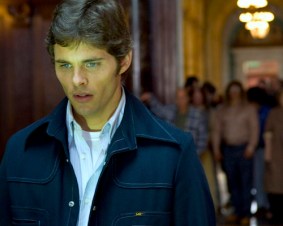 The Box should have been a film we all discussed for years to come, its “what would you do”-ness providing an Indecent Proposal for the 21st Century (as other reviewers have suggested). Sadly the water is muddied by a series of crazy twists and out-there revelations, which sometimes pay off in atmospheric individual sequences, but overall feel… wrong. With Donnie Darko Kelly showed an overabundance of promise. He’s still not fulfilled it, but does present moments of brilliance that suggest we shouldn’t give up hope yet, and which render The Box at least watchable. For that, my score errs on the side of generosity.

The UK TV premiere of The Box is tonight at 11:20pm on BBC One.
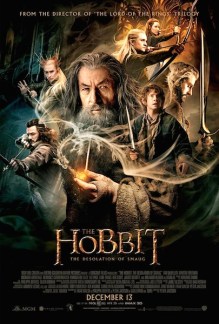 The Desolation of Smowg-not-Smorg begins in the same way
 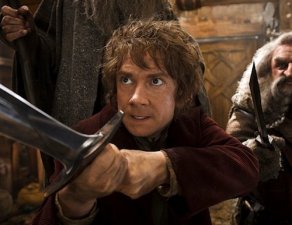 It’s my understanding that the originally-planned (and shot) two-part version of Jackson’s Hobbit adaptation was transformed into a trilogy by, essentially, taking what was to be film #2 and splitting it in half. That might explain why individual sections are allowed to go on so long here: to bulk up the running time to the kind of epic proportions audiences expect from a Middle-earth movie. Anything less than two-and-a-half hours isn’t going to cut it. But when your climax is a battle between a giant dragon (cool!) and a small army of dwarves (kick ass!) around a deserted underground city (hell yeah!), but my main thought afterwards is, “God that went on a bit”, then you’ve failed at something.
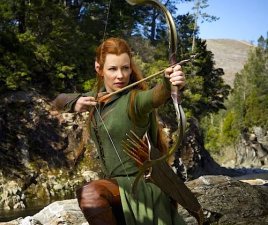 Meanwhile, Luke Evans’ Bard is as Welsh as the actor’s name suggests, which is a little bit of a surprise. But then the dwarves’ accents have all the rest of the UK covered, so why not. Benedict Cumberbatch sounds like Benedict Cumberbatch playing ‘big’ as Smowg-not-Smorg. It feels like this should be an iconic villain performance but, while good, I found it somehow lacking. Expectation may be scuppering him; maybe I’ll warm to it on future viewings.
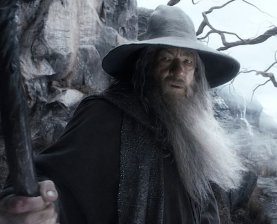 I haven’t picked apart everything that’s wrong with the film (what purpose is there switching from one made-up-for-the-film orc general to another?!), but then nor have I praised everything that works (there are some quality actors in amongst all that crashing and banging). It seems a fair few people liked this Hobbit instalment more than the first; the best explanation I can find is, “because it’s got more action”. Far be it from me to accuse other film viewers of being shallow, but… really? I genuinely enjoyed An Unexpected Journey as a return to the beloved realms and peoples of Middle-earth. The Desolation of Smowg-not-Smaug has some of that, and the charm of introducing us to new parts of the world too, but it’s drowned out by so much aimless noise. Here’s hoping it improves with repeat viewings and/or the inevitable extended edition, because this time I nearly slipped down to a lowly 3 stars.
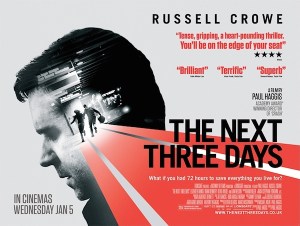 If someone you loved was locked up for decades for a crime you were sure they didn’t commit, how far would you go to get them out? That’s the premise of this methodical thriller from writer-director Paul Haggis (of
 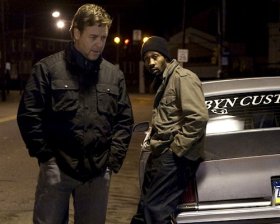 with a protagonist who either already has a “particular set of skills” or implausibly learns them (maybe over a longer period of time) before putting in motion their crazy scheme.
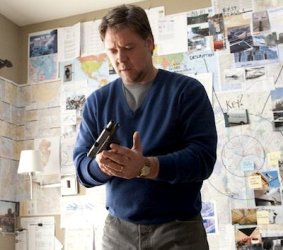 Running him a close second is the all-action final half hour or so, when Crowe (spoilers! but not really!) finally stages the actual escape. It’s a long time coming, but we’re paid off with a pretty fantastic long-form action sequence. There’s genuine tension about whether they’ll pull it off or not, and along the way we’re treated to a few nice flourishes in his plan. There’s a fair degree of silliness still, though, so at least that’s in-keeping with the rest of the movie.
 Finally, there’s an attempt to keep uncertain the truth about Banks’ culpability. Haggis never wanted that question to be answered — Crowe believes she’s innocent, even when she confesses to his face, and that’s what matters. I don’t think Haggis is a filmmaker who can resist answers, however, and for all his assertions that her innocence/guilt is left ambiguous, by the end I think you can be pretty darned certain which it is… which kinda makes all the previous attempts to leave it open feel hollow, especially the ones that side with the untrue.
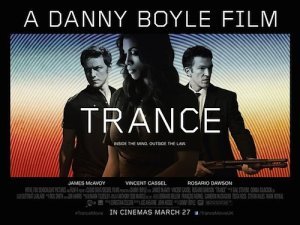 Ambiguous endings used to be anathema to film audiences. They wanted things tied up in a pretty little bow, thank you very much; all the conflicts resolved and all their questions answered. Then the likes of
  In the Blu-ray’s special features, Boyle comments that “it’s more classical than you might expect.” He’s talking specifically about the cinematography (and he’s right, but more on that later), but he could equally be talking about the entire movie. Though it has a storyline that blurs the line between what’s actually happening and what’s happening inside a character’s head (or is that characters’ heads?), the overall tone and style — particularly of the climax — is actually quite Hollywood. It’s Hollywood jazzed up with storytelling trickery, a quirky score, dashes of extreme gore and surprising nudity (that it’s not an 18 is somewhat surprising); but underneath all that it’s not a million miles away from your run-of-the-mill thriller.
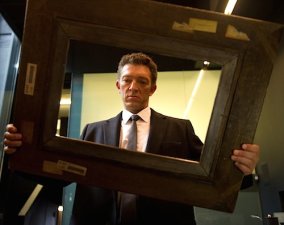 there’s no switching to black and white for dreams, for instance; nothing to definitively tell you which state you’re in. And this is a good thing, because when you need to know you can tell, and the rest of the time… well, the film’s playing with you. That’s the point. What is real and what is a scenario McAvoy’s being talked through? Are these memories what happened or the product of an addled mind?
 Dod Mantle’s cinematography is also strikingly handsome. As noted, the film’s buzz had me expecting something akin to late-career Tony Scott, all jumpy and weirdly saturated and fragmented. Instead, as Boyle said, it’s actually very classical, but with a great eye. There are a number of shots which would look fabulous framed and hung on the wall, not least of the street outside Dawson’s flat at night, a restaurant next to intersecting train lines, and aerial photography of red-lit nighttime motorway junctions, looking like some kind of Rorschach test-esque psychiatrist’s tool.
 Few would deny that Peter Jackson’s extended versions of
 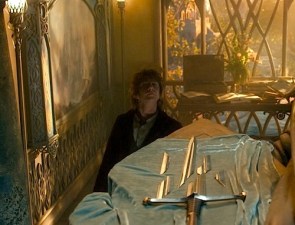 There’s not as much extra time with the dwarves as I expected, though, with most of the character time still going to Bilbo.
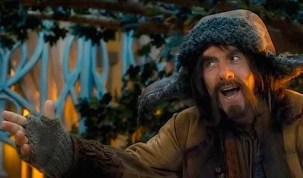 having to work alone on a green screen for many of his scenes with the smaller characters), but newcomers Martin Freeman, Richard Armitage and James Nesbitt shine too. This is Freeman’s film to be the centre of attention, but Armitage and Nesbitt will have much more to do in the follow-ups, and the groundwork is nicely laid here.
 #13 Gravity (2013)
 #18 Space Battleship Yamato (2010)
 The recently-released inspiration for this list. An underrated series from the late ’00s, its creator and stars have tried to get a movie made ever since it was ditched. With traditional options failing, they famously turned to Kickstarter — and fans coughed up almost $6 million. Relatively strong limited-release box office and VOD chart positions suggest their wish for a sequel may be granted. Unlike:
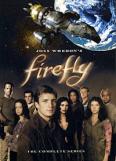 The modern marker of true TV success — DVD sales (they also led to a return for series like Family Guy) — saw Joss Whedon’s short-lived, beloved space Western revived for a lap of honour. Sadly it struggled to find a big enough audience there either, dashing hopes of a sequel. But at least we got one movie. One big damn movie. One day, I’ll tell you all about how I think it’s better than Star Wars…
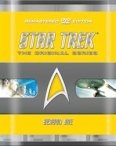 Sci-fi fandoms lend themselves to this kind of list. Now that it’s a massive multimedia franchise, spanning half a dozen long-running TV series and twice as many movies, it’s easy to forget the original Star Trek was cancelled after just three years. The post-Star Wars movie world saw it rescued for the big screen. A bit like what J.J. Abrams is doing now, one might argue.
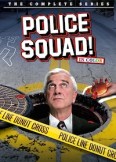 The what now, you might ask? Police Squad lasted just six episodes in the early ’80s, but then they spun it off onto the big screen as The Naked Gun (hence that first film’s ludicrous subtitle) — which was obviously a success, because it spawned two sequels and people still go on about it. Apparently “many gags from the show were recycled for all three films,” which I guess is fair enough if no one watched your show.
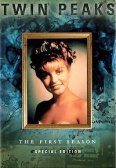 Twin Peaks was a cultural phenomenon, and is widely attributed with revolutionising US network television thanks to its filmic style and long-running storylines. Too long-running, as it turned out, when audiences abandoned it after things got weird (the fact it was masterminded by David Lynch should’ve been a clue) and the driving mystery was kinda-solved. A prequel movie did little to clarify things. (Apparently. I’ve still only seen season one.)
 Sure, the first X Files movie came mid-series, but the second was a considerable time after the show left our screens. And after the TV series ended on a cliffhanger, what better than to return to the big screen so you can tell… a completely standalone and unrelated story with a TV-friendly small scale. Oops. Hopes for a third movie that would deal with the hanging plot threads were basically killed right there.
 Like a
 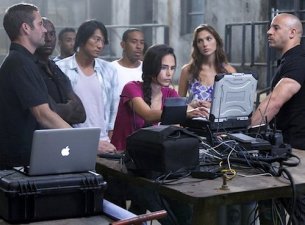 The plot is essentially “
 with both this and last year’s sequel proving huge hits, and a
 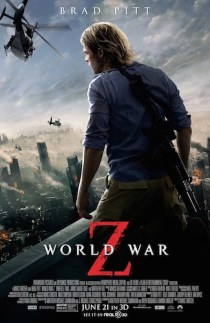 In the weeks leading up to its theatrical release, it was already known that World War Z was going to be an almighty flop. An unscrupulous movie studio had taken a cult novel and thrown away everything but the title, alienating its existing fanbase. They’d spent a fortune making a movie in a traditionally R-rated genre that, if released at R, could never make its money back, and if released at PG-13 would never attract an audience. Then they reshot the entire third act, pushing the budget through the roof and ensuring the resultant film would get critically mauled. A fanbase snubbed, an impossibly huge budget, a genre/rating disconnect, and unavoidably poor reviews to come — World War Z was going to flop, and it was going to flop hard.
 That, at least, is something different. The first half-hour races through stuff we’ve seen time and again: zombie attacks, humans turning on humans as they loot supermarkets, etc. Here the zombies are of the
 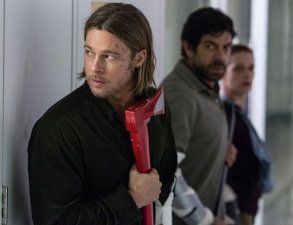 It’s a Wales populated by a Londoner, a Scotsman and a Spaniard, but still. I say “more tense” because this is far from the most nail-biting zombie film you could see. The finale is a nice change of pace, and does work as a climax in spite of the bombast that precedes it, but these are zombies as teen-friendly action movie menace, not adult scare-inducers, so don’t except to feel much fear or surprise.
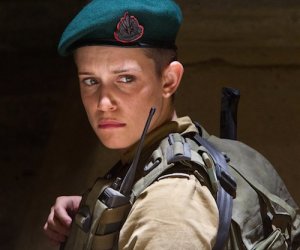 but I don’t think it was the filmmakers’ aim to make us feel the characters’ plight, but instead to show the scope of a worldwide disaster. It does that pretty well, even if the occasionally-CGI zombies prove to be an
 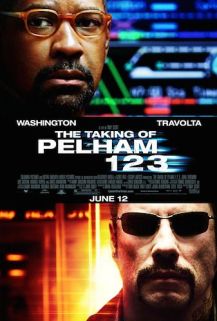 Based on a novel by Morton Freedgood (writing as John Godey), previously adapted into
 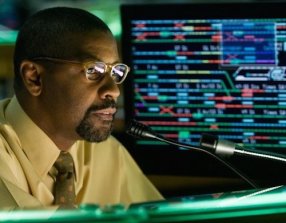 None of that here, where the captives are either even more unnoticeable, or heroic off-duty military types. So far so standard.
 Applied here to such a meat-and-potatoes tale, it feels like they’re trying to jazz it up because it can’t sustain itself otherwise.
 Braveheart
 Up
Up Amélie
 Rear Window
 12 Angry Men
 Blue Velvet and Requiem for a Dream
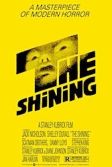 Not only was Kubrick’s acclaimed horror movie not nominated for any Oscars, it found itself in contention for two Razzies. Shelley Duvall was one of the ten Worst Actresses (Brooke Shields in The Blue Lagoon was deemed worst of all), while the sainted Stanley Kubrick was declared one of the year’s Worst Directors (he ‘lost’ to Robert Greenwald for Xanadu). And there you were thinking everyone always loved it.
 100Films.co.uk