
Tom Dey | 102 mins* | TV | 16:9** | USA & Hong Kong / English, Mandarin & Sioux | 12 / PG-13
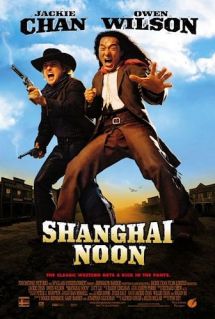 Hong Kong martial arts legend Jackie Chan and Hollywood funnyman also-ran Owen Wilson team up for a film that I don’t think anyone involved could reasonably deny is just “Rush Hour in the Wild West”. Unfortunately, the result is surprisingly lacklustre.
There are two reasons we come to a film like this, exemplified by my summation of the two leads: action and comedy. Some of Chan’s contributions to the former are entertaining, but they’re by no means his best work. Sadly, the latter isn’t that great either. The film works better for both its leads when they’re apart, and that defeats the object. It’s not that Chan and Wilson don’t have chemistry, it’s just that the film gets bogged down in showing their relationship. It’s not funny enough to merit so much screen time.
Indeed, the film as a whole is far too long, meandering through subplots and sequences that need a good trim, if not dumping entirely. This is an action-comedy that runs close to 2 hours — it’s not as if it needs padding; cut it back to 90 minutes and it’d probably be fine. That said, the editing is kinda bizarre, with random jump cuts and comedic asides just plonked in. Fight scenes are occasionally over-cut too — considering Chan can do all these stunts and moves, and indeed is doing them, why has it been cut to look like it’s trying to hide a stuntman?!
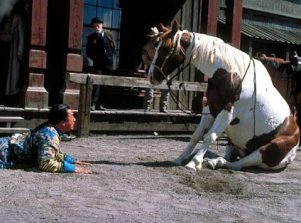 Things that could have (should have) been fixed way back at the writing stage leer out at the viewer. The plot is treated almost perfunctorily, as if it’s not interesting enough to bother explaining or expounding upon. It’s hardly highly original or complex, but it feels as if important beats or character motivations have just been skipped over. For instance, the character/story impact of the final fight would be so easy to build up a bit, but they haven’t and so it falls a bit limp. Not to mention the bit when two characters who are essentially on the same side have a duel when they have more pressing things to worry about — save the Princess first, fight amongst yourselves later! Then there’s all the time given to Wilson’s rivalry with the local sheriff/martial/whatever, which we’re told exists, isn’t really built from anything, and suddenly is half the focus of the climax.
Also, it’s kinda racist and/or xenophobic, towards both the Chinese and Native Americans. Or maybe it’s just unthinkingly clichéd. Or old fashioned — it is 13 years old. On the other hand, that still puts it this side of the millennium. There’s a solid dose of sexism too. It’s established, almost in passing, that the Princess (Lucy Liu) knows her own mind, is clearly quite intelligent, and can fight a bit. Expect her to show that off in the climax? No. She eventually gets in about three kicks before someone twists her ankle. This is after she ran away, not by going out the front door, but by climbing some rickety scaffolding. How dumb is she?! Or, rather, how dumb is she suddenly when the plot wants a damsel in distress bit.
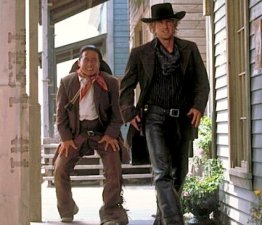 Shanghai Noon should be a lot of fun. It should be Jackie Chan and Owen Wilson engaging in a bit of comedy between skilfully choreographed, occasionally amusing, balletically staged fight sequences. But it isn’t. It’s laden with an underwritten plot, bulked up by clichés, stereotypes, overplayed character scenes, humour that doesn’t work, and a shortage of judicious editing. It is still kinda fun, but it could so easily have been more.

Tomorrow, Shanghai Knights.
This review is part of the 100 Films Advent Calendar 2013. Read more here.
* On TV, where there were no studio logos and obviously foreshortened end credits, it ran 102 minutes 26 seconds. I cite this just in case anything was cut from the middle, because the full PAL running time is 3 minutes 29 seconds more. (I’m nothing if not thorough.) ^
** It’s painfully obvious that the TV version has been cropped from its original 2.35:1. And you thought pan & scan died with 4:3 TVs. ^
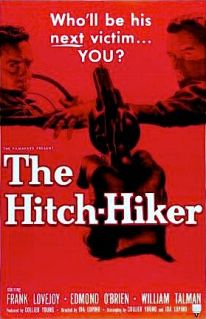 Based on a true story, this film noir sees two chums on the way home from a fishing trip pick up a hitchhiker. As you can tell from the title, he turns out to be rather significant: he’s a murderer on the run, and pulls a gun on the men so they’ll do his bidding, which is take him to Mexico so he can escape justice. Oh dear.
 But does her gender add any different perspective? I think perhaps it does. If you read
 A black and white Swedish movie in which a knight ponders the existence of God while playing chess with Death? Yep, here we have the stereotype of arthouse cinema. Let’s be honest, it lives up to most of those expectations.
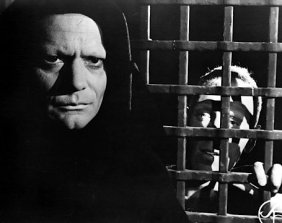 On the more easily-appreciable side, it’s beautifully shot by Gunnar Fischer. It had to be made quickly, on a tight budget, and for that reason Bergman found it imperfect and rough in places. This may be true, but regardless, there are numerous striking compositions, and even more occasions where the rich black-and-white photography looks stick-it-on-your-wall gorgeous. I only watched it on Tartan’s old DVD and, even with mixed feelings about the film itself, I’m sorely tempted to pick up one of the Blu-rays.
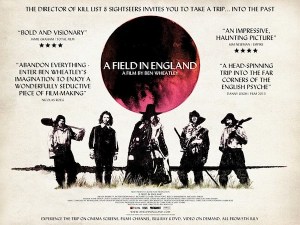 Much was written about A Field in England at the time of its release, so if you frequent the right places online or in the press you can’t’ve missed it. Nonetheless, there’s a good chance you’ll have heard of it more for its release format(s) than for anything in the film itself: the fourth feature in just five years from new British critical darling Ben Wheatley, it was released to cinemas, DVD, Blu-ray, download, video-on-demand, and shown on free TV all on the same day, a first for British cinema. Any casual viewers who checked it out for that reason were in for a shock, because this certainly isn’t an easily-digested mainstream experience.
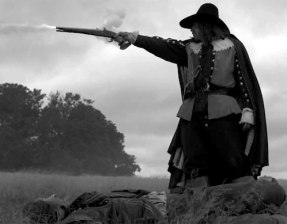 That very subtlety leads some viewers to write this kind of movie off — and fair enough, because if you’re searching for any kind of mass acceptance you don’t do it with a black-and-white film about a few blokes in period dress running around a field doing weird, inexplicable things. Though you might top it off with a shoot-out that is arguably one of the year’s best action sequences, something Wheatley and co do do. And without making it feel tonally out of place, either. Impressive. In keeping but even more memorable is the moment you’ve surely heard about — “when he comes out of the tent with that look on his face”. I wasn’t able to watch the film until something like 24 hours after its Big Premiere, by which time I’d already heard everyone talk about that, and yet it was still uncomfortably uncanny. Kudos, Reece Shearsmith, you’re an odd’un.
 In terms of the new funding models and simultaneous multi-format release and all that… well, it depends what their goals were. If it was to make interesting, alternative, minority-interest films… fantastic, they’ve done it — and got a remarkable amount of interest in the process. If it was meant to be a way of turning a profit, or of reaching a bigger audience… well, it succeeded this time — but how many of those viewers are going to come back? A Field in England is definitely the kind of film that appeals to some people, but it is defiantly not “mainstream cinema”. No bad thing, and something that should be encouraged, supported and funded in some way; but however you do it, it’s not going to continuously bring in big bucks.
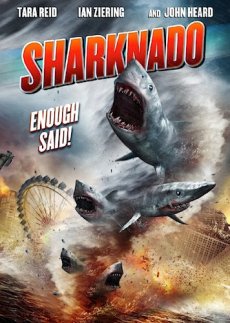 Sharknado is a defining film of 2013. The volume of conversation it generated, which achieved the near-impossibility of higher viewing figures for its repeats, is exceptional. So I was determined to give it its due in a full-length review. But I can’t be bothered — it doesn’t merit such attention.
 If you were looking for the archetype of an epic movie, Lawrence of Arabia would be a strong contender. It has a wide scope in just about every regard, from the desert locations that stretch as far as the eye can see, to the thousands of extras that fill them, to the glorious 70mm camerawork that captures it all, to the sweeping story that also contains a more personal throughline, to the 3½-hour running time.
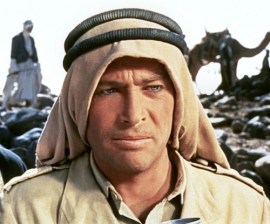 As such, the film hangs on the performance of O’Toole. We’re told Lawrence is an enigmatic figure and his depiction arguably supports that — we never fully get inside his head; we’re always observing him. And yet that’s no bad thing, because even as Lawrence’s confidence waxes and wains, as his allegiances shift and alter, we can feel what he wants to achieve, why he thinks he can. He attempts the impossible and succeeds, which is why he later attempts a bigger impossibility, and must leave the pieces to the more level-headed men, who didn’t have his genius but can therefore play the political game better than he.
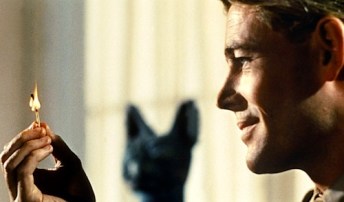 A similar legacy is left by those behind the scenes. Maurice Jarre’s score is the reference point for many a period desert epic — indeed, his music is so synonymous with such settings that it has arguably transcended its source to simply be what music for those locations and times is. It graces a film edited with class by Anne V. Coates, where scenes are allowed to play in luxuriantly long takes at times, while at others smash edits throw us from one location to another. This is undoubtedly supported by F.A. Young’s cinematography, where the wide frame can encompass so much action that there’s no need to cut amongst close-ups; and which can show the world in such majesty that you want it to hold for long, lingering takes. Even viewed on the small screen, the 70mm photography shines, especially on Blu-ray.
 As with any great film, Lawrence of Arabia is at least the sum of its parts. Replace any of the artists I’ve mentioned, or surely many more, and it would not be the film it is. In fact, when working on such a scale, this is more than a film — it’s an experience. And if that sounds pretentious, well, tough. If you haven’t experienced it yet, try not to leave it as long as I did.
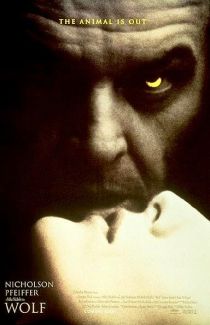 Without meaning to spoil anything, Wolf is rated R for “language and werewolf attacks”! I love the ludicrous specificity the MPAA indulge in sometimes. I know the BBFC’s famous “mild peril” is pretty useless, but at least they draw from an academic- and objective-sounding pool of phrases in their summaries, rather than throwing in ‘advice’ that is meaningless (there are perfectly PG werewolf attacks in other movies).
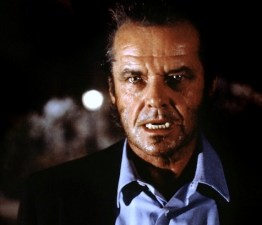 It’s those early sections where the film is at its best, when it tries to stay grounded in some form of realism. Any time it gets too Fantasy, it begins to get a tad silly. The climax in particular seems to come from a different film: Wolf abruptly moves from being an office politics drama with a fantasy edge, to a full-on manwolf-vs-manwolf brawl. As a straight dramatic director, Mike Nichols doesn’t seem to quite have the chops to pull off this fantasy/horror stuff without it beginning to look daft. That might not be entirely his fault, however, as reportedly the film was delayed by months to re-shoot the entire third act. Perhaps originally it had something more in-keeping? That said, he did want Michelle Pfeiffer to wear a red-hood sweatshirt during the finale! She refused, fearing it would harm the film’s credibility. She was right — it’s quite silly enough as it is.
 I can only presume there were hefty paydays for Nicholson and Pfeiffer, both megastars at the time, and possibly Christopher Plummer’s supporting role, maybe Nichols, and on scoring duties (obviously), Ennio Morricone. And maybe those re-shoots were really extensive. Or perhaps they spent it all on the nighttime aerial photography of Manhattan, which is gorgeous — that would’ve been worth it.
 After a decade locked away in motion-capture madness, Robert Zemeckis returned to the realms of the real with this Oscar-nominated drama. Its most high-profile nod was for Denzel Washington, starring as an airline pilot who miraculously crash lands his plane, but is revealed to have been high during the flight. Cue a film that attempts a grown-up account of addiction, but fumbles it, in the process missing the more interesting story of the crash investigation.
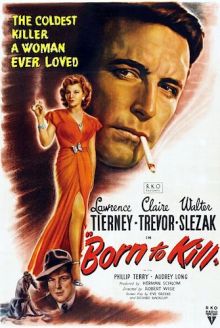 Director Robert Wise certainly had an eclectic career. Depending on your genre predilections, you may feel he’s best known for
 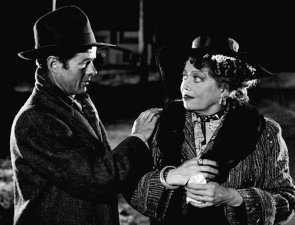 Even today, it’s quite a nasty little work, although tastes have evolved to the point where “discriminating people” are likely to be attracted to it — though not purely for the violence. You’d imagine that would pale by today’s standards, but even now the opening double homicide — presented pretty much in full on screen — is quite shocking, especially because it seems so horrendously plausible. Much movie violence is heightened, involving gangsters or spies or whatever, but here it’s a lover in a jealous rage killing two people in the kitchen of a regular house. Grim.
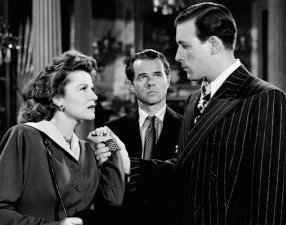 sometimes develop a cult following.
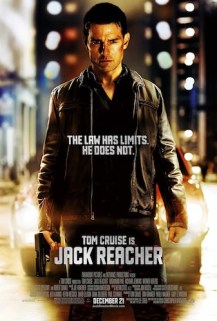 I don’t like Lee Child. I’ve never read one of his novels, but I’ve read and seen interviews with him, and always felt he comes across as intensely pompous and irritating. I disclose this up front because it leaves me predisposed to dislike Jack Reacher, the first (they hope) movie adaptation from Child’s series of novels starring ex-military policeman and now all-purpose vigilante Jack (you guessed it) Reacher.
 How much you consider the twists to be twisty will depend on which suspects your guesswork picks out, but in that regard it’s as strong as other similar genre examples.
 100Films.co.uk