With 2013 completed, listed, and analysed, all that remains is a final bit of reflection: of the 110 films I watched, which were the best? Which were the worst? And what new releases did I miss?
Plus, this year you can vote for your favourite of my top ten.
Before we begin, one last thing to mull: in just the last few days it’s come to my attention that every previous 100 Films year-end #1 has been a film either released that year, or from the previous year that had only just come to DVD/Blu-ray. For all the classics I’ve watched down the years, not one has ever managed to best a new release in my annual affections. That certainly wasn’t deliberate — as I said, I’ve literally just noticed the pattern this week. But with the introduction of What Do You Mean You Haven’t Seen…?, and a summer cinema season that seems to have had a largely mediocre reception, will 2013 be the year to break the mould? Read on…
The Five Worst Films I Saw For the First Time in 2013
In alphabetical order…
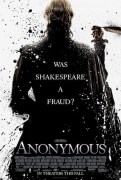 Anonymous
The theory that Shakespeare didn’t write the works of Shakespeare is largely nonsense, but good films have been made of worse. So a period drama — perhaps, at a stretch, some kind of thriller — based around that isn’t doomed… except Anonymous has the misfortune to be helmed by blockbuster maestro Roland Emmerich. The result is a scrappy mess which primarily leaves you irritated that someone might consider it to be historically accurate.
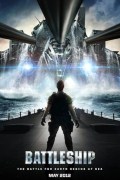 Battleship
Who’d’ve thunk a movie based on a board game would be a poor idea, eh? I think the success of Pirates of the Caribbean has led certain elements in Hollywood to think you can make a film out of almost any recognisable property, ignoring the fact that there were multiple other attempts by Disney to turn theme park attractions into film franchises that flopped. Battleship begins — and, hopefully, ends — a similar list for board games.
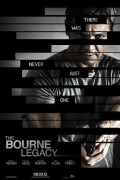 The Bourne Legacy
How the mighty have fallen. It might not seem like the Bourne franchise was dependent on its star (nothing against Matt Damon, but he didn’t ‘make’ the films in the way Depp does Pirates or Downey Jr does Iron Man, for example), but without him it flounders. It’s not Jeremy Renner’s fault — he’s lumbered with a weak continuation/reboot that’s frustratingly naval-gazing when it comes to continuity and lacking in the series’ trademark thrills.
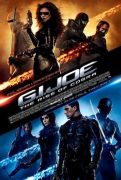 G.I. Joe: The Rise of Cobra
Some people love The Rise of Cobra. This baffles me. I don’t mind a dumbed-down spectacle-focused action/adventure movie, but there are ways in which those can exemplify quality, and G.I. Joe has none. Overcooked action scenes offer no respite from first-draft dialogue, cut-and-paste backstory, and poorer acting than you’d get from a 2×4. I enjoyed The Mummy when I was younger, but Sommers’ post-millennial work makes me fear my memory has deceived.
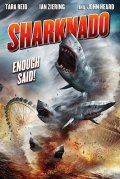 Sharknado
“So bad it’s good” by numbers — which is not how that rarified experience should work: you don’t create “so bad it’s good”, you happen to be it. From the title down this is a cynical exercise in geekdom-baiting, and sadly it seems to have worked. It’s Snakes on a Plane all over again — the final product doesn’t matter, it’s the concept of it that gets a certain kind of person salivating. It doesn’t deserve such success, because Sharknado is uninspired and unfun.
The Ten Best Films I Saw For the First Time in 2013
A quirky French take on the period adventure movie, this is like Indiana Jones crossed with a children’s farce. The resultant mix is not going to be for everybody — the po-faced certainly need not apply — but as a daft runaround, as much concerned with having copious amounts of fun as providing adventuresome antics, it’s all-out entertainment.
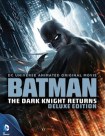
For me, this is the watermark that Zack Snyder’s Batman vs Superman will have to live up to. Good luck, mate. Picking up threads from Part I, Batman must engage in an all-or-nothing battle with a revived Joker, before the American government send the Man of Steel himself after the Caped Crusader. Cue the superhero smackdown to end ’em all. This faces stiff competition to be counted among the best Batman films but, much like Bats vs Supes, its viscerally exciting fight sequences and underlying intelligence (inherited from the original graphic novel) mean it’s up to the challenge.
A low-budget ’60s shocker sounds like exactly the kind of thing that should have faded with time — but quality endures, and George A. Romero’s sub-genre-creating film has that in spades. While some sequences are indeed out-and-out horror, in many respects it’s the strongly-drawn characters who make the film so compelling. The scale of its influence is hard to fathom, both in creating our modern concept of zombies and its demonstrably-replicable claustrophobic stylings; but more than that, it remains remarkably watchable in itself.
Darker than a long night of the soul, Charles Laughton’s sole directorial effort nonetheless appears on lists of films children should definitely see. That’s because this is a Depression-era fairy tale, with all the scariness and cruelty that is inherent to true examples of the form. The story of a ‘preacher’ who duplicitously stalks a dead man’s wife and children in search of hidden wealth, it comes with captivating performances and grim imagery that sears itself into your mind, this is a classic for all ages.
After the Sly Stallone vehicle bungled it back in the ’90s, I doubt anyone thought we’d see a decent screen iteration of 2000 AD’s long-running lawman, Judge Dredd. But here it is. While it may lack the visual faithfulness that the Stallone film actually got right, it more than makes up for it by nailing the tone. This is a sharp, efficient sci-fi action movie, laying the groundwork for a world begging to be explored in sequels, but also an entertaining burst of adrenaline in its own right.
Inviting comparisons with Luc Besson’s classic Leon, the titular Hanna is a teenage girl trained by her father to be a Bourne-level assassin, who he then pits against his former employers. Although the setup may suggest mainstream spy thrills, director Joe Wright instead delivers a left-field coming-of-age movie… just one with hard-hitting action sequences, surreal imagery, long single takes, beautiful cinematography, and a pulsating Chemical Brothers soundtrack. Considered as a thriller it’s relentlessly idiosyncratic, but that’s what makes it so refreshing and wonderful.
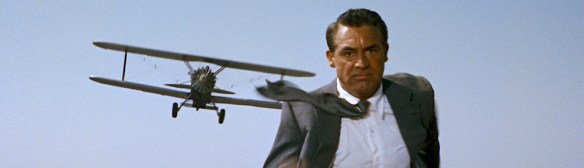
One of Alfred Hitchcock’s most acclaimed films, featuring arguably the most iconic image from his oeuvre that doesn’t involve a shower, North by Northwest is 136 minutes packed full of almost everything you could want from a movie. A story of mistaken identity, murder and spying, it contains sequences of pure tension, of action, of humour; it’s a mystery, a thriller; there’s a dash of romance, even. The whole is unadulterated entertainment. If you wanted one film to demonstrate almost the entire gamut of Hitch’s considerable genius, this is it.
It’s not just one of the most striking and memorable titles of recent years (perhaps of all time) — Andrew Dominik’s Western is striking and memorable in just about every regard. Greatest of all is Roger Deakins’ cinematography, some of the best work from a master of his field; but there’s also the considered and immersive pace, the enthralling and complex performances, and a narrative that’s not only historically accurate but also epic and intimate. Completely overshadowed by There Will Be Blood and No Country for Old Men back in 2007, I judge it to be easily superior to either. An under-recognised masterpiece.
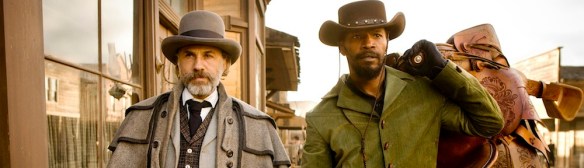
It’s almost a second-place tie between two Westerns this year, with Quentin Tarantino’s “Southern” taking this spot by a nose because of pure entertainment value. This is a film where a not-inconsiderable running time flies by thanks to a wealth of sharp dialogue, emotionally satisfying violence, hilarious asides, and the skill of a filmmaker who by rights should be getting stale and predictable but somehow remains refreshed and invigorated. Jesse James is a sophisticated and classy Western; Django Unchained is its intelligently impudent counterpoint.
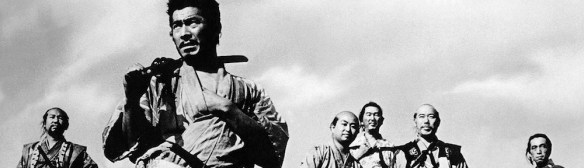
Three-and-a-half-hour black-and-white Japanese movies are not the kind of thing the unpretentious are meant to fall for, and yet Seven Samurai has a fanbase beyond the art house crowd. A case in point for not judging a book by its cover, then, because Kurosawa’s much-imitated classic (everything from individual shots to the entire story has been recycled by others) is an enthralling, gorgeous, vital movie. It takes its time (the feature-length first half is spent merely assembling the titular team), but amply rewards the investment — the final battles are extraordinary examples of old-fashioned action filmmaking.
This year, I invite your opinion on my top ten — well, I always invite your opinion on my top ten (that’s what the comments section is for) — but this year, I invite your opinion through the simple voting mechanism of a poll. I think how that works is pretty self-explanatory…
If you feel I’ve made an unforgivable oversight, feel free to berate me in the comments below.
Thanks to specifically watching 11 highly-acclaimed classics this year, films that might otherwise have made the top ten found themselves squeezed out. So spare a thought for Iron Man 3, easily the best film I’ve yet seen from Summer 2013; Cloudy with a Chance of Meatballs, a surprisingly entertaining bit of nonsense; and The Hobbit: An Unexpected Journey, which isn’t quite The Lord of the Rings but is the next best thing. Plus, from said 11 classics, Lawrence of Arabia and Touch of Evil were both films I admired but wasn’t sure how much I loved, and so found themselves slipping out of consideration.
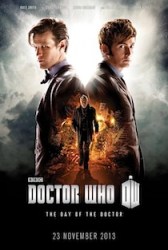 Honourable mentions too for Tintin and the Mystery of the Golden Fleece, whose cult-favourite-ish charms almost saw it become the first three-star film in one of my top tens; and Doctor Who: The Day of the Doctor, which I’ve counted as a film but is a TV programme really (shh, don’t tell anyone!) Part of me wanted to stick to my convictions (the ones that got it listed in the first place) and include it, but when I had 16 films to fit into 10 spaces, it was easier to just let it go.
Finally, I must mention the films that earned themselves full marks, especially this year: with a record high of 23 five-star films across all lists, it was literally impossible for every one to make the top ten (even before my predilection for including four-star films). However, an almost-unbeatable nine did make it in — normally I list them again here, but to put it bluntly: everything except Adèle Blanc-Sec. There were, however, another 11 five-star films on the main list, those being The Artist, Dawn of the Dead, Doctor Who: The Day of the Doctor, The Hobbit: An Unexpected Journey, It Happened One Night, Lawrence of Arabia, My Week with Marilyn, On the Waterfront, Side by Side, Touch of Evil, and Waking Sleeping Beauty. Finally, there was one five-star film apiece for each of my other ‘categories’: from the shorts, A Trip to the Moon; from the alternate cuts, Batman: The Dark Knight Returns (Deluxe Edition); and from repeat viewing, You Only Live Twice.
As is inevitably the case, there were a large number of noteworthy releases this year that I didn’t get to see. So as is my tradition, here’s an alphabetical list of 50 films I missed in 2013. They’re selected for a variety of reasons, be that box office success, critical acclaim, or simple notoriety — though I do err more towards ones I might actually see at some point rather than, say, the 10th highest-grossing film of the year.

12 Years a Slave
Alan Partridge: Alpha Papa
American Hustle
Before Midnight
Behind the Candelabra
Blackfish
Blue Is the Warmest Colour
Blue Jasmine
The Butler
Captain Phillips
Cloudy with a Chance of Meatballs 2
Despicable Me 2
Elysium
Ender’s Game
Fast & Furious 6
The Fifth Estate
Frozen
Fruitvale Station
A Good Day to Die Hard
Gravity

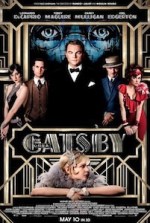
The Great Gatsby
Her
The Hobbit: The Desolation of Smaug
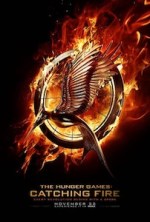
The Hunger Games: Catching Fire
Jack the Giant Slayer
The Lone Ranger
Mandela: Long Walk to Freedom
Monsters University
Much Ado About Nothing
Now You See Me
Oblivion
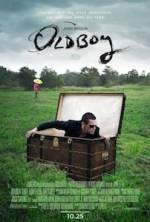
Oldboy
Olympus Has Fallen
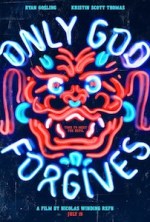
Only God Forgives
Oz the Great and Powerful
Pacific Rim
Pain and Gain
Philomena
Prisoners
RED 2
Riddick
Rush
Saving Mr. Banks
Thor: The Dark World
Trance
Upstream Color
White House Down
The Wolf of Wall Street
World War Z
The World’s End
And so another year is over (except for the twenty reviews I still have to post, that is). It’s always sad to say goodbye, but 2013 has been a strong year for 100 Films and, quite frankly, that makes me happy.
Fingers crossed for another good one in 2014 — and for all of your film viewing endeavours too, dear reader.

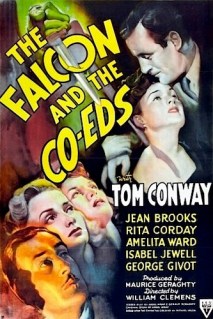
 In fact, the worst thing about the film is purely a result of its age, and that’s the occasional bout of misogyny. Let’s face it, the girls going all giggly over the Falcon is pretty defensible (look at modern-day reactions to the likes of One Direction, Justin Bieber, or even Benedict Cumberbatch), but the bit where he picks a twenty-something girl up to smack her bottom is a bit much. Still, it opens with a great bit: the Falcon parks his car, a girl immediately runs up to it: “Mr Lawrence?” “Yes?” She jumps in, instantly kisses him full on the lips, and when she pulls away all he can say, with a slightly surprised look, is, “Nice!” You could put that in something today and it’d still work.
 such thoughts always endear them to me.
 When
When  Personally, I find it a valid thing to attempt. Rather than take the Superman mythology as read, here Nolan and co — including screenwriter David Goyer and director Zack Snyder — have tried to imagine what would really happen if an alien baby with incredible powers arrived in our world. So Clark Kent hides his abilities, goes on a trek around the world to ‘find himself’, and when he’s uncovered there’s mass media and military interest. Which is pretty accurate, I think. If some guy started stopping oil rigs collapsing single-handed, or flying around the place, the military’s hardly going to sit back and go, “oh OK then”.
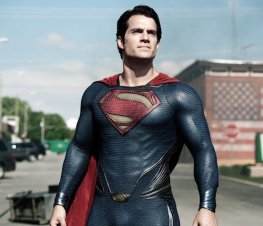 The filmmakers have certainly bought into their own conceit, to a frankly laughable extent. The Blu-ray contains a featurette called All-Out Action, which the menu describes as follows: “The action in Man of Steel soars to new heights with a level of realism never before seen in a super hero film.” Hahahaha! Realism my arse. Once the action kicks in it’s positively comic book. Men are hurled around like rag dolls; Metropolis is destroyed in a huge flying punch-up, which just feels like a less effective re-hash of
 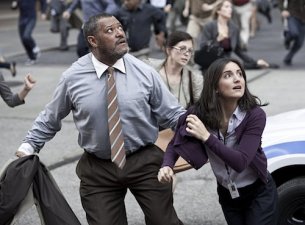 As to the destruction of the city, I think the criticism is right. The city clearly isn’t evacuated before buildings start falling — it’s being evacuated, but no one even knew to start running before the Massive Machine Of Destruction (I forget what it was actually for) turns up and starts destroying things. People run into the streets as buildings fall on them. As a viewer, how can you miss that hundreds, possibly thousands, of innocents are dying? The cinematography makes it look like 9/11 — incredibly like 9/11, in fact. That was 12 years ago by the time of the film’s release, but is it OK to trade on such iconography in a blockbuster entertainment? Should we just ignore the notion that so many ‘extras’ are dying because, hey, it’s just a superhero movie? But aren’t we meant to be taking this as Real World, chaps?
 There’s a lot else that Man of Steel plays with in the Superman legend besides the violence and cinematography. Some people will surely miss the bumbling Clark Kent, the burgeoning relationship with Lois Lane, and so on. These elements are eventually brought in, sometimes in a modified way, which makes it feel like they’ve been put in place — Superman Begins style — to be used in a sequel. Except we know
 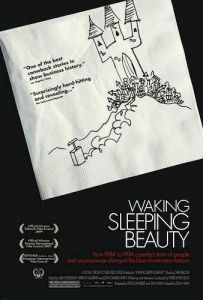 However, Waking Sleeping Beauty is told from the inside: director Don Hahn started out as an assistant director at Disney animation in the ’80s, graduating to producer by the time of Beauty and the Beast. With him he brings behind-the-scenes home movies and access to a stunning array of interviewees. Almost everyone who was anyone at Disney during that time is interviewed, either through archive footage or new audio commentary. It was a tough time, and while Hahn’s portrait is probably not quite warts-and-all, it comes damn close; for example, we get to see some of the caricatures the animators drew in disgust at their new boss, Jeffrey Katzenberg.










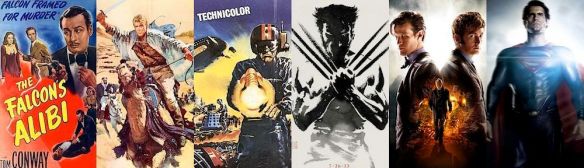
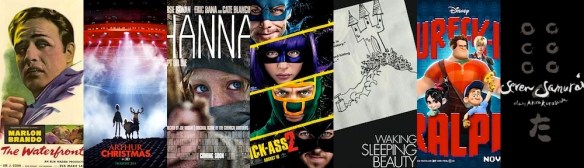






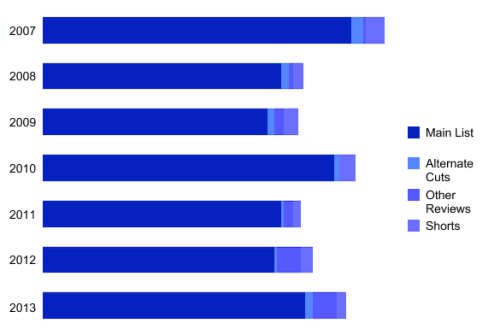

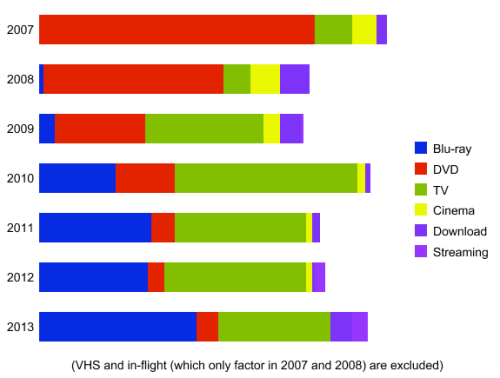


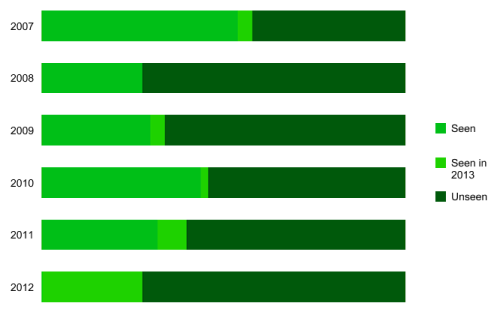
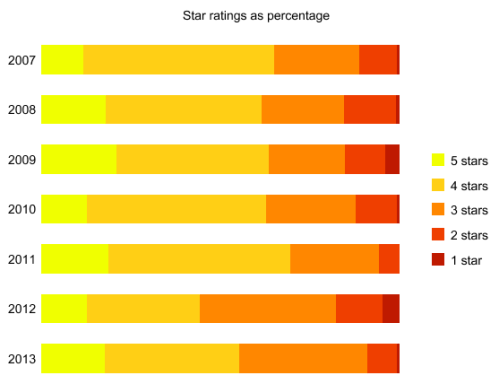
 What Do You Mean You Haven’t Seen…?
 December’s films in full
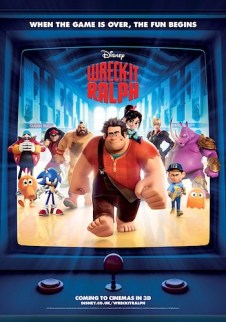 Disney’s 51st and/or 52nd animated classic (depends who you listen to) is, essentially,
  Unfortunately, despite the rarely-filmed milieu of video games, it’s all a bit predictable — like I said, it basically does with video game characters what Toy Story did with toys, both in terms of the story and its themes of acceptance. At least one wearing subplot had me involuntarily exclaim “oh get on with it!” out loud (and I was watching by myself). The pace rarely lets up, and at 101 minutes that becomes tiring. When it does give you a break, you kinda wish it would get a wriggle on, because it’s obvious where things are going and it’s wasting time getting there. Of course, most mainstream films (especially kids’ movies) are going to follow broadly the same arcs — however bad it gets we know the hero will win, etc — but the trick is to make you enjoy the journey, not long to arrive at the destination. I spent most of the third act almost drumming my fingers as I waited for it to get to the latter.
 Wreck-It Ralph isn’t actually a bad film. There’s a fair bit of inventiveness with the concept, and the makers have worked hard to establish a world with rules (though your mileage may vary on how successfully they’ve done that), but it descends into a breathless, sugar-fuelled, reheated runabout. I imagine young kids will adore its colourfulness and its energy, and won’t be bothered by the over-familiar plotting and life lessons; but, beyond nostalgia for arcade gamers, I don’t believe it has huge amounts to offer a grown-up viewer.
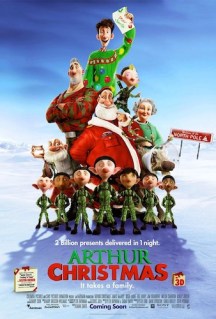 Aardman’s second CG feature attracts a starry cast (not just the leads — check out who’s credited as “Lead Elf”!) to the story of how Santa really delivers all those presents in one night: a giant spaceship-like craft and thousands of SAS-esque elves. But when one child is missed, Santa’s clumsy son Arthur resolves to fix it.
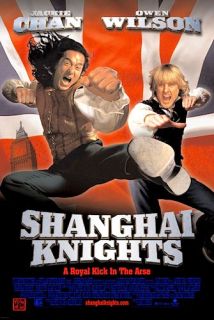 Jackie Chan and Owen Wilson are back as… um… whatever their characters were called, in this follow-up to
 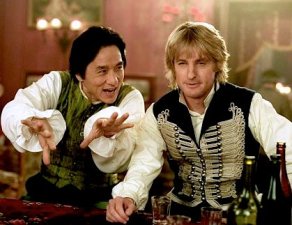 Knights as a whole feels like it moves better than its predecessor — it gets going quicker, without the need to establish these characters and force them together; there’s a greater reliance on those quality action sequences. The guest cast feels a bit bargain basement, though the villains — Aiden Gillen and the aforementioned Yen — are of a higher calibre. This means we’re treated to a pair of great climaxes, with Chan first having that punch-up with Yen, followed by a three-sword duel with Gillen (or possibly a stuntman).
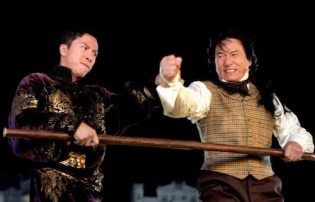 In the end, I’m not sure if I like it more or less than the first film. The Western setting was a smoother fit in many ways, but here there’s a less stodgy plot, a general reduction in the overlong comedy sequences, and even better action sequences. All things considered, I think Knights may actually have the edge.
 100Films.co.uk