
Oliver Parker | 97 mins | TV | 2.35:1 | UK, USA & France / English | PG / PG
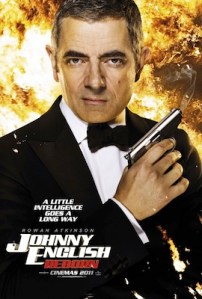 From the director of Oscar Wilde adaptation An Ideal Husband, Oscar Wilde adaptation The Importance of Being Earnest, and Oscar Wilde adaptation Dorian Gray — plus the surely-of-comparable-quality St. Trinian’s and St. Trinian’s 2 — comes this belated sequel no one asked for.
I found the first Johnny English film to be passingly enjoyable, but as I settled down to watch this one I realised I could barely remember a thing about it. That doesn’t matter though, because — as the “Reborn” tag might imply — this one basically starts over. Following an incident in Mozambique, English (Rowan Atkinson) has been retired to a Tibetan monastery (at which point your cliché alarm may start flaring. Try to ignore it because it’s not going to find anything in the film to stop it), but is called back to active service when a CIA agent will speak only to him about a plot to assassinate the Chinese PM.
Perhaps the best word to describe Johnny English Reborn would be “sedate”. Even the action sequences, of which there are a couple, can’t muster much speed, let alone jeopardy.  Two of them are very nearly inspired: a Casino Royale-derived parkour chase, in which English uses his intelligence to find more practical ways around obstacles — but which has the side effect of sucking any dynamism out of the action; and a chase through the streets of London, with English in a souped-up wheelchair — but which feels like some sporadic bursts of concepts rather than a fully-conceived sequence.
Humour comes in dribs and drabs, most of it eliciting a chuckle at best. At worst, it’s blatantly borrowed from somewhere else: the monastery opening (a dozen Rambo III spoofs), punching a misidentified disguised woman (Austin Powers), fighting himself when under mind control (I can’t even think of a specific example it feels so familiar), and more. It’s all very gentle and old-fashioned, but without the wit or class those kinds of comedies can deliver at their best.
Plus, as with so many British films, you can have fun playing Spot The Cast Member. Famous names abound, with one or two recognisable faces cropping up in tiny parts too.  Apparently Ben Miller, English’s sidekick from the original adverts and first movie, filmed a cameo that was ultimately cut. A lot of people seem moderately upset about that on forums. I like Miller, but to be honest I’d forgotten he was in the first one.
Having resurrected Bean out of the blue in the late ’00s, and English out of the blue in the early ’10s, I can only assume later this decade Atkinson will attempt to trot out Blackadder for a belated last hurrah. Or maybe Richard Curtis will stop him. Or more likely turn it into a polemic about Africa. While Reborn is fine, it doesn’t instil the notion that we should be looking forward to any more such resurrections.


 #17 Final Destination 5 (2011)
 This honour was widely seen as recognising the whole trilogy, and really my inclusion is for the same reason — I love all the Lord of the Rings films, but if I had to pick a favourite it would be Fellowship. That The Hobbit didn’t get anywhere near the Best Picture nods this season gives it a faint ring of The Godfather Part III: belated and misguided. Though even Coppola’s threequel got a nomination.
 Speak of the devil… I really need to re-watch the Godfather trilogy, so I can’t offer much insightful comment, but I’m one of those people who sides with Part I being better than Part II. I found Michael’s descent into the family more engaging than… what, his consolidation of power? Is that what happened? (I really do need to re-watch them.) Plus, you can’t beat a bit of Brando.
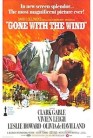 I love an epic — indeed, the average length of my three choices so far is 2 hours 34 minutes — and in many respects Gone with the Wind is the ultimate epic, a tale that sprawls through time and across locations, but with the relationship between two individuals at its heart. And it beat The Wizard of Oz to the prize, which is a bonus.
 As with The Godfather, I need to re-watch this. It was one of the first Westerns I saw and I think it would benefit from the improved understanding of the genre I now have. Equally, it was instrumental in transforming a type of film I’d previously ignored (not through any conscious effort) in to one I enjoy. (There’s a whole article to write on modern mass perception of Westerns, but that’s for another day.)
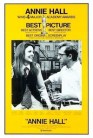 For all the talk of the Academy always getting it wrong, there are numerous times they’ve got it right. Or, at least, near as dammit. Which made choosing just five hard, but I’ve chosen this to try and balance things out — I don’t only like epics that mostly feature some kind of war (this was very nearly Schindler’s List). Woody Allen on form is great fun, and this is that. I liked Manhattan more though.
 There’s a lot of love for this movie in some circles — it’s ranked
 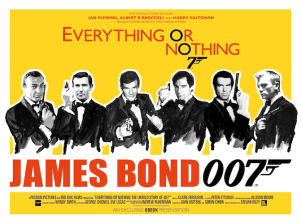 To mark the 50th anniversary of the James Bond film series last year, the producers commissioned this special documentary looking back at the entire phenomenon. If you missed it when it was shown exclusively at Odeon cinemas (in the UK; it was on TV in the US), it’s been out on DVD for a few weeks (in the UK; nothing in the US) and comes to Sky Movies Premiere from tomorrow (at 12:15pm and 10:30pm; continues twice a day thereafter). It’s sometimes called Everything or Nothing: The Untold Story of 007, not that you’ll see that title on screen or on the DVD cover; and not that it’s very accurate, actually, because many (perhaps all) of these stories have been told before. But I’ll come to that.
 Although ostensibly a history of the film series, Riley begins the story with Fleming’s wartime career and the birth of the Bond novels, then covers early attempts to get Bond on screen. Depth here means it actually takes quite a while to get to the entry of ‘Cubby’ Broccoli and Harry Saltzman, the producers who finally brought Bond to the big screen in the still-running series this documentary is meant to be about! Some have accused the film of being “the producers’ story”, as if that were a bad thing. It’s a behind-the-scenes tale, and with only a handful of people steering the series during its lifetime, naturally the throughline falls to them. Besides, cataloguing the changing roster of leading men is a story that’s readily and widely available, what with the on-screen action being (as it were) the ‘public face’ of the series.
 plus second-hand recollections (sometimes, third-hand) of friends and relations. This is, perhaps, most keenly felt in the film’s discussion of Kevin McClory, the man who claimed he had some rights to make competing Bond films (Broccoli and Saltzman brought him in to the fold to make
  As a dyed-in-the-wool Bond fan, I was left wanting a bit more from Everything or Nothing; especially as someone who grew up during the Brosnan era, I feel there’s more to be told about that time. But for newer or casual fans, or those seeking a nostalgia-tinged flick through the highs (and the odd low) of the most enduring series in film history, it succeeds admirably. It’s just a shame they didn’t include it in the Bond 50 Blu-ray set — it would’ve been most welcome on the otherwise-pathetic bonus disc. But that’s a quibble for another day.
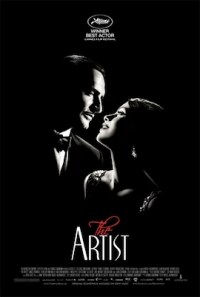 Beginning in 1927, you could (and some have) accuse The Artist of being a remake of
  Besides which, it isn’t a real silent film, and not just because it uses sound on one or two occasions, to very specific effect. Made 80 years after the invention of sound revolutionised cinema over night, The Artist is a tribute and homage to that great era — it’s not trying to beat them at their own game. It’s certainly not the first ‘modern silent’ either, but it’s an appropriate one to have received the most widespread attention (
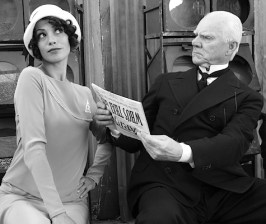 you’d believe they were a precisely-planned specially-constructed set, and unceremonious symbolism is created with former-star George being on the way down and Peppy being on the way up.
 or just faithfully following George around, he draws your attention. I might think that was just me (we’ve been over my love of terriers
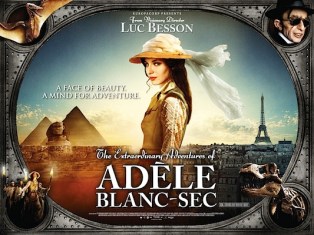 Based on the long-running bande dessinée (aka “comics”) by Jacques Tardi, The Extraordinary Adventures of Adèle Blanc-Sec is occasionally sold to English audiences with a handy quote
 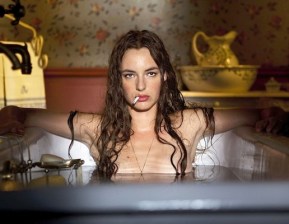 And if that doesn’t put you off, the introduction-heavy opening minutes might, dense with introductions for disconnected characters and locations. Stick with it, it sorts itself out.
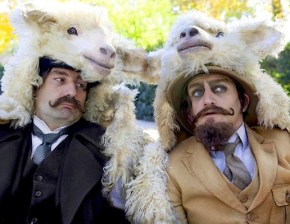 Director Luc Besson managed to build up something of a following with a regular output of films through the ’80s and ’90s, perhaps culminating artistically with the exceptional
 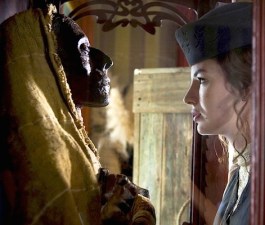 I suppose Adèle Blanc-Sec won’t be to everyone’s tastes. Comparisons to
  The two-part animated adaptation of Frank Miller’s comic, regularly voted among the top three stories ever told in the medium, concludes here. If you’ve not seen
 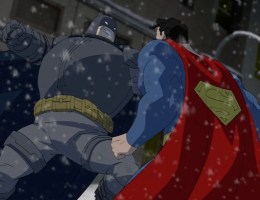 Nonetheless, a pair of big battles form the cruxes around which the story works: Batman vs the Joker, and Batman vs Superman. I won’t spoil the outcomes for those who’ve not read the book, but both are excellently realised on screen. Action can be tricky in comics — you’re stuck with a series of still images to convey fast-paced, often intricate movement. I also generally have the impression that action sequences are not 2D animation’s forte — too many frames need to be drawn, too many different angles to make it quick and exciting enough. The Dark Knight Returns is one of the exceptions, however, and the two big sequences in Part II — as well as a couple of smaller ones — outclass anything in Part I, which was good in the first place. I’d go so far as to say the Superman fight improves on the novel’s version, at least in a visceral sense — Miller delivers Batman’s internal monologue and a certain pleasing disregard of Supes, while Oliva wisely skips any kind of voice over and delivers the entire duel blow for blow. It’s a fantastic climax.
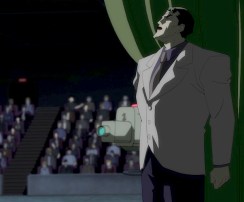 The story may provide some déjà vu for those only acquainted with live-action Batman, because Christopher Nolan borrowed liberally from Miller’s TDKR for his TDKR,
  There were many sceptics when DC first announced they were going to tackle such a sacred Bat-story, and not all were convinced by Part I. I don’t imagine Part II will change their minds, but for those of us who did enjoy the first animated interpretation of Miller’s seminal tale, this is even better. In fact, even without its first half, I’d say it joins the ranks of my very favourite Bat-films.
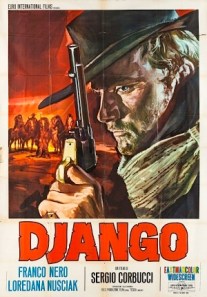 The ’60s were a pretty exciting time for cinema. In France, the Nouvelle Vague were tearing up the rulebook and pushing forward their own techniques; in Britain, the James Bond series was ditching kitchen sink drama in favour of reinventing the action movie, turning itself into a global phenomenon in the process; and in Italy (and Spain) they were pulling a similar trick on that most American of genres, the Western.
 Much of the film plays as an action movie. There’s a lot of atmospheric ponderousness at the start, but once things kick off they rarely let up. In just over 90 minutes the film rattles through a damsel-in-distress rescue; a blink-and-you’ll-miss-it shoot-out; a 40-on-1 massacre; a raid on a fort; a barroom brawl (one of the stand-outs, that — anyone who thinks handheld ShakeyCam fights are a modern invention should take a look); a tense, silent escape; a brutal punishment (or two); a valley ambush; and a graveyard stand-off. I think that’s all, but I may have missed some. It’s practically a definition of bang for your buck, which I’m sure goes a long way to explaining its popularity.
 but it’s like watching something on a not-quite-correctly-tuned analogue TV; like you’ve found the channel, but you’re one or two points off the optimum frequency. Or, to put it another way, it’s really snowy. As I said, I’m no expert in BD quality, but this looks like it needs a sympathetic dose of DNR. No one but fools want a
  100Films.co.uk