
Yes yes yes, it’s May, it’s the summer, it’s exciting. But before all that, let’s take a little peek at how 100 Films’ seventh year fared in April…
What Do You Mean You Haven’t Seen…?
It was bound to happen eventually: I didn’t see a WDYMYHS film this month. It just never panned out, especially over the last few days. The aim is to watch one in the early days of May to make up for it, and then of course another later.
So moving on:
 #38a Harry Potter and the Philosopher’s Stone: Extended Version (2001/2004)
#39 The Last Boy Scout (1991)
#40 Fantastic Four: Rise of the Silver Surfer, aka 4: Rise of the Silver Surfer (2007)
#40a Harry Potter and the Chamber of Secrets: Extended Version (2002/2005)
#41 The Dinosaur Project (2012)
#42 Ted (2012)
#42a Harry Potter and the Prisoner of Azkaban (2004)
#43 Man on a Ledge (2012)
#43a Harry Potter and the Goblet of Fire (2005)
A slow month this one, as you can see, though with five brand-new films watched (alongside four already-seen Harry Potters), it’s far from my worst ever. And that’s with the first week given over to Game of Thrones season two, too. And it’s not even my worst April: 2010 only had three films. Plus, ending at 43, I’m marginally ahead of this time in 2010 and 2012, only a little behind 2007 and 2011, and at double (or more) where I was in 2008 and 2009. Also, as April is precisely one-third through the year, the target number is 33, and I’m well ahead of that.
As you may have guessed, I’ve mounted a re-watch of the Harry Potter series, one every Sunday. This was started almost on a whim, but rather neatly I’ll be watching one on every Sunday in April and May (if it continues to plan). As I’ve never reviewed the first four, I’ll be covering them with full-ish reviews (the first two definitely count as extended cuts anyway, and those pieces are already up — see above); and for the sake of completeness, I’ll attempt some kind of overview on the final four too.
Inspired by Fantastic Four 2… which then wasn’t that bad so didn’t make its own list. There are too many awful alternatives.
I was going to go with “comic book movies”, but then you really have to broaden the remit. I imagine the results are more or less the same anyway. As ever, there’s the caveat that I haven’t seen loads of films, so these are the worst I’ve seen (so no Catwoman, The Spirit, never-released Fantastic Four, etc).
- Superhero Movie
 You might have expected Batman & Robin to top this list. It would be a fair choice. But, believe it or not, it actually has some redeeming features. Not many, but some. This woefully unimaginative spoof has none whatsoever. I’m not even sure it had any laughs. OK, it might not be a ‘real’ superhero movie… but then again, look at the title. It counts.
 - Batman & Robin
 These days, it’s difficult to imagine Hollywood managing to kill off a franchise they didn’t want to. Even those which are consistently a bit rubbish. I imagine this is where they learnt their lesson, turning a reliable cash cow into a despised monstrosity. How the genre got back on its feet just a few years later (and grew stronger than ever) is a minor miracle.
 - The League of Extraordinary Gentlemen
 I really wanted to like this — a great concept, based on a great comic, with great people involved in the film — and on its release, I convinced myself I did. But it’s a bit of a mess really, isn’t it; and the needs of being a PG-13 blockbuster wrecked a lot of the comic’s best ideas. Shame. (It has left me always abbreviating the comic’s title as LXG too, though.)
 - The Punisher (1989)
 I don’t actually know that much about the Punisher, but I don’t believe this is a very good rendition of the comic (where’s the skull emblem?!). And even if it is, it isn’t a very good film. I’ve largely wiped it from my memory, but I recall it being the twin sins of boring and amateurishly made. The two ’00s movies starring the character didn’t go down well, but I can’t imagine they’re worse.
 - Elektra
 A lot of people didn’t like Daredevil. I did. It has flaws, certainly, but it got a lot right. Nonetheless, I had no particular hopes for this spin-off featuring a fan-favourite character who had been mediocrely rendered on screen first time out (and not recast). Low expectations were good, because it’s a mess that doesn’t deliver in any notable respect.
And one I do like…
- Mystery Men
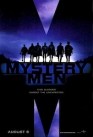 There are many great superhero movies, but this is an undervalued one. Coming in the genre’s quiet period, between the death of the Batman franchise and the rebirth afforded by X-Men, I think this all-star comedy would fare better today. That said, I’ve not seen it for years, and sometimes comedy dates badly, so maybe I should’ve re-watched before putting it here… But I definitely did love it.
There are plenty more films that deserve a place on this list — what should I have made room for?
Next month on 100 Films in a Year…
Can I post more reviews?!
Can I watch two WDYMYHS films?!
Can I reach the month’s aim: #41?!
…which I’ve already passed. Tension, deflated.
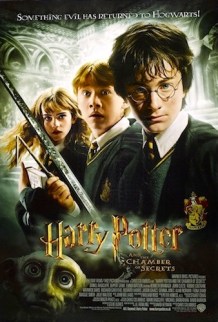 This extended cut takes the already-lengthy second instalment in the Harry Potter franchise and pushes it to nearly three hours (though if you lop off the extensive end credits it’s more like two-and-three-quarters). As with the extended version of
 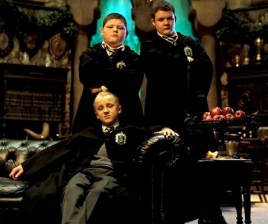 The longest extension comes near the start, when Harry misspeaks while using Floo powder and ends up in the nasty part of Diagon Alley. In the theatrical version he just walks out of the creepy shop, but here he has to hide as Malfoys Senior and Junior enter to sell some items. Though it has the advantage of showing us how Lucius treats his son when out of sight of more respectable wizards, and possibly seeds something for later films (what is the one item Malfoy isn’t prepared to sell?), it dilutes the introduction of Jason Isaacs’ villain, which in the theatrical version came slightly later in the bookshop, where he bumps into Harry, Hermione and the Weasleys as they’re leaving Lockhart’s signing. It’s a more effective, more dramatic introduction to someone who will become a major character as the series progresses.
 There are, arguably, three notable additions to the cast this time out. The first is Lucius Malfoy who, as discussed, will come into his own later. Then there’s Gilderoy Lockhart, a preening wizard celebrity played with relish by Kenneth Branagh. He’s often very amusing and there’s not enough of him. And then there’s Dobby. Apparently Dobby is a beloved character; apparently kids really like him. I’ve always found him intensely irritating, and was surprised how much Rowling made me warm to him in
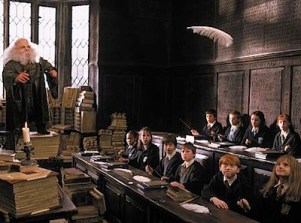
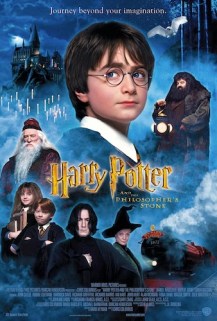 Originally created for the film’s US TV premiere in May 2004, then later released on the film’s Ultimate Edition in 2009 (and not making it to the UK in HD until the Wizard’s Collection last September), this Extended Version of the first Harry Potter film adds six-and-a-half minutes of new bits and bobs to the already lengthy adaptation.
 (See all of that with pictures
 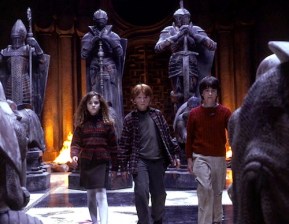 that wasn’t common practice back at the turn of the millennium (unless your name was Ridley Scott), so the filmmakers can’t be blamed for not doing it. As it stands, I think they mostly struck a fair balance between fidelity and the fact it’s an adaptation. Similarly, Columbus’ direction is rarely exemplary, but it’s competent with some memorable moments.
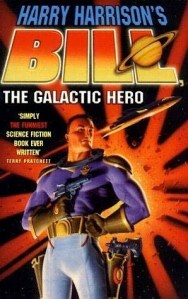 (described by no less than Terry Pratchett as “the funniest science fiction book ever written”), and he’s trying to fund it through
  What’s on offer varies from project to project, of course. In
  Kurt Russell gets embroiled in a fever dream of mystical Chinese tomfoolery in San Francisco’s Chinatown in this cult ’80s adventure from writer/director John Carpenter.
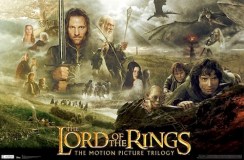 Of course. Some would argue it’s cheating to include an entire trilogy as one film, but Jackson made it as one film and it’s really a single tale that has to be divided to make it possible in cinemas, both financially and for the sake of the audience’s posteriors. But I’ve watched it in a single sitting, something I’ve not managed with some much shorter works, so that makes it OK by me. And I’ve spent all my words here saying that because, really, do you need me to tell you why this tops the list? (Not that this is a ranked list. But if it were, this would top it.)
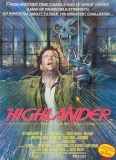 I did think my main rule for this list would be “set at least partly in an alternate world” (see things like Narnia and Stardust), but that would rule out Harry Potter (which is clearly Fantasy) and this. If we’re talking swords-and-sorcery, this definitely has swords and it probably has sorcery too. How else do you explain immortality? Except with some BS sci-fi claptrap in the sequels that no one, not even their makers, wants to remember. It may be campy and ever so ’80s, with the most hilarious array of mismatched accents ever committed to film, but goodness me do I love it.
 A modern, British-tinged take on the tone of The Princess Bride — two elements that give this the edge, for me. It’s also less of a spoof, more of a straight take on a fantasy adventure with an awareness of the comical and a resolute lack of po-faced-ness. There’s a reason Neil Gaiman’s a beloved author, and there’s a reason Matthew Vaughn is a mainstream filmmaker we should all keep a very close eye on.
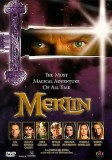 This is a bit of a cheat, because it’s actually a two-part miniseries… but in its entirety it’s shorter than Return of the King, and for some inexplicable reason is
 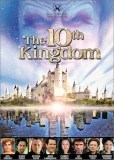 If Merlin was a bit of a cheat, this is a great big one, because The 10th Kingdom is actually a seven-hour miniseries. But tough, because I love it and it’s not well enough known. Here in the UK it aired on Sky back in the days before I had said channel, and so my first encounter was through
 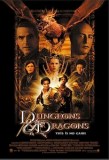 Quite what inspired this turn-of-the-millennium wannabe-blockbuster I don’t know — it came out the year before the double-whammy genre kick-start of Lord of the Rings and Harry Potter… but it feels much more than a single year older. It’s not all bad — some of the scenic effects shots are quite good, and there’s a certain joy in Jeremy Irons’ ludicrously campy performance — but, mostly, it is. The CGI is dreadful, the acting isn’t any better, and the location work makes it look like Power Rangers. If it wasn’t bad enough in itself (which it was), the glossy quality of Rings and Potter just 12 months later revitalised the genre to the point that this was blissfully consigned to ignominious oblivion.
 Most films have a reputation of one kind or another, even if it’s only in certain circles and you have to go searching to find it. I suppose Conan’s is best summed up by
  The guy doing the voiceover narration is godawful though, and there’s far too much of him. It’s never made clear why he’s the one telling the story either, unless I missed it.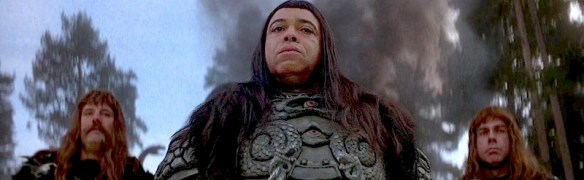
 Time flies: this is 13 years old! Originally a Jim Carrey vehicle (feels obvious once you know), Ben Stiller is the prospective son-in-law meeting Teri Polo’s parents (Robert De Niro, Blythe Danner) for the first time. Disaster ensues in a riot of unfortunate events targeting our hapless hero.
 John Cusack stars as literary giant (figuratively) Edgar Allan Poe in this wannabe-Victorian-
 That they didn’t tone it all down just a smidge to match, and so go for the box office-friendly PG-13, is a surprise in these days.
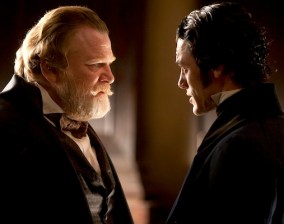 The rest of the cast are from Hollywood’s usual go-to for period tales: Brits; if not entirely then mostly so. (The film was shot in Hungary and Serbia, so I suppose our thesps have the additional advantage of being geographically favourable to Americans.) You know you’re getting a level of quality there, then, though for me Kevin R. McNally lets the side down (again). He’s only a supporting character and is fine most of the time, but there’s one bit when he’s talking to the lead detective and just rattles off his line… It’s not the world’s greatest speech, but you can hear there was meant to be more nuance and quiet in there.
 Se7en is probably my favourite film ever made, but criticisms that it’s quite a standard detective mystery are not invalid. It’s enlivened by Andrew Kevin Walker’s writing (great dialogue, engrossing structure, etc), some top-drawer performances (Freeman, Pitt, a loopy-calm Spacey), and, probably most of all, David Fincher’s inestimable touch. In making such a comparison it’s easy to see that The Raven lacks any of these, which renders it a solid period mystery, but no more.
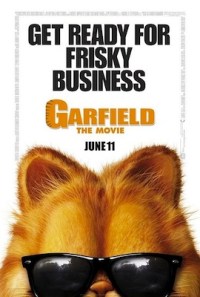 Bill Murray presumably needed some money, otherwise why else voice the titular food-loving sort-of-fourth-wall-breaking moggy in this juvenile adaptation of the long-running newspaper strip? Offering little in the way of laughs, the film’s main success is the cute (real) dog who co-stars as Garfield’s competriot, Odie. The real wonder is how they got him to interact with the CGI cat. Elsewhere, animals are live-action with CG mouths, giving an unsettled presentation of the film’s four-legged characters. Meanwhile, humans Breckin Meyer and Jennifer Love Hewitt engage in a charmless romantic subplot. Oddly, one for dog lovers (with fast-forward to hand) only.
 100Films.co.uk