
Phillip Noyce | 104 mins | Blu-ray | 15 / PG-13
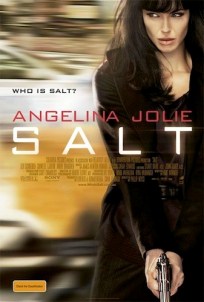 Angelina Jolie takes on a role originally earmarked for Tom Cruise in this Bourne-ish spy thriller from screenwriter Kurt Wimmer (Law Abiding Citizen, the Total Recall remake; writer/director of Equilibrium, Ultraviolet) and director Phillip Noyce (Patriot Games, Clear and Present Danger, The Saint, The Bone Collector).
I list all of those previous projects because it might give you some idea of the calibre involved here — i.e. solid, but perhaps not exceptional. That’s more or less what Salt represents. It offers a handful of moderately exciting action sequences — a multi-vehicle highway escape is the best — and a plot with an engaging mystery eked out through good twists and developments.
Said plot sees Jolie as Evelyn Salt, a US spy accused of being a Russian sleeper who will assassinate a high-profile Russian at a high-profile US funeral in a few days. (In truth, I forget who the Russian is and who the funeral is for. I think they’re the President and Vice-President, respectively. Really, such things are immaterial.) Naturally, she goes on the run… to prove her name, presumably, or is it because she is indeed out to complete said mission?
 This is Salt’s mystery, and this is one of its strong points. The plot developments are well-paced throughout, developing and shifting our expectations rather than stretching it all for a glut of final act reveals. In this regard it goes places you might not expect from a mainstream Hollywood thriller. For starters, you expect the funeral-set assassination to eventually be the film’s climax, no doubt revealing our heroine isn’t a Russian spy as she unmasks the real killer. But that occurs at the halfway point, spinning the film off in new directions. To say more would spoil one of the film’s strongest elements: that, as I said, it has twists and follows storylines you wouldn’t expect in a Hollywood summer blockbuster.
But now I am going to digress into spoiler territory, because on Blu-ray Salt comes in a choice of three cuts. Excessive? Yes. One version is basically a glorified way of showcasing a deleted scene. But, actually, these are more interesting than most extended cuts — not merely slight extensions, there are genuine impactful changes to be found here. And that’s what I’m going to natter about now, complete with spoilers. Just so you know. (The final paragraph, incidentally, is spoiler-free.)
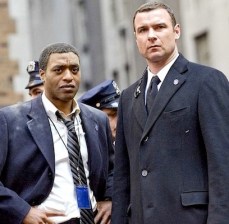 The three cuts, then, are: Theatrical (100 minutes — this was trimmed for the UK to make 12A, but is apparently uncut on disc); Director’s Cut (the one I viewed, this is 4 minutes 5 seconds longer); and an Extended Cut (1 minute 5 seconds longer than the Theatrical). The latter is based on the Director’s Cut and I’ll come to it in a minute. The differences between the Theatrical and Director’s cuts are numerous, but mainly amount to some extra character beats (including more flashbacks to Salt’s childhood) and violence — more blood; seeing people get hit rather than just seeing Salt firing; the President is killed rather than just knocked out; plus a very different death for Salt’s husband (again, more on this in a moment). Plus there’s a voiceover ending too, which in my opinion sets up the sequel even more than the Theatrical version does, with a blatant cliffhanger and suggested plot direction. My regular comparison site Movie-Censorship.com disagrees, but… they’re wrong. So there.
As I mentioned above, the Extended Cut seems to have started with the Director’s Cut, then stripped out all references to the death of Orlov (Salt’s spymaster villain, killed around halfway through in both the Theatrical and Director’s versions) in order to include an alternate ending in which Salt travels to Russia to kill him. Additionally, the President doesn’t die in the Extended Cut, presumably to help provide a more conclusive ending — the Extended Cut is the only one that doesn’t suggest a sequel.
One of the key differences — tonally, at least — is the murder of Salt’s husband, which occurs in a very different way in the alternate cuts. In the theatrical version, she walks around a corner and he’s instantly shot. 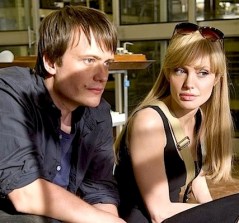 She has to control her emotions so as not to give herself away. In the other versions, however, she’s presented with him in a chamber and given a choice to save him — except trying to save him would give her away, so she’s forced to watch, blank-faced, as he slowly drowns. Salt sacrifices him for the greater good; he dies seeing her cold emotionless face. Ouch. By comparison, the theatrical cut’s blunt gunshot is much softer.
The extended version plays on this nicely with its alternate ending: Salt grieves for her husband during her post-climax interview with Chiwetel Ejiofor’s investigator, even though he reassures her she did it for the greater good (just in case you didn’t understand that when it happened). Then she escapes and toddles off to Russia to kill Orlov. Fundamentally I’m not a fan of this alternate ending — I like that she takes her revenge on the boat-load of people when she does — but it does have one fairly major plus point, I think: she kills Orlov by tying him to a stone and pushing him into the river; she watches him drown, just as he made her watch her husband drown — Noyce’s choice of camera angles emphasises this comparison — but whereas before tears formed, now she is genuinely stony faced. It’s a fitting form of revenge; more fitting, really, than just stabbing him with a broken bottle, as she does in the two other cuts. And this is the real advantage of the DVD era:  if the filmmakers considered another option, now we can see it, and in cases like this choose our preference. Though it seems clear, by its inclusion in both the theatrical and director’s cuts, that Noyce preferred the instant-revenge option.
In conclusion, Salt isn’t really the kind of film that massively deserves multiple versions — it’s a divertingly fun action-thriller, not much more, but for that I think it merits a watch by fans of the genre. Of all the versions my preference is for the Director’s Cut — it packs a better punch than the tamed-down Theatrical, and while it loses the nice revenge parallel of the Extended’s alternate ending, I think it’s overall the most coherent experience.

Salt begins on Sky Movies Premiere tonight at 8pm, and continues daily until Thursday 7th July. I expect it’ll be the theatrical cut though.
If you’re interested in a full catalogue of differences between the versions, Movie-Censorship.com have three (unusually imperfect, sadly) comparisons to offer: between the Theatrical and Extended, Theatrical and Director’s Cut, and Extended and Director’s Cut.
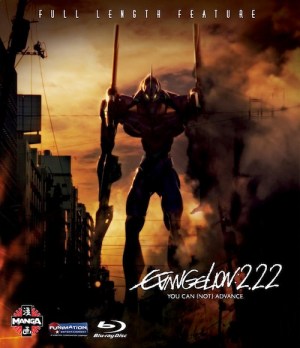 Just over a year since the
  For my money, the first 40 minutes or so of the film are (by and large) the best bits. It opens with a barnstorming action sequence, a great scene for newbies and fans alike as we’re introduced to Eva pilot Mari, who didn’t appear in the TV series. That she then disappears for most of the film, only to make a thoroughly mysterious return later, is one of those explanation-lacking flaws. I’m sure it won’t look so bad once the next two films provide us with answers. Well, I hope not.
 Then the gang take a trip to a scientific installation which is trying to preserve the oceans and their wildlife. It feels like animation shouldn’t be as effective for such a sequence as, say, the footage in a David Attenborough documentary, but nonetheless it feels extraordinary, in its own way. It also marks itself out with the interaction of the characters on a fun day out rather than their usual high-pressure monster-fighting world. And then it’s back to that world for another impressive three-on-one Angel attack.
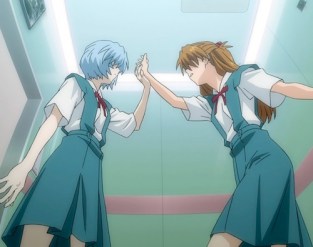 But it’s all building somewhere. For one, there’s another of the film’s best sequences — certainly, its most shocking, which readily earns the 15 certificate. I don’t want to spoil it for anyone yet to see the film, because it’s one of the plot points that differs from the TV series, but it involves the death of a main character in a brutal, deranged way. I say “death” — they pop up in the third film trailer that runs after the end credits, so there’s more to this yet…
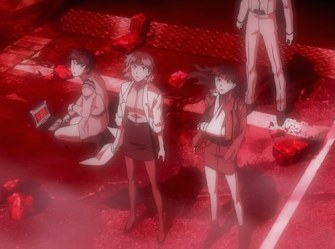 And then, after the end credits, there’s a brief scene that throws another spanner in the works! Double-cliffhanger-tastic… one might say…
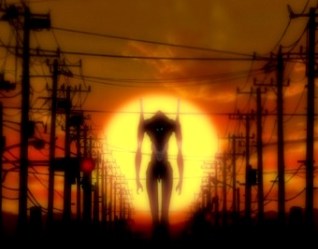 In short, if you’ve always liked Evangelion then you won’t be waiting for me to tell you this is a must-see reimagining; if
 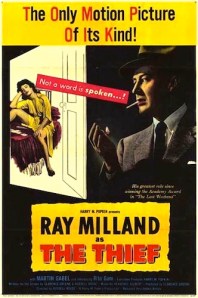 Ray Milland stars as Dr. Allan Fields, a nuclear physicist working at the United States Atomic Energy Commission, who is photographing secret files and passing them to The Other Side, until something goes wrong and the authorities are on his tail. But that’s almost beside the point, because if The Thief is known for anything it’s for its dialogue — as the poster proclaims, “not a word is spoken…!”
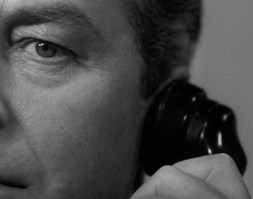 Obviously we can look back to the silent cinema for that kind of thing, but while that era could probably still teach many filmmakers something about visual storytelling, it’s hard to deny that the advent of synchronised sound adds a helluva lot to the ability of film — if it didn’t, it wouldn’t have taken over so fast and remained virtually 100% dominant for the last 80+ years.
 Perhaps this is why the villains are never explicitly named. But they’re definitely not American! Tsk tsk. More crucially, it’s a bit slow at times — it seems to take longer to explain things when stuck doing them through visuals alone. That said, it could probably have survived a speedier approach even doing what it does — perhaps, then, Rouse is playing for time: the film only runs 87 minutes in spite of its pace.
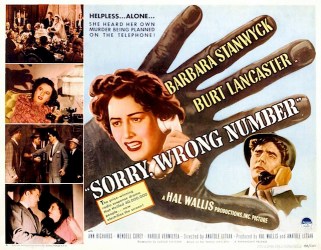 A film noir screenwritten by Lucille Fletcher, “based on her famous radio play” — I love how old movies have credits like that. It sounds like pure hyperbole, but in this case seems to be justified: the original play was broadcast in May 1943 but was so popular they chose to re-stage it with the same lead, Agnes Moorehead, a total of seven times up to 1960. Seven!
 As if keeping us guessing wasn’t enough, our feelings are shifting in this respect too. Arguably it unravels a little late on — when Evans is explaining his part to her, it’s getting a bit implausible — but it’s all redeemed by the finale.
 Like
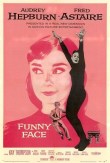
Like 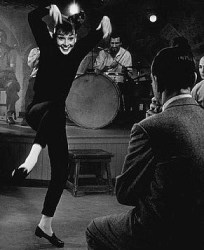 or dismissed the dullness of philosophy for the glamour of couture, but it takes fair jibes at both equally — it’s not mean-spirited or cynical or dismissive, just… quite true.
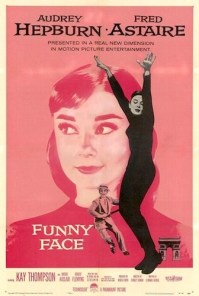
 Funny Face seems to have plenty of critics — mainly on the notion that Hepburn could be said to have a funny face. Pretty shallow reason to dismiss a whole film, if you ask me. While there are couple of bits that don’t wash with my appreciation — the age gap; I could take or leave the two scenes at the church — there’s far more to love about the film.
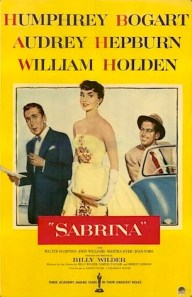 Audrey Hepburn’s next leading role after her star-making turn in
  But it actually feels very mean-spirited — Sabrina is likeable enough that we dislike his machinations. Which means that, for me anyway, there’s no truly supportable lead character. And then at the end he genuinely falls for her, which I found an equally implausible development — as well as seeming totally out of character, it did nothing to redeem what had come before. And he’s old enough to be her dad.
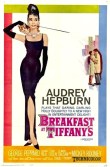
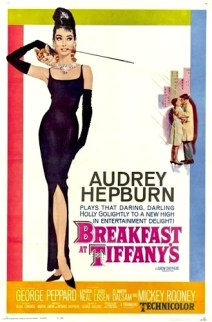 Breakfast at Tiffany’s is a stonkingly famous film — it’s the one most of the famous images in the cult of Audrey Hepburn come from — this despite the fact that, as
 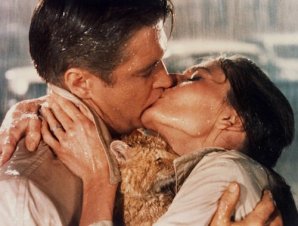 but it works here, especially when sung plainly by Hepburn.
 Following Valentine’s Day — yes, I’m talking about way back in February — Channel 4 attempted a week of Audrey Hepburn films. Except for some reason they didn’t schedule one for Monday. And then Friday’s,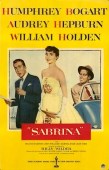
 Sometimes, though, the slog (I say “slog” — obviously it’s good really!) is broken up by my arrival at key points. And this month, I reached not one but two milestones. Yay!
 #48
#48  #52
#52 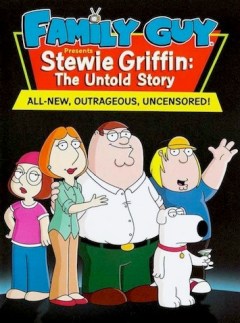 Following Family Guy’s cancellation after three seasons, it somehow found a new lease of life on DVD, posting surprising sales in what was, I suppose, the early years of the format’s mass take-off. This led to a rethink by Fox and a belated (as in, several years later) renewal for the animated sitcom. This story was originally intended to form a three-part opener to the first season back, but Fox wanted a direct-to-DVD movie too — presumably to capitalise financially on that previous success — and so those three episodes were retooled into a feature.
 and the need for it ultimately to be split back up (it was broadcast, censored, as a three-parter at the end of the comeback season). With subplots that begin and end within each half-hour(-ish) segment, it plays about as well as watching a three-parter back to back… which is more than can be said for that Star Wars film. Consequently, it also feels just like regular Family Guy — the same level of humour, basically — though it seemed to me like there were more scatological jokes than normal, some of them going on too long as well. If you’re not a regular viewer of the series, references to running jokes will pass you by; equally, the nature of its humour, often based in cultural references, means that some bits that are obviously jokes will elicit no more than bafflement from a non-versed viewer. Still, there’s plenty of more universal humour too. It relies on the usual style of numerous non sequitur flashbacks and asides. Which, again, is fine — that’s their style; it would be wrong to be anything else.
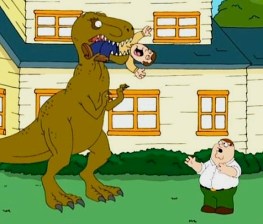 the same as the series normally is, shows how arbitrary US regulations are. It feels like there are a few more jokes that are slightly dirtier than normal and there are a few extra swear words, but they consciously didn’t go OTT with them and, thankfully, it shows. But actually, most of the stuff that’s cut (as detailed on the commentary or in full
  And if you’ve always been curious but never given it a go, don’t start here — I don’t think it would be incomprehensible to first-time viewers, but I don’t think it’s the best introduction to the series either, and it probably makes more sense if you know the characters a bit.
 100Films.co.uk