
Henry Selick | 100 mins | Blu-ray | PG / PG
 I’ve only ever read one thing by Neil Gaiman. It’s not fan-favourite Neverwhere, nor the previously-adapted Stardust. It’s not Hugo-winners American Gods or The Graveyard Book, nor the Hugo-withdrawn Anansi Boys. It’s not any of Sandman. It’s not even Whatever Happened to the Caped Crusader?, his take on Batman.
And it’s not Coraline either.
Which is a shame, because either that or “I’ve never read anything by Neil Gaiman” would have made much better introductions. Indeed, the latter was my original plan, but honesty overcame me — I’ve read his graphic novel/miniseries Marvel 1602. And I just remembered that I’ve also read Good Omens, the novel he co-wrote with Terry Pratchett. So much for my neat little introduction.
But regardless of one’s familiarity with Gaiman, his work comes recommended. Coraline alone won a Hugo, Nebula and Stoker, while the film adaptation was Oscar-nominated (naturally it lost to whichever Pixar film was eligible) and widely well reviewed (an 89% Tomatometer). All of which seems to set it up for a fall. But like, say, The Dark Knight*, it manages to fulfil its promise — Coraline, in short, is excellent.
Where to begin? Well, Coraline is a fairytale, really, albeit a modern one — it doesn’t come at you with princesses or witches or talking animals, but Volkswagens and new homes and stairlifts (all or none of those may be significant to the plot). The fact it’s a fairytale is perhaps neither here nor there, though I do think it pushes aside some logic complaints I’ve seen levelled against the film — do we need a villain’s origins, for example? No, not here. I’m not saying Coraline uses its fairytale basis as an excuse to toss aside narrative sense, just that, if viewed through the prism of 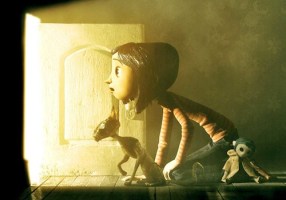 “fairytale story rules” rather than “real-world fantasy story rules” some viewers may have been more forgiving. Also, I’m digressing into a critical blind alley.
It’s also a Proper fairytale, by which I mean two things: one, it has a moral message; two, it’s scary. Very scary, in places. For much of the film there’s a beautiful creepy atmosphere, enhanced by drifting fog and skewed camera angles, but towards the end — when (I write while trying not to spoil too much) the full truth of the Other Mother is revealed — it’s not just kids who are likely to be freaked out. Dark themes and situations abound, though the full implications of some are pared back or glossed past, probably with good reason. Coraline is a “kid’s film” but, like writer/director Henry Selick’s previous The Nightmare Before Christmas or much of Pixar’s output, it’s as least as enjoyable for adults.
And as for the moral subtext… well, it may be very familiar — “be careful what you wish for” and/or “you don’t know what you’ve got till it’s gone” — but Gaiman and Selick certainly have a new, fantastical, mythical spin on it. Some critics say the story is arranged from plot points seen elsewhere and lacks originality, but then critics of everything say that because every story has roots in another. Coraline’s telling displays more than enough originality to keep it going, thankyouverymuch.
The animation, however, is an undeniable triumph. Set and character designs are gorgeous; the stop-motion movement is fluid, nuanced and detailed; the numerous technical accomplishments impressive. Sequence after sequence dazzles, each more magical — or frightening — than the last. Even if you want to criticise the story or characters, 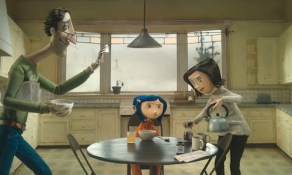 I find it hard to believe anyone could watch this and not enjoy much or all of it on a visual level. And if you don’t — honestly, are you sure you like films?
Only occasionally is one reminded that Coraline was filmed in 3D, when things poke out towards the screen or sink deep into it; but it’s not gratuitous, and if you didn’t know it was designed for 3D you might not even notice. The flattened sets and awkward perspective of the real world, versus the depth and beauty of the Other one, are still conveyed well in 2D. (I’ve had a brief look at the 3D version contained on the Blu-ray disc and will report my views on that another time, when I’ve attempted to watch it in full.)
Much like the animation, Bruno Coulais’ score is hauntingly beautiful. OK, it’s undoubtedly Elfman-esque, but it fits the film to a tee. Also in the audio realm (yes, this is a tenuous link to join two brief comments in a single paragraph), the voice cast are all spot-on, from seasoned pros like French and Saunders to bright young thing Dakota Fanning. Some may take issue with her vocal, or the character, but… well, allow me to employ a longer paragraph:
Reading some other reviews and their comments, it becomes apparent that one’s opinion of the film may depend a little on one’s opinion of Coraline herself. Roger Ebert, for example, considers her to be “not a nice little girl… unpleasant, complains, has an attitude and makes friends reluctantly”, though he notes that “it’s fine with me that Coraline is an unpleasant little girl. It would be cruelty to send Pippi Longstocking down that tunnel, but Coraline deserves it. Maybe she’ll learn a lesson.” For me, however, Coraline is an independent and strong-willed individual with good reason for most of her grievances. Does she need to learn a lesson? Undoubtedly. This is a fairytale, after all, and lesson-learning is more-or-less the point. Perhaps if you think Coraline is unlikeable and deserves the woes heaped upon her you’ll like the film less (I should add that Ebert gave it three-out-of-four, however); but if you get on with the character — and I’m certain many among the film’s supposed target audience, kids, would — then she’s a likeable companion to learn the story’s lesson with.
In general, I’m unconvinced by the criticisms I’ve read. Even those who assert it’s too scary for children tend to have shown it to kids who were too young — please, think about what Parental Guidance actually means before you go showing a PG to a three-year-old. All I can end with is a reiteration of my earlier comment: Coraline, in short, is excellent.

* I’m well aware I could choose any number of classic films whose reputation precedes them. The Dark Knight, however, is similar to Coraline in that it’s a recent release where we’re looking at a year or two of praise & rewards rather than decades of considered thought. Ergo, it’s a better point of reference.
Coraline begins on Sky Movies Premiere today at 10am and 5:30pm, and is on every day at various times until Thursday 10th June.
It placed 6th on my list of The Ten Best Films I Saw For the First Time in 2010, which can be read in full here.

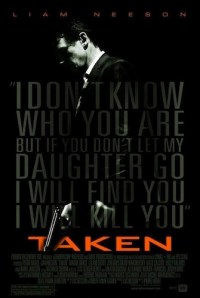 “I don’t know who you are. I don’t know what you want. If you are looking for ransom, I can tell you I don’t have money. But what I do have are a very particular set of skills; skills I have acquired over a very long career. Skills that make me a nightmare for people like you. If you let my daughter go now, that’ll be the end of it. I will not look for you, I will not pursue you. But if you don’t, I will look for you, I will find you, and I will kill you.”
 A Good Script rather than A Series Of Scenes, I’m inclined towards the latter here, because of the comparison with Man On Fire.
 but after half an hour spent setting things up, it’s like screenwriters Luc Besson and Robert Mark Kamen felt they’d done their dramatic dues and just wanted to watch people get beaten up. Or shot. Or blown up. Or hit by trucks.
 Despite all this, Taken’s an entertaining actioner. Unsurprisingly, there’s something satisfying about an apparently calm and controlled father being allowed to explode in precision violence against a bunch of scumbag white slavers. It’s wish fulfilment; proper justice finally being done. And, for extra gratification, he’s got the requisite spy skills — the bit with the radio and walkie-talkie, for example — and, even better, edge — perhaps the film’s most memorable moment (after that speech, anyway), when he shows the lengths he’ll go to when visiting a ‘friend’ for dinner.
 Seraphim Falls sees Liam Neeson and a crew of hired hands chase Pierce Brosnan across every Old West landscape imaginable — from snow-topped mountains to bone-dry dustbowl — but why?
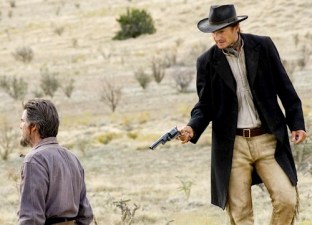 once most everyone else has fallen by the wayside. As the only constants, the various situations and their reactions allow the men to be slowly revealed. It’s not really a character piece, but they’re at least more complicated than your usual Good Guy vs Bad Guy setup — the story has you flip back and forth about which you think is which several times.
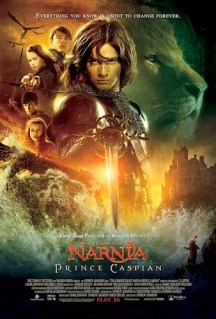 The Pevensie children return to Narnia, but hundreds of years later, in Disney’s last adaptation from C.S. Lewis’ series (don’t worry, Fox have taken it over). For those keeping track, this is both the second book and second film, but fourth chronicle chronologically. Which is fine for now, but I wonder what they’ll do come those earlier-set ones…
 held the record for the longest closing credits at 10 minutes. I don’t really know what’s common these days but 12 minutes is nonetheless 8% of the film.
 or maybe it’s just counting on their memory a bit too much. With only limited characterisation and basic political complications, Prince Caspian really boils down to a series of fights and battles. Nicely done fights and battles, I’d argue, but still, no one’s coming away from this particularly enriched.
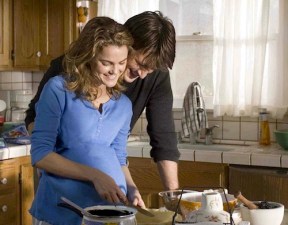
 Whenever a star, director, writer, or other key creative dies during or around the production of a film, it’s apparently tempting to draw some kind of correlation between their death and the themes or content of their work. To force such a link between the murder of writer/director/co-star Adrienne Shelly and Waitress seems inappropriate, however, when the film is so much about life.
 I know I
  Waitress is a “woman’s film”, but in a good way: written and directed from a female perspective, with its central roles being female, it doesn’t pander to a perceived female demographic and nor does it bellow “this is what we women think, and it’s so different to you damn men” — it’s more subtle than that.
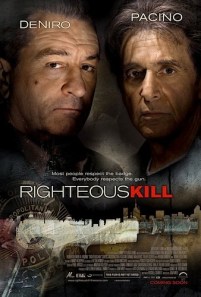 You remember Righteous Kill, right? It’s the film that reunited De Niro and Pacino, only the second time they’d appeared on screen together. And while the first,
  he’s lensing a procedural thriller about a pair of 60-something cops and not Miami Vice 2. Suffice to say, it doesn’t work; if anything, it makes it worse.
 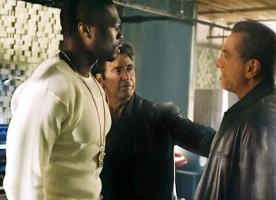 The film’s at its best when focusing on the De Niro/Pacino pairing, granting us the occasional good scene. Or just line — every little helps. But there’s not enough of that and too much of the dross. Other characters come and go with near-random irregularity, subplots are abandoned, or if they were resolved I missed it, and there are so many clichés you wish the DVD came with a spotters’ guide — at least ticking them off would give you something to do.
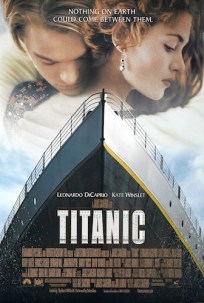 Before
  The scene the day after Jack saves Rose — where they have a natter on deck and she looks at his art for the first time; aka the primary scene for their falling for each other — is particularly weakly written. “Oh Jack, the plot requires me to look at your drawings now, so please hand them over.” The dialogue’s not actually that bad, but it’s bloody close.
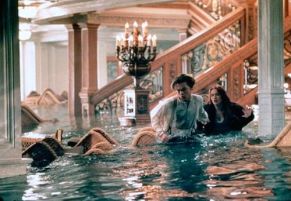 And Leo is pretty-boy Leo. I’m not saying he’s not a talented actor — that was something he’d shown before Titanic and has certainly proven since, though everyone seemed to forget it in the late ’90s — but Jack Dawson is hardly a tricky task for him. Clearly he looks beautiful, has the loveable rogue thing down, and that’s job done.
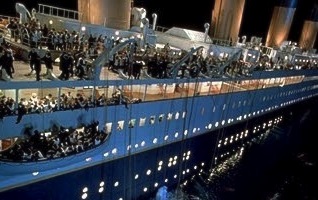 Indeed, Titanic’s literally phenomenal success, and the subsequent abundance of spoofs and homages across all media in the decade-and-a-bit since, is an obstacle for any new viewer. One can’t watch Jack declare “I’m the king of the world!” without thinking of Cameron’s much-derided Oscar speech; can’t watch Jack and Rose ‘flying’ without thinking of any number of piss-takes; and French and Saunders spring to mind quite all over the place.
 Apparently, the recent Michael Caine-starring
 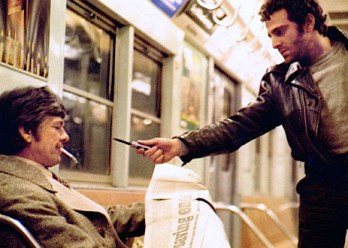 The strongest element is probably Wendell Mayes’ script, because it constructs all this. Weakest is Michael Winner’s direction — some of it’s fine, the occasional shot even good, but largely it’s pedestrian and sometimes mediocre. That said, Winner has become such an unlikeable public figure that it’s somewhat difficult to gauge how much of this is bad direction and how much bias. Still, it’s not the kind of work to make one think, “he’s an idiot, but he knows how to do his job”.
 100Films.co.uk