The Dark Knight (2008)

2008 #47
Christopher Nolan | 152 mins | cinema | 12A / PG-13
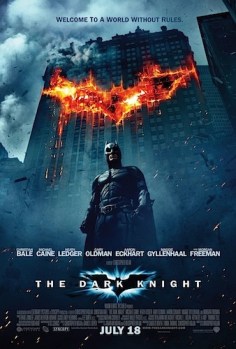
The Dark KnightThe Dark Knight — the sixth film in the modern Batman series (though not connected to the first four) — comes with a heavy weight of expectation on its back. It’s the sequel to the last film, Batman Begins, which relaunched the flailing series in style and is one of the best comic book movies ever — so Nolan and co had to top that. There was Heath Ledger’s death, a sad accident that has heaped extra focus on his penultimate performance here (his final one, in The Imaginarium of Doctor Parnassus, is currently in post-production with no release date) — especially as some sources cited his appropriation of the Joker’s mindset as related to his death. And then there were the trailers too, which caused ridiculous levels of excitement among some — personally, I found them a tad lacking. But I was fairly confident that, a bit like Begins, The Dark Knight would turn out to be the sort of film that doesn’t necessarily trail all that well but is excellent when seen.

And I was right. In this respect, it’s because the action sequences aren’t the point of the film. They occur when required by the story, while still being well-spaced and appropriately exciting, rather than serving as check-boxes for a plot designed primarily to link them together — the latter being what most blockbusters seem to settle for these days. Many are pleasantly old-school in style, the stunts performed largely for real, and at least one major example is even left without music. On the odd occasion when effects must have been used, they’re seamlessly achieved. The most obvious use of CGI — which I won’t describe for the sake of spoilers, though many will already know about — is incredibly well done. All of this helps ground the film in a perhaps-surprising (for some) degree of reality, one that goes far beyond what other ‘realistic’ superhero movies have strived for.

In fact, this realism is probably The Dark Knight‘s main strength. Obviously there’s never going to be a real city where a billionaire dressed in bat-inspired armour protects the populace from a deranged man in clown make-up, but if there were then this is how it would be. Where Burton’s two Bat-films were “dark”, and Schumacher’s were “gaudy” (or “crap”), Nolan’s pair are “real”. It’s an excellent thriller as well as everything else. The focus of the plot — at least at first — is on the mob and their control over Gotham, and it’s from their criminal desires — plus the very existence of Batman — that the Joker grows. Ledger’s performance is as outstanding as you’ll have heard said elsewhere, and while it still feels like a supporting role it receives more attention than the psychology of Bruce Wayne/Batman — which, considering that’s what Batman Begins focused on, seems fair enough. Every other performance is equally as flawless (I’ll name names in a moment), but it’s Ledger’s disturbing, engrossing turn that will stay with you. He is the Joker, in a way Jack Nicholson certainly never was, and — among obviously more upsetting effects of his premature death — the fact we’ll never see him in a rematch is a huge shame.

As Harvey Dent, Aaron Eckhart’s role is much larger than I was expecting. The floating-head posters that seemed to divide the film between him, the Joker and Batman are spot on — they’re the three central characters, everything revolves around them, their actions, choices, and emotions. While Ledger may dominate with his (appropriate) theatricality, Eckhart is more the heart of the film, with a genuinely tragic story. Viewed in this light, the order of the film’s final scenes — which I think some may see as incorrectly balanced, perhaps even anticlimactic — make all the more sense. However, I don’t mean to undersell the rest of the cast by highlighting Ledger and Eckhart — in their supporting parts, Michael Caine, Maggie Gyllenhaal, and especially Gary Oldman and Morgan Freeman, all do brilliant work. The talented Christian Bale manages to hold his own as the ambiguously heroic crimefighter, even against the more obviously attention-grabbing performances of Ledger and Eckhart.

As with other superior superhero sequels like X2 or Spider-Man 2, The Dark Knight uses the groundwork of its successful predecessor to craft an experience that’s even greater. In fact, there’s an awful lot more that could be said about the qualities of The Dark Knight. At two-and-a-half hours, it’s a packed epic of a movie — which makes Nolan’s confident juggling of plot threads, character development, several large performances, action sequences, and more, all the more impressive. I certainly enjoyed seeing it with a large, American (importantly), opening-weekend crowd — several moments produced whoops and sustained applause from the audience, as well as a good number of well-deserved laughs.

The Dark Knight is great entertainment, with a good deal of meat on its bones too — the performances and emotional stories are as engrossing as the thriller-ish plot and impressive action. When all is considered, it’s possibly as perfect a thriller/blockbuster as they come. In fact, as I publish this, The Dark Knight sits at #1 — the best film of all time ever — on IMDb. It will drop, of course, because that’s opening-weekend fan-led gut reaction for you… but, even when time’s passed, I’m certain it deserves to remain high on the list.

5 out of 5

Sadly (though not surprisingly) the Manhattan IMAX was booked solid all through opening weekend (and most of next week, at least). As soon as I manage to see it on the extra-big screen, I’ll share my thoughts here. You can also read even more of my thoughts on the film (this time when considered next to Batman Begins) here.

The Dark Knight placed 1st on my list of The Ten Best Films I Saw For the First Time in 2008, which can be read in full here.

Wanted (2008)

2008 #46
Timur Bekmambetov | 110 mins | cinema | 18 / R

WantedDid you see the trailer for Wanted? Did you think the loopy, somewhat Matrix-y stunts — like bending bullets, driving cars into trains, and numerous others — looked cool? Did you want to see more? If the answer to these questions is “yes”, watch the trailer on loop a few times, because 85% of the film’s cool bits are in there.

The trailer is Wanted’s biggest problem by far. Those expecting to suspend their disbelief and be treated to an onslaught of ridiculous-but-cool CGI-aided action trickery may be disappointed, not because it’s not there but because they’ll have already seen all the best bits. Of course, two minutes of trailer can’t cover all of the action present in the film, but it certainly managed to contain most of the flagship moments. Wanted’s other major problem is its pacing. The “Wesley is an ordinary guy with a dull life” opening is stretched thin, the traditional “training montage” is actually most of the second act, and, by the time it’s remembered there was a proper plot too, all you’re left with are a few more recycled plot beats (most notably from a certain popular late-’70s sci-fi sequel). Those points aside, there’s nothing really wrong with the plot — it’s an above-average way of linking the action together.

It’s hard not to recycle in this genre, of course, but the only other place you’re likely to have seen most of the stunts is… the trailer! Ahem — or, Bekmambetov’s pair of Russian fantasy films, Night Watch and Day Watch. The prologue explaining about an organisation that has existed for thousands of years is certainly reminiscent of those films, though here Bekmambetov is stuck with text rather than a full-blooded flashback. Throughout the rest of the film he displays a noteworthy visual flair, and while I’m sure some prefer their action to be done ‘for real’ and not boosted by computers, there’s no way the crazy things he’s imagined could be achieved that way. I have no problem with the use of CGI personally, especially as the ludicrousness of its use here doesn’t pretend to be something it isn’t.

The cast are all better than the material — not that anyone seems particularly bored or underachieving, just that the screenplay doesn’t tax them. Marc Warren is especially underused, with barely a line of dialogue to his name, though he is awarded a particularly gruesome death. While there’s nothing wrong with most of the elements that make up Wanted, then, it’s hard to escape the feeling that you’ve been cheated into paying to see all the stuff you already saw in the trailer with a few other bits slotted in. I spent much of the film presuming it would finish on an open-ended note, as the structure reminded me of films like X-Men and Iron Man: all set-up and origin story, with a perfunctory climax-providing enemy, done with an eye (or, indeed, both eyes) on a sequel. Wanted doesn’t really end that way, which in an age where the franchise is everything is admirable… apart from that the film leading to that ending still feels franchise-friendly.

If you don’t mind your action being computer-aided and as realistic as… well, a comic book… then there’s much to enjoy in Wanted. Except, you already enjoyed most of it in the trailer. Perhaps things will look brighter with a few years’ distance.

3 out of 5

The Incredible Hulk (2008)

2008 #45
Louis Leterrier | 114 mins | cinema | 12A / PG-13

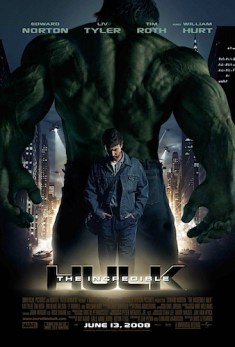
The Incredible HulkNow here’s something I didn’t think we’d see: a sequel to Ang Lee’s disappointing 2003 version of the Hulk, Marvel’s big green superhero-monster-thing. It’s not precisely a sequel though — for those who’ve somehow missed the behind-the-scenes goings on, this one has an all-new cast and crew, led by Hulk-fan Edward Norton on both leading man and (uncredited) writing duties. But does that mean it’s any better?

I think you’d be hard pushed to deny that this version is more entertaining. From the off it strikes a good balance between plot, character development and action. It doesn’t try to dig as far into the hero’s psychology as Lee’s film, but as that crippled the earlier attempt it’s for the best. Norton is a more appropriate Banner than Eric Bana was, achieving drama, humour and action with aplomb. In fact, even though there’s notably less of it, it seems Leterrier and his cast are as adept at crafting dramatic scenes as Lee and his lot were. They’re certainly better at action sequences, of which there are a good number and all well executed. Attempting an athletic chase over rooftops and through small streets so soon after Casino Royale and The Bourne Ultimatum did similar things to such acclaim seems a bold move, and while Hulk‘s version isn’t as memorable it doesn’t suffer unduly from comparison. The final monster-on-monster punch-up is immeasurably better than the first film’s bizarre climax, but the real stand out for me was the battle on the university campus. All of this is helped by vastly improved CGI. No longer is the Hulk an oversized action figure, but instead has weight and grit, and is altogether more believable. You’re never going to be convinced he’s real, obviously, but this time round they’ve made him more than close enough.

In terms of being a sequel, The Incredible Hulk pretty much has its cake and eats it. It makes good use of all the benefits of being Film 2 — it’s not an origin story, it doesn’t waste too much time introducing the characters — but without a dependence on the poor first film — new actors and a modified origin story distance it, so the main plot grows out of the basic ‘facts’ of Hulk’s origin rather than specific incidences from the first film. In fact, those who were lucky enough not to see Lee’s Hulk may well assume the opening credits’ origin story recap is just a retelling of the first film — and there’s no need to inform them otherwise. As well as dispensing with all the first film’s “evil dad” stuff, the version of the origin story here is apparently highly in debt to the ’70s live action Hulk TV series. In fact, there are also numerous nods and cameos to that version throughout (check out the IMDb trivia page for more).

Considering I did as much for Marvel’s other 2008 blockbuster, Iron Man, I feel I should make some comment on the brief franchise-building coda. Unlike Iron Man, however, Hulk doesn’t bury its scene after 10 minutes of credits, much to my joy. For those who don’t know, the brief scene sees Tony Stark — yes, Iron Man himself, naturally played by Robert Downey Jr — have a brief chat with General Ross about the problem of the Hulk. It’s initially immensely fanboy-pleasing, but is allying such a cool, likable hero as Stark with the despicable General Ross such a good idea? Of course, we’ll find out just what the Marvel planning bods have in mind come 2011.

In the end, this sequel is unquestionably superior to Hulk — who’d’ve thought a near-unknown director, whose major previous credit was the fairly risible Transporter 2, could best Ang Lee? The Incredible Hulk is a good blockbuster in its own right, requiring no need to have suffered the previous film, and there’s even room for a sequel. Now there’s something I didn’t think last time.

4 out of 5

The Happening (2008)

2008 #44
M. Night Shyamalan | 90 mins | cinema | 15 / R

This review contains spoilers.

The HappeningWhile others have been lamenting the slide in quality of Shyamalan’s work since his breakthrough 1999 hit The Sixth Sense, I’ve been quietly enjoying most of his films since then. I liked Sixth Sense and appreciated its ingenious twist, but it was the fantastic real-world-superhero tale Unbreakable that did the most to cement him in my affections. Signs was another strong effort, an unusual perspective on alien invasion backed by decent family drama and a few good laughs, helped by the always-watchable Joaquin Phoenix and a sweet kid. On the other hand, it suffered from a stretch of a resolution, and that it starred Mel Gibson. His next was the The Village, in my opinion his biggest misfire thanks to a story disappointingly reliant on an easily-guessed twist, further undermined by a third act structure that bent over backwards to hide the reveal for as long as possible. Most reviewers seem to disagree slightly though, as Lady in the Water was widely panned. Personally I liked it, at least on the level at which it was intended, as a modern fairytale.

This, his latest effort, falls mostly in the middle of the road — a bit like a few of its extras, then. You see, the plot concerns the release of a toxin (from where, no one knows) that causes people to begin committing suicide en masse, by jumping off buildings, or shooting themselves, or a variety of other, more gruesome ideas. It’s in these sequences that The Happening is at its best — Shyamalan can still craft chilling scenes and effective jumps, even if their onset is obvious to a moderately seasoned film viewer. Unfortunately, the rest of the film is a tad weak. Mark Wahlberg’s performance is flat, John Leguizamo struggles to do much better, and Zooey Deschanel gets by in a kooky role that is by turns endearing and slightly irritating. The script is mostly passable, though occasionally heavy-handed, repetitive and clunky — one moment especially jarred for me, when in a middle-of-nowhere diner it seems one person’s dialogue has been split between two actors.

Shyamalan nicely keeps the cause of the toxin up in the air — though the most probable cause is first suggested fairly early on, other theories continue to float around — but with no last-minute revelation such juggling feels unwarranted. Instead there’s just a “it could happen again” final scene, that might be chilling if it weren’t so predictable. Part of the problem with the film’s central conceit is that it’s not very believable. Now, I know, being able to see dead people, developing superpowers or finding a mermaid-like girl in your pool are hardly realistic plot points either, but here it strays too close to the realm of “I expect you to believe this is possible” pseudoscience and so, unlike Princeton gardeners, my belief struggled to be fully suspended.

Ultimately, I’d rank The Happening as Shyamalan’s worst film to date. While it’s pleasing that he doesn’t force everything to rely on a final twist, the overall quality is variable — at least The Village had something going for it before the poor climax. The cod-science explanation feels like a big excuse for a topical eco-message, otherwise just being a basis to string together a collection of well-executed creepy sequences. Perhaps Shyamalan should stop trying so hard to come up with amazing new ideas and just concentrate on telling a good story. There are things to like though, enough to scrape the film into the middle of the road. Sort of the opposite to those suicidal extras then.

3 out of 5

They’ve just watched the film…

They've just watched the film...

Hard Boiled (1992)

aka Lat sau san taam

2008 #43
John Woo | 122 mins | DVD | 18 / R

Hard BoiledThe first John Woo film I saw was Mission: Impossible II. I think. It may’ve been Face/Off, which I love, but this works better with M:I-2 because most people don’t like it. Personally, I like M:I-2. It’s not the greatest action thriller ever, but it has its moments and the plot isn’t half as complex as some like to claim. It’s certainly more fun than Brian de Palma’s Euro-thriller first film, which in retrospect looks a bit like a proto-Bourne. Of course, what M:I-2 really had going for it were its action sequences, which are occasionally a bit out there but always expertly done. Face/Off’s are even better again. Anyone with a basic understanding of structure can’t fail to see what I’m going to say about Hard Boiled.

I don’t think realism is Woo’s strong point — at least, not in his straight-up action movies. That’s not a flaw, though, but a deliberate choice — he dispenses with the realism of what a gunfight would be like (presumably, bloody scary and with fewer shots fired) and pushes the male fantasy of mindless slaughter to the limit. Which means his action sequences are pure adrenaline-pumping fun. Chow Yun-Fat single handedly slaughtering a warehouse full of heavily armed gangsters? Well, of course! Or directly hitting a small object wedged in an electrical pipe with a shaky shooting arm? Naturally! The action may have all the realism of a Dali painting, but it also has all the gleeful fun of repeating everything your sibling said when you were five — except with more choreography. It’s a cliché, but there’s something about Woo’s action that makes you want to use the word “balletic”. Not that I’ve ever really watched ballet. I expect it involves fewer guns.

These sequences seem to have been designed with one thing in mind — cool. And they are. There are a few holes in the plot and characters’ logic, but that doesn’t matter when they can leap around firing two pistols at once and always hit their target, while the bad guys — who could shoot just fine when they slaughtered some innocents a few minutes ago — keep missing them… with machine guns. If you think about it too hard then of course it’s nonsensical, but somehow, in some way, this sort of action seems to appeal to most men (not all, of course, and if you enjoy it then don’t worry, it doesn’t mean you’re a bloodthirsty braindead weirdo). One particularly astounding sequence is achieved in a single long take, as Yun-Fat and Tony Leung make their way down several corridors killing Very Bad Men literally left, right and centre. It’s both exciting and technically impressive, considering how many squibs, blood packs, weapons and extras must have been involved to pull it off in one uncut shot.

If you don’t care for people shooting at each other, especially when it pushes believability beyond the limit, then there’s not really anything for you here. There’s some male bonding stuff, and other bits about duty and honour and sacrifice, and a climactic subplot involving lots of cwute lickle baby-wabies; but Hard Boiled is most at home when the bullets are flying and things are blowing up. And what a lovely home it is.

4 out of 5

Léon: Version Intégrale (1994/1996)

2008 #42
Luc Besson | 127 mins | DVD | 15*

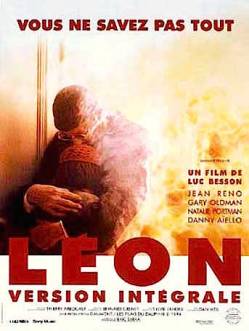
Léon: Version IntégraleI first saw Léon about 10 years ago, back when video was still an acceptable way of watching things. A friend leant it to me, insisting it was a film I absolutely had to see, and he wasn’t wrong. It’s remained one of my favourite films ever since, though typically I haven’t watched it more than once or twice in the intervening decade. (It also fostered a love for Sting’s closing song, Shape of My Heart, which is criminally missing from a Greatest Hits CD my dad owned (even though his dire song from Demolition Man is on there), and in moderately recent years was indifferently reused by both Sugababes and Craig David.)

I became aware of this extended cut a few years ago, a little while before it was released on R1 DVD. Having held out for a UK R2 release for about half a decade now, I gave in and bought the (apparently superior, and also in a Steelbook, which always has a way of persuading me) German R2. It’s labelled as a “Director’s Cut” but, as Besson states in the relatively lengthy booklet (translated with the aid of [the now defunct] Babel Fish), “the second version is neither better nor worse than the original” — it’s not a preferred cut, just a different, extended one.

But personally, I prefer this version. Not because there’s anything wrong with the original — far from it — but because this one has more. Sometimes you can have too much of a good thing of course, but I don’t think that’s happened here. The additions build on the characters and relationships, primarily between the two leads, and also add extra doses of humour and action. Besson wasn’t necessarily wrong to remove these things from his original cut — the extent of Léon and Mathilda’s relationship is especially controversial for some, and the extended scenes of Léon training Mathilda as a Cleaner are arguably extraneous — but they all add to the experience. Wisely, he doesn’t seem to have touched what was already there. Everything that was great about the original — from the astounding performances of Jean Reno, Natalie Portman and Gary Oldman, to the thrilling action sequences, and plenty else in between — remains intact. They’ve not been buggered about with, just expanded around.

Ultimately, the reason I prefer this version is quite simple: I love the film and the characters, I could happily take more of them, and I very much enjoyed all of the added material. I can understand objections to the insinuations about Léon and Mathilda’s relationship, but I didn’t find it any creepier here than it was before (besides which, any paedophilic notions come from her and he quashes them). The quality of the performances in the new scenes, plus other solid additions, make all the new bits worthwhile.

The version intégrale isn’t too much of a good thing, then, just more of a great thing. To my mind, Léon (in either cut) is unquestionably essential.

5 out of 5

* The original cut of Léon was last classified in 1996 and given an 18. The longer version was classified in 2009 and received a 15. That must be a pretty rare case of a longer version (technically) having a lower certificate. ^

Almost Famous (2000)

2008 #41
Cameron Crowe | 118 mins | DVD | 15 / R

Almost FamousSometimes I find I have quite a lot to say about a film when it comes to writing my review for this blog — recently, witness Cloverfield, Transformers, or Indiana Jones 4 (of course, using Indy 4’s full title more than once guarantees a long review). Other times it’s a struggle to come up with anything at all — try the relatively brief comments on The Fountain, The Adventures of Sherlock Holmes or Field of Dreams. Almost Famous falls into the latter camp. Not because it’s no good, or because it’s middle-of-the-road, but because there’s nothing I’m dying to praise or slate about it.
Everything about it is solidly done. Patrick Fugit is an engaging and relatable lead, ably supported in the acting stakes by a good ensemble, especially Philip Seymour Hoffman (unsurprisingly) and fellow top-billers Billy Crudup, Frances McDormand and Kate Hudson. And there’s Zooey Deschanel, who doesn’t have many scenes, but, y’know, still…

Crowe’s autobiographical screenplay is a good one, with plenty of amusing and dramatic moments to keep it ticking over — the most memorable, on a crashing plane, manages both with aplomb. Likewise, his direction is rarely flashy but always works. The music, costumes, design and cinematography evoke the period well (to me, at least, who didn’t live anywhere near the ’70s). There’s probably some life lessons in here — it’s a coming-of-age film after all (as well as a rock & roll road movie, of course) — but they’re not over-laboured.

In short, I really liked Almost Famous. It’s the sort of film that might creep in at the lower end of a (relatively long) list of favourites, not because there’s anything exemplary about it, but because the cumulative effect makes for an enjoyable experience.

4 out of 5

Almost Famous is on Movie Mix (aka more>movies) tonight, Sunday 31st May 2015, at 1:15am.

Cloverfield (2008)

2008 #40
Matt Reeves | 81 mins | DVD | 15 / PG-13

This review contains major spoilers.

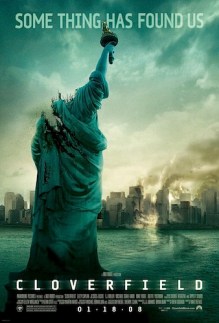
CloverfieldAh, Cloverfield — probably the most hyped “film no one knew was coming” since The Blair Witch Project, if not even longer, and the most widely-discussed marketing campaign since Snakes on a Plane (all of two years earlier). And then, in what can only be described as a surprise, it got good reviews. Less surprisingly, it did pretty well at the box office. Even less surprisingly, they announced a sequel. So far more Blair Witch than Snakes on a Plane, then. Of course, not all reviews were good, and with all this in mind I finally come to see it myself.
Cloverfield works. It has flaws, but overall it works. The opening 20 minutes set up the characters fairly well, though it does take its time. One would hope the idea is to increase the tension by delaying the monster’s appearance, but I can’t help feeling it’s probably just because they think they’re providing a great emotional background. Those who compare these bits to Hollyoaks clearly haven’t seen that risible C4 pile of tosh — Cloverfield’s performances (largely improvised, at least in the early scenes) and direction are much better than that, even if the plot would probably fit snuggly on the teeny soap. I found the opening held my attention well enough, so one has to wonder about the attention span of those who switched off during it. The characters and their relationships may be archetypes, and consequently rather one-dimensional, but at least they show an attempt to make it more than a Big Monster Go Smashy Smashy movie.

That said, it’s when the monster turns up that things kick off. From then the film does a great job of creating an unrelenting chase/escape, drawing the viewer in with its first-person/eyewitness style. You’re never going to be fooled into thinking it’s a real thing that really happened, obviously, but it comes as close as it’s likely to. This is partly thanks to the camerawork, which I’ll get into later. The deliberate drip-feed of information about the monster is well handled also. Those expecting lots of exposition and answers have clearly come to the wrong film, and should perhaps stick to a more straightforward blockbuster. Those who complain that the monster doesn’t make sense, or the bug-parasite-things that drop off it make even less sense, are clearly missing the point — the characters don’t know what this is or what’s going on, so we don’t either; and it’s a sci-fi movie, so any number of explanations you care to put forward could explain things. There are a couple of misfires in this respect — the military’s willingness to explain their plan is unbelievable, and a shot of the monster towering over Hud is a step too far — but mostly it succeeds.

Talking of Hud, he’s come in for criticism, it seems to me for two main reasons: he’s not a great character, and he can’t hold the camera steady. Have the latter viewers ever watched home movie footage? Cloverfield does a spot-on replication of it, which naturally looks odd if you think of it as ‘professional film’ (where even handheld is only slightly wobbly). I challenge anyone to take a normal home video camera and put it through the same things Hud does and come out with any steadier a shot. Sometimes credibility is pushed by having Hud film other characters instead of the more interesting monster (surely where any normal person would point the camera), but it’s only an occasional and minor point. As for his character, he may be dopey, dull, and occasionally even irritating, but his purpose is to be the cameraman — if he were notably likable or, well, notable then you’d want him in front of the camera too. For the sake of the style, someone has to be behind the camera, and Hud’s a perfect fit. You get so used to him as the almost-unobtrusive cameraman that when he’s killed it’s very nearly an audacious shock, though it’s such an obviously audacious move that it’s predictable to most film-literate viewers.

Unsurprisingly, there’s not a huge deal of originality in Cloverfield. The monster itself may look different to the norm, but it stomps through the streets like Godzilla, the attack of its minions/parasites/whatever in a dark tunnel is a sequence we’ve all seen before (nonetheless, it’s effectively done here), and their chestbursting-like birth is obviously straight out of Alien (even if it’s toned down to a PG-13-friendly silhouette). Even the (in)famous handheld style has, of course, been done before. But in marrying all these elements Cloverfield creates something that feels fresh enough (pasting the first-person/handheld/eyewitness style onto almost any genre would give it a new angle, I’d imagine), and, for the most part, it both entertains and intrigues. It may not be quite Empire’s 5-star wunderkind, but it pushes close.

4 out of 5

Cloverfield placed 9th on my list of The Ten Best Films I Saw For the First Time in 2008, which can be read in full here.

The Adventures of Sherlock Holmes (1939)

2008 #39
Alfred Werker | 79 mins | DVD | PG

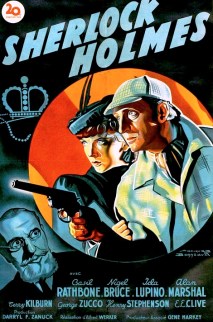
The Adventures of Sherlock HolmesNever mind waiting two or three years for a sequel these days — after the 1939 Hound of the Baskervilles was a box office success, Fox had a sequel out just five months later! I reviewed that first Rathbone/Bruce film back in February, promising an irregular series reviewing the further thirteen pictures the pair starred in. Well, I’ve finally got round to watching the second, and while I was a tad harsh on the first I found myself enjoying this one more.
The Adventures of Sherlock Holmes pits the titular detective against his arch-nemesis, Moriarty, in what’s really speaking a relatively weak plot — most depressing of all is how easily Moriarty’s plan to distract Holmes almost succeeds. But never mind that! There’s rain-lashed, fog-drenched Victorian London streets! Brutal murders by foul foreigners! Dastardly plots against the crown! Galloping carriages! Romantic subplots! A smattering of comedy! A song-and-dance number! (No, really, there is.) And a final shoot out… in the Tower of London! You can’t escape the joyous feeling that this was designed as pure entertainment, literally including something for everyone.

Bruce’s Watson may bumble about too much for the purists (me included, more often than not), the murder plot lacks proper explanation (the production notes on Optimum’s DVD pleasingly expand on this), Rathbone’s characterisation of Holmes may be a touch too friendly… but by then I’m just nitpicking. This sequel is atmospherically, entertainingly and excitingly executed, and that’s plenty good enough for me.

4 out of 5

Field of Dreams (1989)

2008 #38
Phil Alden Robinson | 103 mins | TV | PG / PG

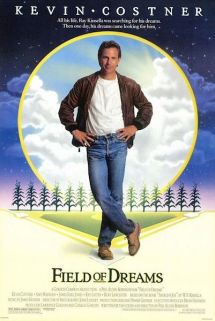
Field of DreamsI’ve never made much of an effort to see Field of Dreams, for a couple of reasons. Aside from its famous mantra/catchphrase (“if you build it he will come”), the only things I’d heard were it was mawkishly sentimental and was about Kevin Costner trying to build a baseball pitch for a ghost — which doesn’t sound particularly exciting and is about sport, something I’m not very fond of. Of course, as anyone who’s seen it will know, I was a tad misled on that last point, as the glorified rounders pitch is built in the first 20 minutes. What follows certainly has its fair share of sentimentality, but I wouldn’t call it mawkish.

In fact, it’s almost unremittingly pleasant. The lack of anything hard-hitting is no doubt why some have such a dim view of the film, as “nice” has become synonymous with “not very good” in modern parlance (I blame Primary School teachers desperate to increase vocabulary). Field of Dreams won’t shock you, it likely won’t make you think very hard, and any moral message or meaning it has is positive and reassuring… but what’s so wrong with that? The plot keeps moving, refusing to be bogged down in navel-gazing or star-gazing. The story is also too unusual to be marred by any serious degree of predictability, though some events are of course easily guessed, but the mystery of how the various elements would come together kept my attention throughout. Crucially, it doesn’t labour its sentimentality or batter you round the head with morals or meanings. It’s hardly ambiguous, but nor is it over done.

Field of Dreams may not be astounding filmmaking — it’s not especially complex, radical, thrilling, thought-provoking, intense or revolutionary, nor terribly serious or terribly funny, nor indeed wholly original — but it is nice. And I mean that in a good way.

4 out of 5

Field of Dreams is on ITV today, Saturday 27th September 2014, at 2:35pm.