Unknown's avatar

About badblokebob

Aiming to watch at least 100 films in a year. Hence why I called my blog that. http://100films.co.uk

The Past Month on TV #16

Another busy month on the box round these parts, so I’ve once again divided my comments into new stuff (i.e. what was actually on TV this month), old stuff (i.e. anything older than four weeks), plus the usual round-up of quick thoughts.

Doctor Who (Series 10 Episode 1)
Doctor Who: The PilotThe 36th run of Doctor Who kicked off with an episode titled The Pilot — no coincidence, that. This is the most newcomer-friendly episode of Who for 12 years, an episode finely calibrated to establish everything for a first-timer but also function for regular viewers too. A lot of that effectiveness can be attributed to Pearl Mackie as Bill, the new companion to Peter Capaldi’s Doctor. After a run of oh-so-special companions running back years, Bill is just an ordinary young woman; but of course she’s extraordinary in her own way: ready to learn, eager to help, full of both inquisitiveness and caring. This is surely the birth of both a fan-favourite companion in Bill and a star in Mackie.

It’s also a rejuvenation for Peter Capaldi’s Doctor. They arguably tried too many different things all at once when he joined the series a few years ago, making him old and irascible in contrast to the young and friendly Doctors that had preceded him throughout the revived series. He was gradually softening anyway, but freed of the burden of Clara he seems able to fully revel in his kooky kindliness. It’s perhaps the most Doctor-ish he’s ever been, and for Capaldi, a life-long fan of the show, that must be a real delight. It’s already a shame he’ll be leaving us this year, but at least we have 12 (or 11, if some rumours turn out to be true) more episodes to enjoy before then.

As for this episode in itself, it was more solid than incredible, though that perhaps does it a disservice. No, it’s not going to sit alongside the likes of Blink and Heaven Sent at the pinnacle of all that modern Who can achieve, but it set out the series’ stall well: it’s sci-fi, but a little quirky, a little scary, and full of heart and emotion. It was almost like a Russell T Davies-era episode, but with an unmistakable Moffat-ness about it too — he may be trying to dodge the “fairy tale” mode he adopted for most of his time on the show, reasserting the “this is based in the real world” aesthetic that RTD relaunched the series with back in 2005, but, frankly, Moffat does the former better than the latter, and there’s an edge of that heightened unreality here nonetheless.

But I think those are niggles and nitpicks. This is a strong opener that establishes a very likeable new TARDIS team to guide us through the season of adventures about to come. Fingers crossed the rest of the run can fulfil its promise.

Iron Fist (Season 1)
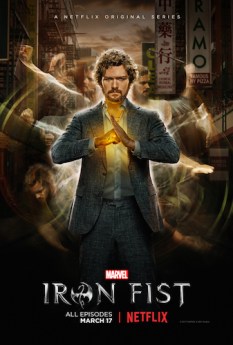
Iron FistThe last of the Marvel/Netflix series before the Defenders team-up, Iron Fist has certainly divided critics and viewers. It doesn’t begin well: the opening episode is possibly the worst thing yet released as part of the MCU, and I only say “possibly” because I never bothered with Agents of SHIELD after the poor reaction to season one. It’s needlessly slow, repetitive, the characters behave implausibly, and the fights are terrible, looking like a first rehearsal filmed with one take. Things do improve — there are more engaging characters, some interestingly developed arcs, and better realised fights — but it still doesn’t come together as well as it could. For one thing, it makes the running of Rand Enterprises a major element, but has a very vague-seeming understanding of how business actually works. It’s just too simplistic.

One of the series’ strongest aspects is the unpredictable loyalties of its characters. I don’t mean that they’re inconsistent, but aside from Danny (who’s the title character, so of course he’s a good guy) and Claire (who’s been in every other Marvel/Netflix show, so she’s a known quantity), the trustworthiness and allegiance of almost every character changes at some point; for some of them, at multiple points. Heck, there are even scenes when you can’t be sure whose side to be on, because both have aspects of right and wrong, good and bad. There are better shows than Iron Fist that never manage that level of shading in their characters. I imagine there’ll be a second season, because when doesn’t Netflix commission more of anything, so hopefully they can build on what worked going forward. And maybe add a business consultant to the writers’ room or something.

The Flash Duet
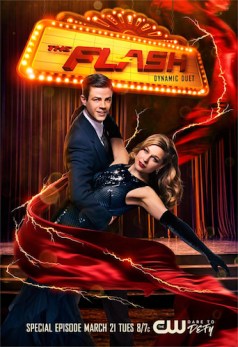
The Flash: DuetAmongst the eight Arrowverse episodes I watched this month was this: the much-anticipated musical crossover between The Flash and Supergirl, which star Glee alumni Grant Gustin and Melissa Benoist respectively — hence why (some) people called for a musical episode, which caused the producers to decide to do one. Somewhat ironic, then, that it seemed to go down well with critics (at least per Wikipedia) but less so with fans: its IMDb rating is just 6.0. I find myself in agreement with the latter. It wasn’t bad, as these things go, but it was overloaded with niggles, Like, why cast another former Glee actor as the villain but then not have him sing with the stars? Why is there a plot hole whereby they call said villain the Music Meister even though it was Barry and Kara who picked the musical fantasy? The guy’s powers seem to be hypnotism-based and nothing to do with music. There were only two original songs, one which was quite fun and one which was overlong and a tad cheesy. Neither came close to the delights of the Music Meister’s original appearance, which also managed five new songs (and a reprise) in an episode that was half the length. The episode’s guest cast seems to have been selected purely on the basis of “anyone from an Arrowverse show who likes to sing”. All in all it came across as half-arsed; like they felt they should do it because people demanded it, but didn’t assign enough time or energy to doing it properly.

The Crown (Season 1)
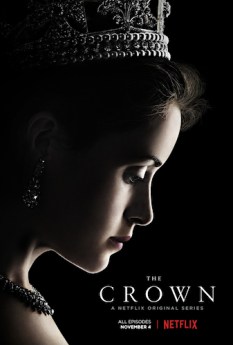
The CrownThe most expensive TV programme ever made (or not, whatever) certainly has its budget plastered all over the screen, which hopefully didn’t distract most viewers in the way it did me. It shouldn’t, really, because this is a good drama about the humanity behind the public faces. Its adherence to fact is apparently variable, which I imagine is very irritating to historians of the period, but it works for the fiction. There are great performances all round, with John Lithgow in particular disappearing into Churchill to the point that I forgot I was watching an actor more than once. There’s an interesting plot thread early on about the position of Philip (Matt Smith) relative to Elizabeth — how his role as a husband is challenged by her position as Queen, etc — which goes a bit awry as the series goes on and has other plots to focus on. It’s left quite open-ended, so hopefully it’ll be completed in the second season.

Line of Duty (Series 2)
Line of Duty series 2I devoted just 32 words to Line of Duty series one when I finally got round to watching it last October. In summary, it was pretty good but not really great, and the unadulterated adulation that follows the programme around nowadays seemed unmerited. Now I get it, though, because — in a similar fashion to how, say, Mad Max is a decent Ozploitation flick but Mad Max 2 is a reputation-earning action classic — series two is where it’s at. There was much praise for Keeley Hawes’ performance as a downtrodden copper under suspicion of organising a violent ambush of a witness protection convoy, and it’s deserved, but the real star is the writing. There are huge, attention-grabbing twists and surprises, and a mystery that keeps you revising your opinion on what happened right until the end, but perhaps most impressive are the lengthy, intensely procedural interview scenes that could come across as factual and dull but instead are completely gripping.

Twin Peaks (Season 2 Episodes 1-9)
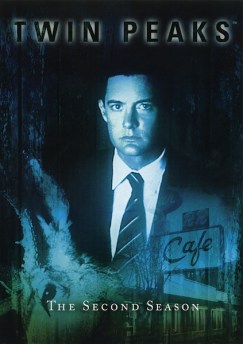
Twin Peaks season 2I first saw the debut season of Twin Peaks many years ago during a repeat run (it was a ‘classic series’ even then, though with hindsight it can’t’ve been a decade old at the time), then watched it again when the DVD came out, but this is my first time watching season two (legal complications delayed its DVD release for what felt like forever, and by the time it finally came out I just never got round to it). The second season is infamous for representing a steep decline in quality, though that isn’t yet evident from this batch of episodes, which covers up to the revelation of who killed Laura Palmer and their capture. I’d say it lacks the pure concentrated genius of the first season, having ramped up the quirkiness quotient and, at the behest of the network, rushing the resolution of the Laura Palmer mystery, but it ain’t bad by any means. There’s certainly much to like in the off-kilter characters, the folksy mysticism, and some fantastic performances — Kyle MacLachlan is a constant delight as Agent Cooper, but Ray Wise is frequently incredible as the grieving Leland Palmer. But I guess it’s mostly downhill from here…

Also watched…
  • 24: Legacy Season 1 Episodes 5-8 — everything I said last time still applies: this is little more than 24-by-numbers. Episode 6 was a particularly irritating example, as a major subplot was hurried to its climax presumably because the writers just got bored with it. Why else rush the plot so massively, in a way that practically ignored the series’ real-time gimmick? I miss the days when the makers cared about maintaining that illusion.
  • Broadchurch Series 3 Episodes 4-8 — it handled its treatment of the issues well, but as a drama Broadchurch 3 couldn’t quite reach the engrossing heights of the first series. Still, it’s a shame there won’t be further cases for the brilliant Tennant and Colman to investigate.
  • Unforgotten Series 1 — ITV’s police drama recently aired a second series, with a third commissioned. This cold case-focused first run features powerhouse performances from a bunch of quality elder thesps (Tom Courtenay won a BAFTA for it, but for my money Gemma Jones as his wife was just as good), plus nicely understated turns from the ever-excellent Nicola Walker and Sanjeev Bhaskar as the coppers on the case.

    Things to Catch Up On
    Car Share series 2This month, I have mostly been missing series two of Peter Kay’s Car Share, which is a couple of episodes in on the telly or available in its entirety on iPlayer. I nearly didn’t bother with the first series (two years ago now!) because I’m not a huge fan of Peter Kay, but someone recommended it and it turned out to be hilarious. I’m sure I’ll make time for the new one soon.

    31 days until new Twin Peaks…

    Next month… more Doctor Who, more Twin Peaks, and probably more stuff dredged up from the “must get round to” pile.

  • Guardians of the Galaxy 3D (2014)

    Rewatchathon 2017 #8
    James Gunn | 121 mins | download (HD) | 2.40:1 + 1.78:1 | USA & UK / English | 12 / PG-13

    Guardians of the Galaxy 3D

    So, I just got a 3D TV. Well, it’s a 4K TV, but we’re interested in the fact it does 3D right now. And, to cut a long story short (literally — I wrote a 1,200-word post about this before deciding it was rambling and pointless), the impetus to get one now came from the fact that all TV manufacturers are ditching 3D from this year and I always kinda wanted it. (As to why I got a 4K one, apparently it makes for better quality 3D; plus it’s future proof — “future” being the operative word because I’m not replacing my Blu-ray player, I don’t keep a regular Netflix subscription, and Amazon Prime’s UHD selection (found on an otherwise-secret menu when you access it from a 4K device!) is quite pitiful.)

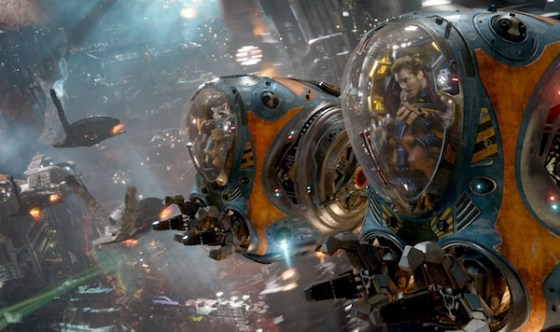
    The first thing I watched was… the opening seven minutes of Doctor Who’s 50th anniversary episode, actually (which has superb 3D). But the first thing I watched in full was Guardians of the Galaxy, because I’d been meaning to rewatch it before the sequel lands at the end of the month, and because I’ve long been curious about the 3D version’s shifting aspect ratio.

    Regular readers may remember that I love a good shifting aspect ratio, and Guardians does not disappoint. As usual for these things, most of the film is at 2.40:1, opening up to 1.78:1 for selected sequences. Director James Gunn uses it in a similar way to Christopher Nolan, with a scattering of expanded shots here and there alongside some whole sequences, mainly used for action scenes and epic establishing shots. (That’s as opposed to something like The Hunger Games: Catching Fire, which has more-or-less half the film in one ratio and the second half in the other.) Even on a TV the effect is immense, the screen-filling interludes feeling genuinely larger and more impactful. This was helped no small amount by my new TV being 12″ larger, which doesn’t sound like much but actually makes a huge difference (as the actress said to the bishop). That said, pausing a moment to do the maths, it’s nearly a whole third bigger than my old TV, so no wonder the difference is noticeable. But I digress…

    Knowhere's better in 3D

    As with so many 3D blockbusters nowadays, Guardians was a post-conversion. Nonetheless, I commented in my original review that some sequences seemed to have been designed with 3D in mind — specifically the chase through Knowhere, which I described as “little more than a blur.” I feel like past-me was correct, because I had no such issues with the sequence this time out. Even though I enjoy it, I’m still one of those people who regard 3D as fundamentally little more than a gimmick (though I’ve yet to see Hugo, so I guess there’s still room for my own conversion to considering it a Serious Filmmaking Tool), but it does lend a scope, scale, and pizzazz throughout the movie that’s a lot of fun, especially during the big action sequences. Indeed, particularly when combined with the shifting aspect ratio, it makes for some very striking moments.

    I’d hesitate to say the 3D improved my opinion of the film as a whole, but I think the second viewing certainly did. My aforementioned original review was pretty darn positive, though I think I’d remembered enjoying it less than I did because the praise it received in some other quarters went into overkill. On this viewing I didn’t feel the problems with pace that bothered me before; and while I continue to think Nova City could do with more development before the climax (I still can’t even remember its proper name), I found said climax to be less overlong and more structured. Obviously the film itself hasn’t changed (well, other than that extra visual dimension), but my perspective on it clearly has (in addition to that extra visual dimension).

    Badasses of the Galaxy

    For all the benefits of bigger screen sizes, extra dimensions, and an adjusted appreciation of its pacing, Guardians’ greatest asset remains its characters and how much fun they are to be around. They are primarily what make it a mighty entertaining movie, whether in two dimensions or three.

    4 out of 5

    The UK TV premiere of Guardians of the Galaxy is on BBC One tonight at 8:30pm — in 2D, of course.

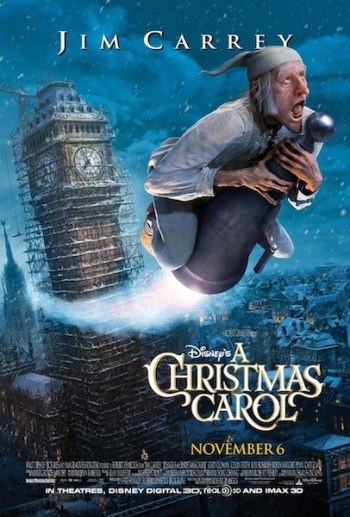
    A Christmas Carol (2009)

    aka Disney’s A Christmas Carol

    2016 #188
    Robert Zemeckis | 88 mins | TV | 2.35:1 | USA / English | PG / PG

    Disney's A Christmas Carol

    You surely know the story of A Christmas Carol — if you don’t instantly, it’s the one with Scrooge and the ghosts of Christmas Past, Present, and Future — so what matters is which particular adaptation this is and if it’s any good.

    Well, this is the one made by Robert Zemeckis back when he was obsessed with motion-captured computer animation, following the financial (though, I would argue, not artistic) success of The Polar Express and Beowulf. Fortunately A Christmas Carol seemed to kill off this diversion in his career (he’s since returned to making passably-received live-action films), because it’s the worst of that trilogy.

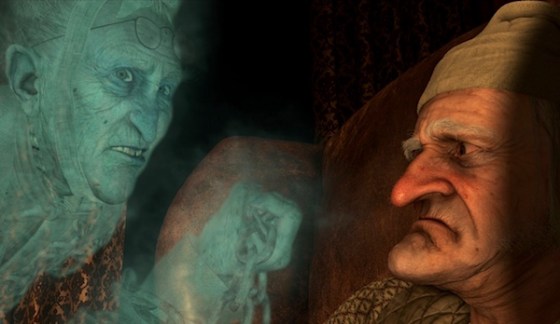
    The theoretical star of the show is Jim Carrey, who leads as Scrooge — here performed as “Jim Carrey playing an old man” — but also portrays all the ghosts, meaning he’s the only actor on screen for much of the film. Except he’s never on screen at all, of course, because CGI. Elsewise, Gary Oldman is entirely lost within the CG of Bob Cratchit, as well as, bizarrely, playing his son, Tiny Tim. The less said about this the better. Colin Firth is also here, his character designed to actually look like him — which, frankly, is even worse. There are also small supporting roles for the likes of Bob Hoskins, Robin Wright Penn, Cary Elwes, and Lesley Manville, but no one emerges from this movie with any credit.

    I ain't afraid of no ghosts... except this one

    In the early days of motion-captured movies many critics were inordinately concerned with the “uncanny valley”, the effect whereby an animated human being looks almost real but there’s something undefinable that’s off about them. Robert Zemeckis attracted such criticism for The Polar Express, mainly focusing on the characters’ dead eyes. No such worries here, though: the animation looks far too cheap to come anywhere near bothering uncanny valley territory. There’s an array of ludicrously mismatched character designs, which put hyper-real humans alongside cartoonish ones, all of them with blank simplistically-textured features. Rather than a movie, it looks like one very long video game cutscene.

    I don’t necessarily like getting distracted by technical merits of special effects over story, etc, but A Christmas Carol’s style — or lack thereof — is so damn distracting. Beside which, as I said at the start, this is a very familiar and oft-told tale, making the method of this particular telling all the more pertinent. At times it well conveys the free-flowing lunacy of a nightmare, at least, but who enjoys a nightmare?

    2 out of 5

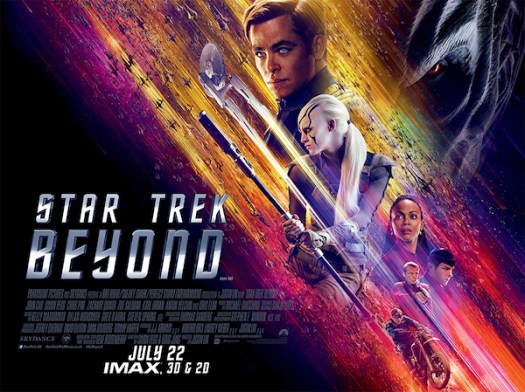
    Star Trek Beyond (2016)

    2016 #183
    Justin Lin | 122 mins | Blu-ray | 2.39:1 | USA, Hong Kong & China / English | 12 / PG-13

    Star Trek Beyond

    The cover of Star Trek Beyond’s Blu-ray proudly proclaims that it’s “the best reviewed action movie of the year”. I don’t think that’s true (Civil War, anyone?), but it does indicate the mindset producing these films nowadays: they’re not the serious-minded sci-fi the Trek franchise was once known for, but action-orientated summer blockbusters.

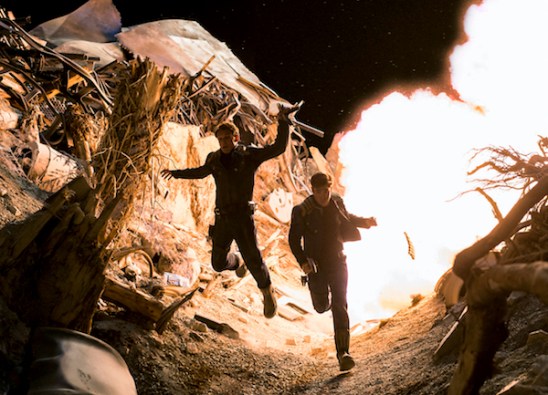
    As that, Beyond is pretty entertaining. An overall lighter tone than the heavy-handed Into Darkness, plus competently executed action sequences and fewer incredulity-inducing contrivances, make for a fun adventure.

    Surprisingly, it doesn’t succumb to the modern franchise proclivity for forcing third movies to be trilogy-formers. Maybe that shouldn’t be surprising though: it was confirmed before Beyond’s release that a fourth (aka fourteenth) movie is in development, so obviously this shouldn’t feel like the end of the road for this crew. The upside of this is that Beyond can get on with its story, unworried about being Epic.

    Explosive

    The downside is it creates a “just another adventure” feel to the plot — a bread-and-butter situation for Star Trek’s original TV format, but underwhelming in an expensive blockbuster movie franchise. Consequently Beyond feels inessential. That’s an odd sensation in a franchise nowadays, where the usual MO sees every movie feed into a bigger multi-film narrative. But with Into Darkness being deliberately ignored here (thanks to its unpopularity with hardcore Trekkies) and Beyond functioning as “just another adventure”, Trek is almost a franchise-out-of-time, where individual instalments can be entirely enjoyed in isolation.

    Not that I think that’s a bad thing. Beyond may lack a certain epicness, but it’s entertaining enough for what it is.

    4 out of 5

    Star Trek Beyond is available on Sky Cinema from today.

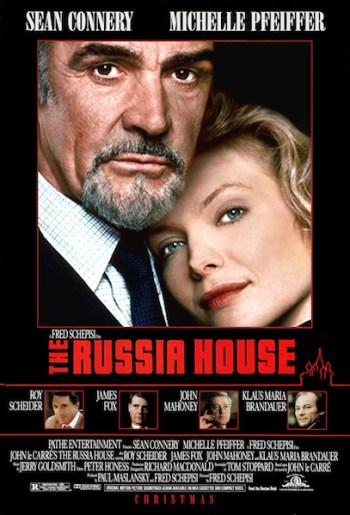
    The Russia House (1990)

    2016 #158
    Fred Schepisi | 123 mins | streaming (HD) | 2.35:1 | USA / English & Russian | 15 / R

    The Russia House

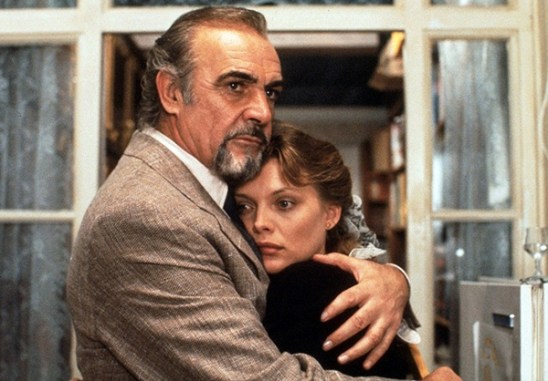
    Sean Connery and Michelle Pfeiffer are on fine form in this romantic spy thriller adapted from a John le Carré novel.

    Although it takes a little time to warm up, it soon reveals a typically intricate Le Carré narrative, with everyone playing everyone else as the intelligence agencies try to use Connery’s publisher to extract a Russian defector, with Pfeiffer as the go-between he begins to fall for. It all comes to a head with one of those delightful sequences where you’re not sure who’s conning who and how, and an ending that is, shall we say, pleasingly atypical for Le Carré.

    The central performances are superb — I’m not sure Connery, playing against type as a washed-up ageing no-name, has ever been better. There’s a top-notch supporting cast too, including Roy Scheider as a CIA agent, James Fox as Connery’s MI6 handler, plus Michael Kitchen, Klaus Maria Brandauer, David Threlfall, and even Ken Russell. It looks fantastic as well, at least to me, in an unshowy, not over-processed, grainy, very film-y way. Thanks to digital photography, they literally don’t make them like this anymore; heck, thanks to digital grading they haven’t made them like this for about 20 years.

    Is that a manuscript in your pocket or are you pleased to see me?

    The Russia House is a much overlooked film, even within the small (but, recently, exponentially expanding) canon of Le Carré screen adaptations. However, with its engaging, uncommonly humane espionage story, driven by strong performances, I think it merits a degree of rediscovery.

    5 out of 5

    The Russia House placed 16th on my list of The 20 Best Films I Saw For the First Time in 2016, which can be read in full here.

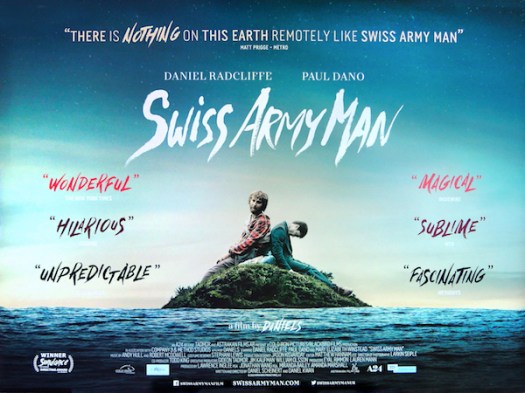
    Swiss Army Man (2016)

    2016 #177
    Daniel Scheinert & Daniel Kwan
    (aka Daniels) | 97 mins | Blu-ray | 2.40:1 | USA / English | 15 / R

    Swiss Army Man

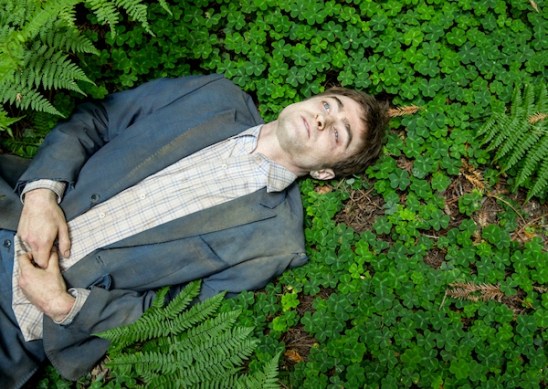
    If you’ve heard of Swiss Army Man, it’s likely for one thing and one thing only: this is the movie where Daniel “Harry Potter” Radcliffe plays a farting corpse with an erection. But rather than the childish super-gross-out comedy that short pitch would seem to suggest, Swiss Army Man is actually quite a sweet indie comedy-drama. With some super-gross-out comedy thrown in, natch.

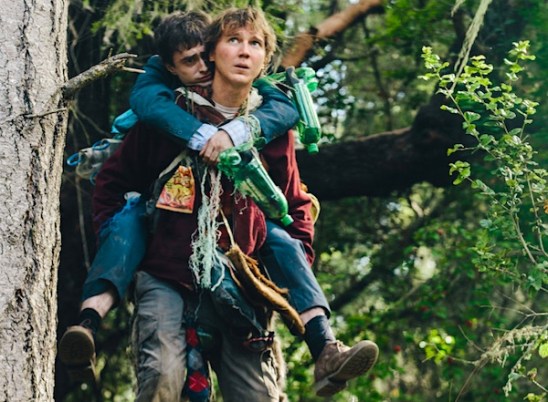
    The plot that leads us to the farting boner corpse begins with Hank (Paul Dano) stranded on an island and, in his lonely despair, attempting suicide. Then he spots a body washed up on the nearby beach. It turns out this isn’t a new friend, because he’s dead. Hank dubs him ‘Manny’. One thing leads to another and Hank uses Manny’s gastric expulsions to create a kind of jet ski that propels them off the island. Hank soon discovers the corpse has myriad potential uses (hence the title), especially when he starts to talk…

    Swiss Army Man is kind of like Cast Away if Wilson the volleyball was a farting corpse. Hank despairs at his situation, chats to the technically-inanimate Manny about it, and together they begin to work through the human condition. In between using Manny’s rigor mortis-powered limbs to chop wood, or his boner as a magic compass to guide them home, that is. I was going to say “it’s that kind of movie”, but I’m not sure there’s ever been another movie quite like Swiss Army Man.

    He ain't heavy, he's my farting boner corpse

    As well as the indie ruminations on the purpose and meaning of life, there are some mystery plots in play, just to keep things engaging. Who is the woman Hank keeps seeing in flashbacks? How many of Manny’s abilities are real and how much is just in Hank’s head? I mean, Manny can’t really talk… can he? What if Manny’s not the only one who’s dead? Maybe these shouldn’t be given so much focus — I don’t think the film wants to be about such plot mysteries — but they were the kind of things running through my head while watching, because you know there’s bound to be some kind of twist or reveal for what’s actually happening. Naturally, I won’t spoil that here; but perhaps the film plays even better on repeat viewings, when you can set aside such wonderings and focus even more fully on the friendship between man and corpse.

    That’s naturally powered by the two lead performances. Dano is very good as a man who’s feeling suicidal for, as it turns out, more reasons than “I’m alone on an island”; though enacting such patheticness (as a human trait rather than a criticism of his mental condition) seems very much within Dano’s wheelhouse. Radcliffe, however, is simply brilliant. Manny comes back to ‘life’ as a kind of innocent, unsure of how the world works and driven by his basest feelings; a reflection of all our inner psyches, in a way. Physically constrained by being, y’know, dead, Radcliffe manages to convey so much despite — or perhaps even partly because of — the limitations imposed upon him.

    Corpsehood

    Made for a relative pittance, technical merits are also strong, with neat special effects to convey Manny’s abilities, and a very indie-ish but fitting vocal-driven score by Andy Hull and Robert McDowell. Interestingly, the Blu-ray contains an option to watch the film without the score, which (based on the few bits I sampled) creates a remarkably different experience. That’s true of most films, of course, but here it dramatically changes the mood of some scenes. It’s less magical, in a way, and sadder, and maybe creepier, which is not the point or message of the film.

    “The farting boner corpse movie” is the kind of pithy description that will put many viewers off, but hiding behind the gross-out facade is a sweet comedy-drama about human interaction that, in its own way, is an incredibly moving, perhaps even heartwarming experience.

    4 out of 5

    Swiss Army Man is released on DVD and Blu-ray in the UK today.

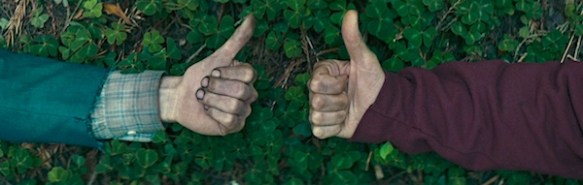
    Thumbs up

    War on Everyone (2016)

    2017 #52
    John Michael McDonagh | 98 mins | streaming (HD) | 2.35:1 | UK / English | 15 / R

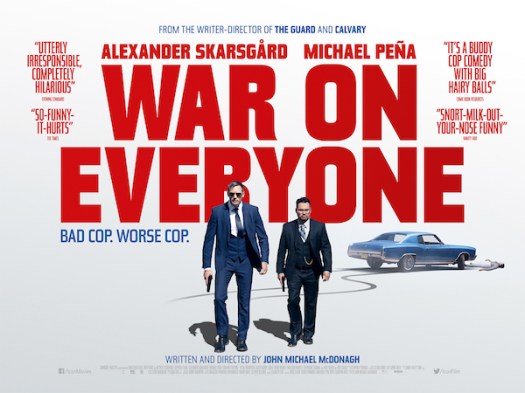
    War on Everyone

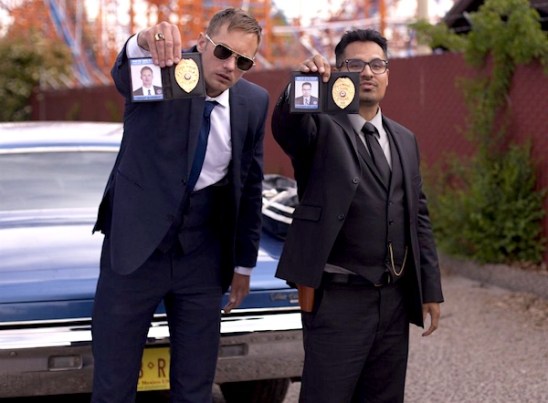
    The third feature from John Michael “older brother of the guy who made In Bruges” McDonagh, War on Everyone is a comedy crime thriller about two dodgy New Mexico cops (Michael Peña and Alexander Skarsgård) who are tricked while trying to prevent a heist and so set about tracking down the stolen money — to pocket for themselves.

    I’ve read that War on Everyone is massively offensive. Well, I mean, if you want to be precious about it, I guess some of it is. Maybe reading that left me expecting something incredibly outrageous, but sadly the film doesn’t hit those highs. I say “highs” — offensiveness for the sake of it is pointless, but some of the best material in the previous movies of the McDonagh brothers has come from a willingness to say and do un-PC things. War on Everyone doesn’t feel neutered in that regard, but nor is anything it does so striking.

    Worse, it has a rambling narrative, wandering pace, and inconsistent tone. It’s not funny enough, frankly, but nor is the crime plot interesting enough to sustain the humour drought. Peña’s comedic gifts carry some of the flat material, though barely, while Skarsgård seems a little lost in an underwritten role. He and Tessa Thompson attempt to salvage something from a romantic subplot that springs from almost nowhere and then occupies a bunch of screen time to no one’s benefit. Caleb Landry Jones fares best as a foppish strip club owner, one of the henchman to Theo James’ big bad, whose entire character is basically, “he’s English — they make good villains, right?”

    Not-so-nice guys

    There are broad similarities to another irreverent comedy thriller from 2006 about a pair of not-so-nice fellas investigating a somewhat-complicated crime plot, but War on Everyone just serves to demonstrate how hard it is to do what Shane Black makes look effortless in The Nice Guys. I thought War on Everyone trailed well and looked like it would hit that same level, or at least something close to it, but sadly the final result feels fumbled.

    2 out of 5

    John Michael McDonagh’s debut feature, The Guard, is on Channel 4 tonight at 12:05am. I’ve got the Blu-ray knocking around somewhere; really ought to get round to watching it…

    The BFG (2016)

    2017 #51
    Steven Spielberg | 117 mins | Blu-ray | 2.39:1 | USA & India / English | PG / PG

    The BFG

    The writer/director team behind E.T. reunite for another tale of a young kid befriending a strangely-proportioned otherworldly creature who can’t quite speak English properly and has an acronym for a name. This one, of course, is adapted from Roald Dahl’s beloved children’s book, here rendered into live-action — or, for a large part, realistic computer animation — by director Steven Spielberg.

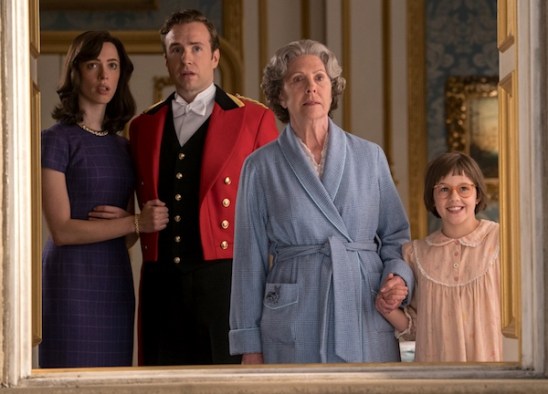
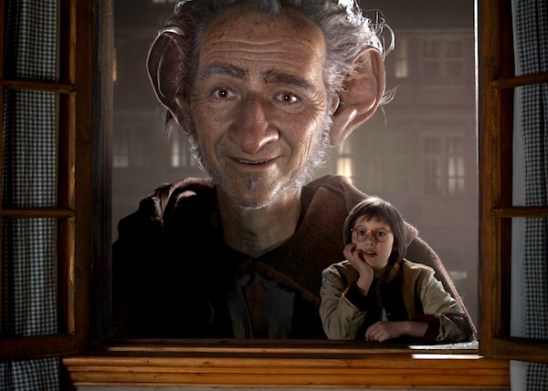
    If you don’t know the story, it concerns insomniac orphan Sophie (Ruby Barnhill), who one night spots a 24ft giant outside her window. Wary of her informing the rest of the world of his existence, he snatches her up and carries her off to giant land. Despite Sophie’s fears, he doesn’t eat her, because he’s actually the Big Friendly Giant (Mark Rylance, motion captured) — but his fellow giants are a different story. Led by Fleshlumpeater (Jemaine Clement, also motion captured), they bully the comparatively tiny BFG and are a constant threat to Sophie’s life, so she concocts a plan, which involves a trip to see the Queen (Penelope Wilton).

    For all its CGI — and, in creating a fantastical other-world adjacent to our own, there is a lot — much about The BFG feels pleasantly traditional, almost like a throwback to kids’ movies of a couple of decades past. This is partly the re-teaming of Spielberg and screenwriter Melissa Mathison, I suppose, but perhaps also the decision to retain the novel’s original 1982 setting. Not that you’d know it for most of the running time, until the Queen makes some telephone calls to “Nancy and Ronnie” (Reagan) and “Boris” (presumably Yeltsin, though that means someone’s got their eras mixed up); references that, coming quite near the end of the film, made me pause in the realisation that it wasn’t just set today (the reference to Boris made me assume the Queen was phoning our foreign secretary).

    Window dressing

    More than dated references, though, the throwback feel is thanks to the pace. I’d hesitate to call The BFG slow, but it’s certainly gentle for a good long while. I don’t think it needs to be a fast-paced thrill-ride, but a little extra speed early on, bringing the luxuriant two-hour running time down closer to the 90-minute mark, might’ve been beneficial. There’s certainly magic and wonder to be found throughout, which are very important aspects of a story like this, but I do wonder if kids might get a bit fidgety nonetheless, which would destroy the effect.

    There is a lot to admire, however. The production design is superb, the giants’ environment full of stuff pilfered from the human world and re-appropriated into useful things — a ship for a (water)bed, for example, or a road sign for a tray; in one sequence, cars and trucks become roller skates. It’s all realised with startling detailed CGI. Okay, you’re not going to mistake the giants for upsized real humans (which kinda makes me long for a Hook-era version of the film, when they would’ve done it all for real with optical effects), but look at the small details — the texture of the giants’ skin, for example — and it looks phenomenal.

    More importantly, the acting is pitched perfectly. Clement and his cohorts manage to be both menacing and comical by turns, Wilton brings easy class to the Queen, and Rafe Spall has an amusing little supporting role as a palace footman. However, Rebecca Hall is utterly wasted in a strangely nothing-y part as the Queen’s assistant — I can only presume this was either one of those “I love the book so will take any role” situations or one of those “my part was mostly cut” situations.

    Big star, little star

    But the real stars are the two leads. Ruby Barnhill was the result of a months-long search for the perfect Sophie and it was worth the effort. Called upon to be confident, scared, awed, and ingenious, Barnhill’s performance is precisely calibrated — “subtle” would perhaps be overselling it, but she lacks the histrionics you get from weak child actors. She’s overall charming, which is important in engaging us in the relationship between her and the BFG. In the giant role, Mark Rylance is, of course, sublime. He may have been recreated in the computer, but all of his personality shines through, his expressions and mannerisms both believable and familiar if you’ve seen him in his corporeal form. It’s one of the best-yet advocacies of so-called “performance capture” (where the actor’s whole performance is captured by those grey jumpsuits with little dots on, as opposed to just “motion capture” where it’s only their physical moves being digitised and supplemented by animators — both are the same process really, it’s just someone coined a different term to indicate when more of the actor’s own work is retained).

    Considering the level of challenge The BFG clearly presented to Spielberg (in the special features he talks about how at times he was unsure how to make the movie, with all the tough requirements of different scales, etc; he and his team actually spent a whole summer making the movie in previsualisation before they did it for real the year after), it’s something of a shame that it’s destined to be regarded as a minor work in his canon. I’m not going to argue it deserves a greater status among his venerable output, but it would be a shame for it to go ignored because of that.

    4 out of 5

    The BFG is available on Amazon Prime Video UK as of this week.

    The Witch (2015)

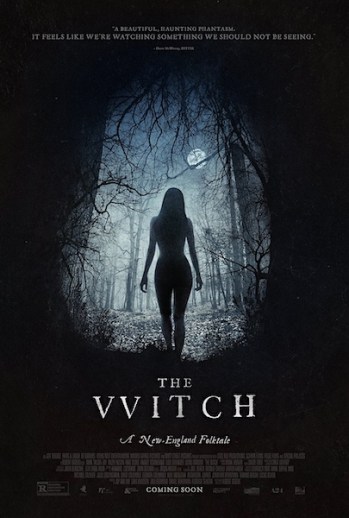
    aka The VVitch: A New-England Folktale

    2016 #171
    Robert Eggers | 93 mins | Blu-ray | 1.66:1 | USA, UK, Canada & Brazil / English | 15 / R

    The Witch

    There’s a lot to commend in this debut feature from writer-director Robert Eggers, the story of English settlers in 17th Century America who are banished from their community and begin to be affected by a supernatural force in the woods.

    With dialogue lifted from contemporary reports of witchcraft, it has a level of period authenticity that is rarely seen. I thought it was an immensely effective choice for evoking an entirely different era, but others find it a distracting affectation. Also distancing for some viewers is the understated style — it’s more of an arthouse period flick than a gore ‘n’ guts chiller; like a horror movie made by Terrence Malick. Much like the dialogue, I thought that gave it a level of realism. You know this isn’t a true story because such occult happenings aren’t real… but if they were, they’d be like this.

    It’s not a horror movie that suits all tastes, then, but I thought it was v.v. creepy and v.v. good.

    4 out of 5

    Don’t Breathe (2016)

    2017 #21
    Fede Alvarez | 88 mins | streaming (HD) | 2.35:1 | USA / English | 15 / R

    Don't Breathe

    One of the most talked-about thriller-cum-horror movies of last year, Don’t Breathe (which is available on Sky Cinema as of last Friday) concerns a gang of young house burglars — Rocky (Jane Levy), who’s doing it to help get her little sister away from their good-for-nothing parents; her boyfriend Money (Daniel Zovatto), who’s a bit of a dick; and Alex (Dylan Minnette), who’s secretly in love with Rocky, and whose dad runs a security company from which they ‘borrow’ the necessary information to access homes without setting off the alarms. After a big final score, they set their sights on the remote home of a chap (Stephen Lang) whose daughter was killed in a car accident, from which he netted a hefty settlement. Plus he’s blind, so it’ll be easy money. Right? As is no doubt obvious, the blind bloke turns out to have a few secrets up his sleeve… and down his basement…

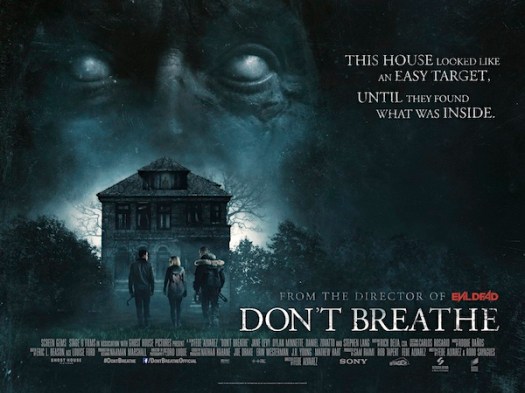
    Despite how it was advertised (doesn’t that poster scream “horror movie”?), really speaking Don’t Breathe is a thriller — it’s about a trio of crooks trying to rob a home and its owner fighting back. Though I suppose it depends what you use to define “a horror movie”, really. I tend to think of them as featuring an enemy who is either supernatural or possibly supernatural, but I suppose the only real prerequisite is that they be scary. Don’t Breathe doesn’t have a supernatural villain (though the blind man’s abilities do stretch credibility), but it’s so gosh-darn suspenseful that the viewing experience is similarly tense to a horror movie, even if outright scares are few. And one memorable scene in particular is certainly classifiable as horrific, most especially for female viewers. So, as a sub-90-minute exercise in mood and thrills it’s a very effective viewing experience; but it’s best not to stop to think about the practicalities if it were real because a lot of the film doesn’t withstand scrutiny. I won’t rehash all of the plot’s logic gaps (there are plenty of articles online that already do that, if you’re interested), but I think it’s best enjoyed as a go-along-with-it experience.

    Bad guys gone good?

    One point of contention for many seems to be the likeability or otherwise of the characters. The ostensible heroes are a gang of crooks who we first meet robbing the home of an undeserving victim, and being needlessly destructive about it too. You might think this sets the blind man up as some kind of avenging hero, but it becomes clear pretty quickly that he’s an even bigger bad guy… so are we meant to side with the crooks after all? For me, this raises a question I’ve come up against before: does a movie actually need to have any likeable characters? Some people need that, for sure, but I don’t think a film does per se. I’m not sure Don’t Breathe has really thought through its position on this issue, which makes reading online commentary about this point a funny thing. For instance, I saw someone argue that the writers make no effort to make us like the burglars — so, what’s the whole thing with Rocky trying to get her sister out of their shitty life for, then? And then another person stated that they actually found themselves liking two of the “bad guys” — so, if the burglars are the bad guys that makes the blind guy the hero? I don’t want to spoil anything, but if you’ve seen the movie you’ll know why holding that opinion is either, a) ridiculous, or b) deeply troubling…

    As I said, it’s best not to think about it too much. I think Don’t Breathe is perhaps the movie equivalent of a theme park attraction: designed to thrill you and scare you during its brief duration, not withstand plot and character scrutiny when dissected afterwards. That’s why my rating errs on the lower side, though if you want nothing more than a gripping hour-and-a-half it maybe merits another star.

    3 out of 5