Unknown's avatar

About badblokebob

Aiming to watch at least 100 films in a year. Hence why I called my blog that. http://100films.co.uk

The 100-Week Roundup VIII

As I mentioned last time, these films are technically from the same week as that last bunch, but seven films seemed a lot for one post. Plus, although they were all watched in the same week, they were watched in different months: the last four were my final films from July 2018, whereas these three are some of my first from August 2018.

In this roundup…

  • Beneath the Planet of the Apes (1970)
  • Pride and Prejudice and Zombies (2016)
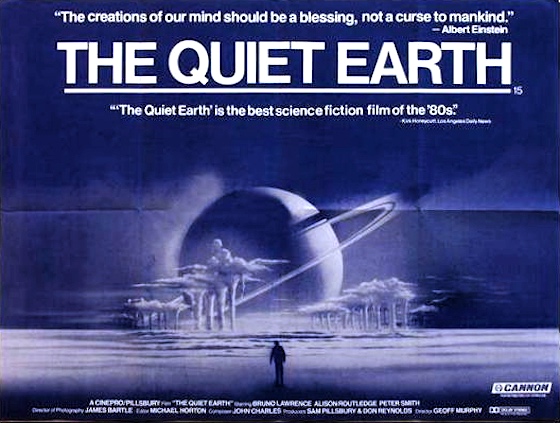
  • The Quiet Earth (1985)


    Beneath the Planet of the Apes
    (1970)

    2018 #174
    Ted Post | 95 mins | Blu-ray | 2.35:1 | USA / English | 15 / G

    Beneath the Planet of the Apes

    Beneath the Planet of the Apes is the sequel no one wanted to make, including the studio — quite a different attitude to today, eh? But Fox were in financial troubles. For his part, Heston managed to negotiate a reduced role and suggested an ending that would kill off the potential for any more sequels. Well, that worked

    Picking up where the first film left off, it sees Heston’s character, Taylor, disappear mysteriously. After a second Earth spaceship crashes on the planet, its only survivor teams up with Taylor’s girl, Nova, to find him, which leads them to encounter a society hiding (you guessed it) beneath the planet of the apes.

    Overall, this feels like trashier sci-fi/adventure than the first one, with a certain B-movie aesthetic to the underground mutants, and a first half that’s just a bunch of running around. Yet, despite that, there are some powerful ideas and solid social commentary here, mainly about blind faith and the terror of military leadership. Plus, the mutants’ use of telepathy as a weapon is quite clever, and their unmasked designs are suitably eerie rather than just ugly. It also has one of the most brutal and bleakest endings ever seen in a Hollywood blockbuster — or probably outside of one, come to that.

    The violence in the final act was originally cut in the UK, and when it was finally released uncut on video some 17 years later, it earnt a 15, a rating its retained ever since. In the US, it’s always been rated G. Those Americans and their insouciant attitude to violence…

    Obviously I watched this two years ago, and at the time I assigned this three-star rating. But I will say that I remember it more fondly than that. As noted above, it takes a while to get going, and it doesn’t have the same classy aspirations as the first film, but its unrepentant fatalism is almost admirable.

    3 out of 5

    Pride and Prejudice and Zombies
    (2016)

    2018 #175
    Burr Steers | 103 mins | TV (HD) | 2.35:1 | UK & USA / English | 15 / PG-13

    Pride and Prejudice and Zombies

    Here’s another one I found more enjoyable than I feel I should have.

    For starters, it’s wild this ever actually got made. I mean, the title is an amusing idea — it’s basically a five-word gag, isn’t it? — but ponder for a moment how that’s going to play out as a full narrative. To live up to its title, it has to make an effort to follow the plot of the novel, and there lies the rub: no one wanting a zombie movie really wants to sit through a Regency romance, and no one wanting a Regency romance really wants it sullied by zombie-based action and gore. Well, inevitably someone will fall into that Venn diagram, but, as someone who’ll quite happily watch either of those genres in isolation, even I struggled to find the idea of such a mash-up too appealing. It needs a clever hand on the tiller to negotiate those treacherous waters, and I’m not sure the director of 17 Again and Charlie St. Cloud was that person.

    But, as I said at the start, I did find it surprisingly watchable. It does have a certain amount of wit and fun with the concept, like turning arguments about accomplishment into ones about fighting style. Sometimes the zombies and fights are tacked on to the existing story, but sometimes the narrative is neatly remixed to include the zombie threat. And like any true action movie, scenes of high emotion are settled not with words but with a good dust-up. There’s a solid cast too, including Lily James (always a bonus) and reliable stalwarts like Charles Dance, although, as Darcy, Sam Riley sounds like he’s battling a nasty throat infection. But Sally Phillips is basically a perfect Mrs Bennet for this or any other version, and the same could be said of Douglas Booth as Bingley, or Matt Smith, on fine comedic form as Mr Collins.

    Pride and Prejudice and Zombies and Knickers

    It does drop the ball sometimes. The climax doesn’t put enough effort into eliciting tension (it’s like they ran out of money or time or effort: “can the heroes make to the bridge in ti— oh, they just did”); at least one apparent subplot doesn’t go anywhere at all; and a mid-credits scene suggesting the story isn’t over feels lame. It definitely pulls some punches in aid of landing a PG-13 rating in the US, which is unfortunate — it’s a mad concept; it needs to do it properly, go all out and get an R. (I’d still say it’s perhaps a bit too gruesome for PG-13, which is why it landed a 15 over here.)

    I still think the director is the problem. A surer hand would’ve made more of the verbal sparring during the physical sparring; would’ve sold the tension of the action. Apparently David O. Russell was original set to direct, which is mad — can you imagine choosing to follow awards-winners like The Fighter, Silver Linings Playbook, and American Hustle with this? Apparently other directors “considered” included Matt Reeves, Neil Marshall, and Lord & Miller. Presumably they turned it down rather than any producer thinking Burr Steers was a better pick — Lord & Miller, in particular, probably would’ve nailed the tone. But, all things considered, what we got could’ve been a lot worse.

    3 out of 5

    The Quiet Earth
    (1985)

    2018 #178
    Geoffrey Murphy | 91 mins | Blu-ray | 1.85:1 | New Zealand / English | 15 / R

    The Quiet Earth

    Here we reach the first real hurdle in these two-year-old roundups, because it turns out I made no notes whatsoever after viewing The Quiet Earth. I did note down some quotes from the booklet essay accompanying Arrow’s Blu-ray release, but it seems a bit rich just to list those excerpts.

    What I can tell you is that The Quiet Earth is a science-fiction film about a scientist who wakes up one morning to find everyone else has disappeared — not fled, not died, just gone. What unfolds from there is a mix of mystery (what happened?) and a kind of existential character examination, both of this man and of ourselves — what would you do if you were the only person on Earth? Only, it doesn’t play quite as heavily as that makes it sound. There are more plot developments, but to say too much would spoil the discovery. And it is a film worth discovering. As Amy Simmons puts it in the aforementioned essay, it’s a “deeply relevant work which reflects darkly upon our age of estrangement and isolation. […] Shifting in tone from horror to comedy to pathos and back again, the film’s great strength is in the themes it explores and satirises — namely nuclear fears, technophobia, and cultural and geographical isolation — which are even more urgent now than when the film premiered in 1985.”

    I’m doing it a disservice with this pathetic little ‘review’, but hopefully someday I’ll revisit it and come up with something more insightful.

    4 out of 5

  • The 100-Week Roundup VII

    If I were being slavishly accurate about weeks, there should be seven films in this roundup. But that seemed a bit much, so — as the next one of these wasn’t due until the end of the month — I’ve split it in two.

    In this roundup, the final films I watched in July 2018.…

  • The Garden of Words (2013)
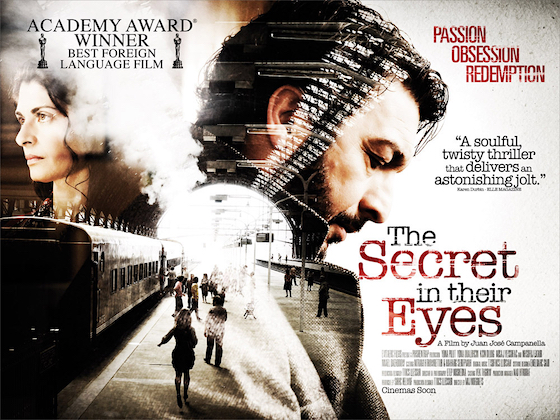
  • The Secret in Their Eyes (2009)
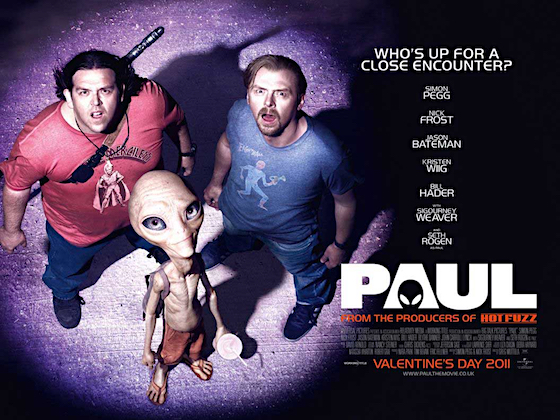
  • Paul (2011)
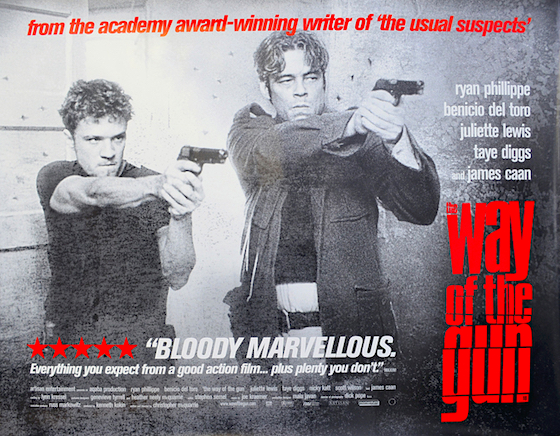
  • The Way of the Gun (2000)


    The Garden of Words
    (2013)

    aka Koto no ha no niwa

    2018 #170
    Makoto Shinkai | 46 mins | streaming (HD) | 16:9 | Japan / Japanese | 12

    The Garden of Words

    If the only anime director’s name you know is Hayao Miyazaki, you could do worse than familiarise yourself with Makoto Shinkai, director of recent popular hits Your Name and Weathering with You. He’d already been gaining attention with the films he made before those, which include short feature The Garden of Words.

    It revolves around two individuals: a 15-year-old schoolboy who aspires to be a shoemaker, and a 27-year-old woman. They meet one day in a park during a rainstorm and develop a connection. According to Shinkai, the film is a love story between two people “who feel lonely or incomplete in their social relations, but who don’t feel that they need to fix this loneliness.” That’s an interesting perspective, because while there’s undoubtedly a significant element of loneliness in the film, it’s accompanied by an element of depression; that these two characters seem unfilled. Without wanting to spoil anything, it seems to be the connection between the two that ‘saves’ them and elevates their lives — i.e. they did need to fix their loneliness. Perhaps it’s a disconnect between intention and execution that led me note that “where it ends up going isn’t as good as where it begins”. Nonetheless, the characters are engaging, and their emotional turmoil and connection are affecting. It also leaves room for personal interpretation with an open ending — it does reach a conclusion of sorts, but there’s clearly space the viewer to imagine what comes next.

    The animation is simply stunning — both beautiful in itself, and in its technical accomplishment. For that reason, if given the choice, it might be tempting to opt for an English dub, but I’d advise to stick with the original Japanese. I’ve written before about how I’m regularly conflicted when watching anime about whether to go for the original Japanese or an English dub, and I do often I go for the latter — I must admit I’m swayed by the recognisable voice casts on Ghibli films, for example; and, generally speaking, it allows you to appreciate the visuals more when you’re not having to read a lot of subtitles. Nonetheless, this time I chose the Japanese audio, and I’m glad I did: it’s subtle and calm, like the film itself, and the quietness and gentle pace mean there’s not an overabundance of distracting reading (unlike in Your Name, for example). I popped on a bit of the American dub afterwards and it felt all wrong by comparison — somehow brash and decidedly inauthentic. On the bright side, either track sounds luscious in 5.1, with the rain falling all around you, which serves to really immerse the viewer in the situation alongside the characters.

    4 out of 5

    The Secret in Their Eyes
    (2009)

    aka El secreto de sus ojos

    2018 #171
    Juan José Campanella | 129 mins | download (HD) | 2.35:1 | Argentina & Spain / Spanish | 18 / R

    The Secret in Their Eyes

    A surprise winner of the Best Foreign Language Oscar in 2010 (it beat A Prophet and Michael Haneke’s The White Ribbon), Argentina’s The Secret in Their Eyes is a murder mystery, two very different love stories, and a musing on the nature of justice, especially within a corrupt system.

    Primarily, it’s a procedural thriller about a decades-old unsolved case that one of the original investigators is revisiting in the hopes of finding closure. As that, I thought the film was probably a bit too long — despite some solid thematic weight, the unnecessarily slow pace at times make it feel a smidge self-important for what is fundamentally a crime thriller. That said, those other facets that have been added to supplement the storyline — the romance side; the passage of time (how do people deal with such life-changing events over the ensuing decades?) — do bring something to the film, elevating it beyond standard police procedural fare.

    Even as ‘just’ that, it pulls off some spectacular feats: the famous single-take at the football match really is an all-timer, and the final twist is unexpected and a perfect capper. I was this close to giving it full marks, and maybe when I revisit it someday I will.

    4 out of 5

    Paul
    Extended Edition
    (2011)

    2018 #172
    Greg Mottle | 109 mins | Blu-ray | 2.35:1 | UK & USA / English & Klingon | 15

    Paul

    On a post-ComicCon road trip around the US’s UFO heartland, a pair of British geeks (Simon Pegg and Nick Frost) bump into an actual alien, the eponymous Paul (Seth Rogen), who’s on the run from a government facility. Cue a kind of “E.T. for grownups” as the trio — and a widening assortment of supporting characters — endeavour to evade the authorities and get Paul home.

    Mistaken by some for the third part of the Three Flavours Cornetto trilogy (thanks to it starring Pegg and Frost, but it’s missing the vital ingredient of director Edgar Wright, who was committed to Scott Pilgrim), Paul lacks the sharpness of that trilogy at its best. However, it’s full of likeability — in the characters, and of course the humour — to the point where it actually manages to get a bit emotional at the end. It’s also chock full of references and quotes for fellow geeks to spot, some of which are incredibly well-timed to have fantastic impact.

    As for the extended cut, there’s a comparison here. As usual, the theatrical cut was R-rated in the US but the extended one is unrated there, but (also as usually) I don’t think there’s anything that wouldn’t pass at R. The running time difference is about five-and-a-half minutes, but there are 41 differences crammed into that time. It seems like some fairly memorable jokes were cut and others added back — nothing earth shattering, but enough to call the extended cut the preferable one.

    4 out of 5

    The Way of the Gun
    (2000)

    2018 #173
    Christopher McQuarrie | 120 mins | Blu-ray | 16:9 | USA / English | 18 / R

    The Way of the Gun

    The debut directorial feature from screenwriter Christopher McQuarrie (who made his name penning the likes of The Usual Suspects and more recently has found success as the regular writer-director of the Mission: Impossible movies), is one of those ’90s crime comedy-dramas — you know, the kind of thing we describe as “Tarantino-esque”, for good reason. It has its fans, but McQuarrie tends to refer to it disparagingly on social media, no doubt in part because it landed him in “director jail” for over a decade. Personally, I agree with McQuarrie (I usually do): it’s not a failure, but it’s not much of a success either.

    My main problem with it is that it’s over-long and over-complicated. Both of those are thanks to too many characters with too many motivations. It’s possible to get your head round it all in the end, but there’s a stretch in the middle where it feels like work. But rather than slow things down and spell it out, it might be better if it moved through them all quicker — at least then it would be pacy. It’s also rather dully shot by Dick Pope, who was later Oscar-nominated for the likes of The Illusionist and Mr. Turner, but has plied most of his trade in the grounded world of Mike Leigh movies, which perhaps explains that. There are still two or three good shots, plus a neat oner that indicates the direction McQ’s style would head.

    There are flashes of McQuarrie’s brilliance elsewhere too, including some nice bits of dialogue and a couple of good sequences. The action scenes, in particular, demonstrate he had a strong skill there from the start. They feel very grounded and real — just the way the characters move; that they’re constantly reloading; how it ends when everyone’s out of bullets. McQuarrie’s brother, a Navy SEAL, was the technical advisor for these scenes, which explains their accuracy. The final shoot-out, with all of that going on, is the best bit of the movie. Well, at least it ends on a high.

    3 out of 5

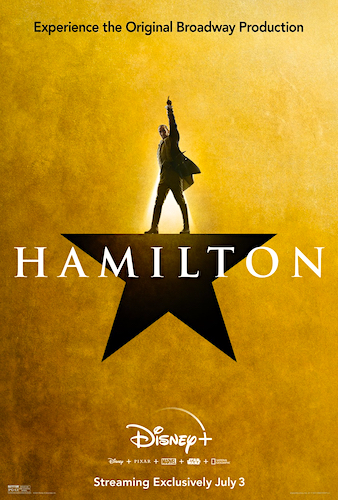
  • Hamilton (2020)

    2020 #157
    Thomas Kail | 160 mins | streaming (UHD) | 1.85:1 | USA / English | 12 / PG-13

    Hamilton on Disney+

    Hamilton, the original musical, is one of the great works of art of the 21st century so far, and now we all get a chance to be in the room where it happened (provided you’re prepared to pony up some dough to Disney+) thanks to the makers having had the foresight to film a full production with the original Broadway cast back in 2016 (and then flogging that recording to Disney for $75 million).

    The show is a genuine phenomenon, but if you’ve let it pass you by, allow me to explain the basics. This is the life story of Alexander Hamilton, one of the Founding Fathers of the USA; an immigrant who fought in the War of Independence, became the first Secretary of the Treasury, and in between and around all that most assuredly lived a life — there’s friendship and rivalry; romance and infidelity; genuine triumph and heartbreaking tragedy. Here that story is told via music, written and composed by Lin-Manuel Miranda (who also portrays the title role), a fusion of hip-hop, R&B, and more traditional Broadway stylings, performed by a cast mostly made up of people of colour. It’s a tale of outsiders and immigrants and forward-thinkers who battled for the right to be recognised and respected — it’s a history lesson, but oh yeah, it’s timely.

    It premiered back in 2015, so over the past five years the praises of the original show and its successful soundtrack album (the primary medium through which most people have been able to experience the work, given the scarcity and cost of tickets) have been thoroughly sung. To briefly offer my perspective, I came to it ‘late’ — sure, I heard about it (initially thanks to references to its ticket prices), but I overlooked it as just another bit of mass-popular culture that likely didn’t have any weight or staying power. My mistake. Long story short, I finally listened to it in full in 2019 and was blown away.

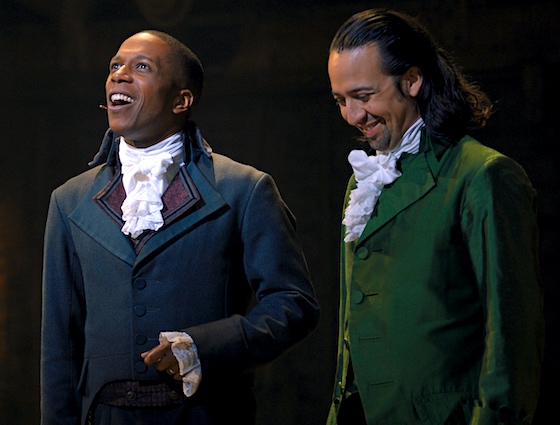
    Aaron Burr, sir

    Adjectives to describe its quality are endless. It’s densely and intelligently written, packed with historical information at every turn, abundant with sly references to other media. Its structure is sublime, laced with callbacks and nods forward from the very opening number; musical motifs repeat, as do lines and ideas, some cropping up before their real significance has been reached, like flash-forwards; elements of plot and character are echoed and mirrored. Many of these are observable first time through; others only reveal themselves with repeat visits. The characters are sharply and smartly drawn, revealing layers and nuances and different perspectives as the piece goes on — it may ostensibly be about Alexander Hamilton, but multiple other characters are at least as richly painted, if not more so. It engrosses like a thriller and packs the serious emotional punch of a finely-wrought drama, but it’s also very funny at times, with numbers as toe-tappingly addictive as a great pop song. It’s hard to think of a more complete all-round experience.

    Well, complete but for visuals if (like me) you’d never seen it performed, only listened to the soundtrack. And, you know, the soundtrack’s not a bad way to experience it — it doesn’t feel notably incomplete. Normally when you listen to a musical’s album, you just get some nice songs from the production. With Hamilton, you get (very nearly almost) the entire soundtrack, and therefore the entire story — you can follow it and not feel like you’ve missed anything. (I do wonder if that’s part of why it’s been such a success.) The lyrics and music conjure up their own imagery in your mind — certainly for me, ever since I first listened to it I’ve pictured whole chunks of it as I’d realise them in a movie version. I’m sure they’ll do a ‘proper’ film of it someday (you really think they’re going to leave all that money on the table?), but I think it’s for the best that’s not the first way I’m seeing it, because I worry it won’t live up to what I’ve concocted in my version.

    As I mentioned at the start, this isn’t a film reimagining like a normal movie musical, but rather a filmed record of the original production. It was shot over three days back in June 2016 (shortly before the original cast moved on), during a mix of live performances and in an audience-less auditorium for the sake of closeups, crane shots, etc. That’s one of the things that elevates this particular film above other recorded-theatre productions I’ve been watching recently (like One Man Two Guvnors, Danny Boyle’s Frankenstein, or the RSC’s Macbeth): whereas they have clearly been filmed live during a single performance, with all the restrictions that implies (limited camera angles; making editing choices in real-time), Hamilton has some extra remove, which has allowed director Thomas Kail to be a bit more creative.

    Looking for a film at work, work

    The camerawork endeavours to add something no theatre performance could, allowing us to see details that would be missed from even the best seats in the house. Closeups let us appreciate the full spit-flecked contempt from Jonathan Groff’s George III in You’ll Be Back; the restrained emotional sacrifice injected into Angelica by Renée Elise Goldsberry during Satisfied; Eliza’s heartbroken defiance from Phillipa Soo in Burn; or the rare occasions Leslie Odom Jr. allows Aaron Burr’s true emotions to break through in the likes of Wait For It and The World Was Wide Enough. That’s not to mention the countless other moments and performers that benefit from us being able to see how much they’re giving their performances; all the subtleties they’re adding.

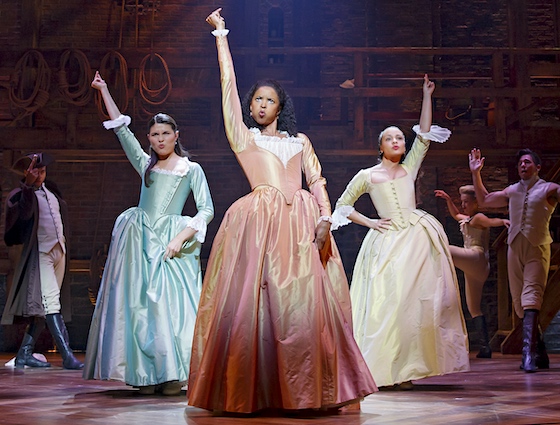
    At other times the camera angles show off the choreography, for example with punch-ins to highlight specific elements during stage-wide ensemble showpieces, like the rewind at the start of Satisfied, or a bird’s eye view as paper flutters in the air during The Reynolds Pamphlet. Still other scenes are reframed for our convenience, such as an exchange between Burr and Hamilton during Non-Stop that takes place upstage off to one side, but is now centred through medium shots and closeups. If all that sounds like it might serve to undermine the staging, it most certainly does not. When called for, Kail and editor Jonah Moran frequently fall back on wide angles to ensure we see the scope of what’s occurring. Only once or twice during the whole two-and-a-half hours do you feel maybe they chose a less-than-ideal angle or over-edited a sequence.

    Having said that listening to the soundtrack feels like a complete experience, watching it certainly shows what you were missing. There’s so much more to add, from little nuances of performance, to visual-only gags and callbacks, to impressive dance and staging — and if we’re already comparing this to the presumed ‘proper film’ version that will exist someday, I also presume some of that staging will be lost in the visual translation. But while there’s an undoubted “designed for the stage” aspect to the blocking or the way some things are realised, it still works on film.

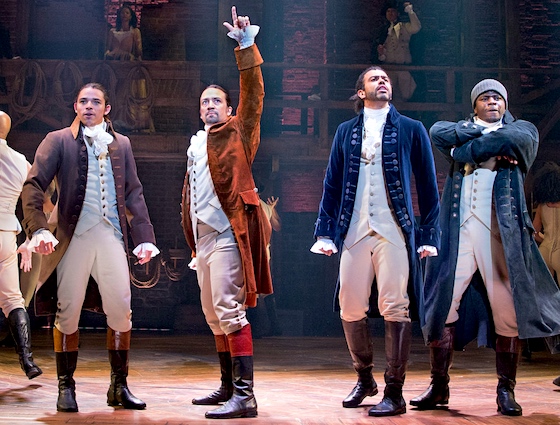
    Not throwing away their shot

    You can’t ignore that this is a film of a Broadway production — even if you wanted to, an opening subtitle reminds us it’s June 2016 in the Richard Rodgers Theatre, and the audience is frequently to be heard clapping, cheering, and laughing (mixed onto the rear speakers if you’re watching in surround sound, as you’d expect, along with a few other moments and effects that add to the experience if you can benefit from such a setup). But it’s so well staged and filmed that you can buy this as the intended experience. With those other filmed-theatre productions I mentioned, you’re often aware that what you’re watching has primarily been staged for those in the room, and that you getting to observe it from a few fixed camera positions is a nice bonus if you couldn’t be there. With Hamilton, it feels like nothing is missed; not only that, but that this is the way the story was meant to be told, complete with elements of theatrical artifice, like the stripped-back staging and actors playing multiple roles (which roles are shared by the same actors is not without significance). Whenever and whatever they do for that theoretical ‘proper film’, I feel like it won’t negate this version, not just as a record of the original show, but as a film in its own right.

    That’s perhaps the most striking aspect of this particular version: it doesn’t feel like a mere stopgap until they film it ‘properly’, nor a “that’ll do” stand-in for a real theatrical performance, but instead like a legitimate experience in its own right. Hamilton is a masterpiece, and getting to see it performed by the original cast in its original staging via a film so carefully and lovingly crafted is an absolute thrill.

    5 out of 5

    Hamilton is available on Disney+ now. It placed 3rd on my list of The Best Films I Saw in 2020.

    The Jaja Ding Dong (Ding Dong!) Monthly Review of June 2020

    My love for you is wide and long, dear readers, and so (one of) the breakout hit(s) from Netflix’s Eurovision movie seemed the only appropriate title for this month’s review.

    Also, I didn’t have any better ideas. I mean, I could’ve called it “halfway”, because we are halfway through the year and I’m going to talk about that… but it’s not as fun, is it?


    #128 The Children Act (2017)
    #129 Paris When It Sizzles (1964)
    #130 Shadowlands (1993)
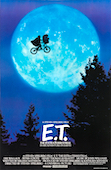
    #131 E.T. the Extra-Terrestrial (1982)
    #132 The Gay Divorcee (1934)
    #133 The Last Black Man in San Francisco (2019)
    #134 The Peanut Butter Falcon (2019)
    #135 Split Second (1992)
    #136 Birds of Prey (and the Fantabulous Emancipation of One Harley Quinn) (2020)
    #137 The Old Dark House (1932)
    #138 The Rhythm Section (2020)
    #139 The Vast of Night (2019)
    #140 The Armour of God (1986), aka Lung hing foo dai
    #141 Gemini Man (2019)
    #142 Cairo Station (1958), aka Bab el hadid
    #143 Tomb Raider 3D (2018)
    #144 7500 (2019)
    #145 Do the Right Thing (1989)
    #146 Shazam! 3D (2019)
    #147 Crawl (2019)
    #148 Chicken Run (2000)
    #149 Man on Wire (2008)
    #150 Who Killed Captain Alex? (2010)
    #151 3:10 to Yuma (2007)
    #152 Polytechnique (2009)
    #153 Eurovision Song Contest: The Story of Fire Saga (2020)
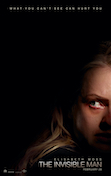
    #154 The Invisible Man (2020)
    #155 Without a Clue (1988)
    Paris When It Sizzles

    E.T. the Extra-Terrestrial

    The Old Dark House

    The Invisible Man

    .


    • I watched 28 new feature films in June.
    • It’s my joint-3rd best month of 2020 (tied with March), which is right in the middle when you remember there have only been six months… but 2020 is clearly an exceptional year, because it’s also in the top 5% of months all-time.
    • It’s also my best June ever, beating the 21 of June 2018.
    • Naturally, that means it stomps all over the June average (previously 10.0, now 11.4).
    • It also sails past the rolling average of the last 12 months (previously 15.3, now 17.3), and also pips the average for 2020 so far (previously 25.4, now 25.8).
    • Reaching #155 means I’ve already passed my final total from last year, making 2020 already my fifth highest totalling year ever.

    Now, some observations on the actual films I watched…

    • They included my 2,000th film for this blog. I wrote about that here.
    • I was also particularly glad to get a chance to see Cairo Station, one of the five films I flagged from The Story of Film: An Odyssey (my 1,000th film) back in August 2015. In the almost-five-years since that post, I’ve seen two of those films. Of the other three, I’ve owned one on Blu-ray for several years; another was released on Blu-ray in the UK last November; and the fifth recently came out on Blu-ray in the US. So, I could/should be completing them by now…
    • This month’s Blindspot film: Spike Lee’s Do the Right Thing, which is exceptionally pertinent right now — which, considering it’s now over 30 years old, is rather depressing. A great film, though.
    • From last month’s “failures” I watched Crawl, The Last Black Man in San Francisco, The Peanut Butter Falcon, The Rhythm Section, and The Vast of Night.

    Finally, returning to statistics: the end of June marks the halfway point of the year, of course, and at #155 it’s the furthest I’ve ever reached by this point (beating #145 in 2018). So, to mark the occasion, I’ve gone back over previous years to see what I can learn about the first half of the year as a predictor for the second.

    • Logic might suggest the second half would be double the first, but that’s never been the case.
    • Of the previous 13 years, five saw the second half more than double the first, with the other eight showing a decrease (obviously).
    • The biggest discrepancy came last year, 2019, when I did 64.9% of my film viewing in the first half of the year, leaving just 35.1% in the second.
    • The biggest swing the other way was in 2009, when I watched 40.4% in the first half of the year and 59.6% in the second.
    • On average, the second half of the year accounts for 48.3% of my viewing; though if we look at just the last five years, that drops to 44.8%.
    • So, as a predictor for 2020, if I follow the all-time average I should end the year on #305 — holy moly! A feat that never seemed possible, considering I’ve only passed #200 twice.
    • If I take the average of just the last five years, I only reach #283 — which would still be my highest year ever by over 20 films.
    • And, compared to the two extremes detailed above, anything below #239 would be a new second-half low (in percentage terms), while a new high would see me watch over 383 films! The latter would mean a monthly average of 38.1 for the rest of the year — higher than I’ve ever reached in a single month. I really don’t see that happening.
    • Leaving percentages behind, the average number of films I’ve watched in July-to-December is 69, which this year would put my final total at 224.
    • Lest all this sound like plain sailing to a number definitively above 200, my weakest-ever July-to-December was 33 in 2011, which, if repeated, would see 2020 end on 188. Never say never…


    The 61st Monthly Arbitrary Awards

    Favourite Film of the Month
    Lots of stuff I liked a great deal this month, and as usual it’s hard to compare such wildly different films. For surprise value, I’m drawn towards Paris When It Sizzles — it doesn’t seem to be well-rated on the whole, but it’s a lot of fun as a kind of “insider’s view” Hollywood spoof that feels ahead of its time.

    Least Favourite Film of the Month
    No outright bad movies this month, in my estimation, but there were more than a couple that didn’t live up to my expectations. Perhaps the worst of these was Crawl, purely because it was doing so much better early on than it was by the end.

    Song That Most Stands a Chance at the Oscars of the Month
    God only knows what’s going to be going on at the Oscars next year, but they should be more amenable to streaming movies than ever, and that might open the door for a song from The Story of Fire Saga to get in — if there’s one thing most people who’ve watched it can agree on, it’s that the original songs are rather catchy (in a Eurovision-y way). Heck, why just one? In the past, multiple songs from the same film have made it, so never rule that out (I have no idea how the rules for the song category work). But if only one song makes it then… no, it won’t be Jaja Ding Dong (well, you never know). It might be Volcano Man, just because that had several weeks of advance play due to being released as a kind of teaser trailer. But judged as an actual song, the big emotive climactic number Husavik surely deserves a shot.

    Most Desirable House of the Month
    I can see why Jimmie Fails obsesses over restoring, maintaining, and (re)acquiring that house in The Last Black Man in San Francisco — it’s gorgeous. Until it gets that makeover at the end, anyway (um, spoilers? I dunno).

    The Audience Award for Most-Viewed New Post of the Month
    Maybe it’s because there’s nothing new in cinemas. Maybe it’s because Eurovision remains popular in many places, as does Will Ferrell. Whatever the cause, Netflix’s Eurovision Song Contest: The Story of Fire Saga has generated a lot of chatter since its release last Friday, and so it’s of little surprise that my release-day review has attracted a fair few visitors. It easily tops this month’s chart (both new and all-time posts), and has overtaken another Netflix original, Extraction, to be my most-viewed film review of 2020 so far.


    This month, my Rewatchathon movies forward at give-or-take its intended pace — which, after last month’s bumper crop, means I’m still over a month ahead of schedule.

    #27 The Scarlet Claw (1944)
    #28 Gambit (1966)
    #29 The Pearl of Death (1944)
    #30 The House of Fear (1945)

    Three of those continue my rewatch of the Sherlock Holmes series starring Basil Rathbone and Nigel Bruce. My original reviews are linked above; the following links are to new thoughts on Letterboxd. In summary, I think The Scarlet Claw remains my overall favourite from the series, but I enjoyed both The Pearl of Death and, in particular, The House of Fear a lot more this time — together, the trio are definitely among the series’ best.

    As for Gambit, it made my yearly top ten back in 2011, but if anything I enjoyed it even more on this second watch. I’d remembered the famous first-act trick, of course, but forgotten the substance of all the twists at the end, which kept it exciting. It’s so much fun in between too, and moves like a rocket without ever feeling rushed.


    Cinemas remain closed, but that hasn’t put a stop to new releases, with the likes of Woody Allen’s A Rainy Day in New York and Simon Bird’s Days of the Bagnold Summer heading direct to rental. Plus, there was an even more high-profile new release in Spike Lee’s acclaimed movie for Netflix, Da 5 Bloods.

    Other titles new to the preeminent streamer that caught my eye include action movie VFW; last year’s animated revival of The Addams Family; documentary The Show Must Go On: The Queen + Adam Lambert Story; and almost a dozen movies directed by Youssef Chahine — I watched the most noteworthy one, Cairo Station, but I’ve seen several others recommended. I also noticed Line of Duty pop up, but only because it was released theatrically here as In the Line of Duty, presumably to avoid conflict with the popular TV series, but Netflix have reverted to its original title. I don’t remember it being well reviewed, so I won’t be rushing to catch up with it.

    Meanwhile, Amazon Prime Video offered the new Shaun the Sheep movie, Farmageddon, which I’ve been looking forward to getting round to. Also a couple of documentaries, one titled Showrunners: The Art of Running a TV Show, which kind of sums up its topic, and the other about a pioneering early female filmmaker, Be Natural: The Untold Story of Alice Guy-Blaché (which still hasn’t been picked up by the site I use to track additions to Amazon, so it may’ve been there a while for all I know). Also standing out from the pack was the brilliantly titled Django and Sartana Are Coming, It’s the End (the titles seem to be the best thing about any of the movies starring Sartana) and a steampunk adaptation of The Secret Garden. Um, what? Colour me curious.

    Once again, Sky Movies / Now TV suffered by comparison. Mr. Jones sounds interesting, but has the kind of grim subject matter that’s going to make me keep putting it off; I didn’t mind the first one, which hardly pushes Maleficent: Mistress of Evil to the top of my must-see list (I didn’t even bother to put it on last year’s ’50 unseen’ list); and I’m not sure I’ve seen enough Kevin Smith films to really ‘get’ Jay & Silent Bob Reboot… but, hey, I guess it is a reboot, right?

    Oh, and lest you think I’d curbed my spending this month, oh dear me, no. Recent films finally hitting disc here included The Lighthouse and Pixar’s Onward (in 3D, natch), while new releases of catalogue titles included 88 Films’ latest Jackie Chan release, Armour of God II: Operation Condor (hence why I watched the first one this month); Eureka adding film noir Criss Cross to their Masters of Cinema line; and BFI issuing a restored Tokyo Story, a film I’ve been meaning to rewatch for a very long time. And offer pricing was once again the siren to my wallet’s sailor: from the BFI, The Crying Game, doco Mifune: The Last Samurai, and their Early Women Filmmakers box set (with seven features and 15 shorts, including several by the aforementioned Alice Guy-Blaché); from a Masters of Cinema twofer, Faust and Witness for the Prosecution; and from the recent UK Criterion offer, Fail Safe, Holiday, Kiss Me Deadly, and Solaris. I think I would’ve caved to more in the latter, but I’m trying to hold some money back for the Barnes & Noble Criterion offer that should be starting in a couple of weeks. I can never have enough set aside for that…


    UK cinemas are set to reopen… but how long will that last? Will anyone go? The major films scheduled for July have already been pushed (again) to August, leaving only re-releases and some small-scale new releases with nothing to lose by testing the waters. Hardly an enticing slate, especially when the safety measures on offer are dubious (personally, I’m almost entirely put off by the lack of reserved seating at Odeon). Some people would like to pretend this is all over, but anything could still change any day…

    Well, at least we’ll definitely have Hamilton on Disney+.

    Eurovision Song Contest: The Story of Fire Saga (2020)

    2020 #153
    David Dobkin | 123 mins | streaming (UHD) | 1.85:1 | USA / English & Icelandic | 12 / PG-13

    Eurovision Song Contest: The Story of Fire Saga

    The Eurovision Song Contest: if you’re from Europe or Australia, or one of the other countries that competes but isn’t really in Europe, it needs no introduction. If you’re from somewhere that hasn’t been enjoying/subjected to it every year for the past seven decades… well, it’s hard to explain. Actually, the basics are easy: it’s a continent-wide song competition, where each participating country submits one artist performing one song, and everyone votes for the winner. But, oh, the cultural connotations and ramifications are so, so much more! For some countries, it’s deadly serious — it’s a way to get noticed on the world stage; it may even make the artist famous. For others, like us Brits, it’s a big campy silly joke… except we’re also rather fond of it (some of us), and we’re terribly annoyed that we don’t win it every year (or at least on a regular basis. Like, once a decade or so would probably keep us happy). And that’s just scratching the surface — it would probably take a book (or, at least, a reasonably long article) to fully explain every nuance.

    Will Ferrell’s latest comedy attempts to distill all that history into a globally-friendly movie-length spoof. It’s a big ask, not just because there’s so much background information to assimilate, but because us Brits have been ripping the piss out of Eurovision for decades. And not just sometimes, but constantly: each country provides a local commentary over the live broadcast, and each year ours is basically a roast. (Notoriously so: some countries are not impressed by the sarcastic, piss-taking attitude being our ‘official’ stance on the contest.) We’re not alone, either: a few years ago when Sweden hosted the contest, they did a pitch-perfect sketch about creating the perfect Eurovision song. If you want to get a feel for the entire Eurovision experience in just six minutes, watch Love Love Peace Peace.

    And so with all that in mind, Ferrell and co are on a hiding to nothing; especially as the film has been made with the cooperation and endorsement of Eurovision’s producer, the EBU (they even get a credit right up front), so it was never going to be able to truly get stuck in for fear of offending its subject. So I guess that’s why they barely even bothered. Oh, there are certainly references to and riffs on Eurovision-y things, so viewers in the know can pick up on them and not feel like it’s about Generic Foreign Singing Contest; but this isn’t really a comedy about Eurovision, it’s about a small-town music duo wanting to make it big. Their chosen method is Eurovision, but it could just as well be The X Factor or The Voice or, well, anything, and it wouldn’t change the core narrative.

    And a man in a hamster wheel

    Said narrative goes through all the motions you’d expect. About the only thing that could be described as a twist is that the smarmy “bad buy” isn’t actually up to anything evil after all, he’s genuinely quite nice. As he’s another contestant, you do wonder if that was an EBU stipulation… The man in question is the Russian entry, Alexander Lemtov (Dan Stevens, who’s excellent as usual), renowned as a “sex player” and the subject of an overlong bit about how he probably has a massive penis. “Overlong” is the watchword for most of the comedic routines in the movie. It’s a form of self indulgence that plagues many a comedy nowadays, and here it helps contribute to a running time that’s simply too long. I always feel like the best comedies are within sight of 90 minutes, but this runs a full two hours. Of course, a comedy made for a famously hands-off studio like Netflix is hardly likely to be exempt from indulgence. Maybe a more interfering one would’ve questioned the wisdom of letting Ferrell include a bit where his character criticises American tourists for coming to Europe and ruining it. Um… It could work in a meta way, but it feels like it’s lacking any kind of knowing wink, beyond it’s very existence.

    One thing that does often work are the songs. You may well have heard Volcano Man when Netflix released it as the first promo for the film, but Fire Saga themselves get two or three more numbers, all of which are varying degrees of “surprisingly catchy”. The one they sing as the climax even made me feel a little emotional. I expect it’s the manipulation of the key changes or whatever (I’m no musician), because I didn’t really feel invested in the characters’ relationship before that point, but hey, if it works it works. Then there are the other contestants… where, unfortunately, the film drops the ball again. Lemtov’s number, Lion of Love, clearly had the most effort put into it — it’s quite fun and very Eurovisiony. But a montage of other acts is weird because it feels like it’s been edited to emphasise the jokes, only there aren’t any. I’m not even being clever, saying “there aren’t any” because I didn’t find them funny — the lyrics aren’t humorous, the staging isn’t particularly laughable… they’re just mediocre songs. It’s a wasted opportunity to provide some quick-fire riffs on Eurovision staples. The best it can do is the first of the montage, a rock song by guys in monster costumes — a reference to Lordi, who won in 2006. As far as I remember, no one has tried the same trick in the intervening 14 years.

    Lion of Love

    The weirdest musical number comes halfway through: at a party Lemtov is hosting for all the contestants, a “song-along” breaks out. Not a singalong, a “song-along”. Suddenly, a bunch of previous real Eurovision contestants show up (much to the bafflement of viewers who’ve never seen the real thing, I suspect) to sing a medley of… songs. Not Eurovision songs, just… songs. Well, Waterloo is in there, but I think that was the only one. It sort of almost works as a kind of mid-film celebration of the real Eurovision, but it’s all so random. Why isn’t it a medley of previous Eurovision tracks? Who even are some of the singers? (I recognised most but not all.) Do people who aren’t fans even get what’s going on during that sequence? It’s a cheesy but potentially fun idea, which I’d embrace wholeheartedly if I felt they’d nailed it. Or even if they’d just had them all cover Love Love Peace Peace.

    Yet for all the film’s faults, I’d be lying if I said I didn’t enjoy it. By sticking to tried and tested plot beats and gags, it has an unchallenging comfortableness. There are laughs along the way — some are just echoes of better versions, yeah (most notably, a bit that’s almost jumping through hoops to avoid Rachel McAdams repeating her iconic line from Game Night. It would’ve been better if they’d just leaned into it and let it be a meta-gag), but there were a couple that caught me with a genuine chuckle.

    Sporadically funny; often dated; with tired and rehashed routines; longer than Alexander Lemtov’s penis; and surprisingly emotional at the end… Actually, maybe The Story of Fire Saga is like Eurovision after all.

    3 out of 5

    Eurovision Song Contest: The Story of Fire Saga is available on Netflix now.

    The 100-Week Roundup VI

    Here’s another quartet of reviews from my July 2018 viewing, with an all-star cast both behind the camera (Stanley Kubrick, Ridley Scott) and in front of it (Keanu Reeves, Leonardo DiCaprio, Russell Crowe, etc).

    In this week’s roundup…

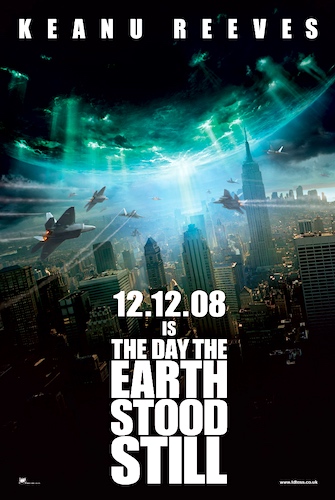
  • The Day the Earth Stood Still (2008)
  • Full Metal Jacket (1987)
  • Wind River (2017)
  • Body of Lies (2008)


    The Day the Earth Stood Still
    (2008)

    2018 #163
    Scott Derrickson | 104 mins | Blu-ray | 2.35:1 | USA & Canada / English & Mandarin | 12 / PG-13

    The Day the Earth Stood Still

    Blockbuster remake of the 1951 sci-fi classic, starring Keanu Reeves as an alien who has come to “save the Earth”.

    The original might be best remembered for its message about mankind. The do-over doesn’t so much attempt serious “humanity are the problem” moralising as just nod in that general direction. Instead, it conforms to the Hollywood-remake stereotype of simplification, using the plot as an excuse for a CGI destructathon. Even as that it’s a bit of a damp squib, with no genuinely impressive sequences; some of the CGI is pretty crap, even, like the first appearance of the giant robot GORT.

    I know we all love him now because he seems like a genuinely wonderful guy in real life and the John Wick movies are cool, but, still, the role of an emotionally cold alien pretending to be human but struggling to understand what truly makes us ‘us’ is a perfect fit for Keanu Reeves and his usual acting style. Jaden Smith is equally perfect casting as an irritating brat of a kid. Jennifer Connelly struggles gamely to be the heart of the film, and there are small or cameo roles for the likes of Kathy Bates, Jon Hamm, and John Cleese, none of whom can really elevate the basic material they’re given.

    All in all, it’s inoffensively bland, with some light sci-fi ideas, a bit of loose moralising, and a bunch of pixels whooshing about. Perhaps with a better creative team — or without the demands of a studio blockbuster budget — it could’ve been more; something genuinely thought-provoking about the value (or otherwise) of humanity. But it isn’t.

    3 out of 5

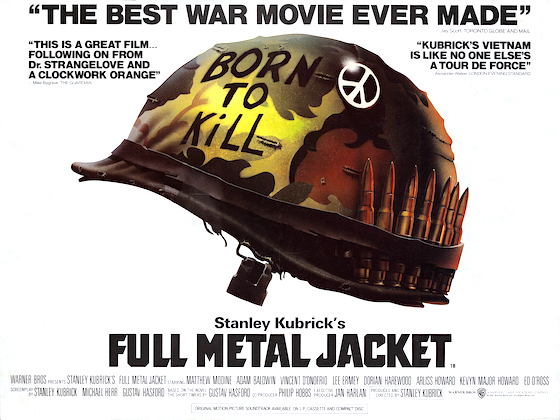
    Full Metal Jacket
    (1987)

    2018 #165
    Stanley Kubrick | 117 mins | Blu-ray | 16:9 | UK & USA / English | 15 / R

    Full Metal Jacket

    Kubrick’s anti-war war movie, about the dehumanisation of abusive army training, the virtue and success of kindness, and how combat can erode and destroy the soul. It’s “a Vietnam movie”, but Kubrick wasn’t interested in Nam per se, rather “the phenomenon of war” and what happens to young men when you turn them into killing machines.

    It’s a film of two halves: first, the training; then, the war. The first half is the better known one, and some people will tell you it goes downhill when they leave training. That first part is indeed horrid but effective and meaningful, but I thought the second half lived up to its impact too.

    A film about war’s effect on people requires strong performances, and fortunately it has those. Most famous is R. Lee Ermey’s nasty drill instructor — an unquestionably accurate portrayal of the real thing, because Ermey used to be one. He was originally hired as a consultant, but decided he wanted the role and convinced Kubrick to cast him, then rewrote his dialogue — the obscenity-strewn insults are all Ermey’s own. But for my money the best performance in the movie comes from Vincent D’Onofrio. Apparently he got the part just because he was a friend of Matthew Modine — it was his first film role — but he’s fantastic. And nowadays best known as a gun-happy right-wing nut-job on Twitter, Adam Baldwin is very convincing as, er, a gun-happy right-wing nut-job.

    Naturally, Kubrick’s work is as on-point as ever. A climactic action scene pits the entire troop against just one sniper, which is both thrilling and horrifyingly brutal. The film’s final death is excruciatingly drawn out, to really convey its emotional toll. Douglas Milsome’s photography frequently looks stunning as well. The fire-lit final act is as visually gorgeous as it is suspenseful and gruelling.

    To paraphrase a commentator in the Between Good and Evil documentary, Kubrick “takes the sympathetic characters and breaks them down so that, by the end, there’s no one left to root for, and the sympathy you feel is not for the character, but for what they’d lost.” And another notes how much you can see Iraq in the film, as if Kubrick was predicting the future of urban warfare too. Or, another way of looking at it: how little changes; how few lessons we learn.

    5 out of 5

    Full Metal Jacket was viewed as part of What Do You Mean You Haven’t Seen…? 2018.

    It placed 8th on my list of The Best Films I Saw in 2018.

    Wind River
    (2017)

    2018 #166
    Taylor Sheridan | 107 mins | streaming (HD) | 2.35:1 | USA, UK & Canada / English | 15 / R

    Wind River

    A veteran hunter helps an FBI agent investigate the murder of a young woman on a Wyoming Native American reservation.IMDb

    What follows is a neo-Western crime thriller, written and directed by Taylor Sheridan. As a genre piece, it’s most noteworthy for how well it handles the reveal of whodunnit. Just as you think the film’s getting to the point where they find who did it, but it’s only a suspicion and they’re going to have to go off and prove it, the film takes a hard left in a different direction that’s perfectly handled. To quote from a comment on iCheckMovies, the way it goes about this “seemed truly unique to this genre. The closest comparison I can think of is from Se7en, when [Se7en spoilers!] Kevin Spacey just turns up and hands himself in, completely out of the blue. It unexpectedly shattered the cat and mouse formula that people expected it to follow.” By dispensing with narrative oneupmanship (i.e. trying really, really hard to pull a twist out of thin air, as most mystery/thrillers do), it lets “the story unfold into more of a tragedy than the standard mystery or thriller you might expect it to be.”

    Talking of other reviews, some people are heavily critical of the film having a white male lead when it’s supposed to be about the plight of Native Americans, and especially Native American women. Well, yes, to an extent that’s true, but this is where fantasy rubs up against reality: do you really think a movie with a Native American lead would find it easy to get funding, distribution, and gain attention? Sometimes these things are a necessary ‘evil’ if your goal is to reach a wider audience and thereby spread the message. Besides, the film makes a point of treating the white characters as outsiders, in various ways. It’s not pretending this is how it should be, nor that they’re welcomed like, “hooray, the white people are here to save us!” If anything it’s used to emphasise the point: the Native American cops can’t solve the case themselves because they’re underfunded and understaffed; they have no choice but to rely on white people being prepared to help. That’s an indictment in itself.

    Altogether, this is a powerful movie — arguably Taylor Sheridan’s best, most mature screenplay (which is saying something for the man who wrote Sicario and Hell or High Water), and features a superb performance from Jeremy Renner, reminding you why he was Oscar-nominated for The Hurt Locker before his attempts to be a blockbuster action star.

    4 out of 5

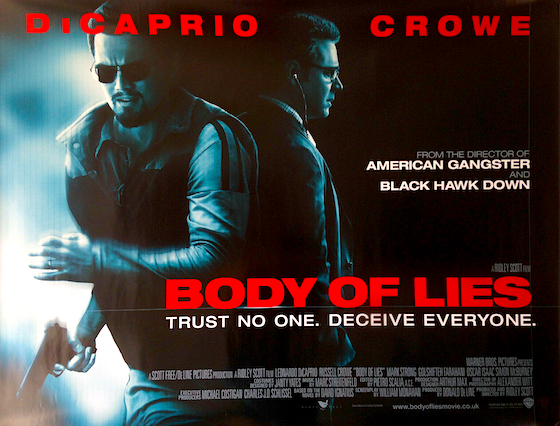
    Body of Lies
    (2008)

    2018 #168
    Ridley Scott | 128 mins | download (HD) | 2.40:1 | USA & UK / English & Arabic | 15 / R

    Body of Lies

    A CIA agent on the ground in Jordan hunts down a powerful terrorist leader while being caught between the unclear intentions of his American supervisors and Jordan Intelligence.IMDb

    That’s the simple version, anyhow, because I thought the film itself got a bit long-winded and complicated; but if you enjoy spy movies, it’s smattered with some good bits of tradecraft stuff. That said, I’m not sure I buy Leonardo DiCaprio as the CIA’s man in the Middle East — he stands out like a sore thumb there; not good for a spy.

    Meanwhile, Russell Crowe commands complex world-changing missions over the phone while taking his kids to school or watching a football match — a nice touch, I thought, contrasting mundanity with these high-stakes actions. (Quite why he “had” to gain 50lbs for the role is beyond me, though. Sounds like he just fancied being lazy about his diet and exercise regime.) Still, the standout from the cast is the ever-excellent Mark Strong as the head of Jordanian intelligence, a man who is urbane and always immaculately dressed, but does not suffer those who disrespect him, exhibiting a kind of calm fury-cum-disappointment when they offend him.

    For all the confusion I felt about the plot, what I presume is the intended theme (that America can’t win because it refuses to respect or understand the culture of both its enemies and allies in the Middle East; and that the supposed good guys aren’t any better than the bad guys) comes across quite effectively. It’s also about the ineffectiveness of advanced technology. The CIA, so focused on their shiny new bells and whistles, lose out in the end to old fashioned personal interaction and patient preparation.

    Body of Lies seems somewhat torn between making these points and being an entertaining action-thriller. Ultimately it straddles the two stools, not quite satisfying as either — it has its moments, for sure, but it’s less than the sum of its parts. Maybe Ridley should’ve left the spy thrillers to his brother…

    3 out of 5

  • Tomb Raider (2018)

    2020 #143
    Roar Uthaug | 118 mins | download (HD+3D) | 2.39:1 | UK & USA / English & Cantonese | 12 / PG-13

    Tomb Raider

    In this gritty(-ish) reboot of the videogame-turned-movie franchise (inspired by a similar reboot they did in the games), Lara Croft loses her most famous twin assets — her dual pistols (also, her giant boobs) — instead replacing them with a bow & arrow (and muscles, respectively) for an adventure that sees her travelling to a secret island where her father disappeared seven years earlier while in search of an ancient curse surrounding a long-lost tomb. Well, natch — clue’s in the title.

    “Movie based on a game” used to be synonymous with “shit”, and to an extent that reputation persists — it takes time to turn such widespread prejudices around — but there have been a few in recent years to buck the trend, like trashy-but-fun Rampage and (apparently) Angry Birds 2. For my money, Tomb Raider is part of that movement. For one thing, it manages to actually feel like the games (or, at least, what I presume the games are like — I’ve never really played any of them), which is a noteworthy point for a genre that sometimes spectacularly failed to understand its source material. Tomb Raider successfully recreates the running, jumping, shooting, puzzle-solving action of its inspiration without too overtly abandoning real-life logic for video game logic. Well, I say “real-life logic” — it’s actually “action/adventure movie logic”, but I think that’s allowed in an action/adventure movie.

    As an entry in that genre, it’s fun enough. It’s not going to compete for greatest-of-all-time status with its urtext, the Indiana Jones films, nor does it quite challenge the heights of more-overt homages like The Mummy, but it’s not a bad couple of hours’ entertainment in their mould. On the downside, the amount of preamble the plot goes through before taking us to the island is a tad unnecessary, mainly because there are a couple of early set pieces that feel forced to make sure there’s some action in the first act. I can understand having one or two (as much as anything, it establishes that Lara isn’t completely unskilled in combat and physical endurance), but it feels like padding. Besides, we’ve come for an Indiana Jones-esque affair — a bicycle race around grey London isn’t quite the right tone.

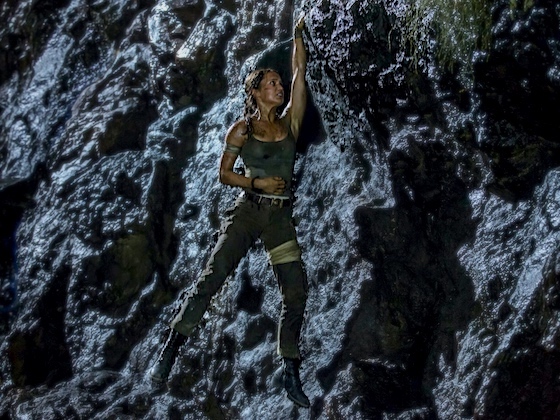
    Hanging around

    Alicia Vikander is more than capable in the lead role, both as an actress and a physical performer — she’s clearly developed the physique for the part, and apparently did her own stunts. Unfortunately, her accent is a little all over the place, a blend of English and Swedish (rather similar to Rebecca Ferguson’s) with occasional flecks of Irish. It’s kind of charming in itself, and I guess it just passes as “English” to Americans, but it’s too distractingly ‘off’ to truly pass as the upper-crust English girl Lara is meant to be. She’s surrounded by a supporting cast of reliable performers — Walton Goggins (surprisingly understated as the villain), Dominic West, Kristin Scott Thomas, Derek Jacobi, Nick Frost (just a cameo) — but none leave a particularly large mark.

    A quick word on the 3D, which is fairly enjoyable. I’d heard bad things, but it’s not awful, just unexceptionally adequate — a bit like the film itself, I guess. It adds somewhat to the “hanging over a chasm” shots (of which there are more than a handful), if nothing else.

    The film ends with a massive sequel tease, which I thought was fairly well handled. I’ve often criticised movies that exist purely to setup sequels/trilogies/franchises, and there are clearly parts of Tomb Raider that have been designed to do that, but it’s managed well enough to not really intrude until the final scenes. That said, it’s an odd kind of tease, suggesting more “corporate espionage” than “tomb raiding”. Unlike so many sequel teases nowadays, this one will actually be acted upon: after some umming and ahhing (the film wasn’t a huge box office hit, but did respectably outside the US, particularly in lucrative markets like China and the UK), it’s going ahead… with Ben Wheatley directing! Colour me surprised. (It was scheduled for release in March 2021, but the shoot was meant to begin in April 2020 and, surprise surprise, got cancelled, so who knows.)

    Tomb raiding

    A lot of this review has wound up couched in disclaimers but, fundamentally, I enjoyed Tomb Raider. It may not have a surfeit of original ideas, but once it gets going it offers up solid levels of excitement — highlights include a protracted boat crash in a storm, Lara negotiating a plane teetering on a cliff edge, and the titular raiding of a tomb, which occupies the third act. If Wheatley can supplement that with a dash of his trademark oddness, the sequel might well be worth looking forward to.

    4 out of 5

    The UK TV premiere of Tomb Raider is on ITV tonight at 7:50pm.

    Gemini Man (2019)

    2020 #141
    Ang Lee | 117 mins | Blu-ray (UHD) | 1.85:1 | USA & China / English | 12 / PG-13

    Gemini Man

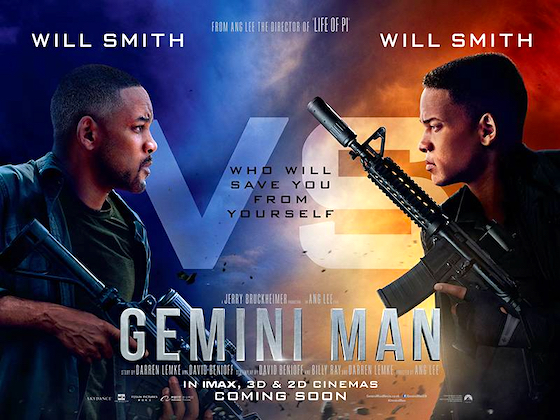
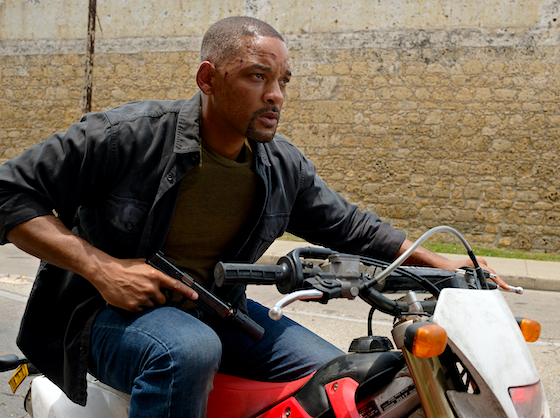
    Gemini Man is a film that, at every point I can remember it being talked about, was discussed more for its various technical feats than anything else. Partly that’s because there are a couple of angles. Firstly, the most obvious: it stars Will Smith as an ageing assassin who must fight… a 25-years-younger Will Smith, achieved with motion capture and CGI. Secondly, director Ang Lee shot it in 3D 4K HFR — that’s High Frame Rate, if you don’t know, with the picture running at 120 frames per second rather than the 24fps we’ve been used to for the past 90-odd years (excepting The Hobbit trilogy, though only if you saw one of the relatively-limited HFR theatrical screenings). Maybe it shouldn’t be a surprise, then, that Gemini Man often feels more like a tech demo with a plot grafted onto it than it does a fully functioning movie in its own right.

    Consequently, I’m going to spend more of this review writing about the film’s presentation than its content. To some degree, that speaks for itself as criticism. But if you are interested in the film and don’t give a toss about how exactly you’re seeing it (or don’t have a choice), feel free to whizz down to the last two paragraphs (just after the picture of Young Will Smith) where I finally offer some thoughts on the film itself.

    Back to the tech, then. There’s currently only one way to see Gemini Man in its intended format: at the cinema. I say “currently” — obviously such opportunities expired when its theatrical run ended, and I don’t imagine it’s likely to get a re-release. Every other option is a compromise. Want to see it in 3D? Not only will you need the appropriate home cinema setup, but you’ll have to import the disc from Germany, the only country where it was granted a 3D Blu-ray release. Want to see it in HFR? That’s easier, because the 4K disc is widely available, though obviously you still need the appropriate kit. (I presume the digital 4K versions are HFR too, but I don’t actually know that.) Mind you, even that’s something of a compromise, because tech limitations mean the home release is 60fps rather than the full 120 (to be fair, so were most HFR cinema screenings).

    Action Man

    I watched it in 4K 60fps, and, oh, it’s weird. So so weird. Distracts-you-for-the-entire-film weird. Virtually-the-only-thing-I’m-going-to-talk-about-in-this-review weird. The disc even begins with a notice/warning that it’s at 60fps rather than 24fps, so presumably they know how weird it feels. The most obvious effect of more frames per second is that motion is smoother, with reduced motion blur, but that applies on a micro level to lend an unnatural clarity to everything. The effect on motion is often called “the soap opera effect”, because such cheap drama has traditionally been shot at TV’s higher default frame rate. Of course, so is much other television, or even behind-the-scenes footage on films; so while it’s not a wholly inaccurate nickname, the effect reminded me more of TV documentaries. The film begins with a train journey in a lusciously green-looking Belgium, before travelling around the globe to other sunny locations with glamorous establishing shots. It looks less like a Hollywood action movie, more like Will Smith is the new host of Cruising with Jane McDonald.

    When it’s not playing travelogue, it looks like a tech demo. I don’t think that’s just the added smoothness, but everything about how it’s shot: it’s very bright and saturated, the kind of look you get in marketing promos, not feature films. Even paused it looks a little odd. Partly that’s the boost given to the colour palette by HDR, but at this point I’ve watched plenty of other films with HDR to be familiar with its effects, and I think this was beyond normal. The other thing the visual quality reminded me of was low-budget films by very new/amateur filmmakers, and that’s definitely to do with Ang Lee’s shot choices — lots of stuff at eye level, gentle pans and tilts, in locations so dull they might have been found around someone’s hometown. It doesn’t help any that all the fonts they’ve used for captions look like the editing software’s bland default. And further, it’s also the effect of shooting on high-resolution digital video — it’s ultra-clear, with none of the grain of real film, but, again, that’s a look more familiar from low-budget productions. Would HFR work better if it was shot on real film? You’d get back some of that tactile grit, rather than telltale digital smoothness.

    Biker Man

    What about when the film gets to its big action sequences — the kind of thing that obviously a no-budget newbie couldn’t afford. Would the change of milieu fix the mental associations? Yes and no, in that it just adds other ones: the first big sequence, the bike chase you probably saw in trailers or clips, looks like a computer game. Again, it’s a mix of elements: the digital sheen, the smooth frame rate, the shot choices (lots of POV or close following, like a game’s third-person camera), and an unnatural-seeming speed — it looks like some of the CGI has been animated too fast, though that could be HFR’s fluidity making normal motion look odd because we’re not used to it.

    The advantage of wondering all this while watching the film at home was that, afterwards, I could pop in the regular Blu-ray and compare a few scenes in 24fps 1080p SDR. Immediately, it looks a lot more like a regular movie. Is that indeed the loss of HFR’s smoothness, or is it the drop in resolution, or the loss of HDR enhancement? Without being able to view different permutations it’s hard to say which one causes the jarring effect, or if it‘s the incremental change made by each that adds up to a radically different picture when combined. That said, obviously I’ve watched 4K HDR films before, and it’s never struck me as odd-looking as much as this film (I’ve seen some strange applications of HDR, but that tends to be in individual shots/scenes, not an entire movie). The bike chase also looks more normal on the whole, though some of the bits I alluded to before still looked dodgy, so I can only conclude it’s a mix of the animation (because I’m sure it’s not a real stunt) and the HFR.

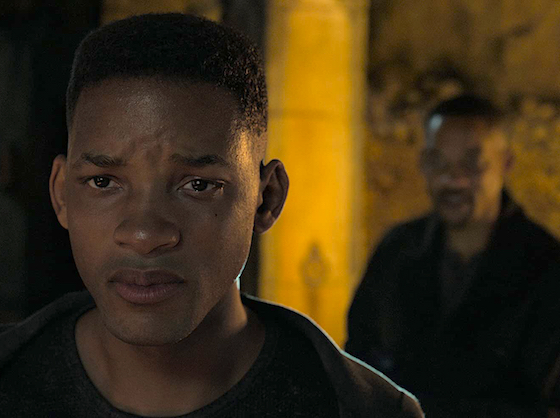
    If all that wasn’t distracting enough, there’s the fact that one of the film’s main stars is a de-aged Will Smith. We’ve seen plenty of de-ageing in films now, whether it be Marvel’s flashbacks or Scorsese’s varied eras in The Irishman. This feels more extensive, though — they’ve not just airbrushed Smith’s age-related blemishes, but recreated his youthful visage with full motion-captured CGI. The end result is both incredibly realistic animation and also not quite there. Maybe that’s just because I know it’s not real — I wonder if someone unfamiliar with the film’s setup wouldn’t register it. It looks more convincing than I remember Peter Cushing being in Rogue One, and I remember stories of kids who didn’t realise he was CGI. I guess the best praise is that, as the film went on, I realised I’d just accepted Young Will as his own character, not a second Old Will in disguise. There are scenes where he’s called on to do Proper Acting and it works. Unfortunately, it’s almost ruined by one scene at the end where the effect suddenly looks like a ten-year-old computer game. Was this a last-minute re-edit, I wonder, leaving them without enough time to do the CGI properly? It’s a shame to have dropped the ball at the last hurdle.

    Young Man

    And if you can get past all the technical distractions (which I guess most people will, as “the tech” is not why most people watch films, and on any format less than 4K the visual oddness evaporates anyway), what about the film itself? Well, it’s a passable action-thriller with a sci-fi tweak. For the level of the latter, think something like Face/Off rather than, say, Blade Runner. I’ve seen quite a few people compare it to a ’90s action movie and that’s pretty fair — subtract the fancy cameras and CGI and that’s what’s left. It’s not necessarily a bad thing, unless you’re so young that ’90s action movies are Old and consequently Bad. There are a couple of very impressive and exciting action sequences — the bike chase, primarily (which I bet looks fab in 3D). That said, the Blu-ray’s visual effects featurette reveals they faked a bunch of stunts that Tom Cruise and Chris McQuarrie would’ve done for real as a third-tier action sequence, which takes the shine off a little. (On the other hand, it also reveals that there’s some fucking incredible CGI in this movie — stuff you’d never imagine was an effect but is, including a full-on close-up of Old Will.)

    So, the reason the tech presentation remains the film’s strongest talking point is that the film underneath is decent but nothing particularly special. That said, I do think it’s been given a hard rap by critics and viewers alike — whether or not you’re interested in the experimental visuals, it’s a fine sci-fi-tinged action blockbuster, with all the attendant qualities and demerits that implies.

    3 out of 5

    Gemini Man is available on Sky Cinema and Now TV from today.

    The 100-Week Roundup V

    Like last time, these five films are connected not only by when I watched them (July 2018), but also by a shared star rating.

    Incidentally, it’s about to be a busy time for these 100-week roundups — there should be one every week for the next few weeks to keep up with my backlog. (As time goes on, such frequency may become commonplace.)

    In this week’s roundup…

  • Muppet Treasure Island (1996)
  • Blade of the Immortal (2017)
  • Cash on Demand (1961)
  • Free Enterprise (1998)
  • Iron Monkey (1993)


    Muppet Treasure Island
    (1996)

    2018 #147
    Brian Henson | 96 mins | TV | 1.85:1 | USA / English | U / G

    Muppet Treasure Island

    Following the success of The Muppet Christmas Carol, the little felt fellas turned their attention to another classic of Victorian English literature, Robert Louis Stevenson’s piratical adventure Treasure Island. For my money, the result is even better — it’s so good that it made me want to finally read the novel, or at least watch a ‘proper’ adaptation. (Two years later, I’ve done neither. Typical.)

    Why Muppet Treasure Island doesn’t attract the same level of love that’s reserved for their Christmas Carol is beyond me, because it’s really a lot of fun. I’m predisposed to enjoy piratical movies, for whatever reason, so perhaps it appeals to me more than average; but even allowing for such bias, I think this is one of the more enjoyable Muppet movies — if I were to rank them, it would be a toss up between this and the 2011 reboot for first place.

    The best bit is definitely the songs, which are properly good. It helps when you’ve got the likes of Tim Curry to sing them, of course. They’re not all the kind of outright comedy numbers you’d expect, either: the opener, Shiver Me Timbers, is quite dark, in fact. They’re supported by a score by Hans Zimmer, which with hindsight sounds like a dry run for Pirates of the Caribbean. There are seven songs in all, and only one that I didn’t really like, which I’d regard as a good hit rate for a musical.

    To top it off, the film ends with a Muppet sword fight. Really, what more could you want?

    4 out of 5

    Muppet Treasure Island placed 17th on my list of The Best Films I Saw in 2018.

    Blade of the Immortal
    (2017)

    aka Mugen no jûnin

    2018 #148
    Takashi Miike | 142 mins | Blu-ray | 2.35:1 | Japan, UK & South Korea / Japanese | 18 / R

    Blade of the Immortal

    Billed as the 100th film directed by Takashi Miike (which it isn’t, but hey), Blade of the Immortal is actually the first one I’ve seen by the (in)famous director. Based on a manga series, it’s about a samurai who’s rendered immortal to serve penance for his crimes, and the young woman who engages him as a bodyguard to avenge her murdered family.

    It’s a bit episodic at first, as our (anti)hero battles through the villains’ top swordsmen one by one, but that means there’s a regular feed of action sequences between the two bookends that are highlighted in the promotion: how he fights 100 men at the beginning, and 300 men for the climax. That last half-hour is an epic flurry of violence, by the end of which rivers of blood flow — literally.

    Aside from the combat, dramatically and thematically a lot of it is about the difference between good and bad, hero and villain; how, really, there’s not so much difference after all — sometimes it’s just a matter of perspective. It could’ve gone for a more streamlined, straightforward revenge narrative, but it throws many characters into the mix with attendant thematic points, which do lend more texture. Or, if you don’t fancy thinking about that stuff, there’s just a lot of really good fight scenes.

    4 out of 5

    Cash on Demand
    (1961)

    2018 #154
    Quentin Lawrence | 77 mins | TV | 4:3 | UK / English | PG

    Cash on Demand

    This Brit-noir came to my attention thanks to the ghost of 82’s review after Indicator included it in one of their Hammer sets (though I caught it on TV). It’s basically a real-time single location thriller (so right up my street) starring Peter Cushing as a bank manager faced with a clever robber — far from a showy heist, this is a calm, almost sedentary robbery… which ultimately gives way to a furious bevy of twists and counter-twists in the film’s closing minutes.

    It’s led by an excellent performance from Cushing, who convinces entirely as an uptight jobsworth brought low by the stress he must endure, which reveals his true character. The film’s focus is on the ringer he goes through thanks to the heist, rather than on clever details of the heist itself — certain plot points are never explained, but it doesn’t matter because this isn’t about the robbery, it’s about how the robbery affects Cushing. To that end, he’s also nicely contrasted with André Morell as the affable thief, particularly as the pair spend much of the film in extended two-handers. Quentin Lawrence’s direction is unflashy but effective, allowing their performances to shine. It’s almost televisual, though with more setups than anything studio-bound of that era would’ve allowed. No surprise, then, that he only directed a handful of films, mostly plying his trade in ’60s and ’70s TV series.

    I do wonder if we could have spent more time with the rest of the bank’s staff, who remain unaware a robbery is taking place. As it stands, they’re all established at the beginning, but then mostly pushed aside until near the end, when they conduct their own investigation for all of two scenes. What if that was expanded into a proper B-plot through the movie? I think it could make the film even better by adding the potential for even more tension. Perhaps it could withstand an expanded remake…

    4 out of 5

    Free Enterprise
    (1998)

    2018 #158
    Robert Meyer Burnett | 109 mins | streaming | 4:3 | USA / English | 15 / R

    Free Enterprise

    Relationship/sex comedy meets geek reference-athon in this ’90s indie that plays like Swingers meets Clerks (he says never having seen Clerks, so that’s just an assumption of what it’s like).

    It slots into what seems like a very ’90s subgenre: the “young film-loving people trying to break into Hollywood” thing. I’m sure there are lots of societal and industrial reasons why there were so many movies in that vein produced in the ’90s. It also comes with the era’s schtick of dialogue loaded to the nines with pop culture references. It’s perhaps an overfamiliar style now, but here it’s at least quite witty and well performed.

    Indeed, this is so a ’90s indie all-round — you know, like the early Tarantinos, and everyone who copied his dialogue’s voice, that kind of thing. If that’s not your bag, you’ll hate Free Enterprise. But if you enjoy that style of film, and if you love geek culture too, well, this was made for you. Literally, I should think. It certainly felt made for me, and I’m not even a Trekkie. To laypeople, it might just look like “Swingers with geek references”, or conversely (to use that old stereotype of geeks), “my life but with sex”.

    So, to give it a 4-star rating feels like a very personal reaction — I think you’ve got to hit the right confluence of interests to get the maximum enjoyment out of this movie. But if you do, it’s really rather good.

    4 out of 5

    Iron Monkey
    (1993)

    aka Siu nin Wong Fei Hung chi: Tit ma lau

    2018 #160
    Yuen Woo-ping | 90 mins | Blu-ray | 1.85:1 | Hong Kong / Cantonese | 12 / PG-13

    Iron Monkey

    Back around the time I was first getting interested in Asian action cinema — when the Hong Kong Legends DVD label was doing sterling work bringing so many titles to the UK market in extras-packed editions — Iron Monkey was fêted as an absolute modern classic. I think it was one of the first to get a two-disc special edition from HKL too, as if to emphasise its importance. But I never got round to watching it, and so now it perhaps came overburdened with expectation. I found it to be a mix of impressively choreographed action, goofy humour, and a rather slight plot.

    The fights are definitely the star; without those, it’s no great shakes. But then, what do you come to this kind of movie for? It’s definitely one I need to revisit and reassess. (And as it’s been two years now, maybe it’s about time I did…)

    4 out of 5

  • The Past Month on TV #59

    Normally I format these TV columns with new (or new-ish) stuff first, followed by older/archive programmes, in a broad-sweep kinda way — i.e. it’s not strictly chronological. But this month not much truly counts as “new”, so I’ve gone for the strictly chronological approach.

    In order of appearance, then, this month there’s an RSC production of Macbeth (staged and filmed in 2018 but debuting on BBC Four tonight); the most recent standup show from Daniel Sloss; Netflix’s revival of Lucifer; classic murder mysteries with Jonathan Creek; an early Doctor Who serial; and more of the worst of The Twilight Zone; plus the usual bits & bobs at the end.

    Macbeth
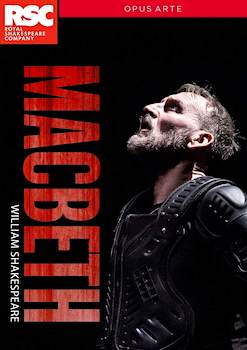
    RSC Macbeth (2018)This Royal Shakespeare Company production from 2018, starring Christopher Eccleston and Niamh Cusack, has apparently been on iPlayer since April, but only came to my attention thanks to a TV screening scheduled for tonight (on BBC Four at 9:30pm).

    You probably know the story: Scottish lord Macbeth bumps into three witches who prophesy he’ll become king, a goal he sets out to achieve by murder. This particular production has some nice ideas, including casting the witches as a trio of creepy little girls in pyjamas, covering the various ghosts in dust, and an ominously reimagined ending. The real high-point, however, comes when Macduff learns of the slaughter of his wife and children, which is thanks to Edward Bennett’s understated but powerfully emotional reaction. It justifies why it’s Macduff who gets to vanquish Macbeth at the climax. That’s another good bit, actually, with a convincingly-realised stage fight (something I’ve not seen achieved too often).

    There’s also a big countdown clock that starts ticking when the king is killed and then remains visible throughout — I feel like it takes some balls to have a countdown running during a live performance! Unfortunately, for much of the time the clock just serves to remind you how long is left during a production that I often found a bit slow. The cast frequently race through their lines and run about the place as if a race is on to the finish line, but, counterintuitively, that does not add pace. Altogether, it’s not terrible, but there have been better versions.

    Daniel Sloss: X
    Daniel Sloss: XHaving really enjoyed Sloss’s two Netflix specials back in 2018, I jumped on this 2019 one as soon as I became aware it existed (it was filmed for HBO in the US, but hasn’t made it to any UK broadcaster or streamer (though it had a theatrical release!) But where there’s a will there’s a way…) Hopefully it will become more widely available, because not only is it hilariously funny but it’s packed with so many insightful, timely routines that I don’t even know where to start. Some of the stuff he has to say should be glaringly obvious (about improvements to sex ed, for instance), and yet has society changed? Obviously not. And then, as is Sloss’s style, he blindsides you with a finale that is hard-hitting but still manages to elicit laughs. Few other comedians, or forms of entertainment fullstop, manage to be so funny or so effectively thought-provoking, and I’m not sure any others manage to combine the two so well.

    Lucifer  Season 4
    Lucifer season 4After three seasons on network TV (or Amazon Prime Video here in the UK), Lucifer fell prey to 2018’s bloodbath cancellation season. It was ultimately revived by Netflix, and it seems to have gone well for them: after this they commissioned a fifth and final season, then upped its episode count, then changed their mind and are negotiating for a sixth season.

    The move to streaming had minimal affect on the show itself, with many things remaining exactly the same: 45-minute-ish episodes, each with a case-of-the-‘week’ plot, and fades-to-black for ad breaks that will never, ever come. It’s only subtleties that are different; the kind of thing only production geeks might even register — that there’s marginally more swearing, violence, and nudity; more special effects, suggesting a slightly increased budget; and 4K HDR-enhanced photography, which makes the image richer and prettier without fundamentally changing the style or visual language of the show.

    As for stuff everyone would care about — plot, characters, etc — a lot of this season has to deal with the fallout from the revelations in the season three finale. That means the show becomes a bit more invested in the supernatural stuff than before, although that’s mainly left to the arc plots — the cases of the week are still grounded in the mortal realm, with the usual array of reasons and settings to motivate murder. Cunningly, it all ends in a place that would’ve been suitable (if unsatisfying) for the series to never return, had this revival been short lived. Fortunately, we’ve more to look forward to.

    Jonathan Creek  Series 1
    Jonathan Creek series 1I used to love Jonathan Creek back in the day. It was a huge hit, too, gaining high viewing figures and a BAFTA award. On the surface it doesn’t look so special: two mismatched individuals solve murders. But it’s the execution that’s different: these are all “locked room” mysteries, and rather than interview a small array of suspects to guess who did it, they must work out how the murder was even physically possible. Creek is a magician’s trick designer, and the stories kind of work like magic tricks: something seemingly impossible that has a hidden rational explanation. Personally, that’s right up my street, and while some elements of the show are obviously dated (the hairstyles; the cars; the pace is leisurely by modern standards), I think it holds up pretty well.

    Doctor Who  The Time Meddler
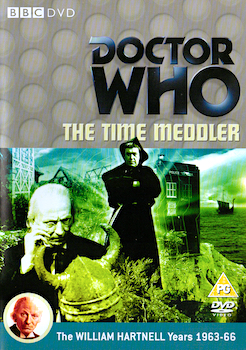
    The Time MeddlerLast month, Doctor Who Magazine ran a Twitter ‘world cup’ to find the most popular stories starring the First Doctor. Many of the usual suspects did well, but I was surprised to see The Time Meddler wind up in second place — I’d never realised how much love there was for this story. In fact, I’d never seen it, so naturally I was inspired to dive in.

    The serial is notable in the history of Doctor Who for being the first pseudo-historical — that’s to say, a story set in the past but with science-fiction elements (beyond the presence of the regular characters and the TARDIS, obviously). Also because (spoiler alert!) it’s the first time we meet another member of the Doctor’s race (besides Susan, obviously). That reveal is a long time coming, though. We get there in the Part 3 cliffhanger, which is one for the ages — I can only imagine how it must’ve played back in 1965. (Of course, without internet discussions or fandom as we know it today, I guess it wasn’t as impactful. But for those kids in the know, whew!) It cues a genuinely superb final episode.

    Unfortunately, the three before it feel like we’re taking the long way round to get to the point. The initial setup is enticing, with anachronistic technology turning up in 1066, given an extra zhuzh because new companion Steven doubts the TARDIS can travel in time, and the out-of-place tech seems to prove him right. After that, there’s a lot of back-and-forthing — the kind of stuff that feels like forward momentum in the moment, but ultimately just moves pieces back to where they were. The Doctor even goes missing for an entire episode (so William Hartnell could have a holiday), which leads to even more wheel-spinning. At least Douglas Camfield’s direction is really rather good… until he attempts to stage a multi-combatant sword fight within the budgetary, scheduling, and technological limitations of 1960s children’s television. It’s not really his fault, I’m sure, but it fails to be an exciting bit of TV.

    I feel like that’s an excellent two- or maybe even three-parter in The Time Meddler — when it finally gets to the point in the final episode, it’s fantastic, but the first three-quarters are much less engaging. It’s worth it for that final part, but there are more consistently excellent First Doctor stories that I’d rank higher.

    The Twilight Zone  ‘Worst Of’
    Jess-BelleThis third selection of episodes deemed the series’ worst (according to the consensus ranking I compiled) mean I’ve now seen the bottom 10% of episodes, which I think is a good time to call a day on being miserable and return to the good stuff. As for the following seven editions, many of them are not fundamentally flawed, but each has some element that doesn’t work or a stumble in their execution that prevents them from achieving the full quality of a good Twilight Zone episode.

    Continuing to move up the rankings, in 149th place is Still Valley, in which TZ basically tells us there are “good people on both sides” as a Confederate soldier is presented with a book of witchcraft that he could use to change the tide of the war, but refuses to do it because it means calling on the powers of Satan. And that’s all for your 25 minutes. As Oktay Ege Kozak of Paste writes, “we watch The Twilight Zone for its morally complex and hard-hitting narratives. Still Valley is so vanilla, it belongs in a show called The Light Zone.” It’s a solid episode for the most part, but with a maddeningly uninteresting conclusion.

    Next up is a season four episode (i.e. an hour-long one), Jess-Belle. At its core it’s a gender flipped version of The Chaser (reviewed last time), in which a young woman wants a particular man to fall in love with her. The main difference is that whereas before the (male) daemon was actually trying to help the main character (by hoping to talk him out of it), the (female) witch here seems more of a malicious, trickster-ish force. There are one or two effectively creepy bits, but it’s weak sauce by TZ standards, with no lesson to be learned and an irritating folksy song that keeps popping up throughout. On Blu-ray it comes with an audio commentary in which TZ expert Marc Scott Zicree spends the entire running time singing the episode’s praises and the writer, Earl Hamner, basically nods along with a “yes, I’m a genius” attitude. On the bright side, it did help me to see some of the episode’s qualities. For example, the extended running time allows room for scenes that would otherwise have been cut, and are actually among the episode’s better bits. And you learn that it was written in just a week as a last-minute replacement — bearing that in mind, it’s not so bad.
    Come Wander with MeThe next episode in our rundown is also based around a song: Come Wander with Me, in which a wandering singer attempts to buy a folksong from a young woman, only to find he might be living the lyrics… maybe. It’s a bit unclear what’s really happening, or why. It’s got some nice ideas, with mysterious characters, the haunting song, and some atmospheric direction by Richard Donner, but it comes to no kind of conclusion. How has this happened before? Has it happened before? Why is it happening again now? The episode barely even begins to ask those questions, never mind answer them; and not in a Lynchian “it’s up to your interpretation” way, which would be fine, but it doesn’t even seem to be aware those questions exist. Frustrating.

    The Brain Center at Whipple’s is set in the future year of 1967, when a company is replacing tens of thousands of staff with a machine. What an implausible notion, eh? This episode is no more than a rather dated lecture about automation — the warning has been ignored, but none of the terrible things foretold have come to pass (…yet). The ending is both painfully obvious (Mr Whipple himself gets replaced by a machine) and silly (said machine is Robby the Robot from Forbidden Planet, waddling around Whipple’s office spinning a keychain for no reason other than Mr Whipple used to). It doesn’t help any that “Whipple” is an inherently silly-sounding name.

    Next up is one of the show’s frequent excursions into the Old West in Showdown with Rance McGrew. They surely made sense at the time, when Westerns were ubiquitous on US TV, but if you didn’t know that it can seem a bit weird that a sci-fi/fantasy show is so obsessed with the era. You do need to know that context for this episode, though, because it’s actually a riff on all those TV Westerns. The first half is basically a spoof of them, which I imagine was rather effective back in the ’60s, because it remains moderately amusing now. After establishing that the show’s star is a bit of a prima donna sissy, he’s magically transported back to the real West, where he must face up to the actual Jesse James, who’s been watching the show and is none too impressed. It’s quite a fun episode, but the idea that gunslingers in the afterlife spend all their time watching movies and TV and getting their feelings hurt about how they’re portrayed is… well, it feels kinda daft, but eh, why not? It makes me wonder if Serling didn’t like Westerns or their attitude to history, and so this whole episode was just an exercise in critiquing them. As such, it’s not too bad.
    The Mind and the MatterThe ‘hero’ of The Mind and the Matter hates people. They bump into him on the subway; they squish against him in the elevator; they accidentally pour coffee over him at work. If he had his way, all the people would just disappear. After he reads a book about the power of the mind, he instantly gains the power to make his thoughts real (no practice required, apparently), and so immediately does away with everyone else. Hurrah! But after a morning’s work in peace and quiet, he’s bored, with no idea what to do. So the first thing he imagines to enliven his world is… an earthquake. Um, what? Unsatisfied with imagining different weather phenomena, and apparently unable to conceive of anything else whatsoever to occupy his interest, he decides to fill the world with people just like him. That results in a world full of grumblers and moaners, which he finds even more distasteful than how it was before — so he just puts it all back. It’s almost a lesson in what happens if you give unlimited power to unimaginative people… except that’s not the point the episode actually wants to make, so it doesn’t really make it. Instead it’s going for “this world isn’t perfect, but it’s better than the alternative and there’s a lot to like”. But it doesn’t make us feel that, it just tells us it. Heck, even the character doesn’t feel it — he’s just as miserable at the end as he was at the start. The whole affair is sort of an infinitely stupider rehash of the classic Time Enough at Last, only without any ironic point. And there are some terrible prosthetic effects, which I struggle to believe convinced anyone even on low-res ’60s TV. Basically, it’s a wholly inadequate episode from every angle.

    Finally for now, The Mirror is the story of a Castro-analogous rebel general (played by Peter Falk) who has successfully taken control of his Central American country, when the former ruler introduces him to a magic mirror that will show any would-be assassins — which just so happens to be more-or-less everyone he knows. I guess it’s meant to be a study in paranoia, although Serling’s opening and closing voiceovers seem to be framing it more as a criticism of tyrants. As the latter, it borders on propaganda, which kind of undermines the former. It’s a reasonable concept, thinly executed.

    Also watched…
  • Elementary Season 6 Episodes 1-14 — I last watched this modern-day Sherlock Holmes in 2017 (and last properly commented on it here in 2016), which I guess shows my level of dedication to it. In truth, I’ve warmed to it over the years. I’m still not convinced it’s a faithful adaptation of the original characters (and certainly not of the stories), but, taken on its own merits, it has good qualities. My favourite of those: the way it’s sometimes prepared to offer quite outlandish storylines, ones that border on science-fiction or pulp genre fare, rather than your bog-standard procedural homicide stuff.
  • Eurovision 2020 — Didn’t actually happen, of course. In its place, the BBC offered a special called Come Together, in which past highlights chosen by a panel of experts were voted on by the public. There were some spectacularly weird choices in there, and of course Waterloo won. That was followed by the official replacement show, Europe Shine a Light. The title is a reference to the last time the UK actually won — were they attempting to keep us on side? It was an odd affair, but still entertaining in its own way. There’s nothing quite like Eurovision… and this wasn’t quite like Eurovision. Still, I suspect it’ll be better than that Netflix film, if its trailer is anything to go by.
  • The Great British Bake Off Series 9 — Beginning a catch-up on the last couple of series. This is the 2018 one, if you need a point of reference. Also watched all of companion show An Extra Slice, which is sometimes even better than the main programme, mainly thanks to Tom Allen’s caustic humour.
  • The Rookie Season 1 Episodes 16-20 — Another handful of episodes (spanning from the unexpected, emotionally devastating Greenlight to the gripping and now-timely season finale (it’s about the risk of a deadly virus released into the population)) that remind this is a more-than-solid example of a US network TV police drama. Looking forward to season two… though with US networks currently cancelling many police-related series, I guess a third season looks uncertain.
  • Star Trek: Picard Season 1 Episode 8 — Just in case you think I’d forgotten about it. Hey, next month I might finish it!

    Next month… I’m not aware of anything in particular coming up, so hopefully I’ll finally dig into my massive pile of “stuff I’ve been meaning to get round to”. Roll a dice for whether that means The Mandalorian or Devs or Killing Eve or Westworld or Jack Ryan or Jessica Jones or The Witcher or Veronica Mars or Peaky Blinders or The Boys or…