Unknown's avatar

About badblokebob

Aiming to watch at least 100 films in a year. Hence why I called my blog that. http://100films.co.uk

Toy Story Toons: Hawaiian Vacation (2011)

2012 #50a
Gary Rydstrom | 6 mins | Blu-ray | 1.85:1 | USA / English | U / G

Hawaiian VacationPixar have always attached original short films to their feature releases. As part of what seems to be their increasing franchisation, however, they’re not always wholly original now: Hawaiian Vacation was the short attached to Cars 2. And it’s the first in a series of Toy Story shorts: the second, Small Fry, appeared in cinemas before The Muppets; the third, Partysaurus Rex, comes with Finding Nemo 3D later this year.
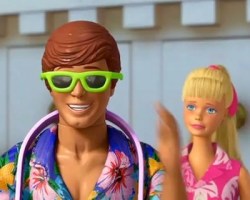
The simple, sweet story is that the toys’ new owner (I forget her name) is off on holiday, so Ken and Barbie attempt to stowaway for a romantic break, only to hide in the wrong bag. Being the kind and caring friends they are, the other toys set about giving them a Hawaiian holiday right there in the bedroom.

Hawaiian Holiday — another time when British English bests American English right there. But I digress.

When I first heard they were doing these shorts I was trepidatious. Toy Story is in many ways Pixar’s flagship franchise, and after the Huge Event that was Toy Story 3, was it really wise to dilute the experience with a series of mini-adventures? Was it not better to leave it as a series of three big movies, each one a grand and special event? After all, the more you do something, the less special it becomes. That’s one of the reasons Toy Story 3 works — we hadn’t seen these characters we love for 11 years. It’s why Toy Story 4 would be a disastrous idea — after such a perfect ending, why revisit them?

SurpriseHawaiian Vacation doesn’t exactly allay these fears — its very existence is proof of that — but at least it’s an entertaining piece in its own right. It succeeds partly by not overreaching itself — this isn’t Toy Story 4 and it doesn’t try to be. It reminds us of the characters and gives them each a story beat, while remaining funny, entertaining and sweet, all in under six minutes. Cars 2 can’t manage that in 106.

These Toy Story Toons may eventually add up to a dilution of Toy Story’s specialness, just another example of Pixar’s increasing predilection for the creation of sequels and spin-offs. But if they’re as good as this, at least we’ll have fun while they do it.

4 out of 5

Toy Story 3 comes to Sky Movies Premiere today at 4:15pm and 8pm, and continues until Thursday 16h August. You can read my review here.

Rango: Extended Cut (2011)

2012 #10
Gore Verbinski | 112 mins | Blu-ray | 2.40:1 | USA / English | PG

RangoThere seem to be an increasing number of live-action directors sticking their oar into animated films; and not just lending their ideas and name, as Tim Burton did with Nightmare Before Christmas, but properly directing them. Robert Zemeckis’ mo-cap obsession has given us that Christmas one, that other Christmas one, and Beowulf; Tim Burton supervised the stop-motion himself in Corpse Bride; then there’s Zack Snyder (Legend of the Guardians*), Steven Spielberg (Tintin), Peter Jackson (Tintin 2), and, here, first-three-Pirates helmer Gore Verbinski.

Perhaps this is because the increasing prevalence of CGI in big-budget movies (which all of these directors have also been responsible for) means the transition to 100% animation is easier — indeed, as I’ve said before, Avatar is classed as live-action but is basically a motion-captured animated film with a few live-action bits. This theory has added weight when you look behind the scenes at Rango: rather than teaming up with an established animation producer like Pixar or Dreamworks, Verbinski assembled his own team of pre-production creatives, wrote and designed the entire film independently for 16 months, then took it to ILM — who had never done an animated movie before — to do the heavy lifting. (The story of how the film was made is pretty much as interesting as the film itself, with Verbinski and ILM bringing their live-action-honed methods and sensibilities to bear on the production of a fully computer animated (not mo-capped) film. I heartily recommend the two documentaries on the Blu-ray. If you’re interested but don’t have the BD, you could do worse than read this article.)

Mmm, texturesIndeed, perhaps the most striking thing about Rango is ILM’s hallmark, the extraordinary realism. Though some of the characters are rendered cartoonishly (just look at Rango’s face) and all are of course anthropomorphised, the textures and lighting are as true-to-life as any of their work in live-action movies. They consciously went for a photographic look, as if it had been shot with real cameras, including consultation with Oscar-winning cinematographer Roger Deakins, and it paid off because the whole thing looks incredible. I know I only just recommended it in the last paragraph, but the making-ofs are really great for an insight into why the film looks and feels so different to most current computer-animated films. The sequences of them recording performance reference are incredible — they essentially shot some scenes in full, with the entire cast, in costume, with full props, some sets, blocking, marks, camera angles, improvisation… (The only thing lacking on the Blu-ray is a Sin City-style full-length version of the movie using that footage.) Even though it’s not mo-capped (Depp refers to their performance-reference recordings as “emotion capture”), they used a mo-cap studio with virtual sets so Verbinski could find angles and so on — all the tools he’d have on a live-action set.

Is it cheating to make an animated film this way? Some people object to motion-capture; is this as bad, or worse? Some will say so; personally, I don’t care — it’s the final product that matters, not how you got there. Though how you got there can make for a damn fine story. (Watch the making-ofs.)

PosseBack to the film itself. I know it’s less interesting, and it is far too slow at the start, but when it eventually gets underway it becomes very entertaining. Somewhere in the middle there’s a five-minute wagon/bat chase that’s a properly exciting action sequence, excellently realised. It was so good I watched it again immediately afterwards. It’s got a clever use of Wagner too, as well as some regular Hans Zimmer action scoring. Zimmer’s score throughout is top quality, referencing Morricone and all the other staples of Westerns.

There’s the quite dark, twisted, alternative designs for characters and locations — not too much (it’s still kid-friendly), but it’s different to what Disney, Pixar and Dreamworks are doing (after early attempts at realism, they seem to be really amping up the cartoonishness now). The cast are great, though there’s much fun to be had spotting voices: some are obvious (Depp, Ray Winstone), others not so much (Isla Fisher, Alfred Molina; Bill Nighy!). There’s a good John Huston impression by Ned Beatty, and Timothy Olyphant’s Clint is so spot on I checked it wasn’t actually him.

For the cinephile viewer, Rango plays as one big homage. The obvious is its deployment of all the cliches and tropes of a Western, including a relatively subtle nod to The Man With No Name (the lead character identifies himself as Rango, but his real name? We never learn). I’ve seen some commentators berate it for this, but it’s clearly paying tribute to the genre, not being a shameful attempt at it. He who controls the waterThe plot, however, is clearly borrowed from Chinatown, but it plays out differently and there’s a clear acknowledgement of the similarities in its portrayal of the Mayor. Again, it’s homage, not rip-off. It does enough under it’s own steam on both fronts to avoid accusations of plagiarism, in my opinion.

On the down side, some of the ‘humour’ is a bit too mucky for my taste. The number of toilet-related gags goes way beyond necessary, and it’s slightly depressing that at least as many are aimed at adults as children. This is where a lot of the extended cut’s four-and-a-half-minutes comes in, incidentally, as this comparison shows. In their opinion, while the extended version’s jokes are still PG-level, they may have been cut to make sure it was absolutely family-friendly. (If you have access to the Blu-ray and want to see the added material without trying to spot it in the film itself, try the deleted scenes section — pretty sure that’s just the stuff from the extended cut.) Aside from muck, there’s an extended ending, though I’m not sure what I think of it. There’s a bit about a final sunset shot which is quite good, but I like the theatrical ending’s mirroring of the opening with the mariachi birds. All things considered, the coda was probably a wise excision in cinemas.

Mariachi BirdsWith its detailed references to other films and real-world visual aesthetic, Rango may be more likely to find appreciation among grown-ups than the children who are the typical target for English-language feature animation. Then again, there’s that immature humour I mentioned. A ‘family’ film indeed. Either way, it’s an entertaining addition to — and alternative from — American animation’s usual offerings.

4 out of 5

* which has nothing to do with Rise of the Guardians, even though that crazed mash-up looks like a Snyder film. ^

Cars 2 (2011)

2012 #51
John Lasseter | 106 mins | Blu-ray | 2.35:1 | USA / English | U / G

Cars 2Pixar, oh exalted studio of wondrous excellence, who produce naught but critically-acclaimed and audience-beloved films that may as well just be given the Best Animated Feature Oscar without the need for fellow nominees, dropped the ball with Cars. So why did it become only the second Pixar movie to earn a sequel? As most people know, because of the merchandise. Little boys love toy cars (and grown men too, apparently) and the things sold like hot cakes, and continued to do so for years afterwards. Running out of ways to milk the first movie’s characters, the only solution was to make some new ones — and that involves making a new film.

For what is essentially a near-two-hour toy commercial, Cars 2 fares quite well — it’s better than Batman & Robin anyway. Well, it’s less offensive to one’s sensibilities. Not ruining a great character and a once-great franchise helps. And, despite its lowly Rotten Tomatoes rating (which is flat out appalling, and doubly so for a Pixar movie), there’s a solid argument to be made that it’s better than the first Cars.

The plot is just as predictable though: character arcs are so well-trodden they only seem to bother including them because they push the story along; surely everyone will guess who the ‘surprise’ villain is as soon as he/she/it shows up earlier in the film; and so on. But instead of the stock “slick city guy finds his true self in the country” tale told first time round, Caine, Michael Cainehere we get an international spy movie — much more fun. The espionage stuff is clearly inspired by Bond (the primary secret service is British, for starters), and the opening eight minutes — an action sequence starring the film’s Michael Caine-voiced Bond analogy — is probably the best stuff in either Cars movie. Actors like Caine and Emily Mortimer lend the whole affair some much-needed class.

Mater, voiced by Some Idiot (I believe Larry the Cable Guy is actually his ‘name’) was a mildly irritating character in the first film, but at least there was less of him than the marketing suggested. Clearly he clicked with someone — the pre-pre-teen toy-buying audience, I suppose — and so his role is massively bumped up here. In fact, I don’t think anyone would disagree that he’s the main character, with Owen Wilson’s McQueen relegated to a supporting role. Mater isn’t the most irritatingly stupid animated character ever conceived, but he’s not a huge amount of fun either. Like so much else, his whole schtick is tiresomely predictable fullstop, and depressingly familiar from first time round — and it was barely amusing in the first place.

McQueen, then, may still be front-and-centre in the marketing, but his story — the racing aspect of the movie — gets quickly relegated to a subplot. It’s kind of ironic, as the first film was all about races on boring NASCAR loops, whereas here we getting exciting European street circuits and we barely see them. On the bright side, we all know how race movies pan out — Touristythe back-and-forth battling, the last-minute surge, etc etc — so it’s not really any loss.

There are a raft of cameos — more than the first film, I think — the most obvious being Lewis Hamilton as a black racing car. He’s joined in a sort-of-double-act by some American voice who I presume is also a racing driver. This is the role picked for localisation, getting region-specific racing drivers in France, Germany, Spain, Australia, Russia, Sweden, Latin America and Brazil. I’d wager at least half of those voices would be infinitely more recognisable to a British audience than that yankee bloke they do have in there — I don’t follow racing and I’ve heard of Fernando Alonso, Sebastian Vettel and Jacques Villeneuve, but I’ve not got the first clue who Jeff Gordon is.

One much-criticised aspect of the first film was its world (who built these cars? where are the humans? etc). It was possible to gloss over it, just about, when the film was doing other things to hold your attention. Here, it’s almost like they don’t want you to forget. It’s plenty exciting and fast-paced enough to leave behind concerns about what’s going on, but then throws in all sorts of unnecessary snatches of dialogue or small details in set design that slap you with a brief remembrance that this world doesn’t make the slightest bit of sense. One I didn’t even notice until I was collating pictures for this review: Why is a CAR wearing a HAT?why is the police car wearing a giant hat?!

The technical faults don’t stop there: despite its pedigree, direction is strangely amateurish much of the time. The action sequences occasionally sing, but not always, while the entirety of the dialogue scenes are flatly shot, showing a repetitive choice of boring angles. It doesn’t help that they don’t contain much engaging material, especially the instances when they seem to be literally trotting out all the first film’s characters to deliver a single line each in not-that-quick succession. At times it verges on painful.

The Cars films are really aimed at kids no older than about six. They won’t be familiar enough with movies to see the tired plot points, they won’t question the film’s bizarre world, they’ll probably be enamoured of Mater, they’ll certainly be suckered in by the talking cars and the glossy action sequences… It’s their very lack of familiarity or critical faculties that makes the film easily entertaining. And then they’ll want all the toys, which is why this movie exists.

And one of the reasons people heavily criticise the Cars films in spite of that increasingly obvious fact is because they’re made by Pixar. In themselves, these two films are fine — but that’s all they are. When Pixar can make so many innovative, exciting, emotional, Action!entertaining films, how can they also produce something so uninspired?

Cars 2 still suffers from many of the first film’s faults, being lacklustre in vital departments like character, humour and storyline. But it’s shorter, faster-paced and more exciting, which for my money makes it the lesser of two evils.

3 out of 5

The Hitchcock 4

It looks like 2012 might be about to turn into a banner year for Alfred Hitchcock.

The BFI have recently completed their project to restore his nine surviving silent films; thirteen of his US works are about to make their Blu-ray debut in October’s massive box set; and Vertigo has just been crowned The Greatest Film Of All Time in Sight & Sound‘s definitive decennial canonisation process.

So broadly in that spirit, today I’ve brought my four previous Hitchcock reviews over to this new blog. I have an awful lot more of his films on DVD that I really ought to get round to seeing… but with that new BD set on the horizon, the compromised comparable DVD set (I think all of the films are even cropped to 4:3) doesn’t look such a tasty proposition. But then the chances of my upgrading to such an expensive BD set don’t look too bright either…

Anyway, that’s a thought process for another time and place. Here’s some old reviews:


July 2012

This month: how I’m doing (as usual), and a little something of interest courtesy of the BFI. (Or should that be a something of little interest?)


Comparisons

I think it’s fair to say that, after a few poorer months recently, July has gone pretty well. In total I watched 16 reviewed films, although as five of those were my Batman retrospective and one was a different version of M (2010’s #20), only 10 actually count towards my total. Still, that’s as good as May and June put together and my best month since March — and when you include the Batmans and M, it’s my best month of the year so far!

So I’m pretty happy with that, it must be said. Especially so as it comes as a bit of a surprise — ‘busy’ months normally feel it, but this one has really crept up on me.


July’s films
Batman Returns
#52 Detective Dee and the Mystery of the Phantom Flame, aka Di Renjie (2010)
#53 Green Lantern: Extended Cut (2011)
#54 16 Blocks (2006)
#54a Batman (1989)
Mask of the Phantasm#54b Batman Returns (1992)
#55 Passchendaele (2008)
#56 Cowboys & Aliens: Extended Director’s Cut (2011)
#56a Batman Forever (1995)
#56b Batman & Robin (1997)
#56c Batman Begins (2005)
The Dark Knight Rises#57 Batman: Mask of the Phantasm (1993)
#58 The Dark Knight Rises (2012)
#58a M (British version) (1931/1932)
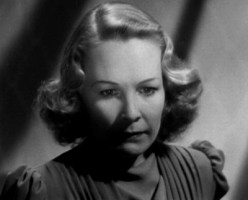
#59 The Saint in New York (1938)
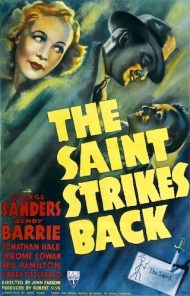
#60 The Saint Strikes Back (1939)
#61 The Final Destination (2009)


87 Films in a Year

In my experience, twitter is generally defined by what you happen to see. Unlike a website, where you might log on and peruse posts going back days or even weeks, twitter gives you a snapshot of what everyone’s saying right now.

So I’m glad I happened to see a tweet from the BFI that declared that “2011 saw an average of 87 film viewings per person in the UK”. Considering what my blog’s all about, I’m sure it comes as no surprise that I’ve often wondered this. And I must admit, it’s considerably higher than I would’ve expected, which makes me wonder how they arrived at it. After all, they didn’t survey everyone in the country, so who’s likely to be reached by BFI polling? Film fans, of course.

All statistics are of course dubious, and there’s no information on how this was collated. Was it a random sampling of the general population or was it specifically people who found it via the BFI (i.e. film fans)? Is it only at the cinema or at home too? Is it any film or only ones new to them? Were they asked to guess or were they asked to keep a thorough record? Were they even asked to guess at all or is it somehow derived from box office admissions?

The penultimate one is especially likely to throw the whole affair (so’s the last one, but we’ll ignore that for now because it makes the whole exercise pointless). People often wildly over- and under-estimate, especially when it comes to how many times they’ve watched something. Perhaps that would mean it averages out OK, or perhaps it skews higher. “Oh, I must’ve watched 100 films this year, easy”, when really they watched one every a week.

And if it is derived from people who kept a thorough record, that brings us back to the point that they must be dedicated film viewers — what regular person is going to count up what they watch now and then for an entire year?

Hm. This statistic started out as really interesting to me, but with all of this logic and analysis I think I’ve ruined it. Maybe that’s for the best.


Next time on the all-new 100 Films in a Year monthly update…

I’ve been watching a surprising amount of the Olympics over the past few days. With it set to continue for about the first half of August, will that be a problem for my continued film viewing?

I’ll let you know… in a month. Enforced tension to maximum!

The Saint in New York (1938)

2012 #59
Ben Holmes | 67 mins | TV | 4:3 | USA / English | PG

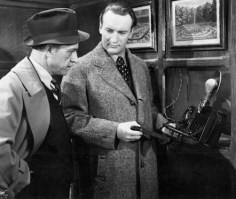
The Saint in New YorkThe Saint in New York is a B-movie in every sense of the term, but it’s certainly one of the fun kind.

There’s a crime wave in New York City. The police know which gangs are responsible but have been unable to successfully prosecute their leaders. So a bunch of people who are somehow involved in the policing of the city elect to call in elusive vigilante-type Simon Templar, aka the Saint, to sort it out for them. It’s the sort of premise you only get in pulp fiction and comic books, and these days the kind of thing that needs subverting or justifying (look how Batman of the ’60s (and even ’90s) works with the police, but is (officially) at odds with the law throughout Nolan’s trilogy)… and I love it. And despite what I just said, you could completely sell it today as a back-room conspiracy of powerful men — I’d love to see this film remade well (and I’ll return to that).

As the Saint, Louis Hayward makes for an appealing hero. He’s cocksure, and you could well argue (as Mike does in his spot-on review at Films on the Box) that he “seems to float through all the perilous situations in which he finds himself, as though he knows he’s the hero of the story and can never die”. Alternatively, he’s a James Bond character, so justifiably confident of his own abilities and plan that he has every right to believe he’ll be OK. (Indeed, this is certainly readable as a proto-Bond movie.) The downside either way is that there’s no sense of jeopardy or danger, which I suppose is a shortcoming; but instead there’s a kind of comic inevitability to the villains believing they could ever beat the Saint.

Screenwriters Charles Kaufman and Mortimer Offner also bestow him with a clever wit. There’s every possibility this results from how he’s portrayed in Leslie Charteris’ original stories, but I’m not familiar with them so couldn’t say; either way, Kaufman and Offner pull it off here too. Hayward wears it well, making a mischievously entertaining presence. The Saint, who is in New YorkHis habit of jumping into moving vehicles, much to the surprise of their drivers, is also fun. The other stand-out character is henchman Hymie, played by Paul Guilfoyle, who is enamoured of the Saint and constantly comments on his actions. Together they make the film a light, fun, amusing experience, with more memorable lines than a film of its stature deserves.

The plot is in many ways stock crime thriller filler, though I believe it has more potential than is realised here — again, I’d love to see a swisher remake. Hitchcock was apparently interested in helming it and I think there’s little doubt he would’ve made a better fist of it than Holmes, whose work is fine if workmanlike. So the story loses some of its impact because it’s under-explained, the final twist solid if guessable (at least by me) because it’s hurtled towards so quickly. The real weak link, though, is a ludicrously rushed romance between the Saint and gangster mol Fay (Kay Sutton). Apparently they fall in love during a 30-second visit to the zoo. Again, the potential joy of a remake: bulk that up and it’d fly well enough. Same with the main plot. Perhaps I should try reading the novel this is based on…

For all its flaws, The Saint in New York is a quick jolt of B-movie fun. Clearly it doesn’t rival the Rathbone Sherlock Holmes series (it’s obviously not as fondly remembered, and that’s usually for a reason), but admirers of pulp ’30s/’40s thrillers are likely to be as entertained as I was. Daft, but certainly fun. Hopefully the rest of the series can live up to (or better) the enjoyment I got from this one.

3 out of 5

The Saint in New York is available on iPlayer until 31st July.

Bad Day at Black Rock (1955)

2012 #47
John Sturges | 78 mins | TV | 2.55:1 | USA / English | PG

Bad Day at Black RockBad Day at Black Rock comes with an air of the forgotten classic — or, at least, it did to me. I think that’s important to how I ultimately reacted to it. As is that wherever I first heard about it pitched it as a suspenseful mystery with a twist. I forget where that was now, but I remember consciously avoiding finding out the plot’s developments (more so than one naturally would anyway) before viewing.

The latter seems to pay off, at first. Spencer Tracy stars as Macreedy, who arrives in a tiny, remote town in the American West, shortly after the end of World War II. He’s there with an unrevealed purpose; the locals are, for some reason, immensely suspicious of him. Starting here, the story is built on slow suspense and mystery: who is Komoko? What happened to him? How does Macreedy know? And what does Macreedy want? Sturges happily lets this mull and build over the best part of an hour, before suddenly darting past the reveals as if they’re unimportant. I’m not saying they need to be sign-posted with dramatic camera angles, weighty overacting and thudding “dun-dun-DUN!” music, but they’re shoved in here as if they’re immaterial; a bit of bookkeeping before the all-action climax. Perhaps these reveals weren’t meant to be so vital to the story as I had been expecting, but it still undermined my expectation.

The film also raises issues that, in my opinion, it fails to adequately explore. Primarily, the American attitude to the Japanese in the wake of Pearl Harbor, and also notions of complicity and complacency in the face of crime. There’s room for these threads to be explored and commented on, to be better exploited than they are. I don’t think it’s an issue of subtly (that is to say, that they are present, but without a heavy hand), more that they’re only fleetingly touched upon. Perhaps that’s unfair — I’m entirely upon to the suggestion that I was so busy focusing on the mysteries, Chatting at Black RockI missed the commentary. Indeed, in his piece at Riding the High Country, Colin notes that the issue of American reaction to the Japanese “is very obviously presented”. (He also examines the film’s representation of a third area, that of Bad Day… as a modern Western and by extension a commentary on “the nature of the west itself”, which as ever I heartily recommend.)

I’ve read that Spencer Tracy was reluctant to star (presumably because of the arguably-anti-American stance of the film), but he nonetheless gives an engaging Oscar-nominated performance, perfectly embodying the character’s odd mix of qualities. He’s authoritative yet acquiescent, disruptive yet quiet, placid yet can hold his own in a fight… In a film otherwise marked by its consciously single-note townsfolk, he makes an intriguing creation.

The most underused character by far is the only woman, Liz, played by Anne Francis, who is vital to the climax but barely has any screen time before that to make us care. Most of the other cast are served at least one scene which is ‘theirs’, in which we get to learn about their archetypal character and their piece in the town’s make-up and secretive past, but third-billed Francis is robbed any of that. Considering the film barely runs 80 minutes as it is, I can’t help but feel there was room to dig into her character a considerable amount more.

Under-used AnneFor a film so based in mystery and which has what I’d call a methodical pace (despite its short running time), there are surprisingly good action sequences to look out for: a car chase/battle along a thin path, a one-handed punch-up in a bar, and a climactic shoot-out that’s at its most tense once all the bullets have been fired. It’s not an action movie by any means, but these cinematic sequences stand out nonetheless.

I imagine I’ve come across as harsh on Bad Day at Black Rock. As noted, I’m not sure where I specifically heard it recommended — several sources, more than likely — but wherever it was made it sound like an under-appreciated minor classic, with a mysterious setup that specifically appealed to me. So perhaps that’s why I’m disappointed the mystery element wasn’t as foregrounded, and why I’m niggling at the ways it could have explored its own content better. At the very least, it leaves topics of consideration open for the audience to debate amongst themselves, and that’s never a bad thing.

4 out of 5

Bad Day at Black Rock is on Film4 today at 5pm, and again on Thursday at 12:40pm.

Wallander: Before the Frost and other stories

Tonight sees the finale of the third series of British Wallander adaptations, this one based on the novel Before the Frost. It was previously filmed seven years ago, as the theatrically-released first episode of the Krister Henriksson-starring Swedish Wallander series, and I reviewed it as part of 100 Films 2009, back when BBC Four aired the Henriksson Wallander, creating the vanguard of our current obsession with Scandinavian crime drama (without this, no The Killing! Guardian readers everywhere gasp at the horror of such an imagining). The broadcast of the English-language re-adaptation seemed like a good time to bring my review over here.

The Henriksson series ran for a total of 26 feature-length episodes. They’re mostly very good and I’d recommend them (they’re available in the UK across four DVD box sets from Arrow). After Before the Frost, three further episodes were treated to a theatrical release, so naturally I reviewed them too. Links to all four follow…


The Dark Knight Rises: Initial Thoughts

The Dark Knight RisesEveryone and their mother will be writing about The Dark Knight Rises over the next few days — I’m sure there’s already been an explosion in articles, blog posts and comments on both, not to mention various related terms trending on twitter almost constantly for most of the week already — so I figured I may as well add my voice to all the thousands shouting into the dark. But rather than a full review (which I’ll save for when things have quietened down a little, and perhaps there’s some kind of consensus or even just other reactions to respond too), here’s a couple of stray thoughts and paragraphs that immediately struck me.

Naturally, this is all spoiler free.

Christopher Nolan’s film is properly epic, and a proper trilogy-closer too. We’re so used to superhero stories that never end that even when he said this would be an ending I half expected something spectacularly open-ended. But no, this is as much a fullstop as we’re ever likely to see on a big-screen superhero… unless it proves really popular and they all start doing it, of course. It feels really weird, but only because it’s not something we’re used to.

The epic part has its pros and its cons. It creates a grand close to the trilogy, but it’s a very busy film and arguably the makers bit off more than they could chew. There’s probably enough story and characters for two whole films here, and maybe they should have pulled back a bit on some threads. Equally, that sense of scale creates the uniquely epic sensation, and maybe it will reward repeated viewings and more leisurely contemplation, each apparently-short moment loaded with information. Or perhaps not — it is literally something only time can tell.

There’s been some backlash already, and though I’ve only skimmed it the feeling I get is mostly one of mismanaged expectations, rather than flaws of the film itself. It’s definitely more comic book-y than The Dark Knight, but only about as much so as Batman Begins. That has clearly disappointed some, but may delight others, and not bother others still. The marketing is part of the problem: the final trailer’s slow, measured, elegiacal style suggested Superhero Movie As Art, whereas Nolan has instead delivered a proper summer blockbuster — albeit one with a more measured pace and less frenetic action than usual. It’s more ‘traditional’ in that respect — I’d wager the pacing is similar to a blockbuster of 20 years ago, rather than the non-stop-bombast we get today.

I also think it might have benefited from a title change — the fan-mooted Gotham City seems ever so apt. Perhaps that would have aligned some expectations in the right direction. Ultimately, you see, this isn’t A Batman Film for the people who want that — it’s The Conclusion Of Christopher Nolan’s Bruce Wayne Story. And I think that’s fine, but perhaps you need to expect that, or at least be open to it as a possibility.

Stray thoughts:

On BD I may watch it with subtitles, not just for Bane (one review I read noted that some of Gordon’s lines “seem to get lost in his moustache”, which is an amusing way of putting the fact that half the cast offer muffled lines at some point; could just be cinema sound systems though).

Criticism of Nolan’s action direction, which has gone on since Begins, is increasingly unwarranted. Some may feel there isn’t enough action, or that what we get doesn’t go on in enough detail, but that’s the style of these films — they’re story movies with action sequences, not Action Movies. The previous two were the same. But the actual shooting and cutting of the action we do get is never less than fine.

Related to the epic-ness, I’ve seen numerous complaints of poor pacing or a slow middle. I didn’t feel that once. Similarly, this epic-ness may be why it can feel certain cast members are underused. The one that surprises me is Matthew Modine — is he really a big enough name for his supporting role here to be labelled “underused”? I didn’t think so. The stand out for me was Michael Caine, who may bring a tear to your eye, but there are several other noteworthy performances.

This is why I’m going to write a full review later, though this has already turned out a tad long.

The big question on everyone’s lips has always been, can it equal or better The Dark Knight? I don’t think it does. I didn’t ever really think it could, so perhaps I just correctly managed my expectations in that regard. But it not being as good as one of the greatest action-thrillers ever made doesn’t mean it isn’t a fantastic film in its own right, and it has a tone and a feel that’s both connected to the previous two Nolan Bat-pics and distinctly its own.

I think it’s wonderful stuff.


My ‘official’ drabble-length review can now be read here.

The Batman Series

In the run up to the release of The Dark Knight Rises I’ve been re-watching all of the modern-era live-action Batman films. I haven’t watched any of them since 2006, well before The Dark Knight was released and only shortly after Batman Begins had signalled a new direction for the Bat-franchise. I think everyone’s view of Batman on film has changed considerably in the last six years, so it’s quite an interesting context to be viewing them in.

I’ve decided not to provide full-length reviews because, quite frankly, I can’t be bothered (I’m 47 behind for pity’s sake!); but because I’ve been having New Thoughts, I thought I’d share a few below. Plus a score, because these are really reviews nonetheless. (I’d give them each their own page, but I don’t want to swamp you yet again, dear treasured email subscribers.) I know I’ve reviewed The Dark Knight twice already, and I didn’t especially want to get into the habit of reviewing it every time I watch it, but I’ve made a couple of quick observations on it in this context.

And with that said…

Batman
2012 #54a
1989 | Tim Burton | 126 mins | Blu-ray | 1.85:1 | UK & USA / English | 15 / PG-13

BatmanIt’s important to re-emphasise what I just said: that this Bat-retrospective was provoked by my realisation that I hadn’t watched these films for six years, since a time when Begins was the pretty-successful new kid on the block. To an extent the changed perspective brought about by the events of the last six years (primarily, The Dark Knight, and (I perceive) a boost in acclaim for Begins by association) colours how we see all of these films now, but I think none more so than this first.

This used to be the dark and serious take on superheroes, treating them in a more grown-up fashion. In the wake of memories of the camp ’60s Batman and the colourful, optimistic Superman film series, that’s certainly what it is. Watched today, it looks positively comic book-y. Sure, it’s a bit grown-up — there’s elements of psychology and adult relationships, not just Boy’s Own Adventure — but the level of heightened reality and camp… it’s nothing like comic book adaptations now. I honestly can’t think of anything made in the current wave of superhero movies that has this tone.

Also, you forget just how true it was that the earlier Batman films focussed more on the villains than the hero. Batman’s in the first scene, but that’s it for a while, and it takes Bruce Wayne ages to appear; when he does, he barely speaks and the scenes aren’t really about him. The story instead follows Jack Napier/the Joker and a pair of journalists, primarily Vicki Vale, though (again) I think it’s easy to forget how prominent her partner (Alexander Knox, played by Robert Wuhl) is. The film puts a little more emphasis on Wayne/Batman later on, but for a hefty chunk it’s not really about him at all. You can really see why Nolan & co thought that was a seam waiting to be tapped when it came to Begins.

Batman feels dated today. I know it’s 23 years old, but it really feels it, in a way the next few films just don’t. There’s still a lot to like here, but it doesn’t impress me in the way it used to when I was younger. It still retains huge nostalgia value at least. Perhaps, with the scales now fallen from my eyes, when I next come to watch it (whenever that may be) I’ll enjoy it more again.

4 out of 5

P.S. The first three Batman films have a chequered rating history, but Batman has perhaps the least explicable. Rated a 12 in cinemas in 1989, it’s consistently been given a 15 for home video. since 1990. The first two times it was classified (in 1990 and then 1992) this would’ve been because the 12 certificate wasn’t available for video, but why it wasn’t downgraded to a 12 in 2004, God only knows. It certainly feels like a 12.


Batman Returns
2012 #54b
1992 | Tim Burton | 126 mins | Blu-ray | 1.85:1 | UK & USA / English | 15 / PG-13

Batman ReturnsTim Burton’s first Batman film is great, no doubt, but Returns is a much better film in so many ways. The direction, writing, acting, action and effects are all slicker. They spent over twice as much money on it and it really shows. Plus they have exactly the same running time (to the very minute), but Batman feels surprisingly small scale and Returns feels epic. Watched today, Batman feels Old, whereas Returns… it’s from ’92 so of course it doesn’t feel New — but it feels more like newer films, in a good way.

Some criticise it for being too dark. Well, it is and it isn’t — there’s a lot of black humour in there. I think it works as a tonal whole — it’s not one-note, but it doesn’t swing wildly around either. What’s wrong with a film having a dark tone? Should every blockbuster pitch for exactly the same light-but-not-too-light area? Because they went for that in Forever and it didn’t go down as well.

And that’s related to another thing — some people criticise it for being a Tim Burton film rather than a Batman film, as if that’s a bad or even valid thing. It’s directed by Tim Burton and you don’t expect a Tim Burton film? I’d rather have a director who puts his own stamp on the material than a hired hand who churns out something generic. What’s the point in hiring someone good if they can’t bring their own influence? You don’t think the current films are as influenced by Nolan’s sensibilities as anything else? Look at his personally-authored Inception and tell me that’s in a vastly different style. Then look at Burton’s Planet of the Apes and see what happens when an individualist director is forced into a studio style. Bad things happen, that’s what.

These are meant to be short reviews so I won’t go on about all of Returns’ plus points, but oh my are they many. This is easily the franchise’s best effort until at least Begins, arguably even until Dark Knight; and for those who prefer their Batman less grounded and more fantastical, it could well be the best of all.

5 out of 5

P.S. Believe it or not (and some will know this and so believe it, but I didn’t until now), Returns is only uncut in the UK as of 2009! Back when the SE DVDs were classified in 2005 it was still cut by seven seconds for “imitable techniques”, and then got a 12. I don’t know if an uncut 15 was offered then, but that’s what it has now.


Batman Forever
2012 #56a
1995 | Joel Schumacher | 122 mins | Blu-ray | 1.85:1 | UK & USA / English | 12 / PG-13

Batman ForeverFour observations I personally hadn’t made before:

1) everyone goes on about how the pre-Begins Batman films dealt with the villains and ignored Bruce Wayne. That’s true of Burton’s pair, but this one spends a ton of time with Bruce (a lot of that’s about Robin, but it’s about Robin in relation to Bruce). The one who’s hard done by is Harvey Dent/Two-Face, who gets relatively little screen time and most of it is spent as a cackling halfwit sidekick to the Riddler. Not befitting the character at all.

But 2) talking of Two-Face, wow does Tommy Lee Jones over-act furiously! Perhaps that’s not news, but crikey it’s so unlike anything else I’ve ever seen him in.

And 3) I swear Elliot Goldenthal’s score referenced the music of the ’60s Adam West series on several occasions. Which, considering the overall tone of the film, feels entirely possible. (I watched the featurette on the BD about the music but they didn’t mention it, sadly.)

Finally, 4) I was aware they’d completely re-edited the first act to put an action scene up front (and get a lower certificate in the US after all the furore that accompanied Returns), but I wasn’t aware of all the casualties. At one point Batman and Two-Face engage in a car chase that happens for no good reason; in the original cut, Two-Face & co ambush Batman on his way back from attending a Bat-signal call. That at least makes some sense, whereas in the film as-is he seems to go out simply for the purpose of having a chase, then goes home.

3 out of 5


Batman & Robin
2012 #56b
1997 | Joel Schumacher | 125 mins | Blu-ray | 1.85:1 | UK & USA / English | PG / PG-13

Batman and RobinBelieve it or not, Batman & Robin isn’t a complete disaster. Don’t get me wrong, I’m not about to mount a defence of the film — it is mostly awful. But only “mostly”.

Relatively significant screen time is given to a subplot involving Alfred being very ill. Thanks to the general warmth of feeling felt toward the character, plus the acting abilities of Michael Gough and George Clooney (who is severely untested by the rest of the movie), this storyline deserves to be part of a far better film.

Also, the realisation of Gotham is impressive. Mixing gigantic sets, model work and CGI, Schumacher and co crafted a towering fantasy landscape straight out of the comic’s wilder imaginings. The neon colouring may not be to the taste of those who prefer Burton’s darkly Gothic interpretation or Nolan’s real-world metropolis (if forced to choose, I’d be among them), but this is an animated-series-style Gotham writ in live-action, and judged as that it’s a resounding success.

The rest of the film is an irredeemable mess, however. Characters speak almost exclusively in one-liners centred on dodgy puns, and even when it’s not a one-liner it’s delivered as if it is. Schwarzenegger is the worst culprit for this, but Uma Thurman overacts horrendously also. She’s defeated by being kicked into her chair, just another of the script’s multitudinous stupidities. Her origin is a weak rip-off of Returns’ take on Catwoman; Bane is reduced to a monosyllabic idiot (at one point he has to plant a series of explosives, grunting the word “bomb” every time he puts one down); Barbara ‘borrows’ a bike from Bruce’s collection and, thanks to editing, appears not to return it for about two days without anyone noticing; and so on. I know they were aiming a little more in the direction of the camp ’60s TV series, but even if you allow for that it just doesn’t pull it off (and I gave the ’60s movie 4 stars, so I believe it can it done).

The “toyetic” approach (i.e. focusing more on the tie-in merchandise that could be generated than the story, etc) results in a foul new look for the Batmobile (though the DVD featurette on the film’s vehicles almost makes you appreciate it — the behind-the-scenes version is much more impressive than what we see in the film) and, famously, the heroes arriving at the climax in new costumes with absolutely no explanation! All it needed was them returning to the Batcave, “we better put on our ice-suits”, something like that. Heck, it would’ve allowed Schumacher to indulge in his suiting-up T&A shots one more time. But no, they just magically change into nastily-designed toy-ready outfits. Ugh.

There is ever so much to hate about Batman & Robin that even the really-quite-well-done Alfred plot can’t prevent me from placing it with the lowest of the low at a single star.

1 out of 5


Batman Begins
2012 #56c
2005 | Christopher Nolan | 140 mins | Blu-ray | 2.35:1 | UK & USA / English | 12 / PG-13

Batman BeginsChris Nolan’s first foray into Bat-world really is a stunning piece of work in many respects. It’s a film with the confidence in its story to take its time and do things its own way. The first 40 or so minutes jump back and forth constantly between Bruce Wayne’s childhood around the time of his parents’ murder, his college-ish days when he runs away around the world, and his present day training with the League of Shadows. But, as is Nolan’s trademark, this mixed-up chronology is never confusing, never unclear, and always serves a point.

Then there’s the fact that Batman himself doesn’t turn up for a whole hour. That’s nearly half the film. But that’s fine — we’re not left wanting, it’s just the right time for him to emerge. When he does, the film becomes suitably action-packed and drives its plot on. Until that point, we’ve had such a thorough basing in the world of Gotham City and the mental character of Bruce Wayne that it seems plausible he’d choose to fight crime by dressing up as a bat.

The Nolan Batman films have become known as the ‘real world’ superhero movies, but of course what we see depicted isn’t the real world, and things wouldn’t happen like this in real life. But it’s the way Begins identifies itself with other movies that creates that feeling. The previous Batman films occur in the exaggerated world of Superman and other superhero fantasy movies; here we’re in an exaggerated world more like James Bond, say, or indeed any other technology-driven action-thriller you choose. It’s not our real world, but it’s the real world of that genre; one closer to our own than the dark fantasy of Burton’s films or the dayglo cartoon of Schumacher’s.

There’s much more that could be said about Begins and naturally I’m limiting myself here (this is meant to be a short comment, after all), but it’s important to note what a fine job Nolan does of making Gotham City a character in the film. All of the Batman films have done this to some degree — it was Burton’s stated aim to make Gotham “the third character” in his first effort — but by giving the city recognisable landmarks, districts, a true sense of history and on-going interrelations, it feels like a real place. And those recognisable landmarks continue into The Dark Knight (particularly spottable are the split-level roads, the Narrows and its bridges, even if the vital-to-this-film’s-plot elevated railway completely disappears between films), cementing the importance of this cityscape. I do hope it continues into Dark Knight Rises. I’ve already read one review that said they should’ve named the final film Gotham City, so I’m optimistic.

The monumental achievement of The Dark Knight has come to overshadow Begins, which is now rendered as a functionary prequel to the next film’s majesty. Don’t let that reputation fool you: on its own merits, this is very much a film at the forefront of the action-adventure, blockbuster and superhero genres.

5 out of 5


The Dark Knight
as 2012 #56d
2008 | Christopher Nolan | 152 mins | Blu-ray | 2.35:1 | UK & USA / English | 12 / PG-13

The Dark Knight, againI was, oddly, a little nervous sitting down to watch TDK for the first time in four years. I’d had such an incredible experience viewing it in the cinema (twice) and, by not watching it since, it had built up some kind of aura in my mind. But I dismissed such silliness and damn well got on with it.

Thank goodness, it’s a film good enough to stand up to such memories. That’s the main thing I wanted to add, I suppose, because everything I had to say in my earlier reviews still stands. The IMAX sequences look almost as incredible on Blu-ray as they did in the theatre (as much as they ever could), but I’m sure you knew that.

What’s interesting is watching this directly after Begins. While Nolan’s first film isn’t even close to being as all-out fantasy as the earlier entries, it errs more in that direction than this one, in my opinion. Begins has a kind of fantastical warmth to it, alongside the more urban-realism aspects. I say “warmth” probably because of the sepia/brown hues of the sequences set in the Narrows and so on. The Dark Knight, by comparison, is set in the cold grey-blue steel world of skyscrapers and the modern metropolis, inspired by towering architecture in its visual style and by epic crime-thrillers in its plotting. Compare the two posters I’ve used here for the gist of what I’m driving at.

Begins is, at heart, still a superhero action-adventure; Dark Knight is a crime thriller that happens to take place in a world with superheroes. Does that make it inherently better? No. But it does make it more unusual for the genre. And as Nolan & co pull off the crime thriller style and feel so damn well, it flat out makes it a great film.

The star rating, of course, stays the same.

5 out of 5

In case you missed the links above, my two previous Dark Knight reviews can be read here and here.


And that’s it for the Batman films… so far. Because at the exact time this set of reviews is posted, I should be sat in a large darkened room with a number of other people, about to embark on the concluding chapter of Nolan’s Dark Knight trilogy. I imagine later today or tonight I’ll have some initial thoughts on that one too.

The Dark Knight Rises