

Chris Columbus | 174 mins | Blu-ray | 2.40:1 | UK & USA / English | PG / PG
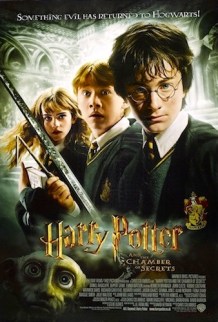 This extended cut takes the already-lengthy second instalment in the Harry Potter franchise and pushes it to nearly three hours (though if you lop off the extensive end credits it’s more like two-and-three-quarters). As with the extended version of the first film, it was originally created for the US TV premiere, then later released on the Ultimate Edition sets, and simply integrates the DVD’s deleted scenes back into the film.
The difference in running time is 13½ minutes, spread across 19 different extensions. (Per usual, a list can be found here.) As you might guess, many are short snippets, running as little as 18 seconds when viewed among the deleted scenes (and those tend to include scene-setting bits from the theatrical version and a copyright notice). Unsurprisingly, then, many are of little significance, often just fleshing out minor characters (Colin Creevey gets to tell his backstory; Justin Finch-Fletchley gets to introduce himself) or adding comedy beats (a floating cake at the Dursleys’; Crabbe and Goyle bumping into ‘themselves’).
So are any especially beneficial? Well, one fleshes out what happened to the flying car (setting up its return to save the day a few minutes later), and there are extra moments to clarify Harry’s awareness of the other students’ worries about him. There’s a bit more Lockhart, once again showing how self-centred he is (it’s surprising how little Kenneth Branagh is in the film actually, so this is welcome), and a tiny bit more Quidditch. There’s also a nod to a subplot with Filch that then doesn’t go anywhere, and one or two minor continuity errors are accidentally introduced (the most obvious is that Hermione tells Harry and Ron they’ll need to take Crabbe and Goyle’s uniforms when using the Polyjuice potion, but then in a new scene she’s stolen some).
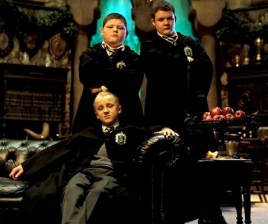 The longest extension comes near the start, when Harry misspeaks while using Floo powder and ends up in the nasty part of Diagon Alley. In the theatrical version he just walks out of the creepy shop, but here he has to hide as Malfoys Senior and Junior enter to sell some items. Though it has the advantage of showing us how Lucius treats his son when out of sight of more respectable wizards, and possibly seeds something for later films (what is the one item Malfoy isn’t prepared to sell?), it dilutes the introduction of Jason Isaacs’ villain, which in the theatrical version came slightly later in the bookshop, where he bumps into Harry, Hermione and the Weasleys as they’re leaving Lockhart’s signing. It’s a more effective, more dramatic introduction to someone who will become a major character as the series progresses.
The film itself has held up well over the last 11 years, I think. Columbus was oft derided as a mediocre director at the time; a workmanlike filmmaker installed to simply guide the book faithfully to the screen. He’s not exactly an astounding presence behind the camera, but he’s more than adequate, and some sequences even exhibit flair. The biggest downside of the adaptation, once again screenwritten by Steve Kloves, is that it lacks tension. J.K. Rowling’s mystery-laden plot is very well constructed, but the adaptation doesn’t pay enough attention to hyping up that it is mysterious. The most glaring omission is that Ginny Weasley, so central to the denouement, barely appears until the finale. On the bright side, the lengthy running time does allow more space for all of the familiar characters to grow — particularly the three leads, who already feel considerably older than in the first film (and this in the only Potter film that was story-accurately shot exactly one year later).
 There are, arguably, three notable additions to the cast this time out. The first is Lucius Malfoy who, as discussed, will come into his own later. Then there’s Gilderoy Lockhart, a preening wizard celebrity played with relish by Kenneth Branagh. He’s often very amusing and there’s not enough of him. And then there’s Dobby. Apparently Dobby is a beloved character; apparently kids really like him. I’ve always found him intensely irritating, and was surprised how much Rowling made me warm to him in Deathly Hallows. I thought that might make him more palatable at the start… but it doesn’t. He’s wonderfully realised, though — despite the age of the film, much of the CGI holds up really well.
Chamber of Secrets isn’t the best film the Harry Potter series has to offer — it lacks the introductory wonder of the first and the portentousness of later films. Viewed in isolation, it can also look like a total aside from the series’ main story arc… but, as those familiar with later events will know, there’s actually a lot of important stuff introduced (and, in some cases, dealt with) here. Whatever you think of Rowling as a writer, she did a helluva job plotting out her grand story over seven tales.

In a fortnight’s time, I aid and abet the Prisoner of Azkaban…
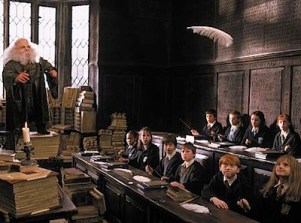
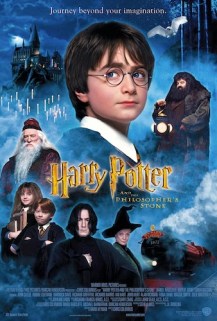 Originally created for the film’s US TV premiere in May 2004, then later released on the film’s Ultimate Edition in 2009 (and not making it to the UK in HD until the Wizard’s Collection last September), this Extended Version of the first Harry Potter film adds six-and-a-half minutes of new bits and bobs to the already lengthy adaptation.
 (See all of that with pictures
 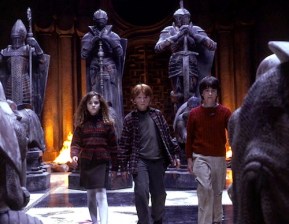 that wasn’t common practice back at the turn of the millennium (unless your name was Ridley Scott), so the filmmakers can’t be blamed for not doing it. As it stands, I think they mostly struck a fair balance between fidelity and the fact it’s an adaptation. Similarly, Columbus’ direction is rarely exemplary, but it’s competent with some memorable moments.
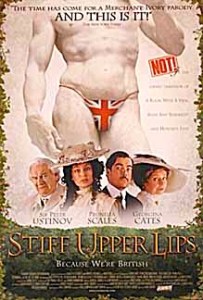 Spoof of British ‘Heritage’ films and TV series, particularly the work of Merchant Ivory. It was probably a bit belated: released in 1998, you’ll note most targets are from the ’80s. It only even made it to TV recently (I watched on
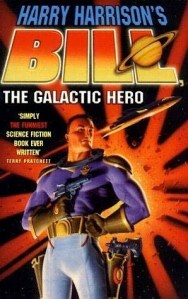 (described by no less than Terry Pratchett as “the funniest science fiction book ever written”), and he’s trying to fund it through
 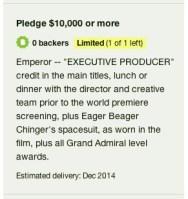 What’s on offer varies from project to project, of course. In
  Kurt Russell gets embroiled in a fever dream of mystical Chinese tomfoolery in San Francisco’s Chinatown in this cult ’80s adventure from writer/director John Carpenter.
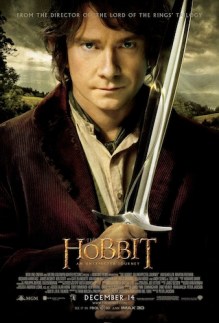 So here we are: nine years after his last tour of duty in Middle-earth, and after a Guillermo del Toro-shaped attempt at not having to serve again, Peter Jackson returns to the world of hobbits, dwarves, elves, orcs, and the rest, to tell the tale some have been clamouring for him to make since
 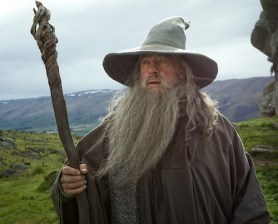 And, I have to say, as someone who hasn’t read the novel since primary school, I couldn’t spot the joins. I could take some guesses, but not many, and considering how long the film is I’m sure there must be quite a lot added.
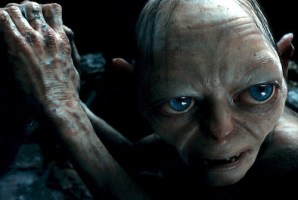 but I could have, and knowing you can do something makes all the difference. There’s also the little timer on the Blu-ray player, which means I can know that it took forty minutes to get out of Bag End rather than just thinking it feels like it. Does that somehow make it more palatable? Would I have been as bothered as others by the film’s length and pacing had I seen it in a cinema initially? It’s tough — nay, impossible — to say, because while there are those other subliminal factors, I also felt like I flat out enjoyed the film for itself, not just for my potential ability to escape it. But it is long and it is episodic, so maybe the association of watching individualistic episodes of TV back to back feeds into the acceptance of that? It’s a circular argument, so we’ll leave it there.
 Howard Shore returns to deliver another fantastic score. After he composed the iconic Fellowship theme for, um, Fellowship, I thought he could never muster anything else as monumental. And, in fairness, that theme is still the defining aspect of the series’ score (its absence here is at times felt, by me at least); but he produced another excellent motif for
 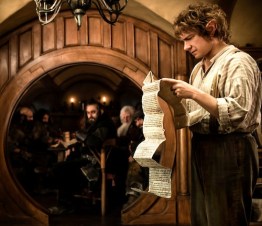 Without the breadth and world-changing story of The Lord of the Rings, The Hobbit was always going to be a somewhat smaller experience. By emphasising the backstory of the dwarves’ stolen homeland and the hints of war-to-come that will ultimately lead in to Rings’ story, Jackson has made it considerably more epic — for good or ill. For me, the whole experience clicked. I don’t think it’s as good as Lord of the Rings, but it is the next best thing.
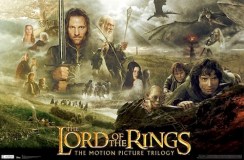 Of course. Some would argue it’s cheating to include an entire trilogy as one film, but Jackson made it as one film and it’s really a single tale that has to be divided to make it possible in cinemas, both financially and for the sake of the audience’s posteriors. But I’ve watched it in a single sitting, something I’ve not managed with some much shorter works, so that makes it OK by me. And I’ve spent all my words here saying that because, really, do you need me to tell you why this tops the list? (Not that this is a ranked list. But if it were, this would top it.)
 I did think my main rule for this list would be “set at least partly in an alternate world” (see things like Narnia and Stardust), but that would rule out Harry Potter (which is clearly Fantasy) and this. If we’re talking swords-and-sorcery, this definitely has swords and it probably has sorcery too. How else do you explain immortality? Except with some BS sci-fi claptrap in the sequels that no one, not even their makers, wants to remember. It may be campy and ever so ’80s, with the most hilarious array of mismatched accents ever committed to film, but goodness me do I love it.
 A modern, British-tinged take on the tone of The Princess Bride — two elements that give this the edge, for me. It’s also less of a spoof, more of a straight take on a fantasy adventure with an awareness of the comical and a resolute lack of po-faced-ness. There’s a reason Neil Gaiman’s a beloved author, and there’s a reason Matthew Vaughn is a mainstream filmmaker we should all keep a very close eye on.
 This is a bit of a cheat, because it’s actually a two-part miniseries… but in its entirety it’s shorter than Return of the King, and for some inexplicable reason is
  If Merlin was a bit of a cheat, this is a great big one, because The 10th Kingdom is actually a seven-hour miniseries. But tough, because I love it and it’s not well enough known. Here in the UK it aired on Sky back in the days before I had said channel, and so my first encounter was through
  Quite what inspired this turn-of-the-millennium wannabe-blockbuster I don’t know — it came out the year before the double-whammy genre kick-start of Lord of the Rings and Harry Potter… but it feels much more than a single year older. It’s not all bad — some of the scenic effects shots are quite good, and there’s a certain joy in Jeremy Irons’ ludicrously campy performance — but, mostly, it is. The CGI is dreadful, the acting isn’t any better, and the location work makes it look like Power Rangers. If it wasn’t bad enough in itself (which it was), the glossy quality of Rings and Potter just 12 months later revitalised the genre to the point that this was blissfully consigned to ignominious oblivion.
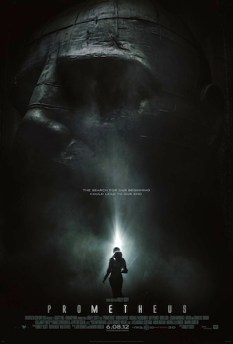 Ridley Scott’s not-an-
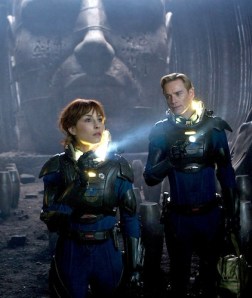 And then, to top it off, it doesn’t have a real ending! They may as well slap “to be continued” on screen, such is the obvious lack of conclusion. It’s immensely frustrating, only to be topped off with a “in case we don’t get the sequel” bit of connective tissue to the Alien series. Mysteries and unanswered questions aren’t a problem in and of themselves — there are plenty in Prometheus’ franchise forbears,
 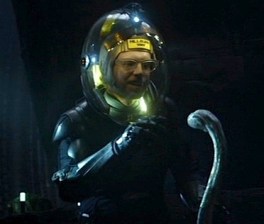 No character is fully developed. Some barely register, suggesting too big a cast, while others suffer from being plain stupid, or doing inexplicably stupid things, or just piss-poor acting. There’s some thing made about Shaw (Noomi Rapace) being religious or a true believer or something, but it’s not properly explained and doesn’t go anywhere. David (Michael Fassbender) and the way he’s treated by the other characters are both very interesting areas, and clearly of huge thematic resonance, but he acts inconsistently for no obvious reason, and despite the horrendous things he does to Shaw at one point, she just gets on with him again in the next scene, and… well, that’s far from being the film’s only plot hole or inconsistency.
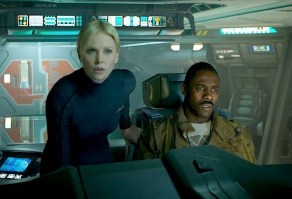 The daft thing is, I think a lot of people would’ve been happy if it had chosen to just go all-out as a schlocky alien horror movie. That’s what Alien is: an exceptionally well-made haunted house movie in space. There’s no shame in that (well, maybe in cinéaste circles, but pish.) But that’s not where Prometheus pitches itself. There’s too much other stuff for it to be just that; stuff that’s apparently aiming to be Profound. So when the horror does turn up, it doesn’t belong.
 Prometheus is a funny old beast, then. There’s lots of good stuff in there, but also lots of baffling decisions and confusing shifts of tone, emphasis, style… Considering it was made by an experienced master-filmmaker, who was presumably granted all the time, freedom and money he wanted to craft the film he desired, it’s baffling how it ended up feeling like such a hodge-podge. Many fans have blamed Lindelof, brought in late on to re-write the screenplay; but considering Scott ruined
  Most films have a reputation of one kind or another, even if it’s only in certain circles and you have to go searching to find it. I suppose Conan’s is best summed up by
  The guy doing the voiceover narration is godawful though, and there’s far too much of him. It’s never made clear why he’s the one telling the story either, unless I missed it.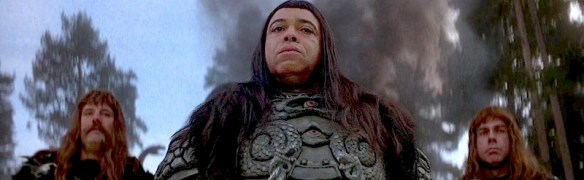
 Time flies: this is 13 years old! Originally a Jim Carrey vehicle (feels obvious once you know), Ben Stiller is the prospective son-in-law meeting Teri Polo’s parents (Robert De Niro, Blythe Danner) for the first time. Disaster ensues in a riot of unfortunate events targeting our hapless hero.
 100Films.co.uk