1998 Reconstructed Version
2013 #58
Orson Welles | 111 mins | Blu-ray | 1.37:1 | USA / English | 12 / PG-13
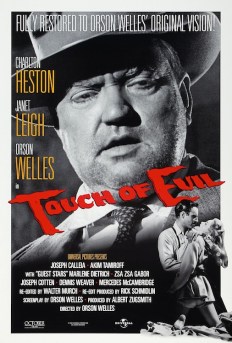 A bomb is stuck to the underside of a car. As the vehicle pulls away, the camera drifts up into the sky, and proceeds to follow the automobile through the streets of a small Mexican border town, until it crosses the border into the US… and explodes. It’s probably the most famous long take in film history, and probably the thing Touch of Evil is most widely known for; that, and it being one of the most commonly-cited points at which the classic film noir era comes to an end.
So who planted the bomb? Who was their target? And why? None of those questions matter. I’m sure they’re answered, but I don’t recall what those answers were, because they’re not what the film is about. What it’s about is Charlton Heston vs Orson Welles. The former is Vargas, a righteous Mexican drugs enforcement officer who witnesses the bombing while out walking with his new American wife. The latter is Quinlan, the policeman charged with finding the culprit — and he isn’t an honest copper. When Quinlan works out who he thinks is guilty, he makes sure there’s the evidence to back that up. And I don’t mean by doing thorough police work. Vargas catches him more-or-less in the act; Quinlan won’t allow himself to be exposed. It’s a game of cat and mouse; at stake, not just two men’s reputations, but justice and the law (not the same thing); and just waiting to get tangled in the middle, Vargas’ new wife — sweet, innocent Janet Leigh.
This is not film noir as many think they know it. Instead of a doggedly determined wisecracking PI solving a slightly seedy case, Touch of Evil is suffused with a sweaty and disquieting atmosphere. 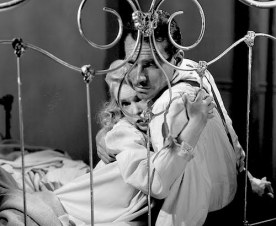 It’s like a terrible fever dream, with events and characters that sometimes seem disconnected, but nonetheless interweave through a dense plot. In this sense Welles puts us quite effectively in the shoes of Vargas and his wife — out of our depth, out of our comfort zone, out of control, struggling to keep up and keep afloat. It might be unpleasant if it wasn’t so engrossing.
Similarly uncomfortable are the film’s moral implications. Well, possibly. In the booklet accompanying Masters of Cinema’s Blu-ray release, French critics François Truffaut and André Bazin both assert that Welles’ Quinlan, while ostensibly the villain, is really a hero; that though he technically breaks the law, he’s morally right to do so. Essentially — or in Truffaut’s case, explicitly — they are defending policemen who fabricate evidence to ensure a conviction. Unfortunately for all their so-called intellectualising, Welles completely disagrees: “The personal element in the film is the hatred I feel for the way the police abuse their power… The things said by Vargas are what I would say myself… that’s the angle the film should be seen from; everything Vargas says, I say.”
Amusingly, Bazin is indeed forced to admit that “in the interviews which he gave me… Welles challenged this interpretation. He maintains that his moral position is unequivocal and he condemns [Quinlan] absolutely”. Meanwhile, Truffaut’s praise-filled essay asserts that, in the film’s ending, “[Vargas’] sneakiness and mediocrity have triumphed over [Quinlan’s] intuition and absolute justice.” Elsewhere, Welles summarises that “it’s a mistake to think I approve of  Quinlan at all… there is not the least spark of genius in him; if there does seem to be one, I’ve made a mistake.” You can get pretentious about it all you want, and bring to bear political views that the film doesn’t support (after all, within the film Quinlan is punished for his crimes and the “mediocre” (Truffaut’s word) moral hero triumphs), but sometimes a spade is a spade; sometimes a villain is a villain; sometimes your disgusting moral perspective isn’t being covertly supported by a film that seems to condemn it.
Welles:
What I want to say in the film is this: that in the modern world we have to choose between the law’s morality, and the morality of simple justice, that is to say between lynching someone and letting him go free. I prefer a murderer to go free, than to have the police arrest him by mistake. Quinlan doesn’t so much want to bring the guilty to justice, as to murder them in the name of the law, and that’s a fascist argument, a totalitarian argument contrary to the tradition of human law and justice such as I understand it.
So that’s the end of that.
Welles’ beliefs about filmmaking were similarly forthright, stating that “all of the eloquence of film is created in the editing room” — the images were important, but the real art was in how they were placed together in the edit. It must have been especially hard for him, then, that so many of his films were “violently torn from [his] hands”: as of 1965, he says only Citizen Kane, Othello and Don Quixote were movies he’d been allowed to edit to his own specification (and that last one barely counts).
 Notably and obviously absent from that list is Touch of Evil. It was taken away from Welles during the editing process, and though he submitted an infamous 58-page memo of suggestions after seeing a later rough cut, only some were followed in the version ultimately released. Time has brought change, however, and there are now multiple versions of Touch of Evil for the viewer to choose from; but whereas history often resolves one version of a film to be the definitive article, it’s hard to know which that is in this case. Indeed, it’s so contentious that Masters of Cinema went so far as to include five versions on their 2011 Blu-ray (it would’ve been six, but Universal couldn’t/wouldn’t supply the final one in HD.) The version I chose to watch, dubbed the “Reconstructed Version”, tries to recreate Welles’ vision, using footage from the theatrical cut and a preview version discovered in the ’70s to follow his notes. Despite the best intentions of its creators, this can only ever be an attempt at restoring what Welles wanted. Equally, although it was the version originally released, the theatrical cut ignores many of the director’s wishes — so as neither version was finished by Welles, surely the one created by people trying to enact his wishes is preferable to the one assembled by people who only took his ideas on advisement?
But that’s not all, poor viewer! There’s also the issue of the film’s aspect ratio: Welles was forced to shoot the film for projection at 1.85:1, but he did so on the understanding that an open matte 1.37:1 version would be shown on TV. He penned an article the same year as Touch of Evil’s release, called “Ribbon of Dreams”, in which he firmly advocates the Academy ratio and shows a strong distaste for widescreen (reading it today, it’s reminiscent of and comparable to Christopher Nolan’s comments on the film vs digital debate). With that considered, the full screen version would seem the preferable choice. 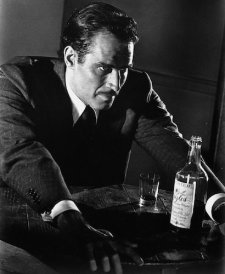 To quote from Master of Cinema’s booklet, “the familiar Wellesian framing appears in 1.37:1: indeed, the “world” of the film setting emerges with little or no empty space at the top and bottom of the frame, almost certainly beyond mere coincidence.” There are things to recommend the widescreen experience (“a more tightly-wound, claustrophobic atmosphere”), and undoubtedly the debate will continue… and such is the wonders of the modern film fan that, rather than having to make do with someone else’s decision on what to put out, all the alternatives are at our fingertips.
Obviously I can’t speak for all the different cuts of Touch of Evil, but considering its constituent elements, it’s hard to imagine a version that isn’t complex, thought-provoking, perhaps a bit uncomfortable, and all-round an impressive work of cinema.
Touch of Evil was viewed as part of my What Do You Mean You Haven’t Seen…? 12 for 2013 project, which you can read more about here.


 2014 Academy Awards
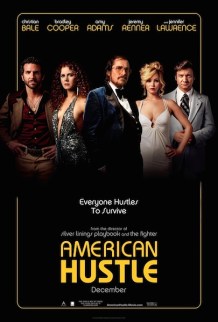 “Don’t put metal in the science oven!”
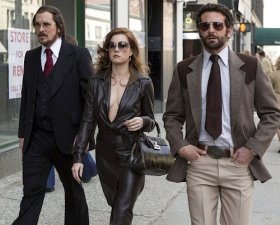 I never connected with the characters, so consequently never felt their predicaments, either romantic or professional. A halting chronologically-challenged start gives way to a middle that ultimately drags, before a “gotcha!” ending whose straightforwardness means it lacks the memorable punch of the best con movies.

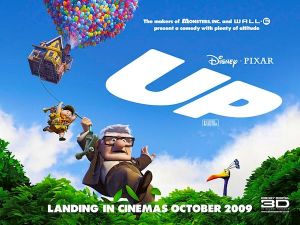 You know Up: it’s the Pixar movie where everyone talks about how amazing the first 10 minutes are, and never seems to have anything to say about the rest of the film.
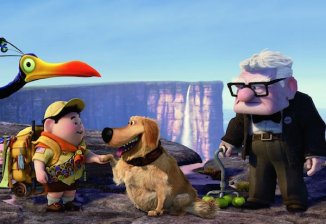 the best bits were shown off in advance. The special features reveal the extent the animators went to when researching real-world locations to influence the film’s strange, alien landscape; sadly, the fact the bizarre rock formations are actually a real thing somewhere in the world is more interesting than how they’re used in the film.
 I figured I ran the risk of affecting the outcome of the Scottish independence referendum if I posted this review yesterday (because of course I have that kind of reach and influence), but after Mel Gibson’s historical(ly-dubious) epic wound up on
  Judged as that, Gibson’s three-hour (near as damn it) movie is a pleasingly traditional epic. Many big films these days are just long, but the story here has scope too — it’s about a war, essentially. And war means battles, which are a particular highlight. The standout is surely the famed Battle of Stirling Bridge — you know, the one where the Scots moon the English. Funny and all, but just a small part of a larger sequence. Gibson has the confidence to show the build-up to the fighting, outline the tactics that will be used, and only then launch into the fray. It’s this measured approach that makes it so effective, rather than the crash-bang-wallop straight-to-the-slaughter style of more recent movies. Due to its notoriety I’d assumed the aforementioned clash was the film’s climax, but it’s actually the centrepiece, pretty precisely in the middle of the film. Fortunately there’s enough else going on (because this isn’t actually An Action Movie) that it doesn’t make things feel lopsided.
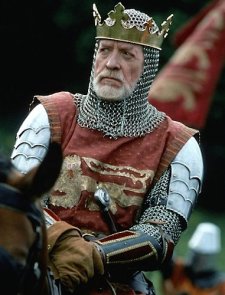 It also doesn’t suffer from that film’s accent issues. Mel Gibson isn’t an American-Scot (or an Australian one), instead delivering an accent that sounds passable to this Englishman. He believed he was too old for the part, which may well be true, but when the rest of it is so inaccurate what does that matter? He’s a solid leading man and a commanding-enough presence. The supporting cast are an array of recognisable Celtish faces — including at least one Irishman playing a Scot and a Scot playing an Irishman — and, because they’re from our fair isles, of course they’re all brilliant. Best of all, however, is Patrick McGoohan. He makes for a fantastic Evil King, given some juicy lines that are even juicier thanks to his delivery. He may not be moustache-twirling-ly memorable like an Alan Rickman creation, but any scene is enlivened by his presence.
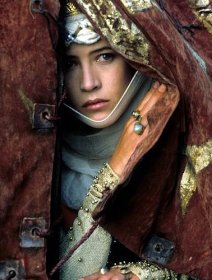 Then there’s that issue of historical accuracy. I know I said we should ignore it, but even if you accept fiction films shouldn’t be slavish history lessons (and not everyone does), how far can they ignore the facts? Often with such films the viewer assumes they’re true until someone says, “actually, I think you’ll find in reality…” Not so with Braveheart: you don’t have to know anything of Scottish history to guess that the face-to-face chats (and more, wink-wink-nudge-nudge) between Wallace and the future-Queen must be almost entirely poppycock (and, in fact, you can drop that “almost”).
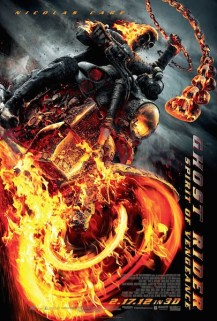 Best known for the trailer that showed its hero pissing fire, Ghost Rider: Spirit of Vengeance is a semi-reboot of the Marvel comics franchise about a demon-possessed vengeance-seeking motorbike rider.
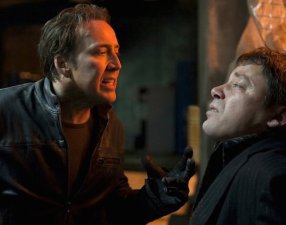 where adults have east European accents but kids sound American, and Idris Elba pretends to be French.
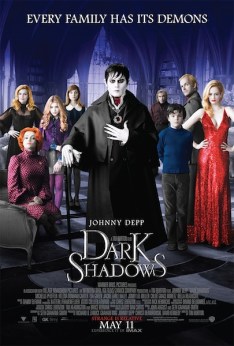 Director Tim Burton’s most recent live-action movie is an adaptation of a 1960s soap opera… albeit one featuring vampires, witches, ghosts and sundry other supernatural goings-on. You wouldn’t get that on
 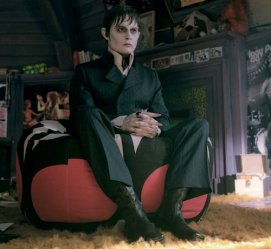 Early on, it works. The first 20 to 30 minutes offer a serviceable prologue and an engaging introduction to most of the characters. It’s funny, it’s occasionally spooky, there’s a good deal of promise for a marginally-more-serious
  It’s a tonal grab bag: at times it seems to be a knowing spoof of daytime soaps, at others pushing for drama almost with a straight face; it’s sometimes deliberately and successfully comedic, at others straining too hard for a desperate laugh; it has a strain of bizarre sexuality that may be aiming at comic but is frequently just uncomfortable. This scrappiness leads to the most cardinal sin of any entertainment: it ends up a bit boring; and, in its out-of-the-blue big-battle climax, crushingly derivative.
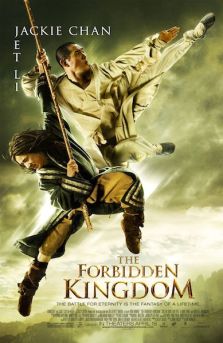 Jackie Chan and Jet Li co-star for the first time (with shared billing, thanks to the J — on screen as it is on the poster) in this US-produced martial arts epic.
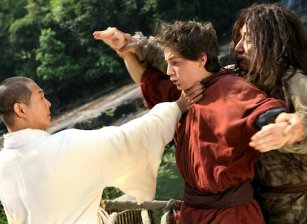 We do get the latter during the climax, which is fine; the former never rears its ugly head. Minkoff knows to hold his camera back, eschewing the fast-cut close-up style of most modern Hollywood action for a more traditional use of long shots and longer takes. It’s a natural fit for the extensive, impressive choreography that’s performed by expert professionals.
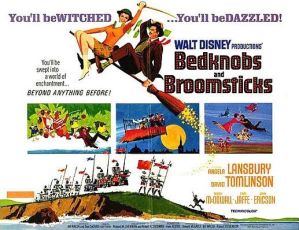 Disney attempted to replicate the success of
 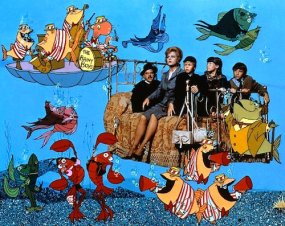 and one that’s mostly animated with our live-action heroes integrated; plus a climax where the good guys defeat one of the world’s great evils, with Poppins’ bankers here switched for the almost-as-bad Nazis. The magical special effects in that final sequence won an Oscar — and well deserved it was too. They look great, definitely holding up today, and it’s actually hard to be sure how they were all achieved.
 There seems to be a certain brand of animated film that I think looks dreadful so avoid, then I hear good things about, so I try it and find that, actually, they are really good. There was
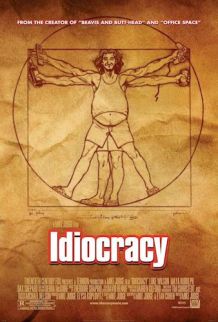 The creator of Beavis and Butthead imagines a future America in which, essentially, everyone has become his once-famous animated creations. I think — I never watched it. Basically, everyone’s a moron.
 100Films.co.uk