2015 #53
Richard Linklater | 96 mins | streaming (HD) | 1.85:1 | USA / English | 12 / PG-13
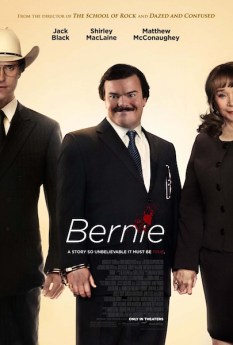 I seem to vaguely remember dismissing Bernie as just ‘Another Jack Black Comedy’ back whenever it came out (in the UK, that wasn’t until April 2013), and essentially forgot about it until earlier this month when it came up on the A.V. Club’s 100 best films of the decade (so far), at #38, which made it sound a very worthwhile watch for multiple reasons. Having seen it, however, I don’t think I’d rank it as one of the (half-)decade’s best. That’s putting an unfair burden on it, though: it’s a movie I’m glad I’ve seen, and certainly one with a good many points in its favour.
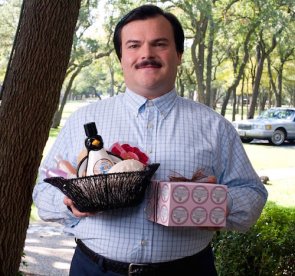
Black plays the eponymous Bernie Tiede, a mortician in the small town of Carthage, Texas, whose dedication to his job and friendly disposition, both far above and beyond the call of duty, soon find him at the centre of the community and beloved by its people. When the town’s renowned miser dies, Bernie forms a bond with his even-miserlier bitch of a wife (Shirley MacLaine), becoming about the only person she gets on with. They go on expensive holidays, dine at fine restaurants, and soon Bernie is managing her affairs. But she becomes increasingly controlling, making demands on his time that he struggles to meet, and treating him as wickedly as she does everyone else. One day, Bernie shoots her dead. When his crime is discovered, the people of his small town initially refuse to believe he did it; when it’s proven he did, they clamour for him to be released anyway.
By-the-by, this is a completely true story.
 (If you’re observing similarities to Midnight in the Garden of Good and Evil there, you’re not the first: the magazine article that inspired Bernie, published around the same time as that book’s film adaptation, is called “Midnight in the Garden of East Texas”.)
Co-writer/director Richard Linklater — who, as we know, often likes to mix up real-life and fiction in the way he produces his movies (cf. Boyhood; the Before trilogy) — tells this story in a docu-drama style, mixing talking head interviews with dramatic recreations. Many (most) of the interviewees are real-life Carthage residents, presumably giving their real recollections and opinions. It fits this narrative to a T, lending veracity to the unbelievable-if-it-weren’t-true story. They’re also amusing — not in a “laugh at the small town folks” kinda way (though there’s an inherent element of that for us as outside observers, let’s be honest), but in an honest-to-goodness “this is what real life’s like” fashion. This irreverence is how many people really react to and discuss momentous events, and in this case that gels with the tone of what happened.
No doubt spurred on by the fact he’s portraying a real person, Black gives a strong performance. It’s a comedy one, undoubtedly, but far more restrained than he normally offers. It doesn’t suggest a Robin Williams-esque versatility — I don’t imagine Black’s suddenly going to be popping up in serious parts all the time — but it is worthy of note. MacLaine does a lot with a little, her character’s vicious nature conveyed at least as much through glances, sneers, and a particular way of chewing food as it is through words and actions.
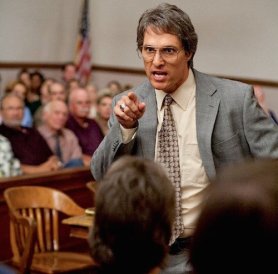 The local attorney seeking Bernie’s prosecution is played by man-of-the-moment Matthew McConaughey. I don’t know when we’re meant to deem the start of his “McConaissance”, but I’m not sure this really qualifies as part of it. Not that he’s bad, but it feels like the kind of played-straight comedy Southerner I’ve seen him do a few times now; indeed, it’s how he comes across in real life, from what I’ve seen. It fits the role like a glove, but doesn’t make for a remarkable performance.
Bernie is one of those stories that you’d never buy if it weren’t true, which makes it perfect fodder for the movies. Native Texan Linklater clearly understands the mindset of those involved and is the right kind of quirky-but-mainstream filmmaker to bring it to the screen. One might argue it doesn’t show suitable reverence to the fact a woman is dead, but the involvement of so many real townspeople suggests it’s got the level and tone bang on. It’s no true-crime mystery, nor the funniest comedy, but it is a tale so engrossingly bizarre that it begs to be heard in full. The real-life post-film ending — Bernie was released from prison last year on the condition he lives above Linklater’s garage — only adds to that fascination.


 A bunch of obstreperous actors are too much to handle for the director of a Vietnam war movie, so he dumps them in the jungle to shoot it with hidden cameras. Things go awry; hilarity ensues.
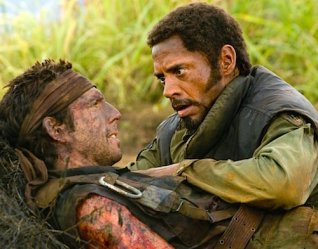 The film may run a little long in the middle, though I don’t think that’s the fault of this extended cut. It adds just over 17 minutes across many little changes and extensions according to movie-censorship.com, but the most notable of these are character-building beats that struck me as fairly worthwhile. Nonetheless, it’s not so padded that it outstays its welcome, generating pretty consistent laughs.
 As presidential nominee Barack Obama talks about the American Dream, in a run-down corner of the nation a trio of small-timers plot a robbery, landing them in hot water with some nasty people.
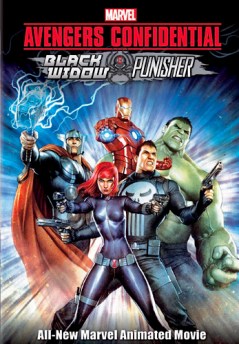 Anime take on Marvel properties. S.H.I.E.L.D. agent Black Widow teams up with vigilante Frank Castle, aka the Punisher, to investigate a threat to global security.
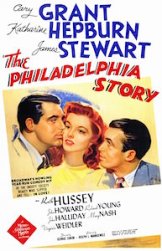 #54 The Philadelphia Story (1940)






















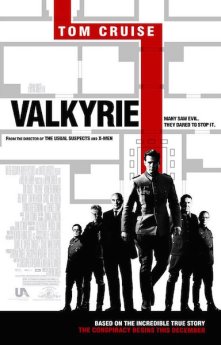 After abandoning the X-Men franchise for a
 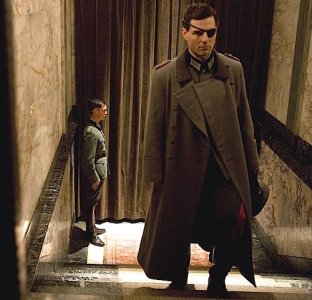 One of the stated aims of the conspiracy is to show the rest of the world that not everyone in Germany believed in what Hitler and his inner circle were doing. It may have taken us a long time to realise that, for fairly understandable reasons, but quality films like this help get the message out. Singer has crafted a proper thriller here, replete with scenes of edge-of-your-seat tension. Many a filmmaker can’t manage that with a fictional storyline, never mind one where we know exactly how it turns out.
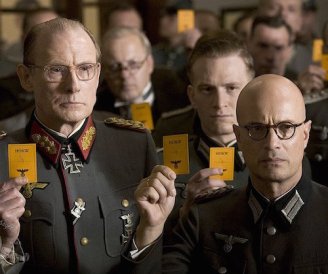 but nor is he in simplistic action hero mode.
 Steven Spielberg’s second feature (or “first” if you’re American) is based, loosely, on a true story. The fictionalised version sees Lou Jean (Goldie Hawn) breaking her husband (William Atherton) out of prison so they can travel cross state to liberate their baby from foster care. Everything goes smoothly until they accidentally kidnap a police officer (Michael Sacks), hundreds of police cars begin to follow them, and a multi-day slow-paced chase ensues.
 when filmmakers became contractually obliged to keep their compositions “TV safe”). The camerawork is frequently extraordinary, including at least one unbroken shot where the camera moves around inside and outside the car, like something out of
 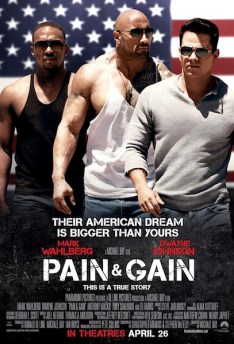 For his first non-sci-fi movie in a decade, divisive action director Michael Bay channels Tarantino (kinda) for this based-on-a-true-story crime comedy. Dwayne “The Rock” Johnson, Mark “Marky Mark” Wahlberg and Anthony “
 Bay is aided by leads who are surprisingly adept at comedy. Johnson is the best thing in it, consistently hilarious as his conscience battles former addictions and newfound religious convictions. I noted down some of his best lines to quote in the review, but they lose something without his delivery.
 After he’s become so sidetracked making the
 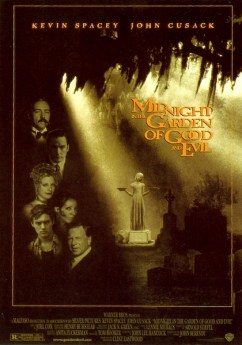 Sent to write “500 words on a Christmas party” in Savannah, Georgia, journalist John Kelso (John Cusack) instead finds himself covering a murder trial where he’s become friendly with the accused (Kevin Spacey).
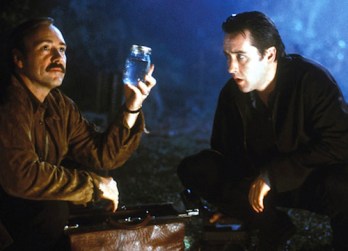 Like many an “adapted from a bestseller!” movies, I guess Midnight in the Garden was a big deal in its day that’s faded to semi-obscurity since (see:
