

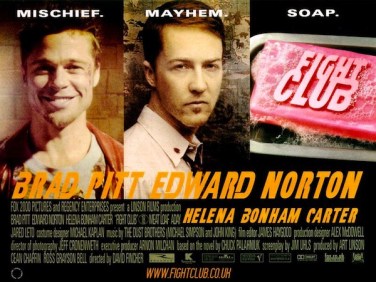
Country: USA & Germany
Language: English
Runtime: 139 minutes
BBFC: 18 (cut, 1999) | 18 (uncut, 2005)
MPAA: R

Original Release: 15th October 1999 (USA)
UK Release: 12th November 1999
First Seen: TV, c.2001
Stars
Edward Norton (American History X, 25th Hour)
Brad Pitt (Interview with the Vampire, World War Z)
Helena Bonham Carter (Room with a View, The King’s Speech)
Meat Loaf (The Rocky Horror Picture Show, Tenacious D in The Pick of Destiny)
Director
David Fincher (Se7en, The Social Network)
Screenwriter
Jim Urls (Sweet Talk, Jumper)
Based on
Fight Club, a novel by Chuck Palahniuk.
The Story
The film’s nameless narrator is growing increasingly disillusioned with his mundane consumerist lifestyle, when he bumps into Tyler Durden. A free-spirited soap salesman, the pair have a fight for the heck of it. Finally experiencing some kind of genuine feeling, they set up an underground club for fighting, but it gradually becomes clear that Tyler may have bigger ideas…
Our Heroes
I am Jack’s nameless narrator. I am also Jack’s friend, Tyler Durden. Yes, just his friend…
Our Villains
The establishment! Capitalism! What’ve you got?
Best Supporting Character
Helena Bonham Carter hasn’t been fucked like that since grade school.
Memorable Quote
“The first rule of Fight Club is: you do not talk about Fight Club. The second rule of Fight Club is: you do not talk about Fight Club! ” — Tyler Durden
Quote Most Likely To Be Used in Everyday Conversation
“You are not special. You are not a beautiful or unique snowflake. You’re the same decaying organic matter as everything else.” — Tyler Durden
Memorable Scene
Called into his manager’s office to discuss his bad behaviour, the Narrator decides the best method of getting his own way is by enacting physical violence… on himself.
Technical Wizardry / Truly Special Effect
For what’s essentially a drama, Fight Club is overloaded with special effects and visual trickery. I don’t know if any are particularly groundbreaking in and of themselves, but several are particularly striking. A personal favourite, thanks to the perfect execution of the idea, is the shot where the Narrator’s condo is transformed into a living IKEA catalogue.
Making of
Marla’s original post-coital line was, “I want to have your abortion.” The studio objected to such an offensive line, so Fincher agreed to change it on the condition that the new line had to be used. The studio agreed, apparently unaware that such an agreement was never going to end well. Fincher wrote the replacement line, “I haven’t been fucked like that since grade school.” The studio asked for the original line back; Fincher refused. (It must say something about American values that abortion is considered more shocking than underage sex.)
Next time…
Nothing from the film, but Chuck Palahniuk has continued his novel in 10-issue comic book series Fight Club 2. A second comic series, Fight Club 3, is planned.
Awards
1 Oscar nomination (Sound Effects Editing)
1 MTV Movie Awards nominations (Best Fight for Edward Norton fighting himself)
1 BRIT Award nomination (Best Soundtrack — it lost to Notting Hill)
What the Critics Said
“Three factors elevate Fincher’s apocalyptic stew to something approaching art. First is Norton’s performance, as sneaky and shocking as that in his film debut Primal Fear. Second is Palahniuk’s story, which dances on a razor’s edge between life and death, expression and repression, ecstasy and agony. Third is Fincher’s dedication to making a film that looks and sound likes no other, one that powerfully illustrates what dementia looks like from inside and out.” — Carrie Rickey, Philadelphia Inquirer
 Score:
 79%
79%What the Public Say
“it’s hard to believe Fight Club is now 15 years old. As I was watching the film last night I found it hard to review because it is so ingrained in pop culture now it would be almost sacrilegious to say something bad about it. […] The first time I saw Fight Club I did not see the twist of [REDACTED] coming. I remember being surprised, but also very confused. I didn’t really understand how it worked then. On the second viewing it is easy to see a million clues pointing to this from the very beginning. Director David Fincher is very clever in how he orchestrates the film by giving you all these hints. He’s very good at walking that tight rope of not giving away too much. The twist is definitely one of the highlights of the film and why it is so memorable. It doesn’t feel cheap to me as some of these things normally do.” — Sherise, The Girl that Loved to Review

Elsewhere on 100 Films…
I reviewed Fight Club as part of a retrospective on Fincher’s films back in 2011, saying “Fincher’s films often look great, but Fight Club is surely the most visually inventive. A list of exciting spectacles could be endless […] To top it off, the ‘regular’ cinematography is grounded in Fincher’s trademark darkness, as if every shot was conceived as just black and he added only what light was necessary.”
A controversial film to this day, Fight Club is a violent, explicit exploration of the turn-of-the-millennium Western male psyche, which hasn’t necessarily lost its relevance in the ensuing decade-and-a-half. Criticised by some for endorsing the anarchic lifestyle it depicts, praised by others for satirising that mode of thinking, and criticised by other others for not satirising it well enough, the film can certainly provoke a spread of views. There’s little doubt that David Fincher’s direction is memorably slick and inspired, however, and it has one of the most talked-about twists in movie history.

#33 will… boldly go where no comedy has gone before.
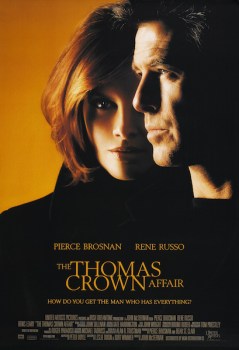 Once upon a time, John McTiernan was an action auteur, known for films that sat comfortably on the “mainstream modern classics” scale, like
 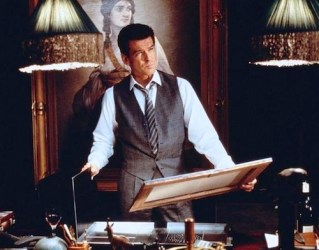 McTiernan’s action background comes to the fore in a pair of extended heist scenes at either end of the movie, which are surely the standout parts. The seductions and plot twists in between these bookends are certainly entertaining and may even keep you guessing, but it’s the heists that pack the most entertainment. They’re the kind of thing we don’t see so much nowadays, at least not in mainstream movies, because any sequence designed to provide excitement is a fight of some kind, and most of those are shot in the shaky-cam style. There’s none of that palaver here, just perfectly choreographed cutting between the various players in each heist, and some well-chosen music — as if being ably to do awesome stuff accompanied by the James Bond Theme wasn’t cool enough, here Brosnan gets to do the same to Nina Simone’s Sinnerman.
 The Thomas Crown Affair may not be the best film on any of its principals’ CVs (well, except perhaps for Russo’s), but it’s a consistently enjoyable light thriller with a couple of particularly memorable sequences and a fun central dynamic. Apparently it’s better than the original, too. There’s long been talk of a sequel, but it seems to have gone the way of McTiernan’s career, which is a shame.
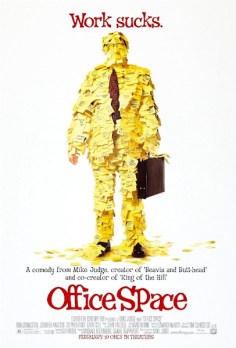 “From the creator of Beavis and Butt-Head” is not a designation that’s going to help sell a film to many people anymore. That the same fella also went on to write and direct the mediocre
 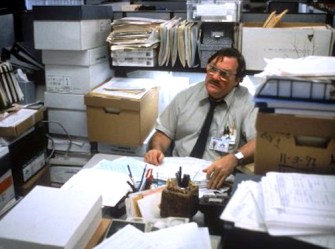 In truth, the plot doesn’t quite fill the slight running time, and Judge doesn’t seem to quite know how to end it — clearly he doesn’t want his hero figure getting caught out, but it can’t just go on forever. Fortunately, this is a comedy, and so plot matters only so much if the rest is funny. In some respects it’s a story of “first world problems” — these guys have decent jobs, making decent money, but it’s boring — but at least it finds the humour in this. Little vignettes of office life, a mix of light satire and gentle surrealism, keep the amusement ticking over too.

 If you hadn’t heard of Veronica Mars before 13th March 2013, you almost certainly did soon after. That’s the date Rob Thomas, creator of the six-years-dead
  There’s no denying that this is primarily a film for fans of the TV series — well, they did fund it, after all. The best way to get the most out of the film is to have watched all 64 episodes of the show first; preferably soon before, in fact, so you can remember who all the minor characters are. However, creator-cowriter-director Rob Thomas is no fool: you don’t produce a successful movie that continues a little-watched TV show by making it a requirement that you’ve watched 64 hours of TV first. (I mean, Joss Whedon knew that with
  school who weren’t actually in the TV series, which might give you a flavour of how it works both for fans and newcomers. The case itself isn’t a bad mystery, but at the same time it’s a little subservient to the other goings-on. I suppose you could argue this is really a comedy-drama about a woman reconnecting with her past life and past friends, and she just happens to have a murder to investigate at the same time.
 To bring up Firefly/Serenity again, I think there’s a reasonable parallel between how those relate to each other, and how they can work for newbies, and how Veronica Mars the TV series and Veronica Mars the movie relate. To wit: in an ideal world, you’d watch all of the series and then the film; but TV series can be long commitments, and for a spot of ‘dipping your toe in the water’, you can also start with the movie and go back to the series for the full picture. Sure, some things are going to be spoiled doing it that way round — but hey, not everyone who’s in the series but not the film ends up dead, I promise.
 More than just a nostalgia trip for people who were there first time round, the movie is a strong addition to the Veronica Mars canon — as someone who didn’t discover the series until the Kickstarter campaign, I thought the film was a heck of a lot of fun, and a wonderful capstone to a mostly-great series. That said, there’s plenty of room for further cases… someday… hopefully…
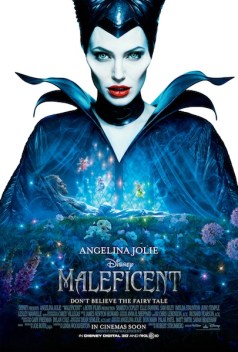 Disney seem to be embarking on a project to remake all of their most beloved animated movies in live action,
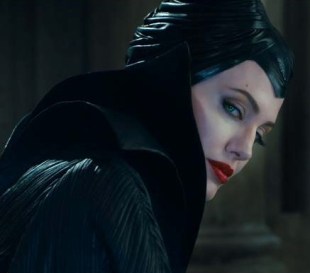 However, this is a Disney movie — you don’t get to turn a villain into the central character and have her be evil throughout. This is where the film gets really revisionist, because Maleficent keeps an eye on cursed Princess Aurora (Elle Fanning) as she grows, doing more to keep her alive than the trio of fairies she’s supposedly in the care of, and her heart is gradually warmed to the girl. Unfortunately, Maleficent was too good at the cursing malarkey: unable to lift her own spell, it plays out regardless, and the film serves us new renditions of the impassable thorns, giant dragon, and true love’s first kiss. It’s in the last where Maleficent is thematically revisionist rather than just a massive rewrite. Your mileage may vary on whether this version is obvious and cheesy, or actually more meaningful and (for the primary audience of little kiddies) more thought-provoking than the original’s — I’d go with the latter.
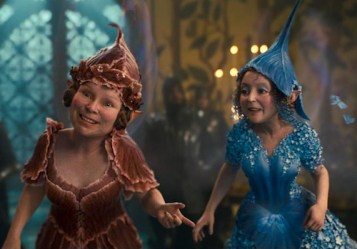 Parts of the film test-screened poorly — mainly the first act, with audiences wondering why it took so long for Jolie to turn up. Consequently, the whole thing was thrown out and reshot; in the process, Peter Capaldi and Miranda Richardson were deleted (and after they’d had to endure hours of transformative prosthetics for their roles, too), and Maleficent was given a new backstory. How far this extended into the rest of the movie, I’m not sure, but at times it feels like stuff has been cut or rearranged. Certainly the story flies past — if it wasn’t trimmed down in the edit, it needed expanding back at the screenplay stage.
 and even
 It’s certainly the summer of good-guy-on-good-guy dust-ups in the superhero subgenre this year, with Batman v Superman
 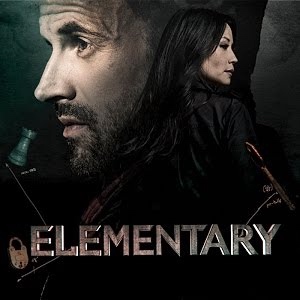 I’m a little surprised I’m still with this “Sherlock Holmes in modern day America with a female Dr Watson” series, because it was never a particularly good version of Sherlock Holmes and it still isn’t. What it has turned out to be is a decent show in its own right (for a US network procedural, anyway), with sometimes-interesting characters who happen to share the names and the odd characteristic of Sir Arthur Conan Doyle’s famed creations. It’s so much its own show that it’s never really bothered adapting the canon, so it was very odd when episode 16, Hounded, didn’t just use a few names from The Hound of the Baskervilles (as the series has in the past), but actually had a passable swing at modernising the entire plot. It doesn’t seem to have gone down too well with critics and viewers, though for my money it did a much better job than
 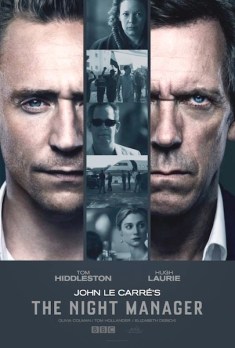 A lavish, all-star, ultra-hyped John le Carré adaptation that, thank goodness, lives up to its reputation. Although it wrapped up in the UK a couple of weeks ago, it only started in the US last night, and I recommend any America-based readers who enjoy a good thriller to get on board tout suite. The Night Manager doesn’t have a
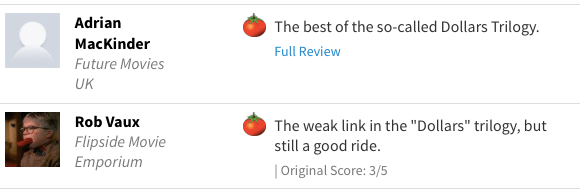
 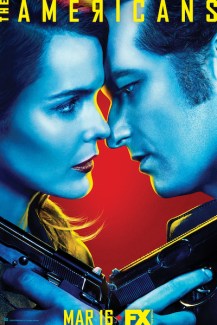 This month, I have mostly been missing season four of The Americans, aka the most underrated drama on television. Well, apart from with critics, that is, who’ve given this run


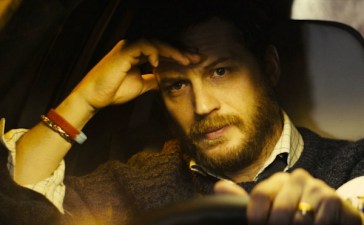
 “Tom Hardy goes for a drive and makes some phone calls” is the plot of this film, which is often mislabelled as a thriller. That’s not to degrade its thrillingness, but rather to say that if you’re expecting a single-location single-character phone-based thrill-ride like
  and in the process turning his life upside down. Another part was to tell a story about an ordinary guy dealing with events that aren’t going to change the world, aren’t even going to make the papers, but are a big deal in his life. Something like this could happen to any of us, and how would we deal with it?
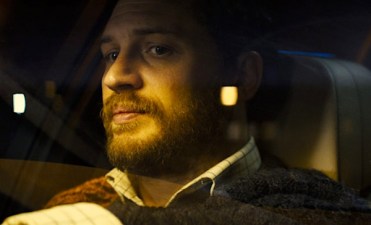 The rest of the cast appear as voices only on the other end of the phone, and in their own way are quite starry — faces that you may recognise, mainly from British TV, in even some of the smaller roles. Not that you see their faces, so, you know, you might have to look them up, or watch the making-of. Some of the performances err a little towards radio acting for me, which is kind of understandable seeing as how that’s basically how they were recorded, but there are particularly good turns from Andrew “Moriarty in
 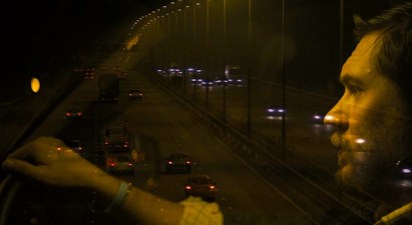 this is about what’s happening on Hardy’s face, not with his whole body. And in either form you’d lose all the photography of nighttime motorways, which have their own kind of hazy beauty. For a movie about someone making phone calls, it is intensely cinematic.
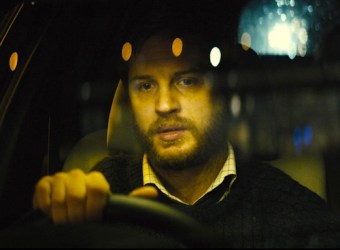 the supporting cast are so much more than “voices on the phone” (listen out, too, for Tom “
