Lupin the Third: Is Lupin Still Burning? (2018)

aka Rupan sansei: Rupan wa imamo moeteiruka?

Jun Kawagoe & Monkey Punch | 27 mins | Blu-ray | 16:9 | Japan / Japanese | 15

Lupin the Third: Is Lupin Still Burning?

Whether you want to call this a short film or a TV special or something else entirely (it was originally released straight to DVD as a special feature in Japan) is little more than a technicality, really. It’s a sub-40-minute standalone piece, and therefore I’m counting it as a short film (it also has been screened theatrically, so it’s not a totally ridiculous classification).

What it definitely is is a 50th anniversary special for the Lupin the Third franchise. Best known in the West thanks to Hayao Miyazaki’s debut feature, The Castle of Cagliostro, Lupin III is actually a sprawling franchise. Beginning life in 1967 as a manga written and illustrated by a chap called Monkey Punch (I suspect not his birth name), an anime TV series followed in 1971, since when there have been multiple further series, dozens of films (both theatrical and TV specials), plus a couple of attempts at live-action movies, and a bunch of video games and stuff too.

Although this short was produced to mark the birthdate of the comics, it takes its cue from the anime series, the first episode of which was called Is Lupin Burning…?! and had the same setup: Lupin is to take part in a car race, but it’s actually a lethal trap set by his enemies. But from there, this version spins off into some wacky time-travel shenanigans — a way to send our hero back into key adventures and moments from his history, handily.

50 years in the crosshairs

Appropriately for a 50th anniversary special, Is Lupin Still Burning is loaded with references (both major and minor) for diehard fans to enjoy. As someone who has enjoyed a couple of Lupin’s adventures but is a long way from being well-versed in his world, I could tell a load of stuff was flying over my head — almost everything, in fact — which was unfortunate, but understandable. This is clearly a celebration that’s primarily aimed at dyed-in-the-wool fans rather than pleasing or initiating newcomers. That said, it still just about works as a madcap one-off adventure. It’s particularly enjoyable in the kinetic action sequences, like a destructive car race — being held in Nomaco (work out the ‘pun’ for yourself) — that plays out during the opening credits.

The franchise’s only regular female cast member, Fujiko Mine, spends most of the film captured by the villains, strapped to a torture table with her clothing mostly torn off, being tickled by robot hands and stuff like that. Your feelings about all this are your own; I describe it merely for context. Put another way, not all of the “fan service” requires prior knowledge to be, er, serviceable.

I expect if you’re a long-term fan of Lupin III, this fan-service-filled short is deserving of at least 4 stars. As someone without that depth of knowledge, it’s unmistakeable that you’re missing out on plenty. The callbacks aren’t little asides or background nods, but fundamental to the plot of the piece. Nonetheless, I’m giving it a positive score, because it is still enjoyable, even if it’s clearly not really made for the likes of me.

3 out of 5

2022 | Week 22

Maybe I should’ve called this post “Weeks 21–22”, to ensure that the titles of these roundups had a complete run of weeks throughout the year. But I didn’t actually watch anything new in Week 21 (my only film that week was the Challenge-qualifying rewatch of On the Town), so it seemed inaccurate to include it.

Week 22, on the other hand, was moderately busy, with this lot…

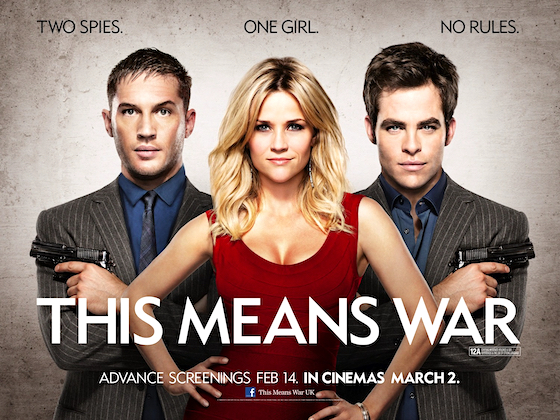
  • This Means War (2012)
  • To Be or Not to Be (1942)
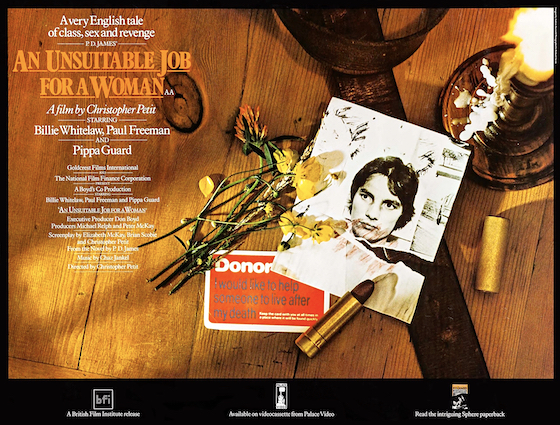
  • An Unsuitable Job for a Woman (1982)
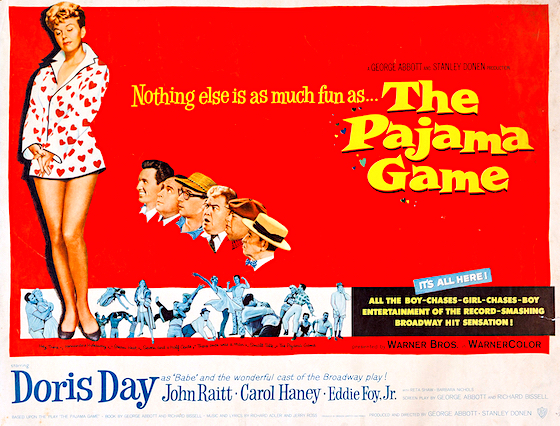
  • The Pajama Game (1957)
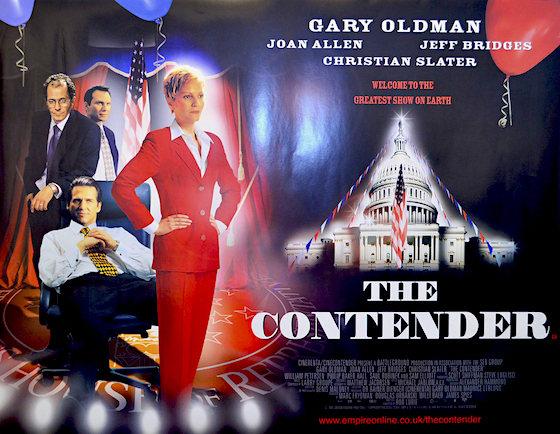
  • The Contender (2000)


    This Means War

    (2012)

    McG | 98 mins | digital (HD) | 2.35:1 | United States / English | 12 / PG-13

    This Means War

    I bet whoever came up with this thought they were a genius: “spyfi action-adventure + rom-com? It’s the perfect date movie!” Of course, what you actually end up with is a film that struggles to do either part well.

    It stars the unlikely combo of Chris Pratt and Tom Hardy (you definitely can’t imagine Hardy doing a movie like this today) as BFF CIA agents who independently fall for the same woman, played by Reese Witherspoon. Uh-oh. Hilarity ensues as the guys deploy their CIA tricks and tech to influence the relationships. Yeah, it’s the kind of concept that once upon a time sounded like a fun and quirky rom-com, but nowadays seems at best morally dubious, at worst downright creepy. And, indeed, that’s how it plays out, with situation after situation that’s played for laughs but feels a little uncomfortable.

    Of course, the big question is “who ends up with who?” This is one of those films so committed to its storyline, so structured to lead to one correct answer, that… they shot multiple endings so they could decide in post. The one they went with doesn’t feel quite right, but, if you imagine the alternatives, most of them don’t either. Well, I say that: I don’t think it’s really a spoiler to tell you that Witherspoon ends up with one of the guys, when the correct choice would’ve been “neither of them. Run from the stalker-ish CIA agents! Find a normal man!”

    2 out of 5


    To Be or Not to Be

    (1942)

    Ernst Lubitsch | 99 mins | digital (HD) | 1.37:1 | USA / English | U

    To Be or Not to Be

    Ernst Lubitsch’s satire concerns an acting troupe in occupied Poland who become mixed up in a soldier’s efforts to capture a German spy before he can undermine the resistance. Made while World War II was still in full force, the film attracted criticism in some quarters for being a comedy about such tragic and ongoing real-life horrors. Lubitsch defended his work, writing to one critic to say, “What I have satirized in this picture are the Nazis and their ridiculous ideology. I have also satirized the attitude of actors who always remain actors regardless how dangerous the situation might be, which I believe is a true observation.” He’s right, of course; at least about the first part. Ridiculously, such debates about whether you can satirise the Nazis persist to this very day — just look at some of the responses to Jojo Rabbit.

    Lubitsch’s film is subtler than Waititi’s, though still undoubtedly a comedy. I mean, with its plucky resistance members taking occupying Nazis for fools, I couldn’t help but think of this as a classier version of ’Allo ’Allo… but I’ve never actually seen a whole episode of that show, so don’t hold my comparison in too high a regard. Whereas that sitcom is famous for its catchphrases and bawdy gags, To Be or Not to Be is less overt, preferring to paint the Nazis as fundamentally incompetent and derive its humour there.

    Despite the distaste some felt, it obviously works for most people, as it appears on several “great movies” lists, not least both the IMDb and Letterboxd Top 250s. To be honest, I feel like I need to give it another spin to digest it more fully, but these thin thoughts will have to suffice for now.

    4 out of 5

    To Be or Not to Be is the 35th film in my 100 Films in a Year Challenge 2022. It was viewed as part of Blindspot 2022.


    An Unsuitable Job for a Woman

    (1982)

    Christopher Petit | 94 mins | Blu-ray | 1.85:1 | UK / English | 15

    An Unsuitable Job for a Woman

    I’ve never read the P.D. James novel on which this is based, but I’m assured it’s longer and more complex — the film rather lacks for plausible suspects, making the central murder mystery thoroughly guessable.

    That said, I’m not sure co-writer/director Christopher Petit is all that concerned with producing a true whodunnit. Put another way, I think he’s more interested in the characters, who happen to be involved in a mystery, than in the mystery itself. Which is fine, but I’m also not sure the film does as good a job as it could digging into those characters. I mean, the way the kinda-naïve young investigator becomes obsessed with the deceased subject of her inquiries — almost falling in love with him, it seems, like some kind of gender-flipped riff on Laura — is more nodded at than explored.

    In the end, I felt like I wanted to like the film more than it was actually giving me things I needed to really like it. It’s not bad, but perhaps it could have been great.

    3 out of 5


    The Pajama Game

    (1957)

    George Abbott & Stanley Donen | 101 mins | digital (SD) | 4:3 | USA / English | U

    The Pajama Game

    This minor musical is primarily of note for two things: the original Broadway staging featured the choreography debut of one Bob Fosse; and it features the song Hernando’s Hideway — if you don’t recognise the title, I’m sure you’ll recognise the tune. I had no idea this is where it originated.

    The story is about a pay dispute in a pyjama factory (given the current strikes and arguments here in the UK, you might think I watched this deliberately. Nope, total coincidence). On one side there’s the leader of the union’s grievance committee (Doris Day, one of just a handful of replacements made to the original cast when they transferred the stage production to the screen). On the other, the new superintendent (John Raitt, clearly a success on Broadway but less so on film). Of course, they fall for each other, before the pay conflict tears them apart. Can their love overcome such trials? What do you think?

    I saw someone describe The Pajama Game as an overlooked classic, which is taking things a bit far. It’s mostly likeable and quite fun, but rarely transcends that level. The undoubted highlight is Fosse’s choreography, which gives even the lesser numbers a polished dynamism. There are a couple of decent songs, but nothing really stands out, bar the aforementioned. It gets a bit too farcical in places, with some of the storylines ultimately taking a turn into very broad territory that feels misjudged. One primarily for genre fans only.

    3 out of 5


    The Contender

    (2000)

    Rod Lurie | 126 mins | Blu-ray | 16:9 | USA, Germany & UK / English | 15 / R

    The Contender

    I only picked this up on disc because it was part of a bundle of other titles I really wanted, but it also sounded like the kind of thing I’d like. Strange that I’d not heard of it before, then. I guess some films just get lost in movie history, especially when they’re a lesser member of a whole wave of movies. This is a political thriller of the kind they seemed to make quite a few of during the ’90s and into the early ’00s, but don’t really do anymore. I guess they exhausted the well, especially after 156 episodes of The West Wing.

    In this case, the story revolves around Laine Hanson (Joan Allen), the first woman nominated to be Vice President (it only took another two decades for that to happen in real life). There’s the familiar battle between the Democrats to get her confirmed, and the Republicans who’d like to do anything to thwart the Democrats. Amongst the scheming between the two sides, the big revelation is that Laine possibly engaged in a scandalous sex act while in college. She refuses to confirm or deny the rumour — it’s her personal business and shouldn’t affect her appointment. Except, of course, it does.

    Various other allegations come and go throughout the confirmation process, the two sides continuing to go back and forth in their attempts to win. It’s not necessarily the point the film is making, but it’s a reminder that politics is all a game to those involved, even as it can have serious effects on the lives of the rest of us. More overtly, the film tackles the different standards a woman is held to when trying to take public office. Fortunately, it’s not as overbearing with that as it could be. Indeed, all round the film is fairly understated. It’s a solid, unflashy, procedural-based kind of thriller.

    That is until the end, when it throws away the understatement for a grandstanding speech based around a fundamental belief in the greatness and goodness of the American political system. It would be heavy-handed in any circumstance, but the past few years (if not longer) of American politics have shown it for the total lie it always was. It doesn’t wholly undermine what’s gone before, but it does end the film on a sour note.

    4 out of 5


  • Bank Holiday (1938)

    aka 3 on a Week-End

    Carol Reed | 82 mins | digital (SD) | 4:3 | UK / English | U

    Bank Holiday

    You’ll be forgiven for not having heard of this one, even though it’s directed by Carol Reed (The Third Man, Oliver!, etc) and stars Margaret Lockwood (The Lady Vanishes, etc), because it seems to be pretty obscure. I only discovered it when browsing the online offering of UK digital channel Talking Pictures TV, and it mainly caught my attention because that was just before the weekend of the Queen’s Platinum Jubilee, when we had a double Bank Holiday. “What appropriate viewing,” I thought. Well, sometimes chance smiles on us, because this definitely doesn’t deserve to be so overlooked.

    As the title indicates, the film is set on a Bank Holiday weekend — the August one, to be precise — and, this being the interwar years (i.e. well before the ease of popping overseas for a quick holiday), city folk flock to the seaside en masse. In terms of the film, a variety of melodramatic and comic plot lines unfurl for an array of characters. The primary one follows a nurse (Lockwood) getting away for a rare holiday with her young fella (Hugh Williams); but he’s not planned it very well, and she’s distracted by thoughts of a man (John Lodge) who was suddenly made a widower on her last shift. That particular storyline gets a bit heavy (death in child birth; attempted suicide), but its balanced by comic antics in other plot lines. Overall, the mix of drama and humour gives a “something for everyone”, all-round entertainment feel that you tend not to get within a single work anymore.

    Two outta three ain't bad

    Nowadays, the film arguably has greatest value as a snapshot of 1930s British society. There’s a degree to which it feels ‘of its time’ as a work of cinema, but not in a terribly dated way. Indeed, while some things have changed a lot in the ensuing nine decades, but there are definitely behaviours, attitudes, and meteorological phenomena that’ll be familiar to any British viewer and their experience of a summer holiday weekend. And it remains entertaining in its own right. The comic bits still mostly work. Even when they’re not hilarious, at least they’re not embarrassing. The drama is similarly solid: the handling of romantic relationships remains relatable, rather than feeling terribly old fashioned (in fact, it had to be edited for release in the US due to its implication that an unmarried couple had a sexual relationship. And they think us Brits are the prudish ones…)

    To call Bank Holiday a “forgotten classic” or similar would be to overstate the point somewhat, but it does seem to be a largely forgotten film that merits being better known.

    4 out of 5

    June’s Failures

    The ‘big news’ this month that’s relevant here is I’ve finally decided to cancel most of my streaming subscriptions — namely: Sky Cinema, MUBI, Apple TV+, and Disney+. Yes, it’s crazy but it’s true: I’ve had all of them on the go at once, along with Netflix (though I share someone else’s account, so at least that’s free to me) and Amazon Prime (which has its own extra benefits, of course). My existing payments don’t run out on most of them until various dates in July, so they’ll still be a part of failures both this month and next. And that’s part of why the streamlining was necessary: there’s stuff I want to watch on all of these services, but I’m not getting around to enough of it to justify the cost. I might start bringing them back in, one at a time; but when there’s all of Netflix, Amazon, and my ever-growing Blu-ray collection to choose from, I hardly need them. And, frankly, for some of those services, I’ve paid for month after month without watching anything at all. Morally, I feel I’ve more than earnt the right to acquire anything already on my watchlist from (*ahem*) somewhere else, if or when I really want to see it.

    Anyway, on to actual titles. The big film at the cinema this month was… Top Gun: Maverick again, really, as its phenomenal popularity led it to become the first billion-dollar-grossing film released in 2022. When it comes to Cinema, Tom Cruise doesn’t mess around. Trying to face up to it, the likes of Jurassic World: Dominion and Lightyear seemed to find it something of a struggle, apparently hampered by poor reviews. Maybe critics do still matter after all. Also filling out the multiplexes have been Baz Luhrmann’s Elvis biopic, horror The Black Phone, and whatever exactly Alex Garland’s Men is. Also worth a mention, I hear, is Good Luck to You, Leo Grande for a first-rate performance from Emma Thompson, which isn’t likely to get much awards season buzz because the film is going direct to streaming in the US, rendering it ineligible for the Oscars. That said, with BAFTA increasingly going its own way, she’ll still stand a reasonable (perhaps even higher, now it’ll be the only opportunity to reward here) chance this side of the pond.

    Talking of Alex Garland, I heard someone describe Spiderhead (Netflix’s biggest original of the month) as “Ex Machina but you can go make tea and not miss anything”, which is amusing but also means it’s still on my watchlist (I would never go make tea during a film without pausing, personally, but nonetheless, I get the point that’s being made). They also had a new Adam Sandler thing, Hustle, which I shouldn’t really mention because it’s going nowhere near my watchlist. I think I heard some people say it’s not too bad, but I’m not a Sandler fan and the plot is something to do with one of those sports only America really plays seriously, which makes it triply uninteresting (because sport would make it doubly so, and American-only sport even more so again). Meanwhile, their surprise hit of the month was apparently Interceptor, an action thing which received poor notices (19% on Rotten Tomatoes) but nonetheless hit #1 in many territories, sparking sequel discussion. It’s on my watchlist, but it’s hardly a priority.

    The other streamers’s offerings were even less impressive, believe it or not. I mean, Amazon’s main original offering this month seemed to be Force of Nature, a Mel Gibson-starring (already a bad sign) cop drama (hardly popular right now) that was released elsewhere back in 2020. Oh dear. It doesn’t look good. Alternatively, there’s time-travel rom-com Press Play, which mixes things up by making it the woman who’s time-travelling for a change. Innovative. Doesn’t mean it’s any good though, with 56% on Rotten Tomatoes and low viewer ratings on the likes of IMDb. As for Sky Cinema, they had Gerard Butler vehicle Last Seen Alive, which my boss — who’s the kind of guy who likes Gerard Butler films — watched and said was awful. (I should probably stop bothering to mention all these films I’m never intending to actually watch…) The only thing that looked halfway decent was also a ‘Sky Original’, Dual, which I gather is some sort of clone-on-clone action thing starring Karen Gillan… but my Sky Cinema subscription has already expired, so I won’t be watching that anytime soon.

    Also new to Sky this month (and therefore not actually getting watched) were reboot Resident Evil: Welcome to Raccoon City, which I heard nothing good about, and Clifford the Big Red Dog, which I also heard nothing good about. Poor old Sky, they do seem to be struggling nowadays. Though they did have The Matrix Resurrections — which I’ve seen, and should have reviewed; and bought on disc, so should watch again — and Edgar Wright’s Last Night in Soho, which seemed to get divisive reviews, but is Edgar Wright, so I’ve blind bought it anyways. Noteworthy catalogue additions to the other streamers included, on Netflix, The Man with the Iron Fists 2 (I say “noteworthy” — I liked the first one enough that this sequel earns a spot on my watchlist, but it’s hardly a major title) and The Devil’s Men (a film made before the ’90s on Netflix? Why, wonders will never cease! Stops me forking out for the Indicator Blu-ray, too); and, on Amazon, Extremely Loud and Incredibly Close (a Best Picture nominee that I know isn’t meant to be very good, but, as well as being on my ‘to see’ list because of the Oscar nom, it was also on my 50 Unseen list for 2012, and I think this might be the first chance I’ve had to watch it for free in almost a decade).

    And, if you’ve not seen Queen biopic Bohemian Rhapsody, you can now stream it on Netflix… or Disney+… all All 4. For all the flack that film gets on Twitter, plus the facts that it’s been shown on TV and is currently on multiple services, I noticed that it had rocketed to #1 on Netflix the day after it was added. For all that certain cinephile hate it, I get the impression normies love it, or at least like it. So did I, so I ought to watch it again (I do own it on 4K disc, though).

    Disney+’s biggest add this month was Doctor Strange in the Multiverse of Madness, racing there so quickly from the cinema that it’s gained a rare two-months-in-a-row mention in my failures. Technically there are several Marvel things I should watch before I get to it, but as I’ve already jumbled up my viewing order, I might skip to it sooner rather than later. I’d quite like to see it in 3D, but as Marvel’s home-3D releases only happen in Japan nowadays, I think that would mean waiting until something like September. Maybe I should just hang back — it’s not as if people are still quiet about spoilers from it.

    As ever, all of the streamers added tonnes of other stuff that I’ve bulked out my watchlists with, but if I started listing it all we’d really be here forever. I haven’t even discussed anything from iPlayer, MUBI, or Apple TV+, but little of it seems worthy of mention. MUBI’s sole brand-new addition, straight from a limited theatrical release, was Pleasure, which has been discussed in some circles for its unflinchingly graphic portrayal of the porn industry. Frankly, I’m not sure I care. And Apple TV+ had a different kind of festival darling, Cha Cha Real Smooth. I have no idea what it’s even about. I saw people logging it on Letterboxd when it played festivals, but I’ve heard it’s one of those kinds of films that people who go to film festivals enjoy while they’re there, but doesn’t merit much consideration outside of that context. Hardly praise to rush it up my list, that.

    Last — but most certainly not least — all the discs I’ve been spending too much of my money on in the last month. The headliner this month has to be The Batman, one of those films I would say I’m really keen to see but have consistently failed to watch both at the cinema and on disc since it arrived a few weeks ago. It comes with two problems: it’s three hours long, so I’ve got to find the time (at the moment, I seem to be able to just about squeeze in a 70-minute noir of an evening, if I make a concerted effort); and my anticipation for it is so high, I can’t simply bung it on and hope for the best — I’ve got to be Prepared. So, goodness knows when I’ll get to it, but it’s right at the top of my “soon” list.

    The only other brand-spanking-new release I picked up this month was Michael Bay’s Ambulance, which I feel like I’m more likely to get round to because, well, it’s Michael Bay — no need to engage brain there, right? But I’ve heard it’s one of his best films, hence why I’ve blind bought it immediately. For all the criticism he’s received down the years, when he’s on his game, Bay is one of the best pure action directors ever.

    So, everything else I bought was either a new release of a catalogue title, or a slightly older release on offer. To stick with 4K, in the “new release” camp were The Untouchables and Wild Things, both blind buys but films that seem possibly up my alley. More of a known quantity was Drive, in a very lavish edition from Second Sight. I’m looking forward to revisiting it, because I put too much pressure on it to be an instant favourite first time I saw it. I didn’t dislike it, but I’m hoping I’ll like it even more on a rewatch. And, thanks to box set sales, I finally got round to picking up both the first Alfred Hitchcock Classics Collection (the one with The Birds, Psycho, Rear Window, and Vertigo, the latter being the one I most need to revisit) and The Lord of the Rings trilogy. I shall refrain from ranting about the shitshow Warner Bros made of that release. Suffice to say, I’m not actually happy to have ‘had’ to buy the barebones films-only edition, but here we are.

    Everything else cuts even deeper into moviedom’s back catalogue. Indeed, it’s mostly films I’ve never even heard of, frankly, but which are part of series or from labels that I trust. We’re talking stuff like Columbia Noir #5 and The Pemini Organisation from Indicator; Execution in Autumn and Outside the Law from Masters of Cinema; ’70s martial arts titles like The Killer Meteors (starring Jackie Chan and Jimmy Wang Yu), Monkey Kung Fu, Shaolin Mantis, and The Shaolin Plot; and both volumes of the BFI’s British horror short film anthology, Short Sharp Shocks. Finally, from a new StudioCanal line of cult movies, two Italian films directed by Enzo G. Castellari: High Crime (the original title translates as The Police Prosecute, The Law Acquits, which, as long Italian genre titles go, is a bit nothingy) and Spaghetti Western Kill Them All and Come Back Alone (which, I’m sure you’ll agree, is a superb title).

    I’ll tell you something: for all being a physical media addict costs my bank account, you certainly don’t stumble across any of this kind of stuff on the streamers.


    The Halfway Monthly Review of June 2022

    Another month gone, and suddenly we’re halfway through 2022. Whaaaat?!

    To mark the occasion, the Viewing Notes section is a little longer than usual, taking a look at how the rest of the year might shape up — or might need to shape up, considering my new 100 Films Challenge is currently running behind schedule…


    This month’s viewing towards my yearly challenge

    #36 Top Gun 3D (1986) — Rewatch #6
    #37 Scream (1996) — Wildcard #2
    #38 Escape in the Fog (1945) — Genre #1
    #39 Pretty in Pink (1986) — WDYMYHS #5
    #40 Paris, Texas (1984) — Blindspot #6
    #41 The Flying Deuces (1939) — DVD #3
    #42 Apollo 10½: A Space Age Childhood (2022) — New Film #6
    #43 My Name Is Julia Ross (1945) — Genre #2


    • I watched 12 feature films I’d never seen before in June.
    • Six of them counted towards my 100 Films in a Year Challenge, along with two rewatches.
    • Wait, two rewatches? Yep, because I’ve deployed my second wildcard of the year to count Scream as a second rewatch for June. That means I can’t count two rewatches in a single month again this year; but, as it marks the beginning of a rewatch of the Scream series, it does open up the rest of those films to counting under Series Progression. Nifty.
    • Genre was the only category I hadn’t started when June began. Escape in the Fog changed that, meaning all 11 categories are officially underway — and all still ‘in play’, with none completed — as I reach the halfway point.
    • This month’s Blindspot film was Wim Wenders’ Paris, Texas, starring Harry Dean Stanton as a dad trying to bond with his kid.
    • This month’s WDYMYHS film was the John Hughes-penned Pretty in Pink, co-starring Harry Dean Stanton as a dad who’s really good with his kid. I remain one behind here, but there’s still plenty of time to catch that up.
    • From last month’s “failures” I only watched The Contender.
    • I also watched a short film this month — my first this year! I often feel like I should watch more shorts, especially as I own hundreds on disc (a handful of dedicated collections, and then loads included as special features here and there). Maybe I should make it some sort of official goal. 100 Short Films in a Year? Sounds doable — but in addition to what I already aim for? Maybe not.

    As I was saying, now that we’re halfway through the year, here’s how things are shaping up overall…

    • I should be at #49 now (not #50, thanks to the first six months of the year being slightly shorter than the second six). Although I’m short of that, at least I’m not a whole month’s worth short (the target for the end of May is #41), so that’s something. Nonetheless, I need to push a bit harder for the rest of the year: the monthly average to reach 100 in 12 months exactly is 8.3 films per month, but for the rest of the year I need it to be 9.5.
    • As a point of comparison, so far this year I’ve averaged 7.2 Challenge films per month, so it’s a bit of a step up.
    • But I’ve averaged 10.5 films per month overall, so if I just make more of them Challenge-compliant going forward then I should be fine.
    • Were I still doing my old-style 100 Films Challenge (just watching any new-to-me 100 films in a year), I’d currently be at #63 — which would be my poorest performance at this point since 2014.
    • All of which sounds fine and dandy, until you remember this: I typically watch fewer films in the back half of the year.
    • That’s not just a casual observation: I have numbers on this. For example, I can tell you that, out of 15 years of running this blog, I did actually watch more films in the back half of the year five times. And on a further three occasions, the second half was within 10% of the first half’s tally. So, it’s not as if the two halves are often wildly different. Which is funny, when you think about it, considering my overall annual tallies can be so very different — historically, anywhere from 94 to 264 films in a year.
    • Anyway, what do the stats foretell for this year? Based on my all-time average first-half-to-second-half ratio, I would watch 122 films this year. Narrowing that to just the last five years, I would make it to 108. And if we look at just years where I’d made comparable progress by the end of June — which happen to be 2010 to 2014, when I’d reached between #55 to #64 by this point — they too reckon I’d make it to 122.
    • Which is all well and good for my old target, but what about the New 100 Films Challenge? Well, so far my ratio of new films to films that count is roughly 1.47:1. If that holds, then watching 122 new films would mean I watch only 83 that count towards my Challenge. So, as I said earlier, I need to up the number of compliant films. Or, of course, just watch more films.
    • As to that final point, the last time I watched more films in the second half of the year than the first was in 2015, driven by pushing myself to make it to #200. But such a goal isn’t always necessary: in 2014, I did an even greater percentage of my viewing in the back half, but only to make it to #136. And goals aren’t a guarantee of anything: in 2016, I watched more in the first half of the year than I had in 2015, but so much less in the second half that I only made it to #195.

    All of which goes to prove one thing: when it comes to my film watching, statistics may be fun, but they’re useless at predicting the future.


    The 85th Monthly Arbitrary Awards

    Favourite Film of the Month
    Quite a few more-than-solid films this month, but the one that comes closest to jumping out at me is also one I’ve been meaning to see ever since it came out, 12 years ago now. That would be political thriller The Ghost Writer (originally released as The Ghost here in the UK, but now under its international title on Netflix). Why does it sometimes take me so damn long to get round to things I was actually quite keen to watch? Goodness only knows. And it’s things like this — where, as I expected, I enjoy them a lot — that prove I shouldn’t let such delays happen.

    Least Favourite Film of the Month
    Apologies to any Laurel and Hardy fans reading this, but my first real experience of their work didn’t really make me laugh, and a comedy that doesn’t make you laugh isn’t much of a success, so The Flying Deuces takes this (dis)honour.

    Most Timely Viewing of the Month
    Here in the UK, we got a bonus Bank Holiday if June, to celebrate Queenie’s Platinum Jubilee… and, on the first of them, I watched the fairly-obscure (I’d certainly never heard of it before) 1938 film Bank Holiday. The film and modern real-life event aren’t really connected in any way (no Jubilee going on in the film), but hey-ho.

    Best Accent of the Month
    Accents in films are a funny business. Sometimes, people don’t even bother: witness My Name Is Julia Ross, a Hollywood production set entirely in London and Cornwall, where half the cast don’t even bother to attempt English accents. Sometimes, you wonder if people needed to: take The Ghost Writer, where it feels like everyone’s doing one accent or another, be it Scots and Americans doing English, or Brits doing American. And then there’s films that are a wonder unto themselves, like House of Gucci, where the entirely-English-speaking cast are doing ‘Italian’ as if they’re in a Dolmio advert. “I cooka da pasta” indeed.

    The Audience Award for Most-Viewed New Post of the Month
    For the second month in a row, my monthly failures roundup — namely, May’s Failures — has topped the chart. I say “topped”: it was the highest new post, but 29th overall. I guess my new reviews just haven’t been that interesting. (My ‘mistake’ has been stopping TV reviews: 24 of the 28 posts above May’s Failures were old TV columns.)


    Every review posted this month, including new titles and the Archive 5


    Y’know, I still haven’t been to the cinema yet this year. I keep meaning to see Top Gun: Maverick, but things keep getting in the way. But, as of today, my local cinema have put it back on to their biggest screen for the weekend, so maybe I’ll finally pull my finger out and get there in the next couple of days.

    As for the rest of the month… oh, who knows!