Psycho Goreman (2020)

2021 #26
Steven Kostanski | 95 mins | digital (HD) | 2.40:1 | Canada / English | *

Psycho Goreman

In the recent episode of his Secrets of Cinema devoted to cult movies (which I covered here), Mark Kermode asserted that filmmakers can’t choose to make a cult movie — it’s up to the audience whether a film becomes a cult favourite or not. While this may be true in a sense, it’s also the case that, after several decades of the phenomenon being observed, any filmmaker who is interested in making a cult movie can consciously include the kinds of ingredients that provoke such devotion, thus giving themselves a head start. Psycho Goreman is one of the most recent films that seems custom-made to be a cult hit, and while only time will tell if it’s truly a “cult classic” or just a passing flavour of the month, it’s already attracted plenty of word-of-mouth attention — indeed, that’s precisely what led me to seek it out back in January, long before it had a confirmed UK release date (which, FYI, is today).

While digging up their back garden for a game, a pair of siblings — obnoxious Mimi (Nita-Josee Hanna) and her pushover older brother Luke (Owen Myre) — unearth a strange gem, which turns out to be a key imprisoning an intergalactic alien mass murderer. The monster now freed, he sets off to dominate and destroy Earth… except whoever possesses the gem can control him, and that’s Mimi. She christens her new pet/toy Psycho Goreman — PG for short — and the cruel, twisted, depraved mastermind sets about using the alien criminal for her own playful ends.

There’s a distinctly ’80s vibe to this whole setup and how it’s presented on screen, both in storytelling terms and in the use of practical suits, models, gore, and special effects. Once he’s free, PG’s old friends and enemies are all out to find him, which puts a wide array of fantastical creatures on screen. None of them are a slouch. The fact such extensive effects work must’ve been achieved on a tight budget, but by clearly enthusiastic and talented craftspeople, only furthers the throwback feel. Indeed, the creature outfits are so impressively designed and realised that, although I haven’t bought an action figure in many years, it made me really want ones of PG and, in particular, his robotic-ish police-lady nemesis, Pandora. (Funnily enough, they’re making some; but they’re retro-style, which I know is a popular thing nowadays, but I don’t think is as cool as a properly-detailed figure. Of course, those kind tend to be rather pricey; but the ones they’re making are far from cheap, especially with international postage. Oh well.)

Mimi and friends

Everything about the filmmaking here has been leveraged to tickle the nostalgia glands of genre fans who grew up with trashy but ambitious sci-fi, fantasy, and horror fare on video, probably when they were officially too young to be watching it. Added to the mix is overt and knowing comedy, because now we’re all in on the joke. I found this aspect a bit hit or miss. When writer-director Steven Kostanski’s work is really on form, it’s frigging hilarious — although do note it can be quite dark comedy at times (which works for me) — but the film doesn’t nail the schtick as consistently as I hoped it would. For every few gags that land or subplots that pay off, there’s something that misses an opportunity or seems to get forgotten. On the other hand, this roughness round the edges is part of the genuine cult movie charm. With geek culture having become mainstream, the high-value neatly-polished version of what used to be direct-to-video schlock is more-or-less what Hollywood serves up at the multiplex every couple of weeks (under normal circumstances). Arguably, a true cult movie has faults that its fans either overlook or embrace because of how much they love the overall result. Psycho Goreman certainly does enough right to inspire that kind of affection.

One complaint I’ve read fairly often, even from those who fall within the film’s target audience, is that Mimi is an annoying brat. Well, it’s pretty clear that’s intentional (as opposed to, say, the result of poor casting). I wouldn’t say the film celebrates her for it, but it doesn’t really punish or develop her either, so perhaps there’s some kind of tacit acceptance there. But then, she’s a preteen girl, so I don’t know how harsh you’d expect it to be on her. Anyway, your mileage will vary as to whether she’s annoying but still amusing, or just plain irritating. I err towards the former.

Gory man

Having outlined the film’s supposed intended audience earlier, I must say it doesn’t technically include me. I was much too mainstream in my childhood viewing, so it’s only in later years that I’ve come to appreciate more of the bizarre deviances in cinematic history. Those who grew up on that stuff may get the biggest kick out of the film, but that doesn’t mean the rest of us can’t delight in its gonzo joys. I won’t be surprised if Psycho Goreman has a bright future ahead as a new cult staple.

4 out of 5

Psycho Goreman is available on Shudder from today.

* To the best of my knowledge, it hasn’t been rated by either the BBFC or the MPAA, the two classifications I normally cite. If you’re interested, for reference, classifications in the rest of the world are all in the 15–18 range. It is very gory, but it’s obviously fake and often comical. ^

Resident Evil: Apocalypse (2004)

2019 #68
Alexander Witt | 94 mins | Blu-ray | 2.40:1 | Canada, UK, Germany, France & USA / English | 15 / R

Resident Evil: Apocalypse

2002’s film adaptation of popular horror video game series Resident Evil may not have been particularly game-accurate (from what I can gather — I’ve never played them), but it was sufficiently entertaining as an action/horror movie in its own right, and consequently it spawned a sequel (and, eventually, four more). Picking up where the first movie left off — with the zombie outbreak, er, breaking out, expanding from one facility into a whole city — Resident Evil: Apocalypse widens the scope of the movie series’ action. It also begins to introduce more characters and plot points drawn from the games, presumably in a deliberate attempt to court fans who were disappointed first time round. Unfortunately, it’s all in aid of a film that just isn’t very good.

Where the first film was a riff on something like Assault on Precinct 13, Apocalypse turns its attention to another John Carpenter classic, clearly trying to be a version of Escape from New York. Set in a semi-abandoned, zombie-overrun city where it’s perpetually nighttime, Alice (Milla Jovovich) and the ragtag group of survivors she encounters must make it out before a nuclear bomb is dropped on it.

It’s a perfectly serviceable storyline, and I have no problem with movies broadly borrowing storylines and whatnot in homage to other flicks. The problem is, Apocalypse is an awfully written and produced film. The first film’s writer-director, Paul W.S. Anderson, sits out the latter role this time, but returns as sole screenwriter. His dialogue is bad, devoid of realism or logic. One example: they’re trapped in a walled-off city, remember, and when one character informs the others that tomorrow morning it’s going to be hit with a tactical nuke, the first response is: “what yield?” Like it fucking matters! They’re dropping a nuke designed to wipe out the city you’re in — doesn’t matter what precise yield it is, you’re all dead. Unsurprisingly, his characterisation isn’t any better, and the cast don’t have the chops to save it, even though there are some decent-to-excellent supporting players here, like Oded Fehr, Thomas Kretschmann, and Jared Harris.

Make my day, zombie

His narrative structure isn’t great, either. Take the ending. The closing moments of the first film could be interpreted as a cliffhanger or sequel tease, I guess, but the final shot also work in its own right as a fatalistic reveal: that despite the efforts and sacrifices of our heroes to contain the virus, it got out and the world has gone full zombie apocalypse. Here, though, the last ten minutes or so of the film are an almost total sidestep from the story we’ve had thus far, their only purpose being to suggest some onward direction for the next movie. I suppose that’s par for the course nowadays, in the era of cinematic universes, but I still don’t think it’s good form. There are ways to have hints and teases for the future without turning a significant chunk of your current movie into an extended trailer for the next one.

The paucity of quality in the screenplay could perhaps be allowed to slide if Apocalypse delivered on its main goals. It’s an action/adventure/horror flick, after all — the boxes it’s looking to tick are not “character drama” and “narrative coherence”, necessarily. Sadly, it doesn’t tick the other boxes either, more scribbles vaguely around them. The action is terribly directed, a blur of meaningless visual noise. Taking Anderson’s place in the director’s chair is Alexander Witt, who had previously been a second unit director on some very good movies, like The Hunt for Red October, Gladiator, The Bourne Identity, and Pirates of the Caribbean. I can only presume his unit wasn’t responsible for any of the action sequences in those films. Apocalypse remains his only primary directing credit: he’s gone back to second unit, working on some more very good movies, like Casino Royale, X-Men: First Class, Skyfall, and Avengers: Infinity War. For whatever reason, I guess that’s a better fit for him.

One of the advantages to coming to a film series years after the fact is you can benefit from the perspective of others. To wit, I’ve seen people say this is the worst of the series. I pray they’re right, because I’ve kinda committed to watching them all now and I’m not sure I can take another four films this poor or, God forbid, worse. I had it down as a 2 for my 2019 stats, but I can’t recall a single redeeming feature now, so:

1 out of 5

The 100-Week Roundup XXXII

The 100-Week Roundup covers films I still haven’t reviewed 100 weeks after watching them. Sometimes these are short ‘proper’ reviews; sometimes they’re only quick thoughts, or even just the notes I made while viewing.

This week’s pair are the final films from May 2019

  • The Saint (2017)
  • Hairspray (1988)


    The Saint
    (2017)

    2019 #92
    Ernie Barbarash | 91 mins | digital (HD) | 16:9 | USA / English | 12

    The Saint

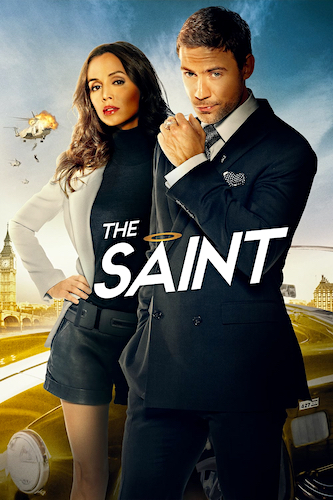
    Leslie Charteris’s “modern-day Robin Hood” Simon Templar, aka the Saint, was adapted into a successful film series in the ’30s and ’40s, and an enduringly popular TV series in the ’60s, so it makes sense that, every now and then, someone tries to revive the property. This latest effort began life as a TV pilot in 2013, which was rejected. Reshoots to extend it into a feature were shot in 2015, but it was only released in 2017, as a ‘tribute’ to Roger Moore (star of the ’60s series, of course, and who makes a cameo here) shortly after his death. I guess that was the only way it could find distribution. You might think the fact it failed on its own merits, twice over, before having to rely on a beloved star’s death to get any kind of release, augurs badly for the film’s quality… and you’d be right.

    Adam Rayner plays the newest incarnation of the eponymous antihero, here tasked with recovering both stolen Nigerian aid money and the thief’s teenage daughter, who was kidnapped as leverage by a mysterious crime organisation. Cue lots of tech-based heist hijinks (gotta make sure we know this is a modern adaptation) and made-on-a-budget action sequences. The overall impression is of something that would’ve been a minor success as a syndicated TV series in about 1995, which obviously means it seem badly dated by today’s standards. The content of the reshoots is a little too obvious: a tacked-on prologue and epilogue, which come in the form of long scenes in limited locations with a small cast. That said, the whole production is so cheap that these additions don’t stick out too much. That’s not a compliment.

    It’s been a very long time now since we’ve had a decent version of The Saint (I rewatched the ’90s Val Kilmer film recently and it’s not some forgotten gem). As such a storied franchise, I’m sure someone will try again — indeed, we might not have to wait long at all, as it’s been reported that Dexter Fletcher is working on a new film that will star Chris Pine. I live in hope.

    2 out of 5

    The Saint featured on my list of The Five Worst Films I Saw For the First Time in 2019.

    Hairspray
    (1988)

    2019 #94
    John Waters | 88 mins | DVD | 1.85:1 | USA / English | PG / PG

    Hairspray

    John Waters is not the kind of filmmaker whose movies you’d expect to see being adapted as a big Broadway musical. But then, Hairspray is not your typical John Waters movie, leaving behind the transgressive, gross-out elements that make films such as Pink Flamingos infamous and unpalatable to this day, replacing them with the sweet story of an overweight high-schooler who wants to be a dancer on her local TV dance show, with a self helping of racial equality — it’s set in 1962 and the show’s black dancers are still segregated.

    Although the end result is resolutely PG material, the film still feels a world away from the slick big-budget studio production values of the stage-musical-based remake — a bit of the grungy, independent, low-budget roots of Waters’s other films has survived into the vibe of this film. In a way, the nice thing about that is that the two screen versions cater to different demographics. So many remakes are aimed at fundamentally the same audience, but in shiny new packaging to attract the imbeciles who refuse to watch any films made before whatever year they’ve arbitrarily selected. Conversely, the two Hairsprays are distinctly different interpretations of the same base material, with a shared socially-conscious vision, but different aesthetic and artistic goals. Both are valid; both are good. My personal preference errs towards the remake, but I appreciate the qualities of the original, too.

    4 out of 5

  • Devil’s Cargo (1948)

    2019 #93
    John F. Link | 62 mins | digital (SD) | 4:3 | USA / English

    Devil's Cargo

    The history of the fictional detective known as ‘the Falcon’ is a bit complicated (if you want a full summary, try this Wikipedia article), but the short version is that, between 1941 and 1946, RKO produced a series of 13 films featuring the character, starring first George Sanders and then his brother, Tom Conway. You can find my reviews of the series collated across these four posts. (The series is also noteworthy for containing the first screen adaptation of a Raymond Chandler novel: the third film, The Falcon Takes Over, was based on Farewell, My Lovely, two years before it was more famously filmed as Murder, My Sweet.)

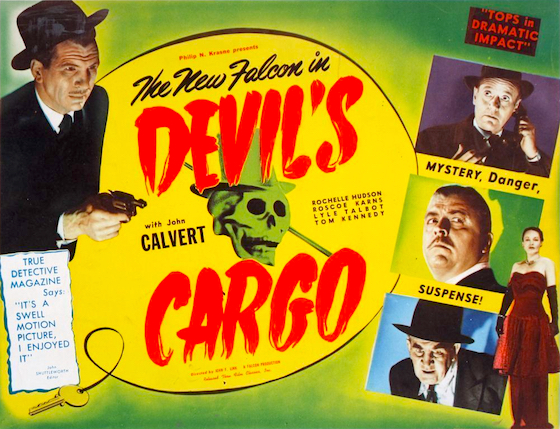
    A couple of years after RKO’s Falcon series ended, Film Classics picked up the mantle, casting magician John Calvert as a different version of the character. Their series only lasted three films, of which this first is the most readily available, because it’s public domain. (Consequently, I’ve yet to see the next two. Writing this has reminded me that I was meant to be tracking them down…)

    The plot has nothing to do with cargo, belonging to Satan or otherwise. Rather, it’s the usual murder mystery setup: a playboy has been shot to death, a crook confesses his guilt to the Falcon, certain he’ll be acquitted due to his motives being (kinda) pure, but then he’s murdered too. It all unfolds as a surprisingly decent little mystery — no great head-scratcher, but it offers enough twists and turns to keep it lively. The conclusion may stretch credibility, and our hero more chances upon the identity of the killer than actually deduces it, but it suffices for a short B-movie.

    “Magic your way outta this!”

    Calvert is decent as the Falcon. He’s no Sanders or Conway, and he has the slight stiffness of a non-professional having a crack at acting, but he’s just about charming enough to carry it off. I’ve definitely seen worse performances in similar roles. I have no idea how famous or acclaimed he was as a magician, so I don’t know if the film’s references to magic and inclusion of tricks is meant as an amusing nod to his original vocation, or it was required to placate the leading man’s ego. I can imagine the production meeting, though… “We want to integrate your magic tricks into the plot.” “How?” “Well, a criminal asks you to show him some tricks, so you do.” I’m not kidding, that’s literally what happens. On the bright side, he has a sidekick dog, Brain Trust, who is cute and occasionally useful.

    As these ’40s detective B-series go, Devil’s Cargo is far from top-tier; but I’ve also seen worse — it’s better than it really ought to be.

    3 out of 5

    The Secret Life of Pets 1&2

    Imaginatively-titled sequel The Secret Life of Pets 2 is available on Netflix in the UK from today, so what better time for me to finally get round to reviewing both that film and its predecessor? (Unfortunately, the first one isn’t currently available on any subscription streaming service.)

    The Secret Life of Pets
    (2016)

    2019 #73
    Chris Renaud | 86 mins | digital (HD+3D) | 1.85:1 | USA, France & Japan / English | U / PG

    The Secret Life of Pets

    In a Manhattan apartment, terrier Max’s quiet life as favourite pet is upended when his owner brings home stray Duke. But they must put their quarrels aside when they get lost in the city and discover that abandoned magician’s bunny Snowball is building an army of lost pets, determined to wreak their revenge. — adapted from IMDb

    Make your main character a cute little terrier-like dog and you’ve basically halfway sold me on your movie already (see: Hotel for Dogs; Benji). It works best with a real cute little dog, of course, but The Secret Life of Pets is proof the effect can carry over to animation, at least somewhat. It helps that the behaviour of the various animals in the film is all quite well observed — heightened, obviously, but there are many reasonable riffs on pet behaviour… that is until the revolutionary group led by a bunny, who’s followed by a tattooed pig and a lizard, hijack an animal control van. That’s a bit silly.

    From the trailers, I thought the animation style looked a bit flat — presumably a deliberate choice, almost like it was going for a Peanuts Movie kinda style — but watching it in 3D adds some pleasing depth and shapeliness, especially as I don’t think flatness actually was the intended effect for the whole movie.

    The Secret Life of Pets mostly reheats, remixes, and recombines stuff you’ve seen done in other movies (although as it came out around the same time as Finding Dory, it’s really a toss up as to who can claim that “animals in control of a human vehicle” climax), but it manages just enough charm to tick over as entertaining rather than irritatingly derivative.

    3 out of 5

    The Secret Life of Pets 2
    (2019)

    2020 #81
    Chris Renaud | 86 mins | digital (HD+3D) | 1.85:1 | USA, France & Japan / English | U / PG

    The Secret Life of Pets 2

    Max faces some major changes after his owner gets married and has a child. On a family trip to the countryside, Max meets farm dog Rooster and attempts to overcome his fears. Meanwhile, Gidget tries to rescue Max’s favourite toy from a cat-packed apartment; and Snowball sets off on a mission to free a white tiger from a circus. — adapted from IMDb

    As the above plot description goes some way to indicating, The Secret Life of Pets 2 feels like watching three episodes of a Secret Life of Pets TV series strung together: for most of its running time, it cuts back and forth between three completely unrelated storylines, seemingly just so that every major character from the last movie has something to do. Things do tie together in the final quarter-hour for an all-action climax, but that doesn’t stop them being entirely disconnected until that point.

    The only thing that really elevates it above TV-level is the visuals, which show off suitably expensive and slick animation, especially in 3D. At this point it almost goes without saying that computer-animated movies look fantastic in 3D, but it’s still pleasing.

    None of which is to say The Secret Life of Pets 2 is an outright bad movie. It’s a step down from the first (as things have panned out, I’ve given them both the same score, but the first one is kind of a 3+), but it has its moments — like the opening five minutes, where Max bonds with his owner’s new kid, which are sweet and cute; or the casting of Harrison Ford as a take-no-bullshit farm-dog, which is perfect. If you liked the first movie, this one passes some time amiably.

    3 out of 5

    The Secret Life of Pets 2 is available on Netflix in the UK from today.

    The 100-Week Roundup XXXI

    The 100-Week Roundup covers films I still haven’t reviewed 100 weeks after watching them. Sometimes these are short ‘proper’ reviews; sometimes they’re only quick thoughts, or even just the notes I made while viewing.

    This week’s selection includes a trio of films I watched back in May 2019

  • Widows (2018)
  • Cosmopolis (2012)
  • The Kennel Murder Case (1933)


    Widows
    (2018)

    2019 #88
    Steve McQueen | 130 mins | digital (HD) | 2.39:1 | UK & USA / English & Spanish | 15 / R

    Widows

    The story of four women with nothing in common, except a debt left behind by their dead husbands’ criminal activities. Set in contemporary Chicago, amid a time of turmoil, tensions build when Veronica (Viola Davis), Alice (Elizabeth Debicki), Linda (Michelle Rodriguez) and Belle (Cynthia Erivo) take their fate into their own hands and conspire to forge a future on their own terms.IMDb

    Best known for powerful socially/politically-conscious work like Hunger, 12 Years a Slave, and the Small Axe series, director Steve McQueen here delivers something closer to a genre movie — although, with its storyline of gangsters’ women empowering themselves, and a racially diverse cast, it still feels at least somewhat radical. As a thriller, it’s not exactly taught with tension, but it’s not too slack either — the pace is considered but not slow, allowing enough room for everything (and there’s a lot) without feeling rushed.

    4 out of 5

    Cosmopolis
    (2012)

    2019 #89
    David Cronenberg | 101 mins | digital (HD) | 16:9 | Canada & France / English | 15 / R

    Cosmopolis

    Riding across Manhattan in a stretch limo in order to get a haircut, a 28-year-old billionaire asset manager’s day devolves into an odyssey with a cast of characters that start to tear his world apart.IMDb

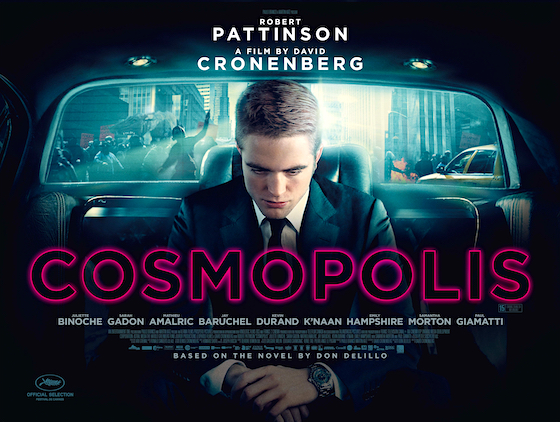
    David Cronenberg may be most famous as a horror director, but the only thing horrific about Cosmopolis is having to sit through it. It has the visual, aural, writing, and performance quality of an overambitious semi-pro early-’00s webseries, from the distractingly ugly green-screened limo windows to the “undergrad philosopher”-sounding screenplay and stiff performances. I presume this literally monotonous lack of realism must have been intentional, but doing something deliberately doesn’t inherently make it good. Cronenberg reportedly wrote the screenplay in just six days, apparently by copy-pasting the book into screenplay format and separating the dialogue from narration. That would go some way to explaining why it’s all so unnatural and impenetrable.

    1 out of 5

    Cosmopolis featured on my list of The Five Worst Films I Saw in 2019.

    The Kennel Murder Case
    (1933)

    2019 #91
    Michael Curtiz | 73 mins | digital (SD) | 4:3 | USA / English

    The Kennel Murder Case

    Before he starred in The Thin Man, one of the definitive detective movies, William Powell played private eye Philo Vance in a series of movies — three at Paramount across 1929 and 1930, later returning for this one at Warners. Here, Vance investigates a locked-room mystery: wealthy collector Archer Coe is dead and all signs point to suicide, but Vance had run into him the day before at the Kennel Club, where Coe was looking forward to his dog winning the next day’s competition.

    While the ensuing story unfolds a solid mystery, it lacks the charm and wit of the Thin Man films. Powell’s character is a facilitator of the plot rather than an entertaining main character; a blank slate who wanders around solving things. That lack of verve or individuality (which you do find in, say, the Falcon and Saint films, which this is on a par with in most other respects) is what really holds it back. Mind you, it has its moments: for example, much of Michael Curtiz’s direction is perfunctory studio-programmer stuff, but there’s the occasional striking shot (the discovery of a body though a keyhole) or sequence (the recap of how the murders went down, with a roving first-person view to hide the killer’s identity).

    3 out of 5

  • The Nomadic Monthly Review of April 2021

    We’re on a road to nowhere… Or, maybe, the road to recovery. Hopefully. Certainly, I’m still on the road to 100 films this year, at least.


    #74 Sátántangó (1994)
    #75 The Son of Kong (1933)
    #76 Godzilla Raids Again (1955), aka Gojira no gyakushû
    #77 King Kong vs. Godzilla (1962), aka Kingu Kongu tai Gojira
    #78 King Kong vs. Godzilla (1963)
    #79 Captain Phillips (2013)
    #80 The Frozen Ghost (1945)
    #81 The Fly (1986)
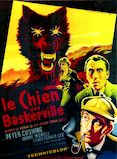
    #82 The Hound of the Baskervilles (1959)
    #83 Nomadland (2020)
    #84 The Hound of the Baskervilles (1978)
    #85 Detective Conan: The Phantom of Baker Street (2002), aka Meitantei Conan: Bekâ Sutorîto no bôrei
    #86 Taken 2 (2012)
    #87 Warning from Space (1956)
    #88 Spielberg (2017)
    #89 Primary Colors (1998)
    #90 Stowaway (2021)
    #91 Beginners (2010)
    #92 The Coldest Game (2019)
    #93 Going My Way (1944)
    #94 A Single Man (2009)
    Captain Phillips

    The Hound of the Baskervilles

    Nomadland

    .


    • I watched 21 new feature films in March.
    • That makes 2021 the first year since 2016 that the first four months have all passed the 20-film threshold. If I continue that into May, it’ll be the first year ever.
    • On the other hand, this is the first month in 2021 not to set a new record for the furthest I’ve reached by this point — I’d got to #96 by the end of April last year. Close, but no cigar.
    • I had hoped this might be the first year I got to #100 in April, but no dice. Last year I did it on May 5th, which is another record I don’t think I’ll be beating after all. Ah well — not everything can be a record-breaker.
    • Nonetheless, this was the earliest I’d ever reached the three-quarters mark, in terms of both my eponymous challenge (getting to #75 on the 3rd, beating the 8th from 2016) and my new 120-film challenge (getting to #90 on the 22nd, beating the 26th last year).
    • In terms of averages, it beats the April average (previously 14.8, now 15.2), but falls a little short of the rolling average of the last 12 months (previously 23.3, now 21.8) and the average for 2021 to date (previously 24.3, now 23.5).
    • Oops, I started another film series! I’d loosely intended to dive into the classic Godzilla films once I finally finished Zatoichi, but enjoying Godzilla vs Kong last month prompted me to want to see the ‘original’, 1962’s King Kong vs Godzilla. To do that ‘properly’, I had to watch the movies preceding it too — you can find the original Godzilla and original King Kong down in the Rewatchathon section, plus Son of Kong and Godzilla Raids Again at #75 and #76 (I watched them in and around spending four days trudging through Sátántangó). So, technically, I’m now three films deep into Big G’s 15-film Showa era.
    • Relatedly: no, that’s not a mistake at #77 and #78 — one’s the original Japanese version, the other is the US rejig (with much footage deleted, new stuff added, and all dubbed into English).
    • This month’s Blindspot film: as mentioned in brackets a moment ago, this was the insanely long (seven hours!) Sátántangó. It’s based on a novel and apparently adapts every single incident from the book, so this is what happens when you don’t bother to abridge an adaptation.
    • I didn’t watch anything from last month’s “failures”. Hey-ho.


    The 71st Monthly Arbitrary Awards

    Favourite Film of the Month
    I originally had a different winner down for this category, until a last-minute change of mind. You see, I expected to like Captain Phillips, because I’d heard good things and I generally like the work of director Paul Greengrass and star Tom Hanks, but it rather blew me away how good it was — a tense, dramatic, unpredictable thriller, with a final scene that by itself should’ve earnt Hanks an Oscar nomination, if not even a win. He was robbed!

    Least Favourite Film of the Month
    I know it’s acclaimed as one of the greatest films ever made, but, sorry, I found Sátántangó to be an unrelenting bore. It may not be the truly worst film I saw this month — it has some great filmmaking, and I do think there’s a very good movie buried inside it, if it were edited down considerably — but this is “least favourite”, not “worst”, and nothing else this month entertained me less for such a long period of time.

    Best Hound of the Baskervilles of the Month — Possibly Ever
    I’ll forgive you if you’re not up on your release years for every adaptation of The Hound of the Baskervilles — there are quite a few, for one thing. So, the two I watched this month were the Hammer version starring Peter Cushing and Christopher Lee (that’s the 1959 one), and the comedy version starring Peter Cook and Dudley Moore (that’s the 1978 one). The latter is famously awful, and… yeah, it is. But the former is a stunner. Not the most strictly-faithful adaptation, but bursting with atmosphere, whip-crack paced (it doesn’t even hit the 90-minute mark), and with a top-flight cast (Cushing deserves to come up more often in discussions of the best screen Sherlocks).

    Most Pleasant Surprise of the Month
    We’re so used to berating Oscar voters for their terrible Best Picture choices, it’s weird that recently they seem to have hit a good streak (Green Book excepted). And it continues this year, because I thought Nomadland was a legitimately fantastic movie. (Admittedly, it’s the only Best Picture contender I’ve yet seen, but still.)

    The Audience Award for Most-Viewed New Post of the Month
    I’m terribly behind on my TV reviews, which at least means they can’t dominate this category. And so a film wins again — not the all-awards-winning Nomadland, though, but the belated UK release of Palm Springs carries it to victory here.


    Although I rewatched four films this month, coming into April I had gradually slipped far enough behind that I’m still four films off target. But I’m always intending to rewatch some whole series (high on the list: to finally watch my Indiana Jones Blu-rays before the 4K set comes out), so if I pull my finger out and do something like that, the number could easily jump up.

    #10 Wonder Woman 3D (2017)
    #11 King Kong (1933)
    #12 Godzilla (1954)
    #13 Palm Springs (2020)

    I found Palm Springs more easily enjoyable on a second watch, freed of all the hype and expectation it came burdened with first time round. Seems only appropriate… Wonder Woman was also a second watch, and my original review still mostly stands (despite the comments section implying I might’ve missed something). As for the quality of its 3D, it’s the kind of post-conversion job that isn’t bad, but also mostly makes you wonder why they bothered.

    King Kong was the subject of a ‘Guide To’, so find that linked above for my latest thoughts on the monster movie classic. I last saw it many, many years ago, and my increased film literacy and appreciation for classic movies led me to enjoy it a lot more this time round. Similar could be said for Godzilla: knowing what to expect pace- and content-wise, I enjoyed it a bit more; certainly enough to shore up the 4-star rating on my review (linked above, natch).


    The reopening of cinemas may be imminent(ish) in the UK, but that hasn’t stopped distributors sending releases straight to overpriced “home premieres” — in April, those included young adult adaptation Chaos Walking and Oscar Best Picture nominee Minari, while fellow Best Picture nominee Promising Young Woman was relegated to being a Sky Original. And if you thought we had to wait quite a while for those, or Palm Springs and Nomadland (which were also both this month), check out Chloé Zhao’s debut feature, Songs My Brothers Taught Me: MUBI was responsible for its UK wide release this month, a full six years after its initial release elsewhere.

    There were Oscar contenders to be found among the streamers’ new releases too, with Amazon offering Sound of Metal to subscribers, alongside premieres of Guantanamo Bay drama The Mauritanian and Tom Clancy adaptation Without Remorse. Netflix’s awards flicks already came out last year, although they had the international premiere of Love and Monsters this month, which was at least up for effects nods. Less well received was Melissa McCarthy superhero comedy Thunder Force, though I have heard positive things about some of their other original titles, like Run (the new film from Aneesh Chaganty, director of Searching) and animation The Mitchells vs. the Machines. In terms of catalogue titles, Netflix brought back sometime-IMDb-Top-250-ers In the Name of the Father, Lagaan, and Taare Zameen Par (aka Like Stars on Earth); the subscription streaming debut of Shirley; plus a few things I haven’t seen for years and would like to rewatch, like Cast Away, The Quick and the Dead, and perhaps Jarhead (I saw it at the cinema 16 years ago and didn’t particularly like it, but maybe it’s worth another look, considering the talent involved).

    Once again, my new disc purchases know no bounds. I passed 100 titles on 4K Ultra HD Blu-ray this month, thanks to new releases of Batman v Superman (remastered with IMAX scenes), the 2014 Godzilla (in a spiffy limited edition from HMV), and Arrow’s Battle Royale (even though I haven’t watched their Blu-ray release that I bought over a decade ago). I also finally got Léon in 4K. I imported the US edition (because it looks so much better than the European one) from Amazon.com last year, but they kept sending me what looked like bootleg copies that I kept returning until they said they’d look into the matter. This time, I picked it up somewhere else, and it’s clearly a genuine copy — so I was right about Amazon flogging bootlegs.

    While I was importing that, I also snaffled up a bunch of classic 3D titles (The Maze, September Storm, and Wings of the Hawk) and finally managed to find a copy of the Olive Signature Edition of Orson Welles’s Macbeth for a reasonable price. Talking of sales, I picked up Black Rainbow, Black Test Car, and The Black Report from Arrow’s recent offering (their related titles being coincidence rather than design). On the full price side of things, I couldn’t resist a bunch of new and recent Indicator releases: The Beast Must Die, Crimewave, Irreversible, and Twentieth Century.

    And talking of failures to resist, I really, really tried not to buy Curzon Artificial Eye’s Bong Joon-ho box set. They used very pretty art design (the box art went down a storm with a certain kind of collector on Twitter) to bundle together almost-special-feature-less versions of a bunch of Bong’s films — and not even a complete collection, because Netflix have a stranglehold on Okja, and I guess Curzon couldn’t be arsed to license his short films (unlike a similar set recently released in Australia). I already own regular extras-filled editions of The Host and Snowpiercer, and I’ve caved to two copies of Parasite (both the 4K and Criterion’s extras-packed release), plus I have my eye on Criterion’s extras-loaded edition of Memories of Murder. All that left in the AE set’s favour was Barking Dogs Never Bite and Mother, the latter of which used to be available in a decent standalone edition (it’s out of print, but used copies aren’t hard to come by). So why the hell did I buy it in the end? Well, that’s still three films I don’t own — I could’ve got Mother by itself, but Barking Dogs Never Bite doesn’t have a standalone edition; and the Criterion release of Memories of Murder has rather controversial, ugly colour grading, while the UK edition is considerably less egregious in that department. The deal was sweetened by Parasite having some special features not present on my other copies (primarily, deleted scenes) and, yes, the attractive box design — it will look nice on my shelf. It’s definitely not the most sound purchasing decision I’ve ever made, but sometimes it’s just nice to have nice things.


    There’s only one date left on my “never seen a film on” list: May 23rd. Will I finally complete the year, or will I forget and miss it? (You’d think it’d be an easy achievement to guarantee, but it wouldn’t be the first time I’ve simply forgotten to do it.)