The Past Month on TV #66

After it had to sit out 2020 entirely (who knows why that happened?!), the Marvel Cinematic Universe is back — but now on TV! *gasp*

Also this month: the continuation of another film-turned-television franchise in Cobra Kai; the examination of film by television in new episodes of Mark Kermode’s Secrets of Cinema; and television that has nothing much to do with film in Staged series 2 and more classic episodes of The Twilight Zone.

WandaVision  Episodes 1-4
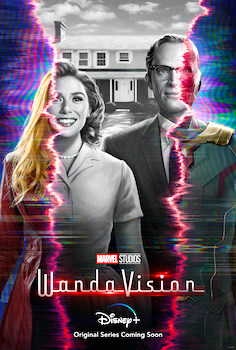
WandaVisionWandaVision isn’t the first television series set in the Marvel Cinematic Universe (in fact, it’s the thirteenth); nor is it the first to feature characters and actors from the movies (that’s been the case in at least two others, off the top of my head); but it is the first to be produced by the same division that makes the movies, so it’s set to be a lot more important (read: not totally ignored) going forward. Indeed, it’s already been reported that the events of this series tie directly into the storylines of the next Spider-Man 3 and Doctor Strange 2, at least.

So it’s a little surprising, then, that this marks such a departure from the regular style and feel of Marvel’s films; much more so than any of their previous TV series did. The setup is that somehow Wanda Maximoff, aka Scarlet Witch, and her robot lover Vision, who died, are living in a world modelled after classic TV sitcoms, and they’re perfectly unaware that there’s anything weird about this. The show emulates these old TV formats down to a tee — it’s not simply that they’ve cropped it to 4:3 and desaturated it to black-and-white, but it’s the camera angles, the acting styles, the set and costume design, the laughter track… The whole vibe of ’60s and ’70s sitcoms is neatly evoked, and the cast are clearly having a ball playing in a different era, with stars Elisabeth Olsen and Paul Bettany particularly up to the task. Plus, the fact this is a nine-episode series, rather than another two-hour action-adventure blockbuster, also allows the show to indulge in old-fashioned standalone-episode storylines, so that each episode feels like a self-contained unit of entertainment, rather than just part of a long movie cut into nine segments

But, of course, something fishy is going on, and when that begins to break through the show cleverly subverts its own format: when a guest starts unexpectedly choking at a dinner party, Wanda urges Vision to use his powers to save him, and the directorial choices suddenly become much more modern, briefly breaking the spell for us as much as the characters, but without doing anything obvious like switching to colour or widescreen. There are increasing flashes of this Twilight Zone-y, Twin Peaks-y, Stepford Wives-y oddness in future episodes, I guess to reassure regular MCU viewers that this is all going somewhere, rather than just being a bit of fluff.

And then we reach episode 4 (spoilers follow). I think we all expected this — i.e. an episode set ‘outside’ that explained (some of) what was going on — to come along at some point. It had to, really. But I thought it would be teased and teased, as it was in the first three episodes, as the show gradually moved through more eras of sitcoms, until eventually we’d start getting to real answers around maybe episode 7 or 8. It’s a very fan pleasing episode — as well as some answers, there’s also a host of roles for minor characters familiar from other MCU outings — but it does slightly concern me for the next five episodes. We know the show is heading back into Wanda’s world, because they’ve promised spoofs of sitcoms from the ’80s, ’90s, and ’00s, but surely it can’t expect to go back to a “sitcom of the week” format and that be sufficient? Now that they’ve opened up the outside, they can’t expect us to just watch Wanda cosplay different eras of sitcom history while learning nothing more about the bigger situation, can they? We’ll have to tune in next week to find out…

Staged  Series 2
Staged series 2The David Tennant- and Michael Sheen-starring (or is that Michael Sheen- and David Tennant-starring?) filmed-over-Zoom sitcom about lockdown life was a hit during one or other of the 2020 lockdowns, so here it is again — just in time for the 2021 lockdown, as things turned out. The second series is very much a follow-up — a sequel, if you will — rather than merely “more episodes of the same”. In fact, it’s a meta-sequel: the first series exists as a fictional project in the world of the sequel. This isn’t a continuation of the storyline(s) we watched in the first series; it’s a follow-on from the fact the first series was a success. Got that? The title card sometimes calls the series Staged², and one feels that’s more than just a typographical play on Staged 2.

That said, what we get in practice is more of the same: actors and creatives bickering about a project over video calls. But this time, rather than a play David and Michael are lined up to star in, it’s a Hollywood remake of Staged that won’t star them. Gasp! Cue a parade of famous-face guest stars as potential new cast members. No spoilers here, because the “oh look, it’s him/her” factor is part of the fun, just as it was in the first series; although, frankly, none of this series’ lot (and there are quite a lot) can pull off the same element of surprise as series one’s biggest names. However, this time the celebrity cameos dominate, with David and Michael spending most of the middle episodes meeting people who might replace them. Even bingeing the series over a couple of days, the plot feels spread thin, with very little actually happening to sustain the two hours (yes, across eight episodes it runs only two hours). The subplots that helped fill out series one (Michael’s neighbour; Georgia’s novel; in the extended cut, Lucy’s relationship; and so on) are gone, with nothing significant in their place. There is a sporadic subplot about Georgia, Anna, and Lucy prepping a charity sketch, which makes for some welcome interludes, but that’s only two or three scenes across the whole series.

And yet, ironically, the show tends to be most fun when nothing happens at all, and we’re left with David and Michael chatting to each other. When they’re separated, having different one-on-ones, it’s enjoyable to discover the foibles of another big-name guest star, but the “huh, it’s Person X” element wears off quickly and we want to go back to our leads hanging out. Fortunately, the last two episodes ride in to save the day, first with probably the best pair of guest stars of the series, then with a quite touching finale that simply abandons all the remake schtick to just be about David and Michael’s friendship as lockdown comes to an end. It’s a sweet, touching farewell to a show that I would guess has now run its course, but was a tonic while it lasted.

Mark Kermode’s Secrets of Cinema  Series 3
Secrets of Cinema: Cult MoviesA trio of new editions of the critic’s explanation of cinematic genres, which play like the best Film Studies lectures you could imagine. Each explores and explains its chosen subject in depth, often spinning out into tangential and related branches of film history — see the episode on pop music movies, for example, which is primarily concerned with movies about pop stars or musicals starring pop stars, but takes a moment to explore the phenomenon of pop stars as proper actors, such as David Bowie’s secondary career. It’s like Kermode and his writers (which include the insanely knowledgeable Kim Newman) can’t help themselves: there’s so much interesting stuff to talk about, so many connections and parallels, and they’re going to squeeze as much of it in as possible. Cited examples are copious and wide-ranging — if an episode is about a subject you’re interested in, be prepared to see your watch list grow. The best of this trilogy is the third, on cult movies; a genre, as Kermode explains, that is defined not by filmmakers but by audiences. It’s also a particularly wide-ranging field, but one whose contents engender genuine love — what makes them cult movies, after all, is that someone loves them. Kermode helps us to understand why.

Cobra Kai  Season 2
Cobra Kai season 2The third season of this Karate Kid TV spinoff/continuation debuted at the start of the month, but I’ve been pacing myself: it’s a really good show and I didn’t want to just burn through it. While I thought season two lacked the moreishness I experienced during season one, I attribute that partly to its quality not coming as a surprise. Also, not tasked with having to set up the whole premise of the show, it can dig a little deeper into what’s already there. That includes more references to the movies. The first is remembered as an ’80s classic; the sequels as an old-fashioned case of diminishing returns — in that situation, many modern revivals choose to ignore the less-favoured follow-ups. Not so Cobra Kai, which this season explicitly references and flashes back to Karate Kid 3 on several occasions. Part of the series’ strength is fleshing out and making real some of the “kids’ movie” logic of the originals, and this season takes on a particularly tough target: the former sensei of Cobra Kai, John Kreese. He’s a bit of an “evil for evil’s sake” villain in the movies, but the series works to add some explanation for that, and even asks if it’s possible that he could be rehabilitated and redeemed, much as former bully Johnny Lawrence has been (or, you might say, is in the process of being).

The series isn’t just stuck in the past, continuing the rivalries between the high-school-aged students of Cobra Kai and competing Miyagi-Do dojo, both on the karate, er, mat (is that what it’s really called?) and in the romantic realm. I suppose it gives the show a “something for everyone” angle, with both teen melodrama and the reflectiveness of its older characters (one of the season’s best episodes sees Johnny catch up with his old gang from school, one of whom is dying from cancer). All of which builds to a stunning climax: as the kids return to school after the summer break, the opposing factions end up in a karate battle that sprawls through the halls and stairways of the school, fellow students watching and egging them on. It takes up half the episode, including the best hallway fight oner since Daredevil — yes, such lofty comparisons are merited. But, as parents always say, “if you keep doing that, one of you’s going to get hurt”, and so of course it ends in (various kinds of) tragedy. What will happen next?! Oh, season three is already calling to me…

The Twilight Zone
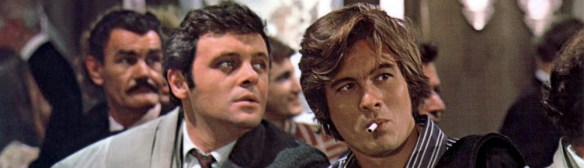
The Twilight Zone: SteelSo far on my journey through the original 1959–64 series of The Twilight Zone, I’ve covered ten selections of the best episodes and three of the worst, as chosen by various critics. With 85 episodes still to go, I’m leaving the opinions of others behind (for the time being) to check out some episodes that caught my attention for one reason or another — not because they’re acclaimed as good or derided as bad, but something about the premise grabbed me while I was perusing all those various rankings.

First up, The Bard, in which an enthusiastic wannabe TV writer uses a magic spell to bring Shakespeare back to life, and persuades the Bard to be his ghostwriter. Serling uses his years of experience to make this a satire of the TV industry, but it’s a pretty mild one — probably due to a mix of the era (when I guess the general public wouldn’t have had too much of an idea about the behind-the-scenes of TV) and the fact Serling still had to work in the industry. Also, it was apparently written in a hurry, and it shows: there are some good lines and moments, but various things don’t pay off or go anywhere. Plus, even the story angle is slightly misjudged: surely the gag here is that Shakespeare’s writing appraised by modern TV execs would be a flop; that TV execs would reject the “greatest writer of all time”. Well, at least we get to see Shakespeare punch a pretentious Method actor (played by a young Burt Reynolds), so there’s that.

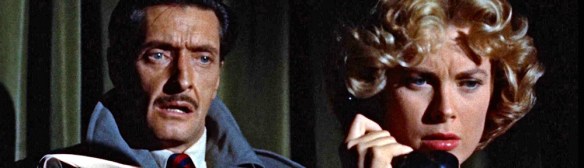
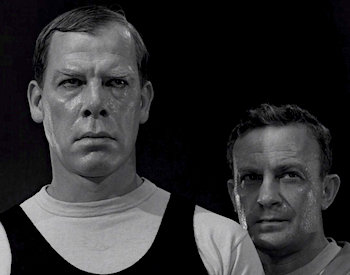
Based on the same Richard Matheson short story that later inspired Hugh Jackman CGI-fest Real Steel, Steel is set in the future year 1974 (remember, this was made in 1964), when boxing has been outlawed and replaced by robot boxing. The episode centres on one bout, between our heroes’ knackered old B2 robot and a more modern B7, against which the B2 doesn’t stand much chance, despite the hopes of its owner, played by Lee Marvin. I’ve not read the original story, but that’s a broadly similar plot to the film; except here things go in a more Twilight Zone direction: when the B2 breaks down entirely, Marvin decides to enter the ring pretending to be it. The ending tries to spin what occurs as some kind of moral about mankind’s tenacity and optimism, but that feels like a bit of a stretch — the remake reimagining the concept as sports/action entertainment is actually a better use of the concept.
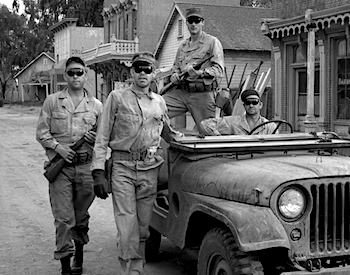
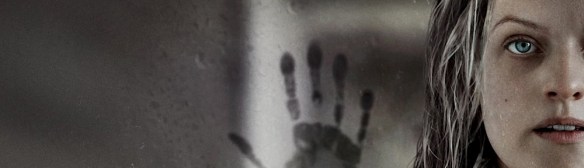
The Twilight Zone: The Old Man in the CaveAn altogether different vision of 1974 is presented in The Old Man in the Cave. This time, it’s a post-apocalyptic world after “the bomb” was dropped, and what’s left of humanity makes do as it can in the remnants of the old world. In particular, one town has survived by following the guidance of an old man who lives in a nearby cave, who seems to know where to plant food, what tinned goods are safe to eat, what the weather will bring, and so on. When a militia turns up (led by James Coburn) planning to bring order to the region, the townsfolk are faced with the choice of continuing to listen to the old man or side with the militia’s view that he’s actually an oppressor and they’re a lot nicer. It turns into a neat little sci-fi fable — the finale says it’s about the error of faithlessness, but I’m more inclined to say it’s about trust in experts vs selfishness and greed. The townsfolk have followed this expert’s guidance for a decade and it’s kept them alive, but that life hasn’t been easy or fun, so they’re tempted by the fantasy sold by the newcomers: that you can have whatever you want; the expert is keeping you down for no reason. Naturally, it can only pan out one way. It’s a story whose moral seems only more pertinent today.

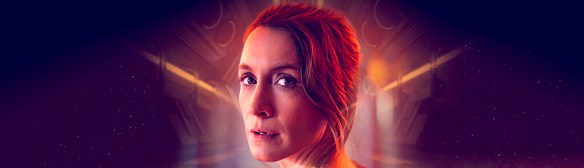
The Rip Van Winkle Caper also catapults us into the future, as a gang of gold thieves cryogenically freeze themselves to wake up 100 years after their crime, when their loot won’t be ‘hot’ and, as a bonus, will have benefited from 100 years of inflation. But crime doesn’t pay, even in the Twilight Zone — doubly so in this episode, where the crooks bring about their own destruction even before we reach the episode’s ironic twist. As a sci-fi lesson in where greed gets you (nowhere), it’s not the series’ greatest parable, but it’s not bad.
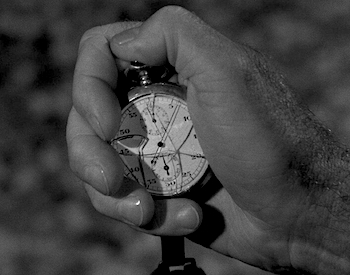
The Twilight Zone: A Kind of a StopwatchThe same could be said of A Kind of a Stopwatch, which takes on a perennial “what if”: what if you could freeze time? It wasn’t an original idea even when this episode was made in 1964, with Serling once saying he received dozens of pitches a year along those lines. He didn’t think any of them had an original enough take on the concept to be worth adapting, until this one. Frankly, I’m not sure what’s so special about it. That’s not to say it’s bad — it’s a reasonably well handled version, although it falls victim to the series’ regular bad habit of having the main character take much longer than the audience to understand the rules of the situation. But the episode’s real flaw comes at the end, when the punishment doesn’t fit the crime: the main character’s fate is not an ironic twist especially suited to him. It’s that which stops Stopwatch from reaching TZ’s true heights; that leaves it a solid “good” episode when it could possibly have been a great one.

Things to Catch Up On
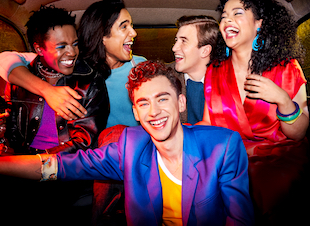
It's a SinThis month, I have mostly been missing It’s a Sin, Russell T Davies’s new drama about a group of friends coming of age amidst the emergence of AIDS in the ’80s. It’s only a couple of episodes in on Channel 4, but the whole five-part series is already available via All 4 (FYI, it’s out in the US on HBO Max in mid-February). I intend to binge the whole thing and review it next month.

Next month… more WandaVision, more Twilight Zone, plus whatever else the TV Gods still have left in the pre-pandemic tank and/or have managed to produce during the various lockdowns.

The 100-Week Roundup XXIII

Regular readers will remember that I started 2021 on the back foot with these 100-week roundups, being about a month behind. Well, after some effort the past few weeks, I’m pleased to report I’ve now caught up — which, if you think about it, only means I’ve caught up to being just 100 weeks behind. Hurrah?

Anyway, as always, this roundup covers films I still hadn’t reviewed 100 weeks after watching them. Sometimes these are short ‘proper’ reviews; sometimes they’re only quick thoughts, or even just the notes I made while viewing. This week’s collection includes the final film from February and the first from March 2019

  • Sherlock Gnomes (2018)
  • Swimming with Men (2018)


    Sherlock Gnomes
    (2018)

    2019 #22
    John Stevenson | 86 mins | digital (HD) | 2.35:1 | UK & USA / English | U / PG

    Sherlock Gnomes

    As if the idea of making a children’s animated movie based on Romeo & Juliet but starring garden gnomes and the music of Elton John wasn’t barmy enough, here we have a sequel that riffs off another classic of English literature, Sherlock Holmes.

    The plot naturally takes the form of a whodunnit, with Gnomeo (voiced by James McAvoy) and Juliet (Emily Blunt) recruiting Sherlock Gnomes (Johnny Depp, for some reason) and his assistant, Dr Gnome Watson (what creative renaming), to investigate the disappearance of their garden ornament friends. Don’t worry too much about the plot, though: I guessed the twist in the very first scene. (Fortunately, there is another twist beyond that.) Instead, treat it as a bright and breezy kids’ adventure. It’s not particularly clever or funny, but much of it is perfectly fine, with the occasional bit that’s quite good, like a Flushed Away-esque sewer scene or a hound of the Baskervilles gag, plus some creative use of animation to render things like Sherlock’s visions or Romeo’s escape plan.

    The Elton John songs are even more incongruously shoehorned in than they were last time — I know he’s a producer, or it’s made by his company or whatever, but, other than that, they have absolutely no reason to be here. Worst of all is a new number, written by Elton and regular collaborator Bernie Taupin but sung by Mary J. Blige. At least it makes the rest of the John back catalogue on the soundtrack seem less objectionable.

    3 out of 5

    Swimming with Men
    (2018)

    2019 #29
    Oliver Parker | 97 mins | digital (HD) | 2.35:1 | UK / English | 12

    Swimming with Men

    Here’s a sort of aquatic riff on The Full Monty, as a man suffering a midlife crisis (Rob Brydon) joins an all-male amateur synchronised swimming team, mostly made up of other mostly-middle-aged British character actors: Rupert Graves, Jim Carter, Daniel Mays, Adeel Akhtar, and Thomas Turgoose. It seems like your typical Britcom setup, but it’s actually based on a true story — the Swedish team it’s about play themselves in the film — which has been filmed several other times now: in Sweden as The Swimsuit Issue; in France as Sink or Swim; plus a documentary about the real team, Men Who Swim. I haven’t seen any of those to compare, but the British variant holds up pretty well by itself, with enough gentle amusement and heartwarming camaraderie to make for a pleasant watch.

    3 out of 5

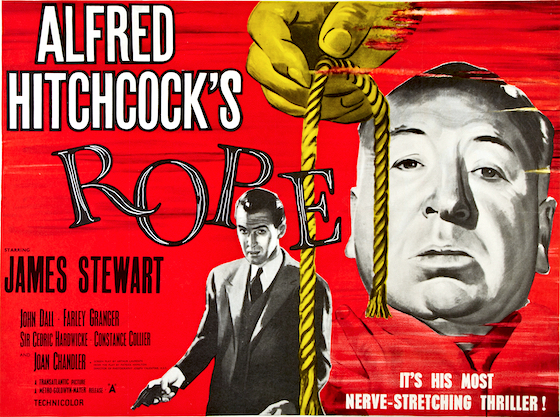
  • Rope (1948)

    2019 #24
    Alfred Hitchcock | 81 mins | Blu-ray | 1.33:1 | USA / English | PG / PG

    Rope

    Nowadays fake single takes are all over the place — some of them even last whole movies. But, as with so much cinematic trickery, it’s not actually a new idea. I don’t know if Alfred Hitchcock was the first director to attempt to trick the viewer into thinking they were watching one long take, when in fact it’s several shots stitched together via hidden cuts, but his effort is certainly one of the most famous. As an exercise in style, it’s a mixed success. Hitch is presumably inventing techniques that other filmmakers would polish and perfect in later attempts at the same stunt, but these first attempts don’t always come off perfectly. For example, every ‘hidden’ cut comes via an unmotivated camera move into the back of someone’s jacket — it may hide the cut in a literal sense, but there’s no doubting what’s going on. The entire movie is staged in actual long takes — just ten in total, most of them running seven to ten minutes. That means there are just nine cuts in the entire film, but several times (four, to be precise) Hitch just gives in and resorts to a regular cut. Sometimes you have to put the needs of the story before your showing off, I guess.

    But, in other ways, the film is a great technical success. The camera moves elegantly around the apartment, employing moveable walls and stagehands shifting props while out of shot to get the moves Hitch was after. A large window at the back of the set shows a cityscape, which in other films would’ve just been a photo blowup, but here is made more convincing and alive with smoke and lights. Similarly, the passing of time is subtly emphasised because, through that window, we can see the sunlight gradually transition from daytime to evening. All of this helps sell the fact that the film takes place in real-time… sort of. Although it only runs 80 minutes, scientific analysis (yes, some scientists analyse this kind of thing) has shown the events cover about 100 minutes. Certain action is sped-up to close that gap — for example, the sun sets too quickly. Apparently this is so effective that the analysis concluded audience members feel like they’ve watched a 100-minute movie, even though it’s only 80… which, er, I don’t think was meant to sound like a criticism…

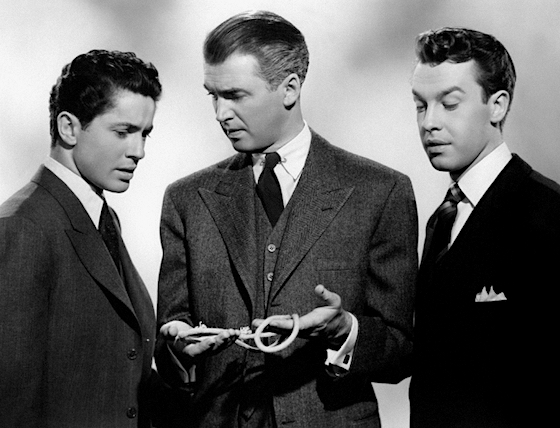
    Look, a rope!

    Ostensibly based on Patrick Hamilton’s play of the same name, which in turn was inspired by the Leopold and Loeb case (also the inspiration for Compulsion, amongst various other works of fiction), this adaptation changes the setting, almost all of the character names, and some of their personality traits too. Wherever they come from, the film offers an interesting array of characters. The most obvious are the two murderers — smug, cocky Brandon and worrisome Phillip — along with James Stewart, who portrays a gradual realisation that something is amis, culminating in devastation at what was really a silly thought exercise being writ into reality. Apparently Stewart thought he was miscast, but I think he’s very good, conveying much with just looks and expressions, and making you believe his moral about-turn at the end.

    Other parts have, perhaps, dated: the film attracted some controversy for its homosexual overtones, but to modern eyes there’s very little to emphasise such an interpretation. Perhaps some social cues that once indicated homosexuality have fallen by the wayside in the past seven decades; or perhaps, because there’s no need to bury such things anymore, what was once ‘weird’ is now just normal behaviour. Nonetheless, much of the screenplay remains quite fun, including various nods and winks to the situation, and one slightly meta scene where two female characters talk about male movie stars they adore in front of Jimmy Stewart. But there are also sequences of familiarly Hitchcockian suspense, one great bit coming when all the characters are distracted chatting but we’re watching the maid who, while she slowly clears stuff away, is on course to discover the hidden body…

    As the end credits roll, the actor who plays David — the victim, who dies in the first shot of the movie; really, no more than a prop — Is listed first, and then every other character is defined in relation to him. It’s almost like they film’s very credits are underlining the message of the film: that no one’s inferior, including David; like they’re giving him some kind of dignity in death by making him the focus of the final element of the film. It’s another neat little trick in a film that’s full of them.

    5 out of 5

    Rope was viewed as part of Blindspot 2019.

    The 100-Week Roundup XXII

    The 100-Week Roundup covers films I still haven’t reviewed 100 weeks after watching them. Sometimes these are short ‘proper’ reviews; sometimes they’re only quick thoughts, or even just the notes I made while viewing. This week’s collection includes three more feature films and one short from February 2019

  • Hacksaw Ridge (2016)
  • Leave No Trace (2018)
  • Inception: The Cobol Job (2010)
  • Fences (2016)


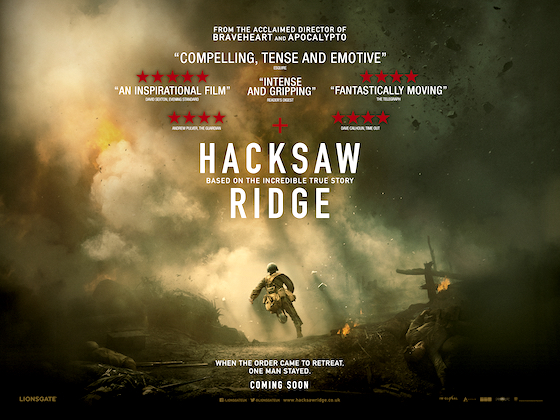
    Hacksaw Ridge
    (2016)

    2019 #17
    Mel Gibson | 139 mins | digital (HD) | 2.35:1 | Australia & USA / English | 15 / R

    Hacksaw Ridge

    Hacksaw Ridge tells the true story of Desmond T. Doss (Andrew Garfield), an American who believed that World War II was justified — so he joined the army to serve his country — but also that killing was wrong — so he refused to carry a weapon. Serving as a combat medic, Doss ended up at the bloody Battle of Okinawa, where he saved the lives of 75 men without firing a shot, and became the first conscientious objector to earn the Medal of Honor.

    It’s an extraordinary true story — the kind of thing that would seem ludicrous if someone made it up — so it earns its place on the screen. Unfortunately, I don’t think the best way to tell it was by letting Mel Gibson carve it from a block of cheese. When the film’s not wasting time on clichéd bootcamp stuff, it’s earnestly indulging in its subject matter to an eye-rolling degree. Indulgence is also the name of the game when it comes to the war, too: for a movie about a guy who wouldn’t kill, it certainly revels in its gory depictions of combat. Handled the right way, such grotesquery could have supported the point that Desmond is right, but Gibson seems to be enjoying the slaughter too much.

    And yet for all of Gibson’s amping it up, some of the real-life stories are even more incredible than what’s in the film — there are stories in IMDb’s Trivia section (here and here, for example) that stretch credulity so far it was decided to leave them out because audiences would never believe it. Considering how OTT the stuff left in is, it seems a shame to have left out something that could be backed up as a true account.

    3 out of 5

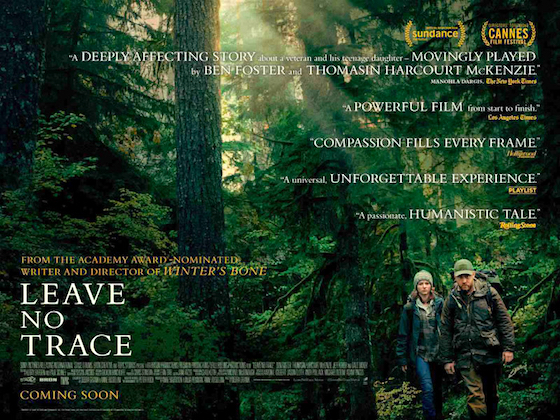
    Leave No Trace
    (2018)

    2019 #18
    Debra Granik | 109 mins | digital (HD) | 1.85:1 | USA & Canada / English | 12 / PG

    Leave No Trace

    Traumatised military veteran Will (Ben Foster) and his teenage daughter, Tom (Thomasin McKenzie), have lived in isolation for years in a public park outside Portland, Oregon, only occasionally venturing in to the city for food and supplies. But when they’re spotted by a jogger, they’re arrested and put into social services. Tom finally gets a sense of what it might be like to integrate with society, but Will clashes with his new surroundings, and soon they set off on a harrowing journey back to the wild. — adapted from IMDb

    I don’t like summarising too much of a film’s storyline at the start of a review, but Leave No Trace is one of those films where the character work is more important than the shifts of the plot. It’s a double portrait: that of a damaged man who can’t cope with society, and his loving daughter who he’s taken on the same path, for good or ill. Will’s lifestyle and parenting methods are entirely at odds with what’s seen as acceptable by society (hence the arrest and being placed in care), but does that make him wrong? The pair’s life in the woods is a “back to nature” approach, detached from technology and the hum of modernity, which many profess to strive for — he’s just actually gone and lived it. But Tom, as just a young teenager, has had this life thrust upon her — it’s what her dad wants, but she’s never known anything else to have the choice.

    So the film rests on the two lead performances. Ben Foster is reliably superb as a father doing his best for his daughter — and, actually, not doing a bad job — but struggling with his own issues and traumas. But the star is Thomasin McKenzie, in what’s proven (rightly) to be a breakout role (she quickly followed this with another leading role in Jojo Rabbit, and will next be seen in new movies from Edgar Wright, M. Night Shyamalan, and Jane Campion). She was just 17 when the film was shot, but is entirely convincing as a 13-year-old, and yet the character also seems old for her age. It’s a weird dichotomy, that. It never crossed my mind that the actress was any older than the character — it’s not just that she looks young, it’s a quality in the performance — and yet she also conveys that sense of being “wise beyond her years”. As if that wasn’t enough, the film’s emotional crux lies with her, delivered in a single emotional gut-punch of a line that’s liable to make you choke up just remembering it.

    4 out of 5

    Inception: The Cobol Job
    (2010)

    2019 #20a
    Ian Kirby | 15 mins | Blu-ray | 16:9 | USA / English | 12

    Inception: The Cobol Job

    Remember motion comics? They were a brief fad where comic books were adapted into movies/series by simply adding movement and sound to the original artwork. (I say “brief fad”, they may still make them for all I know, but there was a rash of them about ten years ago that seems to have abated.) That’s what this animated prequel to Christopher Nolan’s Inception is: a moving version of the one-shot comic (originally published online, but also included in print with some releases of the movie), written by Jordan Goldberg with art by Long Vo, Joe Ng, and Crystal Reid of Udon.

    As motion comics go, the animation here isn’t bad. It’s still clearly derived from a comic book rather than being born into animated form, but it’s got a decent amount of movement and dynamism. But its main fault is not having any voice actors. There’s music (taken from Hans Zimmer’s score for the feature) and sound effects, which complement the atmosphere and help connect it to the film proper, but having to read speech and thought bubbles really keeps it in “motion comic” rather than “animated short” territory. Were the producers at Warner really so cheap that they couldn’t’ve afforded a couple of voice actors for an afternoon’s work?

    As for the story, it’s a nice little prequel to Inception, more-or-less tonally in-keeping with Nolan’s work. It sets up the backstory behind the film’s opening heist and some of its subplots… though, kinda ironically, The Cobol Job also begins in media res, so you could do a prequel to the prequel to explain how they got there. Stories within stories within stories? How very Inception.

    3 out of 5

    Fences
    (2016)

    2019 #21
    Denzel Washington | 139 mins | digital (HD) | 2.39:1 | USA & Canada / English | 12 / PG-13

    Fences

    Troy Maxson (Denzel Washington) is a working-class African-American in 1950s Pittsburgh, doing his best to provide for his family: wife Rose (Viola Davis), teenage son Cory (Jovan Adepo), his son from a previous relationship (Russell Hornsby), and Troy’s mentally impaired brother, Gabe (Mykelti Williamson). But this seemingly-happy dynamic is tried when Troy’s secrets are forced to come to light, and his bitterness at the hand life dealt him threatens his family’s dreams. — adapted from IMDb

    Fences is adapted from a 1985 play by August Wilson, which was revived on Broadway in 2010, and many of the lead cast members from that award-winning production transfer to this film version, not least star (and now director, too) Denzel Washington. Perhaps that’s why the end result is so very stagey.

    It’s not just the limited locations or talky screenplay that give that away — there’s no reason you can’t make a film that’s set in limited locations or heavily based around dialogue, so it goes beyond that. The stage roots show through partly in that so much important stuff is kept offscreen and we’re only told about it through dialogue — I don’t think you’d tell this story this way if it originated for the screen, or indeed as a novel. Then there’s the way the actors move around, the way they come and go from the ‘stage’, the way scenes are blocked — it feels like it’s been lifted off a stage set, plonked on an equivalent real location, then filmed. Then there’s the style of the dialogue — it has a certain kind of familiar theatricality, which I can’t quite define but I always know when I hear it.

    All of which serves as a distraction from whatever Fences is meant to be about. And, frankly, it goes on a bit, with many scenes feeling in need of a massive tighten. It’s not that it’s bad, but it feels very worthy; very self consciously important. Perhaps for some people it is.

    3 out of 5

  • The 100-Week Roundup XXI

    I’m sure regular readers — who hungrily consume every word I publish with a near-religious commitment, right? — are well aware of the purpose of these 100-week roundups; but for the sake of newcomers discovering them for the first time, perhaps stumbling here wearily via an IMDb link, I feel it’s overdue that I come up with some kind of generic introduction to stick on each one. Maybe something like this:

    The 100-Week Roundup covers films I still haven’t reviewed 100 weeks after watching them. Sometimes these are short ‘proper’ reviews; sometimes they’re only quick thoughts, or even just the notes I made while viewing. This week’s collection includes the final film leftover from January 2019 and the first few to be rounded up from that February

  • The Player (1992)
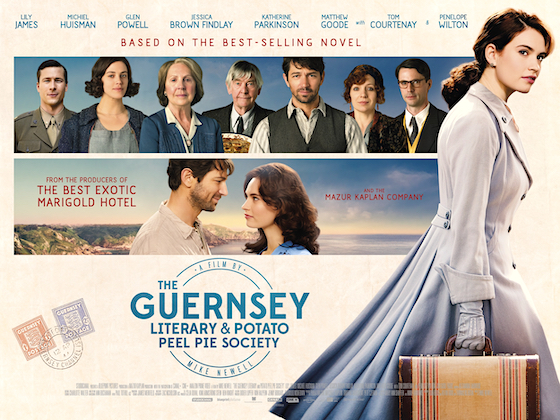
  • The Guernsey Literary and Potato Peel Pie Society (2018)
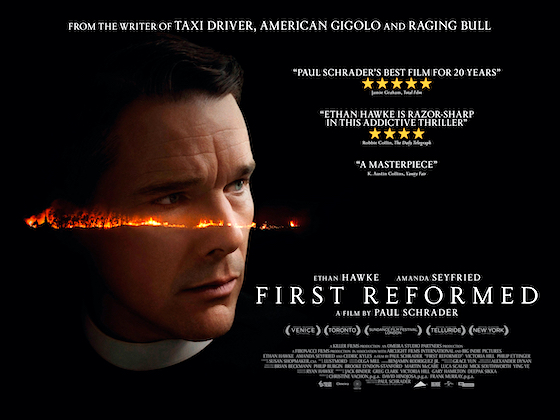
  • First Reformed (2017)
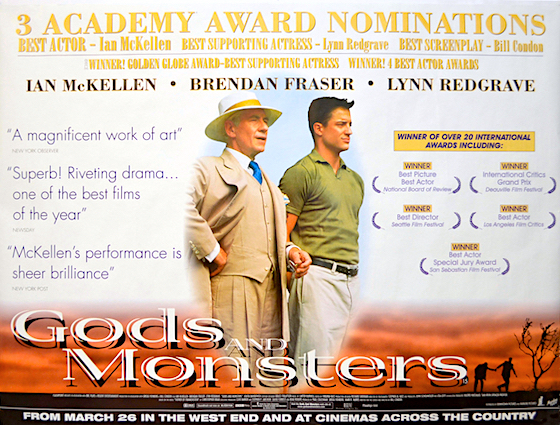
  • Gods and Monsters (1998)


    The Player
    (1992)

    2019 #8
    Robert Altman | 124 mins | Blu-ray | 1.85:1 | USA / English | 15 / R

    The Player

    Robert Altman’s satirical look at the world of Hollywood filmmaking stars Tim Robbins as a studio executive who rejects tens of thousands of prospective screenplays a year. When he begins to receive threatening postcards from an anonymous rejected writer, at the same time as his job seems under threat from a new employee, he’s led down a rabbit hole of suspicion and paranoia that may ruin more than just his career…

    You don’t get movies that are much more “insider Hollywood” than The Player, concerned as it is with the workings of the studio system, and packed to the rafters with cameos, both famous (big-name actors) and not (several of the guys who pitch in the film are real screenwriters). Such a focus would seemed primed to make a film inaccessible — witty and clever to those in the know, but leaving the rest of us shut out. That’s not the case here. While there’s no doubting the truthfulness (at least, in a satirical sense) of Altman’s depiction of Hollywood’s inner workings, he’s taking general aim at the entire world of it. Plus, there’s always the mystery/thriller storyline to keep us hooked.

    And in its insightfulness, the film is ahead of its time. As observed by Sam Wasson in his essay for the film’s Criterion release — written in 2016, but only more accurate five years further on — “today, when it’s the IP and not the script, or the director, or even the actor, that gets the movie made, when films are green-lit before they are written, and studios, I keep hearing, hire weaker directors because they’re easier to control, I think of that meeting, midway into The Player… when [Robbins] muses aloud to a roomful of colleagues, ‘I was just thinking what an interesting concept it is to eliminate the writer from the artistic process. If we can just get rid of these actors and directors, maybe we’ve got something here.’” I guess someone was taking notes…

    5 out of 5

    The Player was viewed as part of Blindspot 2019.

    The Guernsey Literary and
    Potato Peel Pie Society

    (2018)

    2019 #12
    Mike Newell | 123 mins | digital (HD) | 1.85:1 | UK, France & USA / English | 12

    The Guernsey Literary and Potato Peel Pie Society

    In the aftermath of World War II, a writer (Lily James) forms an unexpected bond with the residents of Guernsey when she decides to write about the book club they formed during the island’s Nazi occupation. — adapted from IMDb

    Here we have a film that seemed to come in for a fair bit of flack in critical circles, and I can’t help but wonder if it a large part of it is simply down to the title. As I wrote in the February 2019 Arbies, it’s self-consciously whimsical, but “I can kind of see what they were going for… but they took it too far and now it’s a more horrible mouthful than the pie itself.”

    In fairness to the film’s detractors, that wasn’t their only nitpick. Another is that, although she’s ostensibly the protagonist and therefore a proactive character, James’s role is basically to keep asking the other characters what happened in the past until they explain the plot to her. That’s not an entirely inaccurate assessment of how the story unfolds. Virtually the only dramatic tension comes from the fact the other characters, all of whom know what went on, won’t reveal it until they (or, rather, the plot) decide it’s time to. Then again, stuff like having an active protagonist is one of those rules of drama that I sometimes feel is a rule just because it’s a rule — if your story is engrossing and entertaining anyway, why not have the ‘hero’ be little more than a narrator to guide us through what went on? Anyway, I’m not sure Literary and Potato Peel Pie Society was built to support such technical debates.

    Naturally, there’s a romance storyline too. That’s all very twee, of course, but the flashbacks to life under occupation give the film more grit than some gave it credit for. This isn’t a hard-hitting war movie, but nor is it simply an airy-fairy romance in pretty locations with an overdose of the sugary quirkiness that the title implies. Taken as a whole, it’s a perfectly decent melodrama-ish movie, that delivers on both a “chick flick”-ish romantic level and as some kind of recognition for the efforts of ordinary people during the war.

    4 out of 5

    First Reformed
    (2017)

    2019 #13
    Paul Schrader | 113 mins | digital (HD) | 1.37:1 | USA, UK & Australia / English | 15 / R

    First Reformed

    The pastor (Ethan Hawke) of a small church in upstate New York is asked for help by a pregnant parishioner (Amanda Seyfried) whose husband is a radical environmentalist. When the situation takes a tragic turn, the pastor must cope with mounting despair brought on by tragedy, worldly concerns, and his tormented past. — adapted from IMDb

    My first note about First Reformed is: I’m glad I didn’t watch the trailer first — it gives away almost all the salient details of the climax. So there’s a warning to you, too. (Naturally, the above plot description is written to not give too much away.)

    Continuing in that non-spoiler-y vein, then, all I can share from my notes about the ending is that it definitely seems designed to provoke debate — about the rights and wrongs of what does and doesn’t happen; about the choices made; about the way it chooses to conclude. The problem (or, some might feel, advantage) of being vague about this is that there’s no meaningful way to engage with said debate. Oh well.

    Before we get to the contentious conclusion, First Reformed appears to be a quiet little drama about personal despair and grief. It sort of morphs into something very different — almost a polemic about climax change. I say “sort of” because it also retains its smaller character-specific focus by using such big world-affecting things as a metaphor or mirror for individual dejection and hope. The character in question is Ethan Hawke’s pastor, and it’s very much a character study of him (Amanda Seyfried, a big name given co-billing on posters, etc, doesn’t have a huge amount to do — even when her character is involved in several exceptionally emotional situations, she remains very calm). With the whole film on his shoulders, Hawke is excellent, navigating us through his character’s rather internal conflicts with an assured performance.

    It was a good enough turn to put him in the awards conversation, as I remember, but not to secure any major nominations. The film did get an Oscar nod for its screenplay, written by director Paul Schrader, but it lost to Green Book. The less said about that the better, maybe.

    4 out of 5

    Gods and Monsters
    (1998)

    2019 #16
    Bill Condon | 105 mins | digital (HD) | 16:9 | USA & UK / English | 15 / R

    Gods and Monsters

    James Whale (played here by Ian McKellen) was the director of such acclaimed classics of the 1930s as Frankenstein, The Invisible Man, and Show Boat. By 1957, he was long since retired, and when he suffers a stroke it causes him to reflect on his memories — of his earlier life in England; of his movie career; and of his time in the trenches during World War I. He recounts these experiences to his new gardener, Clay (Brendan Fraser), a strapping ex-Marine who Whale persuades to model for him. Their friendship grows, even as Clay is wary of Whale’s homosexuality, and Whale’s health deteriorates.
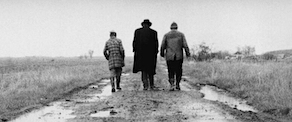
    Viewed now, there are definitely parallels between this and another film starring Ian McKellen and directed by Bill Condon, Mr. Holmes. Both concern a dying old man (McKellen), cared for by a characterful housekeeper (here, Lynn Redgrave), who connects with a younger male while reflecting on former glories. No offence meant to Condon, but if he were a more noted director then I guess more people would have discussed the similarities between the two works, for good or ill (are they mirrored explorations of a similar theme, or just self plagiarism?) Of the two, Gods and Monsters is probably the more effective, benefitting from being based on a real person and true events in its exploration of who this person was.

    4 out of 5

  • The 100-Week Roundup XX

    Maybe I should’ve gone out of sequence and numbered this one XXX, given the pornographic content of a couple of these films from January 2019

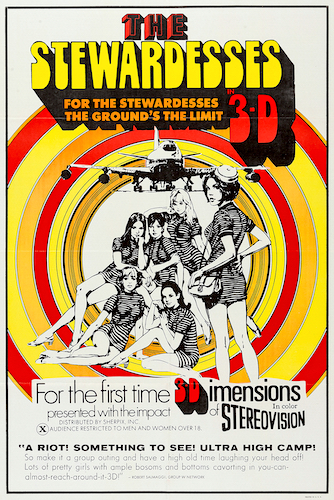
  • The Stewardesses 3D (1969)
  • Experiments in Love 3D (1977)
  • La jetée (1962)


    The Stewardesses 3D
    (1969)

    2019 #6
    Alf Silliman Jr. | 93 mins | Blu-ray | 1.33:1 | USA / English | X* / R

    The Stewardesses in 3D

    If I asked you to guess the most profitable 3D movie ever made, what would you say? Avatar, probably. And, er, you’d be right (in terms of pure dollars earned, anyway). But what about before Avatar came along? You might opt for Jaws 3-D, or one of those ’80s horror franchise entries, like Friday the 13th Part III or Amityville 3-D. Or you might try Alfred Hitchcock’s shot at the format, Dial M for Murder; or perhaps the Universal horror classic Creature from the Black Lagoon. Well, all of those answers would be wrong. The correct answer — as you’ve no doubt guessed by now, because you’re not stupid — is The Stewardesses. Why?

    Boooobs.

    And, er, the rest of the female anatomy, quite frankly, because, yes, The Stewardesses is fundamentally a porno. Bow-chicka-wow-wow! Oh, but not, it would seem, one exclusively for the dirty mac brigade, as it had enough of a mainstream claim (it was advertised as being based on a novel. There was no novel) to be booked into regular cinemas as well as onto the grungy grindhouse and drive-in circuits. It ran repeatedly for decades, and was made for a pittance, so its cost-to-profit ratio just kept on going up. To be precise, off a budget of just $100,000 it’s reported to have grossed up to $30 million, a 30,000% return. (For comparison’s sake, Avatar’s return was 1,176%.) It was also technologically innovative: the director helped develop a simple and economical single-camera 3D system (the 3D films of the ’50s had been shot with two cameras and projected with two projectors), which was later used by major movies during the ’80s 3D boom, such as Jaws 3-D.

    But what of the film itself? It’s an odd mashup of porno and arthouse, with gratuitous sex and nudity bumping against mundane drama, sequences that seem more like an observational lifestyle documentary, and occasional experimental scenes. It’s hard to tell how much the film is aiming for realism and how much is just amateurish: there’s dodgy framing, weak performances, and Filmmaking 101 goofs (spot the mic), but something about the editing patterns, shot choices, and day-in-the-life subject matter feels influenced by cinéma vérité. But there are also random showcases of the 3D effect, including a game of pool and a fairground sequence, which includes point-of-view rides on a rollercoaster ride and ghost train.

    Sexy lamp

    The sex stuff is dropped in here and there around this. There’s a bit of fooling around in a cockpit at the start, although this is again played more for the 3D gimmick (some legs-akimbo feet protruding from the screen) and laughs (the old “someone left the mic on and everyone can hear” bit). But then it’s almost quarter-of-an-hour before there’s anything that could be genuinely described as pornographic (full frontal yoga); after that, it’s back to watching some of the girls go to a bar and another go on a dinner date. A surprising amount of time is spent watching girls brush their hair — sometimes topless, which makes sense in a laughably gratuitous way, but other times… not.

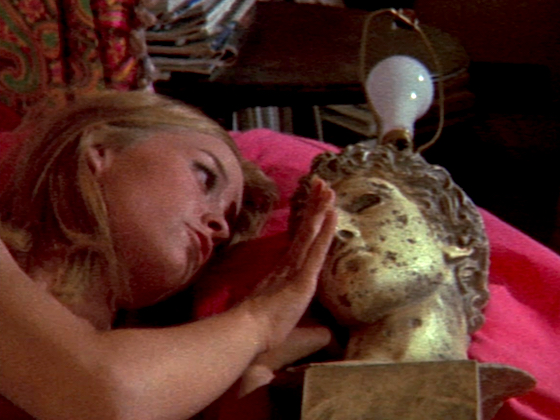
    The first truly explicit scene depicts a girl on an acid trip having sex with a lamp shaped like a classical bust, while superimposed inverted images show the body she’s imagining it has. I mean… you couldn’t make that shit up, right? It’s more like an experimental movie than a porno. Later sequences are more straightforward porn, not least a lengthy lesbian scene; but the final sex scene is far from titillating, returning to that odd artiness with shots of vases and statues, closeups of appendages and limbs, unhappy faces, and a disquieting score. It ends by taking an exceptionally dark turn, with a murder-suicide that seems almost entirely unmotivated by anything that’s come before. It’s certainly not how you expect them to wrap up a film aimed at titillation.

    It would seem The Stewardesses was a film of very mixed ambitions. The end result is objectively terrible, and yet also kind of fascinatingly enjoyable and thought-provoking. It’s certainly not dull, I’ll give it that.

    2 out of 5

    * It hasn’t been rated by the BBFC since a cut version received an X in 1973. ^

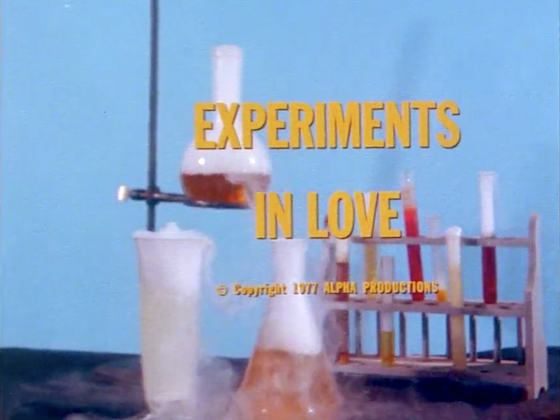
    Experiments in Love 3D
    (1977)

    2019 #6a
    Darrell Smith | 28 mins | Blu-ray | 1.20:1 | USA / English

    Experiments in Love

    Where The Stewardesses makes you wonder “is it porn or is it a drama with gratuitous sex?”, Experiments in Love prompts no such quandaries: it’s porn. And yet…

    A sci-fi comedy porno short, the plot (yes, there is a plot) sees a pair of “sexy scientists” experimenting with 3D cameras under instruction from a room-sized computer that speaks with a dodgy Japanese accent, so that they can use the cameras for a university project on human sexuality. In practice, it’s a bunch of 3D trick shots performed by a pair of women in very, very little clothing. Eventually, their sexy experiments overheat the system, which attracts the attention of a nearby handyman, and… well, I’m sure you can guess what goes on from there.

    While there’s no doubting the primary purpose of Experiments of Love, it has a knowing irreverence that makes it pretty funny, plus a cornucopia of great-looking 3D stunts, that make it worth watching for more than just the relatively explicit softcore sex and nudity. Whatever you want from it (based on reasonable expectations), you’re likely to get.

    3 out of 5

    La jetée
    (1962)

    2019 #6b
    Chris Marker | 28 mins | digital (HD) | 1.66:1 | France / French | PG

    La jetée

    And now for something completely different…

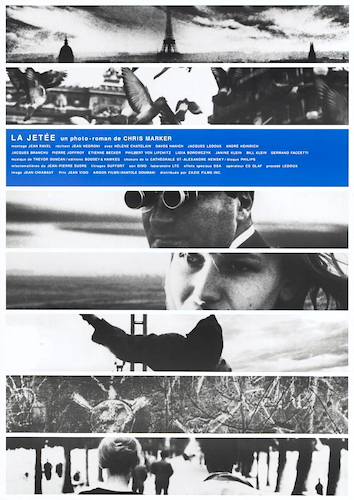
    Told via a series of still photos with voiceover narration, this is the story of a man in a post-World War III future who is subjected to a time travel experiment. While others have been unable to withstand the mental strain, scientists believe that the man’s obsession with a childhood memory will work in his favour if they send him back to near that moment. With the experiment a success, the man begins to develop a relationship with a woman in the past; but the scientists want him to find a solution for their post-apocalyptic woes…

    Probably most widely known as the work that inspired Terry Gilliam’s Twelve Monkeys, La jetée is a seminal piece of science fiction filmmaking in its own right. By limiting the visuals to photographs, writer-director Chris Marker creates an eerie, discomfiting atmosphere, wholly appropriate to a post-apocalyptic future of enforced experimentation. But it also fits thematically: this is a film very much about memory, and what is one of our primary prompters of memory if not photographs? “Nothing distinguishes memories from ordinary moments,” says the narrator at one point. “Only later do they become memorable by the scars they leave.” Genuinely, a pretty profound thought to chew over.

    La jetée is a film I definitely need to revisit: it’s one of those films that is preceded by such a reputation that one struggles to judge it fairly on a first viewing, when expectations are too high. Put another way: although I’m not giving it full marks, that is not to dispute its standing as a classic.

    4 out of 5

  • The 100-Week Roundup XIX

    Although I managed to get caught up on my reviews to the end of 2018 by the end of 2020, these 100-week catch-ups are still behind schedule — after all, 100 weeks is slightly less than two years, so I should be into February 2019 by now. But we are where we are, and so here’s the first batch from January 2019. At least the first one’s more appropriate now than it would’ve been in December…

  • Happy New Year, Colin Burstead (2018)
  • Cool Hand Luke (1967)
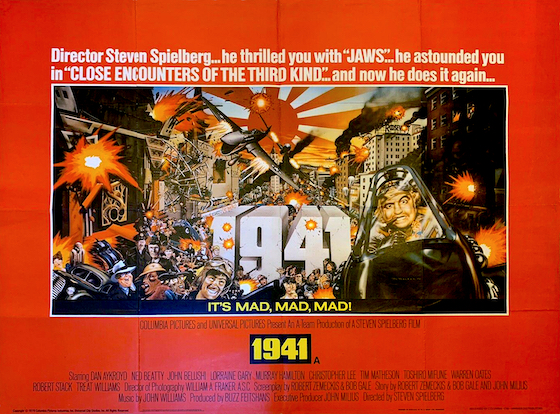
  • 1941 (1979)
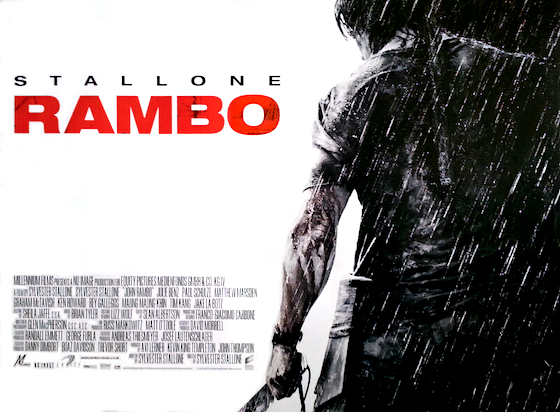
  • Rambo (2008)


    Happy New Year, Colin Burstead
    (2018)

    2019 #1
    Ben Wheatley | 89 mins | digital (HD) | 2.39:1 | UK / English | 15

    Happy New Year, Colin Burstead

    Writer-director Ben Wheatley leaves behind the murderous themes that have characterised his feature output to instead portray a family drama that plays like an art house EastEnders. Put another way, it’s about an extended family spending most of their time arguing about things they have or haven’t done to each other, but it’s really slow and frequently abstruse.

    I guess Wheatley has his fans, and I know he has his detractors, but I find every one of his movies a crapshoot: sometimes I think they’re pretty great, sometimes interminable, sometimes floating somewhere in between. Colin Burstead is definitely at the negative end of the spectrum — way down that end, in fact. Unlike other Wheatley films I’ve not liked, this has little to commend it: none of the pretty cinematography or nods to social satire of High-Rise; none of the mood or editing trickery of A Field in England. The visuals are little better than a home movie; the editing is… random. And I mean that literally: sometimes shots from other scenes drop in for no apparent reason, never mind the senseless intercutting that goes on regularly.

    I guess Wheatley was going for some kind of Robert Altman thing, with all the characters and their own storylines and the way they’re intercut and the dialogue overlaps. But there’s no mastery of that form apparent here, and certainly no story worth applying it too. Even at under 90 minutes, it feels like it goes on forever. It’s that most damnable of things: boring.

    1 out of 5

    Happy New Year, Colin Burstead featured on my list of The Five Worst Films I Saw in 2018.

    Cool Hand Luke
    (1967)

    2019 #2
    Stuart Rosenberg | 122 mins | digital (HD) | 16:9 | USA / English | 15

    Cool Hand Luke

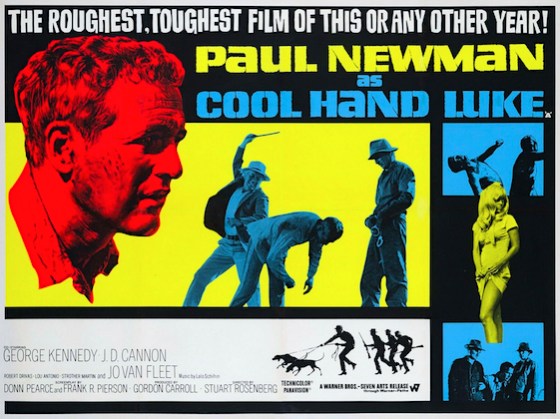
    When petty criminal Luke Jackson is sentenced to two years in a Florida chain gang, he doesn’t play by the rules of either the sadistic warden or the resident heavy, Dragline. As he becomes a rebel hero to his fellow convicts and a thorn in the side of the prison officers, the latter actively work to crush Luke until he finally breaks… — adapted from IMDb

    The thing that most surprised me — or, at least, struck me — about Cool Hand Luke was how similar it felt to One Flew Over the Cuckoo’s Nest (of course, that film came out eight years after this one, so if there is a chain of influence it flows in the other direction). They’re about different kinds of institution, but the vibe of the piece — a new against-the-grain inmate riling up the others to provoke the oppressive authority figures who control them — is very similar. They also have a similar comedic/dramatic mix of tones for most of the runtime, before both ending with a calamitous finale.

    If Cool Hand Luke feels a bit less dark overall, it’s probably because its leading man is the immensely charming Paul Newman, versus Jack Nicholson in Cuckoo’s Nest — he’s charming in his own way, but it’s definitely a cockeyed kinda likeability, with an undercurrent that things might go bad at any moment. Not that Cool Hand Luke is lacking in threatening atmosphere, with the abusive ills of the chain gang system ever-present.

    4 out of 5

    Cool Hand Luke was viewed as part of What Do You Mean You Haven’t Seen…? 2019.

    1941
    (1979)

    2019 #4
    Steven Spielberg | 119 mins | Blu-ray | 2.35:1 | USA / English, Japanese & German | 12 / PG

    1941

    From 1975 until the end of the ’80s, director Steven Spielberg had a truly extraordinary run of movies: Jaws, Close Encounters of the Third Kind, Raiders of the Lost Ark, E.T. the Extra-Terrestrial, Indiana Jones and the Temple of Doom, The Color Purple, Empire of the Sun, Indiana Jones and the last Crusade — every one of them an era-defining box office hit and/or a multi-Oscar-nominee. Except that list overlooks one dud: 1941. That’s how the majority see it, anyway, but it does have something of a cult following (and apparently “the Europeans love it”, or so Spielberg claims in an accompanying documentary).

    Personally, as is so often the case, I fall somewhere between these two stools. Spielberg signals his tonal intention from the off, beginning with an outright spoof of the famous opening to Jaws, the film that had made his name just a few years earlier. After that, 1941 unfolds almost like a sketch show, through a series of comedic vignettes; though it’s more like binge-watching a whole series of a sketch show, because there’s also a series of running plot lines. And just like a sketch show, the quality varies wildly from bit to bit. I felt like it took a long time to really get going, and then it felt like it was going on forever, but I actually warmed to its barminess in the end. Even if it’s weak overall, there are some very good sequences — the dance competition-cum-chase is a particular highlight. There’s a ton of special effects at the climax which look spectacular, too — you can always rely on Spielberg to pull off a good-looking, technically-excellent movie.

    In later years, Spielberg has admitted his hubris and arrogance (coming off the massive double success of Jaws and Close Encounters) hindered the film, which he thinks should’ve been funnier. Nonetheless, he’s still proud of it — indeed, when he was given the chance to restore his original two-and-a-half-hour director’s cut (Columbia and Universal had cut the original release against his wishes, fearing for its commercial potential), he took that opportunity. Some day, I’ll have to give the longer cut a go. I presume it can’t be any more consistent, but maybe there are some extra laughs…

    3 out of 5

    Rambo
    (2008)

    2019 #5
    Sylvester Stallone | 92 mins | Blu-ray | 2.35:1 | USA & Germany / English, Burmese & Thai | 18 / R

    Rambo

    In Thailand, John Rambo joins a group of mercenaries to venture into war-torn Burma and rescue a group of Christian aid workers who were kidnapped by a ruthless local infantry unit.IMDb

    Despite the blunt title, Rambo is not a reboot of the Rambo series. Nor is it quite a Jason Bourne-style “let’s just use his name this time”, because there’s already kinda been a film called Rambo — it was the second one. And, of course, people tend to just call the first one Rambo, despite that not being its title at all. So maybe let’s not get hung up on the naming of Rambo movies (though if anyone ever says “I really enjoyed that one movie, Rambo,” you’re probably going to have to ask for clarification).

    Despite being an OTT action series, Rambo has a habit of getting involved in real-life conflicts: the first one spun out of Vietnam; the second was concerned with an issue from that conflict’s fallout; and the third saw him stick his oar into Afghanistan. Using real-world geopolitics as an excuse for a brutal action movie is the kind of thing some people will always find distasteful, but at least Rambo seems to have its heart more in the right place than First Blood Part II or Rambo III did. In fact, the film was banned by the rulers in Burma, but was widely bootlegged by resistance fighters, who loved it and adopted phrases from it as mantras. So you can say it was distasteful to the real political situation if you like, but the people actually embroiled in it clearly felt differently. And David Morrell, the author of the original First Blood novel (who has proven quite happy to criticise a Rambo movie), was “pleased” with this one: “the level of violence might not be for everyone, but it has a serious intent. This is the first time that the tone of my novel First Blood has been used in any of the movies. It’s spot-on in terms of how I imagined the character — angry, burned-out, and filled with self-disgust because Rambo hates what he is and yet knows it’s the only thing he does well.”

    Big fucking gun

    Oh yes, “the violence may not be for everyone”, because, oh boy, it really is brutal! Blood and body parts explode all over the damn place. But the film invests a lot of effort in making sure you know these bad guys really, really deserve it — mainly by showing them to be brutal bastards themselves, committing nasty war crimes in the film’s first half. At one point during the bloodbath climax, they employ artillery so heavy it takes off heads with a single shot. That’s used to kill every bad guy on a gunboat… and then they blow the boat up with a rocket launcher, for good measure. It’s not quite as ridiculous as that time Rambo used an explosive-tipped arrow to kill one man, but it’s getting there.

    A couple of years after the film’s release, Stallone put together a Director’s Cut that reportedly pulls back on some of the violence and adds more character-centric scenes. I don’t know if that would make the film better — I feel like the balance is pretty good right now. Maybe a little heavy on the brutality, sure, but I can’t see how a movie like this needs much more character stuff than it already has. It’s really well paced as it stands: it manages to not feel in a rush, while also not feeling slow; and once the men are properly on their mission, it’s almost relentless without being breathless. It makes for a very smooth, fast 90 minutes.

    4 out of 5

  • Blindspot 2021: What do you mean you haven’t seen…?

    Now that all my “looking back at 2020” posts are done, it’s time to start the first full week of 2021 wi— sorry, what? Second week? Where did the first one go?! Alright, well, it’ll have to do. So, dragging myself belatedly into the same year as everyone else, it’s time to present my Blindspot picks for 2021.

    The Blindspot challenge (for the benefit of those still unfamiliar with it) involves choosing 12 films you should have seen but haven’t, then watching one a month throughout the year. I started doing this eight years ago, calling it “What Do You Mean You Haven’t Seen…?” (WDYMYHS for short), but then someone else came up with the same idea independently and gave it a much snappier moniker, and that caught on.

    My 12 films for this year are below in alphabetical order. After that there’s a few stats, and then I’ll explain how and why I chose them.


    Aguirre,
    Wrath of God
    Aguirre, Wrath of God


    The Birth of a Nation
    The Birth of a Nation


    Cinema Paradiso
    Cinema Paradiso


    Come and See
    Come and See


    La Dolce Vita
    La Dolce Vita


    Frankenstein
    Frankenstein


    La Haine
    La Haine


    The Life and Death
    of Colonel Blimp
    The Life and Death of Colonel Blimp


    Pather Panchali
    Pather Panchali


    Rain Man
    Rain Man


    Sansho Dayu
    Sansho Dayu


    Sátántangó
    Sátántangó

    Here’s a few stats about this year’s list…

  • The average running time of the films is 2 hours 36 minutes. Yes, that’s the average. While the shortest film, Frankenstein, runs a measly 1 hour 10 minutes, there are only two others below the two-hour mark, and four that run over 2½ hours. And the longest, Sátántangó, is a whopping 7 hours 19 minutes — that’s longer than six Frankensteins.
  • There’s a spread of exactly 80 years between the oldest film (1915’s The Birth of a Nation) and the newest (1995’s La Haine). Of course, that means the most recent film here is over a quarter of a century old…
  • Exactly eight decades are represented, too. The most prolific is, amusingly enough, the ’80s, with three films. The ’50s and ’90s have two each, and there’s one apiece from the 1910s, ’30s, ’40s, ’60s, and ’70s.
  • The films come from nine countries: three from the USA, two from Italy, with the rest being from France, Germany, Hungary, India, Japan, the Soviet Union, and the UK.
  • There are eight different main languages spoken, plus one silent film. English is the most common with three films, two are in Italian, and the rest encompass Bengali, French, German, Hungarian, Japanese, and Russian.
  • Six of the films are from directors who I’ve never seen a feature from before. They are D.W. Griffith, Werner Herzog, Elem Klimov, Satyajit Ray, Béla Tarr, and Giuseppe Tornatore. (I have seen a short by Griffith before, but this is his first feature for me.)

    I tend to mix up my method for choosing films each year, but for 2021 I’ve retained one thing from last year — itself a legacy of the couple of years where I did two 12-film lists — and that’s to have six films ‘chosen for me’ via a consensus ranking of various “greatest movie” lists, and then to choose the other six myself from my massive unwatched disc pile. Inevitably, the latter seems to get influenced by films that piqued my interest in the former, but, eh, why not? (If you fancy a challenge, feel free to guess which six films belong to which selection process. Answers coming up.)

    The lists that contribute to the “poll of polls” selection can only be varied so much. I mean, there are probably thousands of such lists out there, but there are only a handful that are well known and respected (to one degree or another), and so I tend to use a lot of the same ones every year. You might think that makes which films appear a foregone conclusion — surely they’re the ones that narrowly missed out last year? — but things do change on some of these lists. For example, when I chose last year’s selection, Come and See was ranked 7th on Letterboxd; this year, it’s 2nd. That’s not an insignificant change: when I’m combining multiple lists, a jump like that at the top of a list could be the difference between inclusion and not quite making it. Besides, I do vary my lists and how I count them every year, precisely so as to keep things slightly unknowable.

    This year’s contributing lists were:

  • Letterboxd’s Official Top 250 Narrative Feature Films
  • IMDb’s Top Rated Movies (aka the IMDb Top 250)
  • the Reddit Top 250
  • Empire’s The 500 Greatest Movies of All Time (aka the Empire 500)
  • Empire’s The 100 Best Films of World Cinema
  • Sight & Sound’s 2012 poll, using the 250-film version listed on Letterboxd (the official list only goes to 100)

    A notable absentee this year is They Shoot Pictures, Don’t They?’s The 1,000 Greatest Films, itself a “poll of polls” that is therefore one of, if not the, definitive lists of greatest movies. That’s why I normally include it, and that normality is why I didn’t this year: it’s gone just for the sake of a change. In its place (sort of) is the Empire World Cinema list. It’s shorter than the others, so under my scoring system (which I’ll explain in a moment) it contributed somewhat less than the other lists. That means it served to tweak which foreign films got in, rather than acting to wipe out US/UK films — although, as it turns out, no US films made it through that way.

    So, each poll was scored out of 250 (250 points for 1st place, 249 for 2nd, etc), except the Empire World Cinema one, which was out of 100. Any film beyond 251st place on the Empire 500 earnt one point; and there were 10 additional points for each list a film appeared on (i.e. every film got 10 bonus points, because every film had to be on one list; but if it was on two it got 20, etc.) The full chart ended up including 230 films — that’s everything I hadn’t seen from the Letterboxd, IMDb, Reddit, and Empire World Cinema lists, plus those from the top 150 on Sight & Sound and the Empire 500 (by the time I got to those, I figured any films further down that weren’t on another list didn’t stand a chance; of course, I did include their rankings for all films that were on another list). Further to the plain scores, I also applied other rules — “no repeat directors” is the main one. I used to limit myself to films I already own, but not anymore; and I try to ensure variety in the kinds of films included, to get a spread of ages, countries, genres, etc.

    With all that considered, I think this is the first year I’ve simply accepted the films at the top of the chart without having to eliminate any. The only film to appear on all six lists was Come and See, so perhaps it’s no surprise that it came first with 810 points. Mind you, only one film appeared on five lists (Paris, Texas) and that came 17th, so being on fewer lists with higher ranks could beat merely appearing on many lists. In second place was La Dolce Vita with 647 points; third was Cinema Paradiso with 510; fourth was Pather Panchali with 502; fifth was Sátántangó with 461; and in sixth, just behind it with 460, was The Life and Death of Colonel Blimp. Regular readers (or those who’ve clicked and read some of the links in this article) may remember that Come and See and Sátántangó both qualified for the 2020 list, but were removed because new restorations were on the way. Those have now materialised: Come and See on a Criterion disc that I imported, and Sátántangó on very different UK and US discs (it’s also available to rent digitally, which is how I intend to view it).

    As for my ‘free choice’ films, three have a spot on that consensus ranking. They were La Haine (13th, 413 points), Sansho Dayu (16th, 398 points), and Aguirre, Wrath of God (38th, 262 points). You’ll note that none of those films are American, and so my only three picks that are not on the consensus ranking (The Birth of a Nation, Frankenstein, and Rain Man) are also my only three US films. Make of that what you will.

    I’ve spent most of 2021 so far working towards one self-imposed deadline after another, to get all of these end of year/new year posts done, so now I’m looking forward to catching up on other blogs — and actually watching some films!

  • The Best of 2020

    And so, we reach the end of 2020.

    I don’t know about you, but this feels like a, “what, already?!” moment to me. Putting my year-in-review posts together used to seem to take ages, but this year it feels like I’ve barely begun and now it’s over. But that’s enough about my subjective perception of time — let’s talk about movies in 2020, like Tenet, which is partly about… um, never mind.

    This final year-in-review post does what it says on the tin: it’s a list of my favourite films that I saw in 2020 (normally my least-favourites would be here too, but I did those already). A note for newcomers and/or reminder to the forgetful: rather than just 2020 releases, I select my list from all 264 movies I saw for the first time during 2020. That’s partly because there are tonnes of new releases that I never see in time — which is also why this post contains a list of 50 significant films I missed.

    Compiling this year’s lists has taken a lot of thinking, rearranging, cutting, reflecting, re-adding, re-rearranging, and a certain amount of “oh, that’ll do, what does it matter anyway” to actually get them out the door. Here’s what I ended up with…


    The 26 Best Films I Saw For the First Time in 2020

    Since 2016, I’ve replaced the usual “top ten” with a “top 10%”. As I watched 264 films in 2020, that means this year’s list has 26 films. (If you think that’s too many, feel free to scroll down and start from wherever you like.)

    Although all the movies I watched for the first time in 2020 are eligible, I did watch 57 films that had their UK release in 2020, so I’ve noted the ‘2020 rank’ of the eight that made it in. (I also saw a couple of 2020-UK-release films at FilmBath Festival in 2019. As they were already ranked as 2019, I’ve not factored them in here.)

    26 Klaus

    The animation is absolutely gorgeous in this Oscar-nominated BAFTA-winning Netflix original about a disaffected postman who helps originate the legend of Santa.

    25 The Looking Glass War
    The mundanity of real-life espionage; conflicted morals; the futility of the whole thing — this John le Carré adaptation is full of all the things that made his work so great.

    24 Dial M for Murder

    As intelligent and tense a thriller as you’d expect from Hitchcock; so good it even manages to make you overlook its obvious stage-bound roots. Superb in 3D, too.

    23 The Invisible Man
    2020 #8 This #MeToo-era reimagining of the HG Wells / Universal Horror classic could hardly be more timely. But even leaving that aside, it’s a chilling exercise in ratcheting tension.

    From its astounding opening to its hard-hitting final act, Last Black Man is an astonishing cinematic experience about the stories we tell ourselves about ourselves. [Full review.]

    A space ship full of colonists is sent irretrievably off course in this Scandi sci-fi that’s driven by big ideas about human behaviour in extremis. [Full review.]

    William Holden and Audrey Hepburn are clearly having a whale of a time in this marvellously cine-literate ’60s romp about a struggling screenwriter. [Full review.]

    19 Philomena
    Judi Dench is extraordinary and Steve Coogan is a revelation in this intensely affecting drama about a wronged woman searching for her son who was taken decades earlier.

    18 Fanny and Alexander

    Ingmar Bergman described this as “the sum total of [his] life as a filmmaker”. Blending familial drama with a dash of magical realism and the supernatural, it’s a masterful work.

    17 Belladonna of Sadness
    Delicate watercolour artwork and medieval folklore smash against a storyline fuelled by rape and a penis-shaped devil in this astonishing animation full of psychedelic imagery and experimental music. I’ve never seen anything quite like it.

    2020 #7 It’s “Agatha Christie meets the Coen brothers in a nudist camp” as the eponymous handyman searches for his missing hammer in a world full of wobbly bits, where anyone might’ve taken it. [Full review.]

    15 Tenet
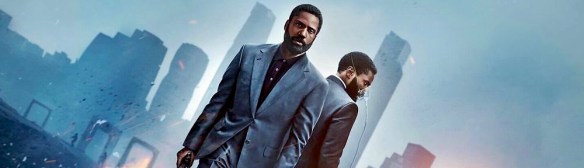
    2020 #6 If you let go of the need to fully understand the mechanics of the film’s time-reversal conceit, Christopher Nolan’s latest is an audacious and exciting spy thriller. It’s a shame real-world arguments have come to overshadow what is actually a suitably thrilling spectacle.

    14 Soul

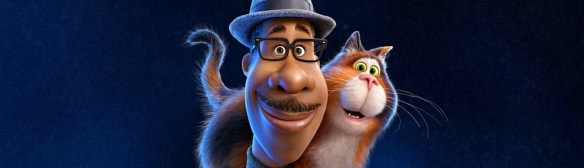
    2020 #5 Pixar have often been praised for making films for grown-ups. That’s not something I’d wholly agree with, until now. Not as cutesy as the rest of their output (largely), Soul asks big questions about what makes us who we are. All wrapped up in a buddy-quest storyline, of course.

    Rian Johnson’s tribute to whodunnits a la Agatha Christie pulls off something that genre can’t always manage: rewatchability. It barely matters who actually dunnit when it’s this much fun spending time with the outrageous suspects and Daniel Craig’s implausibly-accented detective. [Full review.]

    12 The Old Dark House

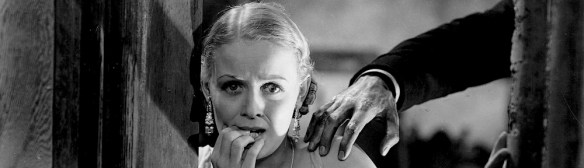
    As amusing as a droll comedy and as atmospheric as a creepy old-school horror, James “director of Frankenstein” Whale’s genre classic is just a lot of fun.

    If this anime were live-action, it would be an action-adventure blockbuster. It’s got it all: thrills, humour, emotion, wonder… That makes it so accessible, it would be a perfect starting point for any Westerner new to anime. [Full review.]

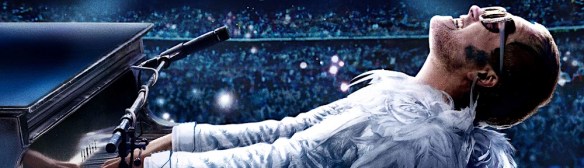
    Taron Egerton stars as Elton John for this unusual biopic of the singer. Part traditional musician biopic, part jukebox musical, director Dexter Fletcher remixes John’s music into some imaginatively staged sequences, while Egerton and his supporting cast (in particular Jamie Bell) give thoughtful, nuanced performances. The cumulative effect is a movie that is highly enjoyable but not without depth. [Full review.]

    9
    The Lady Vanishes

    Alfred Hitchcock is probably most renowned for his Hollywood movies (Pyscho, Vertigo, Rear Window, etc), but we shouldn’t forget his British output — these are the films that got him Hollywood’s attention, after all. The director’s second appearance on this year’s list is one of the last films he made before that jump across the pond. It’s a mystery thriller about an old lady who somehow disappears from a moving train, and a couple of youngsters who try to find out how and why. It’s witty, it’s clever, and it’s exciting — all the things for which Hitch is best known.

    8
    Judgment at Nuremberg

    This fictionalised account of the military tribunals that took place following the Second World War sets its sights not on the trials of major Nazi leaders, but on the subsequent trials that assessed the guilt of people further down the chain — here, four judges and prosecutors who helped facilitate the Nazi’s crimes. For such weighty material, this is an appropriately weighty film — a long, complex, methodical, harrowing account. Boldly directed by Stanley Kramer, and with an incredible cast all giving first-rate performances, this remains a powerful, brilliant film.

    7
    Tim’s Vermeer

    Computer graphics pioneer and inventor Tim Jenison is an art enthusiast, fascinated by the work of Dutch master Johannes Vermeer, in whose work his engineer’s brain sees a near-impossible photographic accuracy. So, he sets out to prove and expound upon existing theories that Vermeer painted with the aid of some kind of optical device. What unfolds is an astonishing story of obsession, dedication, and art historiography, which challenges your idea of where the line lies between art and technology.

    2020 #4 Sam Mendes’s single-take(-kinda) World War One adventure ended up losing many of the big prizes to Parasite last awards season (FYI, they both count as 2020 films here due to UK release dates in January and February, respectively). But that doesn’t mean it’s any less of an extraordinary experience. I love a long single take (fake or not), and I love stories that unfold in real-time, and I feel World War One has been under-represented on screen — so when Mendes takes all of those things and executes them brilliantly (having Roger Deakins on cinematography helps), you get a film that’s right up my street. [Full review.]

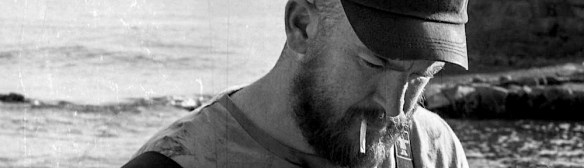
    If 1917 uses all the skills of modern tech to craft an almost old-fashioned epic, Bait is practically the polar opposite: old-school techniques (a wind-up camera; hand-developed 16mm film; post-sync sound) to tell a very modern story (broadly, about the economic plight of Cornish fishermen). It could be pretentiously arthouse or an insufferable polemic, but it’s neither. Instead, the story is told with genuine heart, drama, and humour, and the handmade aesthetic adds an appreciable, beautiful texture. [Full review.]

    4
    Parasite

    2020 #3 If you use Letterboxd, the latest film from acclaimed South Korean director Bong Joon Ho comes with a heavy millstone round its neck: according to that site’s users, it’s the greatest film ever made. Like Citizen Kane before it, such a label can be a distraction, and makes some people want to push back against it (is that why I’ve only ranked it at #4? You decide). “Best film ever” or not, the first non-English-language film to win the Best Picture Oscar is a timely deconstruction of class systems — just who are the eponymous parasites, actually? Even aside from big societal questions, it’s a thrilling piece of filmmaking; tense, exciting, and surprising.

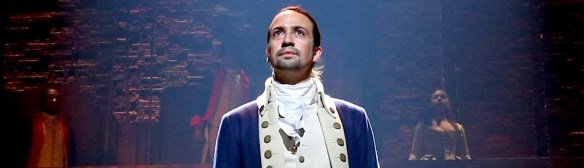
    2020 #2 Can a filmed stage production be the year’s best film? Um… Well, that’s a major reason why Hamilton is in 3rd place for my 2020 viewing and 2nd place for 2020 releases: it’s not really a film, right? Well, it’s definitely some kind of historical record — not of the life of Alexander Hamilton, but of a theatre production that took the world by storm. Here we get to witness the original Broadway cast in the show’s original staging, allowing us all the chance to witness a genuine cultural phenomenon first-hand. But this is not merely a couple of cameras plonked into the audience for the sake of posterity: director Thomas Kail users multiple cinematic techniques to make a film that truly feels like a film. Yes, it’s still theatrical, but it feels like this is how this story is meant to be (cf. something like Dogville: also very theatrical; also definitely a film). Theatres will reopen and we’ll be able to see Hamilton in the flesh again; and someday they’ll inevitably make a ‘real’ movie adaptation; and even still, this film will stand as a legitimate, magnificent experience in its own right. [Full review.]

    2020 #1 Writer-director Eliza Hittman’s story of a Pennsylvanian teenager forced to travel to New York for an abortion is told with documentary-like subtlety and understatement, but the result is incredibly moving and powerful. Without ever explicitly stating it, the film is an eloquent condemnation of US systems that force poor and struggling individuals to jump through hoops to access care that those of us in the rest of the developed world might consider basic rights. It’s a potent reminder that, for all its claims of being a highly-developed world-leader, for many of its citizens the US is as regressive, prejudiced, and unequal as the ‘Third World’ countries it so often seeks to demonise. [Full review.]

    1
    Do the Right Thing

    If there’s one feature that links many films on this year’s list, it’s timeliness: films that connect with some of the big sociopolitical issues of our day. Do the Right Thing was made over 30 years ago, but in its subject matter — a stiflingly hot day in a Brooklyn neighbourhood causes tensions to boil over into white-on-black violence — it could scarcely be more 2020. But this is not about “which film best encapsulates the year”, and so Spike Lee’s film tops my list because of all its other qualities, too. It’s a portrait of a place; a day-in-the-life hangout movie, where we follow myriad characters as they go about their business; 90-or-so minutes in which we get to understand the neighbourhood, to know its inhabitants… before the powder keg explodes and everything changes. Except, as we now know, nothing’s really changed at all.


    As usual, I’d just like to highlight a few other films.

    First, the cinematic masterpiece that is Love on a Leash. If you’re unfamiliar with this feat of cinematic excellence, may I recommend my review. It’s not exactly #27, because at various points while curating my list I had it in the top ten, the top twenty, in 26th place… but, eventually, not in the list at all. As I discussed in my review, it’s a film that’s hard to categorise: it’s simultaneously a one-star disaster and a five-star artistic experience. It’s an object lesson in why criticism of art can never be objective, because it’s unquestionable that it’s terribly made in every respect, and yet it’s nonstop entertaining, even thought-provoking, and certainly unique. (Of course, some people would say it’s objectively bad. Those people are wrong.)

    I’m someone who believes “best” and “favourite” can be different things: in 2020, I saw some movies I would acknowledge as great but that didn’t make the Top 26 because they didn’t really entertain me; equally, some films got in that are indeed great but I may never rewatch, whereas I left out simpler fare that I’m sure I’ll revisit. In a ranking of the “best” films I saw this year, no way does Love on a Leash get close; but in terms of my “favourite” films, it might’ve been pretty damn high. My final Top 26 falls somewhere between those two stools, but does carry the “best of” name, and so it felt insulting to any other film in the list (or, indeed, to those that tried but failed to squeeze in) to rank Love on a Leash above them. So here it is instead: first among my “honourable mentions”, with two solid paragraphs dedicated to it — more than any film in the actual list. So who’s the real winner, eh?

    Next, let’s recap the 12 films that won Favourite Film of the Month at the Arbies, some of which have already been mentioned and some of which haven’t. In chronological order, with links to the relevant awards, they were Laputa: Castle in the Sky, All Quiet on the Western Front, The Lady Vanishes, Aniara, Belladonna of Sadness, Paris When It Sizzles, Hamilton, Bad Boys for Life, Fanny and Alexander, Tim’s Vermeer, An American Werewolf in London, and Klaus.

    Finally, I always list every film that earned a 5-star rating this year. It’s especially pertinent this year, given how few reviews I’ve actually posted; although, as I noted in my stats post, it’s possible some of these ratings will be revised when I come to write a full review. But, for now, the 39 films with full marks are 1917, All About Eve, All Quiet on the Western Front, An American Werewolf in London, Anand, Aniara, Bait, Belladonna of Sadness, Dial M for Murder, Do the Right Thing, E.T. the Extra-Terrestrial, Fanny and Alexander, The French Connection, Hamilton, Harakiri, I Am a Fugitive from a Chain Gang, In the Mood for Love, The Invisible Guest, Judgment at Nuremberg, Knives Out, Lady Bird, The Lady Vanishes, Laputa: Castle in the Sky, The Last Black Man in San Francisco, Little Women, The Looking Glass War, Love on a Leash, The Lunchbox, A Man for All Seasons, Man on Wire, Marriage Story, Never Rarely Sometimes Always, Parasite, Paris When It Sizzles, Philomena, Rocketman, Safety Last!, Soul, and Tim’s Vermeer. Plus, this year I also gave five stars to Mission: Impossible – Fallout in 3D, and (earmarked for the ‘Guide To’ treatment at some point) Tim Burton’s Batman and Monty Python’s Life of Brian. There were also several short films that merited the accolade, namely Flush Lou, The Last Video Store, The Monkeys on Our Backs, and The Starey Bampire.


    It may have felt like 2020 was a year bereft of movies, as blockbuster after blockbuster got kicked into 2021, but plenty of stuff still came out — both major releases that took the streaming plunge, and smaller titles that probably wouldn’t’ve seen huge theatrical box office anyway; not to mention stuff that’s going to count as 2020 due to festival screenings but won’t really be released anywhere until 2021; and, of course, all the streamers’ own original movies.

    Even though I did watch 57 movies that had a UK release in 2020, there were a considerable number I missed. So, as always, here’s an alphabetical list of 50 films from 2020 that I’ve not yet seen. (I normally use IMDb’s dating to decide what’s eligible for inclusion, but I’ve allowed a handful that are listed as 2019 only because of festival screenings.) These have been chosen for a variety of reasons, from box office success to critical acclaim via simple notoriety. There are many more I want to see that I could have included, but I always attempt to feature a spread of styles and genres, successes and failures.

    Another Round
    Da 5 Bloods
    The Hunt
    The New Mutants
    Promising Young Woman
    WolfWalkers
    Bill & Ted Face the Music
    The Eight Hundred
    I'm Thinking of Ending Things
    Nomadland
    Rebecca
    Wonder Woman 1984
    An American Pickle
    Ammonite
    Another Round
    Artemis Fowl
    Bill & Ted Face the Music
    The Call of the Wild
    Da 5 Bloods
    David Byrne’s American Utopia
    The Devil All the Time
    Dolittle
    The Eight Hundred
    The Father
    The Gentlemen
    The Half of It
    Happiest Season
    Hillbilly Elegy
    Host
    The Hunt
    I’m Thinking of Ending Things
    Kajillionaire
    The King of Staten Island
    Ma Rainey’s Black Bottom
    Mank
    The Midnight Sky
    Military Wives
    Minari
    Miss Juneteenth
    Mulan
    My Spy
    The New Mutants
    News of the World
    Nomadland
    One Night in Miami…
    Onward
    Peninsula
    Possessor
    Promising Young Woman
    Rebecca
    Saint Maud
    Scoob!
    The Secret Garden
    Shirley
    The Social Dilemma
    Sonic the Hedgehog
    Supernova
    The Trial of the Chicago 7
    True History of the Kelly Gang
    The Witches
    WolfWalkers
    Wonder Woman 1984


    And that is 2020 over and done with — hurrah!

    Ignoring for a moment all the news that’s currently telling us how 2021 will be just as bad, if not worse, one thing to look forward to is that it’s my 15th year writing this blog. 15 years! I feel old… The actual date of the blog’s 15th birthday is at the end of February 2022, so I’ve got a little time yet to prepare some kind of celebration.

    In the meantime, let’s watch some more films…

    The Worst of 2020

    “All of it,” I hear you cry. Yes, ok, ha ha, very funny. Obviously I’m specifically talking about the worst films of 2020.

    Regular readers will know I normally include this list in my “best of” post — a sort of counterbalance to any chance of relentless positivity; a reminder that, for all the smooth, there’s always some rough. Maybe we don’t need that kind of thing for 2020, but tradition is tradition. Of course, putting this list in its own post is some kind of break with tradition anyway. But the reason is simple: I’m still working on my “best of” list — it’s a long’un, being 10% of my total viewing, and this being my biggest year ever. That also means the “best of” post will be a plenty long enough read without this little dose of misery in there. So here it is by itself instead.

    A quick reminder: I select my best and worst lists from all 264 films I saw for the first time in 2020, not just new releases.


    The 5 Worst Films I Saw For the First Time in 2020

    As revealed in my stats post, I only handed out two one-star ratings this year. In retrospect, perhaps I was too generous, because to get this “worst of” selection down to just five films I had to leave out several movies that I really, really disliked. Here’s what I pared it down to, in alphabetical order…

    Hunter Killer
    This throwback-ish techno-thriller really wants to be an exciting submarine adventure in the mould of The Hunt for Red October or Crimson Tide, but it can’t rise above the level of ‘wannabe’. It’s mired with an implausible plot and bizarre casting (Gary Oldman is prominent in the marketing, but he’s barely in the film itself). It just doesn’t have the smarts to successfully emulate the Tom Clancy style it so desperately aspires to.

    Lovers Rock
    Sight & Sound ranked this the best film of 2020. Its appeal clearly isn’t limited to the arthouse crowd, because Empire ranked it 7th in their list. But I didn’t get it at all. If you told me director Steve McQueen tricked the BBC into paying for an elaborate ’80s theme party by just filming it, sticking some credits on his raw footage, and handing it over with the claim “yeah, this is a real movie — it’s got a screenplay credit and everything”, I’d believe you.

    The Man Who Sleeps
    Never mind being one of the best films of the year — this was ranked as one of the 250 best films of all time by Letterboxd users. It’s dropped off that list now, but not before I bothered to watch it, unfortunately. Like Lovers Rock, it’s a crushing bore; 70-something minutes spent watching a man do virtually nothing. Un homme qui dort? More like Un homme qui t’endort. [Full review]

    Some Beasts
    A family’s trip to a remote island goes awry when interpersonal tensions overflow into arguments and abuse. It’s a bit slow and self-consciously arty, but that’s not its real sin. That comes in the final 20 minutes, when it throws in an extreme plot development with no time — nor, I think, inclination — to responsibly engage with its consequences. I’m loathe to call any film “offensive”, but this probably comes the closest of anything I’ve seen. [Full review]

    Superman IV: The Quest for Peace
    Superman: The Movie still stands up as one of the greatest superhero movies ever made. Its sequels show you how a franchise can die. 2 and 3 are bad enough, but The Quest for Peace is by far the worst — a joyless anti-nuclear polemic, with low production values and iffy storytelling. The only bright spots are the talented returning cast, but they’re better appreciated by just rewatching the first one again. [Full review]


    The 26 best films I saw for the first time in 2020.