The 100-Week Roundup VII

If I were being slavishly accurate about weeks, there should be seven films in this roundup. But that seemed a bit much, so — as the next one of these wasn’t due until the end of the month — I’ve split it in two.

In this roundup, the final films I watched in July 2018.…

  • The Garden of Words (2013)
  • The Secret in Their Eyes (2009)
  • Paul (2011)
  • The Way of the Gun (2000)


    The Garden of Words
    (2013)

    aka Koto no ha no niwa

    2018 #170
    Makoto Shinkai | 46 mins | streaming (HD) | 16:9 | Japan / Japanese | 12

    The Garden of Words

    If the only anime director’s name you know is Hayao Miyazaki, you could do worse than familiarise yourself with Makoto Shinkai, director of recent popular hits Your Name and Weathering with You. He’d already been gaining attention with the films he made before those, which include short feature The Garden of Words.

    It revolves around two individuals: a 15-year-old schoolboy who aspires to be a shoemaker, and a 27-year-old woman. They meet one day in a park during a rainstorm and develop a connection. According to Shinkai, the film is a love story between two people “who feel lonely or incomplete in their social relations, but who don’t feel that they need to fix this loneliness.” That’s an interesting perspective, because while there’s undoubtedly a significant element of loneliness in the film, it’s accompanied by an element of depression; that these two characters seem unfilled. Without wanting to spoil anything, it seems to be the connection between the two that ‘saves’ them and elevates their lives — i.e. they did need to fix their loneliness. Perhaps it’s a disconnect between intention and execution that led me note that “where it ends up going isn’t as good as where it begins”. Nonetheless, the characters are engaging, and their emotional turmoil and connection are affecting. It also leaves room for personal interpretation with an open ending — it does reach a conclusion of sorts, but there’s clearly space the viewer to imagine what comes next.

    The animation is simply stunning — both beautiful in itself, and in its technical accomplishment. For that reason, if given the choice, it might be tempting to opt for an English dub, but I’d advise to stick with the original Japanese. I’ve written before about how I’m regularly conflicted when watching anime about whether to go for the original Japanese or an English dub, and I do often I go for the latter — I must admit I’m swayed by the recognisable voice casts on Ghibli films, for example; and, generally speaking, it allows you to appreciate the visuals more when you’re not having to read a lot of subtitles. Nonetheless, this time I chose the Japanese audio, and I’m glad I did: it’s subtle and calm, like the film itself, and the quietness and gentle pace mean there’s not an overabundance of distracting reading (unlike in Your Name, for example). I popped on a bit of the American dub afterwards and it felt all wrong by comparison — somehow brash and decidedly inauthentic. On the bright side, either track sounds luscious in 5.1, with the rain falling all around you, which serves to really immerse the viewer in the situation alongside the characters.

    4 out of 5

    The Secret in Their Eyes
    (2009)

    aka El secreto de sus ojos

    2018 #171
    Juan José Campanella | 129 mins | download (HD) | 2.35:1 | Argentina & Spain / Spanish | 18 / R
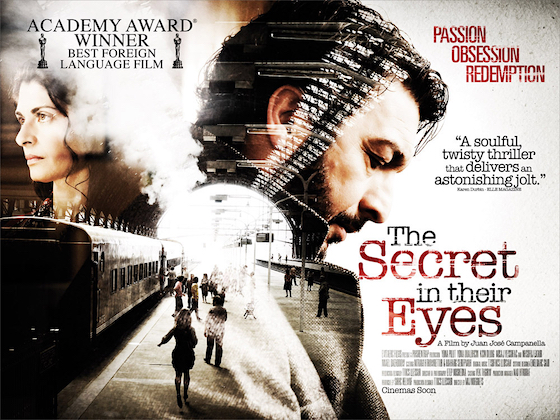
    The Secret in Their Eyes

    A surprise winner of the Best Foreign Language Oscar in 2010 (it beat A Prophet and Michael Haneke’s The White Ribbon), Argentina’s The Secret in Their Eyes is a murder mystery, two very different love stories, and a musing on the nature of justice, especially within a corrupt system.

    Primarily, it’s a procedural thriller about a decades-old unsolved case that one of the original investigators is revisiting in the hopes of finding closure. As that, I thought the film was probably a bit too long — despite some solid thematic weight, the unnecessarily slow pace at times make it feel a smidge self-important for what is fundamentally a crime thriller. That said, those other facets that have been added to supplement the storyline — the romance side; the passage of time (how do people deal with such life-changing events over the ensuing decades?) — do bring something to the film, elevating it beyond standard police procedural fare.

    Even as ‘just’ that, it pulls off some spectacular feats: the famous single-take at the football match really is an all-timer, and the final twist is unexpected and a perfect capper. I was this close to giving it full marks, and maybe when I revisit it someday I will.

    4 out of 5

    Paul
    Extended Edition
    (2011)

    2018 #172
    Greg Mottle | 109 mins | Blu-ray | 2.35:1 | UK & USA / English & Klingon | 15
    Paul

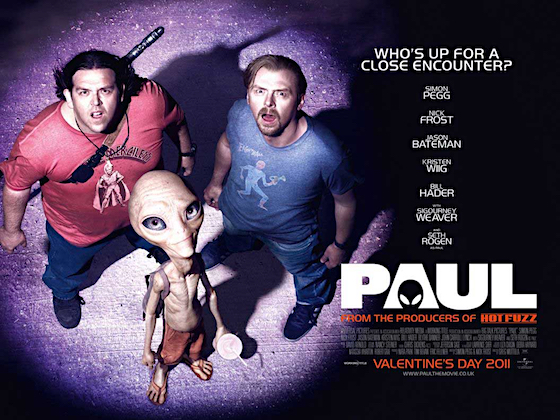
    On a post-ComicCon road trip around the US’s UFO heartland, a pair of British geeks (Simon Pegg and Nick Frost) bump into an actual alien, the eponymous Paul (Seth Rogen), who’s on the run from a government facility. Cue a kind of “E.T. for grownups” as the trio — and a widening assortment of supporting characters — endeavour to evade the authorities and get Paul home.

    Mistaken by some for the third part of the Three Flavours Cornetto trilogy (thanks to it starring Pegg and Frost, but it’s missing the vital ingredient of director Edgar Wright, who was committed to Scott Pilgrim), Paul lacks the sharpness of that trilogy at its best. However, it’s full of likeability — in the characters, and of course the humour — to the point where it actually manages to get a bit emotional at the end. It’s also chock full of references and quotes for fellow geeks to spot, some of which are incredibly well-timed to have fantastic impact.

    As for the extended cut, there’s a comparison here. As usual, the theatrical cut was R-rated in the US but the extended one is unrated there, but (also as usually) I don’t think there’s anything that wouldn’t pass at R. The running time difference is about five-and-a-half minutes, but there are 41 differences crammed into that time. It seems like some fairly memorable jokes were cut and others added back — nothing earth shattering, but enough to call the extended cut the preferable one.

    4 out of 5

    The Way of the Gun
    (2000)

    2018 #173
    Christopher McQuarrie | 120 mins | Blu-ray | 16:9 | USA / English | 18 / R
    The Way of the Gun

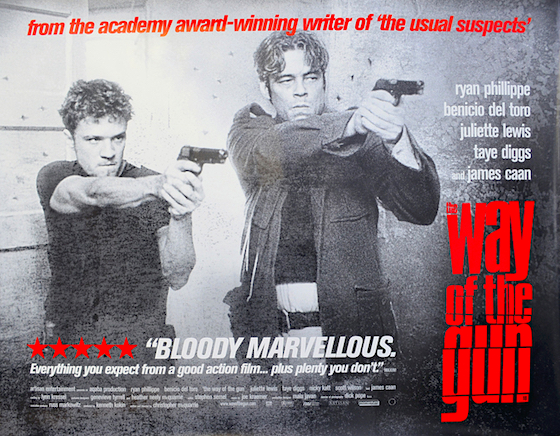
    The debut directorial feature from screenwriter Christopher McQuarrie (who made his name penning the likes of The Usual Suspects and more recently has found success as the regular writer-director of the Mission: Impossible movies), is one of those ’90s crime comedy-dramas — you know, the kind of thing we describe as “Tarantino-esque”, for good reason. It has its fans, but McQuarrie tends to refer to it disparagingly on social media, no doubt in part because it landed him in “director jail” for over a decade. Personally, I agree with McQuarrie (I usually do): it’s not a failure, but it’s not much of a success either.

    My main problem with it is that it’s over-long and over-complicated. Both of those are thanks to too many characters with too many motivations. It’s possible to get your head round it all in the end, but there’s a stretch in the middle where it feels like work. But rather than slow things down and spell it out, it might be better if it moved through them all quicker — at least then it would be pacy. It’s also rather dully shot by Dick Pope, who was later Oscar-nominated for the likes of The Illusionist and Mr. Turner, but has plied most of his trade in the grounded world of Mike Leigh movies, which perhaps explains that. There are still two or three good shots, plus a neat oner that indicates the direction McQ’s style would head.

    There are flashes of McQuarrie’s brilliance elsewhere too, including some nice bits of dialogue and a couple of good sequences. The action scenes, in particular, demonstrate he had a strong skill there from the start. They feel very grounded and real — just the way the characters move; that they’re constantly reloading; how it ends when everyone’s out of bullets. McQuarrie’s brother, a Navy SEAL, was the technical advisor for these scenes, which explains their accuracy. The final shoot-out, with all of that going on, is the best bit of the movie. Well, at least it ends on a high.

    3 out of 5

  • Hamilton (2020)

    2020 #157
    Thomas Kail | 160 mins | streaming (UHD) | 1.85:1 | USA / English | 12 / PG-13

    Hamilton on Disney+

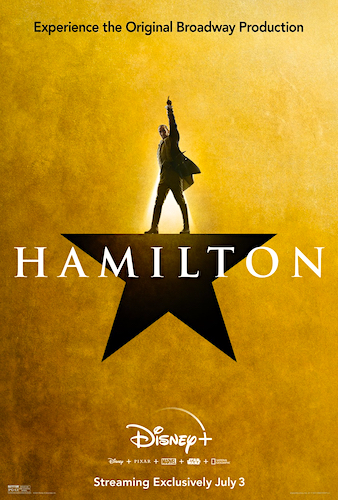
    Hamilton, the original musical, is one of the great works of art of the 21st century so far, and now we all get a chance to be in the room where it happened (provided you’re prepared to pony up some dough to Disney+) thanks to the makers having had the foresight to film a full production with the original Broadway cast back in 2016 (and then flogging that recording to Disney for $75 million).

    The show is a genuine phenomenon, but if you’ve let it pass you by, allow me to explain the basics. This is the life story of Alexander Hamilton, one of the Founding Fathers of the USA; an immigrant who fought in the War of Independence, became the first Secretary of the Treasury, and in between and around all that most assuredly lived a life — there’s friendship and rivalry; romance and infidelity; genuine triumph and heartbreaking tragedy. Here that story is told via music, written and composed by Lin-Manuel Miranda (who also portrays the title role), a fusion of hip-hop, R&B, and more traditional Broadway stylings, performed by a cast mostly made up of people of colour. It’s a tale of outsiders and immigrants and forward-thinkers who battled for the right to be recognised and respected — it’s a history lesson, but oh yeah, it’s timely.

    It premiered back in 2015, so over the past five years the praises of the original show and its successful soundtrack album (the primary medium through which most people have been able to experience the work, given the scarcity and cost of tickets) have been thoroughly sung. To briefly offer my perspective, I came to it ‘late’ — sure, I heard about it (initially thanks to references to its ticket prices), but I overlooked it as just another bit of mass-popular culture that likely didn’t have any weight or staying power. My mistake. Long story short, I finally listened to it in full in 2019 and was blown away.

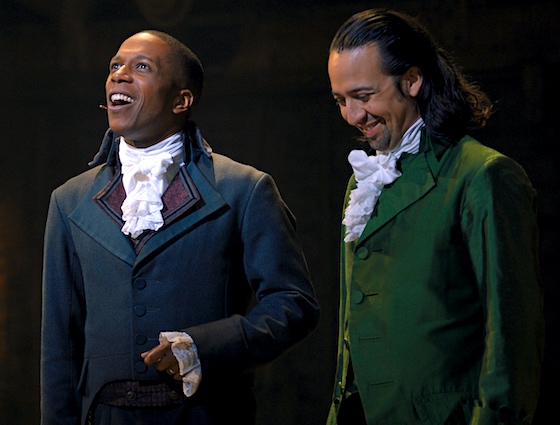
    Aaron Burr, sir

    Adjectives to describe its quality are endless. It’s densely and intelligently written, packed with historical information at every turn, abundant with sly references to other media. Its structure is sublime, laced with callbacks and nods forward from the very opening number; musical motifs repeat, as do lines and ideas, some cropping up before their real significance has been reached, like flash-forwards; elements of plot and character are echoed and mirrored. Many of these are observable first time through; others only reveal themselves with repeat visits. The characters are sharply and smartly drawn, revealing layers and nuances and different perspectives as the piece goes on — it may ostensibly be about Alexander Hamilton, but multiple other characters are at least as richly painted, if not more so. It engrosses like a thriller and packs the serious emotional punch of a finely-wrought drama, but it’s also very funny at times, with numbers as toe-tappingly addictive as a great pop song. It’s hard to think of a more complete all-round experience.

    Well, complete but for visuals if (like me) you’d never seen it performed, only listened to the soundtrack. And, you know, the soundtrack’s not a bad way to experience it — it doesn’t feel notably incomplete. Normally when you listen to a musical’s album, you just get some nice songs from the production. With Hamilton, you get (very nearly almost) the entire soundtrack, and therefore the entire story — you can follow it and not feel like you’ve missed anything. (I do wonder if that’s part of why it’s been such a success.) The lyrics and music conjure up their own imagery in your mind — certainly for me, ever since I first listened to it I’ve pictured whole chunks of it as I’d realise them in a movie version. I’m sure they’ll do a ‘proper’ film of it someday (you really think they’re going to leave all that money on the table?), but I think it’s for the best that’s not the first way I’m seeing it, because I worry it won’t live up to what I’ve concocted in my version.

    As I mentioned at the start, this isn’t a film reimagining like a normal movie musical, but rather a filmed record of the original production. It was shot over three days back in June 2016 (shortly before the original cast moved on), during a mix of live performances and in an audience-less auditorium for the sake of closeups, crane shots, etc. That’s one of the things that elevates this particular film above other recorded-theatre productions I’ve been watching recently (like One Man Two Guvnors, Danny Boyle’s Frankenstein, or the RSC’s Macbeth): whereas they have clearly been filmed live during a single performance, with all the restrictions that implies (limited camera angles; making editing choices in real-time), Hamilton has some extra remove, which has allowed director Thomas Kail to be a bit more creative.

    Looking for a film at work, work

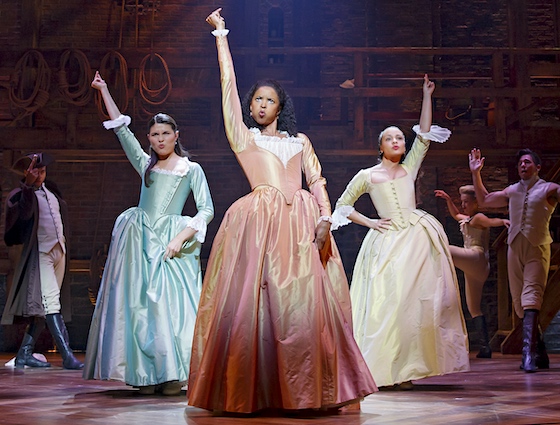
    The camerawork endeavours to add something no theatre performance could, allowing us to see details that would be missed from even the best seats in the house. Closeups let us appreciate the full spit-flecked contempt from Jonathan Groff’s George III in You’ll Be Back; the restrained emotional sacrifice injected into Angelica by Renée Elise Goldsberry during Satisfied; Eliza’s heartbroken defiance from Phillipa Soo in Burn; or the rare occasions Leslie Odom Jr. allows Aaron Burr’s true emotions to break through in the likes of Wait For It and The World Was Wide Enough. That’s not to mention the countless other moments and performers that benefit from us being able to see how much they’re giving their performances; all the subtleties they’re adding.

    At other times the camera angles show off the choreography, for example with punch-ins to highlight specific elements during stage-wide ensemble showpieces, like the rewind at the start of Satisfied, or a bird’s eye view as paper flutters in the air during The Reynolds Pamphlet. Still other scenes are reframed for our convenience, such as an exchange between Burr and Hamilton during Non-Stop that takes place upstage off to one side, but is now centred through medium shots and closeups. If all that sounds like it might serve to undermine the staging, it most certainly does not. When called for, Kail and editor Jonah Moran frequently fall back on wide angles to ensure we see the scope of what’s occurring. Only once or twice during the whole two-and-a-half hours do you feel maybe they chose a less-than-ideal angle or over-edited a sequence.

    Having said that listening to the soundtrack feels like a complete experience, watching it certainly shows what you were missing. There’s so much more to add, from little nuances of performance, to visual-only gags and callbacks, to impressive dance and staging — and if we’re already comparing this to the presumed ‘proper film’ version that will exist someday, I also presume some of that staging will be lost in the visual translation. But while there’s an undoubted “designed for the stage” aspect to the blocking or the way some things are realised, it still works on film.

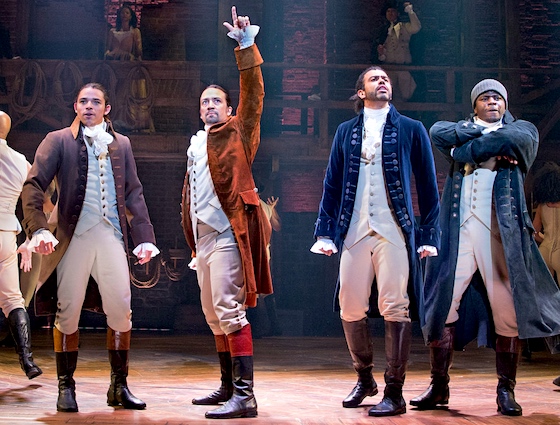
    Not throwing away their shot

    You can’t ignore that this is a film of a Broadway production — even if you wanted to, an opening subtitle reminds us it’s June 2016 in the Richard Rodgers Theatre, and the audience is frequently to be heard clapping, cheering, and laughing (mixed onto the rear speakers if you’re watching in surround sound, as you’d expect, along with a few other moments and effects that add to the experience if you can benefit from such a setup). But it’s so well staged and filmed that you can buy this as the intended experience. With those other filmed-theatre productions I mentioned, you’re often aware that what you’re watching has primarily been staged for those in the room, and that you getting to observe it from a few fixed camera positions is a nice bonus if you couldn’t be there. With Hamilton, it feels like nothing is missed; not only that, but that this is the way the story was meant to be told, complete with elements of theatrical artifice, like the stripped-back staging and actors playing multiple roles (which roles are shared by the same actors is not without significance). Whenever and whatever they do for that theoretical ‘proper film’, I feel like it won’t negate this version, not just as a record of the original show, but as a film in its own right.

    That’s perhaps the most striking aspect of this particular version: it doesn’t feel like a mere stopgap until they film it ‘properly’, nor a “that’ll do” stand-in for a real theatrical performance, but instead like a legitimate experience in its own right. Hamilton is a masterpiece, and getting to see it performed by the original cast in its original staging via a film so carefully and lovingly crafted is an absolute thrill.

    5 out of 5

    Hamilton is available on Disney+ now. It placed 3rd on my list of The Best Films I Saw in 2020.

    The Jaja Ding Dong (Ding Dong!) Monthly Review of June 2020

    My love for you is wide and long, dear readers, and so (one of) the breakout hit(s) from Netflix’s Eurovision movie seemed the only appropriate title for this month’s review.

    Also, I didn’t have any better ideas. I mean, I could’ve called it “halfway”, because we are halfway through the year and I’m going to talk about that… but it’s not as fun, is it?


    #128 The Children Act (2017)
    #129 Paris When It Sizzles (1964)
    #130 Shadowlands (1993)
    #131 E.T. the Extra-Terrestrial (1982)
    #132 The Gay Divorcee (1934)
    #133 The Last Black Man in San Francisco (2019)
    #134 The Peanut Butter Falcon (2019)
    #135 Split Second (1992)
    #136 Birds of Prey (and the Fantabulous Emancipation of One Harley Quinn) (2020)
    #137 The Old Dark House (1932)
    #138 The Rhythm Section (2020)
    #139 The Vast of Night (2019)
    #140 The Armour of God (1986), aka Lung hing foo dai
    #141 Gemini Man (2019)
    #142 Cairo Station (1958), aka Bab el hadid
    #143 Tomb Raider 3D (2018)
    #144 7500 (2019)
    #145 Do the Right Thing (1989)
    #146 Shazam! 3D (2019)
    #147 Crawl (2019)
    #148 Chicken Run (2000)
    #149 Man on Wire (2008)
    #150 Who Killed Captain Alex? (2010)
    #151 3:10 to Yuma (2007)
    #152 Polytechnique (2009)
    #153 Eurovision Song Contest: The Story of Fire Saga (2020)
    #154 The Invisible Man (2020)
    #155 Without a Clue (1988)
    Paris When It Sizzles

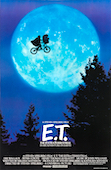
    E.T. the Extra-Terrestrial

    The Old Dark House

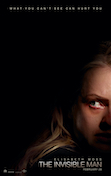
    The Invisible Man

    .


    • I watched 28 new feature films in June.
    • It’s my joint-3rd best month of 2020 (tied with March), which is right in the middle when you remember there have only been six months… but 2020 is clearly an exceptional year, because it’s also in the top 5% of months all-time.
    • It’s also my best June ever, beating the 21 of June 2018.
    • Naturally, that means it stomps all over the June average (previously 10.0, now 11.4).
    • It also sails past the rolling average of the last 12 months (previously 15.3, now 17.3), and also pips the average for 2020 so far (previously 25.4, now 25.8).
    • Reaching #155 means I’ve already passed my final total from last year, making 2020 already my fifth highest totalling year ever.

    Now, some observations on the actual films I watched…

    • They included my 2,000th film for this blog. I wrote about that here.
    • I was also particularly glad to get a chance to see Cairo Station, one of the five films I flagged from The Story of Film: An Odyssey (my 1,000th film) back in August 2015. In the almost-five-years since that post, I’ve seen two of those films. Of the other three, I’ve owned one on Blu-ray for several years; another was released on Blu-ray in the UK last November; and the fifth recently came out on Blu-ray in the US. So, I could/should be completing them by now…
    • This month’s Blindspot film: Spike Lee’s Do the Right Thing, which is exceptionally pertinent right now — which, considering it’s now over 30 years old, is rather depressing. A great film, though.
    • From last month’s “failures” I watched Crawl, The Last Black Man in San Francisco, The Peanut Butter Falcon, The Rhythm Section, and The Vast of Night.

    Finally, returning to statistics: the end of June marks the halfway point of the year, of course, and at #155 it’s the furthest I’ve ever reached by this point (beating #145 in 2018). So, to mark the occasion, I’ve gone back over previous years to see what I can learn about the first half of the year as a predictor for the second.

    • Logic might suggest the second half would be double the first, but that’s never been the case.
    • Of the previous 13 years, five saw the second half more than double the first, with the other eight showing a decrease (obviously).
    • The biggest discrepancy came last year, 2019, when I did 64.9% of my film viewing in the first half of the year, leaving just 35.1% in the second.
    • The biggest swing the other way was in 2009, when I watched 40.4% in the first half of the year and 59.6% in the second.
    • On average, the second half of the year accounts for 48.3% of my viewing; though if we look at just the last five years, that drops to 44.8%.
    • So, as a predictor for 2020, if I follow the all-time average I should end the year on #305 — holy moly! A feat that never seemed possible, considering I’ve only passed #200 twice.
    • If I take the average of just the last five years, I only reach #283 — which would still be my highest year ever by over 20 films.
    • And, compared to the two extremes detailed above, anything below #239 would be a new second-half low (in percentage terms), while a new high would see me watch over 383 films! The latter would mean a monthly average of 38.1 for the rest of the year — higher than I’ve ever reached in a single month. I really don’t see that happening.
    • Leaving percentages behind, the average number of films I’ve watched in July-to-December is 69, which this year would put my final total at 224.
    • Lest all this sound like plain sailing to a number definitively above 200, my weakest-ever July-to-December was 33 in 2011, which, if repeated, would see 2020 end on 188. Never say never…


    The 61st Monthly Arbitrary Awards

    Favourite Film of the Month

    Lots of stuff I liked a great deal this month, and as usual it’s hard to compare such wildly different films. For surprise value, I’m drawn towards Paris When It Sizzles — it doesn’t seem to be well-rated on the whole, but it’s a lot of fun as a kind of “insider’s view” Hollywood spoof that feels ahead of its time.

    Least Favourite Film of the Month
    No outright bad movies this month, in my estimation, but there were more than a couple that didn’t live up to my expectations. Perhaps the worst of these was Crawl, purely because it was doing so much better early on than it was by the end.

    Song That Most Stands a Chance at the Oscars of the Month
    God only knows what’s going to be going on at the Oscars next year, but they should be more amenable to streaming movies than ever, and that might open the door for a song from The Story of Fire Saga to get in — if there’s one thing most people who’ve watched it can agree on, it’s that the original songs are rather catchy (in a Eurovision-y way). Heck, why just one? In the past, multiple songs from the same film have made it, so never rule that out (I have no idea how the rules for the song category work). But if only one song makes it then… no, it won’t be Jaja Ding Dong (well, you never know). It might be Volcano Man, just because that had several weeks of advance play due to being released as a kind of teaser trailer. But judged as an actual song, the big emotive climactic number Husavik surely deserves a shot.

    Most Desirable House of the Month
    I can see why Jimmie Fails obsesses over restoring, maintaining, and (re)acquiring that house in The Last Black Man in San Francisco — it’s gorgeous. Until it gets that makeover at the end, anyway (um, spoilers? I dunno).

    The Audience Award for Most-Viewed New Post of the Month
    Maybe it’s because there’s nothing new in cinemas. Maybe it’s because Eurovision remains popular in many places, as does Will Ferrell. Whatever the cause, Netflix’s Eurovision Song Contest: The Story of Fire Saga has generated a lot of chatter since its release last Friday, and so it’s of little surprise that my release-day review has attracted a fair few visitors. It easily tops this month’s chart (both new and all-time posts), and has overtaken another Netflix original, Extraction, to be my most-viewed film review of 2020 so far.


    This month, my Rewatchathon movies forward at give-or-take its intended pace — which, after last month’s bumper crop, means I’m still over a month ahead of schedule.

    #27 The Scarlet Claw (1944)
    #28 Gambit (1966)
    #29 The Pearl of Death (1944)
    #30 The House of Fear (1945)

    Three of those continue my rewatch of the Sherlock Holmes series starring Basil Rathbone and Nigel Bruce. My original reviews are linked above; the following links are to new thoughts on Letterboxd. In summary, I think The Scarlet Claw remains my overall favourite from the series, but I enjoyed both The Pearl of Death and, in particular, The House of Fear a lot more this time — together, the trio are definitely among the series’ best.

    As for Gambit, it made my yearly top ten back in 2011, but if anything I enjoyed it even more on this second watch. I’d remembered the famous first-act trick, of course, but forgotten the substance of all the twists at the end, which kept it exciting. It’s so much fun in between too, and moves like a rocket without ever feeling rushed.


    Cinemas remain closed, but that hasn’t put a stop to new releases, with the likes of Woody Allen’s A Rainy Day in New York and Simon Bird’s Days of the Bagnold Summer heading direct to rental. Plus, there was an even more high-profile new release in Spike Lee’s acclaimed movie for Netflix, Da 5 Bloods.

    Other titles new to the preeminent streamer that caught my eye include action movie VFW; last year’s animated revival of The Addams Family; documentary The Show Must Go On: The Queen + Adam Lambert Story; and almost a dozen movies directed by Youssef Chahine — I watched the most noteworthy one, Cairo Station, but I’ve seen several others recommended. I also noticed Line of Duty pop up, but only because it was released theatrically here as In the Line of Duty, presumably to avoid conflict with the popular TV series, but Netflix have reverted to its original title. I don’t remember it being well reviewed, so I won’t be rushing to catch up with it.

    Meanwhile, Amazon Prime Video offered the new Shaun the Sheep movie, Farmageddon, which I’ve been looking forward to getting round to. Also a couple of documentaries, one titled Showrunners: The Art of Running a TV Show, which kind of sums up its topic, and the other about a pioneering early female filmmaker, Be Natural: The Untold Story of Alice Guy-Blaché (which still hasn’t been picked up by the site I use to track additions to Amazon, so it may’ve been there a while for all I know). Also standing out from the pack was the brilliantly titled Django and Sartana Are Coming, It’s the End (the titles seem to be the best thing about any of the movies starring Sartana) and a steampunk adaptation of The Secret Garden. Um, what? Colour me curious.

    Once again, Sky Movies / Now TV suffered by comparison. Mr. Jones sounds interesting, but has the kind of grim subject matter that’s going to make me keep putting it off; I didn’t mind the first one, which hardly pushes Maleficent: Mistress of Evil to the top of my must-see list (I didn’t even bother to put it on last year’s ’50 unseen’ list); and I’m not sure I’ve seen enough Kevin Smith films to really ‘get’ Jay & Silent Bob Reboot… but, hey, I guess it is a reboot, right?

    Oh, and lest you think I’d curbed my spending this month, oh dear me, no. Recent films finally hitting disc here included The Lighthouse and Pixar’s Onward (in 3D, natch), while new releases of catalogue titles included 88 Films’ latest Jackie Chan release, Armour of God II: Operation Condor (hence why I watched the first one this month); Eureka adding film noir Criss Cross to their Masters of Cinema line; and BFI issuing a restored Tokyo Story, a film I’ve been meaning to rewatch for a very long time. And offer pricing was once again the siren to my wallet’s sailor: from the BFI, The Crying Game, doco Mifune: The Last Samurai, and their Early Women Filmmakers box set (with seven features and 15 shorts, including several by the aforementioned Alice Guy-Blaché); from a Masters of Cinema twofer, Faust and Witness for the Prosecution; and from the recent UK Criterion offer, Fail Safe, Holiday, Kiss Me Deadly, and Solaris. I think I would’ve caved to more in the latter, but I’m trying to hold some money back for the Barnes & Noble Criterion offer that should be starting in a couple of weeks. I can never have enough set aside for that…


    UK cinemas are set to reopen… but how long will that last? Will anyone go? The major films scheduled for July have already been pushed (again) to August, leaving only re-releases and some small-scale new releases with nothing to lose by testing the waters. Hardly an enticing slate, especially when the safety measures on offer are dubious (personally, I’m almost entirely put off by the lack of reserved seating at Odeon). Some people would like to pretend this is all over, but anything could still change any day…

    Well, at least we’ll definitely have Hamilton on Disney+.