Yesterday (2019)

2020 #21
Danny Boyle | 116 mins | streaming (HD) | 2.39:1 | UK, USA, China & Japan / English | 12 / PG-13

Yesterday

Jack Malik (Himesh Patel) is an aspiring — and failing — musician. He’s unlucky in love too, although that’s also his own fault, because he’s missed the blatant fact his friend-cum-manager Ellie (Lily James) has fancied him for the past couple of decades. One day there’s a weird blackout thing across the world, and (long story short) Jack is apparently the only person who remember the Beatles exist. Shocked that the world has been deprived of this amazing, culture-defining music, Jack begins to perform and record it… with zero success. Clearly, there’s more to it than just the music and lyrics. And he’s still none the wiser to Ellie’s obvious affections. Maybe Jack is just one of life’s losers?

Ooh, that all sounds a bit depressing, doesn’t it? Don’t worry, this is a Richard Curtis movie — things pick up. Because of course someone notices the music Jack’s now playing is amazing, and of course that leads him to global success. Curtis is a massive Beatles fan — I believe that’s how the concept for the movie came about in the first place — so there’s no way he’s going to let what he believes is the wondrousness of their music go unnoticed. We know that as well, I think, so the bit where Jack still fails, despite now having good material, is a nice little plot red herring.

It’s welcome, too, because the plot doesn’t have a whole lot else surprising going for it. (Well, there’s a subplot about the song Wonderwall that is such a plot structure red herring as to seem like a plot structure mistake, but I’m not sure it counts as a surprise when it’s only likely to be noticed by film buffs who incorrectly predict where it’s going.) It’s one of those films where the one-line premise is more interesting than what the film actually does with it. “What if only one man remembered the Beatles?” sounds like a neat idea for a story, but where is there to go with it? For the sake of there being any story at all, he has to be able to perform these songs that only he can remember. Then he either has to be a success or not, as discussed. It all feels inevitable, the only real question being what’s the ‘out’ — how does this end? Well, I shan’t spoil it.

She loves you, yeah, yeah, yeah

To add more bulk, there’s a romance storyline. Of course there is, it’s a Richard Curtis movie. But a romcom is hardly more original, is it? No, this is a very comfortable movie — you’re rarely going to be surprised about where it chooses to go. That said, I liked this side of the film more. In fact, I feel like the film would actually have been better without the whole Beatles thing — just a movie about a struggling wannabe musician realising he doesn’t really love music, he loves Lily James. As it is, at one point he has to choose between his lifelong dream of pop music mega-stardom or being with Lily James, and he choose the dream, which is wholly implausible because Lily James.

But for all its predictability, there are some really nice bits along the way. (Proper spoilers follow.) It turns out there are two other people who remember the Beatles, and they begin to stalk Jack as he has success… but it turns out they’re just glad this music is back in the world. Neat twist. The surprise-cameo John Lennon scene is another unexpected moment heavy with emotion. The closing montage not being to any ‘big’ Beatles song, but to Ob-La-Di, Ob-La-Da (well, life does go on). Ed Sheeran ruining one of the greatest songs ever written. That one’s not so much nice as “funny because it’s true”, but I’ll take it. (If you thought Ed Sheeran was bad in his Game of Thrones cameo, just wait ’til you see him try to act as, er, himself. The role is very convincingly written, mind.)

Perhaps the most fascinating aspect of the film is that it’s not only the Beatles that have disappeared in this alternate world. Oasis have gone too, which, as Jack observes, “makes sense” — though the film doesn’t go very far in this regard. It’s based on the notion that the Beatles’ music was The Best Ever, but what has removing them from history actually changed about pop culture? As far as we can see, all it means is that Oasis don’t exist. Is that really the sum total of the Beatles’ influence? Anyway, my point was that other stuff has disappeared too, including Coca Cola, Harry Potter, Saturday Night Live (although that’s just become Thursday Night Live for some reason), and smoking. So this isn’t just “a reality without the Beatles”, it’s a subtly different world entirely. That’s an interesting creative choice. It’s basically just used as a source of humour — an easy go-to gag — but it still provokes the question: why has this random selection of things disappeared? What else has gone that Jack doesn’t notice?

Hey Dude

Ultimately it doesn’t matter, because this is a comedy like Groundhog Day or Sliding Doors in that the sci-fi/fantasy aspect is a means to an end, not a thing to be queried in itself. But in those films the change only affected our hero: in Groundhog Day, Bill Murray is the only one in the time loop; in Sliding Doors, it’s only Gwyneth Paltrow’s life that’s significantly different (and none of the characters are even aware there are two versions of events). In Yesterday, Jack isn’t the only person this happened to, which emphasises the “what happened?” question. Why did it affect most people, but not these few? Why is so much of the world the same, but random things are missing? The film doesn’t care — it’s not about that — but, with the narrative choices the storytellers have made, it invites these kinds of wonderings.

That is, unless you just switch off and let it be a pleasant bit of fluff about a guy becoming famous with borrowed music while finally realising that the girl who’s wasted her life waiting for him to realise she loves him, er, loves him (Jack doesn’t deserve Lily James). Yeah, it’s mostly predictable, but that’s part of the comfort factor. There’s some good music, some likeable performances, and a general amiability to its tone. Let it be, indeed.

3 out of 5

Yesterday is available on Sky Cinema from today. (Maybe I should’ve reviewed it tomorrow…)

Sean Connery as James Bond, Part 2

If everything had gone according to plan, this weekend Americans would’ve been flocking to cinemas to see Daniel Craig’s final performance as Bond, James Bond, secret agent 007, in No Time to Die (us Brits would’ve all been to see it last weekend, of course). As that’s not to be, here’s something both entirely similar and entirely different: my reviews of Sean Connery’s final performance in the role — both of them.

This concludes my coverage of Connery’s time as Bond, the previous instalment of which I posted in, er, 2013. (And you thought No Time to Die had a long delay.) That covered his first stint as James Bond — the five films he starred in from 1962 to 1967. Now, here are his two remaining performances:

Neither of these films is Connery’s finest hour as Bond — they’re his worst hours, in fact — but, I must say, they were both better than I had remembered.

Click through to learn more about…

That may be it for Connery, but — as always — James Bond will return… in Daniel Craig’s case, in November (fingers crossed!)

Never Say Never Again (1983)

The 100 Films Guide to…

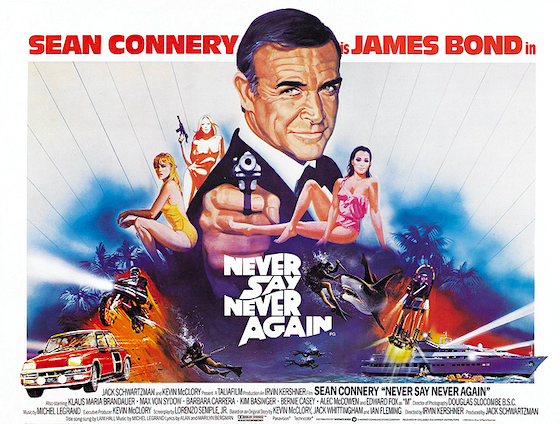
Never Say Never Again

Sean Connery is James Bond 007

Country: UK, USA & West Germany
Language: English
Runtime: 134 minutes
BBFC: PG
MPAA: PG

Original Release: 7th October 1983 (USA)
UK Release: 15th December 1983
Budget: $36 million
Worldwide Gross: $138 million

Stars
Sean Connery (Thunderball, Highlander)
Klaus Maria Brandauer (Mephisto, Out of Africa)
Kim Basinger (Mother Lode, Batman)
Barbara Carrera (The Island of Dr. Moreau, Lone Wolf McQuade)
Max von Sydow (The Exorcist, Minority Report)

Director
Irvin Kershner (The Empire Strikes Back, RoboCop 2)

Screenwriter
Lorenzo Semple Jr. (Papillon, Flash Gordon)

Based on
An original James Bond story by Kevin McClory, Jack Whittingham and Ian Fleming, which Fleming later novelised as Thunderball.


The Story
Ageing secret agent James Bond is sent to a health spa to get back into shape, but therein stumbles upon part a plot to hijack nuclear warheads and hold the world to ransom. With the theft successful, it falls to Bond to retrieve the weapons before it’s too late.

Our Hero
Bond, James Bond, British secret agent 007. He’s played by Sean Connery — already the first and third actor to play James Bond on the big screen (in a serious movie), here he becomes the fifth too. Unlike the official Bond films, which carried on regardless as Roger Moore began to look more like an OAP than a capable secret agent, Never Say Never Again acknowledges that Bond is getting on a bit. That’s because Connery was 53 at the time, and this is from back in the days when 53 was old, especially for an action star — not like today.

Our Villains
Billionaire businessman Maximilian Largo is actually the highest-ranking agent of SPECTRE, a global criminal organisation masterminded by Ernst Stavro Blofeld. With Blofeld merely pulling the strings behind the scenes, it’s Largo and his lackeys that Bond must defeat to save the world.

Best Supporting Character
Rowan Atkinson’s cameo-sized role as inexperienced local bureaucrat Nigel Small-Fawcett is actually quite amusing, and therefore probably the best thing about the film.

Memorable Quote
Largo: “Do you lose as gracefully as you win?”
Bond: “I don’t know, I’ve never lost.”

Memorable Scene
At a charity event hosted by Largo, Bond comes face-to-face with his adversary for the first time, where he’s challenged to play Domination, a 3D computer game. It couldn’t be more ’80s if it tried.

Memorable Music
James Bond films have a very distinct musical style… but not when they’re unofficial productions they don’t. Without access to familiar themes, Never Say Never Again finds itself having to reach for something different… and fails: the title song is bland and the jazzy score is forgettable.

Letting the Side Down
Where to begin? Well, let’s pick on perhaps my least favourite bit of the whole endeavour: henchwoman Fatima Blush; and, more specifically, how the film ends up handling her. First, there’s a truly terrible sex scene between her and Bond, but it only gets worse later: the self-espoused feminist becomes monomaniacally concerned that Bond should think she’s the greatest shag he ever had, which distracts her to the point that he gets the opportunity to kill her… which he does with an explosive bullet that just leaves her smoking high heels behind. No, seriously. And for this performance Barbara Carrera received a Golden Globe nomination! If you told me she’d been nominated for an award and asked me to guess which, I’d’ve been certain it was a Razzie.

Making of
“So how did an unofficial James Bond film come about anyway?,” I hear you ask. Well, the story starts in the early ’60s, after the Bond novels had become popular but before the film series began. Creator Ian Fleming worked with independent producer Kevin McClory and screenwriter Jack Whittingham on a script for a potential Bond film titled Longitude 78 West, but this was abandoned due to costs. Fleming then adapted the screenplay into a Bond novel, Thunderball, but without credit for either McClory or Whittingham. McClory sued for breach of copyright, and the matter was settled by Fleming giving McClory all rights to the screenplay. By this time the official Bond film series was underway, and Eon Productions made a deal for McClory to coproduce their adaptation of Thunderball, an agreement which forbade him from making any further films of the novel for another decade. That lands us in the mid-’70s, when Bond was still very popular. As McClory began attempting to get a new adaptation off the ground, Eon put legal obstacles in his path, accusing his new script of breaking copyright restrictions by going beyond the confines of Thunderball. Eventually McClory and other producers managed to clear these hurdles and, after rewrites to make Connery happy (which were undertaken by British TV writers Dick Clement and Ian La Frenais, who went uncredited due to Writers Guild of America restrictions, despite much of the final script being their work), the remake finally went before the cameras — with a new title, suggested by Connery’s wife, referring to his vow that he would “never” play Bond again.

Previously on…
James Bond had starred in 13 official movies by the time this came along. It’s kind of ironic that Never Say Never Again’s unofficial status means it can’t acknowledge any of that, while also tacitly acknowledging it with Connery’s very presence in the lead role. Though if it had been able to acknowledge it, the fact this film is a straight-up remake of Thunderball might’ve led to some awkwardness.

Next time…
Early in 1984, producer Kevin McClory announced a sequel, S.P.E.C.T.R.E. It never happened. He spent most of the rest of his life trying to pursue further James Bond projects: he tried to remake the same story again in 1989 as Atomic Warfare starring Pierce Brosnan, and again in the early ’90s as Warhead 2000 AD starring Timothy Dalton. In 1997 he sold the rights to Sony, who already held the rights to Casino Royale and hoped to use that to launch its own Bond series. MGM sued and the matter was settled out of court, with Sony giving up all claims on Bond. (Perhaps this explains why Sony have been so keen on acquiring/retaining the series’ distribution rights in recent decades.) And so we’re left with just one James Bond series, which has mostly gone from strength to strength.

Awards
1 Golden Globes nomination (Supporting Actress (Barbara Carrera))
2 Saturn Award nominations (Fantasy Film, Special Effects)

Verdict

Between this and the state of the official Moore-starring films at the time, it must’ve sucked to be a Bond fan in the early- to mid-’80s. Maybe some thought Connery returning to the role he’d defined would be a boon, but it didn’t turn out that way: in just about every respect, Never Say Never Again plays like a weak imitation of a Bond film… which I suppose is exactly what it is, really.

As an unofficial production, it’s missing a bunch of the identifying features of the Bond films: the gun barrel, the title sequence, the musical stylings, and, most conspicuously, the famous theme. There’s more to Bond than these tropes, of course, and a really good Bond movie can survive without them, but their absence contributes to the feel of this being a low-rent wannabe, when it needs all the help it can get. The stuff it can include isn’t great either. The one-liners and innuendos are particularly bad. The action is rather dated (although the chase between a souped-up Q-bike and the henchwoman’s tacky little ‘80s car is more exciting than the notoriously underpowered car chase in Spectre, which says more about Spectre than Never Say Never Again). Then there’s the sex scene I mentioned above.

One critic retrospectively described the film as “successful only as a portrait of an over-the-hill superhero,” which is true… up to a point. I mean, most of the stuff about Bond being past his best seems designed to explain Connery’s grey hair and lined face — Bond is still irresistible to literally every woman he meets, and has no problem at all doing any of the action stuff. Connery’s performance isn’t bad either, although it didn’t quite feel like Bond to me. I’m not sure why. It’s not that he seems bored or like he’s only going through the motions (a sensation that definitely comes across in some of his original performances as the character), but he no longer seems to have quite the panache you expect from 007.

And yet, for all that, it’s not as irredeemably terrible as I’d remembered. For all the glaring faults, it actually ticks along with a decent level of entertainment value. So is it, in fact, unfairly maligned? It’s nowhere near the best of Bond, but it doesn’t descend into outright silliness like some of the official ones do (well, apart from those smoking shoes), and it even has a couple of pretty good bits. It would definitely be a lesser Bond — if it counted, which it doesn’t — but, as a couple of hours of off-brand Bondian fun, it could actually be a lot worse.

Diamonds Are Forever (1971)

The 100 Films Guide to…

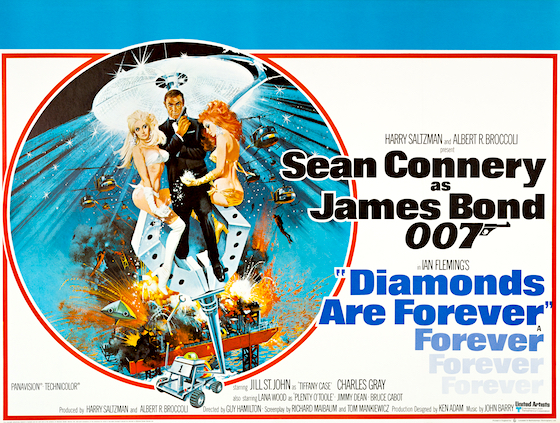
Diamonds Are Forever

You’ve been waiting for him…
Asking for him…
Now he’s here.

Country: UK
Language: English
Runtime: 120 minutes
BBFC: A (cut, 1971) | PG (1987) | 12 (2012)
MPAA: PG

Original Release: 14th December 1971 (West Germany)
UK Release: 30th December 1971
Budget: $7.2 million
Worldwide Gross: $116 million

Stars
Sean Connery (Marnie, The Untouchables)
Jill St. John (The Lost World, Sitting Target)
Charles Gray (The Devil Rides Out, The Rocky Horror Picture Show)
Lana Wood (The Searchers, Grayeagle)

Director
Guy Hamilton (Battle of Britain, Evil Under the Sun)

Screenwriters
Richard Maibaum (Ransom!, Licence to Kill)
Tom Mankiewicz (The Sweet Ride, Ladyhawke)

Based on
Diamonds Are Forever, the fourth James Bond novel by Ian Fleming.


The Story
After finally assassinating his nemesis, Blofeld, Bond is assigned to investigate a diamond smuggling operation in Holland, but following the trail leads him to the glitz of Las Vegas — and a familiar foe.

Our Hero
Bond, James Bond, agent 007 of the British secret service. He may be looking a little older than when we last saw him, but he’s still capable of wooing all the ladies and scaling the outside of skyscrapers.

Our Villains
We so much focus on the Dr Nos and Auric Goldfingers of the early Bond films — plus the ever-changing roster of villains he’d face in later movies — that it’s easy to forget Blofeld has a presence in almost every Bond movie before Diamonds Are Forever (indeed, Dr. No (which only mentions SPECTRE) and Goldfinger (which has no ties whatsoever) are the only exceptions), so it’s no real surprise that he’s not just confined to the pre-titles here. It certainly wouldn’t have been to audiences in 1971, either: he’s prominent in the trailer, and Charles Gray is rather highly billed for someone who’s only in the opening minutes. That said, Lana Wood is fourth billed and she only has about three scenes, so… Until he’s properly revealed, however, we have overtly homosexual assassins Mr Wint and Mr Kidd to tide us over. Considering they’re shown as creepy and murderous, it’s hardly an enlightened portrayal of homosexuality; but then it is from 1971, so what do you expect?

Best Supporting Character
Tiffany Case is Bond’s way in to the diamond smuggling operation. She’s a self-assured and capable woman… for about the first half of the film, before she sharply descends into a stereotypical Bond Girl bimbo. Oh well, they tried.

Memorable Quote
“That’s quite a nice little nothing you’re almost wearing. I approve.” — James Bond

Memorable Scene
Bond travels to Amsterdam under the identity of a diamond smuggler they’ve captured, but when he escapes and to Amsterdam too, Bond must intercept the chap before his cover’s blown — which he does in a small lift, leading to a brutal close-quarters brawl that’s almost as good as the famous train carriage one in From Russia with Love.

Write the Theme Tune…
One of the most famous of the Bond title tracks, its music was written by the film’s — and, by this point, the series’ incumbent — composer, John Barry. It was his fifth Bond theme song (seventh if you include Mr. Kiss Kiss, Bang Bang and We Have All the Time in the World). The lyrics were by Don Black, returning for his second theme after Thunderball.

Sing the Theme Tune…
This is also the second Bond theme for singer Shirley Bassey, after (of course) Goldfinger. Apparently co-producer Harry Saltzman hated the song, objecting to the innuendo in the lyrics, and it was only saved by his fellow producer, Cubby Broccoli. That said, Saltzman may have had a point: in a later interview, Barry revealed that he instructed Bassey to imagine she was singing about… a penis. “They are all I need to please me / They can stimulate and tease me … Hold one up and then caress it / Touch it, stroke it and undress it…” Whew, crikey!

Making of
By this point in the Bond series (this is the seventh film, remember) a lot more original thought was going into which direction to take things than just “adapt a Fleming novel”. For one thing, they were worried Bond’s British style was becoming passé, so they decided to set the movie in glamorous Las Vegas — which, let’s be frank, has dated far, far more than the classier style of the earlier films. Anyway, they went even further than that: with Lazenby having deserted them, a new leading man was required, and so they cast… an American! *gasp* Unthinkable today. The man in question was John Gavin, best known for playing Sam Loomis in Psycho. He’d also played France’s answer to Bond, agent OSS 117, in a film just a couple of years earlier, which is either good training or a weird conflict, depending how you look at it. Not that it mattered anyway, because United Artists insisted they get Sean Connery back, and they did — albeit for a then-extraordinary $1.2 million salary. To Connery’s credit, he gave every cent of it to a Scottish education charity he’d established.

Previously on…
Connery played Bond in five movies between 1962 and 1967, eventually becoming bored of the role and quitting. They replaced him with an unknown Australian model, who promptly got too big for his boots and ran off after just one movie. It just so happens that the films’ storylines lend credence to the theory that James Bond is a codename that goes along with the 007 designation — normally I hate that theory, but the way it explains the events of OHMSS and Diamonds Are Forever is quite neat. (Basically: Connery-Bond retires and is replaced by Lazenby-Bond (hence the “this never happened to the other fella” line), but when Lazenby-Bond’s wife is killed he quits and Connery-Bond comes out of retirement to avenge her for him (hence him tracking down Blofeld at the start of DAF, but not seeming all that emotional about it).)

Next time…
Connery said he’d never play Bond again… which became the inspiration for the title the next time he did. But that really was his last hurrah in the role. As for the official Bond movies, they finally did the inevitable and cast Roger Moore. The rest is history.

Awards
1 Oscar nomination (Sound)

Verdict

Well throw me out a window and call me Plenty if Diamonds Are Forever isn’t actually a really enjoyable Bond movie. Okay, it’s probably still the worst (official) Connery movie, thanks to a few daft bits (the elephant playing the slot machine; Blofeld in drag; etc), and because it simply doesn’t have as many standout sequences or memorable lines as his other five. But, on its own merits, it’s good fun. The first 45 minutes or so are played admirably straight and serious; the car chase around Vegas is rather good; and while those bits of silliness do creep in, they’re only fleeting (albeit a precursor to where the whole series would go in the Moore years). I’d previously remembered Diamonds as a real nadir; a blight on the name of the series. Now, while I wouldn’t rank it among my most favourites, I found a lot to like.

(For the sake of comparison, I previously gave five stars to From Russia with Love, Goldfinger, You Only Live Twice, and On Her Majesty’s Secret Service, and four stars to Dr. No and Thunderball. This would be three-and-a-half, but I’ve never done half stars on this blog. If I did, perhaps one or two of those others would’ve been marked down by half-a-star too.)

The Past Month on TV #57b

I’ve blathered on so much this month that, for the first time, I’ve split the TV post in two for ease of reading. It’s all about what’s best for you, my dear readers.

For this month’s introduction and a bunch of Doctor Who stuff, look here. For everything else — Red Dwarf: The Promised Land; Mark Kermode’s Secrets of Cinema series 2; the worst of The Twilight Zone; odds & ends, and what I’ve missed this month — continue…

Red Dwarf  The Promised Land
Red Dwarf: The Promised LandThe 13th iteration of Red Dwarf eschews the normal episodic format for a single 90-minute special, in turn ditching the expected Red Dwarf XIII moniker for a subtitle. Well, the show has form in this: for its 21st anniversary revival we got Red Dwarf: Back to Earth instead of Red Dwarf IX, which wasn’t a whole series but instead a 90-minute single story (in that case split into three half-hours, but still).

Indeed, despite the feature-length format, The Promised Land is not “Red Dwarf: The Movie” — it still very much looks and feels like the show has in its Dave era, not least because it was still shot in front of a studio audience. Fortunately, it does still justify its running time by being more than just three episodes strung together. Writer Doug Naylor probably could’ve separated ideas from the plot out into three separate storylines if he’d wanted, but as it stands it just plays like a super-sized normal episode. That’s not a criticism — everything’s on form, making this at least as good as any other episode the show has had recently (and, if you go looking through my previous reviews, you’ll see I enjoyed most of those too).

The feature-length shape does allow for some variety in tone, including a strikingly emotional scene between Lister and Rimmer. As I saw someone say on social media, “I didn’t know this show was capable of that.” It leans on the fact these characters have an onscreen relationship lasting over 30 years — not explicitly, but you do feel the weight of that time spent together. It’s actually quite a beautiful moment, with a lovely analogy that has a part to play in the equally emotional finale.

Talking of those 30-odd years, in so many ways this feels like an anniversary special. Not just because it’s a feature-length one-off (for which, as I mentioned earlier, the show has form), but in the way its plot calls right back to the very first episode of the programme, delivering on story elements not seen since that first series, and with a ton of nods and winks to episodes throughout the years too. It makes me wonder if it was written for the 30th anniversary (which was two years ago), but it took longer than intended to get the gang back together. Certainly, if it had been pitched as a 30th anniversary special, I don’t think anyone would’ve been disappointed.

Indeed, they weren’t disappointed now, with the reaction on social media looking overwhelmingly positive. I don’t think that’s a given, nor newness bias — I remember Back to Earth facing a mixed-to-negative response — so I think The Promised Land can be judged a success all round. Personally, it’s made me want to dig out all the old DVDs (or perhaps upgrade them to Blu-ray) and rewatch the whole series.

Mark Kermode’s Secrets of Cinema  Series 2
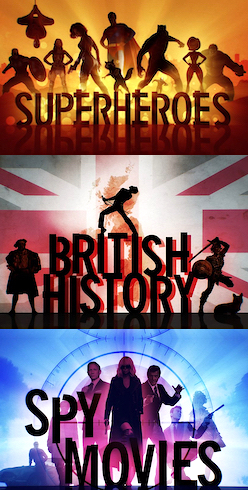
Mark Kermode's Secrets of Cinema series 2Mark Kermode’s insightful deconstruction of cinematic genres returns for a full second series (following a few occasional specials last year). I say “full” — three episodes. Whereas the first series took on a fairly random selection of enduringly popular genres, this batch somewhat follows the example set by last year’s specials by being particularly timely. Those were themed around when they aired (Christmas movies at, obviously, Christmas; Oscar winners just in time for, obviously, the Oscars; and disaster movies ahead of, obviously, the current crisis. No, I jest, it was for Bank Holidays), whereas these episodes tackle the genres du jour: superhero movies (can’t get more top-of-the-zeitgeist than that), British history movies (including modern history movies like Bohemian Rhapsody and Rocketman, both recent hits), and spy movies (which would’ve coincided perfectly with the release of No Time To Die if that hadn’t had to be postponed).

In typical BBC Four fashion, the series if both educational and entertaining. Even if you’re a well-read movie buff, Kermode (plus writer Kim Newman) are likely to draw out at least some connections or comparisons you haven’t thought of it, but are always on the money and enlightening. But as well as being information, they make for an entertaining overview of the genres in question, working both as a kind of clip show to relive each genre’s highlights, and, with their relative comprehensiveness, to suggest some films you might not have seen yet. For example, British history is such a broad catch-all kind of subject (as Kermode acknowledges in the programme, each time period is really its own subgenre) that I came away with a list of 17 films I wanted to watch or rewatch. I always think that’s a mark of a good film documentary: one that makes you want to see the movies it’s talking about.

(Series 2 and the Oscars special are currently available on iPlayer. Kermode said on Twitter that they’ll be putting the older episodes back up too, but they haven’t yet.)

The Twilight Zone  ‘Worst Of’
Cavender is ComingFor the past year I’ve been working my way through episodes of The Twilight Zone that are considered to be among its very best. But if I carried on like that, my overall experience of the show would be to see its quality gradually tail off, and someday my time with it would end by watching its weakest instalments. That doesn’t seem a fitting fate for such a classic series. It’s too late for me to save some of the very best for last, but I can jump the gun a little and watch some of the most poorly-regarded episodes now. Naturally, I’ve used the lists I compiled for a consensus ranking to curate this selection. I’ve taken the last-place choice from each full-series ranking, and that also happens to include the episode with the lowest average score across all the lists.

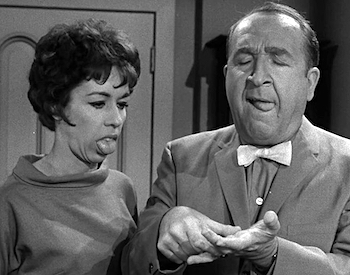
First up, the episode with the lowest rating according to IMDb users, Cavender is Coming. On average it comes 107th (out of 156), the highest of these five, with TV Guide even placing it in their top 50 (at #38), but clearly IMDb users have something against it. It stars Carol Burnett as a klutzy lady who keeps losing her job, so she’s assigned a guardian angel to make things better. Said angel is last-chancer Cavender — if he fails this task, he’ll be kicked out of angel school… or something. I don’t know. The Twilight Zone is notoriously bad at comedy, and this is probably the most outright sitcom-y episode of them all — it even aired with a laughter track originally. Nearly everyone reserves some praise for Burnett, which I guess is to do with her being an iconic figure of American TV or something. Not that she’s bad, but she does little to elevate a message-less episode. Even after watching the next four, I tend to agree that this may be the very worst episode of them all.

Proceeding down the average rankings, next is ScreenCrush’s pick, Execution (135th overall). It’s an odd little story with a kinda daft premise: in the Old West, a criminal is about to be summarily hung, but he disappears into thin air… and appears in the present day, courtesy of a ‘time machine’ that randomly scoops a random individual randomly out of the past. How? Why? Who cares! No spoilers, but the unwitting time traveller finds the modern world all a bit much, and someone ends up being transported back. The point of the story is… cosmic justice? Or something? I guess? Getting into spoiler territory now, the episode almost poses an interesting moral question: “if a murderer deserves to be hanged, does the murderer of a murderer deserve to be hanged?” Unfortunately, it doesn’t actually engage with that at all. In fact, it seems to take it as read that the modern-day criminal who gets accidentally sent back to the 1880s deserves his fate. But, as far as we know, he only murdered another murderer — so, by that moral standard, don’t the rest of the “neck tie party” (as Serling repeatedly calls the group of hangmen) also deserve to be hanged? Food for thought. Unless you’re a brainless supporter of the death penalty, I guess.

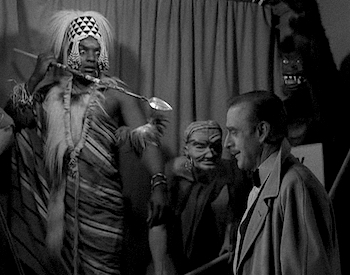
The JungleThe worst episode according to Buzzfeed is The Jungle, which comes 148th overall. It’s about an American engineer who’s just returned from a trip to Africa where his company is planning to build a hydroelectric dam, and he may’ve been cursed by natives opposed to the project. As you’ve probably guessed, the episode’s biggest problem is some old-fashioned kinda-racist stereotypes about Africa and its people. I mean, the episode doesn’t even bother to say which country he’s been to, it’s just “Africa”. It’s not overtly racist, I don’t think, but it’s certainly tone deaf. There’s a scene where our hero discusses the project with the board of directors that juxtaposes the idea of witchcraft, which they all laugh at, with the irrational superstitions they all practice (not walking under ladders, etc), which is kinda neat, basically saying that “you laugh at their beliefs because you think of them as simple folk, but it’s no worse than our superstitions,” which is truthful and borderline enlightened. But that’s about all the episode has going for it. By the time he’s travelling home through the implausibly empty nighttime streets of New York City and being haunted by jungle sounds, it all seems pretty silly; and then his cab driver just drops dead, and a tramp appears and disappears out of thin air, and you wonder what all that’s got to do with anything. The only moral the episode can offer is “maybe some superstitions are right”, which is poppycock.

So far I’ve watched nearly a quarter of all episodes of The Twilight Zone, but I’d only seen one from its fourth season before today. That’s probably because I’ve been focusing on the show’s best episodes, and everyone seems to agree that season four is its weakest. Nonetheless, there’s only one episode from that season among this initial batch of bad episodes: I Dream of Genie, Paste’s pick for the very worst and 152nd on average. It’s about a downtrodden clerk who’s presented with the opportunity to wish for anything he wants, and considers carefully via a series of imagined alternate lives — which conspire together to pad out the episode’s running time, of course. In his first imagining he fails to conceive of a world in which he’s not being pushed around, and if that had continued through his other fantasies we might’ve been on to something here — a sad examination of how being so mistreated can seep into your very way of being. But it’s not aiming for that, because this is A Comedy One and so tragic insight is out of the question. The whole thing is half arsed in conception, and also flabby — Serling could definitely have told the same story in half the time without losing anything of value, which I think is a consistent problem with the season four episodes. I didn’t hate it — it’s probably the best of these five — but it’s far from a great episode.

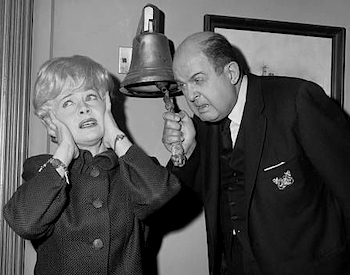
Sounds and SilencesFinally, we end as we began, with an episode voted on by the public: at the bottom of Ranker’s list, and last on average too, is Sounds and Silences. It’s about an excessively-loud, domineering blowhard who gets some measure of comeuppance when he begins to be bothered by everyday sounds like a dripping tap or ticking clock. And then it goes the other way and he can’t hear loud noises at all. It’s poorly written and terribly performed — in the lead role, John McGiver is overacting something rotten. Some criticise the undercurrent of misogyny in the storyline, but I don’t know about that. He blames his mother and his wife for all his problems, but he’s an unlikeable sod so surely any misogyny is his rather than the episode’s — we’re not being asked to agree with him. The character’s ironic fate may be some form of poetic justice, but it’s too long coming to be entertaining, and too obvious to be satisfying. Whether I disliked this or Cavender is Coming more, I’m not sure, but they both merit their places at the bottom.

Also watched…
  • McDonald & Dodds Series 1 Episode 2 — The second episode (of two) in this (very short) series was slightly better than the first, but not by a huge amount. I’ll probably keep watching if they make more, mainly to spot filming locations that I recognise. If it weren’t for that I wouldn’t bother.
  • One Man, Two Guvnors — This isn’t really TV, but nor is it really a film (although it was released in cinemas, so I could’ve counted it if I wanted). What it is is a filmed stage production, which the National Theatre released on YouTube for free — but only for one week, so I’m afraid it’s gone now. It was really good. Sorry. Currently available is a 2015 production of Jane Eyre (their channel is here), with more to follow every Thursday (more info here.
  • The Rookie Season 1 Episodes 7-15 — Churned through a pile of this in next to no time because it’s relatively easy viewing but with enough bite to keep it interesting. One of those shows that will never be a classic or top of the zeitgeist, but is highly watchable.
  • Star Trek: Picard Season 1 Episodes 4-6 — Way behind on this because it never engages me enough to choose to put it on. That said, I’ve found these middle episodes a bit better — I quite enjoyed the silliness of episode five, Stardust City Rag. But it’s the series’ lowest-rated episode on IMDb, which suggests other Picard viewers and I may be at odds about what makes good TV…

    Things to Catch Up On
    Westworld season 3This month, I have mostly been missing Westworld season 3, which is now four or five episodes in. I’ve not seen anyone talking about it on social media, so I’ve no idea if it’s good or bad, but I am inferring that not as many people are talking about it anymore, which is its own kind of criticism. One show I have heard mentioned is Tales from the Loop, Amazon’s new anthology sci-fi series. That’s been picking up good notices, and I thought it looked interesting anyhow, so I must make time for it.

    Next month… more animated classic Doctor Who; more of the worst of The Twilight Zone; and maybe I’ll even finish Picard or watch The Mandalorian, too…

  • The Past Month on TV #57a

    I get the impression many people have been using their newfound homebound status to watch lots of TV. I’ve mostly been focusing on films, however, so this month’s TV update doesn’t actually have a whole lot of different things to cover (certainly not when compared to, say, last month). Even though I’m finally posting this about a week later than I originally intended, I still haven’t had much to add to it.

    That said, what I have been watching is the kind of stuff I write a lot about — mostly, classic Doctor Who and The Twilight Zone — so much so that I’ve actually decided to split this update into two posts, because it was getting unwieldy. Today: Doctor Who stuff. On Friday: everything else.

    Doctor Who  Rose
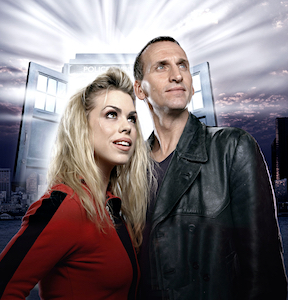
    Doctor Who series 1If you’re active (or looking in the right places) on social media, you may have noticed that there have been a bunch of Doctor Who watchalongs happening recently — you know, where people from around the world all watch the same thing at the same time and tweet about it. Organised by Doctor Who Magazine’s Emily Cook to provide something nice for Whovians in these trying times, they’ve been rather a big success — they’re always all over the trending topics on Twitter, and big names from the show have been persuaded to sign up and join in. The most recent one, to mark the 10th anniversary of Matt Smith’s debut episode, saw all three of its stars (Smith, Karen Gillan, and Arthur Darvill), plus writer/showrunner Steven Moffat and director Adam Smith, sharing thoughts and memories during the episode. Plus some of them have been accompanied by new fiction or stuff dug out from the archive.

    Personally, the only one I’ve joined in with was the 15th anniversary rewatch of nuWho’s first episode, Rose. I say “joined in” — I watched the episode, then went on Twitter afterwards to catch up. I mean, you can’t watch TV and tweet along, can you? I know people think they can, because they do, but they’re wrong — you can’t. Not properly, anyway. While you’re busy tweeting, you’ll inevitably miss something — lots of somethings, even. And as I hadn’t watched Rose in about 13 or 14 years, trying to read the thoughts of thousands of other people at the same time seemed a daft idea. So I didn’t. But, weirdly, even watching it alone but with the knowledge that other fans around the globe are doing the same thing, there’s an old-fashioned sense of community — a feeling you used to have every week, when watching a TV programme live was The Way We Did TV; a feeling that’s dissipated considerably in the modern streaming era, where even traditional-TV shows are on iPlayer or whatever and many people happily choose to catch up later.

    Still, the best bit was the surrounding tie-ins written by Russell T Davies, including a non-canonical prequel about the end of the Time War (I love The Day of the Doctor with all my heart, but good golly can RTD write epic mythic Time War stuff better than anyone) and a gently satirical sequel that revealed Boris Johnson is, in fact, an empty plastic clown. I do so miss the days when RTD was in charge…

    Aside from the watchalongs, I’ve personally been digging even further back into Who history…

    Doctor Who  Animated Missing Episodes
    Like silent cinema before it, early television was viewed as disposable, its value lying in the moment of its airing. The only reason to keep a TV programme after broadcast was to sell to other territories, or possibly to archive a handful of episodes as an example of what was produced. In the 1960s and ’70s, the BBC began to junk some of their archive, to reuse resources and make space for newer things. Many programmes fell victim to this destruction, but one of the highest profile has been Doctor Who. That’s what happens when there’s a dedicated fanbase who want to hang on to every second of something.

    By the time the junkings stopped, 152 episodes of Doctor Who had been lost. Over the years there have been extensive efforts to recover these missing editions. There have been many successes, but 97 episodes remain missing. (For far more detail on all this, you could do worse than this Wikipedia page.) But thanks to the efforts of a few determined fans who recorded the programme’s audio as it was broadcast, the soundtracks for every single episode survive. Over the years, these have been used to help plug the gaps in various ways — released on cassette and CD; paired with photographs to form slideshow-like visualisations; and, most recently, used as the soundtrack for animated reconstructions. I’ll spare you another potted history of those, but after a faltering start they’re turning into a regular drip feed.

    Now, during the most recent series of Doctor Who (reviewed in these three posts) I came to the realisation that I hadn’t watched any of the classic series in a long time — five years, in fact, back to when I paired up one classic serial to every new episode of Peter Capaldi’s first series. What better way to get back on the wagon than with the animated reconstructions, most of which have been released in that five year gap? So I’m beginning with the first of the current wave of animations, and more should follow.

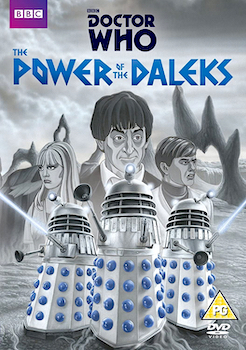
    The Power of the Daleks

    The Power of the DaleksThe first of the current wave of animations was The Power of the Daleks — a good place to start anyhow because it’s Patrick Troughton’s debut serial in the lead role. As he was just the second (canonical) Doctor, that makes the serial significant for the ground it was breaking — it’s the first time we’re introduced to a new actor taking over the series, something that’s become a staple of the programme (to the extent that the major plot lines and revelations of the most recent series were about the Doctor’s ability to regenerate). Sensibly, the production team paired their new leading man with the thing that had ensured the series’ popularity: the Daleks. And while the Doctor is dealing with a change of face and attitude, so are his enemies: these Daleks are keen to act as subservient aids to a human colony who have discovered their long-buried space capsule. Surely the evil fiends can’t’ve turned good?! (Spoiler alert: of course they haven’t.)

    Away from such juxtaposition of temperament, it’s a good chance for the new Doctor to prove his mettle. It worked, too — obviously so in the case of ensuring the series’ longevity, but also as a story in its own right: in the last Doctor Who Magazine poll, this was voted the 19th greatest Who story ever (which, out of a list of 241 stories at the time, is no small achievement, especially for a missing black & white adventure. Indeed, if you limited the poll to just black & white stories, it came 3rd). It’s easy to overlook now, when we’re so used to regeneration, but Troughton comes in and makes the role his own, plays it his own way, isn’t even vaguely an emulation of Hartnell. It would’ve been the easiest thing in the world to cast someone like Hartnell and have them behave like Hartnell, but changing the character up so much is a braver, more interesting choice — and probably really helped the programme in the long run.

    As for the story itself, as well as the mystery and threat of the Daleks it has a nice line in the petty political squabbling and machinations of the human colony’s leadership. Almost as much time is spent worrying about rebels, sabotage, and plots to rule as there is about the Daleks. I feel like that’s the kind of extra angle that often gets overlooked in Who nowadays, what with the need to deliver fast-paced 45-minute blocks of entertainment. (Maybe that’s unfair — almost everything of interest gets overlooked in Who right now, and previous eras of the revived show certainly weren’t averse to a little commentary on the pettiness of humanity.) There are some great performances too, especially Robert James as the scientist Lesterson, who has the most prominent character arc of anyone across the serial. His ultimate fate is particularly well written and acted, his final moments tragic and hilarious and barmy all at once.

    As for the animation, it’s understandably a bit basic (these are not big-budget productions) and at times unsure what to do with itself — there’s the occasional bit of ‘dead air’ in the original soundtrack, probably where someone was just walking across a room or giving a reaction shot or something, and the animation isn’t quite up to filling the gap with something of interest. There are definitely times when it feels like you’re missing a little bit of business that was deemed too difficult or vague to animate. It would’ve been nice if they could’ve invented something to happen during those moments, instead of just holding on shots of literally nothing going on. But that’s probably nitpicking. As a visual to accompany the soundtrack, it’s more than adequate. Given the choice between this, a slideshow of rarely-changing photos, and audio-only, I’ll take the animation, thanks.

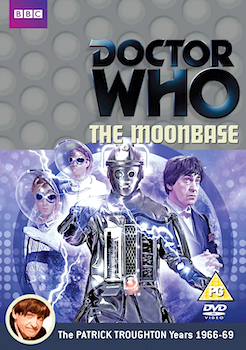
    The Moonbase

    The MoonbaseNext up by the series’ original chronology is The Moonbase — in terms of animation, Power was released in 2016 while The Moonbase was done in 2013; and half the serial survives, so it’s only half animated. It’s actually this older effort that looks better, the animation feeling much smoother and more realistic than Power, and making that look even more stilted and Flash-y by comparison. Apparently production on Power was incredibly rushed, and obviously they had to complete six episodes vs just two for The Moonbase, but the visual style is also slightly different; less obviously cartoonish.

    As for the story itself, we move from one iconic Who monster to another: the Cybermen. And it’s another landmark in Who history: the first base-under-siege story, a subgenre that would become a staple of the Troughton era and keep popping up in the decades to follow. It’s also only the second Cybermen story, and they show off a sleeker redesign, which sets a precedent — whereas the Daleks have looked fundamentally the same since their first appearance, the Cybermen are redesigned almost every time they appear. Personally, I love the Cybermen, but this is not their finest hour.

    The serial’s biggest problem is that it seems slow and uneventful. It begins with the Doctor and friends having a jolly holiday on the Moon, which I actually quite liked — bear in mind this was made in 1967, two years before man actually walked on the Moon, and you can see why the very fact of our heroes being there would be worthy of such emphasis. But it sets the tone for the story to come — Episode 2, for example, mostly revolves around the base’s crew spouting technobabble while they run checks to repair a machine. This came 113th in the aforementioned DWM poll, and with time wasting like that it’s easy to see why. At least the cliffhangers are effective, even if they don’t always make sense — but you can see how that would build the series’ reputation for them. It’s a shame such a defining aspect of the show has mostly been lost in the modern era.

    The serials was written by the Cybermen’s co-creator, Kit Pedler, an actual scientist who was brought on to bring “scientific rigour” to the programme. These scripts do feel like they come from someone with a keen interest in science — there’s plenty of jargon thrown around; the Doctor runs medical tests and experiments (rather than just waving his sonic screwdriver around as he would nowadays); Ben and Polly cooking up a plan to defeat the Cybermen with a solvent cocktail, based on Polly’s nail varnish remover…! It’s easy to joke about “defeating Cybermen with nail varnish remover”, but it’s a scientific way of problem solving, which is quite good really for a show that was still very much aimed at children and with some degree of an educational remit. It’s just a shame that the narrative around it is so sluggish. Maybe they were going for “atmospheric”. I don’t think it worked. Shame.

    The Macra Terror

    The Macra TerrorMuch more successful in that department is The Macra Terror. No full episodes survive of this serial, so it’s back to 100% animation, and once again we have a change in style. It’s in widescreen, and it’s in colour, and the locations are bigger and more varied than they would’ve been on ‘60s TV, and the audio is so clean and clear it could’ve been recorded yesterday. It makes for a surreal viewing experience at first — are we sure this is a genuine Second Doctor story from over 50 years ago, not some recreation with perfect impressionists? After the previous animations tried to emulate the style of the original episodes, it’s a definite change of pace, but why not? It certainly brings some added dynamism to a few of the scenes — like Power, there are some all-but-silent sections; unlike Power, many of them now have some interesting visuals, which is most welcome. They had to make some trims here and there, I think for budget reasons (stuff that is inessential to the main narrative and would’ve been time consuming to animate), which is a shame (it would’ve been particularly fun to see the whole TARDIS crew dance a jig to escape at the end), but it is what it is.

    As for the story itself, it offers an intriguing setup, with a good setting (a colony of happy workers) and mystery (what was seen by the ‘mad’ man they want to hush up?) It unfolds at a much better pace than The Moonbase, with a regularly developing and shifting plot. For example, many penultimate episodes of classic Who serials devolve into running around in place to delay the ending by another week. The Macra Terror is the antithesis of that, introducing brand new locations and plot points to genuinely further the narrative and mystery. There are exciting cliffhangers, too — again, probably much more so in animation than it was in the original live action. The Macra themselves benefit in particular. They’re basically giant crabs, which was a bit overambitious for the series to attempt in the ’60s. The originals have the look of an awkward primary school art project and aren’t actually that big, whereas the animated versions are huge and genuinely threatening. When one attacks Polly in Episode 2 it’s epic and exciting and scary… in animation. This is one of the few parts that survives from the original (thanks to censors in Australia) and… it ain’t that. The Macra is so much smaller and so much less manoeuvrable that you can see Anneke Wills and Michael Craze working overtime to convince you their escape requires any more than just getting up and wandering away. It’s a perfect example of how the artistic licence taken by the animators has paid off in dramatic terms.

    I’ve always got the impression that The Macra Terror has a pretty poor rep among Whovians. I hope the animation has caused it to be re-evaluated, because I think it’s really rather good.

    The Wheel in Space: Episode 1

    Finally for now, an abridged version of The Wheel in Space: Episode 1, which was created for the BFI’s annual Missing Believed Wiped event about missing TV. The Wheel in Space is a six-parter, meaning it runs approximately 150 minutes, but here we get just 11 of them. The animation itself is about the same quality level as the others, and it’s a nice little bonus in its own way, but ultimately it feels rather pointless; like an extended tease for a full-length animation that isn’t coming. The serial may well be animated in full someday (if they’re happy to do The Faceless Ones and Fury from the Deep, which have no obvious hooks to interest casual / on-the-fence viewers, then surely something with the Cybermen is a no brainer), but if they do then what purpose will this have served? I expect they’d want to do these 11 minutes again rather than make the remaining 139 to match. And if they don’t ever do it in full, well, the serial is still left with three-and-a-half episodes visually missing. But, like I say, it’s enjoyable enough for what it is.

    In Part 2… new Red Dwarf; Mark Kermode’s Secrets of Cinema; the worst of The Twilight Zone; and quickies on McDonald & Dodds, The Rookie, Star Trek: Picard, and National Theatre’s YouTube stream of One Man, Two Guvnors — which, I’ll tell you now, is great fun, worth your time, and you only have until 4pm tomorrow to start watching. It’s here.

    Hustlers (2019)

    2020 #39
    Lorene Scafaria | 110 mins | streaming (HD) | 2.39:1 | USA / English | 15 / R

    Hustlers

    A struggling stripper (Constance Wu) is taken under the wing of an older pro (Jennifer Lopez) at a club frequented by super-rich Wall Street types. The going is good… until the 2008 financial crash happens, knocking out their clientele and, in turn, them. Of course, the Wall Street guys got away scot-free after that debacle, even as others floundered — including our stripper friends. That is, until J.Lo and co come up with a scheme to rip the bastards off.

    Crime movies are sometimes criticised for glamourising the illegal acts of their characters. Sometimes that’s people misreading the film (in the case of many a Scorsese movie, for instance). Sometimes it’s true (the many rip-offs by people who misread Scorsese movies, for instance). Sometimes it’s unavoidable, because we’re going to be on the criminals’ side however you present it — and I think that’s the case here. Those fuckers had it coming, and these girls brought it to them. Not all heroes wear capes clothes.

    Even more satisfyingly, it’s based on a true story. Director Lorene Scafaria leans into the story’s caper movie parallels just the right amount, giving the movie a great tone — funny without turning it into an outright comedy; heartfelt without getting schmaltzy; a crime drama without getting self-consciously Gritty. Her direction is fantastic, with exciting shot choices, editing tricks, sound design, and fitting needle drops. But among the razzmatazz she doesn’t lose sight of the point: it’s about these women and their relationships as much as it is about the scam they pulled.

    Every day they're hustlin'

    And so the film rests heavily on the shoulders of Wu and Lopez, but they’re both strong enough to carry it. Wu gets the bigger arc — from nervous newbie to confident co-conspirator to a frustrated “only adult in the room” position when others begin to push things too far. We also see her in framing flash forwards, where she’s in a different position again. Normally I hold little truck with this kind of framing device, because it’s often a lazy shortcut through the story or gives away too much of where thing are going. Here, though, it’s just tantalising enough to make you wonder where exactly she’s ended up, and therefore how exactly she got there. J.Lo’s performance has attracted plenty of praise (there was widespread disappointment when she didn’t get an Oscar nom), and she is wholly convincing as an outwardly glamorous and successful woman with a steely survivor’s core.

    “Strippers rip off rich businessmen” sounds like the setup for an exploitation movie, and in other hands it probably would’ve been. But without a leering gaze, and with a true-story basis that remembers these women are human beings, there’s a dimension of reality that elevates proceedings — even as it’s still fun seeing the underdog pull a fast one on schmucks who deserved it.

    4 out of 5

    Hustlers is available on Amazon Prime Video in the UK from today.

    The Self-Isolated Monthly Review of March 2020

    I hope you’ve got time for a long read (I know you do — you’re stuck at home too, right?) because there’s a tonne of stuff to witter about in this month’s update.

    So, settle down with some of the stuff you’ve stockpiled (well, okay, you shouldn’t really need pasta or loo roll to get through this post… I hope…) and while away your isolation with my self-centred lists and stats.


    #31 The Karate Kid Part II (1986)
    #32 Won’t You Be My Neighbor? (2018)
    #33 The LEGO Movie 2: The Second Part 3D (2019)
    #34 Harakiri (1962), aka Seppuku
    #35 Showman: The Life of John Nathan-Turner (2019)
    #36 Judgment at Nuremberg (1961)
    #37 The Invisible Guest (2016), aka Contratiempo
    #38 Godzilla: King of the Monsters 3D (2019)
    #39 Hustlers (2019)
    #40 Fast & Furious: Hobbs & Shaw (2019)
    #41 Last Chance Harvey (2008)
    #42 Red Joan (2018)
    #43 Late Night (2019)
    #44 Quartet (2012)
    #45 The Lady Vanishes (1938)
    #46 Ice Age: Dawn of the Dinosaurs 3D (2009)
    #47 The Platform (2019), aka El hoyo
    #48 The Battle of Algiers (1966), aka La battaglia di Algeri
    #49 Spider-Man: Far from Home 3D (2019)
    #49a Peter’s To-Do List (2019)
    #50 The Mad Magician 3D (1954)
    #50a Spooks! 3D (1953)
    #50b Pardon My Backfire 3D (1953)
    #51 A Man for All Seasons (1966)
    #52 The Viking Queen (1967)
    #53 Aladdin 3D (2019)
    #54 One Cut of the Dead, aka Kamera wo tomeruna! (2017)
    #55 Knives Out (2019)
    #56 The Breakfast Club (1985)
    #57 So Dark the Night (1946)
    #58 Missing Link (2019)
    Harakiri

    The Invisible Guest

    The Lady Vanishes

    Knives Out

    .


    • I watched 28 new feature films in March. Boy, does that give me a lot to talk about…

    So, let’s break it up a bit. First, some stats…

    • That’s my biggest month since July 2018, which also had 28 films. They’re now tied as my 4th best months ever.
    • Talking of all-time numbers, it’s my best March ever, with a total that’s double the month’s previous average of 14.4. In fact, it single-handedly pulls that average up by over one whole film, to 15.5.
    • Talking of averages, it also surpasses and increases both my rolling average of the last 12 months (previously 12.75, now 13.3) and my average for 2020 to date (previously 15.0, now 19.3).
    • Talking of numbers that are almost 20, it’s my 20th month ever to have 20+ films, and my first 20+ month since last May.
    • Talking of months with 20+ films, March is the month where I have the greatest consistency at reaching a total of 20+. I’ve done it every year since 2016 — that’s five years in a row now. It means March makes up fully 25% of all months with 20+ films. For comparison, there’s no other month where I’ve done it for more than two years in a row.
    • Another milestone: I reached (and passed) #50, i.e. halfway. Except I’m aiming for at least 120 nowadays, so halfway is another couple of films away yet.
    • Nonetheless, this is the second-furthest I’ve ever reached by the end of March, just ahead of #57 in 2018, but reasonably far behind 2016’s #67. What does this tell us about how the rest of the year might pan out? Bugger all. In 2018 I ended up reaching #261, whereas in 2016 I ‘only’ got to #195. And for another point of reference, March 2015 ended at #44, over 20 behind 2016, but ended the year five ahead, at #200. So, y’know, it’s all meaningless.
    • I also had a really good month for my Rewatchathon (see further down this post for more about that). I really should go back and produce a full set of numbers for every month so I can include that in comparisons too…

    Talking of my Rewatchathon, what of my other viewing challenges…

    • This month’s Blindspot films: influential guerrilla war movie The Battle of Algiers; plus, I watched the first of what I’m calling my ‘overflow’ films (unseen leftovers from previous Blindspot challenges), seminal ’80s teen comedy The Breakfast Club. Also Harakiri, which merited a mention in my Blindspot post this year about why it wasn’t included (I’d forgotten about that when I randomly chose to watch it anyway!)
    • From last month’s “failures” I watched Fast & Furious: Hobbs & Shaw, Hustlers, The Karate Kid Part II, and Late Night.

    Finally, some observations about the other films…

    • It’s fundamentally meaningless, but this month I watched my first feature films of the years whose titles begin with nine letters of the alphabet: F, G, H, I, K, O, Q, V, and W. That’s 35% of the alphabet covered in one month — only slightly more than the seven / 27% in January and eight / 31% in February, but then this task gets harder as the year goes on (January has a massive advantage, for hopefully-obvious reasons, whereas the most any of the remaining nine months would now be able to manage is two / 8%).
    • Another first: The Viking Queen was the first film I’ve watched on DVD this year.
    • Talking of DVDs, I watched Judgment at Nuremberg on the BFI’s recent Blu-ray release, which I bought even though I’d only bought the DVD a little while ago. Well, when I fished out that DVD to put on my “to sell” pile, I found it still had the dispatch receipt inside, which showed I bought it in… 2010. A whole decade ago! Sometimes I worry about my sense of the passage of time…
    • As you can tell (as if you didn’t already know), picture quality is important to me. So I could probably write an entire post about the weirdness I’ve been experiencing with Netflix’s PQ of late. I started streaming The Platform, but after it maintained a speed of just 0.57 Mbps — and looked terrible because of it — I gave up and, er, sourced it elsewhere. I’ve tried it again several times since, at different times of the day and night, and it’s always 0.57 Mbps. The same thing happened with Missing Link, although that was 1.21 Mbps so was somewhat more watchable (I still went and got a better copy from somewhere else, though). That led me to try about a dozen more titles, all of which came through at completely different rates, some reasonable, some not. It doesn’t seem to be connected to them needing different amounts of data or needing some time to get up to speed, either — it appears to be totally random. And it doesn’t seem to waver. I had decided to just cancel my Netflix subscription until all this is over (because I presume it’s connected to the speed-limiting they’re reported to be doing in Europe) — after all, it’s not as if I don’t have enough else to watch… but there’s loads of stuff I really do want to see on Netflix, and some of it is still streaming at a reasonable quality. So, I’m undecided.
    • As you can tell from the lack of blue text in the listing above, I haven’t reviewed a single film from this month’s viewing. I thought this might be the first time that’s happened, so I trawled back through all 118 monthly updates to check, and I can confirm… it’s not. In fact, it last happened less than a year ago, in July 2019. You have to go back over five more years, to May 2014, to find the time it happened previous to that; but it happened once in 2013 and three times in 2012, too. So, yeah, not really news.
    • I feel like the only person in the world who hasn’t (re)watched Contagion this month. If you’re interested, my quickie review from when I did watch it is here.


    The 58th Monthly Arbitrary Awards

    Favourite Film of the Month
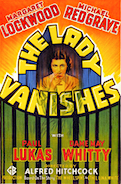
    I saw quite a few great films this month, and usually that would make this choice very hard, but I fell head over heels for Alfred Hitchcock’s The Lady Vanishes. I don’t think it comes up too often as one of his very best, but it’s definitely one of my favourites from his whole filmography.

    Least Favourite Film of the Month
    I know it’s an acclaimed classic, but the film I least enjoyed actually watching this month was The Battle of Algiers.

    Best 3D of the Month
    I watched six new feature films and two shorts in 3D this month (plus four more features in the Rewatchathon), which I expect is a personal best. Setting aside the quality of the film itself, the one with the very best 3D was The Mad Magician. It’s in black & white, which was a bit weird at first (not sure I’ve ever seen a black & white film in 3D before), but because it’s from the ’50s it was actually shot in 3D, not post-converted, and while post-conversions are often very good nowadays, there’s so much extra subtle detail you get when something’s been shot in stereo for real.

    Best Twist of the Month
    Who doesn’t enjoy a twist? Filmmakers certainly do, and so they abound this month — even The LEGO Movie 2 has one (kinda). Prime examples include Harakiri (which keeps you on your toes with constantly shifting information), Knives Out (which has more up its sleeve than simply whodunnit), and So Dark the Night (that is a whodunnit, but if you watch it, try to read as little as possible first). But the winner this month is The Invisible Guest, because it managed to get almost as far as the reveal before I guessed what was really going on, in part by peppering plenty of about-turns along the way. Nicely done.

    The Audience Award for Most-Viewed New Post of the Month
    It’s a long-standing observations that TV-related posts do well in this category, especially when they’re given plenty of time to amass hits. So, as I posted my 56th TV column way back on the 8th, it’s no surprise to see it win out easily. (The highest film post was The Lion King.)



    As I mentioned in this month’s viewing notes, I didn’t rewatch Contagion; but that aside, my Rewatchathon is going rather well this year, racing ahead of target. Mainly, I’ve been revisiting in 3D films I’d previously only seen in 2D.

    #9 The LEGO Movie 3D (2014)
    #10 The Lion King 3D (2019)
    #11 Godzilla 3D (2014)
    #12 Sherlock Holmes and the Secret Weapon (1942)
    #13 Sherlock Holmes in Washington (1943)
    #14 Mission: Impossible – Fallout 3D (2018)

    Starting with the 3D, then, that Fallout link takes you to my full review of it in 3D, so no need to repeat myself. My Lion King review isn’t expressly about the 3D, but, as I do discuss in the review, I was impressed by it, and it led me to even enjoy the film a little more. As with most computer animated films, The LEGO Movie looks awesome in 3D. Indeed, the skilful way the filmmakers emulated the scale of LEGO is only emphasised by the use of depth here. Despite the fact I already owned the (2D-only) Special Special Edition, I bought another copy in 3D on the strength of the 3D presentations of the LEGO Batman and Ninjago movies, and I wasn’t disappointed. (Now I just ought to watch some of the SSE-exclusive bonus features to justify that purchase…)

    Godzilla’s 3D didn’t generate much comment from me, which is a shame because you’d think the scale would lend itself. It’s not bad, just not special. The film itself is not perfect either, but it’s a darn sight better than most people give it credit for. One thing that’s often criticised is how sparingly Godzilla is actually in it, but I think writer-director Gareth Edwards paced it just right — when the big guy finally turns up, it’s an electric moment.

    I totally forgot that I’d randomly rewatched Sherlock Holmes and the Secret Weapon in December 2017, but colourised. This time was the original black & white version, as part of my rewatch of the whole Basil Rathbone Sherlock Holmes series on Blu-ray. I more or less stand by my original review, which I also stood by in 2017 (though I’m back to being less keen on Lionel Atwill’s Moriarty again), so I guess my opinion on this one is fairly certain. However, I liked Sherlock Holmes in Washington more than I’d remembered; though my original review (linked above, obv) isn’t that damning, so clearly its poorness had self-inflated in my memory. That said, I do still think it’s one of the series’ weakest outings.


    I normally begin this section by looking at the stuff I failed to see on the big screen last month, but, well, that’s dried up, hasn’t it? However, though it may feel like Coronavirus has been denying us social experiences for, like, ever, it’s actually only been a couple of weeks — before everything went completely self-isolating-tastic, cinemas were full of Onward, Military Wives, Misbehaviour, Bloodshot, Fantasy Island, and Dark Waters. Even My Spy actually came out over here (in the US it was pushed back into Bond’s vacated release slot. Presumably they’ll be abandoning that now too).

    Now, of course, you have these “direct from the cinema” rentals popping up, including Emma (which I’ve seen), The Hunt, and The Invisible Man, plus Bloodshot and Military Wives from the previous list (no Onward this side of the pond). They mostly cost £15.99 for a 48-hour rental (though Bloodshot has gone straight to £13.99 to own, suggesting they don’t expect anyone will want to). At that price, it isn’t worth it to me. For comparison, a ticket at my local cinema is £5.75 — I’m interested in seeing most of those films, but not almost-three-times-what-it-would’ve-cost-me-at-the-cinema interested. I’ll wait ’til they drop to a sensible price and/or hit disc.

    Some digital rentals have drawn me in, though — the cut-price ones Amazon offer as a perk of being a Prime member. For either 99p or £1.99 a pop I’ve got Aniara, End of the Century, It: Chapter Two, Rambo: Last Blood, and Ready or Not all ticking down to expiry dates throughout April.

    I have less compunction about splurging money on disc purchases. Last month I mentioned that “I got a bit carried away with Blu-ray purchases”, with 16 films on disc among my failures. This month puts that in the shade, with a ridiculous 40 films added to my Blu-ray collection (and I actually watched some new stuff I bought, so the true total acquired this month is even higher). Specific splurges include an Arrow sale (mostly noirs, like The Big Clock, Nightfall, and Phantom Lady, plus the Sister Street Fighter collection); an Indicator sale (their seven-film Samuel Fuller box set, plus A Dandy in Aspic, Footsteps in the Fog, The Legacy, and No Orchids for Miss Blandish — none of which I’d even heard of before Indicator released them, but they do make things sound so good); and a bunch of 3D discs of films I’d already seen and enjoyed to some degree (Bolt, Tangled, Pan, Journey to the Center of the Earth, and Noah, which is available from Germany in a well-reviewed 3D conversion). Talking of Germany, I also just discovered they’ve had Steven Soderbergh’s Solaris on Blu-ray for a couple of years, so I imported that too (for a very reasonable price, I must say, from Amazon UK). I also bought Criterion’s release of The Blob at an offer price from them, and Bong Joon Ho’s The Host at an offer price from HMV. While trying to fill out a different multi-buy offer I upgraded my old DVD of the X Files movie to Blu, which I knew would put me on track to upgrade the whole series eventually… and it did, just a week or two later, getting it for a good price secondhand on eBay… and then I upgraded I Want to Believe, just to complete the set. I also upgraded The League of Extraordinary Gentlemen — yeah, I know, but I actually quite liked it back in the day, and I saw this article on Twitter that swayed me. And that’s not even everything, but dear God, it’ll do.

    Back to streaming, then, and the big names have been trotting out plenty of content this month, only spurred on by everyone being stuck at home right now — and by the launch of a major new competitor in Disney+. I haven’t subscribed, nor taken the free trial (yet), so I don’t really know what’s on there besides what everyone’s been talking about, i.e. a months-late release of Star Wars TV series The Mandalorian (which they’re sticking to releasing weekly, even though it’s all been out in the US — and on piracy sites — for months), and the live-action remake of Lady and the Tramp.

    Over at the usual suspects, Netflix had their second back of Studio Ghibli films, which for me means Arrietty (though I own it on Blu-ray), The Cat Returns, and My Neighbours the Yamadas. I also want to rewatch Spirited Away, and as I only own it on DVD, HD on Netflix is tempting. Most of their original additions this month seemed to be TV series, although there was Mark Wahlberg in Spenser Confidential, but it was so poorly reviewed that I don’t intend to bother. From the back catalogue, they just recently added The Death of Mr Lazarescu. I remember that getting recommended a lot back when it came out. I never really knew what it was about, but the Netflix blurb begins: “Amid a pandemic”, so I can see why they’ve acquired it now.

    As for Amazon, they could offer up recent stuff like The Aeronauts (one of their own, so I think it even bypassed disc), Blinded by the Light, and Midsommar. Other additions catching my eye included sci-fi drama Marjorie Prime (I heard about this somewhere only recently, but I forget the context other than it was a recommendation); The Immigrant (Marion Cotillard, Joaquin Phoenix, and Jeremy Renner in a film from the director of Ad Astra); Antiviral (a sci-fi-horror-thriller written & directed by Brandon “son of David” Cronenberg); and Intacto (a film I’d completely forgotten all about, but the poster image struck a deep memory of something that had once been highly recommended and I really wanted to see, probably right back when it first came out, 18 years ago(!) Well, now it’s on my watchlist again).

    Both of those added a lot more than I’m bothering to list here, so if you’re a subscriber to either, do be sure to keep an eye on sites like New on Netflix UK or this Amazon equivalent.

    Finally, I went to cancel my Now TV Sky Cinema subscription at the start of the month, but they offered me a great deal: three monthscompletely free. You can’t turn that down, can you? Even if I only watched one film on there during those three months, the cost-benefit ratio would be fine. They add a new premiere every day, plus a handful of other titles now and then, but, despite that, only a couple of newcomers were worthy of note to me: The Goonies (yep, never seen that), Her Smell (people seem to keep recommending it), Robert the Bruce (the unofficial sort-of-sequel to Braveheart), and The Secret Life of Pets 2 (the first one was alright, so why not?)

    (Whew, this section is getting damn long nowadays — and that’s without the further 50 films I had on my long-list but decided not to mention. Maybe I should start doing it as a standalone post — this month it’s over 1,000 words, which is about the same length as one of my longer film reviews!)


    Right now who knows what next week will bring, never mind next month? Though if things carry on as they are (and it looks like the will for a good while yet), perhaps it’ll be a record-breaking month. Or perhaps not. Who knows!