Annihilation (2018)

2018 #45
Alex Garland | 115 mins | streaming (UHD) | 2.39:1 | UK & USA / English | 15 / R
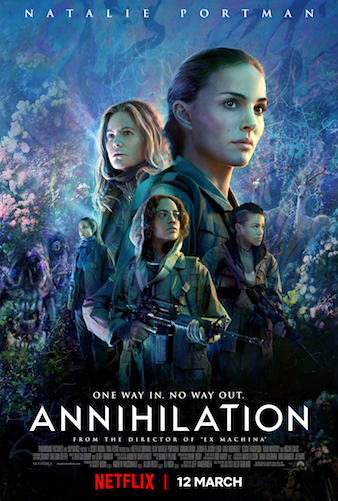
Annihilation

Many column inches (and even more tweets) have been penned about Paramount’s decision to relegate director Alex Garland’s second third film straight to Netflix outside the US, Canada, and China, so I presume the pros and cons of that move have been thoroughly discussed elsewhere. Personally, I’m on the fence: it’s disappointing not to see intelligent sci-fi being given a shot at the box office, but I’m one of those people who’s 50/50 on whether I go to see it or just wait for disc/streaming/etc. (I’ve not even seen The Shape of Water, for example, although that’s partly due to a dearth of convenient screenings during its brief theatrical appearance. Conversely, I did go to Arrival.) Anyway, it is what it is at this point, so let’s move on to the film itself.

Loosely based on the acclaimed novel by Jeff VanderMeer (reportedly Garland read the book once then wrote the screenplay from memory), it follows biologist, academic, and former member of the Army, Lena (Natalie Portman), whose soldier husband Kane (Oscar Isaac) went missing a year ago during a secretive mission. After he suddenly reappears, apparently with no memory of his time away but with some severe medical problems, the couple are scooped up by a military organisation investigating Area X, a top-secret quarantined zone affected by an unexplained phenomenon known as the Shimmer. Various teams have been sent inside the Shimmer, but Kane is the only person to ever return. As his health deteriorates, Lena, desperate for answers, joins the latest squad to venture inside. That’s where stuff gets crazy…
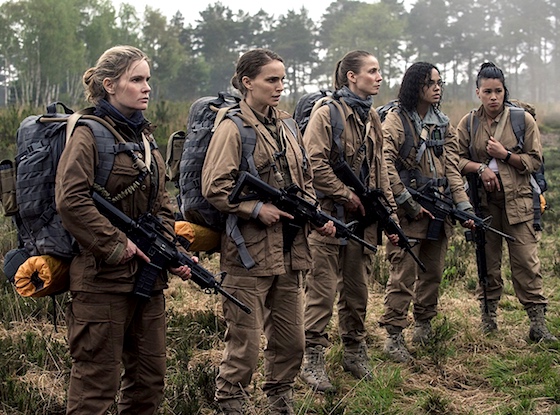
Squad goals

The first thing Annihilation made me think of was Denis Villeneuve’s Arrival. The connection was initially triggered by the score: the ambient soundtrack by Geoff Barrow and Ben Salisbury reminded me so much of Arrival’s that I had to check this wasn’t a last work by Jóhann Jóhannsson. Once I spotted that, the other similarities in the story leapt out: they’re both thoughtful sci-fi parables about a female university lecturer being co-opted into a military operation to investigate a strange extraterrestrial presence on Earth, while also remembering her family life in flashbacks.

Despite Paramount’s insistence that the film was too intelligent for non-US audiences (you can take a moment to laugh at that notion if you like), Annihilation is perhaps more accessible than Arrival, at least initially. Whereas Villeneuve’s film played like a character drama, Garland’s has a strong adventure-movie vein, also laced with elements of the horror genre. It’s still not a mile-a-minute thrill-ride, but, if you wanted, you could engage with it on the level of a quest through an alien event, encountering strange phenomena and creatures, with events of life-threatening jeopardy. However, for all the original sci-fi ideas, it does also touch on weightier, more human psychological issues — as the Empire review summarised it, “depression, grief and the human propensity for self-destruction.”
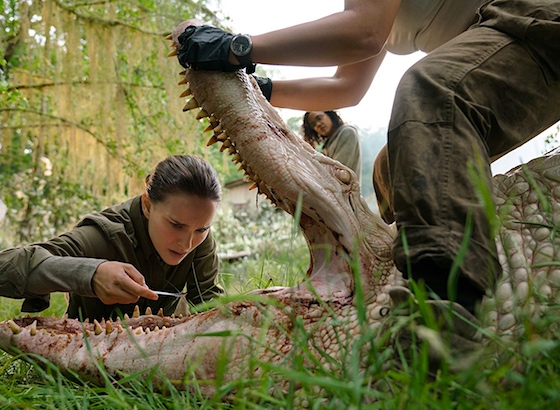
All the better to eat you with

Naturally this material is carried by the cast. Portman makes for an interesting lead. Clearly damaged by grief, she’s quite a cold figure, which may distance her from some viewers in the way it does from some of her team mates. But there’s more to it than that, and Portman delivers subtle nuances that hint at more beneath the surface. The rest of her all-female squad — played by Jennifer Jason Leigh, Tessa Thompson, Tuva Novotny, and Gina Rodriguez — all have distinct personalities, all get brief subplots and moments, and they’re mostly managed with an equal level of understatement. Perhaps the best is Thompson, whose calm, gently heartfelt performance is quietly superb, and even more striking as it marks a huge contrast to her star-making turn in Thor: Ragnarok just a few months ago. As a pair of films to be a calling-card for her skills, one could barely ask for more.

A lot of disappointment about the lack of a theatrical release stems to not being able to see these visuals on a cinema screen; not being able to experience the audio with a cinema sound system. Well, that partly depends on your own setup at home, of course. Setting that aside, though, while there are certainly some very striking visuals, it wasn’t as consistently stunning as some reviews made it sound. I’m not saying it wouldn’t benefit from the big screen, especially if you’re particularly fond of that experience, but I didn’t feel I was missing much scale by watching at home. I felt similarly about the sound design, though I do say that as someone with a 7.1 system. For spectacle, the intricate and colourful end credits are the most striking bit — I’m certain they benefitted from my viewing the film in 4K HDR.
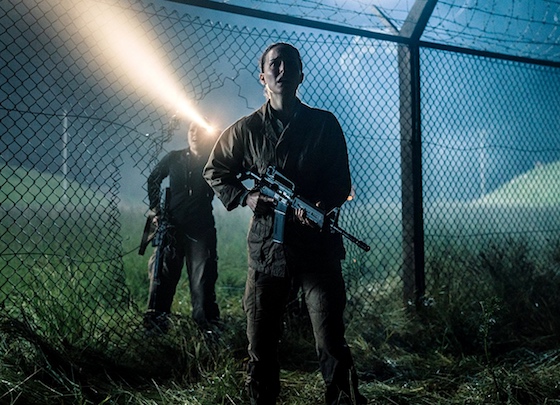
Scared of the dark?

However you get to see it, writer-director Alex Garland has crafted another sci-fi mystery/thriller that engages on multiple levels. For me it was somewhat damaged by the hype, perhaps a result of US reviewers frantically urging people to get out and see it to prove that Paramount’s lack of faith was a mistake. While I didn’t instantly love it in the same way as, say, Arrival, or Garland’s debut, Ex Machina, it’s undoubtedly a fascinating, thought-provoking slice of science-fiction — and a much-needed critical success for the “Netflix Original” brand after a couple of recent duds. I’d also say it places Garland ahead of genre contemporaries like Neill Blomkamp and Duncan Jones as a filmmaker to keep an eye on. Okay, he’s not quite Denis Villeneuve, but he’s a lot closer than the others.

4 out of 5

Annihilation is available on Netflix in most of the world now.
The Jungle Book (2016)

2018 #40
Jon Favreau | 106 mins | Blu-ray (3D) | 1.78:1 | USA & UK / English | PG / PG

The Jungle Book

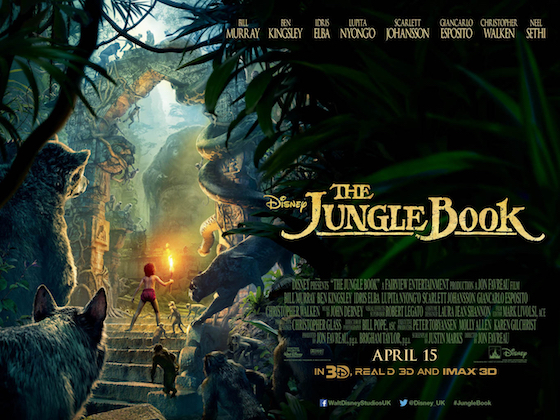
One of the successes that has convinced Disney to remake basically their entire animated back catalogue in live-action, Jon Favreau’s take on Disney’s adaptation of Rudyard Kipling’s stories barely counts as “live-action” really: the vast majority of it is animated — often the only real bits are Mowgli and some (but by no means all) of the props and scenery he interacts with — but it’s done to be photo-real and so we pretend that’s live-action.

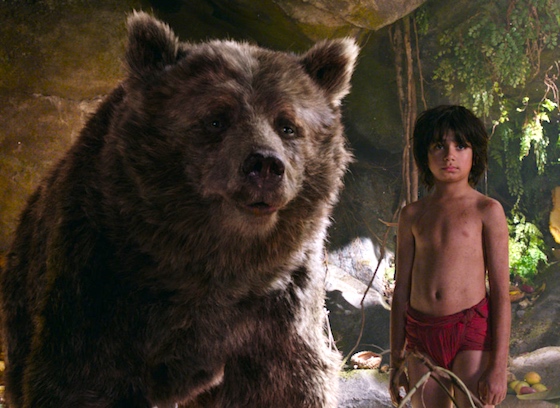
Whatever you want to call it, the visuals are stunning. It’s incredible stuff by the animators, though also by Favreau and DP Bill Pope to make all that hard work look great as a film too — they put special effort into making sure the CGI was properly lit, etc. And I reckon it’s even better in 3D. Presented in a screen-filling 1.78:1 ratio, unconstrained by the black bars of your nowadays-standard 2.35:1, it honestly feels like a window into another world. You sometimes see reviews of good 3D that say “you feel like you could reach out and touch it”, which I’ve always taken as A Thing People Say rather than an actual inclination, but at one point I did feel like I wanted to reach out and stroke Baloo’s fur, he looked so soft. The end credit sequence (a kind of pop-up book routine) looks particularly great in 3D, which helps to sell the miniaturised dimensions.

Bear necessities

Anyway, the film itself. Disney’s Jungle Book is such a well-known childhood classic that I don’t imagine you need me to recap its plot, though this version doesn’t ape it one-for-one. When Favreau was first brought on board the story treatment Disney had in development was much closer to Kipling’s work, including none of the changes Disney made when they adapted it before (i.e. adding songs and the character of King Louie), as well as being more violent, aimed at a PG-13 rating. So it was Favreau who decided it should be closer to the Disney classic, aiming to find the sweet spot between the two styles. I think he’s nailed that, mixing in enough that’s familiar from the animation with a bit more seriousness derived from Kipling.

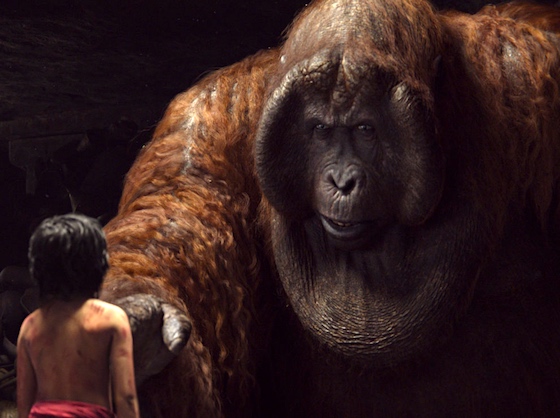
That said, I wasn’t wholly convinced by the use of the songs. The rendition of Bare Necessities is disappointingly truncated, though at least fits in context. Conversely, King Louie’s song, I Wan’na Be Like You, is so out of place that I found the sequence kind of uncomfortable. Weirdly, its reprise at the start of the end credits is great. There it’s followed by Trust In Me, which isn’t included in the film proper but might actually have worked there.

I wanna be like you-oo-oo

Still, the film as a whole functions well; surprisingly well, one might even say. You may remember the Rotten Tomatoes score for it went crazy when it came out, hiding the high 90s — it ended up at 95%. And it’s the perfect example of why Rotten Tomatoes doesn’t score a film’s quality, but does score the chance that you’ll enjoy a film. I’m not sure many people would think this is a “9.5 out of 10” kind of film, but one there’s a 95% chance you’ll think is good? Yeah.

4 out of 5

The Jungle Book is available on Netflix UK from today.

Murder on the Orient Express (2017)

2017 #164
Kenneth Branagh | 114 mins | cinema | 2.39:1 | USA, UK, Malta, France, Canada & New Zealand / English, French & German | 12A / PG-13

Murder on the Orient Express

Did we need another version of Murder on the Orient Express? That seems to be the question that preoccupies many a review of the film, primarily with reference to the Oscar-winning 1974 version directed by Sidney Lumet and starring Albert Finney as Agatha Christie’s Belgian detective, Hercule Poirot, alongside an all-star supporting cast. That’s not the only other adaptation of arguably detective fiction’s most famous novel, though there were fewer than I thought: a modernised TV movie starring Alfred Molina was made in 2001, and it was of course filmed as part of the David Suchet Poirot TV series in 2010, but that’s your lot (in English — the Germans and Japanese have both done it on TV). So, on the one hand, maybe we should be all set for screen versions; on the other, it’s not like it’s the only remake.

So, if you’ve not seen a version before, you’re spoilt for choice. If you want to know which I think you should pick… Well, I’ve not seen it, but I imagine we can discount that 2001 TV movie. Suchet is still the definitive screen interpretation of Poirot, but that particular episode is not the series’ finest hour, as I recall. And while I enjoyed the ’74 version a good deal, I wasn’t bowled over by it. Which brings us to this new one.

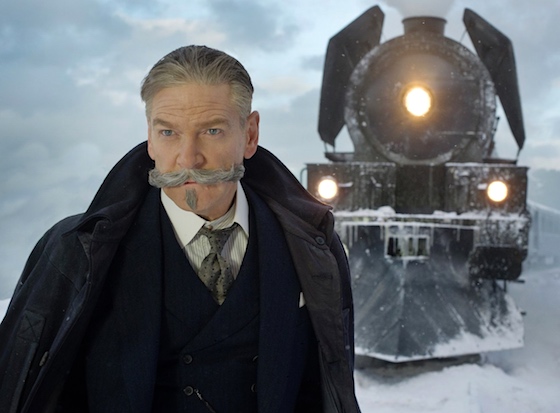
The star of the film: Branagh's moustache

Personally, I thought it was very good indeed. It’s a film of its genre and heritage — by which I mean it functions the way Christie-style murder mysteries always do, and it’s staged and shot mostly with a classical dignity — so if you have a dislike for that then this isn’t revisionist in a way that will win you over. But within those ‘constraints’ it’s very well done. The photography, in particular, is magnificent. Shot on 65mm, but without showing off about it in the way some other directors have recently, it has a richness, a grandeur, and an elegance that is most befitting.

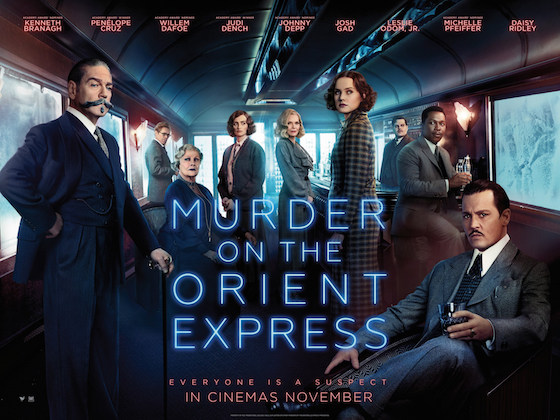
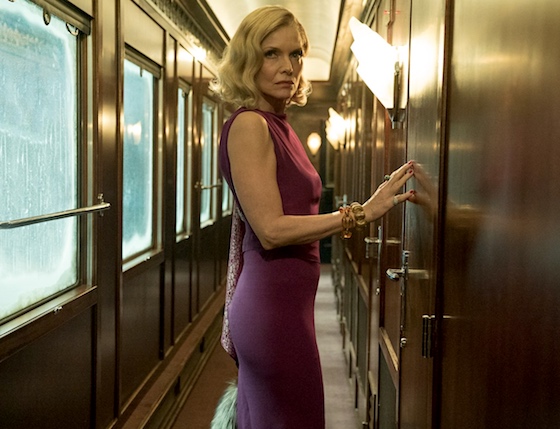
Having mentioned the all-star cast of the previous film, it must be said that this version doesn’t skimp in that department either. The key roles are filled with a veritable who’s-who of acting talent, including big names (Johnny Depp, Michelle Pfeiffer, Penélope Cruz), quality thesps (Olivia Colman, Willem Dafoe), people who’ve worked with Branagh before (many of the small roles), people who tick multiple of those boxes (Dame Judi Dench, Sir Derek Jacobi), and freshly-minted stars too (Star Wars‘ Daisy Ridley, Sing Street‘s Lucy Boynton; depending on your point of view, Beauty and the Beast‘s Josh Gad and Hamilton‘s Leslie Odom Jr as well). The size of the cast and style of the story means that even the most-featured only get a couple of scenes of their own (plus scattered lines in ensemble moments), but the talent involved imbues the roles with inherent character.

A dangerous liaison?

And then there’s Branagh himself as Monsieur Poirot. Most discussion of his performance has focused on the moustache, understandably. It’s certainly a magnificent feat. But Branagh is a very fine actor, of course, and he manages to make Poirot his own — an impressive job when there’s the spectre of David Suchet’s definitive performance looming. I wouldn’t say he’s surpassed Suchet in any way, but his take on the character is different enough to dodge too many direct comparisons, while not being so different that it no longer feels like Poirot, at least to me.

Frankly, I feel like an important element to enjoying the film is to approach it with an openness to it being its own thing — a courtesy I don’t believe it was afforded by some critics and viewers. Many reviews I’ve read had a tendency to compare it to the 1974 film, either in a specific “what I thought of each” sense or a broad “your opinions of that film may colour your view of this one”. I guess that’s a useful metric to some people, but it’s better to judge the film on its own merits, I feel. That said, I’ve also seen some call it too slow, others call it too fast; some say it’s too dull, others say it’s too full of action… No wonder it ended up with middling average scores: never mind not being able to please everyone, it seems like you can’t please anyone. Personally, I thought it largely hit the mark in all those respects.

Classical elegance

And it seems like the wider audience agreed: it ended up grossing $350 million worldwide, which places it in the top 30 releases of 2017. For a film of this type in the current box office climate, that’s an excellent achievement. For comparison, it’s just below the likes of Fifty Shades 2, Cars 3, and The Mummy Mk.III, and it also out-grossed films such as The LEGO Batman Movie, Blade Runner 2049, Split, Baby Driver, and even Get Out. I guess it appealed to a different audience than the one that routinely discusses movies online. It also means we’re getting a sequel, with Death on the Nile set for a 2019 release. Do we need another version of that too? Well, why not?

4 out of 5

Murder on the Orient Express was released on DVD, Blu-ray, and all the rest, in the UK this week.

La La Land (2016)

2018 #10
Damien Chazelle | 128 mins | streaming (HD) | 2.55:1 | USA & Hong Kong / English | 12 / PG-13

La La Land

Oscar statue2017 Academy Awards
14 nominations — 6 wins

Won: Best Picture, Best Actress, Best Director, Best Cinematography, Best Score, Best Song (City of Stars), Best Production Design.
Nominated: Best Picture, Best Actor, Best Original Screenplay, Best Editing, Best Costume Design, Best Sound Mixing, Best Sound Editing, Best Song (Audition (The Fools Who Dream)).

Yes, I am very, very, exceptionally late to the party here. For example: whenever I watch a film I log it on Letterboxd, then have a scan through the ratings my ‘friends’ have given it, whether that’s just one other person or a few dozen. This had by far the highest number of ‘friends’ who’d already seen it that I’ve ever encountered. And it was on Letterboxd that I first encountered La La Land, in fact, when it started screening at festivals in the latter half of 2016 and everyone was raving about it. It was a must-see long before the Oscar buzz started to build, and obviously that only intensified the film’s reputation. It’s a lot of anticipation to heap upon one movie. Fortunately, La La Land can bear it.

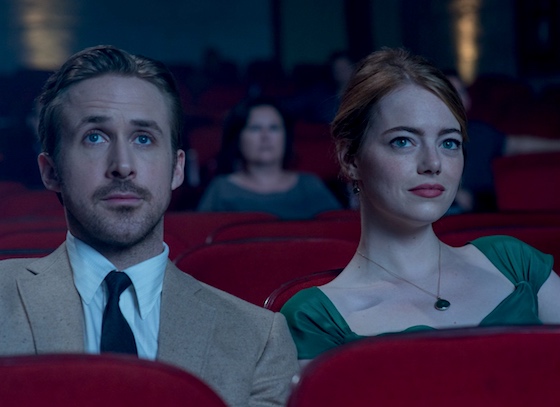
For anyone who’s even later to it than me, it’s the story of aspiring actress Mia (Emma Stone) and aspiring jazz musician Sebastian (Ryan Gosling), who encounter each other randomly, initially hate each other, but fall in love. Don’t worry, I haven’t spoilt the ending — there’s more story beyond that typical romance plotline. And much of it is told through the mediums of song and dance.

Watching the best picture...

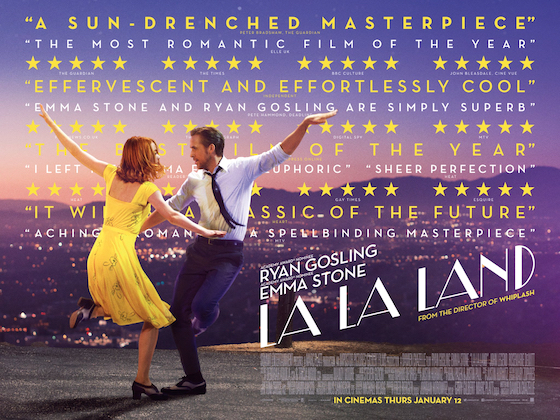
La La Land isn’t “kind of a musical”, or “I suppose you could call it a musical”, or “a film with songs, a bit like a musical” — it is a Musical. And while the leads can’t really sing, that doesn’t stop there being some beltingly good numbers in it — though, for my money, the best either (a) don’t involve the leads at all, or (b) don’t involve singing. Coincidentally, two of those are the set pieces that bookend the film. The opener is a colourful stunner, a bright and breezy singalongathon on a gridlocked freeway, made even more enjoyable by being realised in a (faked) single-take. Related thought: I feel like we need to bring back done-for-real oners — people are faking them too easily and too often nowadays. Though, saying that, another particularly joyful sequence is the dance routine that adorns the poster. Its success lies in part with Gosling and Stone’s well-performed moves, but also, like the opening number, with how well shot it is. I assumed it was done on a set with some CGI’d backgrounds and probably some invisible cuts, but no, it was achieved on location, the shoot squeezed into the real ‘magic hour’ — actually a half-hour window — and is, I believe, a genuine single take.

Now, the other bookend is (obviously) the ending. Well, I think they actually label it an epilogue, because its events occur after the main story; but an epilogue is an addendum, isn’t it?, and I reckon this final sequence is as vital as any other part of the film. It’s how the story really ends, and it’s an all-timer of a finale. That comes both from the tone it takes (no spoilers here, but see my Letterboxd comment) but also the sequence itself, a stunning marriage of visuals, soundtrack, and meaning — and I say this as someone who (for a pertinent example) disliked An American in Paris specifically because of its extended ballet bit at the end. Damien Chazelle well earned his Best Director Oscar.

Finale

Speaking of which, I must mention what went down at the Oscars. Well, not so much the snafu itself (though that made for great telly), but the ultimate result. I think there can be little doubt that Moonlight is a more significant film for our times, for all kinds of reasons, and it’s certainly a quality work of filmmaking in its own right, but La La Land is a more purely enjoyable cinematic experience, with just enough grit in the mix to stop it being too sappy. I don’t resent Moonlight its victory, but I’d’ve voted for this.

5 out of 5

The 2018 Academy Awards are handed out tonight from 1am GMT.

La La Land placed 4th on my list of The 26 Best Films I Saw For the First Time in 2018.

The Love Punch (2013)

2018 #7
Joel Hopkins | 94 mins | streaming (HD) | 2.35:1 | France & UK / English | 12 / PG-13

The Love Punch

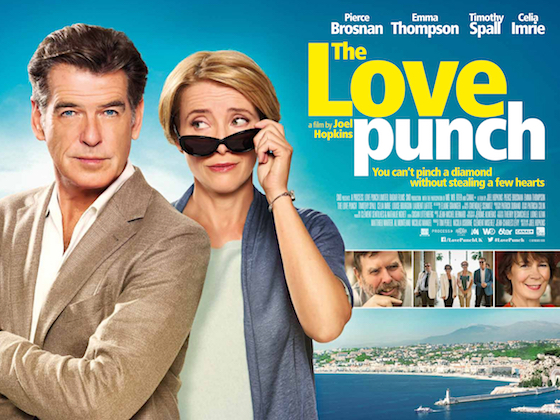
In this very daft comedy heist thriller (calling it a thriller is a bit of a stretch, but anyway), Pierce Brosnan plays Richard, a businessman whose company is bought out by mysterious others, only for them to strip its asset and sink the employees’ pensions — as well as that of Richard’s ex-wife, Kate (Emma Thompson). When the man behind the buy-out, Kruger (Laurent Lafitte), refuses to play fair, Richard and Kate team up with their neighbours, Pen (Celia Imrie) and Jerry (Timothy Spall), to pilfer the extraordinarily expensive diamond Kruger has bought his fiancée (Adèle Blanc-Sec’s Louise Bourgoin).

The Love Punch flirts with seriousness in its setup — what could be more current than unscrupulous moneymen buying a company and screwing over people’s pensions? — but quickly reveals its true nature as an implausible farce. Despite the lead cast, it seems to have been a French-driven production (even the UK-set scenes were filmed over there), so I suppose that style is only appropriate. While never scaling the heights of genuine hilarity, I don’t imagine anyone thought they were making anything other than a light romp.

So if you like any (or all) of Brosnan, Thompson, Imrie, and Spall, as well as the idea of a bit of gently-farcical gadding about in the south of France, then The Love Punch is amiable fluff to while away 90 minutes on a Sunday.

3 out of 5

The Snowbound Monthly Update for February 2018

Oh, the weather outside is frightful, but films are so delightful; and since we’ve no place to go, let’s look back at the last month on 100 Films


#16 Accomplice (1946)
#17 Airplane II: The Sequel (1982)
#18 The Cloverfield Paradox (2018)
#19 Casino (1995)
#20 Hitchcock (2012)
#21 Fast & Furious 8 (2017), aka The Fate of the Furious
#22 WarGames (1983)
#23 Black Panther (2018)
#24 Zatoichi and the Chest of Gold (1964), aka Zatôichi senryô-kubi
#25 The Dark Tower (2017)
#26 The Duellists (1977)
#27 Persepolis (2007)
#28 Being John Malkovich (1999)
#29 One for the Fire: The Legacy of “Night of the Living Dead” (2008)
#30 Birth of the Living Dead (2013)
#31 Mute (2018)
#32 Big Fish (2003)
#33 My Cousin Rachel (2017)
#34 Mindhorn (2016)
#35 The Villainess (2017), aka Ak-Nyeo
#36 I Origins (2014)
Black Panther

Big Fish

The Villainess

.


  • With 21 new films watched this month, February is all set to beat a few stats.
  • So, it passes all averages: for the month of February (previously 11.5, now 12.4); for 2018 to date (previously 15, now 18); and the rolling average of the last 12 months (previously 14.5, now 15.1).
  • It’s also the second highest February (behind 2016’s 24) and the second furthest I’ve reached by the end of February (behind 2016 again, when I’d made it to #44).
  • In 11-and-a-bit years of doing this blog, it’s only the 10th month with 20+ films. That puts it in the top 7.5% of all months.
  • Despite February being the shortest month, 21 is the most films I’ve watched in a single month since last October. If you include rewatches (more on those further down, as usual), it’s the most since… the same. But to find another month where I watched more overall, you’d have to go back to another October: October 2015, aka my highest month ever.
  • This month’s Blindspot film: one of the few gaps in my Tim Burton viewing, probably his most restrained (and, by no coincidence, one of his best) film in the last 20+ years, Big Fish.
  • This month’s WDYMYHS film: one of the many gaps in my Martin Scorsese viewing, though sadly I found Casino to be rather overrated.


The 33rd Monthly Arbitrary Awards

Favourite Film of the Month

This month wasn’t a bad one for quality viewing — far from it — and yet options for this category quickly narrowed to just a couple of prime contenders. Of those, I had little doubt about my favourite: ticking all sorts of boxes with its African James Bond superhero routine, it had to be Black Panther.

Least Favourite Film of the Month
There were a few less-good films this month, two of them courtesy of Netflix’s Originals line. Of that pair, undoubtedly the worst (to my mind) was The Cloverfield Paradox. Its surprise release may’ve been hailed as genius, but when you actually see the film you realise that innovation was almost all it had going for it. If Netflix ever try to pull the same stunt again… well, it’s not going to bode well for that film’s quality.

Best Action Sequence on Wheels of the Month
Black Panther has a cool semi-virtual car chase, and obviously Fast & Furious 8 bases almost all of its action around motor vehicles, but neither can come close to The Villainesssword fight on speeding motorbikes. And later it trots out a bus-based finale, just to make sure no one else would stand a chance in this category.

Flower of the Month
It may not be the weather for them, but after Big Fish it has to be daffodils.

The Audience Award for Most-Viewed New Post of the Month
It’s the film everyone’s been talking about this month — and going to see in droves, too — so it’s no surprise to find Black Panther in pole position here.


In a real turn-up for the books, my Rewatchathon is currently well ahead of schedule…

#5 Blade Runner 2049 3D (2017)
#6 Beetlejuice (1988)
#7 The Mask (1994)
#8 The Love Punch (2013)
#9 Mission: Impossible (1996)
#10 Shrek (2001)

Regular readers with exceptional memories may recall I only last watched The Love Punch in January. Frankly, it’s not a film I necessarily thought I’d ever revisit, let alone so soon, but sometimes you need something inoffensive that will placate a group of family members with varied tastes. And, to be completely honest, although it’s an utterly daft movie, I do quite like it.

Beetlejuice turns 30 next month, so I’ll post more about it then. Mission: Impossible and Shrek will also be getting the “Guide To” treatment, to fill out my archive with posts about the entirety of each series — three of the five Mission films are already here; and while there are no Shreks yet, three of those five will be first-time watches when I get to them. This is also the beginning of a rewatch of all the M:I films before this summer’s sixth arrives. It’s the first time I’ve watched the first two in at least a decade — time bloody flies, don’t it?


It’s time for the annual update of my director’s page header image, which features the 20 directors with the most films I’ve reviewed. (The excitement never stops around here, folks!)

There were no humungous changes like the surge of Spielberg last year. Nonetheless, Michael Bay and Ron Howard have moved into positions where they definitely get to appear on the banner; but there’s a ten-way tie for 18th place, from which only three directors can be selected. Already included in the header were John Carpenter, Alfred Hitchcock, Ernst Lubitsch, Tony Scott, and Billy Wilder — at least two had to go to make way for Bay and Howard. Also under consideration for the remaining three slots were Danny Boyle, Kenneth Branagh, David Lynch, M. Night Shyamalan, and Quentin Tarantino.

In the end, I decided to go for a near-maximum refresh: off come Carpenter, Lubitsch, Tony Scott, and Wilder (Hitchcock stays because, c’mon, it’s Hitchcock), and on go not only Bay and Howard, but also Lynch and Tarantino.


British Summer Time begins. No, seriously: right now it couldn’t be more wintery, but in just 25 days the clocks change. Madness.