Prometheus 3D (2012)

Rewatchathon 2017 #10
Ridley Scott | 124 mins | Blu-ray | 2.40:1 | USA & UK / English | 15 / R
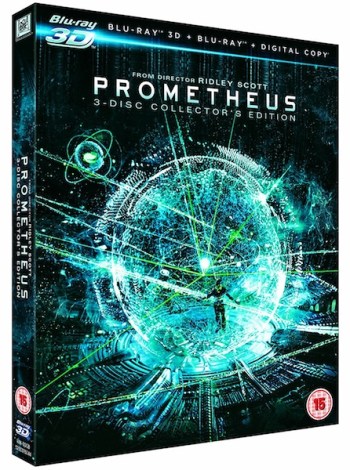
Prometheus 3D

80 years in the future, a starmap found in some caveman paintings provokes a trillion-dollar mission to the other side of the universe so that the world’s stupidest scientists can (spoilers!) get themselves killed.

It is, by complete coincidence, 4½ years to the day since I first and last watched Prometheus, and this revisit has of course been inspired by its just-released follow-up, Prometheus 2: Extraterrestrial Boogaloo Alien: Covenant, which I’m seeing tomorrow. Frankly, most of my original thoughts on the film still stand. To summarise: it has some really good bits, but then it stops making sense and turns into a braindead blockbuster that doesn’t bother to properly explain its own plot, never mind the potentially-interesting sci-fi ideas it initiated early on. Apparently the Blu-ray’s deleted scenes do clarify some of the plot holes and gaps in character motivation, but other stuff is just plain stupidity on the part of the characters. Or, rather, the writers. Well, one of the writers, at least.

But despite my basic opinion not changing, I’m posting about Prometheus again because this was the first time I watched it in 3D. Hailing from those brief couple of years where the term “post-conversion” was blasphemous, Prometheus was genuinely shot in 3D — and, however good post-conversion has become since then, I think parts of this film make a case for why doing things properly is still best. But I’ll come to that.
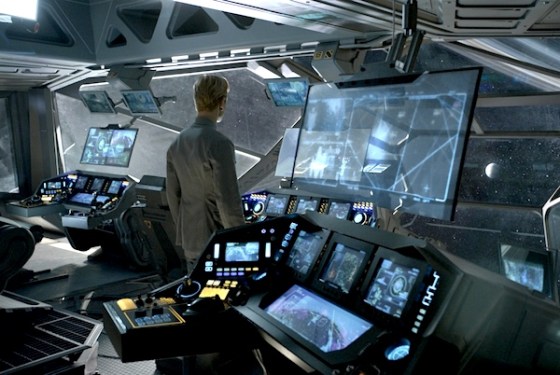
Building busy bridges

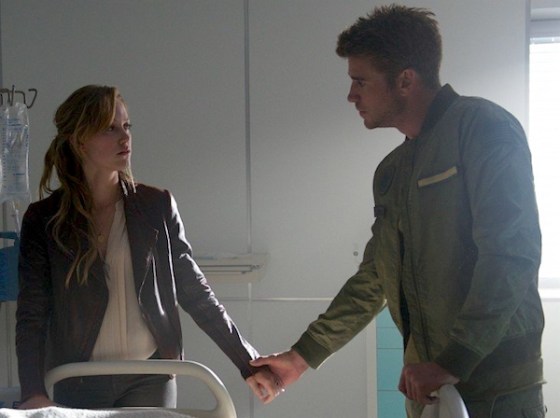
In general, Ridley Scott’s 3D mise en scène is exemplary, almost always placing objects and characters at various distances from the camera to emphasise and clarify the sense of depth. The busy layout of the Prometheus’ bridge helps this no end, making scenes set there some of the clearest examples. Even on less populous sets, Scott finds angles and compositions that offer nice dimensionality without slipping into being a vacuous 3D showcase. He frequently uses glass to good effect, creating an obvious separation between the clear material — be it a window, a spacesuit helmet, or a sleeping pod — and what’s on the other side, almost casually adding extra layers to any shot they appear in.

In terms of show-off effects, Scott never breaks the ‘window’ of the screen by having things poke out at the viewer, but there are still scenes where the extra dimension is really felt. The storm sequences are a perfect example, with bits of debris flying around all over the place. In-film computer elements like holograms or displays have their own shapely presence in front of, around, and distinct from the physical world they’re part of, making them seem all the more real. Perhaps most of all, the room-filling Engineer star chart David discovers looks great in 3D. My memory of it from the 2D version is an indecipherable array of lights filling the screen, which is probably because it was all perfectly in focus for the sake of the 3D. With that extra dimension, it looks like something worth marvelling at.
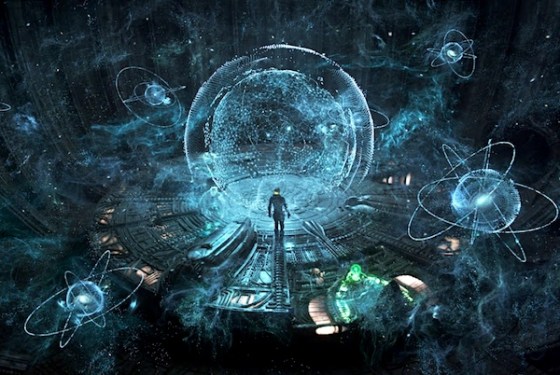
Maps to the stars

Having been shot ‘for real’, the 3D just gives everything, even dialogue scenes, a sense of space and distance. You can appreciate the gap between someone’s head and the neck-back of their spacesuit; or, in close-ups, the distinct (but not in-your-face) distance between someone’s nose and eyes and hair. Perhaps the most impressive element are textures, like the hieroglyphs David finds cut into rock, or even characters’ skin — at times you can ‘feel’ its surface, its pockmarks and pores. However good post conversions are, I’m not sure they’re ever that thorough!

Watching in 3D is never going to gloss over Prometheus’ more fundamental flaws — it’s never going to make up for issues with the screenplay or the edit (that said, I’ve heard it makes Transformers 4 considerably more entertaining, so maybe “never” is too strong a word). What you do get is a sense that effort was made to make the 3D experience worthwhile. It may be an inessential component of the movie (a virtual necessity when there will always be people watching in 2D, of course), but it’s one that nonetheless adds an appreciable extra dimension.

3 out of 5

Alien: Covenant is out in the half the world (including the UK) now, and is released in the other half (including the US) from Thursday.
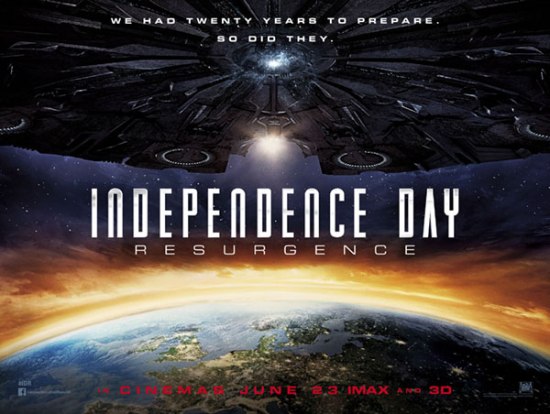
Independence Day: Resurgence (2016)

2017 #64
Roland Emmerich | 120 mins | Blu-ray | 2.39:1 | USA / English & Mandarin | 12 / PG-13

Independence Day: Resurgence

With nostalgia-driven reboots and belated sequels all the rage these days, it was inevitable someone would eventually get round to Independence Day, the highest grossing film of 1996. Back then it took $817 million, a total most producers would be happy with even today… especially those behind Resurgence, which managed a comparatively paltry $389.6 million, leaving it in 21st place on 2016’s chart.* I guess nostalgia doesn’t win everything.

One thing the two-decade delay has given us is an interesting setup for a sequel. Reflecting real life, the film begins 20 years after “The War of ’96” (i.e. the original movie). Humanity has rebuilt, integrating alien technology with our own to create more advanced aircraft and weaponry, including a moon base and defensive satellite system, all on the assumption that the aliens will come back. But they don’t and everyone lives happily ever after.

Not really! The actual mechanics of the plot are far too fiddly to bother getting into here, but suffice to say the aliens do return, and, in typical sequel fashion, they’re bigger and badder. Facing them on humanity’s side are returning faces (Jeff Goldblum, Bill Pullman), returning characters with new faces (Maika Monroe, Jessie T. Usher), some surprising new faces (Charlotte Gainsbourg?!), and Liam Hemsworth, who somehow merits top billing. No Will Smith, because he died. Well, his character died, because Will Smith was busy doing Suicide Squad, which is basically the same thing.

The cast who DID come back

I jest at the Squad’s expense, but I actually enjoyed DC’s notoriously messy movie more than this. I think. (I intend to review it next week, when it’s also on Sky, so we’ll see what I say then.) You see, although from the outside it may look like Resurgence is just a rehash of the first movie, but with bigger spaceships, there are actually good ideas in here: how the world has developed since the last film, where the characters are, some new facets to our understanding of the alien race. Unfortunately, the film is in such a hurry to churn through Plot that it doesn’t take time to let any of the potentially-interesting stuff settle; doesn’t allow the space for it to be developed or appreciated. It feels wrong to complain that a blockbuster isn’t long enough, especially in this day and age, but you wish Resurgence had just given itself a little time to breathe; to properly explain why characters were doing certain things, rather than throwing in a speedy line of dialogue that there’s no time to process; to allow its set pieces to show off their scale, rather than racing from one to the next as if having as many as possible is better than making the most out of… well, any of them.

Despite the unwavering focus on plot over everything else (it even sidelines spectacle at times, which is what big-budget disaster movies like this should be about), the headlong rush to get through the narrative means its storytelling is really sloppy. For instance, we’re reintroduced to Goldblum’s father (Judd Hirsch) trying to hawk his book to a room of uninterested pensioners; then we next see him on a boat, just in time to get caught up in the giant spaceship’s arrival. So, does he live on this boat? It doesn’t look big enough for that. So is he just hanging out there? Why? I mean, he was just at a book reading. And why does he have a boat anyway? Yet for all this rushing, the film begins to waste time on a bunch of random kids in a car, or some salvage sailors performing a job that (in story terms) doesn’t actually need doing. Clearly the script needed a good going-over by someone with an objective eye.

Independence Day: The Next Generation

Maybe it’s daft to focus on the quality of the screenplay in a film like Independence Day — as I said just now, its genre dictates it should be all about spectacle. But it’s the poor screenplay that undercuts those things. Not just because it has iffy dialogue or muddled character motivation (which it does), but because they’ve made the story more complicated than it needed to be and the film is desperate to tell us it as quickly as possible. I suspect it’s not a coincidence that it runs exactly two hours, because it feels like it’s been sliced as thin as possible on an individual scene level, as if they were trimming frames here and there to have it run no longer than 120 minutes.

The big show-off scenes are further marred by variable effects. Much of the really grand stuff is decent, if hurried past, but the film is flooded with green screen work that is consistently atrocious. Like, “it was better 20 years ago”-level bad. The deleted scenes may hold the key to why this is: there’s one where a character is picked up from a bus stop on an ordinary street, except it’s been filmed on a green screen instead of on, y’know, a street. If you’re making your effects team waste time generating something you could’ve filmed by popping down the road, no wonder they don’t have time to do the tricky stuff properly.

And, quite bizarrely, there are a couple of action bits that mirror sequences from, of all things, San Andreas. They happen back to back — intercut, in fact — which just emphasises the parallel. This signifies nothing, really, it’s just… strange.

We're gonna need a bigger spaceship

I really wanted to enjoy Independence Day: Resurgence, because I thought the “20 years later” ideas had promise, and also I have a soft spot for the original. Sure, it’s cheesy as hell, but mostly the cheese works thanks to an earnestness and the evocation of some degree of emotion. Plus, it achieves what it sets out to be — that is, an entertaining disaster movie cum alien invasion actioner. This follow-up wants to do the same thing on a bigger scale, and it is indeed even cheesier at times, but not in the same likeable way. If the first is a tasty chunk of mature cheddar (which, for the purposes of this analogy, we’re going to say it is) then the second is a thin slice of processed burger cheese. And, also like fake cheese, it fails to achieve even the straightforward thrills it sets out to create.

2 out of 5

Independence Day: Resurgence is on Sky Cinema from today.

* For what it’s worth, if it had equalled the $817 million then it would’ve been 8th on 2016’s chart, beating the likes of Fantastic Beasts and Deadpool. ^

Hell or High Water (2016)

2017 #19
David Mackenzie | 102 mins | streaming (HD) | 2.35:1 | USA / English | 15 / R

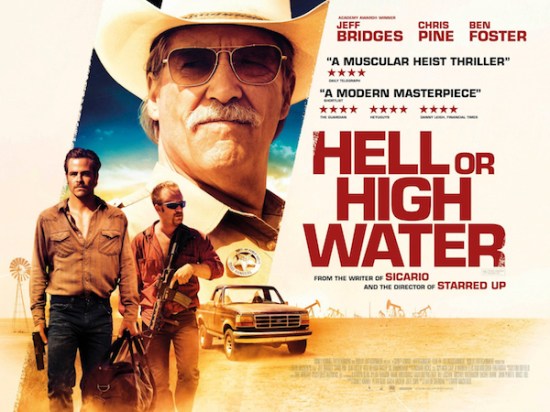
Hell or High Water

Oscar statue2017 Academy Awards
4 nominations — 0 wins

Nominated: Best Picture, Best Supporting Actor, Best Original Screenplay, Best Editing.


The line between right and wrong, legal and illegal, is blurred once again by the writer of Sicario in this tale of two brothers (Chris Pine and Ben Foster) committing a series of bank robberies for reasons beyond greed, and the two Texas Rangers (Jeff Bridges and Gil Birmingham) hunting them down.

I don’t think it would be unkind to describe Hell or High Water as a genre picture: it’s a crime thriller about bank robbers and the police out to catch them, with its setting and tone also bringing something of the Western — or, rather, neo-Western. (It bugs me a little when people refer to films not set in the Old West as “Westerns”, because that seems an inherent part of the genre to me. Naturally, the term “neo-Western” has already been coined, and I feel it’s one we should start using more widely.) There is something more to it than that though, which might explain its slightly incongruous presence among 2017’s Best Picture nominees. In part it’s a social drama, the characters’ motivations based in very topical concerns, including their plan that represents a form of revenge against the banks who have it coming.

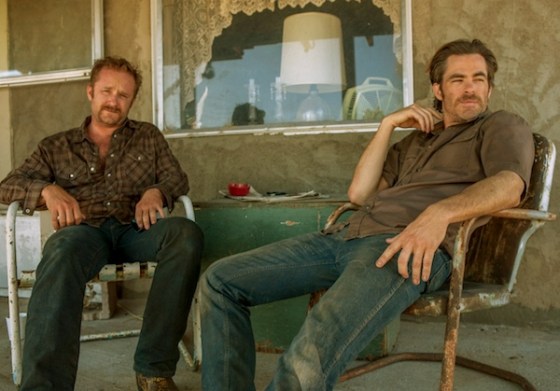
Pair of crooks

In another part it’s a character drama. Indeed, the acting is the best part. Jeff Bridges subsumes himself in the character, an old lawman on the verge of retirement, but still sharp and capable, who won’t know what to do with himself once he’s put out to pasture — this is his last great hurrah. He got all the plaudits because he’s Jeff Bridges, but it doesn’t feel massively outside his wheelhouse. Conversely, Chris Pine is practically a revelation. Best known for leading blockbusters, here he convinces as a father who’s finally trying to do the right thing for the future of his kids, whether that thing is legal or not. When these two finally come face to face, it’s nail-biting. That’s to do no disservice to Ben Foster, as Pine’s wildcard brother, who perhaps has less honourable intentions; or Gil Birmingham as a fellow Ranger, who Bridges spends most of the film mercilessly teasing, though it turns out conceals an underlying affection for his friend.

Credit is also definitely due to director David Mackenzie, who certainly has an eye for a shot and a way with constructing an action sequence, for which credit must also be due to editor Jake Roberts. Similarly to cinematographer Giles Nuttgens, who evokes a dusty West Texas with its own kind of sandblasted desolate beauty.

Pair of cops

Hell or High Water is a very good film, a neo-Western crime thriller genre movie that is exceptionally well directed, shot, and performed. Yet somehow it feels out of place among the Best Picture nominees — like, it’s not that good. Of course, Oscar has a long history of nominating films that aren’t good enough, and Hell or High Water is better than most of them. So while I don’t feel I can stretch to giving it five stars, I certainly recommend it highly.

4 out of 5

Hell or High Water is available on Amazon Prime Video UK from today.

Nightcrawler (2014)

2017 #63
Dan Gilroy | 118 mins | Blu-ray | 2.40:1 | USA / English | 15 / R

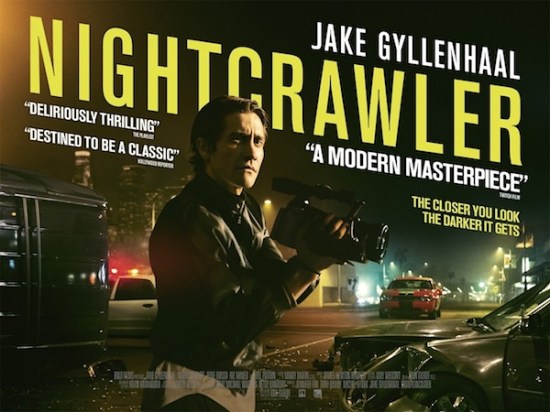
Nightcrawler

Dan Gilroy’s neo-noir thriller is part “state of the nation” observational drama and part character study.

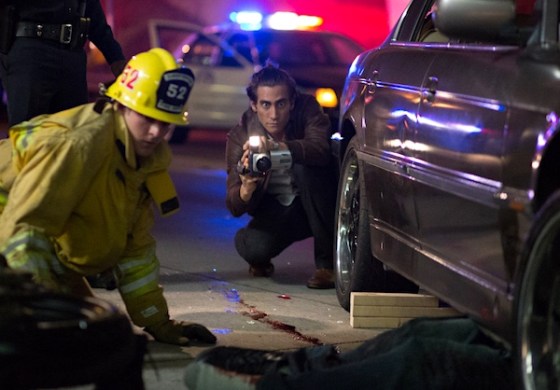
The character in question is Louis Bloom (Jake Gyllenhaal), a young man who, like so many in modern America, struggles to find paid employment. Indeed, as the film opens he’s resorted to stealing fences to hawk to scrap metal dealers — and, when cornered by a security guard, also resorts to violence. That’s the kind of man Bloom is, which will become important as the film goes on. On his way home he comes across the aftermath of a near-fatal car accident, and witnesses the freelance news cameramen rushing to the scene. For some reason this job strikes Bloom as glamorous, so he buys a camera and a police scanner and throws himself into it. His boundary-pushing enthusiasm soon puts him on the way to success, racing around nighttime L.A. chasing bloody imagery. It’s a cutthroat industry, but Bloom is prepared to go pretty far for exclusive footage…

Any well-informed viewer isn’t likely to glean much from Nightcrawler about the state of modern America. That Bloom is desperate for employment is more of an inciting incident than a dissected issue, though it does also partially fuel a subplot when he employs an assistant. That US TV news is all about shock value — “if it bleeds it leads” — is a truism that’s decades old, too. If the film contributes anything to that discussion it’s to wonder if things have reached a nadir. Writer-director Gilroy says he was trying to tell an objective and realistic story, but it’s coming from a very cynical, almost satirical place about TV news. Or maybe local US news really is that extreme, I don’t know. Either way, this observational stuff isn’t bad, but nor is it revelatory.

If it bleeds it leads

Where the film really flies is in its characters. There are impressive supporting performances, from Riz Ahmed as the uncertain and kinda gullible young guy Bloom employs as his assistant, and Rene Russo as the outwardly confident but actually kinda desperate TV news producer Bloom sell his work to; plus an almost cameo-level appearance by Bill Paxton as a rival nightcrawler who rubs Louis up the wrong way.

But the film belongs to Gyllenhaal. Wild-eyed, eager to please, but not quite right in how he interacts with other human beings, and with a real thirst for the gory profession he lands upon, Bloom has a sense of morality that is quite removed from the norm. From the start we’re in no doubt that this is a guy prepared to take relatively extreme measures to secure what he wants, but how far will he go? As he begins to establish himself as a respectable businessman — or, at least, someone who wants to be thought of as respectable — how much has his attitude changed, if at all? Gyllenhaal immerses himself in the role, skilfully negotiating Bloom’s swings from smarmy charm to emotionless non-engagement with the horrors he films. He’s physically transformed too: he lost weight, didn’t eat, and stayed up nights in preparation for the role. On the Blu-ray, Ahmed comments that the literal hunger Gyllenhaal was enduring contributed to his performance as a guy who is so hungry (for success) he’ll do anything necessary to achieve it.

(Talking of the Blu-ray, its only special feature (aside from an audio commentary) is a five-minute featurette that briefly features the two real-life nightcrawlers who consulted on the film. They share a couple of quick anecdotes about what the real job is like, which is quite fascinating — it’s a shame there’s not a fuller feature about those guys and their work. I don’t know if it would sustain a whole feature documentary — maybe it would — but a decent-length DVD extra would’ve been nice.)

Nighttime L.A. car chase

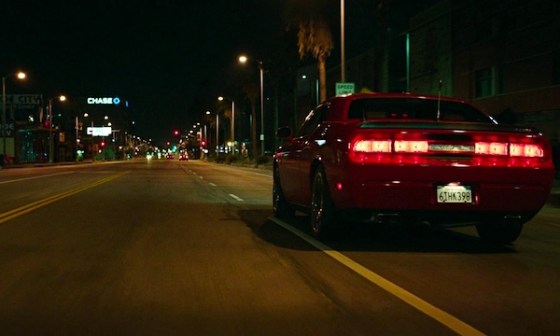
Outside of its characters, Nightcrawler impresses with technical merits. The lensing of nighttime L.A. by DP Robert Elswit is highly evocative, a netherworld where flashing red-and-blue lights illuminate scenes of carnage. The film’s pace is apparently unhurried but constantly engrossing. You’re not exactly sucked into this world alongside Bloom (Gilroy’s right that presenting him as unnecessarily aggressive upfront serves to stall sympathy from the viewer), but you become an interested observer, unable to look away — like a rubbernecker at an accident, appropriately enough. Several scenes, especially in the film’s second half, generate a level of nail-biting tension, while a climactic car chase is an action scene for the ages. Gilroy’s brother Tony, a producer on the film, was one of the architects of the Bourne franchise, and you wonder if he brought some expertise to the realisation of that sequence. This isn’t a film for adrenaline junkies on the whole, but that scene is a kick.

Driven by a sharp character examination from writer-director Dan Gilroy, brought to life in a compelling, committed performance from Gyllenhaal, Nightcrawler is an appropriately cynical exploration of modern morality as embodied by one outsider, moulded in the shape of a fantastic noir thriller.

5 out of 5

The UK TV premiere of Nightcrawler is on BBC Two tonight at 9pm, after which it will be available on iPlayer.

Nightcrawler was viewed as part of my What Do You Mean You Haven’t Seen…? 2017 project, which you can read more about here.

It placed 8th on my list of The 17 Best Films I Saw For the First Time in 2017, which can be read in full here.

Guardians of the Galaxy Vol. 2 (2017)

2017 #59
James Gunn | 136 mins | cinema | 2.35:1 | USA / English | 12A / PG-13

Guardians of the Galaxy Vol. 2

The franchise that some thought might kill the Marvel Cinematic Universe, but which actually turned out to be one of its most popular successes, is back for the difficult second album. And difficult it is, because Guardians 2 takes a lot of what made that first movie work and ramps it up to 11, consequently slipping over into bouts of self-indulgence.

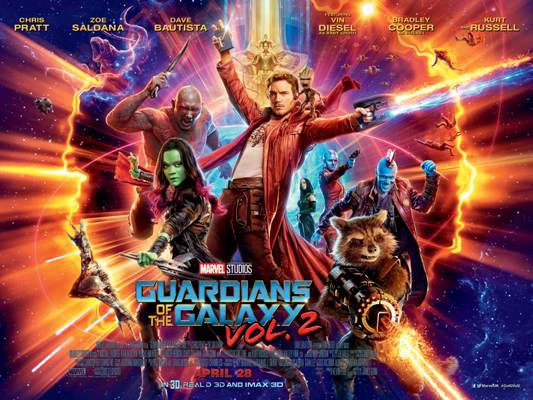
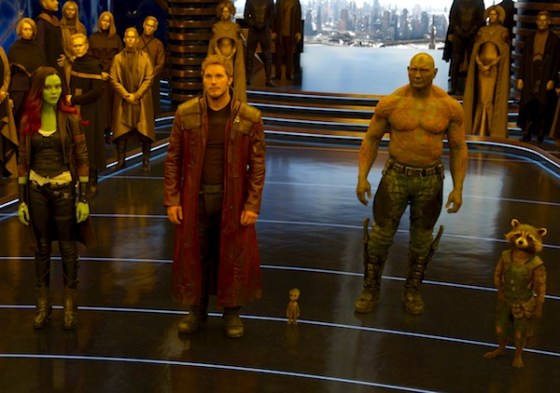
The story picks up on a thread left conspicuously hanging at the end of the first movie: who is Peter’s father, and why did he have the Ravagers kidnap Peter from Earth? Vol. 2 digs into those answers pretty quickly, because it has somewhere else to go with them… but that would be spoiler territory. So while Peter (Chris Pratt), Gamora (Zoe Saldana), and the ever-hilarious Drax (Dave Bautista) toddle off to learn about daddy-o, the rest of the gang — Rocket (motion capture of Sean Gunn, voice of Bradley Cooper) and Baby Groot (still voiced by Vin Diesel, allegedly) — get caught up in a mutiny involving Yondu (Michael Rooker) and Nebula (Karen Gillan). All while the lot of them are being chased by a race of gold-skinned perfectionists led by the priestess Ayesha (Elizabeth Debicki) who the Guardians conned.

Returning writer-director James Gunn gets things off to a strong start, diving straight into answers, humour, an entertaining title sequence, a couple of action scenes, more humour, and more answers. But after this strong and pacy opening salvo, the film seems to flounder a little. Not fatally so, but it gradually becomes apparent that the middle is going on far too long. Your mileage will vary on how draggy this is — some people seem to have absolutely hated it; I thought much of it was amiable enough, but it goes nowhere fast and that eventually becomes wearing.

You've got the power to know you're indestructible...

Part of the problem lies in splitting our heroes up into two groups with two stories. It may have been inspired by The Empire Strikes Back (or that may just have been a parallel some critics have spotted, I’m not sure), and it’s not a fundamentally flawed structural choice, but here it doesn’t really work. Part of the problem is that the gang works best when sparking off each other. Heck, the film even goes to pains to set up a joshing rivalry between Peter and Rocket, then splits them up! Story-wise, the issue is twofold: the A plot is a slow one that spins its wheels because it has too little story-fuel to drive the whole movie; but the B plot feels grafted on to give half the cast something to do, as well as provide a little action and humour while the other plot is tackling the emotional heft.

That said, uncommonly for a modern blockbuster, it’s the emotional side the film gets most right. While the plot dawdles, the action is adequate, and the comedy is hit and miss (more the former than the latter, to be fair, but there’s a definite case of “throw everything and see what sticks”), there are several characters who get strong, believable, rounded emotional arcs. The obvious one is Peter finding out about his parentage, but my favourite was where the film goes with Nebula and the relationship with her adopted sister, Gamora. There’s also a comparatively meaty subplot for Yondu, meaning it’s mostly the supporting characters who fare best with the material rather than the heroes — aside from Peter and (to a lesser extent) Gamora, the primary function of Drax, Rocket, and Baby Groot is to be humour generators. They are funny, though.

Funny.

In the director’s chair, Gunn continues to dole out even more of what people praised about the first movie. You liked the retro-cool soundtrack? OK, how about a new track every time there’s a lull in the action! The use of the music feels sloppy, often just plonked there to cover a gap, with no discernible thematic relevance. It’s doubling down on something people latched onto the first time, but it feels slapdash. The one instance that almost works is Fleetwood Mac’s The Chain, which has a setup and a pay-off, but they’re not quite properly connected.

Also overdone is the slow motion walking. Remember that shot in the first film of the Guardians walking into battle in slow-mo looking badass, that was then humorously undercut when they started, like, yawning and stuff? James Gunn does, and he liked it so much that he uses it again several times here. Apart from he seems to have forgotten the second part of the scene that made it funny rather than cheesy. Cool people walking in slow motion seems to be one of those cinematic devices that doesn’t really date, especially when used sparingly, so I could let it go once, but here it reaches the point of “oh my God, another slow-mo walking shot?!”

This indulgence in everything people liked before extends right to the very end of the movie — literally. The end credits are a lively affair in and of themselves, but they’re further interrupted by a total of five additional scenes. Five. They’re mostly inconsequential (don’t go expecting any hints towards Infinity War), but they’re worth sticking around for because a couple are quite amusing.

More guardians, more... galaxy? I dunno.

Guardians of the Galaxy Vol. 2 is an uneven film, which manages to be entertaining as a whole thanks to its likeable and funny characters — even if the best gags have all been played in the trailers (and some of them played better in trailers, too), it’s trying so hard (so, so hard) to be a good time that much of it works. It’s strongest at the beginning and the end, which almost makes you overlook that it gets a bit thumb-twiddly in the middle, with one plot more of a short story than a movie and the other feeling a little like a waste of time. However, the surprising focus on and awareness of the characters’ psychological lives makes up for that somewhat — oddly, Marvel’s most comedy-driven and alien-starring movie may also feature their most effective understanding and representation of characters’ emotions.

But don’t worry, there are still jokes about poo and penises.

4 out of 5

Guardians of the Galaxy Vol. 2 is in cinemas pretty much everywhere now. Except Japan. Sorry, Japan.

I am Baby Groot.

Elstree 1976 (2015)

2017 #18
Jon Spira | 101 mins | streaming (HD) | 1.78:1 | UK / English | 12

Elstree 1976

In a studio near London in the summer of 1976, filming took place for a movie that the crew regarded as a children’s flick and several cast members assumed would be a flop. They couldn’t’ve been more wrong, because that film was Star Wars, probably the most influential movie of the last 40 years. You know the names of many of the people who were there: George Lucas, Harrison Ford, Mark Hamill, Carrie Fisher, Alec Guinness… But there was also an army of supporting actors and extras. This is their story.

Here’s where the point of Elstree 1976 runs aground for some viewers. It is not The Making of Star Wars; nor is it The Secret Making of Star Wars, where the “little people” dish the dirt on what really happened. There is a bit of that in here — a section where the interviewees tell their tales from the set — but it’s not what the film is about. Rather, it’s a study of what it’s like to be tangentially attached to something great; to be a bit player in a cultural phenomenon. Most of the contributors here just took any old job to earn some cash, but by happening to be in the right place at the right time they found themselves attached to something huge for the entire rest of their lives. How does that change the course of someone’s life? How does it change the very fabric of who they are as a person?

What it's actually like being on a film set

There are reviews of Elstree 1976 that espouse a “why should we care” perspective. “These people aren’t the leads, they were just little people, why should we give a hoot about their lives?” Well, isn’t that the point? They’re people, like you and I — people who have lives. They were involved with one of the largest, most enduring pop culture events of our time, and yet they were so on the periphery that it’s a tiny part of their lives… or it should have been. Star Wars may be this huge, defining thing for its lead actors and high-profile crew members, but there were also dozens (probably hundreds) of people who “just happened to work on it”, and who otherwise have led ordinary lives. Or haven’t, because of the effect the film has had.

You see, here’s the thing: some of these people were only on screen for a frame or two, or they were hidden under a prosthetic that means you never even saw their face… and yet they still attend conventions where people want to meet them, get their autograph, all that jazz. For all the people who don’t understand the appeal of a movie telling these performers’ life stories, there are fans who are so much more interested in them for so much less. I don’t know how much the documentary actually explores the psychology of that, but it does touch on some aspects — the behind-the-scenes hierarchy of conventions, for instance, and how some actors don’t think others are worthy of putting in an appearance.

Extras, extras, read all about it!

Providing you approach it with the right expectations, Elstree 1976 is interesting in its way. As a portrait of ordinary lives that were touched by something extraordinary it’s got an interesting thematic point to make, but the lives covered are still ordinary, and we therefore hear a lot about that ordinariness. Well, maybe that’s harsh — some of these people certainly have stories to tell. Still, it’s probably a bit too long, and a greater focus on the behind-the-scenes stories and conventions, plus a trim to the general life stuff, might’ve been beneficial. Nonetheless, it offers a unique perspective on a much-discussed movie and the culture that surrounds it.

3 out of 5

Elstree 1976 is available on Sky Cinema from today.

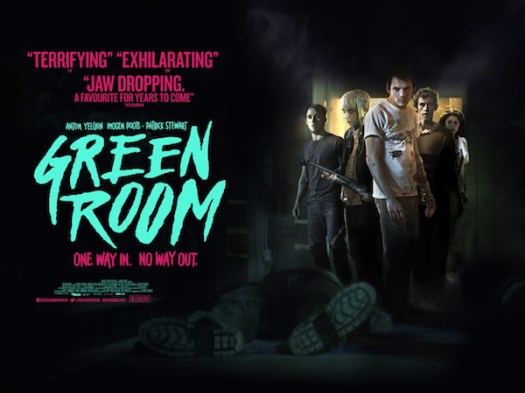
Green Room (2015)

2017 #1
Jeremy Saulnier | 95 mins | streaming (HD) | 2.35:1 | English / English | 18 / R

Green Room

In my review of 2016, I asserted that Denis Villeneuve was “one of the most exciting directors working right now.” Here we have, if not the other end of the spectrum, then certainly a different angle on it: Jeremy Saulnier, perhaps the most overrated director working right now.

This, his third film, follows a struggling rock band who, in desperation for any work, take a gig at a remote club frequented and owned by extremist fascists. When the band see something they shouldn’t, the club’s violent owner and his gang try to kill them.

The main point everyone seems to make about Green Room is how unbearably tense it is. Well, I can imagine it might’ve been pretty tense if I hadn’t spent the whole time struggling to work out what was going on from all the mumbled dialogue. It’s not helped by much of the early chatter being music scene gobbledegook. Is this what watching sci-fi feels like to normal people? On one hand it doesn’t matter — the film is about the tension of the situation, not the vibrant wordplay. On the other, I was so distracted trying to decipher what was happening from the semi-unintelligible speech that I never really felt that fêted suspense.

Neither rock nor roll

The one time I did feel any real tension was right near the end. The form of the movie dictates that most of the cast are gonna get it, so it’s only in the closing stages that the final survivors (who are, naturally enough, the top-billed cast) may either win or finally be killed. The film has its indie-ness in its favour here, because you think that maybe the heroes will lose. Perhaps such a line of thought is me being too logical, not entering into the spirit of the fiction, but clearly the movie didn’t grip me enough before that point to feel anything sooner.

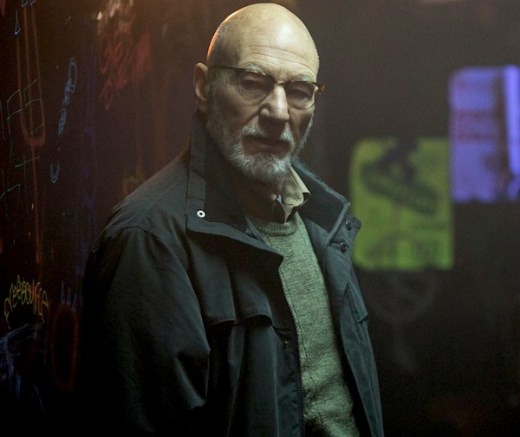
On the bright side, Patrick Stewart oozes class as the calmly in control villain, but I can see why he seemed to get pissed off at all the reviews/interviews going “OMG, this is such a departure for you!” Yeah, if your experience of his abilities extends no further than Star Trek: The Next Generation and the X-Men movies then this turn must be a revelation, but the guy’s got a long and exalted career playing all sorts of roles, on stage and screen. I’m not saying he’s bad here — he’s Patrick frickin’ Stewart, of course it’s a good performance — but I think some of the unreserved praise he’s received comes from a place of surprise at this role being a ‘departure’ for him.

These are the voyages of the starship Fascism

Labelling Saulnier the most overrated director currently working may be a bit harsh. It’s not that he’s a bad filmmaker, or even that he makes bad movies per se, but neither Blue Ruin nor Green Room have done very much for me, despite the adulation they’ve received elsewhere. Maybe if he continues this titular trend and next makes, I dunno, Red Mansion, which sounds like it might be a Gothic chiller, maybe then I’ll like him.

That said, I think Green Room is definitely more effective at its goals than Blue Ruin was. Even if I still think Saulnier is overrated, this is a step in the right direction.

3 out of 5

The General Unselfish Love for Everyone Monthly Update for April 2017

Chai-ai-ain, keep us together…

Any excuse to get some Fleetwood Mac on loop.


#50 Ferris Bueller’s Day Off (1986)
#51 The BFG (2016)
#52 War on Everyone (2016)
#53 Dazed and Confused (1993)
#54 Now You See Me 2 (2016)
#55 Nocturnal Animals (2016)
#56 The Legend of Tarzan (2016)
#57 The Magnificent Seven (2016)
#58 Sully (2016), aka Sully: Miracle on the Hudson
#59 Guardians of the Galaxy Vol. 2 (2017)
#60 The 39 Steps (1935)
#61 Silver Linings Playbook (2012)
#62 Split (2016)
Ferris Bueller's Day Off

Nocturnal Animals

.


  • I watched 13 new films this April, making it the lowest month of 2017 so far (but only by one).
  • It falls short of the average for the last 12 months (previously 14.75, now 14.08), and of 2017’s average to date (previously 16.3, now 15.5), but it does drag the April average up from 9.67 to precisely 10. (That leaves just June, July, and November as months with averages below 10.)
  • This month’s Blindspot film: one of Hitchcock’s definitive early works, solving the mystery of The 39 Steps.
  • This month’s WDYMYHS film: underwhelming Oscar-winning rom-com Silver Linings Playbook.


The 23rd Monthly Arbitrary Awards

Favourite Film of the Month

A lot of films vie for my affection this month. I was charmed by a friendly giant, found Tom Ford’s latest to be pleasantly provocative, enjoyed some magnificent gunslinging, was thrilled by classic Hitchcock, and chilled by Shyamalan’s return to form. But, to slightly modify this award to “most surprisingly among my favourite films of the month”, one film caught me unawares more than any other: I confess that I half expected to hate Ferris Bueller’s Day Off, what with its lead character seeming like a dick ‘n’ all, but the skill of writer-director John Hughes is not to be underestimated.

Least Favourite Film of the Month

Richard Linklater set out to make an anti John Hughes movies with Dazed and Confused, and I guess he succeeded based on this neat little favourite/least favourite mirroring we’ve got here.

Best Pilot in the Galaxy
Star-Lord and Rocket can bicker about it all they want, but neither can hold a candle to Chesley ‘Sully’ Sullenberger.

End Credits Scene I’m Most Annoyed I Had Spoiled
Guardians of the Galaxy Vol. 2 may have five (five) scenes during its credits, but they’re all a bit something-and-nothing (I can’t even remember what was in them all now, and I only saw it three days ago). But that scene at the end of Split (it comes after the second title card, so I think we can argue it’s in the end credits)… damn, I wish that hadn’t been widely reported all over the shop and I’d instead been able to discover it in situ. That said, it’s so well constructed that it gave me a tingle of long-awaited excitement nonetheless.

The Audience Award for Most-Viewed New Post of the Month
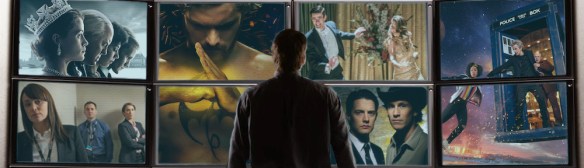
Since I’ve started posting my content on IMDb my TV reviews have really taken off in the hits. It’s the latest one of these, The Past Month on TV #16 (in which I shared my thoughts on the likes of Doctor Who, Iron Fist, The Crown, and Twin Peaks), that takes this month’s gong. (My most-viewed new film review was Don’t Breathe.)


Back to just one rewatch this month, which I reviewed at the time:

#8 Guardians of the Galaxy 3D (2014)

This is not going to plan.


We’ll see if the new Pirates of the Caribbean film, Dead Men Tell No Tales Salazar’s Revenge, is the return to form that they’re claiming. And La La Land makes it to Blu-ray over here, so I’ll finally see it.