100 Films’ 100 Favourites #73

Return to a galaxy far, far away.

Also Known As: Star Wars: Episode VI – Return of the Jedi
Country: USA
Language: English
Runtime: 132 minutes | 135 minutes (special edition)
BBFC: U
MPAA: PG
Original Release: 25th May 1983 (USA)
UK Release: 2nd June 1983
First Seen: VHS, c.1990
Stars
Mark Hamill (The Empire Strikes Back, The Guyver)
Harrison Ford (Indiana Jones and the Last Crusade, Patriot Games)
Carrie Fisher (The Empire Strikes Back, The ‘Burbs)
Anthony Daniels (The Lord of the Rings, Star Wars: Episode I – The Phantom Menace)
Peter Mayhew (Star Wars, Comic Book: The Movie)
Director
Richard Marquand (Eye of the Needle, Jagged Edge)
Screenwriters
Lawrence Kasdan (Raiders of the Lost Ark, Silverado)
George Lucas (American Graffiti, Star Wars: Episode III – Revenge of the Sith)
Story by
George Lucas (Indiana Jones and the Temple of Doom, Radioland Murders)
The Story
As the Galactic Empire construct a new Death Star, Jedi-in-training Luke Skywalker — the Rebel Alliance’s best hope of defeating the evil Darth Vader — is busy rescuing his friend Han Solo from the clutches of crime lord Jabba the Hutt. Meanwhile, the powerful Emperor waits, intending to convert the young Jedi to the Dark Side…
Our Heroes
Luke Skywalker: Jedi Knight.
Han Solo: defrosted resistance captain.
Princess Leia: sister, love interest, bikini-wearer. Is it just me or does Leia get a pretty poor deal as the trilogy goes on?
Our Villains
Quite possibly the greatest villain ever created for the movies, Darth Vader. Here he’s on an arc of redemption, so there’s also the Emperor, who has the appearance of a wizened old man but is strong in the Force. As Vader himself puts it, “the Emperor is not as forgiving as I am.” Uh-oh!
Best Supporting Character
R2-D2 is the best supporting character in every Star Wars film, but in this one we are introduced to Jabba the Hutt (well, unless you watched Episode I or the New Hope Special Edition first). A giant, fat, slug-like crime lord who is impervious to Jedi mind tricks and apparently has a fondness for metal bikinis, he’s as physically repulsive as are his methods and mores.
Memorable Quote
“Many Bothans died to bring us this information.” — Mon Mothma
Quote Most Likely To Be Used in Everyday Conversation
“It’s a trap!” — Admiral Ackbar
Memorable Scene
The speeder bike chase — arguably the best action sequence in the entire original trilogy. Considering this is a series of films that include three or four duels with frickin’ laser swords, that’s some feat.
Memorable Music
John Williams’ music is an essential part of the Star Wars experience. While no single tune in Jedi is as iconic as the Main Theme from A New Hope or the Imperial March from Empire, the overall score is as good as ever.
Technical Wizardry
The background plates for the speeder bike chase were captured by having a Steadicam (operated by the system’s creator, Garrett Brown) walked through a forest while filming less than one frame per second. When played back at regular 24fps, this 5mph stroll came out more like a 120mph hurtle. They spent three days filming to get enough footage for the whole sequence.
Truly Special Effects
These days, the answer to the question “how did they do that?” is “CGI”. Back in the ’80s, however, they had to be a bit more creative — leaving an abundance of achievements worthy of inclusion here. For example, the shot where the Imperial fleet spring their trap on the Rebels was the most complex matte shot ever attempted, with dozens of separate model elements having to be printed in. Or there’s the puppet work. Jabba was full-size, of course, and the 2,000lb costume was operated by four puppeteers: one for his right arm and jaw, another for his left arm and tongue, both of whom moved his body; another had a cable control to move the mouth and nostrils, using his feet to work bellows to simulate breathing; and the fourth moved his tail. Plus the smoke for when Jabba uses his pipe was apparently created by someone smoking a cigar and blowing it up a tube. For the Rancor, on the other hand, Lucas wanted to use a Godzilla-style man in a suit, but the tests didn’t work very well. The final result is not stop-motion, as you might expect, but an 18-inch rod puppet. Filming it was treated as a live-action shoot, though various techniques were used to conceal the methodology, like slow-motion or running the film backwards — anything they could think of to help remove the sense of “Muppet-ness”.
Letting the Side Down
When it comes to Lucas’ Special Edition fiddling, most people focus on the “Han shot first” complaint. Personally, I find the change at the end of Jedi — where Hayden Christensen has been pasted over Sebastian Shaw as Anakin’s Force ghost — more egregious. That said, the stupid song & dance number in Jabba the Hutt’s palace runs it a close second. On the bright side, the added shots of planets around the Empire celebrating the destruction of the Death Star helps aggrandise an otherwise low-key post-climax celebration.
Making of
So, that metal bikini, eh? What a blatant bit of fan service by that dirty old George Lucas! Well, apparently it actually came about because Carrie Fisher herself complained about her all-covering costumes in the first two films meaning you couldn’t tell she was a woman. Costumer Aggie Guerard Rodgers’ design was inspired by the work of famed fantasy artist Frank Frazetta, but whoever decided it should be made as such a rigid piece wasn’t thinking ahead: the solidness of the top meant it didn’t move with Fisher’s body, and she refused to use double-sided tape, so before each take someone from wardrobe had to (to quote IMDb) “ensure that her breasts were still snug inside the costume”. Nice work if you can get it. Nonetheless, several scenes had to be reshot due to what we now call “wardrobe malfunctions”.
The Ewok Line
To quote from the How I Met Your Mother Wiki, “The Ewok Line correlates the birth year of a person and the subsequent appreciation of Ewoks […] Those born on or before May 25, 1973 have a low appreciation of the film’s creatures, while those born after this date have an affinity for them. This is because those who saw the Ewoks in Return of the Jedi, which was released theatrically on May 25, 1983, who were 10 or under still loved their teddy bears, giving them an increased appreciation for the Ewoks.” I was born in 1986 and, yes, I love Ewoks. I mean, how can you not enjoy their silly mix of teddybear cuteness, gobbledegook language, and Empire-beating military competence?
Previously on…
Return of the Jedi picks up on the cliffhanger from The Empire Strikes Back, which of course continued the story of Star Wars. Many, many other films, TV series, novels, comic books, computer games, and whatever other media you can think of, take place before and around these movies.
Next time…
Ooh boy… Well, primarily: 16 years later, George Lucas returned to the world he created for the infamous Prequel Trilogy, finally filling in those missing first three Episodes. Chronologically, the saga picks up after Jedi with last year’s Episode VII: The Force Awakens, and will continue in Episodes VIII and IX. Aside from those main tenets, there’s an unimaginable mass of stuff in what’s known as the Star Wars Expanded Universe: TV series, novels, comic books, computer games, and anything else you can imagine — and it’s only going to continue growing in the future. Most of what was generated before Disney bought Lucasfilm may have been wiped out by whoever’s in charge now, but that doesn’t mean people don’t care about what went on in it. Of particular note is Timothy Zahn’s Thrawn trilogy of novels, which kickstarted the prominence of the Expanded Universe, and which many fans used to view as effectively being Episodes VII, VIII and IX.
Awards
1 Oscar (Special Achievement in Visual Effects)
4 Oscar nominations (Score, Art Direction-Set Decoration, Sound, Sound Effects Editing)
1 BAFTA (Visual Effects)
3 BAFTA nominations (Make Up Artist, Production Design/Art Direction, Sound)
5 Saturn Awards (Science Fiction Film, Actor (Mark Hamill), Costumes, Make-Up, Special Effects)
5 Saturn nominations (Actress (Carrie Fisher), Supporting Actor (Billy Dee Williams), Director, Writing, Music)
Won the Hugo for Best Dramatic Presentation
What the Critics Said
“The characters and dialogue get lost somewhere between the bug-eyed monsters and the exploding spaceships, but it is all so much fun it probably really does not matter a whole lot. […] Because so much of Return of the Jedi concentrates on makeup and special effects, and perhaps also because much of the dialogue (and acting) is so bad, it is pretty hard to get too involved with the characters, who came across with much more human interest in The Empire Strikes Back, the second of the movies. In a sense, the extraterrestrials are a lot more human than the people.” — Harper Barnes, St. Louis Post-Dispatch
What the Public Say
“[A] thing I like about the scene in Jabba’s palace is the teamwork between all of the heroes in their mission to rescue Han Solo. It reminds me of a heist in way, since you got the droids, Chewbacca, Lando, Leia and Luke all working together and serving different purposes in rescuing Han. I also love the fact that the reason they are all working together is because they all care about Han. It just goes to prove that Star Wars isn’t just a huge spectacle but a story about family and friendship, which makes it a lot more personable.” — Jacob Bartley, Apocaflix! Movies
Elsewhere on 100 Films…
I’ve written about the original Star Wars trilogy twice before, both times back in 2007. Of Return of the Jedi’s modified DVD version, I said that “there seem to be only minor differences or effects improvements here — it does make you wonder what the fans were kicking up such a fuss about”, and noted that “the speederbike chase is one of the trilogy’s greatest action sequences. And Ewoks are cute.” Then, treating the film as the sixth part of the saga, I wrote that it had “the biggest failing of the films as a single series: the prequel trilogy is endlessly obsessed with the prophecy about Anakin bringing balance to the Force; it isn’t mentioned once here. A dubbed line or added shot with Yoda saying something would’ve been nice.”
Verdict
Once upon a time I decided Return of the Jedi was actually my favourite Star Wars movie. I watched them again last year and changed my mind again, and wondered quite what I’d been thinking before. Jedi does have a lot to commend it, from multiple memorable set pieces to some effective character work with most of the principals, but it’s certainly not without its flaws, which have only been exacerbated by the prequel trilogy — as the climax to a mythic six-film saga, the finale of Jedi lacks some heft. Arguably it only reaches towards classic status by association with its two predecessors, but on its own merits it’s still an exciting space adventure.
#74 will be… six weeks on the road in the winter of 1931.

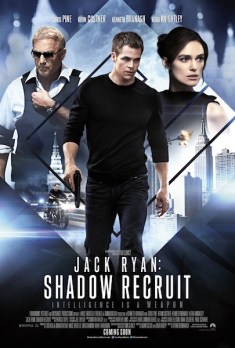 Kenneth Branagh, who once used to direct films based on Shakespeare and opera and that kind of thing, seems to have carved himself a place as a jobbing blockbuster director so far this decade: it started with a spot in Marvel’s then-burgeoning universe, adapting Thor; saw arguably its greatest success with the live-action remake of Disney’s Cinderella; and he’s now working on an adaptation of young adult action-adventure Artemis Fowl — all released by Walt Disney Pictures, incidentally.
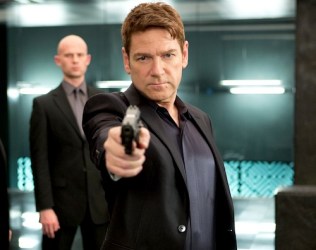 he comes up against oligarch Viktor Cherevin (Kenneth Branagh), the architect of the plan, which will be instigated by a massive terrorist attack on US soil. Unless Ryan can stop him, of course — with the help of his handler (Kevin Costner), and his fiancée Cathy (Keira Knightley), who’s followed him to Russia because she thinks he’s having an affair. I mean, he was sneaking around a lot…
 a little different to the action-thriller norm. Ryan has skills leftover from his military days, but he’s not a one-man army like Bond or Bourne — he needs help both on the ground and from tech guys behind the scenes, who play a vital role in… well, I was going to say “the climax”, but it’s “the bit just before the climax”. The climax is a chase around New York, because of course you have to end with a chase.
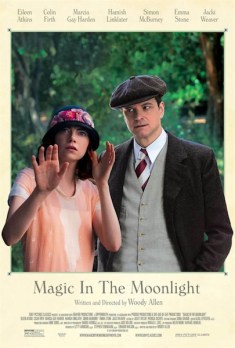 Woody Allen’s 44th film is a Sunday-afternoon-style period comedy, which nonetheless manages to touch on issues of existentialism and the meaning of life. If that sounds terribly Deep, don’t worry: Magic in the Moonlight may tickle your fancy, but it’s unlikely to tax your brain.
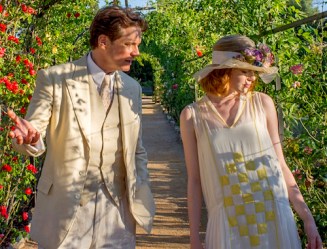 The most pleasing aspect is probably Darius Khondji’s photography. He emphasises the region’s beautiful golden light, with saturated colours emphasised by deep shadows, to create a warm and idyllic atmosphere, further accentuated by the twinkling blue ocean and stunning locales. It’s exemplary work that will likely make you long for distant times and places.
 Score:



 Stoner comedies aren’t really my thing, but something about American Ultra — which is often pithily described as “
 really mean it’s funny (there are two or three laughs, tops), just that it has a less serious tone. Even if you want to claim the Bourne similarities are just one facet, the film as a whole feels generally reminiscent of any number of low/medium-budget action flicks. It’s not bad, it passes the time, but original or exceptional? No.
 Legend of the Guardians is pretty odd.
 The “event miniseries” short-lived revival of a once-popular TV series is all the rage these days, with 24, Heroes, and The X-Files all trying it out in the past couple of years, Gilmore Girls doing essentially the same thing on Netflix in a couple of months, and Twin Peaks at it sometime next year. The thing that seems to have defined these revivals so far is that time has made no difference: none of them have come back radically new or changed, but have just been “more of the same” as the series they’re resuming, for good or ill. 24: Live Another Day is absolutely an example of this. It may be four years on, set in London, and only 12 episodes long, but if you didn’t know the circumstances behind production you’d be unlikely to think this was anything other than season 9 — after all, the show has always had years-long in-universe time jumps between seasons, and the last few have varied the location also (after seasons 1-6 were set in LA, season 7 was relocated to Washington, DC, and season 8 to New York). On top of that, the way the storyline drags back old characters who hadn’t been in the series for years cements the assumption that it’s a for-the-fans bonus run rather than a fresh-start relaunch attempt (which I guess next year’s spin-off, 24: Legacy, is hoping to be). All of this means that it has its good points, especially the action scenes, but some of the storytelling is overfamiliar, the dialogue at times terribly clunky, and there’s a continued half-arsed application of the real-time concept (which has been a bugbear of mine since season four or five). The fact it ends without really resolving the on-going story of Jack Bauer also feels like a daft mistake.
 Finally got round to this popular series (from a year ago! Time, where do you go?). I was pleasantly surprised by the plot. The setup was sold as a woman (the titular GP) becoming suspicious her husband was cheating on her — is he, or is she imagining things? For whatever reason I’d presumed that would be the mystery of the entire series, and it would inevitably turn out he was cheating because there’s not much story otherwise. But actually, that’s kind of dealt with in the first episode, and then it spins off in various twists and turns. It’s exciting and unpredictable without quite descending into the easy trap of having characters make completely ridiculous decisions or take extreme actions. It’s a pretty finite story, though, so quite where the commissioned second series is going is anyone’s guess.
 A new miniseries (it only finished on Tuesday — get me, watching something when it’s actually on!) from writers Harry and Jack Williams, who penned 2014’s excellent James Nesbitt drama The Missing (which, like Doctor Foster, has an unexpected second series in production). This is a slighter affair: essentially a murder mystery, but with a few well-executed twists along the way. It starts with the murder of a young couple whose families are neighbours on isolated farms in Scotland. When the suspected murderer turns up injured at those farms on the storm-afflicted night after the murder, they lock him in the barn while they await an ambulance… and then one of them murders him. Whodunnit? And what will they tell the police? And why the hell did he kill the couple, anyway? It’s funny to think of a four-hour drama as slight — imagine thinking a four-hour film was a bit short and lacking incident — but at least it’s not slow with it, somehow. A subplot about the investigating officer’s home life has no relevance to the main story and could’ve been cut, and the final revelations are somewhat farfetched, but other than that it’s a decent little thriller.
 I’ve never read any Tick comics, nor seen the
 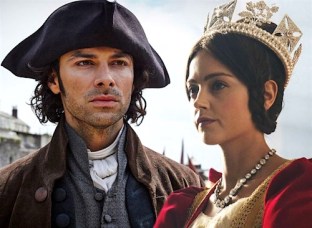 This month, I have mostly been missing Poldark and Victoria, respectively the BBC’s big period drama hit and ITV’s big period drama hope, which are currently going head-to-head on Sunday nights. For some reason I find myself not caring one iota about the latter (has it gone down well, or not? I don’t even know), but will get round to Poldark eventually.


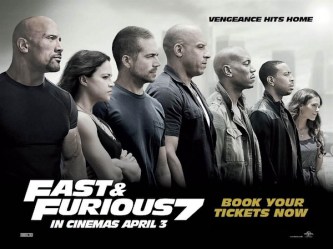 The franchise that can never make up its mind about what each instalment’s called continues with its most outrageously ludicrous entry yet.
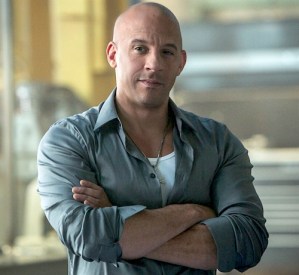 Despite that, the series is beginning to feel increasingly “fans only”. That’s the way of all things these days, I suppose. Long gone are the days when movie series aimed at accessibility, each entry fundamentally a standalone adventure for a popular hero. Serialisation is the new discreteness, and it pays dividends for Marvel and, indeed, for Fast & Furious: in the same year as
  while we’ve seen computers being used to generate a performance for a deceased actor for over 15 years now (I believe
  But hey, what does it matter? The point is the big dumb fun of the action sequences, be they well-choreographed and -shot fisticuffs, excellent stunt driving, or computer-generated ridiculousness. Is it okay to just give a movie’s plot a free pass like that? Sometimes, I think it is. Furious 7 is an action movie, in a fairly pure sense of the term, and action it delivers.
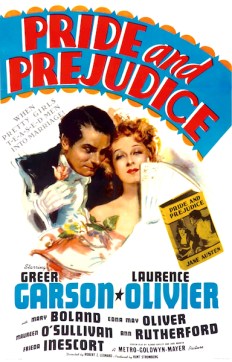 The first adaptation of Jane Austen’s ever-popular novel, MGM’s film is a compromised endeavour: by executives softening dialogue and rewriting characters; by changing its setting to permit grander costumes; by

 100Films.co.uk