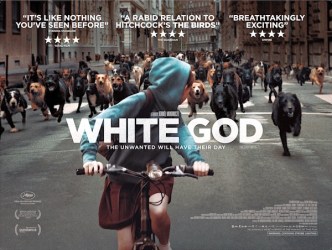
White God (2014)

aka Fehér Isten

2016 #11
Kornél Mundruczó | 121 mins | streaming (HD) | 2.35:1 | Hungary, Germany & Sweden / Hungarian | 15 / R

Thirteen-year-old Lili (Zsófia Psotta) and her dog Hagen are forced to temporarily live with her father, Dániel (Sándor Zsótér), because her mother is going on holiday with her new partner. Dániel doesn’t like Hagen anyway, but when the dog’s behaviour causes problems for him, he sets Hagen loose on the streets. Already angry with her father and his attitude, a devastated Lili sets out to find her beloved dog, who is busy discovering the darker side of mankind and our treatment of animals.

If White God sounds a bit bleak then, well, it can be. It’s a European arthouse drama, really, and so you get the attendant choices with pacing and storytelling style, as well as a commitment to realism — until the third act, at least, which I’ll come to in a moment. Hagen ends up in some very dark places, and co-writer/director Kornél Mundruczó doesn’t shy away from showing their brutality. Conversely, real dogs were used throughout filming, and the film doesn’t have a Hollywood budget for prosthetics or CGI, so we’re spared some of the imagery a less fiscally inhibited director might’ve forced upon us. Mundruczó insisted that all the dogs in the film were real animals trained to perform (and none were harmed, of course), which must’ve been limiting at times, but makes everything we see that much more effective.

For all the toughness of the journey, where it leads is triumphant; not entirely so, I must add, but enough. The film’s third act can pithily be described as Rise of the Planet of the Dogs: having seen the abuses of humans, an impounded Hagen leads a canine uprising that seeks to… well, they don’t speak (they’re dogs, remember, and this isn’t Disney), so who knows what their precise aims are? “Revenge” would be too cruel, but they definitely seeking some retribution. The film’s sadness doesn’t disappear (hence why not entirely triumphant), but some wrongs are righted.

The comparison to certain films about apes goes further than just the theme of an animal revolution, however: just like the last two Apes movies, White God drags a little when it leaves the animals for the humans. I’d love to see an edit which just followed Hagen’s story — you’d certainly keep all the film’s interesting and memorable bits, and lose very little. Not that the human bits are bad, per se, but they don’t go anywhere particularly new. Ooh, a teenager striking out, going to clubs (gasp!), and then realising that her parent isn’t such a monster after all (twist!) The performances are good — young Psotta is very naturalistic, and Zsótér makes you understand the humanity of someone who could’ve been a straightforward villain — but the dogs are where the real interest is at.

Some will find the middle of the film a slog, I suspect, both emotionally and with its occasionally lagging pace. However, the bookends seek to justify it. There’s catharsis in the finale, as described, but even better is the film’s opening. It has to be seen to be properly understood, but it’s operatically scored, shot, and edited, and involves hundreds (literally) of trained dogs en masse. It’s spectacular, unforgettable moviemaking; perhaps even one of the best openings to a film ever. And I don’t say that just as a “dog person”.

White God could benefit from tightening in some places, and less focus on the by-the-motions human subplots wouldn’t be a bad thing, but as a kind of magical realist drama, almost an arthouse take on certain Hollywood blockbuster narratives, it’s a compelling and sometimes awe-inspiring movie.

4 out of 5

The Lord of the Rings (2001-2003)

100 Films’ 100 Favourites #53—55
Peter Jackson | 685 mins | New Zealand & USA / English & Sindarin | 12 / PG-13

For obvious reasons, Peter Jackson’s adaptation of The Lord of the Rings is usually listed as the three separate films it was released as. But in the same way J.R.R. Tolkien considered it one long novel that had to be split up for the sake of publication, so too the movies work well — best, one could even argue — as a single 11½-hour experience.

Having inducted the trilogy’s individual instalments into my 100 Favourites series over the past week (and a bit), I’ve covered most aspects of this epic moviemaking endeavour pretty thoroughly already, so here are links to each of my previous entries:


The Lord of the Rings: The Return of the King (2003)

100 Films’ 100 Favourites #55

The Journey Ends.

Country: New Zealand & USA
Language: English & Sindarin
Runtime: 253 minutes (extended edition)* | 201 minutes (theatrical version)
BBFC: 12A
MPAA: PG-13
* 263 minutes with the interminable fan club credits.

Original Release: 17th December 2003 (UK, USA & others)
First Seen: cinema, December 2003

Stars
Liv Tyler (Armageddon, The Incredible Hulk)
Miranda Otto (Love Serenade, War of the Worlds)
Cate Blanchett (Elizabeth, Blue Jasmine)
John Noble (The Monkey’s Mask, Risen)
Ian Holm (Alien, Hamlet)

Director
Peter Jackson (The Frighteners, The Hobbit: An Unexpected Journey)

Screenwriters
Fran Walsh (Heavenly Creatures, King Kong)
Philippa Boyens (The Lovely Bones, The Hobbit: The Battle of the Five Armies)
Peter Jackson (Braindead, The Hobbit: The Desolation of Smaug)

Based on
The Lord of the Rings, a trilogy of novels by J.R.R. Tolkien.

The Story
The Ring’s evil influence over Frodo intensifies as he and Sam allow Gollum to lead them on a difficult path into Mordor. Meanwhile, Aragorn and Gandalf try to unite the world of men against Sauron’s forces, hoping to at least buy Frodo and Sam the time they need…

Our Heroes
It’s an ensemble cast so there are heroes aplenty, but this is the film where Sam really comes to the fore. Although wronged by Frodo, whose Ring-induced confusion allows him to be convinced by the machinations of Gollum, Sam repeatedly comes through to rescue his friend. “I can’t carry it for you… but I can carry you!”

Our Villains
With Saruman out of the picture, the focus falls back on the Big Bad big eye, Sauron. In the extended cut we’re also treated to his rather disgusting Mouth. Special mention also for the Witch-King of Angmar, who reckons he can be killed by no man. Of course, despite Tolkien’s reputation, not every character is a man…

Best Supporting Character
Women get short shrift in Tolkien’s world on the whole, but Miranda Otto’s Éowyn gets a relatively strong role through Two Towers and Return of the King, here riding into battle (in disguise) and (spoiler alert!) avenging the murder of her uncle, the king.

Memorable Quote
“My friends, you bow to no one.” — Aragorn, to the Hobbits.

Quote Most Likely To Be Used in Everyday Conversation
“Fool of a Took!” — Gandalf

Memorable Scene
With the Ring destroyed and Sauron defeated, the film takes the necessary time to walk us through the ultimate fates of the surviving characters. For the conclusion of an eleven-hour story, The Return of the King has a proportionally appropriate number of endings. Stop bloody whinging.

Memorable Music
Howard Shore completes his fantastic score. This time, memorable moments include The Realm of Gondor (in Ascension), heard best as Gandalf rides into and up the city of Minas Tirith; and The Edge of Night, sung by Pippin (Billy Boyd) as Faramir leads a futile charge on Osgiliath (another strong contender for Memorable Scene, that).

Technical Wizardry
The Fellowship of the Ring was one of the films that pioneered digital grading, a process which pretty quickly became standard (and now is fundamentally unavoidable, what with digital photography being the primary movie production format). Return of the King demonstrates the full power of the form, however: After the final battle, Pippin finds Merry on the battlefield. In the theatrical cut, the scene takes place during the day; in the extended cut, new and rearranged scenes means it takes place at night. It’s the same footage, graded differently, and it works seamlessly in either cut.

Truly Special Effect
Creating the trilogy’s many epic battle sequences required the ability to computer generate hundreds of thousands of soldiers fighting, a gargantuan task and a problem that hadn’t had to be solved in filmmaking before. This is what led to the creation of MASSIVE — short for Multiple Agent Simulation System In Virtual Environment — a computer program which creates thousands of characters who are capable of acting as individuals, responding to their surroundings through the use of pre-programmed actions and animations. The kit has been used in many sci-fi/fantasy films since, including Avatar.

Letting the Side Down
I’ve never really bought all the stuff with the ghost army, and apparently Peter Jackson agrees. Although he hated it because it was so unbelievable, he kept it in so as not to disappoint fans of the novel.

Making of
Although most of the trilogy was filmed as part of one massive shoot before the first film was even released, pick-ups and additional filming were later done for both parts two and three. Ultimately, the final day of filming for the trilogy (to get one additional shot for the extended edition of Return of the King) actually occurred not only after the final film had already been released, but after it had swept the board at the 2004 Academy Awards, too. Apparently it amused Peter Jackson to be shooting footage for a movie that had already won the Best Picture Oscar.

Previously on…
The story began in The Fellowship of the Ring and continued in The Two Towers, of course.

Next time…
Jackson and co returned to Middle-earth to adapt prequel tale The Hobbit in three parts, which has a framing device that places it… before Fellowship. So this remains the chronological end of the line.

Awards
11 Oscars (Picture, Director, Adapted Screenplay, Editing, Art Direction-Set Decoration, Costume Design, Makeup, Score, Song, Sound Mixing, Visual Effects)
5 BAFTAs (Film, Adapted Screenplay, Cinematography, Visual Effects, Audience Award)
8 BAFTA nominations (Supporting Actor, Director, Music, Editing, Production Design, Costume Design, Sound, Make Up/Hair)
9 Saturn Awards (Fantasy Film, Actor (Elijah Wood), Supporting Actor (Sean Astin), Director, Writing, Music, Make Up, Special Effects, DVD Special Edition Release (for the extended cut))
5 Saturn nominations (Actor (Viggo Mortensen), Supporting Actor (both Ian McKellen and Andy Serkis), Supporting Actress (Miranda Otto), Costumes)
7 Teen Choice Award nominations (including Choice Movie Liar and Choice Movie Sleazebag (both for Gollum))
Won the Hugo for Best Dramatic Presentation Long Form

What the Critics Said
“the invisible wizard Peter Jackson makes use of every scene to show us the meaning of magnificence. Never has a filmmaker aimed higher, or achieved more. The third and last installment of the screen epic based on J.R.R. Tolkien’s literary classic redefines — steeply upward — the very notion of a major motion picture. […] To write about this culminating chapter of The Lord of the Rings is to risk gushing in a public place. Still, I’ve never seen a movie like it, or been so struck by a filmmaker’s generosity and the prodigality of what he has done. Yes, the running time is long, and yes, those many endings in a slow, dreamy coda left me feeling spent — better spent than I can ever remember.” — Joe Morgenstern, The Wall Street Journal

Score: 95%

What the Public Say
“When I talk about any of the Middle Earth films, I’m referring to the extended edition because, despite Jackson’s dissembling, they’re the movies he always intended to release and are uniformly better than the theatrical cuts. Nowhere is this more true than with The Return of the King which, despite winning Best Picture, was made infinitely better by its extended cut, which does clock in at a whopping four and a half hours. It’s a wonderful end to one of the most epic tales in all of fiction (and if I hear anything about the “five million endings” I’ll reach through your screen and slap you unless you can tell me how you would have ended an 11 hour film better).” — David Yaeger, Killing Time

Verdict

Return of the King is widely regarded as the best Lord of the Rings film, which is an opinion I can’t agree with. At its simplest: there’s nothing I’d change about Fellowship to improve it, whereas RotK could stand to lose the Army of the Dead and (were it not for the fact it comes from Tolkien) no one would mind. Still, that element aside, this is a fantastic conclusion to Tolkien/Jackson’s epic saga, bringing numerous plots and characters to their conclusion, and rounding out one of the most impressive feats of filmmaking we will likely ever see. There are very few things I could imagine watching for 12 hours straight (without it feeling like a chore, anyway), but The Lord of the Rings is certainly foremost among them.

#56 will be… ロストイントランスレーション。

Crimson Peak (2015)

2016 #33
Guillermo del Toro | 119 mins | Blu-ray | 1.85:1 | USA & Canada / English | 15 / R

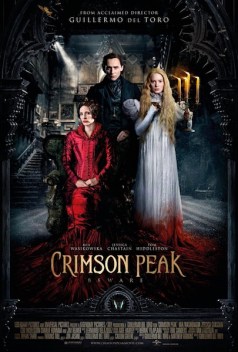
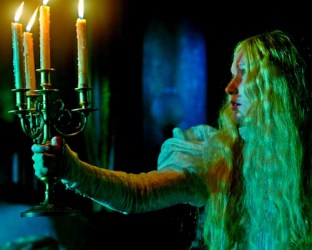
Mia Wasikowska stars opposite a British thesp best known for playing a comic book villain and a red-headed repeat-Oscar-nominee, in a Gothic drama-thriller from an acclaimed non-Anglo director? That’s a description of Stoker, Park “Oldboy” Chan-wook’s modern-Gothic chiller that co-starred Matthew “Watchmen” Goode and Nicole “The Hours” Kidman, which I awarded a five-star review and a place in my top ten last year. It’s also a description of Crimson Peak, Guillermo “Pan’s Labyrinth” Del Toro’s classic-Gothic chiller that co-stars Tom “Thor” Hiddleston and Jessica “Zero Dark Thirty” Chastain, which struggled to find an audience in cinemas last year. That last fact has often been attributed to its marketing, which I presume was as a horror movie (I never watched any of the trailers). It’s understandable the studio went for that, though: they know how to sell horror, but Crimson Peak is actually something more uncommon.

If you’ve not at least heard of The Castle of Otranto then there’s a chance your expectations of Crimson Peak may be misaligned. Which is not to say you won’t like it, especially if you’re of an open-minded disposition, but if having heard it’s “Gothic” and a “horror movie” has conjured up something Hammer-esque in your mind, then you are indeed off base. I think most people hear “Gothic” and automatically extrapolate “Gothic horror”, at least as far as movies are concerned. Crimson Peak isn’t a Gothic horror, though — at least, not in the Hammer sense — but rather a Gothic Romance, which is as distinct from “horror” as it is from “romance”. Perhaps “Gothic melodrama” would be a term better suited to today’s audiences. OK, maybe not — frankly, it’s difficult to imagine any scenario in which a movie of this kind generates big bucks at the box office unless you somehow made one that features a comic book character beating the crap out of the cast every 20 minutes.

The story actually concerns Edith Cushing (Wasikowska), a well-to-do businessman’s daughter in upstate New York who is occasionally haunted by ghosts. She falls for visiting English gent Sir Thomas Sharpe (Hiddleston) and, long story short, moves with him and his haughty sister Lucille (Chastain) back to their crumbling — literally — pile in the English countryside. The house hides many secrets, and ghosts, too. Having said it’s not a horror movie, it would be unfair to class Crimson Peak as simply a tame drama — as you’d expect from writer-director Guillermo del Toro, those ghosts can be bleedin’ scary, and there are certainly a smattering of good old fashioned jumps to boot.

If you start reading online (the ones I read, at any rate), you tend to find people either: a) thought there weren’t enough ghosts, or b) thought there were too many ghosts. And there’s an element of truth in this: the horror bits are a little bit too horror-genre for a Gothic romance/melodrama, but they’re undoubtedly not in it enough to transform it into a full Horror movie. Someone with the predilection to enjoy both is required to stomach the film, which I must say I am, and I dare say Del Toro would fit that bill also. It seems clear that he’s made exactly the film he wanted to make; it’s just unfortunate that turned out to be a tricky sell, and consistently misunderstood by a mainstream audience. (I say “mainstream audience” because you can find an abundance of comments on film-fan websites noting how it was incorrectly marketed, etc.) That said (minor spoiler here), it’s stated in the film itself that the ghosts are a metaphor. OK, it’s stated by Edith about the story she’s writing, but you don’t need a degree in Film Studies to realise this is meant as a meta-comment on the film as well. Or maybe you do.

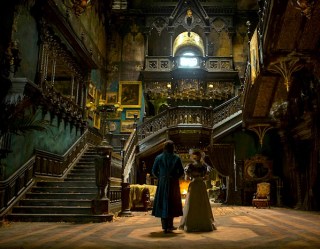
Whatever one’s thoughts on the story and tone of the film, it can’t be denied that its technical merits are extraordinary. Every inch of the design work is gloriously imagined, and the cinematography — the lighting in particular — is spectacular. And that gigantic house set…! And the climactic ‘limbo’ set, too — incredible work. (That’s not a spoiler, incidentally: it was the set’s nickname, not its literal location.) The ghost effects are excellent too — original, creepy, and executed in a way that blurs the lines between make-up, animatronics, and CGI. It’s a shame the film as a whole wasn’t better received, because I imagine that’s all that held it back from numerous awards-season nods.

Crimson Peak is exactly the kind of film that, on reflection, I may wind up liking even more than I do now. Perhaps others will feel the same and it will also gain better standing in assessments of the director’s filmography — even as it is, it’s definitely one of my favourite Del Toro films (though I really need to give Pan’s Labyrinth another go, to see if I can see what all the fuss is about this time). The film’s tagline was simply “Beware”, but perhaps the viewer needs to be warned instead to “be prepared” — if you know what you’re getting in to, I think Crimson Peak has a lot to recommend it.

4 out of 5

Crimson Peak premieres on Sky Cinema (including via Now TV) tomorrow, Sunday 17th July.

Superman Returns (2006)

2016 #117
Bryan Singer | 154 mins | DVD | 2.35:1 | USA / English | 12 / PG-13

The same summer that Christopher Nolan revitalised the Dark Knight with the critically acclaimed and commercially successful Batman Begins, one of the men who’d helped kickstart the current superhero resurgence, X-Men director Bryan Singer, attempted the same with DC Comics’ other major hero, Superman, only to be met with critical derision and commercial failure.

Except that’s not actually what happened, despite what many have come to believe since. Superman Returns was actually pretty popular with critics: 76% on Rotten Tomatoes, enough to gain a Certified Fresh classification; and if you hone that to just top critics, it scores 68% versus Batman Begins’ 65%. Returns also outgrossed Begins that summer, taking $391 million worldwide to the Bat’s $374 million. These are all small margins, but even just being on the same level as each other demonstrates something about how perception and accepted narratives can distort what actually happened.

Of course, even this is a slight distortion, because while Batman Begins cost $150 million, Superman Returns’ budget was $204 million — at the time, one of the most expensive movies ever made. Lump in the development costs of previous aborted Superman films (which Hollywood accounting does) and you get closer to $270 million — a figure that, even today, would put it in the top five most expensive movies ever made.

All of that was ten years ago now, since when plans for a sequel have been abandoned, the character has had a reboot, and kicked off a shared universe with a Batman co-starring sequel, too. With all that behind us, is Superman Returns’ poor reputation actually deserved? I’ve never got round to seeing it, so had no horse in the “it’s misunderstood” / “it’s deservedly derided” race; but today is the 10th anniversary of the film’s UK release, so what better time to finally join the debate?

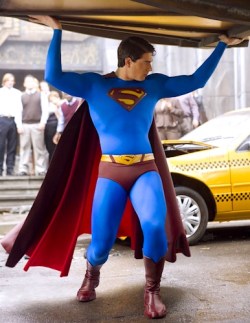
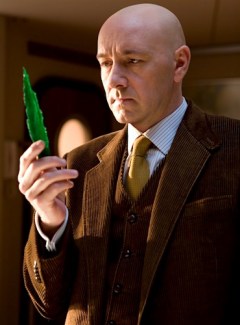
The film begins in media res, with Clark Kent / Superman (Brandon Routh) returning home after five years away. The world has moved on: hot-shot reporter and Supes love interest Lois Lane (Kate Bosworth) has a fiancé (James Marsden) and a young son, and worst of all has penned an award-winning article called “Why the World Doesn’t Need Superman”. Meanwhile, criminal mastermind Lex Luthor (Kevin Spacey) has escaped a jail sentence and is secretly setting about a nefarious plan…

Sitting down to Superman Returns cold, it feels like you’re watching a sequel — and in many respects, that’s what it is. Singer loves the Christopher Reeve Superman movies, quite rightly, and when offered the chance to make a new movie with the character essentially set out to make Superman III. Yes, Superman III already exists — and Superman IV, too — but no one likes them, so Singer’s decision to just completely ignore them wasn’t so daft. What was daft was making a sequel to a 26-year-old movie and assuming that the audience would be instantly familiar with the whole setup. Most cinemagoers won’t have done their homework and re-watched the older films before heading to the movies (because why would they?), so no wonder people felt confused and disappointed by what they were seeing. People nowadays complain about too many reboots and retellings of origin stories, often for good reason, but (a) sometimes a new telling is the right way to go, and (b) if you’re going to pick up a character mid-life, you still need to treat it as a new and standalone story if its immediate predecessor was released decades ago.

Really, Returns is one massive tribute to those ’70s and ’80s Superman films. Brandon Routh is essentially stuck doing a Christopher Reeve impression, both as bumbling Clark Kent and the Big Blue Boy Scout. Kevin Spacey is similarly in Gene Hackman mode, though as the film goes on he seems to increasingly relish the absurdity of what they’re doing. Old footage of Marlon Brando is resurrected to play Supes’ dad; the aesthetic is nostalgic, with a bright red-and-blue costume, classically-inspired sets, and sepia-tinged cinematography; there’s a focus on drama, with a sparing use of action sequences (at least until the climax); even the opening titles emulate the iconic whooshing blue names of the 1978 film. Maybe watched as part of a series with the earlier films it works as an homage or addendum, but as a work in its own right, viewed in isolation, it feels… misjudged.

That’s not helped by some aspects simply not working. I have nothing against Kate Bosworth, but she’s horribly miscast as Lois; so wrong it’s even hard to pin down exactly why it doesn’t work. The pace is wonky, with a long, slow start before a surfeit of action sequences blow in, at least one of them a complete aside from anything that’s going on, presumably just to gather some cool shots for the trailer (the bullet bouncing off Superman’s eye, for example). If the movie had begun with the airplane rescue scene — which is actually a great sequence, quite possibly the best Superman-related action scene ever filmed — perhaps it would’ve earnt the time to indulge in the Reeve-related posturing that actually takes up the first half-hour-or-so. I can imagine an edit of the movie that begins on that plane: just a bunch of journalists observing the press demonstration of the new shuttle technology, when suddenly, inexplicably, it fails — they’re all going to die — then Superman turns up completely out of nowhere and saves them. Then you have the credits, which are immediately followed by Lex’s whole journey to the Fortress of Solitude, and only then do you get in to the stuff with Superman only having just returned, wondering what his places is now, and so on. Maybe lose the scene of him basically stalking Lois’ new family, though.

You can see what Singer was going for with Superman Returns — a respectful, lightly modernised homage to some classic, beloved movies — but the benefit of hindsight makes it clear that really wasn’t a good idea. That said, it could’ve worked. If they’d put a little more effort into making it work as a semi-reboot rather than as a straight-up continuation, which is how it comes across, then maybe it would’ve been friendlier to newcomers. There are some excellent things in here — the tone mixes drama, humour, and life-or-death stakes in a way some blockbusters are losing sight of; Lex’s scheme is unusual and therefore interesting; the action scenes are thrilling; attempting to bring some character to the characters, rather than merely using them as pawns in those action sequences, almost lends the film additional depth — and I think it would’ve been a lot better liked if people felt they could get on board with it; if it wasn’t trying so hard to be something it’s not, which is a Superman movie starring Christopher Reeve made in 1983. For all Man of Steel’s faults, at least it tried to reintroduce the character, rather than pick up where it left off.

The final thing this all makes me think of is the forthcoming Marvel Spidey movie, Spider-Man: Homecoming. One wonders if Sony were inspired by Superman Returns’ perceived failure when they chose to reboot Spidey in 2012’s The Amazing Spider-Man, rather than make Spider-Man 4 with a new cast and crew. That reboot decision was not popular, to say the least, with audiences thinking ten years (since the ‘first’ Spider-Man movie) was too little time to warrant retelling a familiar story. With that universe abandoned after an even-less-popular sequel, the next Spider-Man movie has to start again — but they’ve learnt their lesson and aren’t retelling the origin, instead diving in with Spider-Man already established as a hero. In media res again, then, but also (one hopes) with an awareness that this is to be the first movie in a series, not pretend to be the third or fourth. Another, better lesson learnt from Superman Returns, perhaps? Wouldn’t it be nice if Hollywood could learn from its mistakes more often…

3 out of 5

The Lord of the Rings: The Two Towers (2002)

100 Films’ 100 Favourites #54

The Journey Continues

Country: New Zealand & USA
Language: English & Sindarin
Runtime: 224 minutes (extended edition)* | 179 minutes (theatrical version)
BBFC: 12A
MPAA: PG-13
* 235 minutes with the interminable fan club credits.

Original Release: 18th December 2002 (UK, USA & others)
First Seen: cinema, December 2002

Stars
Andy Serkis (Burke & Hare, Rise of the Planet of the Apes)
Bernard Hill (Titanic, Franklyn)
Christopher Lee (Dracula, The Wicker Man)
Hugo Weaving (The Matrix, V for Vendetta)
David Wenham (The Crocodile Hunter: Collision Course, 300)

Director
Peter Jackson (Heavenly Creatures, The Lovely Bones)

Screenwriters
Fran Walsh (The Frighteners, The Lovely Bones)
Philippa Boyens (The Lord of the Rings: The Fellowship of the Ring, The Hobbit: An Unexpected Journey)
Stephen Sinclair (Meet the Feebles, Braindead)
Peter Jackson (Bad Taste, King Kong)

Based on
The Lord of the Rings, a trilogy of novels by J.R.R. Tolkien.

The Story
Frodo and Sam continue on their way towards Mordor, guided by the duplicitous Gollum. Meanwhile, the surviving members of the Fellowship attempt to bring the kingdom of Rohan into the fight against the hordes of orcs Saruman is assembling.

Our Heroes
As the Fellowship go their separate ways, you could argue that The Two Towers is where Aragorn really comes into his own: the self-exiled royal unveils his leadership qualities as he persuades the people of Rohan to abandon Edoras for the safe haven of Helm’s Deep, and leads the defence of that stronghold.

Our Villain
Once-good wizard Saruman is lent villainous credence by Christopher Lee — really, who else could it be? In one of Jackson’s few missteps, he deleted Saruman’s defeat from the theatrical cut of Return of the King… but the extended cut restores it, so that’s alright then.

Best Supporting Character
Although he’s covered by CGI in the final film, it’s Andy Serkis that really brings Gollum — and his alter ego, Sméagol — to life. It may have led to Serkis becoming the go-to expert in performance capture, but it’s also a great acting performance, full of light and shade, and creating sympathy for an ultimately villainous character. (See also: Truly Special Effect.)

Memorable Quote
“Where is the horse and the rider? Where is the horn that was blowing? They have passed like rain on the mountain, like wind in the meadow. The days have gone down in the West behind the hills into shadow. How did it come to this?” — Theoden

Quote Most Likely To Be Used in Everyday Conversation #1
“Po-tay-toes! Boil ’em, mash ’em, stick ’em in a stew.” — Sam

Quote Most Likely To Be Used in Everyday Conversation #2
“My precious…” — Gollum

Memorable Scene
The climactic battle of Helm’s Deep is surely one of the greatest battles ever put on screen, as thousands of orcs attempt to storm a fortress defended by a small force of soldiers supported by a ragtag gaggle of old men and boys. Like the ninth episode of a season of Game of Thrones, it plays out over about an hour, but doesn’t flag because it’s so well realised.

Memorable Music
Howard Shore’s excellent score continues to evolve and develop, with the stand-out theme this time being for the realm of Rohan. Also of note is the track that plays over the credits, Gollum’s Song, hauntingly sung by Emilíana Torrini.

Technical Wizardry
Although Lord of the Rings features expanses of excellent CGI, much of it was also created with miniatures — or “Bigatures”, as production nicknamed them, due to the massive scale of some that they built (the largest was 9 metres tall). It lends the final images a physicality and realism that demonstrates why a combination of multiple techniques is often the best way to create a superb end result.

Truly Special Effect
Just a couple of years after The Phantom Menace featured the first major all-CGI character, Weta perfected the form with Gollum, a fully believable creature and an essential part of the narrative. (See also: Best Supporting Character.)

Letting the Side Down
The problem with being the middle part of a series is the story can lack a beginning or an end. Two Towers handily makes up for the latter with the epic battle of Helm’s Deep and the Ents conquering Isengard, but the former is an issue — the film takes a while to get up to speed.

Making of
The prop gate of Helm’s Deep was so well built that a real battering ram failed to knock it down. The door had to be weakened to get the required shots. On the film’s commentary track, Peter Jackson notes that if he ever had to defend a castle he’d want Weta Workshop to build the door.

Previously on…
The story began in The Fellowship of the Ring.

Next time…
The story ends in The Return of the King.

Awards
2 Oscars (Sound Editing, Visual Effects)
4 Oscar nominations (Picture, Editing, Art Direction-Set Decoration, Sound)
3 BAFTAs (Costume Design, Visual Effects, Audience Award)
7 BAFTA nominations (Film, Director, Cinematography, Production Design, Editing, Sound, Make Up/Hair)
4 Saturn Awards (Fantasy Film, Supporting Actor (Andy Serkis), Costumes (tied with Star Wars: Episode II), Make-Up)
6 Saturn nominations (Actor (Viggo Mortensen), Younger Actor (Elijah Wood), Director, Writing, Music, Special Effects)
1 Broadcast Film Critics Association Award (Best Digital Acting Performance (Andy Serkis, obv.))
4 MTV Movie Awards (including Best Virtual Performance (Gollum, obv.), Best Action Sequence (Helm’s Deep))
1 Kids’ Choice Award nomination (Favorite Male Butt Kicker)
Won the Hugo for Best Dramatic Presentation Long Form

What the Critics Said
“Gollum is a wonderful creation: voiced by Andy Serkis, and given the most heartbreakingly expressive face, he’s far more than a digital effect: he’s really there, taking up space, displacing air (part of the impact comes from the meticulous care with which all the creatures of Middle Earth are scaled relative to one another). Gollum is a vile mixture of servility and malice, yet watching him being beaten, throttled, kicked by almost everyone he encounters is as distressing as watching a child being hit. Frodo, for all his faults, is kind to Gollum, seeing in him his own disturbing likeness; Sam, for all his virtues, is cruel.” — Suzi Feay, The Independent

Score: 96%

What the Public Say
“The tricky thing with being the second film in a trilogy is that there is no beginning and end. It is almost as if the entire story arc is getting sidetracked by some other battles and new creatures and characters to be met. The film is a intense adventure film but the emotional pull of the two main characters and their journey is out on hold. What makes the Fellowship of the Ring one of the most completely amazing films is because there is a both an emotional and a physical journey the characters take. In the Two Towers we are constantly being told by an assortment of characters that a real war is coming and what they are experiencing are just small skirmishes. Are the filmmakers deliberately teasing us with the excitement of the next film or attempting to do the story its rightful justice?” — Brian Baumann, brianbaumannmoviereviews

Verdict

I was less than impressed by much of The Two Towers when I first saw it — the first hour or so drags, and the intercutting of the deathly dull Entmoot slightly hampers the momentum of Helm’s Deep. Nonetheless, there’s an awful lot to commend it, and the pace becomes less jarring with multiple revisits (when the Extended Edition first came out I even watched both cuts back to back on the same day, which is very unlike me). Some of the trilogy’s best characters first appear here, bringing with them plenty of plot developments that make my notion it was all almost done at the end of Fellowship seem suitably foolish. And, of course, the Battle of Helm’s Deep can’t be beat.

A day may come when the courage of men fails, when we forsake our friends and break all bonds of fellowship… but it is not in #55.

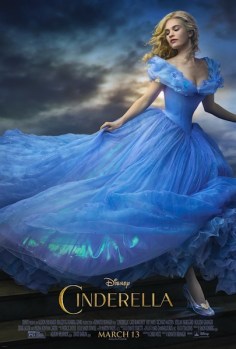
Cinderella (2015)

2016 #43
Kenneth Branagh | 101 mins | streaming (HD) | 2.35:1 | USA & UK / English | U / PG

Disney’s animated classic is re-imagined in live-action, losing the songs but expanding the story. The latter serves to find a little more realism in the setup (how Cinders became a servant to her stepmother, etc), as well as in the characters’ motivations and actions.

Cate Blanchett excels (as ever) as the evil stepmother, and Lily James sells Ella’s perfectness as delightful rather than irritating. It’s kinda odd to see Game of Thrones’ Richard Madden as a clean-cut Prince, though.

Branagh brings requisite class and gloss for a remake that, while not a classic like the original, is a worthy revisioning.

4 out of 5

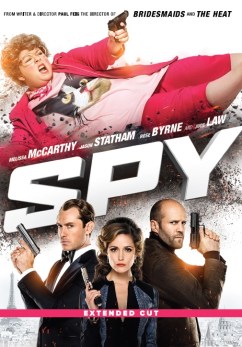
Spy: Extended Cut (2015)

2016 #106
Paul Feig | 125 mins | streaming (HD) | 2.35:1 | USA / English | 15

The cinema was blessed — or, depending on your point of view, blighted — by an abundance of espionage-related movies last year (see: the intro to my initial thoughts on Spectre for more on that), and even writer-director/star team Paul Feig and Melissa McCarthy got in on the act with this comedy.

McCarthy is Susan Cooper, a CIA agent who provides desk-bound support for Bond-esque super-spy Bradley Fine (Jude Law). When Fine is killed while investigating the villainous Rayna Boyanov (Rose Byrne), Cooper insists she go into the field to finish what he started. This doesn’t impress experienced agent Rick Ford (Jason Statham), who goes rogue to deal with Boyanov himself.

Technically speaking, Spy is a spy comedy rather than a spy spoof — a perhaps subtle distinction, but one that does inform the kind of comedy you’re getting; i.e. rather than a send-up that relies on you knowing the material being parodied to get the jokes, this is almost a workplace comedy… just one where the workplace is international espionage. Put another way, less Naked Gun or Austin Powers, more Kingsman with the comedy dialled up higher in the mix.

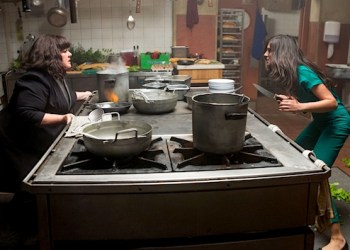
This is perhaps why it’s sporadically amusing rather than regularly hilarious; on the bright side, it only occasionally slides too far into dull toilet/gross-out ‘humour’. Similarly, it means that there are a handful of fun and/or exciting action beats scattered throughout the film, which you might not expect. They’re typically brief, but — even more surprisingly — there’s a fight between McCarthy and a henchwoman in a kitchen which is a genuinely good action sequence. It’s also surprisingly gruesome. Yes, it’s R-rated, but in the world of comedy that usually just means an overabundance of the F-word. Here we have at least one clear headshot, a dissolving throat, a knife through a hand, and more photos of a henchman’s penis than you ever needed to see. (That last one’s only describable as “gruesome” depending on your personal predilections, of course.)

Apparently Feig is a fan of James Bond and developed, wrote, produced, and directed Spy because he knew no one would ever let him do a real Bond movie. I guess that explains why some of it does work passably well as a genuine action/thriller. Composer Theodore Shapiro does an equally good job of evoking Bond’s musical stylings throughout his score. In my experience most comedies don’t show such consistent commitment in their music. Talking of music: as I mentioned in my June monthly update, there’s a random cameo by Verka Serdyuchka, Ukraine’s Eurovision entry from 2007. That gets the film some bonus points in my book.

The quality of the cast’s performances are variable in ways I didn’t expect. Statham almost steals the film, playing essentially himself — but exaggerated, I’m sure. McCarthy is a solid lead, at her best when sparking off Rose Byrne, who makes anything more watchable. Miranda Hart has a large supporting role as McCarthy’s CIA colleague, but I’m not sure that her strengths are wholly played to. I guess if you like her you’ll like her here (and if you don’t…) Peter Serafinowicz’s lecherous Italian is disappointingly overplayed, however, and I’m not sure why you’d cast ever-so-British Jude Law as a James Bond type and then give him an American accent.

The extended (aka unrated) cut contains almost 10 minutes of extra material, detailed here. Reading that list really demonstrates how some bits were tightened up for the theatrical release. I’d even wager that some parts are the result of improvising to find one good line, but in the extended cut they’ve strung half a dozen of the options together. I don’t think any casual viewer would miss much by sticking to the theatrical cut. That said, despite it running to two hours, I didn’t find it to be too long. It still wouldn’t hurt if it was tighter in places, but I didn’t get that “oh dear God why is this longer than 90 minutes?!” feeling you can get from 120-minute comedies.

Amusing rather than hilarious, but with a pleasing commitment to its genre, Spy isn’t going to tap into the zeitgeist in the way Austin Powers did almost 20 years ago(!), but it does provide a largely entertaining couple of hours.

3 out of 5

Feig and McCartney’s latest collaboration, the Ghostbusters reboot, is in UK cinemas from today, and launches around the world over the coming weeks.

The Lord of the Rings: The Fellowship of the Ring (2001)

100 Films’ 100 Favourites #53

One Ring To Rule Them All

Country: New Zealand & USA
Language: English & Sindarin
Runtime: 208 minutes (extended edition)* | 178 minutes (theatrical version)
BBFC: PG (“Battle violence and fantasy horror may not be suitable for under 8’s”)
MPAA: PG-13
* 228 minutes with the interminable fan club credits.

Original Release: 19th December 2001 (UK, USA & others)
First Seen: cinema, December 2001

Stars
Elijah Wood (The Ice Storm, Eternal Sunshine of the Spotless Mind)
Ian McKellen (Richard III, X-Men)
Viggo Mortensen (G.I. Jane, Eastern Promises)
Sean Bean (GoldenEye, Black Death)
John Rhys-Davies (Raiders of the Lost Ark, In the Name of the King: A Dungeon Siege Tale)
Orlando Bloom (Pirates of the Caribbean: The Curse of the Black Pearl, Kingdom of Heaven)
Sean Astin (The Goonies, The Colour of Magic)
Dominic Monaghan (I Sell the Dead, X-Men Origins: Wolverine)
Billy Boyd (Urban Ghost Story, Master and Commander: The Far Side of the World)

Director
Peter Jackson (Bad Taste, King Kong)

Screenwriters
Fran Walsh (Meet the Feebles, The Hobbit: An Unexpected Journey)
Philippa Boyens (King Kong, The Hobbit: The Desolation of Smaug)
Peter Jackson (Heavenly Creatures, The Hobbit: The Battle of the Five Armies)

Based on
The Lord of the Rings, a trilogy of novels by J.R.R. Tolkien.

The Story
Legend tells of a ring, created by an ancient evil that gave its wearer the power to enslave the world. Believed lost for centuries, it has now been found… in the possession of one Frodo Baggins, a Hobbit of the Shire. With an evil force thought long-defeated on the rise, and hunting for the Ring to cement his power, Frodo will do what few of his kind have ever done: venture beyond the confines of their homeland. Joined by eight companions, they must travel across Middle-earth to destroy the One Ring once and for all.

Our Heroes
Frodo Baggins lives a quiet life in the countryside idyll of the Shire, where the greatest drama is stopping his relatives from stealing the cutlery. When a dangerous artefact is found to be in his possession, however, the honest and good nature of his people comes to the fore. On his quest, he has eight friends and protectors: his best friend / bodyguard / gardener, Samwise Gamgee; two rambunctious but pure-hearted Hobbits, Merry and Pippin; the powerful wizard Gandalf the Grey; a mysterious ranger from the North, Strider, aka Aragorn; from the world of Men, warrior Boromir; elf Legolas, a skilled archer; and an axe-wielding dwarf, Gimli.

Our Villains
The Dark Lord Sauron is an almost intangible threat, though his manifestation as a giant flaming eye atop an imposing tower is pretty freaky. Of more immediate danger to our heroes are his armies of orcs, as well as former allies who may have been converted…

Best Supporting Character
In many ways the strongest character arc of this first film belongs to Boromir. From the kingdom of Gondor, who are on the front lines defending the world from Sauron’s forces, Boromir is understandably frustrated by the lack of support his people have received, and is eager to use the Ring — a power he is denied, because it is too dangerous. But the Ring’s temptation is hard to resist… At one point a threat from within, which ultimately tears the fellowship asunder, Boromir comes through in the end with a helluva death scene. (He’s played by Sean Bean, of course he dies.)

Memorable Quote
“One ring to rule them all. One ring to find them. One ring to bring them all, and in the darkness bind them.”

Quote Most Likely To Be Used in Everyday Conversation #1
“Keep it secret. Keep it safe.” — Gandalf

Quote Most Likely To Be Used in Everyday Conversation #2
“He is seeking it, seeking it, all his thought is bent on it.” — Gandalf (well, I use it all the time…)

Memorable Scene
In the Elven city of Rivendell, representatives from Middle-earth’s various kingdoms and races gather for a council to decide what to do with the Ring. Concluding it must be destroyed, they bicker over who will make the dangerous journey into Mordor to do so. As the arguments grow louder and more heated, a small voice pipes up: to Gandalf’s dismay, but not surprise, Frodo offers to carry the Ring.

Memorable Music
Howard Shore’s score across the trilogy is incredible, a well-considered and developed work of art that he’s even turned into a symphony. There’s at least one memorable motif in each film, but the first has the best of all: “The Fellowship” theme, which naturally resurfaces regularly throughout the film, is (for my money) one of the greatest pieces of film music ever composed. (For more information on the score, try this dedicated Wikipedia article.)

Technical Wizardry
The production’s dedication to creating the world of Middle-earth is extraordinary. It’s not just the faultless design work, which perfectly imagined the locations, costumes, weaponry, creatures, and so on, but the amount of effort that then went into realising those designs: they produced over 19,000 costumes, including linking 12.5 million plastic rings by hand to create all the chainmail; 48,000 swords, axes, shields, and other pieces of armour; 500 bows and 10,000 arrows… the numbers go on. Also, because Hobbits walk around barefoot, shoe-like fake feet were created for the actors — of which they got through 1,800 pairs.

Truly Special Effect
One of the biggest challenges for realising The Lord of the Rings on screen are the heights of the various races — Hobbits are under 4-foot tall, dwarves are a little taller, and men are… well, man-sized. Jackson and co achieved this by employing various techniques, including forced perspective, body doubles, and split screen, which of course necessitated building two versions of some sets, one of which had to be a precisely scaled up/down version of the other. Fortunately, all of the Hobbit actors were quite short and Gimli actor John Rhys-Davies is quite tall, so they were able to lump the Hobbits and Gimli together as being the same scale. On screen, the results are seamless.

Making of
Viggo Mortensen Method-ed his way through playing Aragorn, including living in his costume outside of filming, insisting on doing his own stunts and using a real steel sword instead of the significantly lighter aluminium and rubber duplicates, bonding with the horses before filming, and having the script revised so that more of Aragorn’s lines were in Elvish.

Previously on…
The Lord of the Rings was adapted as an animated movie in 1978, which I think has its fans but generally isn’t that well regarded. For various reasons it didn’t tell the whole story, either, leading to a TV movie adaptation of The Return of the King being produced in 1980. On radio, it was adapted by the BBC in 1955-6, in the US in the ’60s and again in the ’70s, and, most notably, by the BBC again in 1981. That last adaptation was so acclaimed that Jackson has said it was an influence on his film version.

Next time…
The Two Towers and The Return of the King complete the story. A decade later, cast and crew returned to adapt Tolkien’s preceding novel, The Hobbit, as a prequel trilogy. There are other Middle-earth books, but their film rights reside with people who aren’t fans of Jackson’s films, so that’s probably that for Middle-earth on the big screen.

Awards
4 Oscars (Cinematography, Score, Makeup, Visual Effects)
9 Oscar nominations (Picture, Supporting Actor (Ian McKellen), Director, Adapted Screenplay, Art Direction-Set Decoration, Costume Design, Editing, Song, Sound)
5 BAFTAs (Film, Director, Visual Effects, Make Up/Hair, Audience Award)
8 BAFTA nominations (Actor (Ian McKellen), Adapted Screenplay, Cinematography, Editing, Music, Production Design, Costume Design, Sound)
3 Saturn Awards (Fantasy Film, Supporting Actor (Ian McKellen), Director)
6 Saturn nominations (Writing, Music, Costumes, Make-Up, Special Effects, Cinescape Genre Face of the Future Male (Orlando Bloom))
Won the Hugo for Best Dramatic Presentation

What the Critics Said
“Jackson has given himself a mountain to climb in tackling Tolkien’s obsessively multi-layered fantasy (intricate back-stories, made-up languages and all). On the whole he copes beautifully. The Fellowship of the Ring honours the text without being enslaved by it. The explanatory dialogue may creak on occasion, but the action scenes have a snap and pace that suggests a film-maker not scared to bring his own touch to the material. Physically, too, the film is a triumph: an art-department’s dream during its lovely interior sequences and a potent advert for the New Zealand tourist board when it heads into the great outdoors. […] Jackson’s serious, high-minded approach looks defiantly out-of-fashion; worlds away from kid-friendly Harry Potter (the season’s other big fantasy film about wizards). Instead, The Fellowship of the Ring boasts some more unlikely influences. At times, Jackson’s film could almost pass for the Anglo-Saxon cousin of Crouching Tiger, Hidden Dragon; lacking the dark, liquid exoticism of Ang Lee’s Chinese-language epic, but compensating with old-school blood-and-thunder and a rash of fairytale monsters.” — Xan Brooks, The Guardian

Score: 91%

What the Public Say
“everything about the film is of the highest quality. Both the visuals and audio blend together so well, to create an incredible onscreen world. The set designers did a wonderful job; iconic locations from the book became iconic film locations, such as the rolling green hills of The Shire, pulling you in like a dream, or the mystic and elegant Rivendell or the deep dark of Moria. All of these places and more truly are another world, and no matter what you think of the film the images of these places will stick with you forever.” — Ben Foster, BFFRAP

Verdict

Now that it’s fêted as one of the greatest film trilogies ever made, it’s easy to forget what a gamble a three-film, $300 million adaptation of J.R.R. Tolkien’s unfilmable novel seemed back when production started in the late ’90s; especially as it was to be made by a director whose track record was low-budget horror films, with a cast mostly without star names, filmed on the other side of the planet, where little news leaked out to the wider world, and with all three films shot at once — no backing out if the first flopped. Then it was released and became an instant global phenomenon.

Watching it for the first time, unfamiliar with the story in all but the broadest sense, was an incredible experience. I remember it ending and having no idea how there could be two more films — it felt like Frodo and Sam were almost at Mount Doom already! Oh, how naïve I was. Anyway, for me Fellowship remains the strongest of the trilogy; the only one that feels like a complete work in its own right — even though it’s clearly nowhere near the end of the overall narrative, an awful lot of the plots and themes reach suitable climaxes. Finiteness aside, the quality of the work is unquestionable: this is exciting, funny, emotional, transportive, epic filmmaking of the highest order.

Next… nobody tosses #54.

Grand Piano (2013)

2016 #34
Eugenio Mira | 87 mins | streaming (HD) | 2.35:1 | Spain & USA / English | 15 / R

Written by Damien “Whiplash” Chazelle, Grand Piano is “Phone Booth with a piano”. Elijah Wood plays a nerve-ridden musical wunderkind about to make his comeback when he receives a phone call ordering him to play an impossible piece of music perfectly or else his loved ones get it. Is he up to the challenge? Can he uncover and defeat his telephonic terroriser whilst also giving a piano performance to a packed house?

Running under 80 minutes before the credits roll, Grand Piano is a brisk thriller that barely has time to be anything less than engrossing. It relies on keeping you entertained with its series of quick reveals, twists, and sequences of tension, rather than meaningful themes or considered characters (though look out for some perhaps-familiar faces in supporting roles nonetheless). Director Eugenio Mira keeps things relatively classy, rather than descending into meaningless shaky-cam antics — this is a movie set at a classical music recital, after all.

The storyline is utterly preposterous, of course, though it amuses me that some people criticise it for that. I mean, it’s a genre picture — no genre picture is not preposterous. The veneer of truth they present varies, but rare is the genre movie that crafts a genuinely plausible version of real life. Die Hard would never, ever happen, but it’s still a great action movie. I’m not claiming Grand Piano is of Die Hard quality, but criticising its plot for being preposterous? It’s not so preposterous that it breaks the ‘rules’ of the thriller genre. Either you’re on board with that, or maybe you shouldn’t watch this kind of movie.

Really, there’s not much more to Grand Piano than its well-made creation of tension and thrills, and so I don’t find myself with much more to say about it. I enjoyed it very much, though.

4 out of 5