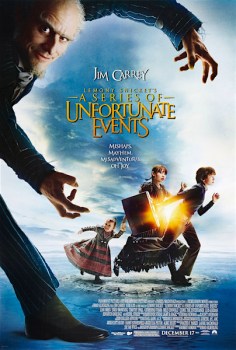
Lemony Snicket’s A Series of Unfortunate Events (2004)

100 Films’ 100 Favourites #50

Don’t say we didn’t warn you.

Title Commonly Abridged To: Lemony Snicket
Title on IMDb: A Series of Unfortunate Events

Country: USA & Germany
Language: English
Runtime: 108 minutes
BBFC: PG
MPAA: PG

Original Release: 16th December 2004 (Australia & New Zealand)
UK Release: 17th December 2004
US Release: 17th December 2004
First Seen: cinema, c.2004

Stars
Jim Carrey (Ace Ventura: Pet Detective, Eternal Sunshine of the Spotless Mind)
Liam Aiken (Stepmom, How to Be a Man)
Emily Browning (Sucker Punch, Pompeii)
Jude Law (The Talented Mr. Ripley, Sky Captain and the World of Tomorrow)
Billy Connolly (Mrs Brown, Quartet)
Meryl Streep (Sophie’s Choice, Mamma Mia!)

Director
Brad Silberling (Casper, Land of the Lost)

Screenwriter
Robert Gordon (Galaxy Quest, Men in Black II)

Based on
A Series of Unfortunate Events, a series of novels by Daniel Handler Lemony Snicket. In particular, the first three: The Bad Beginning, The Reptile Room, and The Wide Window.

The Story
After their parents are killed, the three Baudelaire siblings are placed into the care of a series of kooky relatives, while the scheming Count Olaf attempts to track them down and murder them for their money.

Our Heroes
This is the story of the three Baudelaire children: resourceful, inventive eldest sister Violet; bookish Klaus; and baby Sunny, who is very perceptive and can also bite things. No one knows the precise cause of the Baudelaire fire, but just like that, the Baudelaire children became the Baudelaire orphans, and were put into the care of…

Our Villain
Count Olaf, the kind and friendly guardian who wants to kill the orphans for their inheritance. A master of disguise… sort of.

Best Supporting Character
The film is wittily narrated in the erudite English tones of Lemony Snicket himself, who gets all the best insights.

Memorable Quote
“This would be an excellent time to walk out of the theatre, living room, or airplane where this film is being shown.” — Lemony Snicket

Quote Most Likely To Be Used in Everyday Conversation
“I will raise these orphans as if they were actually wanted!” — Count Olaf

Memorable Scene
The end title sequence re-tells the film in a pop-up book / shadow puppet show kind of style, which is awesome.

Memorable Music
The film has a great, fun score by Thomas Newman. The downside to it is you can hear the style bleed in to other, less appropriate work, like Skyfall.

Technical Wizardry
The entire film was shot on soundstages, including exterior scenes, utilising forced perspective and matte paintings, as well as greenscreen. No doubt that helped create its surreal, fantastical, timeless style. Indeed, the whole thing looks great, with superb gothic/steampunk-inspired design work across the board (and all of it Oscar nominated). If you want to be critical I suppose you could call it “Burtonesque”, but if it works… Plus, it was shot by Emmanuel “three time Oscar winner” Lubezki, so you know that’s good.

Truly Special Effect
Baby Sunny was largely played by a pair of twins, but certain sequences that were either dangerous or required specific actions necessitated the use of various effects techniques. Several scenes were created with an entirely CGI Sunny (motion captured from the animation supervisor’s own baby daughter); some shots of her talking have the lower part of her face replaced with a virtual version; and they built an animatronic baby, too.

Making of
Olaf: “I must say, you are a gloomy looking bunch. Why so glum?”
Klaus: “Our parents just died.”
Olaf: “Ah yes, of course. How very, very awful. Wait! Let me do that one more time. Give me the line again! Quickly, while it’s fresh in my mind!”
That’s Carrey genuinely asking for the line again, in character. Director Brad Silberling liked the moment so much he kept it in the film.

Next time…
Although plans for a sequel and/or sequels were mooted, the kids long ago aged out of such things. Instead, the books are being re-adapted as a Netflix series, starring the legen- (wait for it) -dary Neil Patrick Harris as Olaf and with Patrick Warburton narrating. It’s being produced/directed by Barry Sonnenfeld, who Handler Snicket had originally developed this film adaptation for. An eight-episode first season is due later this year. Personally, I’m quite excited for it.

Awards
1 Oscar (Makeup)
3 Oscar nominations (Score, Art Direction, Costume Design)
2 Saturn nominations (Fantasy Film, Make-Up)
1 Teen Choice Award (Choice Movie Bad Guy)
2 Teen Choice nominations (including Choice Movie Liar)

What the Critics Said
“As the title suggests, Unfortunate Events belongs to the grim but vital strain of children’s literature in which children suffer terribly, parents and kindly adults have the same life expectancy as villains in action movies, and courage and ingenuity are all that keep kids alive. […] At its best, A Series Of Unfortunate Events is the stuff nightmares are made of, a sick joke of a film that realizes the best children’s entertainment doesn’t hide from the bleaker side of life, but plunges into the void and respects kids enough to assume they can handle it.” — Nathan Rabin, The A.V. Club

Score: 72%

What the Public Say
“While there are certainly dark currents under the surface of this fantasy, the director Brad Silberling doesn’t let them overtake the film. Yes, bad things happen—people die and children are in jeopardy. But there’s a dry wit that balances out and also a sense of fun in how the kids use their abilities to discover a new way to survive whatever comes next. Lemony Snicket’s A Series of Unfortunate Events is a strange, dark film, and I recommend it for being just that.” — Tanner Smith, Smith’s Verdict

Verdict

I’ve never read A Series of Unfortunate Events, but I get the impression some of its fans aren’t too enamoured with this film adaptation and its changes. As a movie in its own right, however, it’s a clever, witty, gothic adventure… for kids! Jim Carrey is on fine form as the evil Count Olaf, there’s quality support from some recognisable thesps in guest-star-level roles, the kids are a likeable bunch, and baby Sunny’s subtitled observations are frequently the highlight. Some reviews describe it as “superficial” or a “pantomime”, but even if it is, it’s devilishly entertaining.

#51 will be… professional.

Adam (2009)

2016 #20
Max Mayer | 95 mins | TV | 2.35:1 | USA / English | 12 / PG-13

Hugh Dancy (of TV’s Hannibal) stars as the eponymous Adam, a New Yorker with Asperger syndrome who’s having to work out how to go it alone after his protective father passed way. Isolated by his condition and his struggle to cope with change, his life faces upheaval when he loses his job, but he also begins to strike up a relationship with his new neighbour, Beth (Rose Byrne). As someone once said*, the course of true love never did run smooth — especially when one of a couple has a social interaction disorder.

Inspired by writer-director Max Mayer hearing a person with Aspergers interviewed on the radio, that starting point has had the end result of Adam at times being at risk of slipping into a “this is Aspergers” documentary. Fortunately it manages to pull that back — such explanatory scenes are surely necessary for neophyte viewers’ understanding of Adam’s condition, which is naturally central to the events that follow. Dancy worked with with Mayer for a month before filming began to develop the character, and spoke with individuals affected by Aspergers to learn about their feelings, sensory issues, and interests. It clearly paid off: I imagine it must be tricky to pull off a character like that without taking it too far, but Dancy is great in the role.

As the other half of the relationship, Rose Byrne holds her own having to almost play the ‘straight man’ to Dancy’s more obvious performance. She’s a considerably better actress than some of her movie choices would have you believe, and roles like this prove that. Bonus points to the writing here for Beth not just accepting everything Adam does — that’s much more realistic than him happening across an endlessly understanding saint of a woman. But boo to the critics who didn’t buy that a privileged “daddy’s girl”-type could ever possibly fall for someone with autism — how judgemental are you?
Among the supporting cast, Peter Gallagher plays the kind of role he always seems to play: as soon as he makes passing mention of being investigated for some kind of financial crime, you know he did it (and probably more), and his daughter will find out and it’ll wipe the scales from her eyes. The only question is whether he’ll be found guilty by the court or weasel his way out of it. Talking of predictability, Mayer opts for the ‘indie’ rather than trad-rom-com ending, but that in itself is kind of predictable. Of course, when both possible outcomes are predictable (and, in a rom-com, there are only two), you can’t win.

So you can’t deny there are clichéd building blocks here, and they do hold the film back from being great, but the sweet relationship and Dancy’s performance overcome them enough to make for a likeable movie.

4 out of 5

* It was Shakespeare. It’s always Shakespeare. ^

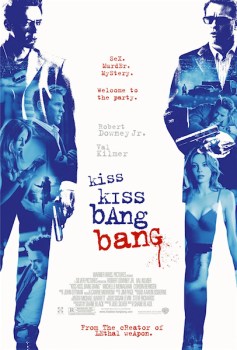
Kiss Kiss Bang Bang (2005)

100 Films’ 100 Favourites #49

Sex. Murder. Mystery.
Welcome to the party.

Country: USA
Language: English
Runtime: 103 minutes
BBFC: 15
MPAA: R

Original Release: 14th September 2005 (France)
US Release: 21st October 2005
UK Release: 11th November 2005
First Seen: cinema, 2005

Stars
Robert Downey Jr. (Chaplin, Zodiac)
Val Kilmer (Top Gun, Batman Forever)
Michelle Monaghan (Mission: Impossible III, Source Code)

Director
Shane Black (Iron Man 3, The Nice Guys)

Screenwriter
Shane Black (Lethal Weapon, The Last Boy Scout)

Based on
Bodies Are Where You Find Them, a novel by Brett Halliday.

The Story
After accidentally getting cast in a movie, fugitive crook Harry Lockhart is given on-the-job experience with private eye ‘Gay’ Perry van Shrike. When the pair become witnesses to a murder that it looks like they committed, they become embroiled in a conspiracy that they’ll have to untangle to save themselves.

Our Heroes
Harry Lockhart is our narrator: a crappy thief who stumbles into an acting audition while on the run from the cops, and ends up whisked off to Hollywood to play the lead in a mystery movie. To help him prepare for the role he shadows Gay Perry, a top L.A. P.I., who’s consistently, hilariously sarcastic. Also, homosexual.

Our Villains
It’s a murder mystery, so, that’s kind of a spoiler. Also: almost not the point.

Best Supporting Character
Harry happens to run into his childhood crush Harmony Lane, now working as a waitress in L.A. Soon she’s asking him to investigate her sister’s recent suicide, which she thinks was actually a murder. That subplot isn’t at all related to the main case. Nope.

Memorable Quote
Perry: “Go. Sleep badly. Any questions, hesitate to call.”
Harry: “Bad.”
Perry: “Excuse me?”
Harry: “Sleep bad. Otherwise it makes it seem like the mechanism that allows you to sleep—”
Perry: “What, fuckhead? Who taught you grammar? Badly’s an adverb. Get out. Vanish.”

Memorable Scene
Arriving back at his hotel room after they’ve witnessed the murder, Harry goes into the bathroom to take a leak. As he’s doing that, he glances round… and sees the girl’s body in the shower. He turns to look at it in shock… and pisses all over it. Cue hilarious exchange when he phones Perry for help.

Awards
5 Saturn nominations (Action/Adventure/Thriller Film, Actor (Robert Downey Jr.), Supporting Actor (Val Kilmer), Supporting Actress (Michelle Monaghan), Music)
1 Phoenix Film Critics Society Award (Overlooked Film of the Year)

What the Critics Said
“the plot of the film is almost willfully convoluted. But it’s also largely beside the point, an excuse for quite a few good scenes, most of them equal parts homage and subversion. The familiar ingredients of the hard-boiled school (and the noir cinema it spawned) are all here: the half-glittering, half-seedy L.A. setting; the protagonist’s expository voiceover; the jaded but ultimately decent private eye; the dead body that mysteriously turns up exactly where it’s not wanted. But Black gives each element a satiric twist: the tough shamus is gay; the corpse is discovered in a bathroom and accidentally peed on; the first-person narrator is not so much unreliable as simply incompetent.” — Christopher Orr, The Atlantic

Score: 85%

What the Public Say
“What’s unexpected about the movie is just how funny it is despite all the graphic murder, incest, torture, suicide, and dismemberment that occurs. […] Black effortlessly moves between legitimately realistic, unsettling violence (a murder witnessed by Harry midway through the film is a prime example of this) to wacky, slapstick violence (a late-in-the-movie Russian Roulette-style interrogation that does not, shall we say, go particularly well, for instance) without ever losing his balance. The real joy of the movie, though, is watching Val Kilmer and Robert Downey Jr. bounce off one another.” — Jake Farley, 10 Years Ago: Films in Retrospective

Verdict

One-time “highest paid screenwriter in Hollywood” Shane Black made his directorial debut with this satirical neo-noir, which can be credited with reviving Robert Downey Jr’s career for the third or fourth time (it led directly to him being cast in Iron Man). The film’s best quality is probably its humorous dialogue — choosing just one memorable quote was hard, though many come in lengthy exchanges. Downey Jr is hilarious, of course, but even he’s outmatched by Val Kilmer as sarky investigator Gay Perry. Even more impressively, love interest Michelle Monaghan holds her own against them both. The plot may be so confusing it’s easily forgotten, but the whodunnit reveal is beside the point when the journey there is so entertaining.

#50 will… retrace each and every one of the Baudelaire children’s woeful steps.

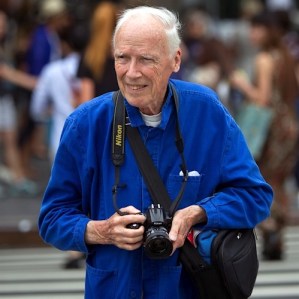
RIP Bill Cunningham

I don’t do this kind of post often/ever — as we all know, I’d’ve had a very busy year of it if I did — but the death of Bill Cunningham, New York fashion photographer, is less likely to be mentioned in the film world.

That’s with the notable exception of the documentary Bill Cunningham New York, which I reviewed in 2012 and included in my top ten for that year, too. It’s a film about one man, not only in name but in attitude — it’s a portrait more than a narrative, and the skill of the filmmaker lies in the fact you don’t notice the filmmaker’s skill.

Bill was 87 years old — “a good innings”, as we say, and consequently not the most tragic newsworthy death to have happened in this year of perpetual bitterness. Nonetheless, as I wrote in my review, Bill seemed “a fascinating, unusual, but likeable, and certainly unique, individual”. That’s why the film is so interesting, and why his loss is particularly sad.
For much of his photographic career he contributed columns to the New York Times, and so it seems most fitting to link to their obituary. As they write, he was less a mere ‘fashion photographer’ and more “an unlikely cultural anthropologist, one who used the changing dress habits of the people he photographed to chart the broader shift away from formality and toward something more diffuse and individualistic.”

If you’ve not seen the documentary, keep an eye out for it.

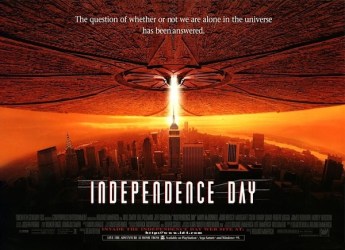
Independence Day: Special Edition (1996/1998)

2016 #102a
Roland Emmerich | 154 mins | Blu-ray | 2.39:1 | USA / English | 12 / PG-13

I’m not sure when I last watched ID4 (as it was so often branded and marketed, for only semi-clear reasons — sure, US Independence Day is July 4th, but other than that the “4” has nothing to do with anything), but it’s been a damn long time — my DVD copy, which I know I never watched (I have the shiny new remastered Blu-ray now), has a postcard inside advertising the forthcoming Planet of the Apes remake, in cinemas Summer 2001. The time I best remember seeing it was in cinemas on its initial release. Independence Day was a phenomenally huge deal back in 1996: it felt like that shot of the White House being destroyed was on TV on loop; there were making-of TV specials (I remember the behind-the-scenes footage of how they did those incredible, much-discussed effects as clearly as I remember anything from the film itself); I listened to the Radio 1 Independence Day UK audio drama on tape (it was… so-so), read the tie-in comic book adaptation, and also the tie-in novelisation — which was the first book I ever gave up on without finishing because I thought it was so badly written. Ten-year-old badblokebob, literary critic. The film itself was also the first 12-rated movie I went to see in the cinema, so it was even more of a big deal for me.

Revisiting it 20 years later, with a sequel imminent, ID4 obviously no longer has that attendant hype, but it does hold up pretty well in its own right as a blockbuster disaster epic. At least, it did for me — I read a review on Letterboxd from someone who watched it for the first time this January, saying that, in the age of the modern spectacle-based blockbuster, Independence Day doesn’t compete. Which feels weird, because it was all about the spectacle when it came out; but of course, things date, and what counted as sheer cinematic spectacle in 1996 is (it would seem) underwhelmingly run-of-the-mill in 2016. It’s fair to say that not all of the model effects still hold up, but there’s a physicality to them that really works. The best ones are still among the best movie effects ever.
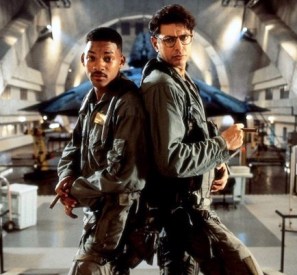
The film’s first half is superior to its second. Co-writer/director Roland Emmerich and co-writer/producer Dean Devlin conceived the film off the idea of 14-mile-wide spaceships just appearing one morning, and the realisation of that concept (and the ensuing destruction) is where the film really shines. That’s not to say there’s not good stuff after the aliens unleash their devastating destructive power — the famous presidential speech comes just before the climax, for one — but it’s from the midpoint on that some things begin to get a tad muddled, some subplots are rushed along, and other events get needlessly elongated. That said, it’s all relative: the 2016 version of this story with this many characters would surely run for five hours as it endeavoured to give them all a starring-role-level storyline and turn every effects-fuelled alien encounter into a 20-minute action sequence.

One area it really succeeds is humour. It doesn’t lose the scale or seriousness of the events, but it keeps the tone entertaining. That feels like a skill a lot of blockbusters used to have that’s gone awry in recent years, though you could use the tone of Marvel Studios’ movies to counterpoint that. Those Marvel films are definitely subject to a different criticism of modern blockbusters, however, which is their mindless destruction of whole cities. It’s a just criticism, and some of the blame for it can surely be traced back to the popularity of ID4. However, here the destruction isn’t so unfeeling: the morning after the aliens’ famous landmark obliteration, President Whitmore mulls over how many people died and how many didn’t have to if he’d made different choices. Both Marvel and DC have had to make that kind of reflection a plot point in sequels to retrospectively justify it happening in the first place.
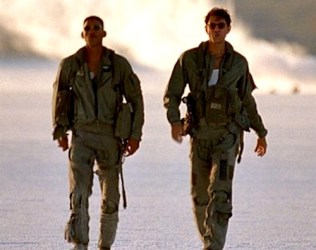
This was the first time I’d watched Independence Day’s extended Special Edition cut, and I’d advise not bothering. It adds around 8½ minutes of new material, but the scenes don’t add all that much, and some of them are so awkwardly rammed in that it’s almost irritating — for instance, several are inserted in the middle of an existing music cue by merely fading out the score immediately before the new scene, then fading it back in afterwards! They’re deleted scenes that have been shoved into the movie, with the score often fudged to make room and stuff like that, rather than it being a genuine “extended cut”. People seem to love extended cuts on disc, but sometimes a nice deleted scenes section is preferable.

With the way things are nowadays — every hit sequelised; old IPs regularly dragged up for new moneymaking opportunities — it was kind of inevitable we’d get ID4 2 eventually. I’m looking forward to it, but not insanely hyped up. It probably benefits from the 20-year wait story-wise, allowing for a drastically new status quo on Earth when the aliens return, but with blockbusters released all year round now, and CGI meaning every one is overloaded with effects shots that are far more epic than ID4 had, there’s little doubt that the sequel won’t have the same enduring impact on the blockbuster firmament. For its faults, you can’t deny ID4 that.

4 out of 5

Independence Day: Resurgence is in UK cinemas now, and is released in the US tomorrow.

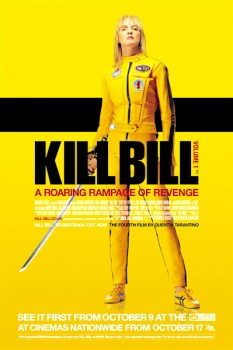
Kill Bill: Vol. 1 (2003)

100 Films’ 100 Favourites #48

A Roaring Rampage of Revenge

Also Known As: Kill Bill: Volume 1

Country: USA
Language: English, Japanese & French
Runtime: 111 minutes
BBFC: 18
MPAA: R

Original Release: 10th October 2003 (USA)
UK Release: 17th October 2003
First Seen: cinema, October 2003

Stars
Uma Thurman (Pulp Fiction, My Super Ex-Girlfriend)
Lucy Liu (Charlie’s Angels, The Man with the Iron Fists)
Vivica A. Fox (Independence Day, Sharknado 2: The Second One)
Daryl Hannah (Splash, Wall Street)
David Carradine (Death Race 2000, Q: The Winged Serpent)

Director
Quentin Tarantino (Pulp Fiction, Inglourious Basterds)

Screenwriter
Quentin Tarantino (True Romance, Django Unchained)

The Story
Left for dead by her former teammates, highly-skilled martial artist the Bride awakes from her coma with one thing on her mind: to hunt down her would-be assassins in a roaring rampage of revenge.

Our Hero
The Bride, aka Black Mamba, aka [bleep], is a deadly assassin out for revenge against the gang of former associates who tried to murder her, in particular their leader, Dave. No, wait, that’s not right. What was his name? Anyway…

Our Villains
The five former members of the Deadly Viper Assassination Squad who were involved in the Bride’s ‘murder’. In this film, that amounts to Veronica Green (aka Copperhead), who has settled down as a suburban mom, and O-Ren Ishii (aka Cottonmouth) who is now the leader of the yakuza, commanding a veritable army of ninjas. You’ll have to wait ’til the next film for the other three members to turn up properly, including their leader, Bob. No, wait, that’s not right. What was his name?

Best Supporting Character
O-Ren Ishii’s ultra-violent head bodyguard, teenage schoolgirl Gogo Yubari. Proficient with a weapon that I’ve just learnt is called a meteor hammer. How awesome is that?

Memorable Quote
“That woman deserves her revenge and we deserve to die.” — Budd

Memorable Scene
The House of Blue Leaves: after calling out O-Ren Ishii, defeating her six bodyguards, and meteor hammer-wielding Gogo, the Bride turns to face O-Ren herself… when the sound of dozens of motorbikes roars outside. “You didn’t think it would be that easy, did you?” In flood O-Ren’s yakuza army, the Crazy 88, surrounding the Bride. The fighting begins, and when our hero bloodily plucks out one of their eyes, the film smash-cuts to black & white to obscure the ensuing bloody bloodbath of bloodletting.

Memorable Music
Tarantino once again raids his record collection to create the film’s eclectic soundscape. The stand-out track is surely Tomoyasu Hotei’s Battle Without Honor or Humanity, the theme from New Battles Without Honor and Humanity (aka Another Battle), which has been co-opted into endless TV montages since it appeared in Bill. Of course, there’s also the cover of Woo Hoo by the 5.6.7.8’s, which contains the immortal lyrics, “woo-hoo woo-hoo-hoo, woo-hoo woo-hoo-hoo / woo-hoo, woo-hoo, woo-hoo woo-hoo-hoo.”

Truly Special Effect
In his quest for authenticity to the ’70s martial arts movies he was homaging, Tarantino forbid the use of either CG blood or modern physical methods. Blood spurts were achieved in the same way the Shaw Brothers movies did decades earlier: condoms full of fake blood that splattered on impact.

Making of
The big battle with the Crazy 88 (see: memorable scene) is in black-and-white everywhere apart from Japan (and in The Whole Bloody Affair single-film cut (see: next time)). This is partly an homage to US TV screenings of kung fu movies in the ’70s and ’80s, when censors insisted scenes of extreme bloodshed be obscured by the removal of colour. However, the scene was meant to be in colour (hence why it still is in Japan), but the MPAA demanded the scene be somehow toned down — hence why Tarantino threw in the old TV technique. So it is an homage, but one brought about for the same reason as the originals.

Next time…
Originally shot as one film, Kill Bill wound up way too long and so was split in half for its initial release, with Vol.2 coming out six months later. Tarantino has long promised a single cut version, known as The Whole Bloody Affair, and since 2011 a version of that has screened a couple of times at the L.A. cinema he co-owns. No luck for the rest of us, though. Rumours persist of a Vol.3, which Tarantino always said he wanted to wait ten to fifteen years to make, so we’re in prime “maybe now?” territory.

Awards
5 BAFTA nominations (Actress (Uma Thurman), Music, Editing, Sound, Visual Effects)
2 Saturn Awards (Action/Adventure/Thriller Film, Actress (Uma Thurman))
5 Saturn nominations (Supporting Actor (Sonny Chiba), Supporting Actress (Lucy Liu), Director, Writing, Cinescape Genre Face of the Future Award – Female (Chiaki Kuriyama))

What the Critics Said
“Quentin Tarantino’s giddy homage to the movies he grew up with at the grind houses — the Hong Kong chop-sockies and spaghetti Westerns and samurai and blaxploitation flicks. […] There is no ironic overlay in Tarantino’s movies, no ‘commenting” on the pop schlock he’s replicating. He simply wants to remake in his own way the kinds of movies he’s always loved, and he’s about as uncynical as a movie geek can be.” — Peter Rainer, New York

Score: 85%

What the Public Say
“post-modernism retains an awareness of the past, and examines how the past can be reshuffled into something new and exciting. The idea is to take pieces, tropes and archetypes from past-movements and to reshape them, deconstruct them and reference them, ultimately, with the goal of transcending them. And Quentin Tarantino, as a director, understands this process. […] Kill Bill is something of a post-modern masterpiece, and whilst it never really goes beyond the surface of its tropes, it remains one of the most impressive and entertaining movies of the 2000s.” — Carl, some films and stuff

Verdict

If Tarantino had pulled his finger out and bothered to release The Whole Bloody Affair in a way most of us could see, I might’ve bent my own rules and allowed that on. As it is, faced with Kill Bill possibly taking up two whole spots on my hotly-contested top 100, I opted to include just the first half. Back when the two parts came out, I might’ve made a case that Vol.2 was better. Perhaps it still is — but Vol.1 is certainly the more iconic.

Last year’s Hateful Eight seemed to provoke a lot of “my personal ranking of Tarantino films” posts, which just proved that everyone has a very different take on the ordering of his movies — Kill Bill came last in its fair share. It’s an interesting step in QT’s career, marking a shift from talky American crime dramas to wild genre homages. Reservoir Dogs and Pulp Fiction may be more innovative, but the style and shape of Bill is a herald for what was to come in Inglourious Basterds and Django Unchained. I like those two even more, but its appropriation of ’70s kung fu styles keeps Bill distinctive and largely enjoyable.

#49 will be… a Black comedy-mystery.

The Descendants (2011)

2016 #57
Alexander Payne | 110 mins | TV | 2.35:1 | USA / English | 15 / R

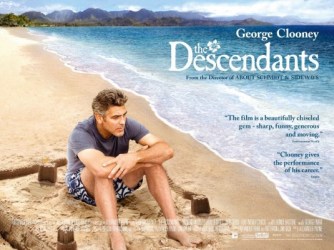
Comedy-drama starring George Clooney as a Hawaiian with family issues: his wife’s in a coma and may’ve been cheating; his daughters are unruly; and his extended family is considering a massive land sale that’s the talk of the islands.
Though marred by heavy-handed voice-over exposition (it baffles me that it won a Best Screenplay Oscar), it’s lifted by strong performances from the daughters (Shailene Woodley and Amara Miller) and Clooney, inverting his usual confident demeanour.

I guess “wry observations of middle-aged men in crisis” are Payne’s stock-in-trade. This one’s amiable, though (writing with three months’ perspective) perhaps a tad forgettable.

4 out of 5

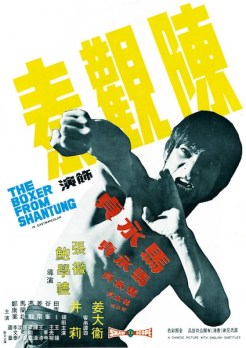
The Boxer from Shantung (1972)

aka Mǎ Yǒng Zhēn

2016 #56
Chang Cheh & Hsueh Li Pao | 125 mins | TV (HD) | 2.35:1 | Hong Kong / Mandarin | 18

The problem with watching so many Shaw Brothers movies so close together, as I have this year, is they begin to blur into one. There’s definitely a house style to the stories, the photography, the sets — everything, really. Even the particularly good ones can fail to lodge in the memory as discrete units.
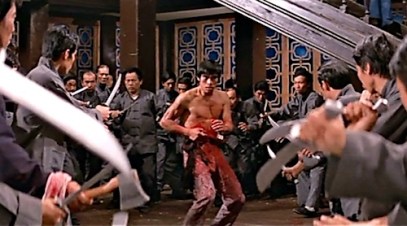
That said, The Boxer from Shantung is a particularly good one. It tells the based-(loosely)-on-a-true-story tale of Ma Yongzhen (Chen Kuan-tai), a small-town guy labouring in Shanghai. After an encounter with gangster Tan Si (David Chiang), Ma decides that’s the life for him, and sets out to climb the crime ladder.

The Boxer from Shantung displays a greater focus on plot and character than is perhaps typical for a Shaw Bros movie, but doesn’t exactly stint on action either — the sequences are a little more spread out than usual, and it results in a just-over-two-hours runtime that isn’t typical for these films. Fortunately, it’s an engrossing enough story that this isn’t a problem, even if the narrative has a rise-and-fall kind of shape that is fairly familiar in the gangster genre.

Nonetheless, where the film really comes to life is in its stonking climax — a massive brawl in which Ma kicks everyone’s ass for quarter of an hour, even with an axe embedded in his stomach. At the end of the day, tightly choreographed and expertly performed action sequences such as this are why we come to these movies; and, at the end of the day, The Boxer from Shantung doesn’t disappoint.

4 out of 5

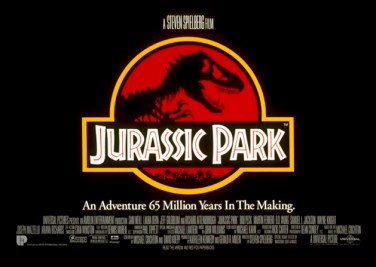
Jurassic Park (1993)

100 Films’ 100 Favourites #47

An adventure
65 million years in the making.

Country: USA
Language: English
Runtime: 127 minutes
BBFC: PG
MPAA: PG-13

Original Release: 11th June 1993 (USA)
UK Release: 16th July 1993
First Seen: cinema, 1993

Stars
Sam Neill (Dead Calm, Event Horizon)
Laura Dern (Wild at Heart, Inland Empire)
Jeff Goldblum (The Fly, Independence Day)
Richard Attenborough (10 Rillington Place, Miracle on 34th Street)

Director
Steven Spielberg (Jaws, Indiana Jones and the Temple of Doom)

Screenwriters
Michael Crichton (Westworld, Twister)
David Koepp (Death Becomes Her, Panic Room)

Based on
Jurassic Park, a novel by Michael Crichton.

The Story
Invited to a remote island by an eccentric billionaire, a group of scientists, investors, and children discover he’s managed to clone and resurrect dinosaurs, which he intends to exhibit in his theme park: Dinosaur Land!
…not really — it’s called Jurassic Park. As the visitors tour the park looking at the creatures, a nice two-hour nature documentary unfolds.
…not really — the dinosaurs escape and run amok and people die and it’s basically a horror/disaster movie with giant prehistoric lizards as the killer/natural disaster. Good times.

Our Heroes
Dr Alan Grant and Dr Ellie Sattler are palaeontologists invited to Jurassic Park’s test run by enthusiastic grandfatherly billionaire John Hammond. There’s also Dr Ian Malcolm, a sexy mathematician (oxymoron?), and Hammond’s grandkids, siblings Tim and Lex, who Grant is essentially left to babysit. There’s also a handful of other characters who are essentially dinosaur-food… er, I mean, who are totally going to survive to the end of the movie.

Our Villains
It’s a bit mean to call the dinosaurs villains — they’re just behaving as nature intended. Of course, when uber-predators like Tyrannosaurus Rex and Velociraptors are involved, they’re still the main threat. Their impromptu freedom is all the fault of greedy, traitorous tech geek Dennis Nedry, though.

Best Supporting Character
For what may be the only time in movie history, Samuel L. Jackson is in this movie and isn’t the coolest character. That honour goes to Bob Peck as the park’s badass head ranger, Muldoon.

Memorable Quote
“Don’t move! He can’t see us if we don’t move.” — Dr Alan Grant

Quote Most Likely To Be Used in Everyday Conversation
“Clever girl.” — Muldoon

Memorable Scene
As the newly-arrived visitors drive across the island, Hammond whispers to the driver to stop. Dr Grant idly looks off to the side, and his mouth falls open in shock. He pulls off his hat. He stands. He fumbles to take off his sunglasses, not believing his eyes. Dr Sattler is distracted by a leaf that shouldn’t exist. Grant reaches over to grab her head, turns it to face what he sees. Now she looks shocked, standing and pulling off her glasses. Whatever they’re looking at, it’s big. And only then, as John Williams’ music swells, does Spielberg cut to it: towering over them, a Brachiosaurus — a real, living dinosaur.

Write the Theme Tune…
Some chap named John Williams totally lucked out writing the film’s iconic main theme, which is one of music’s best evocations of the feelings of awe and wonder.

Technical Wizardry
It’s easily overlooked among all the visual antics, but the film’s sound design is incredible, too. Spielberg insisted on all-new sounds being captured throughout (rather than using any library effects) to help ensure the dinosaur roars sounded unique. The T-Rex’s roar was a combination of sounds from dogs, tigers, alligators, elephants, and… penguins.

Truly Special Effect
Spielberg thought about using a combination of animatronics and groundbreaking CGI to create the dinosaurs, but they just resurrected some real ones instead. More seriously, there’s actually only 15 minutes of dinosaur footage in the film. Nine minutes of that is animatronics — despite its fame and influence, just six minutes were created with CGI.

Making of
Spielberg came up with the idea for the famous rippling glass of water when he saw the mirror in his car vibrate because of sound. When the effects team tried to replicate that with water, nobody could do it… but they told Spielberg they could. The night before the effect was to be shot, effects supervisor Michael Lantieri placed a glass of water on a guitar, plucked the strings, and got the desired effect. For the film — where the glass is on a car dashboard, not a musical instrument — guitar strings were attached to the underside of the dashboard. These days you know they’d just do all that with CGI, and this is why older movies are better.

Next time…
Spielberg returned to helm first sequel The Lost World: Jurassic Park in 1997, which has its fans, but not that many. Joe Johnston took over for Jurassic Park III, which is less epic than either of is predecessors, and more of a brisk (just 90 minutes long), straightforward action-adventure movie. After many years of aborted plans, the series was revived last year in Colin Trevorrow’s Jurassic World, which met with incredible financial success and a mixed (though generally favourable) reception. A fifth film, directed by The Impossible’s J.A. Bayona, will be a direct sequel to Jurassic World and is slated for release in 2018.

Awards
3 Oscars (Visual Effects, Sound, Sound Effects Editing)
1 BAFTA (Special Effects)
1 BAFTA nomination (Sound)
4 Saturn Awards (Science Fiction Film, Director, Writing, Special Effects)
7 Saturn nominations (Actress (Laura Dern), Supporting Actor (both Jeff Goldblum and Wayne Knight), Performance by a Younger Actor (both Joseph Mazzello and Ariana Richards), Music, Costumes)
3 MTV Movie Awards nominations (including Best Villain — for the dinosaurs? I don’t know.)
Won the Hugo for Best Dramatic Presentation

What the Critics Said
“As he did in Jaws, Spielberg has crafted a man-vs.-nature masterpiece with admirable logic, darkly funny violence and enthralling state-of-the-art special effects. Watching Jurassic Park, one gets the same feeling of wonderment, glee and old-fashioned fright that moviegoers must have felt 60 years ago when King Kong roared out of the jungle and scaled the Empire State Building. […] We ask for two things from big-budget thrillers like this: Make us believe and make us jump. Jurassic Park delivers on both counts; it’s the best gasp-between-the-giggles movie made since a cocky young director and a clunky Bruce the Shark scared the beach out of us 18 summers ago.” — Steve Persall, Tampa Bay Times
(I want to quote so much of this review, because it’s full of good bits, like how it’s “the most intelligent, pro-feminist adventure movie yet made”; or how “a faithful version of Crichton’s tale would have cost at least twice the film’s $60 million price tag” — a film costing $120 million? Unthinkable!)

Score: 93%

What the Public Say
“We’re kept waiting for the first full shot of a dinosaur, and it’s worth the wait, the little jeep carrying Sam Neill and Laura Dern stopping long enough for them to gawp in helpless wonder at the sight of Brachiosaurs eating. It works for two reasons. One is the reactions of the actors, which only adds to the moment’s sense of authenticity and gravitas. The second is the use of CGI. Jurassic Park was like a great leap forward in special effects technology. Before this, the only way to see dinosaurs on film was the stop-motion animated models shot painstakingly by Ray Harryhausen and his peers. Suddenly, all that was consigned to cinema history thanks to digital effects, work that holds up today because Spielberg knew how to use CGI judiciously rather than too often […] The combination of CGI and puppetry to create the dinosaur looks seamless, and whilst it must have been painstaking to develop and film there’s no doubt it’s great to watch” — Mike, Films on the Box

Verdict

For a certain generation, Star Wars is undeniably the defining cinematic experience. For a more recent one, I guess it’s Harry Potter or something. In between, you have my lot — and as became quite clear with the unexpectedly phenomenal response to Jurassic World this time last year, we have Jurassic Park. It was the first film I ever saw at the cinema, and much of it has been lodged in my memory every since.

That it’s beloved shouldn’t be such a surprise, really: it was huge back in 1993, and is one of only ten films that can lay claim to ever having been The Highest Grossing Movie Of All Time. It wasn’t the first film to employ computer-generated special effects, but by featuring them so prominently it paved the way for further effects breakthroughs. The groundbreaking imagery still holds up today — and when you consider that the effects in some movies out last week are already dated, that’s even more impressive.

It’s certainly not just about the effects, though: it’s a fantastic adventure movie, putting its likeable characters through the ringer in a story that is by turns exciting, funny, scary, and genuinely awe-inspiring.

#48 will be… a roaring rampage of revenge.

Ip Man 3 (2015)

aka Yip Man 3

2016 #108
Wilson Yip | 105 mins | streaming (HD) | 2.35:1 | Hong Kong / Cantonese & English | 12 / PG-13

Donnie Yen returns as the eponymous kung fu master, who’s most famous for training Bruce Lee, to complete a trilogy of biographically-dubious but broadly entertaining actioners.
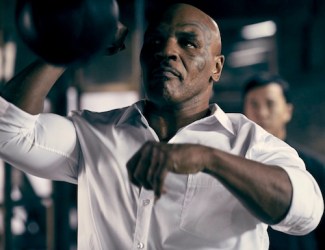
This time round, Ip comes into conflict with property developer Mike Tyson (yes, that Mike Tyson) when he tries to buy out Ip’s son’s primary school. The principal refuses, violence ensues, and Ip and his students end up essentially working as security guards. While he’s busy doing that, Ip is once again neglecting his home life, where his wife (Lynn Hung) is getting mysterious stomach pains…

That occupies most of the film, anyway, until it suddenly resolves what appears to be the main story a good half-hour from the end, then spins out one of the subplots into the main storyline for the third act. It’s a remarkably odd structural choice. On the bright side, that means it may just surprise you a little — it dodges the boredom of, “well he can’t win now because this fight can’t be the climax”, or, “well that guy’s totally going to go back on his word because there’s half-an-hour left yet”, and so on. Predictable it is not. Well, OK, a fair bit of it is still predictable — you know who’s going to win in the end, don’t you? — but how many movies have you seen where the main villain is dealt with and/or simply set aside at the end of act two, and an almost-completely-new story powers the final act?

The downside is it makes a lot of the story feel like a case of something-and-nothing. Tyson is no real threat, not least because he’s barely in the film and can’t act for toffee, but related subplots — like the potential romance between one of Ip’s students and one of the school’s teachers — literally disappear without a trace. Even when there’s a young pretender to Ip’s title of grandmaster, there’s little sense that they may’ve opted for a “changing of the guard”-type narrative for the trilogy-capper. And, as with both of the previous films, the less said about the film’s attitude to foreigners the better (though I guess Hong Kong’s British occupiers weren’t exactly above reproach).
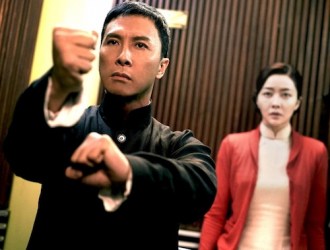
However, the film does deliver in two key areas. The storyline of the wife’s illness finally tackles Ip’s family issues head on. That conflict between his dedication to his martial arts life and his consequent semi-abandonment of his family has been an undercurrent throughout all three films, but I don’t believe they’ve engaged with it fully until now. That he chooses to forgo a challenge to be by his wife’s side stands in counterpoint to the climax of the second film, where he missed his son’s birth to fight a duel. Not only that, but these events finally get under Ip’s unflappably stoic demeanour, and Yen lets Ip’s polite blank-faced reserve crack. In some respects, it pays off having kept that up for most of three movies. Maybe I’m just being soft today or maybe it is well performed, but either way I really felt the emotional impact of this storyline.

The other key area is the action, with famed choreographer Yuen Woo-ping taking over from Sammo Hung, who choreographed parts one and two. Early bouts are not bad, though surprisingly underwhelming, but things really pick up later on. An elevator fight between Ip and a Thai boxer is the absolute high point, an incredible close-quarters action scene that spills out into a stairwell, but Donnie Yen vs Mike Tyson is a very good sequence also, and the climax ain’t half bad. Particular props to the sound designers in that last one, especially the clanging, squealing knives.

After an awkward first half, Ip Man 3 gradually transitions into a rewarding set of circumstances, on both the action and emotional fronts. The lack of consistency may mean it doesn’t satisfy fans as much as the first film did, but I’d say it’s a step up from the second, and definitely worth a look for fans of the old punching-and-kicking-and-hitting-each-other-with-poles-and-knives.

4 out of 5

Ip Man 3 is available on Netflix UK from today.