
Tom Green | 119 mins | Blu-ray | 2.39:1 | UK / English | 15 / R
 Ten years after the events of Monsters (according to the blurb, anyway — there’s no mention in the film), the infected zones have spread worldwide. Keen to quell the spread of the aliens, America have decided to do what they do best: bomb them all to hell, wherever they may be. In the Middle East, the destruction of lives and property — by both the monsters and US bombs — has led to insurgents fighting back against US troops, while the campaign against the monsters continues with little success.
In case it’s not apparent, this sequel to Gareth Edwards’ low-budget sci-fi indie-romance takes things in a completely different direction: we follow a troop of soldier mates (primarily Parkes, played by Sam Keeley — you can tell he’s the lead because he gets to deliver the sub-Apocalypse Now voiceover narration; but also other young British actors like Joe Dempsie (of Skins and Game of Thrones) and Kyle Soller (of Poldark)) as they’re shipped off for their first tour in Nonspecificstan, where they’re under the command of hardened vet Frater (Johnny Harris). The guys’ macho posturing is soon undercut by the realities of a combat zone, especially when they’re dispatched to rescue four soldiers left behind deep in the infected zone — or the IZ, as they of course call it.
For its genre-shifting pains, Dark Continent received exceptionally poor reviews: “disappointing”; “uncompromisingly boring and pointless”; “a clichéd macho fantasy”; “monstrously bad”; even “the worst sequel of the decade.” Oh dear. At the same time, respected genre expert Kim Newman gave it 4 stars in Empire. Has too much time spent with cheap DTV crap for his regular Empire column warped his perspective? (Radio Times also gave it 4 stars, but their film section disappeared into a haze of unreliable irrelevance long ago.) So is it the unconscionable disaster of consensus, or a misunderstood success? In my opinion, it’s somewhere between the two.
 Let’s start with some other reviewers’ problems. An oft-cited one is the initial moral repugnance of the characters, but is it a valid criticism to say a movie about a bunch of macho dicks presents its characters as macho dicks? Because let’s not be kidding ourselves, the American military is not full of Guardian-reading lefties; it’s full of vulgar, unreconstructed young Blokes… like these fellas. Now, I’m sure I’m generalising — I’m sure they can’t all be like this — but I can believe plenty of them are. No doubt elements of their behaviour are more “macho fantasy” than reality (a hookers and coke party the night before shipping out?), but the fundamentals of their attitude are plausible.
If the film glamourised this we might be in trouble, but I don’t think it does. The aforementioned party looks scuzzy rather than fun, though I suppose some might disagree. More pertinently, the “war is hell” theme hits home pretty fast, and these posturing wannabes are torn apart by the realities of combat — in some cases, literally. Cue karmic punishment and/or a patch of soul searching and personality restructuring. This arc — a war zone taking a bunch of full-of-themselves oh-so-macho kids, then chewing them up and spitting them out — may be a little obvious, even cliché, but at least it does it. Anyone who thinks the film is glorifying their “macho fantasy” lifestyle has judged the film solely on its first act.
Perhaps the film isn’t clear enough on this point. Later, it does again flirt with values one might find inaccurate: Two survivors, hiding out for the night, talk about home. One recalls how, last time he was back, his daughter looked scared of him. The other asks why he doesn’t just stay home with his little girl? The first says he came to the IZ to fight to keep her safe. The other asks if he thinks they’re doing that?  And just as it looks like we’re about to get a truthful, if obvious, moment where the characters admit that, no, this war is utterly pointless and has absolutely nothing to do with America or keeping Americans safe, the first guy answers, “yes, I do.” Really? Really?! At that moment it just feels queasily like right-wing propaganda, especially as the two characters in question have been positioned as our de facto heroes.
But stick with it for the final act and that character goes off the reservation. Again, Dark Continent presents us with a perspective distasteful to the politics of film critics (and me too — I’m not entirely absenting myself here), but then later shows that it doesn’t support that point of view after all. Now, I’m not making a case for this being a Clever Movie — the points it makes are nothing new, and they’re made in a form and through character arcs that are intensely familiar, so I can see justification for those criticisms (and such criticisms have been made). However, labelling it a testosterone-drenched war-is-fun propaganda piece for emotionally/socially underdeveloped males is somewhat unjust.
In a related argument, some have accused the film of going too far, glorifying things that deserve none. Partly this stems from reading the film as being pro the experience it conveys, which — as if I haven’t made it clear already — I think is a false reading. Early on, before they ship out, our ‘heroes’ attend an illegal dog fight that sets a pit bull against a dog-sized monster. It does not go well. There is maybe a little too much graphic detail at points. Even these distasteful characters don’t enjoy the ‘spectacle’, though; indeed, our main point of identification (Parkes, with his voiceover) looks away for most of the fight and is the most disturbed by it after, too. It’s a horrible scene, but it’s meant to be horrible. The counterargument goes that it’s unnecessary — no one in real life is having dogs fight alien monsters, so where’s the benefit to putting it on screen?
 Later, in the war zone, there are more horrific situations and imagery that will certainly test your perspective. For example, the guys come across a school bus that was caught in an attack on some monsters. The bus is full of dead children, but our guys need to search it for water nonetheless. Is this unflinching in its realism of the brutality of war, or a step too far and just sick? Perhaps the sci-fi context again undermines the movie, because you can’t apply the “this is really happening” argument when there are giant monsters involved. But if the giant monsters are a MacGuffin to reflect real, current conflicts, then does this become something that is happening? Perhaps it’s a circular argument.
A more clearly accurate criticism concerns the presence of the titular monsters… or, rather, the lack of them. Far from being the film’s raison d’être, they are instead its MacGuffin. In reality, Dark Continent is just a Middle East war movie with some creatures adding a little flavour. Remove them completely and the entire plot would function just fine. That’s not a rash generalisation, I’ve thought it through: there’s nothing in this movie that couldn’t occur by setting it in Iraq or Afghanistan during their recent real-world occupations, and occasionally replacing the alien monsters with (depending on context) an IED or some natural wonder. Now, I’m sure this is part of the point — it’s an incredibly thinly-veiled analogy for the real Middle Eastern conflicts. But that veil is too thin. Anyone coming here for monster action will be largely disappointed, and anyone expecting an allusionary sci-fi commentary on American foreign policy will just find a commentary on American foreign policy.
 Dark Continent is the debut feature of director (and, here, co-writer) Tom Green, who previously helmed half-a-dozen episodes of E4’s excellent “superheroes with ASBOs” drama Misfits and a three-part BBC One thriller that seems to be as forgettable as most three-part BBC One thrillers. Famously, the original Monsters was Gareth Edwards’ first film too: he wrote, directed, designed, shot, and did all the CGI for it single-handed, for $500,000. On the back of it, he was immediately given the keys to a $160 million Godzilla reboot and the first-ever live-action Star Wars spin-off movie (whose full title seems to change monthly, but is currently Rogue One: A Star Wars Story). Will Green be so fortunate? All those reviews suggest not.
For what it’s worth, I don’t think Green does a bad job. The film is too long — tightening up the first and last 40-or-so minutes, to bring the total length down towards the original film’s 94 minutes, would’ve been beneficial; and that pointless wannabe-Apocalypse Now voiceover, which comes and goes before disappearing entirely, should’ve been scrapped in post (if not sooner) — but, otherwise, I think he’s produced a well-made film. It’s also prettily shot by DP Christopher Ross, making great use of location shooting in Jordan to create an authentic and beautiful desert landscape. Some of the battle sequences are enmeshed in rote hyper-grainy ShakyCam, but you can’t have everything. That’s backed up with excellent CGI. Not only does it place the various monsters convincingly in the landscape but, occasionally, the pairing of the classy photography and well-realised graphics make for something aesthetically beguiling.
 I do think Dark Continent is better than most reviews give it credit for, but it’s not exactly a movie of the greatest or most original insight, and — their added visual interest aside — it didn’t need to be a Monsters movie. Indeed, if it had just been a straight Middle East war movie, perhaps some critics would’ve been kinder, because at least they would’ve known what they were getting. If you liked the first film then there’s absolutely no guarantee you’ll enjoy this — it’s not the same kind of film at all — but the worst sequel of the decade? Not even close.

Monsters: Dark Continent is released on UK DVD, Blu-ray and VOD today.
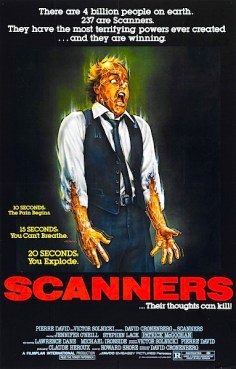 If you’re versed in sci-fi/fantasy cinema, you’ve heard of Scanners even if you haven’t seen it: it’s the one with the (in)famous exploding head. That moment is distinctly less shocking for those of us coming to the film as a new viewer at this point: gore perpetuates genre cinema nowadays, so it’s less striking,
 emotional journey or something is the core of the film. As if to make up for it, McGoohan is of course excellent, acting everyone else off the screen, while Ironside makes for an excellent villain, naturally. Some say that the final psychic battle, between Lack and Ironside, is underwhelming, but I thought it was excellently realised, a tense and effective struggle. Such brilliant effects and sequences are scattered throughout the film.
 Paul Thomas Anderson — the fêted writer-director of
  Anderson chooses to realise the movie mostly in long, unbroken takes, which not only lets the photography shine, but also allows his cast free rein to construct their own performances. I’m not sure how much that pays off, but it’s certainly not a hindrance. Turns from the likes of Josh Brolin and Martin Short border on the memorable, though your mileage will vary on if anyone truly achieves it, with the possible exception of Katherine Waterston, who surely deserves more — and more prominent — roles. Other recognisable faces (Jena Malone, Eric Roberts, Reese Witherspoon) are wasted in one- or two-scene appearances, which I suppose we could kindly call cameos.
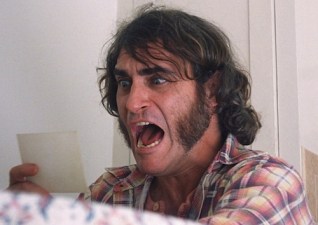 I am in neither of those groups, however. The aforementioned fleeting aspects of quality weren’t enough to swing it for me either. Sadly, I’ll be chalking this up alongside
 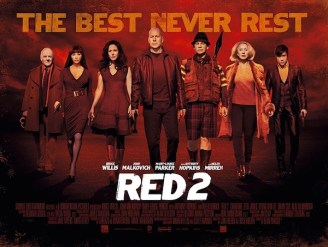 The “retired, extremely dangerous” agents return for more of the same.
 Jon Schnepp’s widely-reviewed documentary about the batshit-crazy Nic Cage-starring Tim Burton-directed Superman movie that almost happened in 1999. If all you’ve seen are the photos of a stoned-looking Cage in a light-up abomination of a Superman costume that leaked onto the internet a few years ago, prepare to be amazed. Indeed, those infamous photos and footage are an aberration that this documentary explains.
 There seem to be an increasing number of “making-of documentaries about films that didn’t get made”, to the extent where it’s almost turning into a sub-genre. The highly-praised
 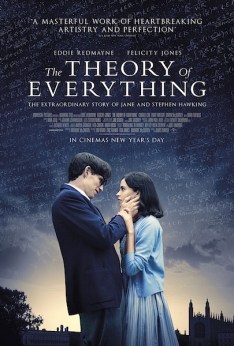 Biopic of genius cosmologist Stephen Hawking and his wife/caregiver Jane, on whose memoir the film is based.
 Louis Leterrier, helmer of the
  Their criticisms aren’t wholly unfounded: the characters are thin; at times it’s unclear which side we’re meant to be following or most invested in; the use of CGI in the magic somewhat undermines it; a good deal of the plot stretches credibility. Conversely, the credibility is questionable from very early on, so the counterargument goes that it’s the whole MO of the film — you don’t complain about Iron Man not being possible in real life, do you?
 Such a style certainly fits the magic world. I guess it’s just not to everyone’s taste.
 Nine months on from its theatrical debut, I’ve managed to remain remarkably spoiler-free about Interstellar, the ninth feature from director Christopher Nolan. “Matthew McConaughey lives on a farm and somehow ends up in space with Anne Hathaway,” is about all I knew going in. That and the somewhat divisive critical reception it had received, leaving what many had assumed could be an Oscar favourite with a disappointing tally of nominations (and its studio to have backed the wrong horse, resulting in
  More plot happens. Interstellar is the kind of film where you could get an awful long way through the story just trying to explain the setup. That’s a certain style of storytelling, and in its own way a positive one — a plot that is constantly moving and updating, rather than one that presents a basic setup, runs on the spot with it for a while, then wraps it up. The latter is how most narratives unfold, which is why reviews can so often summarise said setup and that’s fine. Nonetheless, Interstellar’s first act goes on too long, and could do with a good trim. (For an alternative view on why the first act is in some respects the best part of the film and needed more development, read
  Based on a skim through online reaction, some viewers would indeed love even more, while others would despise it. One thing I find interesting about this apparently diverse reaction is that you can find an abundance of negative/semi-negative comments and reviews by people who write such things, but nonetheless the average user scores on the likes of
 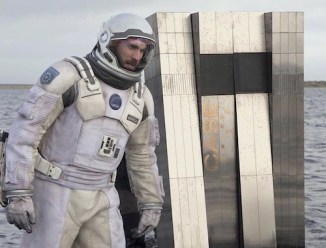 From a filmmaking perspective, there is surely nothing to fault. The visuals are incredible. As you’d expect, the IMAX footage looks absolutely stunning. Every time the Blu-ray reverted back to 2.40:1 I was a little disappointed. A sneaky part of me thinks Warner deliberately make these sequences look less good to ramp up the quality of the IMAX footage (I felt the same about
 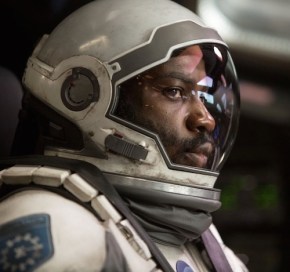 Anne Hathaway is largely understated, but slivers of emotion seep through when appropriate; and Michael Caine actually gets to do a bit of Acting in a Nolan film for a change, rather than just turning up as a wise old dispenser of exposition — though don’t worry, he does that too. One of the stand-outs for me was David Gyasi, getting a role that was subtly stronger and more thought-provoking than several of his more famous colleagues, and executing it with aplomb too. Similarly, the voices of semi-sentient robots TARS and CASE — Bill Irwin and Josh “he’ll always be ‘that guy from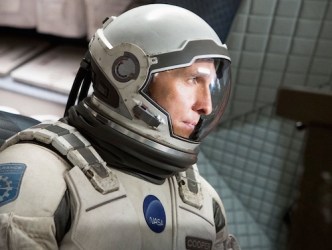

 The kids’ phenomenon of the ’80s/’90s has never quite gone away, and this film is one thing that kept it ticking over in the ’00s. I watched out of nostalgia, which may’ve been a mistake.
 100Films.co.uk