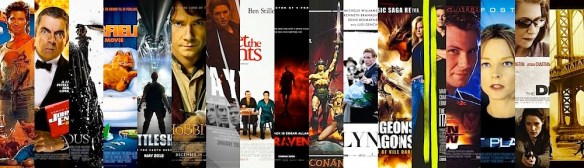
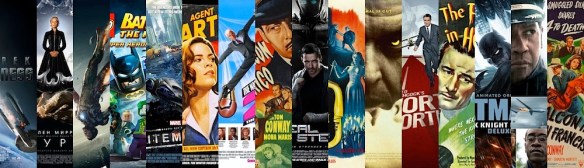
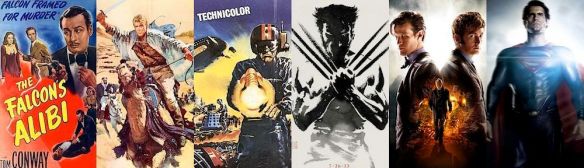
2013 In Retrospect

With 2013 completed, listed, and analysed, all that remains is a final bit of reflection: of the 110 films I watched, which were the best? Which were the worst? And what new releases did I miss?

Plus, this year you can vote for your favourite of my top ten.

Before we begin, one last thing to mull: in just the last few days it’s come to my attention that every previous 100 Films year-end #1 has been a film either released that year, or from the previous year that had only just come to DVD/Blu-ray. For all the classics I’ve watched down the years, not one has ever managed to best a new release in my annual affections. That certainly wasn’t deliberate — as I said, I’ve literally just noticed the pattern this week. But with the introduction of What Do You Mean You Haven’t Seen…?, and a summer cinema season that seems to have had a largely mediocre reception, will 2013 be the year to break the mould? Read on…


The Five Worst Films I Saw For the First Time in 2013

In alphabetical order…

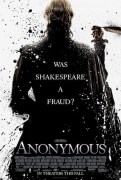
Anonymous
The theory that Shakespeare didn’t write the works of Shakespeare is largely nonsense, but good films have been made of worse. So a period drama — perhaps, at a stretch, some kind of thriller — based around that isn’t doomed… except Anonymous has the misfortune to be helmed by blockbuster maestro Roland Emmerich. The result is a scrappy mess which primarily leaves you irritated that someone might consider it to be historically accurate.
Battleship
Who’d’ve thunk a movie based on a board game would be a poor idea, eh? I think the success of Pirates of the Caribbean has led certain elements in Hollywood to think you can make a film out of almost any recognisable property, ignoring the fact that there were multiple other attempts by Disney to turn theme park attractions into film franchises that flopped. Battleship begins — and, hopefully, ends — a similar list for board games.
The Bourne Legacy
How the mighty have fallen. It might not seem like the Bourne franchise was dependent on its star (nothing against Matt Damon, but he didn’t ‘make’ the films in the way Depp does Pirates or Downey Jr does Iron Man, for example), but without him it flounders. It’s not Jeremy Renner’s fault — he’s lumbered with a weak continuation/reboot that’s frustratingly naval-gazing when it comes to continuity and lacking in the series’ trademark thrills.
G.I. Joe: The Rise of Cobra
Some people love The Rise of Cobra. This baffles me. I don’t mind a dumbed-down spectacle-focused action/adventure movie, but there are ways in which those can exemplify quality, and G.I. Joe has none. Overcooked action scenes offer no respite from first-draft dialogue, cut-and-paste backstory, and poorer acting than you’d get from a 2×4. I enjoyed The Mummy when I was younger, but Sommers’ post-millennial work makes me fear my memory has deceived.

Sharknado
“So bad it’s good” by numbers — which is not how that rarified experience should work: you don’t create “so bad it’s good”, you happen to be it. From the title down this is a cynical exercise in geekdom-baiting, and sadly it seems to have worked. It’s Snakes on a Plane all over again — the final product doesn’t matter, it’s the concept of it that gets a certain kind of person salivating. It doesn’t deserve such success, because Sharknado is uninspired and unfun.



The Ten Best Films I Saw For the First Time in 2013

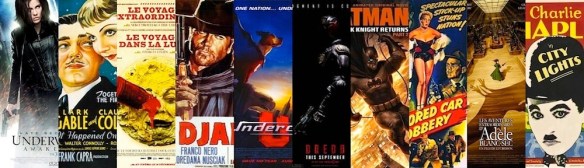
A quirky French take on the period adventure movie, this is like Indiana Jones crossed with a children’s farce. The resultant mix is not going to be for everybody — the po-faced certainly need not apply — but as a daft runaround, as much concerned with having copious amounts of fun as providing adventuresome antics, it’s all-out entertainment.

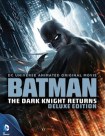
For me, this is the watermark that Zack Snyder’s Batman vs Superman will have to live up to. Good luck, mate. Picking up threads from Part I, Batman must engage in an all-or-nothing battle with a revived Joker, before the American government send the Man of Steel himself after the Caped Crusader. Cue the superhero smackdown to end ’em all. This faces stiff competition to be counted among the best Batman films but, much like Bats vs Supes, its viscerally exciting fight sequences and underlying intelligence (inherited from the original graphic novel) mean it’s up to the challenge.

A low-budget ’60s shocker sounds like exactly the kind of thing that should have faded with time — but quality endures, and George A. Romero’s sub-genre-creating film has that in spades. While some sequences are indeed out-and-out horror, in many respects it’s the strongly-drawn characters who make the film so compelling. The scale of its influence is hard to fathom, both in creating our modern concept of zombies and its demonstrably-replicable claustrophobic stylings; but more than that, it remains remarkably watchable in itself.

Darker than a long night of the soul, Charles Laughton’s sole directorial effort nonetheless appears on lists of films children should definitely see. That’s because this is a Depression-era fairy tale, with all the scariness and cruelty that is inherent to true examples of the form. The story of a ‘preacher’ who duplicitously stalks a dead man’s wife and children in search of hidden wealth, it comes with captivating performances and grim imagery that sears itself into your mind, this is a classic for all ages.

After the Sly Stallone vehicle bungled it back in the ’90s, I doubt anyone thought we’d see a decent screen iteration of 2000 AD’s long-running lawman, Judge Dredd. But here it is. While it may lack the visual faithfulness that the Stallone film actually got right, it more than makes up for it by nailing the tone. This is a sharp, efficient sci-fi action movie, laying the groundwork for a world begging to be explored in sequels, but also an entertaining burst of adrenaline in its own right.

Inviting comparisons with Luc Besson’s classic Leon, the titular Hanna is a teenage girl trained by her father to be a Bourne-level assassin, who he then pits against his former employers. Although the setup may suggest mainstream spy thrills, director Joe Wright instead delivers a left-field coming-of-age movie… just one with hard-hitting action sequences, surreal imagery, long single takes, beautiful cinematography, and a pulsating Chemical Brothers soundtrack. Considered as a thriller it’s relentlessly idiosyncratic, but that’s what makes it so refreshing and wonderful.

One of Alfred Hitchcock’s most acclaimed films, featuring arguably the most iconic image from his oeuvre that doesn’t involve a shower, North by Northwest is 136 minutes packed full of almost everything you could want from a movie. A story of mistaken identity, murder and spying, it contains sequences of pure tension, of action, of humour; it’s a mystery, a thriller; there’s a dash of romance, even. The whole is unadulterated entertainment. If you wanted one film to demonstrate almost the entire gamut of Hitch’s considerable genius, this is it.

It’s not just one of the most striking and memorable titles of recent years (perhaps of all time) — Andrew Dominik’s Western is striking and memorable in just about every regard. Greatest of all is Roger Deakins’ cinematography, some of the best work from a master of his field; but there’s also the considered and immersive pace, the enthralling and complex performances, and a narrative that’s not only historically accurate but also epic and intimate. Completely overshadowed by There Will Be Blood and No Country for Old Men back in 2007, I judge it to be easily superior to either. An under-recognised masterpiece.

It’s almost a second-place tie between two Westerns this year, with Quentin Tarantino’s “Southern” taking this spot by a nose because of pure entertainment value. This is a film where a not-inconsiderable running time flies by thanks to a wealth of sharp dialogue, emotionally satisfying violence, hilarious asides, and the skill of a filmmaker who by rights should be getting stale and predictable but somehow remains refreshed and invigorated. Jesse James is a sophisticated and classy Western; Django Unchained is its intelligently impudent counterpoint.

Three-and-a-half-hour black-and-white Japanese movies are not the kind of thing the unpretentious are meant to fall for, and yet Seven Samurai has a fanbase beyond the art house crowd. A case in point for not judging a book by its cover, then, because Kurosawa’s much-imitated classic (everything from individual shots to the entire story has been recycled by others) is an enthralling, gorgeous, vital movie. It takes its time (the feature-length first half is spent merely assembling the titular team), but amply rewards the investment — the final battles are extraordinary examples of old-fashioned action filmmaking.


Poll

This year, I invite your opinion on my top ten — well, I always invite your opinion on my top ten (that’s what the comments section is for) — but this year, I invite your opinion through the simple voting mechanism of a poll. I think how that works is pretty self-explanatory…

If you feel I’ve made an unforgivable oversight, feel free to berate me in the comments below.


Honourable Mentions

Thanks to specifically watching 11 highly-acclaimed classics this year, films that might otherwise have made the top ten found themselves squeezed out. So spare a thought for Iron Man 3, easily the best film I’ve yet seen from Summer 2013; Cloudy with a Chance of Meatballs, a surprisingly entertaining bit of nonsense; and The Hobbit: An Unexpected Journey, which isn’t quite The Lord of the Rings but is the next best thing. Plus, from said 11 classics, Lawrence of Arabia and Touch of Evil were both films I admired but wasn’t sure how much I loved, and so found themselves slipping out of consideration.

Honourable mentions too for Tintin and the Mystery of the Golden Fleece, whose cult-favourite-ish charms almost saw it become the first three-star film in one of my top tens; and Doctor Who: The Day of the Doctor, which I’ve counted as a film but is a TV programme really (shh, don’t tell anyone!) Part of me wanted to stick to my convictions (the ones that got it listed in the first place) and include it, but when I had 16 films to fit into 10 spaces, it was easier to just let it go.

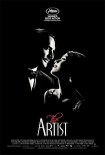
Finally, I must mention the films that earned themselves full marks, especially this year: with a record high of 23 five-star films across all lists, it was literally impossible for every one to make the top ten (even before my predilection for including four-star films). However, an almost-unbeatable nine did make it in — normally I list them again here, but to put it bluntly: everything except Adèle Blanc-Sec. There were, however, another 11 five-star films on the main list, those being The Artist, Dawn of the Dead, Doctor Who: The Day of the Doctor, The Hobbit: An Unexpected Journey, It Happened One Night, Lawrence of Arabia, My Week with Marilyn, On the Waterfront, Side by Side, Touch of Evil, and Waking Sleeping Beauty. Finally, there was one five-star film apiece for each of my other ‘categories’: from the shorts, A Trip to the Moon; from the alternate cuts, Batman: The Dark Knight Returns (Deluxe Edition); and from repeat viewing, You Only Live Twice.


The Films I Didn’t See

As is inevitably the case, there were a large number of noteworthy releases this year that I didn’t get to see. So as is my tradition, here’s an alphabetical list of 50 films I missed in 2013. They’re selected for a variety of reasons, be that box office success, critical acclaim, or simple notoriety — though I do err more towards ones I might actually see at some point rather than, say, the 10th highest-grossing film of the year.
12 Years a Slave
Alan Partridge: Alpha Papa
American Hustle
Before Midnight
Behind the Candelabra
Blackfish
Blue Is the Warmest Colour
Blue Jasmine
The Butler
Captain Phillips
Cloudy with a Chance of Meatballs 2
Despicable Me 2
Elysium
Ender’s Game
Fast & Furious 6
The Fifth Estate
Frozen
Fruitvale Station
A Good Day to Die Hard
Gravity
The Great Gatsby
Her
The Hobbit: The Desolation of Smaug
The Hunger Games: Catching Fire
Jack the Giant Slayer
The Lone Ranger
Mandela: Long Walk to Freedom
Monsters University
Much Ado About Nothing
Now You See Me

Oblivion
Oldboy
Olympus Has Fallen
Only God Forgives
Oz the Great and Powerful
Pacific Rim
Pain and Gain
Philomena
Prisoners
RED 2
Riddick
Rush
Saving Mr. Banks
Thor: The Dark World
Trance
Upstream Color
White House Down
The Wolf of Wall Street
World War Z
The World’s End


A Final Thought

And so another year is over (except for the twenty reviews I still have to post, that is). It’s always sad to say goodbye, but 2013 has been a strong year for 100 Films and, quite frankly, that makes me happy.

Fingers crossed for another good one in 2014 — and for all of your film viewing endeavours too, dear reader.
2013: The Full List

Here we are for the seventh time, dear readers: a new year begun, meaning it’s time to look at the one just passed.

2013 was an above-average year for 100 Films in purely numerical terms: I watched 110 films that were new to me, a number higher than I managed in four of the blog’s six previous years. There are a whole host of ways I’ll be (over-)analysing that viewing, both throughout this post and another in a few days’ time — perversely, this is one of my favourite bits of the year.

Anyway, because there’s a lot of long lists stretching out this post, let’s begin with a list of handy links, enabling you to jump down to whichever bit interests you:

So without further ado:


2013 As It Happened

Below is a graphical representation of my viewing, month by month. More importantly, each of the twelve images links to their relevant monthly update, meaning this is where you can find a numbered list of every qualifying film I watched in 2013.


The List

Alternate Cuts
Other Reviews
Shorts

The Statistics

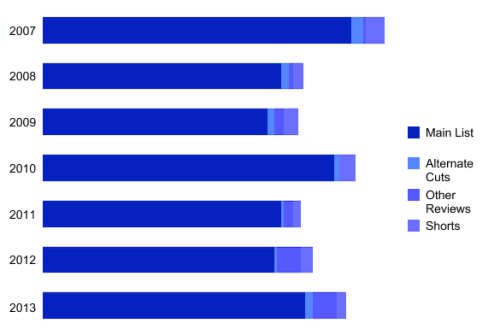
As I expect you know by this point, I watched 110 new (to me) feature films in 2013. (All are included in the stats that follow, even if I’ve not posted a review yet.) This makes 2013 my third best year ever, behind 2007’s 129 and 2010’s 122.

I also watched three features I’d seen before but were now extended or altered in some way. I also chose to review ten others for the fun of it. Between those two groups there’s all eight Harry Potters, watched and reviews as part of my thorough retrospective. All 123 films are included in the statistics that follow (except where indicated).

I also watched four shorts this year (which shan’t be counted in any statistics… except for the one that says they are). That’s one fewer than last year and one more than the year before, but as I own literally hundreds on DVD, I really should be doing a lot better.

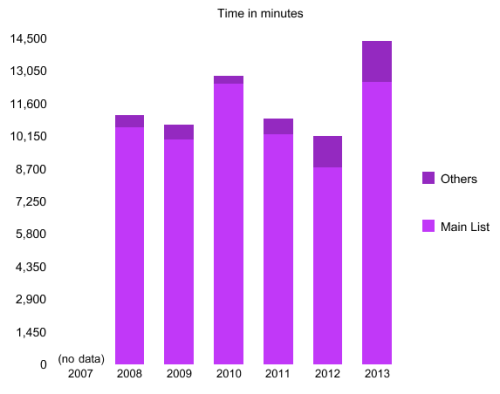
The total running time of new features this year was 209 hours and 10 minutes, a huge increase on last year; indeed, it’s the highest ever (by 58 minutes), over a year that had about a dozen more films. Lots of long ‘uns this year. The total running time of all films (and this is the one that does include shorts) was 239 hours and 29 minutes — which, as you can see in the graph below, makes this year the longest by some way; in fact, new features alone definitively tops the entirety of viewing from all but one previous year!

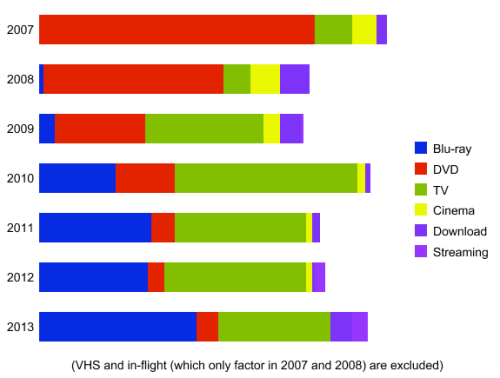
This year’s most prolific viewing format was, for the first time, Blu-ray. HD discs accounted for 59 of films watched, which is also the format’s highest tally to date. Second was television, bumped off the top spot for the first time since 2008 (when it finished fourth). I watched 42 films on the gogglebox (just four of them in HD), which is also its lowest total since 2008 (when it accounted for just 10!) Also-rans include DVD with eight (considering my vast collection, I ought to invest a bit more time in them) and downloads, also with eight (mostly Falcon films nabbed from iPlayer, but also two others in HD).

Finally, after ‘storming’ from nowhere to a massive four films last year, streaming continued its (minor) resurgence with six. Last year it was thanks to Netflix and LOVEFiLM, this year it’s Now TV (which also means they were all in HD, something the other two services didn’t offer through my Wii). To be honest, I’m surprised that number’s so low — I really ought to have made better use of the service. Maybe in the early months of 2014.

For the first time since this blog began — indeed, for perhaps the first time in almost 20 years — I didn’t make a single trip to the cinema this year. Put that down to personal laziness as much as apathy with the current state of the cinematic experience. Sad in a way, but so often I find it such a palaver, and an expensive one at that: when you can get a new release Blu-ray for little more than the total cost of a solo cinema trip (and these days, if I cared enough to go to the cinema for it, I’m almost certain to want the Blu-ray too), it makes financial sense.

This year’s closest temptations were The Wolverine (now the first X-Men film I’ve skipped theatrically), Doctor Who’s 50th anniversary special (I was going to catch an encore but, of all things, a broken boiler got in the way), and Gravity (“see it in 3D on the biggest screen you can find,” they wailed. I forgot.) Maybe next year I’ll be tempted to make the arduous shift from my sofa to a cinema seat by the likes of X-Men: Days of Future Past and… um… well, I’m sure there’s something else to look forward to…

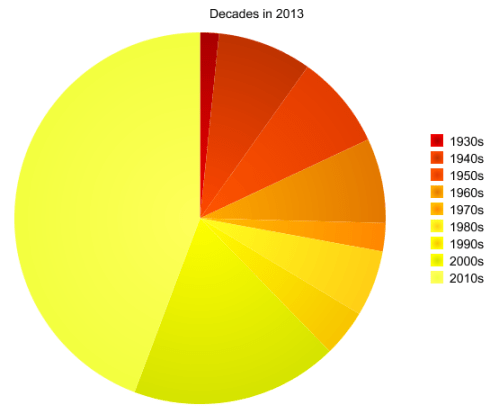
The most popular decade in 2013 was the 2010s, with 54 films. Unsurprisingly, 2013 itself accounted for a goodly chunk of that. At 43.9% of my total, the ’10s are also up a fraction on last year. Continuing that pattern, the ’00s finish second again, with 22 films (17.9%) — numbers close to 2012’s.

In all, my viewing spanned eight decades — as with last year, every decade since the 1930s is covered (I really must make an effort with my silent film DVD/BD collection). With post-millennial years taking the top two places, it falls to the last millennium to round out the list: the ’40s and ’50s come joint third with 10 (8.1%) apiece, while the ’60s are just behind on nine (7.3%). In descending order, the ’80s claim seven (5.7%), the ’90s account for five (4.1%), the ’70s manage three (2.4%), and the ’30s have just two (1.6%). Finally, if I included shorts in these things the 1900s would also feature, thanks to 1902’s A Trip to the Moon.

Last year, 106 of the 108 films I watched were wholly or significantly in English. Poor. This year, it was 115 out of 123 — still not great if you’re looking to take in the vastness of world cinema, but 93.5% vs. last year’s 98% is clearly an improvement. A distant second was Japanese with four (3.3%), and there were two apiece containing significant amounts (or being wholly in) French, Italian and Mandarin. Still, as last year’s complete list of languages was “English, German, Cantonese and Mandarin”, the total of 11 this year (plus “silent”, if you count that) is a step in the right direction. Others of note include Sioux (thanks to Shanghai Knights) and Klingon (guess). OK, maybe I shouldn’t count the last one. Call it 10 languages, then.

Moving on to countries of production, the USA is similarly dominant, producing or co-producing 102 films. At 82.9% of my viewing, that’s actually marginally up on last year. Second place again belongs to Britain with 36 films (29.3%), also upping its share from 2012. A mixture of co-productions obscure the true numbers for country-of-origin, but other numerical highlights include France (8), Germany (6, all co-productions if I remember rightly), Canada (5), Italy (4), Japan (3, none of them co-prods), and South Africa (3, an increasingly popular co-production destination I believe). A further 12 countries have one or two productions to their name, although I think only Sweden’s sole entry was entirely their ‘own work’.

This year I also totted up the BBFC and MPAA certificates of films I watched. From the BBFC, the PG, 12 and 15 certificates were all pretty well balanced, with 31, 34 and 33 films respectively. Of the outliers, 12 were rated U and nine were 18s, leaving four that somehow weren’t BBFC certified at all.

The MPAA are a funnier lot: the top certificate from them is “Not Rated”, with a total of 39. That’s because they don’t insist on reclassifying old titles, plus a few “unrated cut”s. The highest genuine rating was just behind: the ubiquitous PG-13, with 37. Elsewhere, R-rated films totalled 27, there were 18 at PG (compare to the BBFC’s 31), the surprisingly-rare G put in one appearance, and there was even an NC-17! Feel free to go hunt that one out.

(I was going to include a graph here, but it didn’t really show anything the numbers don’t. That is to say, the BBFC are more reasonable.)

After just three of 2012’s films appeared on the IMDb Top 250 — the lowest number ever — this year has seen a resurgence. As of New Year’s Day 2014, 13 films from 2013’s main list appear upon that hallowed chart; one of my higher totals, though not a patch on 2007’s 21. This year’s lot is made up of the 11 I saw from What Do You Mean You Haven’t Seen…? (which had to be on the IMDb Top 250 to qualify), plus Django Unchained (53rd) and It Happened One Night (135th). The positions range from 18th (Seven Samurai) to 197th (The Night of the Hunter). For all that, I still have some 114 Top 250 films to see.

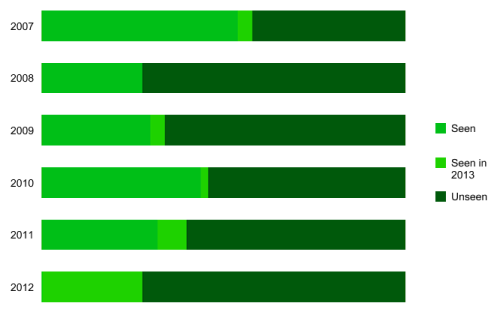
At the end of all six previous years’ final summaries, I’ve included a list of 50 notable films I’d missed from that year’s releases. Taking into account 2013’s viewing, I’ve managed to see (deep breath) two more from 2007’s list (bringing the total for that 50 to 29), no more from 2008’s (leaving it at 14), two more from 2009’s (bringing it to 17), one more from 2010’s (bringing it to 23), and four more from 2011’s (bringing it to 20). It’s now a year since I published 2012’s 50 (obviously), and in that time I’ve managed to see 14 of them. A solid start, but as I own or have access to over 20 more, I could do a lot better.

A total of 96 solo directors and three directing partnerships appear on the main list this year. Foremost among these numerically is George A. Romero with six films, while there are two each for William Clemens, Justin Lin, John Madden, Orson Welles and David Zucker. Elsewhere, Jay Oliva appears once on the main list and once in the additional films. The latter also gives us four films for David Yates, two each for Chris Columbus and Gordon Flemyng, and two shorts for Louis D’Esposito. Most of those multiples are thanks to franchises: “the Dead” (Romero), the Falcon (Clemens), Fast & Furious (Lin), Naked Gun (Zucker), Batman (Oliva), Harry Potter (Yates, Columbus), Doctor Who (Flemyng), and Marvel (D’Esposito).

I noted previously that there seemed to be an uncommonly high number of noteworthy directors who I was encountering for the first time this year. They include Ingmar Bergman (The Seventh Seal), Frank Capra (It Happened One Night), John Cassavetes (The Killing of a Chinese Bookie), Vittorio De Sica (Bicycle Thieves), Georges Méliès (A Trip to the Moon), Nicholas Ray (On Dangerous Ground), and George A. Romero (Dawn of the Dead, and the rest). There could be said to be more (Andrew Dominik, Richard Fleischer, Charles Laughton, Ben Wheatley…), but your mileage may vary.

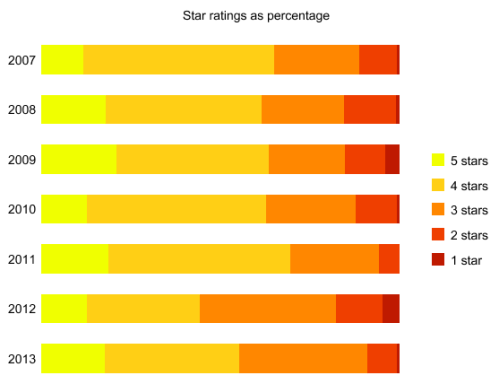
Lastly, the scores. 2013 ushered in 22 five-star films (the most ever!) and just one one-star film. 2012 saw three-star films top the tally for the first time; 2013 saw the highest number of three-star films ever, at 44… but they were nonetheless bested (just), by the 46 four-star films. Hurrah for quality! Last but not least (literally), there were 10 two-star films.

To be frank, I expected the number of films I awarded three stars to have again exceeded the number given four. Last year I wondered if I was being harsher or just watching poorer films; this year, I’d felt certain I was doing the former, with multiple movies that would previously have benefitted from my benevolence being cruelly stripped back to that middle rank. And I only felt a little bit bad about it. In fact, the only thing that ever gives me pause is that there are archive four-star reviews which, for parity’s sake, ought now to be three-stars. I guess I’ll just have to live with that.

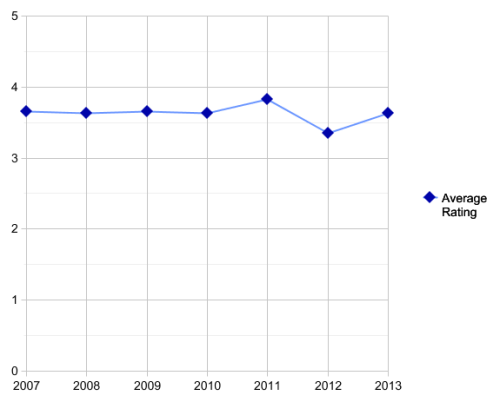
Finally, then: after last year’s record-low average score, this year saw it rise back into regular territory, finishing up at 3.6. Hurrah again!


Coming next…

It’s time to definitively wave goodbye to 2013 with my final summary post. My bottom five are already chosen, my top ten currently has fifteen entries, and the long list for my “50 unseen from 2013” stands at 113… but fear not, dear reader: choices will be made, and all will be revealed this weekend.

December 2013

Merry New Year to you, dearest reader. Before I get really stuck in to reviewing the year as a whole, there’s one final month to look at individually.

That said, we begin proceedings with how things went for my new-this-year challenge-within-a-challenge…


WDYMYHS 2013What Do You Mean You Haven’t Seen…?

Having set out with the goal of watching one super-acclaimed film per month, I somehow ended up with three to get through come December. That didn’t quite go to plan then. Undeterred, I shall be attempting this again in 2014… even though I wound up only seeing 11 of the 12 films I was supposed to.

So what were the final two? Well, both were from the 1950s — somewhat unsurprisingly, considering that decade made up half the starting list. More precisely, they were Elia Kazan’s On the Waterfront, and a film I’ve been meaning to see for so long I can’t even remember how long that is — and, indeed, one that inspired this very project — Akira Kurosawa’s Seven Samurai.

What got missed? Martin Scorsese’s Raging Bull. Hey, I don’t like boxing movies. It won’t roll on to 2014’s WDYMYHS (unless it qualifies again under whatever new rules I cook up — yes, there will be a modified selection process), but I still intend to try to squeeze it in during January.


Seven SamuraiDecember’s films in full

#104 On the Waterfront (1954)
#105 Arthur Christmas (2011)
#106 Hanna (2011)
#107 Kick-Ass 2 (2013)
#108 Waking Sleeping Beauty (2009)
#109 Wreck-It Ralph (2012)
#110 Seven Samurai, aka Shichinin no samurai (1954)


Analysis

110! A nice strong number, I’d say. Also, the first time I’ve ever finished in the 110s (after two 90s, two 100s, and two 120s).

The total for December 2013 (seven films) is pretty much in line with the same month from the last few years: in 2012 it was six, in 2011 it was eight, and in 2010 it was seven. Quite a different tale to the early years: it was double that in 2009 at 14, and 2008 was the infamous “race to the finish” year that saw me churn through 19 films (still the highest ever single month in the blog’s history).

I won’t share too much more analysis on how December fits into the year as a whole, because that’s what the big stats thing in the next year-end summary is for. If I were to rank the months of 2013, though, it would come 8th, which is the lower end of the middle.

The Advent Calendar

Last year’s inaugural 100 Films Advent Calendar wound up only managing 23 of the intended 25 reviews… though it was still a great success, both in reducing my backlog and producing views: December 2012’s hits were up 41% on November 2012’s.

This year, it’s a similar story: I managed to get in all 25 reviews, reducing the backlog once again, and the views for December 2013 were up 18% from November 2013 — and up 74% from December 2012! Rest assured, unless I manage the unlikely feat of keeping on top of my reviews, it’ll be back in 2014.


Next on 100 Films in a Year…

No “list of five” this month because, quite frankly, I’ll be chucking enough other lists your way soon enough: there’s the full list of 2013 viewing, my bottom five, my top ten, and the 50 I missed, not to mention all the lovely stats.

And then it all begins again, for the eighth year. Octastic!