My challenge-within-a-challenge is back, with 12 fresh films to squeeze in to my 2014 viewing.
The odd up-and-down aside, I feel WDYMYHS worked well last year; but for its second outing I wanted to make some changes. Though the top 12 that last year’s simple formula resulted in were all films I definitely needed to see — and several were ones I’d been looking forward to for so long I was actively put off by the level of expectation — I wanted to try something different. Last year’s 12 were, for want of a better word, a little “worthy”: 75% were black & white, 50% were from the 1950s, the most recent was 30 years old… I have nothing against any of those factors individually, but it began to feel rather dominant.
The question was, how to change it while also making the list a ‘random’ selection dictated by Best Of lists, others’ ratings, and the like? Well, it got complicated… but just in case anyone’s interested, I’ll explain it all anyway. Though for the sake of those who don’t care but are nonetheless curious what 12 films the system chucked out, I’ll do my explaining after the list itself. (That said, it’s only in the long explanation that you’ll learn what the string of letters and numbers under each title actually mean.)
So, in the order they were generated (from ‘best’ to ‘not-as-best’), this year’s 12 are:
The Shining
Score: 933
IMDb #51 | TSPDT #112 | Empire #52 | iCM Most ✓ed #52
Rear Window
Score: 753
IMDb #30 | TSPDT #42 | Empire #103
Up
Score: 698
IMDb #118 | iCM Most ✓ed #20 | Box Office #56
The Big Lebowski
Score: 676
IMDb #133 | TSPDT #231 | Empire #43 | iCM Most ✓ed #89
Modern Times
Score: 540
IMDb #41 | TSPDT #43
Amélie
Score: 533
IMDb #65 | TSPDT #800 | Empire #196 | iCM Most ✓ed #104
12 Angry Men
Score: 525
IMDb #7 | TSPDT #531 | Empire #72
Requiem for a Dream
Score: 472
IMDb #75 | TSPDT #672 | Empire #238 | iCM Most ✓ed #108
Oldboy
Score: 456
IMDb #76 | TSPDT #845 | Empire #64
Braveheart
Score: 443
IMDb #79 | Empire #320 | iCM Most ✓ed #74
The Searchers
Score: 426
TSPDT #9 | Empire #164
Blue Velvet
Score: 406
TSPDT #78 | Empire #85
(All rankings were correct at the time of compiling and may have changed since.)
So, good list? Bad list? Feel free to share any and all opinions. And as per last year, my progress will be covered as part of the monthly updates.
Now, the long bit:
Stats
As you can see, the new selection process has created a fundamentally different set of films. Last year, 50% came from the 1950s and there was nothing from the last 30 years; this year, 50% come from the last 20 years. Last year, 75% of the films were in black & white; this year, 83% are in colour. Last year, three of the films were over three hours long; this year, only two of them even cross the two-hour mark. Even the completely incidental matter of how many I have on Blu-ray and how many on DVD has been turned on its head, with last year’s 7:5 ratio becoming 5:7 this year. About the only thing that remains the same (not identical, but near enough) is the proportion of non-English language films: last year there were three, this year there are two.
Other similarities come in the presence of certain directors: there’s another film each from Chaplin, Hitchcock and Kubrick, all of whom (as you may remember) I had to reject multiple films by last year to meet my “no repetition” rule. In Hitch’s case, it’s the film I would’ve watched in 2013 were it not for my old “Blu-ray trumps DVD” rule; in Chaplin’s case, it was the film of his that ranked second last year; and for Kubrick, it was his third film last year but is now #1 under the new rules. No repeat appearance for Bergman, however, who had multiple entries at the top of last year’s long list, but this time only reached #18.
I’m not short of notable directors among the other nine, however, with a film each from: the Coen brothers, John Ford, David Lynch, Sidney Lumet, and what will be my first encounter with Darren Aronofsky. Depending on your point of view, the remainder don’t stint either: Mel Gibson, Jean-Pierre Jeunet, Park Chan-wook, and Pete Docter Of Pixar.
Process
So, how exactly did I concoct this duodectet of acclaimed classics?
First, a quick reminder of the comparatively simple way I did it last year: I went through IMDb’s Top 250 and the top 250 entries in They Shoot Pictures, Don’t They?’s 1,000 Greatest Films and noted down every film I owned, then eliminated any that weren’t on both lists, then split the difference between their placement on each list to produce some kind of average. Then, allowing only one film per director and allowing films I owned on Blu-ray to earn a place above those I owned on DVD, the top 12 (ultimately culled from the top 18) became my final selections.
That’s far simpler than where we’re going this year.
So, as expressed, I wanted to make the list a little more (shall we say) populist. The best way to do this, I reasoned, was to include more lists. In the end I used five, and they were:
- IMDb’s Top 250, which guarantees a wide viewership and high ranking; it’s often seen as an incredibly mainstream list, but in places (especially a little lower down) it’s less so than you might expect;
- They Shoot Pictures, Don’t They?’s The 1,000 Greatest Films, which is compiled from an extraordinary number of ballots from critics, filmmakers, and more, weighted and analysed to produce a very academic list. To say it strives to be anti-mainstream is unfair, but it’s certainly not concerned with being populist;
- Empire’s 500 Greatest Movies of All Time, which is Empire magazine’s huge poll of readers, journalists and filmmakers from 2008. Much like the IMDb list, it skews mainstream, but even if it’s from “a mainstream film magazine” that’s still “a film magazine”, so the mid- to lower-levels produce interesting films;
- iCheckMovies’ Most Checked, which should see the inclusion of the kind of movies ‘everyone’ has seen but I haven’t;
- All-Time Worldwide Box Office, for essentially the same reason as above. (The version I used is linked to, though it seems to have numerous little differences to the one at my normal go-to site for box office numbers.)
For parity with the IMDb list, all were limited to the top 250 entries. For the record, all positions were collated from the iCheckMovies versions of the lists on 5th January.
As you can see, that’s a list of lists that errs much more toward the mainest of mainstreams than last year’s. However, I’ll repeat my caveats from above: the IMDb and Empire lists aren’t as unrelentingly populist as certain cinephiles would have you believe; and even where they are, I’ve already seen most of those films anyway. Additionally, with so many lists I removed the requirement for films to appear on all of them, which led to the following in my final 12:
- Two films don’t appear on the IMDb Top 250;
- Six films don’t appear in the TSPDT 1000’s top 250;
- Three films don’t appear in the Empire 500’s top 250;
- Six films don’t appear on iCheckMovies’ Most Checked;
- Eleven films don’t appear in the All-Time Worldwide Box Office top 250.
In all, 117 films I own appeared in the top 250 of at least one list, but only 48 of those appeared in the top 250 of two or more lists.
So how do all these lists come together to form my list? I can’t simply split the difference this time! Short answer is, I used a points system. For each list, a film received 251 points minus its position on the list; so the #1 film would get 250 points, the #2 film 249, and so on. If a film was outside the top 250, it scored 0 points for that list.
This produced a chart that was interesting in a number of ways, but one was that it didn’t take account of how many lists a film was on. For instance, The Exorcist appears on four of the five lists, but is quite low on all of them, so its score was 188; The Passion of Joan of Arc, however, only appears on one list, but at #14, so its score was 237. That didn’t seem quite fair. To balance this, I awarded 50 points for every additional list a film was on beyond its first. So, to use the same two films, Joan of Arc got no bonus points, while The Exorcist got 150. These are two of the more extreme examples, but it certainly made huge changes — The Exorcist jumped up literally dozens of places.
I felt some more tweaking was in order. It was all well and good rewarding appearances on multiple lists, but some films were in the upper echelons of one list but just scraping in to another. I decided to weight the results further in the favour of films that were at the top of particular lists. Essentially, this gives a slight edge to the importance of certain lists — which is fine, because I didn’t necessarily want all five lists to be of equal weight. So, 25 bonus points were award for being in: the IMDb top 100, the TSPDT top 50, and the iCM Most Checked top 50. (By this point I was just looking at numbers, so I’ve no idea what actual difference this made to rankings.)
I briefly considered awarding bonus points for an appearance on any list outside of its top 250 — IMDb and iCM Most Checked stop at that number, but the others go on much higher (the size is mostly in their names, but the box office chart goes to 500-and-something too). I was thinking of something like 25 or 50 points, until I realised this would mean a film could get more for being 251st on a list than it could for being 250th, or even 200th potentially. I could’ve raised all the films’ totals by the bonus amount (i.e. instead of scoring 250, #1 would score 300, and so on down), but, to be frank, I couldn’t be bothered.
One final points booster I did add, however, was again from iCheckMovies. That site has many, many official lists for films to appear on, and obviously the more lists it’s on the more acclaimed a film is. So, each film got the number of lists it was on as bonus points — e.g. The Shining appears on 21 lists, so it got 21 points; A Clockwork Orange appears on 29 lists, so it got 29 points — still not enough to reclaim last year’s spot above its Kubrick stablemate, though. In fact, I don’t think this had any impact on the final 12. Although the number of lists they’re on ranges from 14 to 29, at this point those kind of points were’t enough to see any of them booted out, or even rejigged within the 12 itself.
With the final points awarded, all that remained was to institute my other rules. Firstly, no repeat directors — bye bye A Clockwork Orange, which actually finished second overall. I also decided to eliminate Raging Bull — it didn’t feel right it being on the list two years in a row. That had finished third. The next repetition isn’t until #16, a second Chaplin-directed film, but this year that fell beyond the reach of the final 12. I did make one more change, however: I eliminated #14, The Wild Bunch, which would otherwise have been the final film of the 12. Why? Well, this is one that could be contentious…
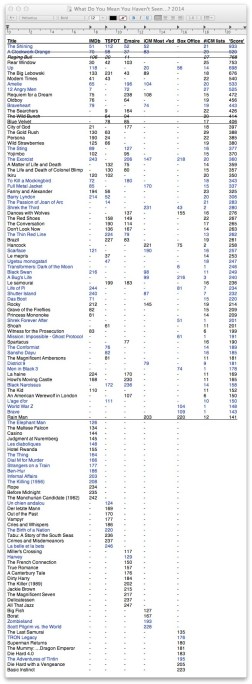 I say that as if I anyone cares or my rules weren’t arbitrarily cooked up! But what I mean is, there isn’t any rule that counts it out. Yes, with this year’s selection I was aiming for a wide variety of tones, styles, eras, content and so on, and The Wild Bunch is a Western just like the film immediately before it (The Searchers) — but there are plenty of thrillers and a couple of comedies on the list, so why not repeat the Western too? Especially as I get the impression these two aren’t that similar. The real reason, though, is that I wanted to include #15, Blue Velvet. Were I to give the films a personal rating — of “have been waiting to see”-ness, say — the Lynch would come out on top of those two. As they were quite close in points anyway (414 vs 406), I decided to just make the swap, rather than continue to fiddle in the blatant hope of making Blue Velvet’s score rise.
And so, with my underhandedness factored in, I finally had my final 12.
That was fun, wasn’t it?
(The tall picture on the right is the final version of my long list. If you want, you can click here for a legible version, on which you can play “spot the French title spellcheck ‘corrected'”.)
And finally…
The level of my wit is on full display with the inclusion of “Alfred Hitchcock’s Rear” in the top image. Teeheehee.

 Joseph Gordon-Levitt stars as a Manhattan bicycle courier in this near-real-time action-thriller from co-writer/director David Koepp. Charged with getting a letter from one end of Manhattan to the other through rush hour traffic ASAP, Gordon-Levitt finds himself coming up against a loony cop (Michael Shannon) who for some reason is desperate to get his hands on said envelope…
 Gordon-Levitt makes for as appealing a lead as ever, not that his charm is called on much, while Shannon is a memorably crazed villain. He’s a better fit here than he was as Man of Steel’s General Zod, but he’s a delectable nemesis in any context. It’s true that his barminess serves to stretch the concept’s real-world plausibility, but so does a thin bit halfway through that struggles to drive the scenario on to feature length, not to mention a boatload of Chinese gangster stuff. But hey, this is an action-thriller — if you want real-world plausibility, you’re in the wrong genre.
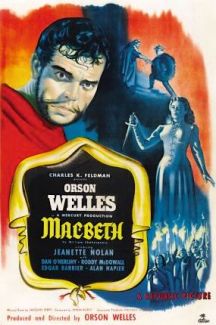 Twelve years on from his innovative, acclaimed, career-bolstering ‘
 The low budget and quick schedule affect the film across the board, for good and ill. There’s much dramatic staging, with grand sets and doom-laden lighting. The shadow-drenched cinematography may well be a result of the cheap production, but the resulting effect is marvellous. Indeed, all the camerawork is great. There are some striking long takes, including the majority of the night of the murder occurring in one long unbroken shot. The costumes, on the other hand, look like a ragtag bunch of Past Clothing from the studio’s store… which is because they essentially were.
 Macbeth himself is hardly in possession of all his faculties at that point, acting like a drunkard; but rather than make the sequence appropriately sinister (it’s in this state that he orders the execution of Banquo and Fleance, for example), it plays up the silliness, which is a shame.

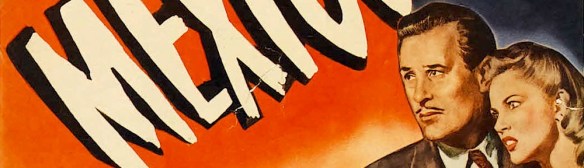

 After leaving his New York base to investigate some
 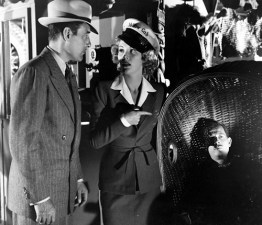 Stand-out sequences include a bit where the police detectives move through a crowd of suspects, all relaxing near the pool on a location shoot, while outlining each one’s possible motivations, essentially to their face. It’s a simple sequence, not exactly high on drama or humour, but there’s a pleasant structural touch to it. Or the finale: the Falcon is, as ever, drawn into the case by a mysterious woman… but by the end he has four of them grouped around him!
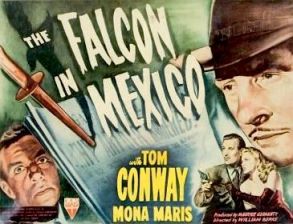 “In our peaceful country, life is very seldom in danger,” states one character halfway through The Falcon in Mexico, just one of many instances that might make you think the film was co-funded by the Mexican tourist board. Oh sure, there’s the usual array of thefts and murders that you’d expect from a Falcon adventure, but they’re mostly committed by Americans. No, the film on the whole is very keen on the place, and the quality of its police, and even ends with a shot of a poster proclaiming “Visit Mexico!”
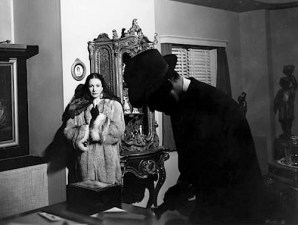 What I did make out was grandly far-fetched — more so than normal, I mean. Considering the tone and style of the series, it’s kind of OK that most of the plot’s explanations are not even close to plausible in the real world. On the bright side, it does make for another genuine mystery (I should stop praising the series for this now, all the films do it).
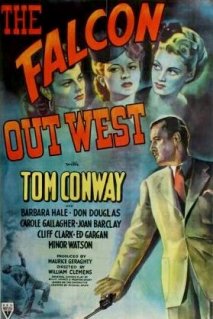 With each passing entry, the Falcon films become less reminiscent of their Saint forebears and more akin to the Poirots and Marples of this world: a gently comical murder mystery, with a finite location and a finite number of suspects, where the ‘game’ of solving the plot is the point.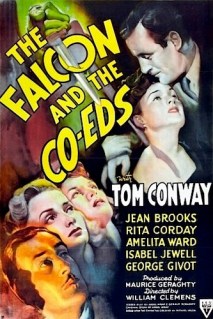
 In fact, the worst thing about the film is purely a result of its age, and that’s the occasional bout of misogyny. Let’s face it, the girls going all giggly over the Falcon is pretty defensible (look at modern-day reactions to the likes of One Direction, Justin Bieber, or even Benedict Cumberbatch), but the bit where he picks a twenty-something girl up to smack her bottom is a bit much. Still, it opens with a great bit: the Falcon parks his car, a girl immediately runs up to it: “Mr Lawrence?” “Yes?” She jumps in, instantly kisses him full on the lips, and when she pulls away all he can say, with a slightly surprised look, is, “Nice!” You could put that in something today and it’d still work.
 such thoughts always endear them to me.
 When
When  Personally, I find it a valid thing to attempt. Rather than take the Superman mythology as read, here Nolan and co — including screenwriter David Goyer and director Zack Snyder — have tried to imagine what would really happen if an alien baby with incredible powers arrived in our world. So Clark Kent hides his abilities, goes on a trek around the world to ‘find himself’, and when he’s uncovered there’s mass media and military interest. Which is pretty accurate, I think. If some guy started stopping oil rigs collapsing single-handed, or flying around the place, the military’s hardly going to sit back and go, “oh OK then”.
 The filmmakers have certainly bought into their own conceit, to a frankly laughable extent. The Blu-ray contains a featurette called All-Out Action, which the menu describes as follows: “The action in Man of Steel soars to new heights with a level of realism never before seen in a super hero film.” Hahahaha! Realism my arse. Once the action kicks in it’s positively comic book. Men are hurled around like rag dolls; Metropolis is destroyed in a huge flying punch-up, which just feels like a less effective re-hash of
 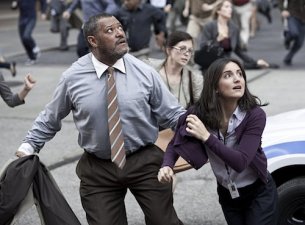 As to the destruction of the city, I think the criticism is right. The city clearly isn’t evacuated before buildings start falling — it’s being evacuated, but no one even knew to start running before the Massive Machine Of Destruction (I forget what it was actually for) turns up and starts destroying things. People run into the streets as buildings fall on them. As a viewer, how can you miss that hundreds, possibly thousands, of innocents are dying? The cinematography makes it look like 9/11 — incredibly like 9/11, in fact. That was 12 years ago by the time of the film’s release, but is it OK to trade on such iconography in a blockbuster entertainment? Should we just ignore the notion that so many ‘extras’ are dying because, hey, it’s just a superhero movie? But aren’t we meant to be taking this as Real World, chaps?
 There’s a lot else that Man of Steel plays with in the Superman legend besides the violence and cinematography. Some people will surely miss the bumbling Clark Kent, the burgeoning relationship with Lois Lane, and so on. These elements are eventually brought in, sometimes in a modified way, which makes it feel like they’ve been put in place — Superman Begins style — to be used in a sequel. Except we know
  However, Waking Sleeping Beauty is told from the inside: director Don Hahn started out as an assistant director at Disney animation in the ’80s, graduating to producer by the time of Beauty and the Beast. With him he brings behind-the-scenes home movies and access to a stunning array of interviewees. Almost everyone who was anyone at Disney during that time is interviewed, either through archive footage or new audio commentary. It was a tough time, and while Hahn’s portrait is probably not quite warts-and-all, it comes damn close; for example, we get to see some of the caricatures the animators drew in disgust at their new boss, Jeffrey Katzenberg.
 100Films.co.uk