
Ian MacNaughton | 85 mins | DVD | 1.78:1 | UK / English | PG / PG
 The first Monty Python theatrical release (four more would follow; five if you count last year’s A Liar’s Autobiography) is a compilation of re-shot sketches from the first two series of Monty Python’s Flying Circus.
Designed to launch the sextet to a US audience who wouldn’t have seen the TV series, And Now For… contains around 40 sketches, including two of their most famous: the Dead Parrot sketch and The Lumberjack Song. I have to confess, I’m really a Python neophyte — to be precise, I’ve seen Holy Grail twice, Life of Brian once, and only stray sketches in documentaries and clip shows and the like. As such, almost the entire film was new to me (the only exceptions being the aforementioned pair), so I can’t tell whether the re-shoot impaired or enhanced the quality. (In fact, I say “re-shoot”, but the film was shot between series one and two of Flying Circus, so this is actually the first performance of the series two sketches.)
The Dead Parrot sketch clearly isn’t as good — it feels like Palin and Cleese re-enacting past glories, robbed of much energy by not being shot as-live in a single take. The Lumberjack Song, on the other hand, seems to survive fine. The rest is as much of a mixed bag as sketch shows ever are — it’s become a cliché to call them “hit and miss”, but it’s true. Over 40 years on, the Pythons’ style is still so leftfield, experimental, absurdist and irreverent that one man’s hilarity will easily be another’s bafflement.  For my money, it becomes a bit tiring watching sketches for so long, even with the attempts made to link them together — it doesn’t form a narrative, so much as a series of casual crossovers that would make re-arrangement in an edit impossible. In and of themselves, however, many of the skits hit their mark.
Director Ian MacNaughton also helmed the TV series but, freed of the constraints of BBC studio filming, he mercifully does more than point-and-shoot. Sometimes this doesn’t work (an early sketch, “Marriage Guidance Counsellor”, is initially shot from bizarrely high angles followed by some very flat compositions), but other times it comes off beautifully: a long track-and-pan throughout “Nudge Nudge” is flawless.
Perhaps this is showing my Python inexperience again, but, considering how everyone goes on about the brilliance of Graham Chapman, he’s far from foregrounded here. Cleese, Idle and Palin seem to get the most material; Chapman is often a kind of straight man (in fairness, often among the rest of the troupe acting this role for the benefit of a lead); Jones doesn’t do much at all, which is perhaps why he later moved toward directing. Of course, this perception could just be the result of the sketches chosen; or, for all I know, he was more talented as a writer than performer; or perhaps he came into his own later (he’s the lead character in both Holy Grail and Brian, of course). But, on this evidence alone, I don’t think Chapman would be the one to draw anyone’s attention. In fact, the thing that most struck me about the cast is that, while most of them look familiarly young, Eric Idle looks about 15.
 Reportedly the Pythons didn’t consider the film a success, hampered by interfering higher-ups and a ludicrously low budget (according to Wikipedia, this was “so low that some effects which were performed in the television series could not be repeated in the film”!) Ironically, US reviews were mixed and the film did little business at the box office (a 1974 re-release, after the TV series had turned up on PBS, was a greater success), while in the UK it was popular enough to turn a profit, despite the fact it contained nothing new for British fans — “indeed many were disappointed that the film seemed to belie its title.” Indeed.
It’s difficult to know what And Now for Something Completely Different offers fans today. With the TV series readily available on DVD, I imagine it more often pays to re-watch the original versions. Equally, as noted, this is technically the first outing for some. Perhaps it’s just a curio; a different perspective on familiar material. For newcomers… well, as one, it’s difficult to say how much it offers a grounding in the Pythons’ material. Is it a best-of? Some of their most famous stuff isn’t here (presumably it came in the latter two series), and almost an hour-and-a-half of sketches gets a bit much. Indeed, it’d probably work better in more bite-size chunks; say, 30 minutes at a time.

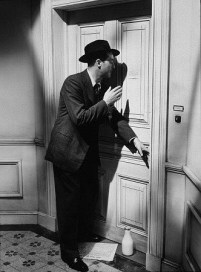
 Directed by the inestimable Billy Wilder, winner of the Grand Prix (forerunner to the Palme d’Or) at the first Cannes, winner of the Best Picture Oscar in 1946, and also Best Actor, Director, and Screenplay, it’s a wonder that The Lost Weekend isn’t better known. I don’t think I’d even heard of it until Masters of Cinema announced their Blu-ray release
  all of them thwarted at the last possible moment, when victory seems assured. The film isn’t preachy, but if it does teach us a lesson then this is how it does it.
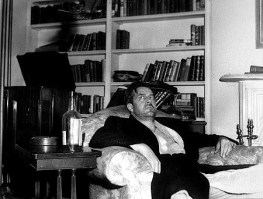
 Milland is astounding. The film rides on him and he really carries it. It’s easy to play a comic drunk, but Milland doesn’t sink to that. Indeed he doesn’t do one type of drunk at all, swaying back and forth across various levels of inebriation as required. I often find films of this era contain performances we assess as great, but if you put them in a film today no one would buy it; they’d find it stagey and fake. Milland’s transcends that — it fits the era, but I wouldn’t be surprised to find it would play just as potently today. I think it’s fair to say that Milland is not widely known today, but with every film of his I become more convinced that history has been unkind.
 There’s also able support from Howard Da Silva as barman Nat and Doris Dowling as Gloria (is she a whore of some kind? Just an escort? A bar-crawler? Did I miss something?), whose slang is oddly infectious. No offence to Jane Wyman, but her lovelorn-but-strong girlfriend character only seems to really come alive in the closing minutes, when she considers abandoning Birnam to his fate.
 but from what I do know of other conditions of addiction and mental health, this feels as if it’s still thoroughly relevant.
 Bruce Willis stars as a down-on-his-luck PI who stumbles into a sport/politics conspiracy in this early-’90s action-thriller from screenwriter Shane Black (
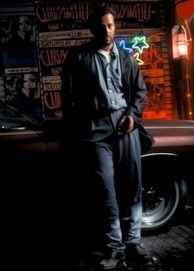 — pitch black frames punctuated by glowing coloured lights. On the whole, it looks gorgeous.
 2001’s car racing actioner
 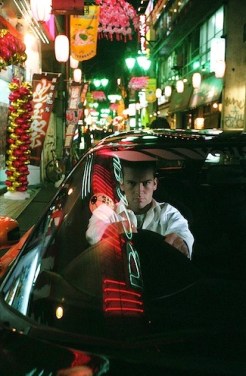 If I sound dismissive, it’s slightly affected: Tokyo Drift is surprisingly decent. Surprisingly decent for a Fast and Furious film, that is. In
  Quentin Tarantino made his name in the ’90s with a series of dialogue-heavy gangster thrillers that provoked a storm of imitators. Since the turn of the millennium, however, he’s contented himself with a series of extravagant hyper-cinephilic genre homage/parodies. After tackling Japanese action movies in
  It’s fair to say Django Unchained sprawls. But, unlike the chapterised character-flitting antics of Kill Bill and Inglourious Basterds, it has a straight throughline it follows from beginning to end, with only a few asides. In terms of length and scope, it’s perhaps not too much of a reach to evoke
  Or how about those action sequences? Months of work training real horses to do things never before seen pays off (and Tarantino proudly displays the “no animals were harmed” notice right at the top of the credits), while the blood-drenched Candyland shoot-out is arguably one of the best pure action scenes in years. Those are amongst myriad other sequences, from the small and transitory to the epic and vital.
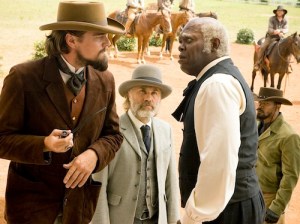 Still, best served — and, perhaps, more deserving of the Supporting Actor nod — are villainous duo Leonardo DiCaprio and Samuel L. Jackson. For starters, has Leo ever played a villain before? He’s on stonking form here as Southern gent Monsieur Candie (who can’t speak French), a sinisterly welcoming fellow with a dark side that’s on constant display. He’s all smiles and all lingering threat and menace. Indeed, scenes are often at their most tense when he’s at his nicest. I think there’s an argument for him to go down as one of the great screen villains — he even has the obligatory cool dispatch. “I couldn’t resist” indeed.
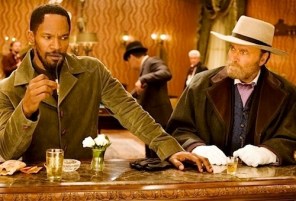 It does make you wonder if some of these people had bigger roles that got cut… or maybe there are just
 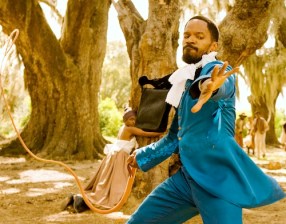 Tosh and piffle, I say. One of the best ways to skewer many an evil institution is to make them a laughing-stock, to take the piss out of them, and that’s exactly what Tarantino is doing. These aren’t likeable, funny people who are Klan members; they’re incompetent fools because they’re Klan members. The resulting scene is hilarious and deservedly one of the movie’s most memorable moments.
 After
After 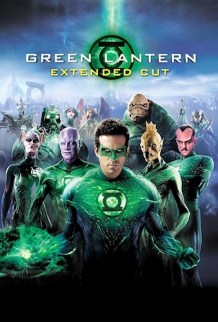 “Hype” has to be one of the biggest factors in how we view films these days. Technically it’s defined as “extravagant or intensive publicity”, I suppose thereby meaning something to “positive expectation”, but I think it also works the other way: if you’ve heard nothing but awful things about a film, its weakness has been ‘hyped’. It’s this latter point that applies to Green Lantern, which has an almost insurmountable degree of negative expectation attached. To summarise the headline points, it’s got a woeful rating of
 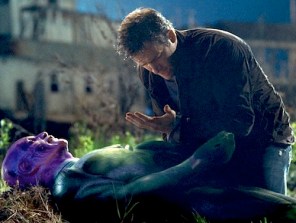 But I digress. Cocky jocky Hal is whisked off to the other side of the galaxy to learn how to be a Hero and use his ‘magic’ ring, which can conjure stuff up, then returns to Earth to save it from some menace(s). As superhero origin stories go, at least it’s got a couple of differences.
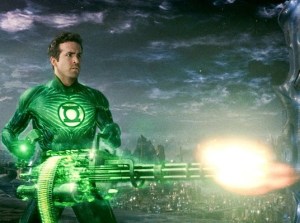 There are positives. The action sequences are good, which is a definite plus in this kind of film. The inventiveness with what the ring can do is fun. There’s a lack of relation to the sketchily-drawn characters that stands in the way of us truly engaging with them, and there’s a certain brevity and lack of scale that undersells the alleged threat to Earth (it’s a giant evil space-cloud that can barely cover a few city blocks, let alone the entire planet) — but, that aside, they’re entertaining enough. That said, much as the film pulls its punches with characterisation and threat, so it does with awe and spectacle. The Lanterns’ planet Oa doesn’t have the same impact as Asgard in
 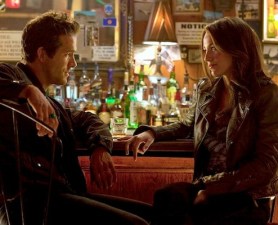 Indeed, I’d say the Extended Cut doesn’t go far enough, with some of the disc’s deleted scenes meriting inclusion. However, the main one occurs on Oa, meaning an effects-heavy scene that hasn’t had CG work done or all the voices recorded, so couldn’t just be dropped back into the finished film as-is. I imagine that’s why it wasn’t. That said, even if they’d done such work, those scenes are minor points, not game-changers.
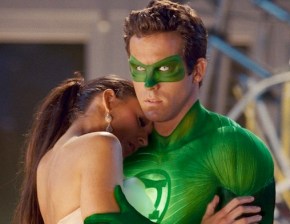 Still, I think there’s a better film lurking in Green Lantern, and it’s a shame it didn’t get the screenwriter(s) or director(s) required to bring it out. It’s even more of a shame that worse films than this have received a kinder critical consensus or huge box office. That leaves some suit feeling vindicated and churning out the same rubbish again, whereas with a bit more effort Green Lantern 2 could’ve been worthwhile.
 The fourth Harry Potter film is the pivot around which the series revolves, in oh so many ways. Most obviously, it’s book 4 of 7 — the halfway point. It’s also where the books switch from short ‘children’s novel’ lengths to the huge tomes they eventually became. More importantly, it’s the instalment on which the overarching plot of the entire series hangs. Although each previous entry in the Potter canon contributed something to the mythology (even if sometimes its significance wouldn’t become apparent until much later), they’re still viewable as discrete adventures. So too is Goblet of Fire, for the most part — the exception being its final act, which kicks off the story that will consume the rest of the series.
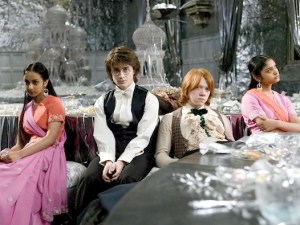 It makes sense: at this point the series was moving beyond your stock franchise length of “trilogy” and into less frequently charted waters, amid speculation that the leads would be recast. With Goblet of Fire being the last point you could reasonably pull that off, I imagine it paid to emphasise that these were the same kids — that we see a cast age in more-or-less real time throughout their childhood, including many small supporting roles as well as the leads, is one of the Potter films’ more unique highlights.
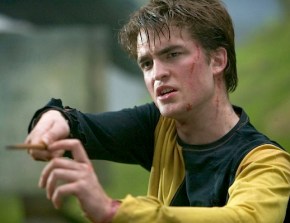 I can’t remember if Diggory’s meant to be a nice guy or an irritating jock, but here he’s played by Robert Pattinson, proving it’s not only his involvement with
 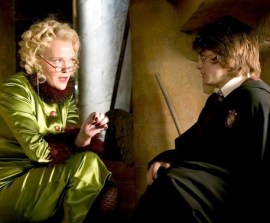 but her Quick-Quotes Quill — which, essentially, just makes stuff up — is present and correct. The next tale,
 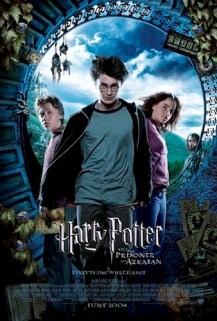 Prisoner of Azkaban marks a significant turning point for the Harry Potter film series. Viewed now, it’s easy to see it as just Episode 3 of 8; a saga still getting underway. At the time, coming off the back of two incredibly successful films, it felt like a grand shake-up of an established formula.
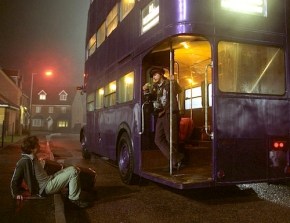 Cuarón and screenwriter Steve Kloves (who would pen every Potter film bar
 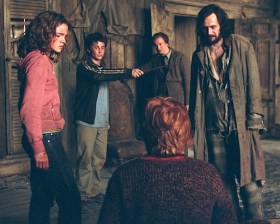 The film series doesn’t treat either of them particularly well compared to the books, but then supporting characters and subplots are the first things to go (quite rightly).
  100Films.co.uk