2013 #27
Peter Jackson | 170 mins* | Blu-ray | 2.40:1 | USA & New Zealand / English | 12 / PG-13
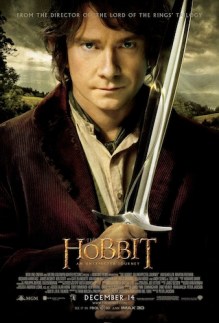 So here we are: nine years after his last tour of duty in Middle-earth, and after a Guillermo del Toro-shaped attempt at not having to serve again, Peter Jackson returns to the world of hobbits, dwarves, elves, orcs, and the rest, to tell the tale some have been clamouring for him to make since Fellowship of the Ring turned out to be a film of landscape-changing brilliance over a decade ago. Well, a version of that tale, anyway.
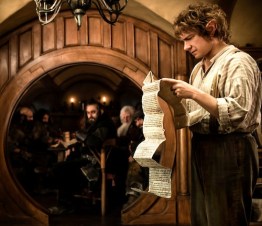
The Hobbit, as I’m sure you know, sees a younger Bilbo Baggins (Ian Holm in The Lord of the Rings and a prologue here; Martin Freeman for the bulk of the film) coerced by the wizard Gandalf (Sir Ian McKellen again, of course) into joining a party of dwarves setting out to reclaim their gold and/or homeland, stolen by the dragon Smaug (that’s Smowg, not Smorg). In this version, emphasis is firmly on “homeland” rather than “gold”, and there’s a bunch of other stuff drawn in from the masses of appendices and associated material that J.R.R. Tolkien wrote about Lord of the Rings. In the process, Jackson and co have mutated The Hobbit from a simple tale of adventure that happens to take place in the same universe as The Lord of the Rings and has some shared characters and locations, and turned it into a film (well, a trilogy) that is both standalone adventure and grand prequel to his already-made epic.
There’s endless discussion to be had about the choices Jackson and co-screenwriters del Toro, Fran Walsh, and Philippa Boyens have made in this transformation of a beloved novel (and there’ll be even more in future parts, I should imagine, when they start introducing new characters they’ve created themselves). I can sympathise with those who wanted a single-film, straightforward, faithful adaptation of the novel (I sincerely hope there’s a fan edit to adequately fulfil that desire once the trilogy is complete); but there’s also so much in Tolkien’s world, much of it with direct (if inessential) relevance to Lord of the Rings, that it might have seemed a shame to miss this opportunity to get it on screen. 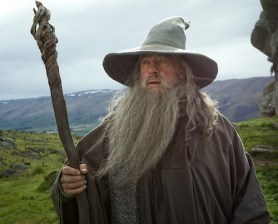 And, I have to say, as someone who hasn’t read the novel since primary school, I couldn’t spot the joins. I could take some guesses, but not many, and considering how long the film is I’m sure there must be quite a lot added.
Putting aside questions of adaptation (others have already discussed that at great length and with much more authority than I), how does it survive as a film in its own right? The reviews have been mixed, but I would say it fares very well. It may lack the epic world-changing grandeur of Lord of the Rings, but as an epically-scaled action-adventure fantasy I found it to be most entertaining. It treads a tricky path mixing action, humour, world-building, politicking, legend, and plot, and some would assert some elements dominate more than they should, or are mishandled — I’ve heard the humour called too childish, the action too like a videogame, and so on. For me, the balance worked. It’s not perfect — it takes forty minutes for the cast to leave the opening location of Bag End, which is fine in a fan-pleasing extended edition but feels excessive in a theatrical cut — but it ticks enough boxes and hits enough bases to entertain. And at the end of the day, it is an entertainment.
I have to wonder if viewing at home affects one’s perception of The Hobbit’s length and pacing. For one thing, from a personal point of view, I saw all of the theatrical Lord of the Ringses in the cinema, and the Extended Editions only on DVD — coming to The Hobbit first on DVD, am I automatically associating it with the extended experience? Even as I write it, I think that’s a pretty spurious argument. More so, however, there’s all those factors of the home viewing experience that are often cited in its favour over the cinema: you can start when you want (no trailers!), pause for a snack or the loo or just the hell of it; and it’s also commensurate with, say, marathoning TV shows, where you might watch several hours in one go anyway. As it is, I didn’t pause The Hobbit once, watching it right through in one go as per the cinema — 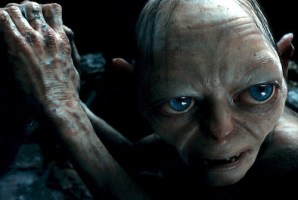 but I could have, and knowing you can do something makes all the difference. There’s also the little timer on the Blu-ray player, which means I can know that it took forty minutes to get out of Bag End rather than just thinking it feels like it. Does that somehow make it more palatable? Would I have been as bothered as others by the film’s length and pacing had I seen it in a cinema initially? It’s tough — nay, impossible — to say, because while there are those other subliminal factors, I also felt like I flat out enjoyed the film for itself, not just for my potential ability to escape it. But it is long and it is episodic, so maybe the association of watching individualistic episodes of TV back to back feeds into the acceptance of that? It’s a circular argument, so we’ll leave it there.
Besides issues of faithfulness and length, the film’s other big controversy (as if it didn’t have enough!) is the whole HFR argument, which seemed to plague all previews and early reviews. I can’t enter into that, but I can say it hasn’t filtered down to the Blu-ray experience — if it should look clearer and sharper and less motion-blurred-y, it doesn’t to any extent that stops it feeling like a Movie. The whole thing looks gorgeous, as you’d expect, though I won’t credit that to the cinematography lest Christopher Doyle comes round and gives me what for. In other technical fields, the make-up, models and CGI are all as up to snuff as you’d expect from this team. They’re probably exceptional, in fact, but hamstrung by the fact we expect them to be. If they’d fluffed something people would have noticed, but what could they do to stand out? Gollum may be better-realised than ever, but he was so good before that few will notice; other sequences, like the fighting rock giants, are awesome but perhaps get lost in the mix.
 Howard Shore returns to deliver another fantastic score. After he composed the iconic Fellowship theme for, um, Fellowship, I thought he could never muster anything else as monumental. And, in fairness, that theme is still the defining aspect of the series’ score (its absence here is at times felt, by me at least); but he produced another excellent motif for Two Towers (Rohan), and Return of the King (Minas Tirith), and once again here, this time related to the dwarves. Much like John Williams on the Star Wars prequels, Shore is charged with retrofitting his score to begin before but ultimately dovetail with the following/preceding trilogy, and I think he pulls it off (as much as a musical dilettante like me can spot such things). Locations and characters familiar from Lord of the Rings come with their musical cues intact, which blend seamlessly with the new material. I hadn’t bothered to pre-order the soundtrack CD, but I hopped online to get it as soon as the film finished.
The Hobbit film trilogy will long remain a controversial subject. It was always going to. The book is a light children’s adventure tale, while Jackson is making the film in the context of a successful blockbuster epic set in a dark/realistic fantasy world — he couldn’t have made it too whimsical and still had it gel with the existing films. Plus: if he’d done a straightforward adaptation in a single film, would it have felt underwhelming? Does it need a ramped-up sense of the epic in order to compete with its chronological sequel? For Tolkien fans, no; for a mainstream audience, perhaps it does. And for the latter it clearly worked, taking over a billion dollars worldwide, albeit aided by 3D ticket prices.
 Without the breadth and world-changing story of The Lord of the Rings, The Hobbit was always going to be a somewhat smaller experience. By emphasising the backstory of the dwarves’ stolen homeland and the hints of war-to-come that will ultimately lead in to Rings’ story, Jackson has made it considerably more epic — for good or ill. For me, the whole experience clicked. I don’t think it’s as good as Lord of the Rings, but it is the next best thing.
The Hobbit: An Unexpected Journey is available in the UK on DVD, Blu-ray and via on-demand services from Monday 8th April.
My review of the Extended Edition can now be read here.
* According to the BBFC, The Hobbit: An Unexpected Journey runs 32 seconds longer on disc than in cinemas. I’ve no idea why. ^

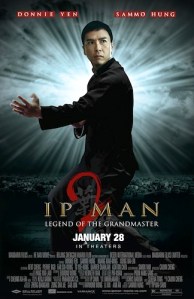 Picking up more or less where the first film left off, this sequel sees Ip and his family settled in Hong Kong, struggling to get by as he attempts to set up a Wing Chun school against opposition from the existing establishments.
 their presence and storyline drag the film down.
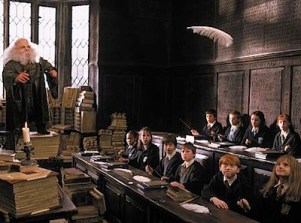
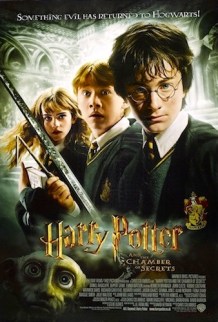 This extended cut takes the already-lengthy second instalment in the Harry Potter franchise and pushes it to nearly three hours (though if you lop off the extensive end credits it’s more like two-and-three-quarters). As with the extended version of
 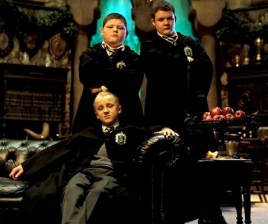 The longest extension comes near the start, when Harry misspeaks while using Floo powder and ends up in the nasty part of Diagon Alley. In the theatrical version he just walks out of the creepy shop, but here he has to hide as Malfoys Senior and Junior enter to sell some items. Though it has the advantage of showing us how Lucius treats his son when out of sight of more respectable wizards, and possibly seeds something for later films (what is the one item Malfoy isn’t prepared to sell?), it dilutes the introduction of Jason Isaacs’ villain, which in the theatrical version came slightly later in the bookshop, where he bumps into Harry, Hermione and the Weasleys as they’re leaving Lockhart’s signing. It’s a more effective, more dramatic introduction to someone who will become a major character as the series progresses.
 There are, arguably, three notable additions to the cast this time out. The first is Lucius Malfoy who, as discussed, will come into his own later. Then there’s Gilderoy Lockhart, a preening wizard celebrity played with relish by Kenneth Branagh. He’s often very amusing and there’s not enough of him. And then there’s Dobby. Apparently Dobby is a beloved character; apparently kids really like him. I’ve always found him intensely irritating, and was surprised how much Rowling made me warm to him in
 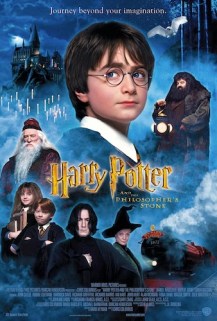 Originally created for the film’s US TV premiere in May 2004, then later released on the film’s Ultimate Edition in 2009 (and not making it to the UK in HD until the Wizard’s Collection last September), this Extended Version of the first Harry Potter film adds six-and-a-half minutes of new bits and bobs to the already lengthy adaptation.
 (See all of that with pictures
 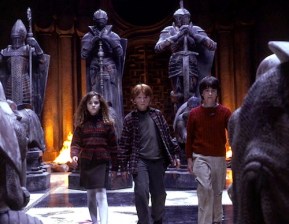 that wasn’t common practice back at the turn of the millennium (unless your name was Ridley Scott), so the filmmakers can’t be blamed for not doing it. As it stands, I think they mostly struck a fair balance between fidelity and the fact it’s an adaptation. Similarly, Columbus’ direction is rarely exemplary, but it’s competent with some memorable moments.
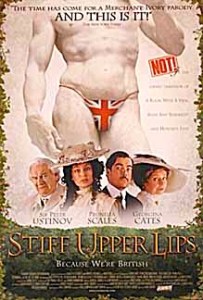 Spoof of British ‘Heritage’ films and TV series, particularly the work of Merchant Ivory. It was probably a bit belated: released in 1998, you’ll note most targets are from the ’80s. It only even made it to TV recently (I watched on
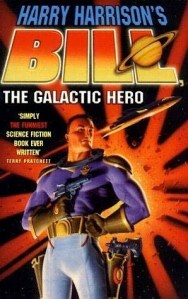 (described by no less than Terry Pratchett as “the funniest science fiction book ever written”), and he’s trying to fund it through
 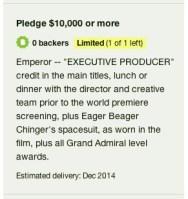 What’s on offer varies from project to project, of course. In
  Kurt Russell gets embroiled in a fever dream of mystical Chinese tomfoolery in San Francisco’s Chinatown in this cult ’80s adventure from writer/director John Carpenter.
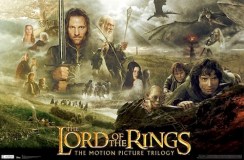 Of course. Some would argue it’s cheating to include an entire trilogy as one film, but Jackson made it as one film and it’s really a single tale that has to be divided to make it possible in cinemas, both financially and for the sake of the audience’s posteriors. But I’ve watched it in a single sitting, something I’ve not managed with some much shorter works, so that makes it OK by me. And I’ve spent all my words here saying that because, really, do you need me to tell you why this tops the list? (Not that this is a ranked list. But if it were, this would top it.)
 I did think my main rule for this list would be “set at least partly in an alternate world” (see things like Narnia and Stardust), but that would rule out Harry Potter (which is clearly Fantasy) and this. If we’re talking swords-and-sorcery, this definitely has swords and it probably has sorcery too. How else do you explain immortality? Except with some BS sci-fi claptrap in the sequels that no one, not even their makers, wants to remember. It may be campy and ever so ’80s, with the most hilarious array of mismatched accents ever committed to film, but goodness me do I love it.
 A modern, British-tinged take on the tone of The Princess Bride — two elements that give this the edge, for me. It’s also less of a spoof, more of a straight take on a fantasy adventure with an awareness of the comical and a resolute lack of po-faced-ness. There’s a reason Neil Gaiman’s a beloved author, and there’s a reason Matthew Vaughn is a mainstream filmmaker we should all keep a very close eye on.
 This is a bit of a cheat, because it’s actually a two-part miniseries… but in its entirety it’s shorter than Return of the King, and for some inexplicable reason is
 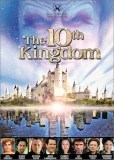 If Merlin was a bit of a cheat, this is a great big one, because The 10th Kingdom is actually a seven-hour miniseries. But tough, because I love it and it’s not well enough known. Here in the UK it aired on Sky back in the days before I had said channel, and so my first encounter was through
 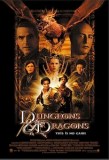 Quite what inspired this turn-of-the-millennium wannabe-blockbuster I don’t know — it came out the year before the double-whammy genre kick-start of Lord of the Rings and Harry Potter… but it feels much more than a single year older. It’s not all bad — some of the scenic effects shots are quite good, and there’s a certain joy in Jeremy Irons’ ludicrously campy performance — but, mostly, it is. The CGI is dreadful, the acting isn’t any better, and the location work makes it look like Power Rangers. If it wasn’t bad enough in itself (which it was), the glossy quality of Rings and Potter just 12 months later revitalised the genre to the point that this was blissfully consigned to ignominious oblivion.
 100Films.co.uk