
Between October 2009 and October 2011, I reviewed every film in the Saw franchise. As it’s Halloween again, it seems a good time to re-post them all to this new blog — one per day in the last week, because I timed it cleverly. Think of this as a kind of personal last hurrah for the ’00s horror staple.
And staple it was, providing one film every year, at Halloween of course, between 2004 and 2010. Indeed, by the time of Saw IV they were using the tagline, “If it’s Halloween, it must be Saw”. The series was at the spearhead of the low-budget high-gore era of horror — the once-ubiquitous term “torture porn” was coined to describe 2005’s Hostel, but it was retroactively applied to Saw. The filmmakers refuted the label, and at the series’ best they’re right. The original film is a small-scale thriller with gory/scary moments — it’s actually a pretty good film, deserving to transcend the reputation its long-running follow-ups have attracted. At its worst, though, the series does plumb the depths of extreme gore for its own sake. Saw III is perhaps the worst example, but that doesn’t excuse some of the other films.
Another factor that marks the films out is their continuing story. Perhaps this will one day be viewed as A Thing of the ’00s — witness how many TV series (especially in the US) moved from obsessively standalone storytelling to serial nature, led by the likes of 24 and The Wire, and cemented by the huge success (in the US at least) of Lost. Though every Saw film presents a standalone story — what I call the “Game of the Film”, as each is a deadly set of tasks (a game) constructed by central villain/anti-hero Jigsaw (or one of his disciples) for some deserving guest character — they quickly become obsessed with their own mythology, doling out variably-sized doses of backstory each time. The early films pretty much stand alone, but by the third and fourth the series is beginning to disappear up its own rear end as it obsessively fills in all the blanks.
The Saw series, unlike so many long-running horror film franchises, really is a series — you can’t dive in and just watch any entry; not if you want it to make sense, anyway. The first two movies are the exception, but the third and fourth take place concurrently and then the franchise moves forward (mostly) through an on-going investigation. Fortunately they were allowed to wrap it up, with Saw 3D (the seventh and final film) bringing the drawn-out story threads to a conclusion. It’s not a wholly satisfying ending (as you can read in my full review), but at least it is one.
The once mega-hit series was killed off by low-budget-filmmaking’s latest fad, the found-footage movie: where once Saw was dominant at Halloween, the sixth film was out-grossed by newcomer Paranormal Activity. That cut short long-term plans for the series (as my review of the fourth film mentions, they once promised at least eight movies), and Paranormal Activity has trundled on as an annual Halloween staple for the 2010s (the fourth was released a fortnight ago). Personally they don’t interest me.
Neither did I think the Saw movies would, really. I’m no gore fiend, nor even a massive horror fan — there has to be something else going on than simply scares to really hold my attention. This is where the first Saw is a real success, because I’d argue it’s actually a thriller with horrific elements; kind of like a B-movie rendition of Se7en, perhaps. Even when it sinks to nasty depths at points that follow, the series retains this thriller element, the (almost-)never-ending story all but ensuring the viewer’s need to continue watching. Even when some of the middle entries dipped, there was always the promise of redemption — the sixth film is perhaps the series’ second-best, for instance. Sadly they couldn’t maintain that momentum for the final entry.
I’m glad the Saw movies came to an end, because with that on-going mythology they really needed an ending. But now they’re done, I kind of miss them a little. Not necessarily enough to sit through it all again… but maybe one day.
My full original reviews of each film, first published between 2009 and 2011, follow:


 Before
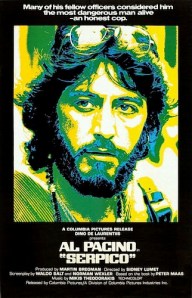
  As the titular copper, it’s a typically strong performance from Al Pacino. Not his best work — I don’t think the part really gives him enough to deliver that — but he’s more often than not the most engaging element of the film. This was his fifth film; considering
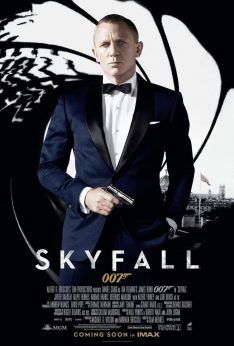 Bond is back, and you’ve surely seen the torrent of 4- and 5-star reviews (and the insignificant handful of dissenting voices). I’m pleased to report that the consensus is correct: Skyfall is Bond at his best.
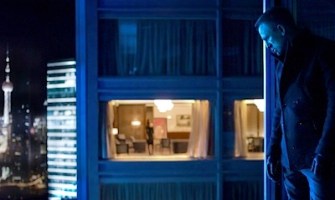 Technically speaking, the film looks gorgeous thanks to Roger Deakins’ cinematography. Best looking Bond ever? There’s little I can think of to dispute that. Obviously it could be said to lack some of that ’60s glamour, but from a purely photographic perspective, it shines. (Incidentally, this shot isn’t actually in the film.) I’m less sold on Thomas Newman’s score. While in no way bad, and with undoubted sparing but precise use of the Bond theme, it didn’t always click for me. The fact I at times felt like I was listening to cues from
 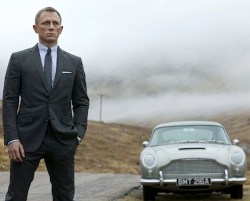 honestly, there perhaps aren’t as many twists as you might expect in that department, but the ways they’ve nodded to the franchise’s history are sublime.
  Lewis Gilbert is the director of
 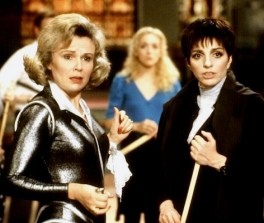 The standout from the cast is probably Julie Walters, in a relatively early big-screen role. Considering how well-known she is now she seems quite lowly billed and little-featured, but bearing in mind this is a US production from the early ’90s, it’s less surprising. She’s very good (isn’t she always?) as the group’s newest member, a posh English lady who sticks her oar in and is a bit too blunt with her comments. I seem to remember her generating most of the laughs in this comedy-drama, although that’s not to disparage anyone else’s work.
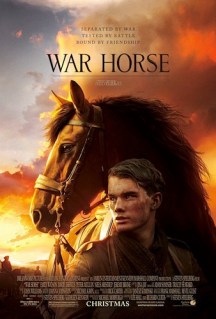 After decades telling tales from the Second World War, Spielberg moves back a conflict. That said, the BD’s special features make sure to point out this “is not his First World War movie” — it’s just a good tale about a boy and his horse.
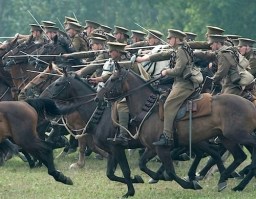 It can’t be denied that there’s factual inaccuracy here (the climax takes place at the Somme in the lead up to Armistice Day in 1918, but that battle was actually fought in 1916), or the occasional heavy dose of sentimentality (it’s directed by Spielberg and co-penned by Richard Curtis — what did you expect?), but I think it carries through these with a scale and heart that is, primarily, entertaining. It is based on a children’s novel and I think aims to be a family film (it should by rights be a PG; my twitter rant on that subject is
  Aiding the sense of the epic is Janusz Kaminski’s cinematography, which is regularly stunning and definitely one of the film’s standout achievements. The beauty of some shots is immediately obvious — he lenses the countryside idyll of Dartmoor in a sweeping fashion, bathed in summer sunlight — but there are striking compositions to be found throughout, be they in close-ups, cavalry charges, horse auctions, battlefield hospitals… There’s often a lovely texture to things too, from the likes of drifting snow or chaff, or the way light streaks across a room. The final scene, fully tinted orange, calls to mind the likes of
 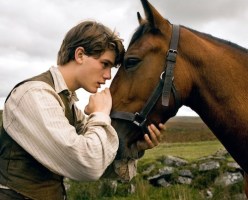 one that isn’t afraid to depict some of the nastier realities of the world, but in a way that makes them relatable for a younger audience. I think that’s important; but this isn’t a Worthy Film for that, it’s just something it does well. I think it also nails sensations of adventure and, yes, sentimentality.
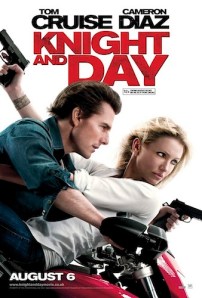 James Mangold is one of those filmmakers with a thoroughly eclectic CV, taking in crime thriller
  Knight and Day is nothing deep or revelatory or groundbreaking, but if you were expecting it to be then more fool you. If you can’t abide Cruise or Diaz (and I know some people really can’t) then it should certainly be avoided, but those caveats aside I thought it was good fun. No classic, and far from destined to be a standout on Mangold’s multi-Oscar-winning filmography, but an appropriately entertaining couple of hours.
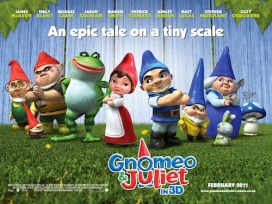 Gnomeo & Juliet is the latest British attempt to crack the lucrative CGI animated kids’ movie market, after the lack of success (or, alternatively, failure) from the likes of
 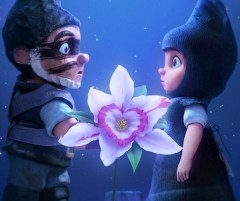 My only other note is that it ends with a truly awful cover of Crocodile Rock by Nelly Furtado. A storyboarded “all’s well that ends well” ending (included on the BD, and the DVD for all I know) looks much better.
 Following the surprise success of
  Hitler (aka Bruno Ganz) and a cool exit; a really good car chase; and a couple of solid punch-ups, including a particularly good one at the climax.
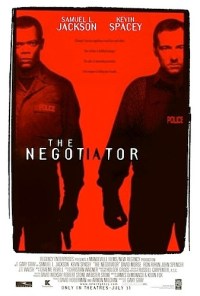 As premises go, “hostage negotiator turns hostage taker” is a doozy. You can immediately imagine all the drama to be had from pitting The Best Negotiator In The World (because it’s a movie — it’s going to be the best one that goes rogue, isn’t it) against The Second Best Negotiator In The World — he’ll know all the techniques! He’ll… well, mainly the techniques one. But also his colleagues will be working against him — will they be on his side? Or against him? It practically writes itself.
 but before that it sets up the characters and gets them on the bus, and the third act goes off-bus for a climax. Similarly, The Negotiator‘s first act gives us a day-in-the-life case for maverick negotiator Jackson, before putting him in his predicament; it toddles along, extending the hostage situation part with some tense and/or exciting sequences; and then the third act sees our hero set off to find the proof he needs.
 100Films.co.uk