
Anatole Litvak | 85 mins | TV
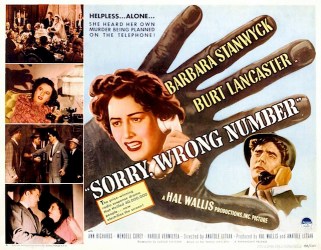 A film noir screenwritten by Lucille Fletcher, “based on her famous radio play” — I love how old movies have credits like that. It sounds like pure hyperbole, but in this case seems to be justified: the original play was broadcast in May 1943 but was so popular they chose to re-stage it with the same lead, Agnes Moorehead, a total of seven times up to 1960. Seven!
It’s easy to see how it would work on radio: the plot is primarily characters talking on the phone, though in this case there are flashbacks and visuals to flesh it out. And there are flashbacks within flashbacks too, just to keep us on our toes. Naturally it’s based around a series of mysteries related to our bed-ridden heroine, who overhears a threat on someone’s life and begins to wonder if it’s actually about her. So we wonder, what is her illness? Is it relevant? Is her paranoia a symptom? All are well played, mixed up with possible reasons and motives for her being murdered, which also shift around neatly.
Barbara Stanwyck portrays a not-very-sympathetic lead character, which makes the viewer question how we feel about her possibly being murdered. We should be against it, but she’s not nice, but she is ill, and her whole life’s falling apart down the phone… 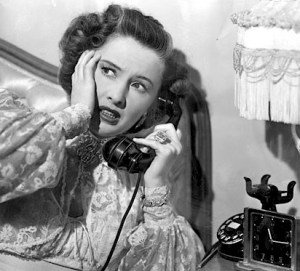 As if keeping us guessing wasn’t enough, our feelings are shifting in this respect too. Arguably it unravels a little late on — when Evans is explaining his part to her, it’s getting a bit implausible — but it’s all redeemed by the finale.
The film concludes with a hair-raising final sequence. I reckon it must be among the most tense, scary and chilling sequences in all of cinema, certainly that I’ve seen. It’s not so much the performances, or the shadow on the wall, or the screeching music — though they all contribute — as the fear of the actual situation: your home, your personal, private, safe space, being invaded, and the first you know of it is an all-too-solid shadow on the wall, coming up the stairs to get you… It’s horridly brilliant.
Most of Sorry, Wrong Number is very good. If that wasn’t enough, the finale cements it as a memorable must-see.

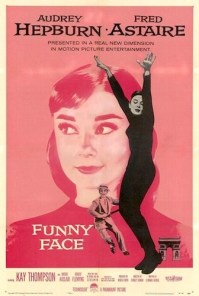 Like
Like 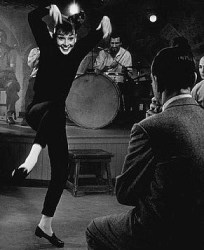 or dismissed the dullness of philosophy for the glamour of couture, but it takes fair jibes at both equally — it’s not mean-spirited or cynical or dismissive, just… quite true.
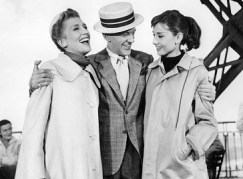 Funny Face seems to have plenty of critics — mainly on the notion that Hepburn could be said to have a funny face. Pretty shallow reason to dismiss a whole film, if you ask me. While there are couple of bits that don’t wash with my appreciation — the age gap; I could take or leave the two scenes at the church — there’s far more to love about the film.
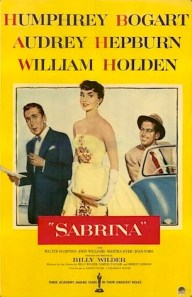 Audrey Hepburn’s next leading role after her star-making turn in
 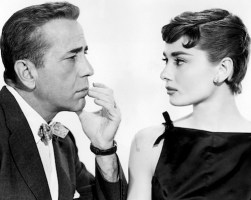 But it actually feels very mean-spirited — Sabrina is likeable enough that we dislike his machinations. Which means that, for me anyway, there’s no truly supportable lead character. And then at the end he genuinely falls for her, which I found an equally implausible development — as well as seeming totally out of character, it did nothing to redeem what had come before. And he’s old enough to be her dad.
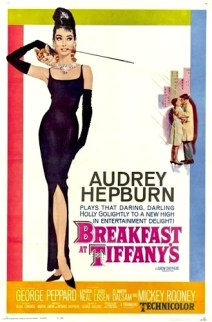 Breakfast at Tiffany’s is a stonkingly famous film — it’s the one most of the famous images in the cult of Audrey Hepburn come from — this despite the fact that, as
  but it works here, especially when sung plainly by Hepburn.
 Following Valentine’s Day — yes, I’m talking about way back in February — Channel 4 attempted a week of Audrey Hepburn films. Except for some reason they didn’t schedule one for Monday. And then Friday’s,
 100Films.co.uk