2010 #100b
Ron Howard | 146 mins | Blu-ray | 15
 Back in this blog’s early days, I established the rule that where a different cut of a film was not significantly different to the original version it wouldn’t be counted towards my total (assuming I’d seen the original, that is — if it’s the first time I’ve seen any version of the film, it still counts). There’s no hard criteria for what counts as “significantly different” though. A couple of additional minutes? No. A lot of additional minutes? Yes. Where’s the line between “a couple” and “a lot”? No idea. Thus far, I’ve left it up to “a feeling”, perhaps not always correctly (the I Am Legend “alternate theatrical version”, for instance, makes quite an impact with its new ending, but I didn’t give it a new number).
Which more-or-less brings us to the extended cut of Angels & Demons, which I first saw in the cinema in May 2009. This version is 7½ minutes longer than the “theatrical version” also contained on the Blu-ray disc, though it’s worth noting that’s the US theatrical version — the UK one was trimmed for violence. That’s not a hugely increased running time, true, but it has potential to make a difference. As I expect you’ve guessed from the lack of new number, in practice it doesn’t.
There are changes, of course there are, and they’re outlined here (though I swear I saw some of those bits in the cinema), but as you can see, most are barely noticeable — that list memorably describes one bluntly as a “useless extension”. While watching I wondered if the violence had been extended (I was right), and there was one line I found particularly funny which I thought I’d’ve remembered (indeed, it’s new),  but other than that if you’d told me this was the cut I watched in cinemas I’d believe you. This longer cut doesn’t make the film better or worse, just less suitable for younger viewers.
My general thoughts on the film aren’t much different to last time. Though I must be sure to mention Pierfrancesco Favino as Inspector Olivetti, the Vatican policeman who is actually one of the film’s best characters, injecting a modicum of charm and humour into proceedings while snatching almost all the best lines (not that there are many).
The tale moves at a pretty rollicking pace without attempting to force a sense of speed. From my point of view, a good hour shot by in what felt like half the time. I don’t think the perceived speed is because this was a second viewing, because I did notice it the first time, I just didn’t have a handy timecode ticking away next to the screen then. The chase structure and constant deadlines help ensure the pace rarely lets up as characters dash from one set-piece to the next. It doesn’t make for a deep or thoughtful movie, despite some of the ideas and history that are tossed around, but it does make for a moderately exciting thriller.
In this respect — that it’s an action-based thriller rather than a lot of talky theorising — I think it translates better to the screen than The Da Vinci Code did. That said, I’ve still not read the novel, so can’t comment on faithfulness. Wikipedia suggests it’s very close, though with a few appropriate modifications that don’t impact on the plot a great deal.
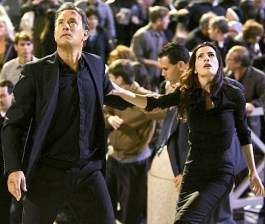 It’s still riddled with flaws, mind. Some of the dialogue is fairly atrocious (but at least it’s only some); exposition is often blatant and repetitive (we’re told what the preferiti are three or four times in as many minutes); some of the deductive leaps are a bit much; and the whole antimatter bomb still seems scientifically suspect. It all depends how much you’re willing to forgive, really. In a similar vein, one of the most contentious issues of Dan Brown’s novels is his use of “truth”. He mixes well-researched fact with his own creation at will, often leaving you to wonder if what you’re hearing is pure truth, truth bent to the plot, or a total fabrication. But then this isn’t a history or art lesson, it’s a mystery thriller, and if one wants to know more I’m sure there are books to read and documentaries to watch.
In short, then, the Angels & Demons extended cut is basically the same as the theatrical version. If you enjoyed that then you might want to seek this out for your next viewing, just because why not? If you weren’t impressed before, however, there’s no special incentive to try again.
My original review of Angels & Demons can be read here.

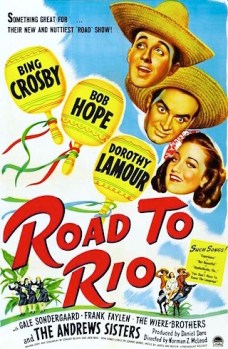 Bing Crosby, Bob Hope and Dorothy Lamour return for the fifth film in the Road to… series.
 I’ve awarded to each belies how much I enjoyed them, with Morocco in particular worth a fourth. But I think it’s also fair to say these films are a rather dated style of entertainment. That’s not necessarily a bad thing — as noted, I still think they’re fun, and I’m sure many others do and would too — but plenty of modern viewers would find them (to be polite) too quaint.
 Daylight is a disaster movie; the kind they apparently made lots of in the ’70s, and has seen a revival (to some degree) thanks to Roland Emmerich and his brand of apocalypse-bringing. This was made in the ’90s though and, lacking any self-aware qualities, might be seen as a throwback. Whether that matters is probably an issue for more well-versed disaster movie fans than I.
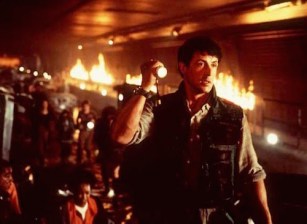 Which Characters Would It Be Most Tragic To Lose and started to work his way through them until he reached the end of the screenplay. I suppose it’s flat-out good advice for a disaster movie, but, try not to get too attached.
 inadvertently overshadows the whole film. I suppose any shot of the Center calls up those memories now, but it’s unfortunate that this one comes at the end of a disaster movie.
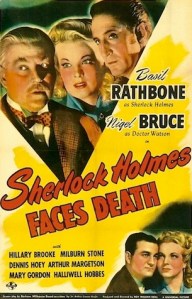 He’s put down the
 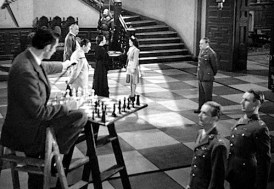 Relocated in the war years, the Musgrave manor is currently a home for convalescent soldiers, providing no end of potential suspects. Some may guess the culprit from the off, others will land upon them at other places throughout proceedings, but it seems to me there’s still enough going on to keep us guessing.
 100Films.co.uk