2009 In Retrospect

Introduction

2009’s well and truly over (well, aside from the 20 reviews I still haven’t posted), so it’s time to reflect on what has been.

It’s been a somewhat inauspicious year for 100 Films, actually, failing to make the titular target for the first time and not necessarily seeing a great many classic films along the way. 2007’s Top Ten held undeniable classics like Brief Encounter and Citizen Kane, while 2008’s managed the likes of Rashomon, Notorious, and the 9th greatest film of all time [as of 2015, it’s gone back up to 4th]. I don’t mean to spoil this year’s lot, but it looks kinda tame and modern (70% come from the last three years) by comparison.

Equally, whereas the first two years saw just a single one-star film each, this year (as noted in my previous summary post) I’ve awarded four. Clearly my recent viewing choices leave something to be desired — indeed, for all of this I have only myself to blame.

In case you forgot…

As regular readers are undoubtedly aware — but it doesn’t do any harm to re-emphasise — both the Bottom Five and Top Ten are based on what I’ve seen for the first time this year, not what was released this year (hence why I was wittering on about not having many all-time-classics to include). To this end, you can see the list of contenders here, which I’m certain includes some that are bafflingly absent from what follows.

Each of the Top Ten comes with a further recommendation, also plucked from this year’s viewing, of a film that is in some way similar. Why? I’m not sure, it just seemed a good idea. They are not numbers 11 to 20 in my favour.

And with that out of the way for another year, here are the lists:

The Five Worst Films I’ve Seen in 2009

Hannah Montana/Miley Cyrus: Best of Both Worlds Concert Tour
My original review was more verbose than this ‘movie’ deserves, so let me sum it up in one word: tosh.

AVPR – Aliens vs Predator: Requiem
AVP was pretty rubbish, but AVPR performs the impressive feat of turning its predecessor into a pleasurable memory. As I said in my original review, “the inconceivably thorough degradation of a once-great franchise is its greatest crime.”

Alone in the Dark
Makes AVPR look good. Actually, it doesn’t — I don’t think anything could — but if forced I’d still rather re-watch those franchises being destroyed than suffer through this incomprehensible and unexciting mess another time.

Sarah Silverman: Jesus is Magic
Comedy should be funny. That’s pretty much a basic principle, I’m sure everyone will agree. Whether it’s also cutting-edge, old-fashioned, gentle, satirical, offensive or comfortable, it at least needs to be funny. Which, in this film, Silverman isn’t.

Sherlock: Case of Evil
This wins the final spot over the likes of Transporter 3, The Man in the Iron Mask, The Red Riding Trilogy and Cinderella simply because it was so wiped from my mind I had to look up my own review to remember what it was. Case of Evil is moderately passable in itself, but by being literally forgettable it earns a place here.

The Ten Best Films I’ve Seen For the First Time in 2009

10) Rage
Just sneaking in at the outside edge of my top ten is Rage. It looked like a film I wouldn’t really enjoy — a full feature-length of fashion industry people nattering to camera while exciting events took place off screen — but a high-quality cast and the fact it was free persuaded me. I’m glad it did, because I actually enjoyed it immensely. Sometimes I do like gimmicks, and this one works.
See also: The Knack …And How to Get It, because it’s the next-most experimental/arty thing (that isn’t also in this top ten).

9) Alien Resurrection
I ummed and ahhed over this, but in the end Resurrection beat the other two Alien sequels into my top ten. Is Aliens a better film? Probably. Well, certainly. But Resurrection is under-loved and, in my view, a little gem… in it’s own twisted, dark kind of way.
See also: Aliens, obviously.

8) Culloden
The faux-documentary is everywhere these days, but few are quite as original as Peter Watkins’ 1964 effort. Instead of comedically covering a fake band/movie/dog show, Watkins presents a real historical event as if it’s been covered by a modern-day current affairs programme. The concept is executed consistently and flawlessly, while even on a small BBC budget he manages to craft epic and affecting battle scenes.
See also: Paths of Glory, for more wartime miscarriages of justice.

7) Star Trek
I’m no Star Trek fan, and that’s one of the main reasons this latest franchise entry makes my top ten: it’s not the Second Coming some seem set on celebrating it as, but it’s a fine action-adventure that I actually enjoyed — more than I can say for most of Trek. It’s also distinctly fun, in the bright, colourful, occasionally a little silly vein, a quality that’s in disappointingly short supply among modern blockbusters.
See also: Avatar, also bright and colourful, but woefully over-hyped.

6) Rock n Roll Nerd
Perhaps enjoyment of this depends on your opinion of Tim Minchin, but even if you’re not a fan (yep, I hear there are some people who don’t like him) it remains an interesting glimpse behind the scenes of the world of stand-up comedy (part of it anyway), alongside the journey of a sudden rise to fame and a sweet domestic ‘subplot’.
See also: Commentary! The Musical for more behind-the-scenes-styled comedy songs.

5) For All Mankind
Two documentaries mark the mid-point of this year’s top ten, but this just edges in the lead because of its Importance and poetic beauty. The story of the Apollo missions is told effectively if sparely, but it’s the visuals that are the real joy here.
See also: In the Shadow of the Moon tells the same story, but with the astronauts’ recollections decades later.

4) Son of Rambow
There’s something about Son of Rambow… The shape of the story is familiar, the lessons learnt hardly new, and some of the sillier subplots rub incongruously against the realist primary narrative. And yet none of that matters because it’s beautifully written, directed and performed, full of skill and charm, amusing and moving in equal measure. And personally, I quite like barmy subplots.
See also: Stand By Me, another set-in-the-past boyhood coming-of-age tale.

3) Watchmen: Director’s Cut
I’ve barred myself from giving this the top spot because, as noted in my review of the theatrical cut, I still can’t be certain my opinion of the film is divorced from my opinion of the novel: so faithful is Snyder’s adaptation, so indicative was the trailer and other pre-release coverage, that even watching it for the first time it felt like I’d seen it before. It’s flawed, but it’s also brilliant.
See also: Batman (1966), an equally divisive superhero movie. Totally different, mind.

2) In Bruges
Looking over my whole top ten this year, there’s a bit of a “it’s not for everyone” theme developing. With its foul language, extreme violence, politically incorrect humour and somewhat inconclusive ending, In Bruges undoubtedly falls into that category. But for anyone who can stomach those things it’s a wonderfully entertaining film in every respect. A bit like my #1…
See also: Ripley’s Game, another Europe-set hitman thriller with a comic edge.

1) Inglourious Basterds
Tarantino’s latest seems to have been quite divisive with audiences, possibly due to misaligned expectations. As a blast — or, rather, several blasts — of pure cinema, resplendent with a cornucopia of irregular screen tricks and motifs scattered throughout with carefree abandon, it’s an awful lot of fun. Unlikely to best Reservoir Dogs or Pulp Fiction for mainstream acceptance, perhaps, but there’s something for every kind of cineast in here.
See also: The Thief of Bagdad, equally episodic, playful and joyously filmic.

Special Mentions

As ever, I can’t end this without mentioning the 17 films that earned themselves 5-star ratings this year (including some that are yet to have reviews published). Six of them made it into the top ten: For All Mankind, In Bruges, Inglourious Basterds, Rage, Son of Rambow, and Watchmen: Director’s Cut. Normally I’d just list the others, but first I’m going to pick out two that came closer than most to cracking the top ten: The Great Dictator and The Thief of Bagdad. I suppose that makes them 11 and 12. The remaining nine included: Aliens, Anne Frank Remembered, La Antena, The Apartment, Glory, Paths of Glory, Watchmen (failing to make the top ten because of the Director’s Cut), and Where the Sidewalk Ends.

Finally, the 17th was Blade Runner: The Final Cut. As with Leon last year, I didn’t feel justified including in my Top 10 a film so similar to a version I’d previously seen. As it was excluded from consideration, then, it gets its own paragraph here.

Additionally, I felt five-stars were deserved by a few films I’d seen before (The Birds, Some Like It Hot, Flash Gordon) and one alternate cut (Alien: The Director’s Cut), not to mention two shorts: The Lunch Date and Commentary! The Musical.

More randomly, well done to X-Men Origins: Wolverine for finally putting a film under ‘X’ on my review list; and to The X Files sequel for doubling the number. Just ‘Y’ left to fill…

The Films I Didn’t See

As I’m certain you’re aware, this isn’t a Top 10 of 2009 (only of my 2009), but new films do feature, and with that in mind there were a number of notable releases that I’ve yet to see.

In my annual tradition, then, here’s an alphabetical list of 50 films (listed as 2009 on IMDb) that I’ve missed this year. These have been chosen for a variety of reasons, from box office success to critical acclaim via simple notoriety.

2012
(500) Days of Summer
9
The Boat That Rocked
Brüno
A Christmas Carol
Coraline
District 9
Drag Me to Hell
An Education
Fantastic Mr. Fox
Fast & Furious
The Final Destination
G.I. Joe: The Rise of Cobra
Glorious 39
The Hangover
The Hurt Locker
Ice Age: Dawn of the Dinosaurs
The Imaginarium of Doctor Parnassus
In the Loop
The Informant!
The International
The Invention of Lying
Invictus
Jennifer’s Body
Julie & Julia
Knowing
Monsters vs. Aliens
Moon
Nine
Paranormal Activity
The Princess and the Frog
The Proposal
Public Enemies
Push
The Road
A Serious Man
Sherlock Holmes
The Soloist
St. Trinian’s 2: The Legend of Fritton’s Gold
The Taking of Pelham 1 2 3
Taking Woodstock
Terminator Salvation
This Is It
The Time Traveler’s Wife
The Twilight Saga: New Moon
Underworld: Rise of the Lycans
Up
Where the Wild Things Are
Year One

A Final Thought

“It’s the end, but the moment has been prepared for…”

See, 2010’s already begun!

2009: The Full List

Introduction

So, 2009… the first year I failed to reach my stated goal. Still, I saw 94 new films and bothered to review several others — and here’s a full alphabetical list of the lot of ’em!


The Full List

Airplane! (1980)
Aliens (1986)
Alien³ (1992)
Alien Resurrection (1997)
Alone in the Dark (2005)
An American in Paris (1951)
Angels & Demons (2009)
Anne Frank Remembered (1995)
La Antena (2007)
The Apartment (1960)
Ashes of Time Redux (1994/2008)
Avatar (2009)
AVP: Alien vs. Predator (2004)
AVPR – Aliens vs Predator: Requiem (2007)
Babel (2006)
Batman (1966)
Big Nothing (2006)
Blade Runner: The Final Cut (1982/2007)
Brute Force (1947)
Children of Heaven (1997)
Cinderella (1965)
Copycat (1995)
Culloden (1964)
Dark Floors (2008)
Eastern Promises (2007)
Exiled (2006)
Fatal Instinct (1993)
A Few Good Men (1992)
Flags of Our Fathers (2006)
Flesh for Frankenstein (3D) (1973)
For All Mankind (1989)
For Your Consideration (2006)
Friday the 13th Part III (3D) (1982)
Glory (1989)
The Great Dictator (1940)
Hamlet (2009)
Hannah Montana/Miley Cyrus: Best of Both Worlds Concert Tour (3D) (2008)
Hard Candy (2005)
Harry Potter and the Half-Blood Prince (2009)
High Anxiety (1977)
High Society (1956)
In Bruges (2008)
In the Shadow of the Moon (2007)
Inglourious Basterds (2009)
Insomnia (2002)
Jumper (2008)
The Kite Runner (2007)
The Knack …And How to Get It (1965)
The Lady from Shanghai (1947)
Lethal Weapon (1987)
The Man in the Iron Mask (1998)
Marnie (1964)
Michael Clayton (2007)
Murder on the Orient Express (1974)
No Country For Old Men (2007)
Paths of Glory (1957)
Predator 2 (1990)
Rage (2009)
Red Riding: 1974 (2009)
Red Riding: 1980 (2009)
Red Riding: 1983 (2009)
The Right Stuff (1983)
Ripley’s Game (2002)
Rock n Roll Nerd (2008)
Runaway Train (1985)
Sarah Silverman: Jesus is Magic (TV edit) (2005)
Saw (2004)
Saw II (2005)
Saw III (2006)
Saw IV (2007)
Seance on a Wet Afternoon (1964)
Shadow of the Vampire (2000)
Sherlock (2002)
Sherlock Holmes in Washington (1943)
Sky Captain and the World of Tomorrow (2004)
Solaris (2002)
Son of Paleface (1952)
Son of Rambow (2007)
Stand By Me (1986)
Star Trek (2009)
State of Play (2009)
Stranger on the Third Floor (1940)
The Taking of Pelham One Two Three (1974)
There Will Be Blood (2007)
The Thief of Bagdad (1940)
Transformers: Revenge of the Fallen (2009)
Transporter 3 (2008)
Wallander: Before the Frost (2005)
Wallander: Mastermind (2005)
Watchmen (2009)
Watchmen: Director’s Cut (2009)
Where the Sidewalk Ends (1950)
The X Files: I Want to Believe – Director’s Cut (2008)
X-Men Origins: Wolverine (2009)

Alternate Cuts
Alien: The Director’s Cut (1979/2003)

Other Reviews
The Birds (1963)
Flash Gordon (1980)
Predator (1987)
Some Like It Hot (1959)

Shorts
Commentary! The Musical (2008)
Cut (2009)
The Gruffalo (2009)
The Lunch Date (1990)
The World of Tomorrow (1998)
The Wraith of Cobble Hill (2005)


The Full Statistics

In the end, I watched 94 new feature films in 2009, the first year I’ve failed to reach 100.

I watched three features I’d seen before that were extended or altered in some way. Two of them even factored in the main list. I also reviewed four films I’d seen before. (All 99 films are included in the statistics that follow, unless otherwise indicated.)

I also watched six shorts this year, which by some coincidence falls exactly mid-way between the number I saw in 2007 and the number I saw in 2008. Exciting stuff. (Shorts aren’t counted, except the total total running time.)

The total running time of new features was 166 hours and 51 minutes. The total running time of all features and shorts was 177 hours and 44 minutes.

I saw 6 films at the cinema this year, including, for the first time, one in 3D. That’s far beaten by the number of new films I saw on DVD though, which stands at 29 (rising by just one if counting extended/altered films, five if counting all features). Surprisingly, however, that’s also soundly beaten by the number I watched on TV: 44, including 8 in HD and, appropriately, 3 in 3D. This compares to 14 in 2007 and 10 last year, making 2009 a highly unusual year by comparison. Otherwise, I watched 8 via download, 6 on Blu-ray and 1 via online streaming, which is a first (for a feature-length film) for me. VHS has finally disappeared however, dropping steadily from five in 2008 to two last year, and now to zero.

The most popular decade this year was, as ever, the 00s, with 51 films. Of the rest, 10 were made in the 90s, 12 in the 80s, 5 in the 70s, 8 in the 60s, and 6 each in the 40s and the 50s. The oldest film on this year’s list dates from 1940. (Where alternate cuts offer up multiple decades (Ridley Scott, I’m looking at you) only the decade of production/original release is counted.)

My average score was 3.7, equal to 2007’s and 0.1 higher than 2008’s. Seems I’m consistent. This year that average comes from 21 five-star films (up on both previous years) and 4 one-star films, the first year I’ve doled out more than one of the latter. The majority of films, as usual, scored four stars (there were 42 of them this year). There were also 21 three-star films (down on 2008, which was down on 2007) and 11 two-star films (in the same ballpark).

15 films appear on the IMDb Top 250 Films at the time of writing, which is slightly up from last year. Their positions range from 28th (Avatar) to 231st (Glory). From Empire’s Top 10 of 2009 (only to be found buried away here, apparently) I’ve managed just two. As ever, there are too many other lists around to consider them all.

At the end of both 2007 and 2008 I included lists of 50 notable films I’d missed from that year’s releases. With all of 2009 taken into account, I’ve managed to see four more from 2007 (bringing the total number seen from that 50 to just 21), and, equally, a mediocre four from 2008’s list (shamefully, I actually own or have recorded 14 of the remaining 46). Hopefully further films from both lists will crop up in 2010.

A total of 87 directors appear on this year’s list, as well as two partnerships (both pairs of brothers) and two directing teams. Topping the list of those with multiple films is Darren Lynn Bousman with three (all Saw sequels), while there’s two apiece for James Cameron, Alfred Hitchcock, Rob Reiner, Ridley Scott and Billy Wilder. Zack Snyder also appears twice, with two cuts of the same film.

35 of the films are currently in my DVD/Blu-ray collection (plus four of the shorts).


Still to come…

I’m not done with 2009 yet. Aside from 21 outstanding reviews (by which I mean they’ve yet to be posted, not that they’re exceptionally good), there’s my Top 10 and Bottom 5 of what I saw this year. All of that to follow shortly… or, y’know, one day…

Culloden (1964)

2009 #48
Peter Watkins | 69 mins | TV | 12

CullodenCulloden tells the story of the 1746 battle — famously, the last fought on British soil — and the events that followed it, as if it were covered by a modern TV news report (albeit a feature-length one).
This adopted style — a first — makes for an effective presentation. As a form it obviously foreshadows the docudrama, a method of presenting history which is so popular today, though not quite in this way. Writer/director Peter Watkins gratifyingly refuses to break from his premise: the whole film is very much like an extended news piece, featuring interviews, facts, and the famous BBC objectivity — at no point does the narration inform us who is good and bad, right and wrong, yet leaves us with little doubt about Watkins’ opinions (which are pretty low of just about everyone).

In fact, the film is fuelled by much youthful righteous indignation from Watkins, in his late 20s when Culloden was made. That said, his (perhaps unrealistic) idealism is still in evidence in every interview I’ve seen with him from decades later (though in those cases applied to what TV is and should be). But he allows it to dominate proceedings here, too often focusing on the awful conditions of the poor or the wrongs committed against them by Nasty Rich Folk. Should we be cross about this? It is 1746 after all — of course life was awful for common folk and the upper classes were rich twits who rode roughshod over them. That’s how things were in The Past, for thousands of years before it and hundreds of years after. With our modern developed sense of morality it all looks Nasty and Wrong, but we can’t go back and change it so why get so upset about it? Surely such vitriol is better directed at places where this is still the case?

While Watkins’ righteousness is clearly present before and during the battle, it’s really let loose in the aftermath, as English soldiers commit all sorts of atrocities to the Highlanders. Perhaps this was genuinely shocking and deserved in ’64, and it’s still true that the actions taken were unforgivably horrid, but it’s no longer shocking — not because we’re desensitized to violence at this point, but because we’re now very aware that we have done horrendous things throughout our history even while painting ourselves as the good guys (as we still do today, of course). Early on he describes the workings of the clan system, ostensibly factually but with a clear undercurrent of its unfairness; yet at the end bemoans its destruction by the English. Maybe this is why Watkins struggles to find anyone likeable in the film: they’re all as bad as each other.

Even if his overly moral stance falters, Watkins’ filmmaking techniques rarely do. The use of ordinary people as actors works fine most of the time, though occasional performances or scenes show off the cast’s unprofessional roots. Watkins’ theories about how TV should be run and the involvement of the public in the way he did here may be romanticised and impractical, but it’s hard to deny that his application of them worked wonders. Performances frequently aid the documentary effect by seeming just like those in genuine interviews or news footage, whereas even the best professional actors trying to emulate such reality are usually mannered enough for the viewer to realise they’re acting.

Best of all, however, is the titular battle. These scenes are extraordinary, creating a believability even the largest Hollywood budget has often failed to challenge. It’s epic but also involving, disorientating but clearly told, brutal without needing expensive prosthetic effects or an 18 certificate. It’s a brilliant example of camerawork, sound design and editing combining under inspired direction to create a flawless extended sequence.

Culloden was a bold experiment in filmmaking — indeed, the notion of a distant historical event being presented as if covered by news cameras still sounds innovative — and Watkins mostly pulls it off, with stunning battle sequences, effective performances and a high concept that is never betrayed. A few minor weak points aside, the only serious flaw is that Watkins lets his overdeveloped morality run unchecked. His application of a modern outrage to what seems a typical historical situation grates quite quickly but never abates, ultimately reclaiming a star from what is nonetheless an exemplary effort.

4 out of 5

Culloden placed 8th on my list of The Ten Best Films I Saw For the First Time in 2009, which can be read in full here.

Cinderella (1965)

aka Rodgers and Hammerstein’s Cinderella

2009 #91
Charles S. Dubin | 78 mins | TV | G

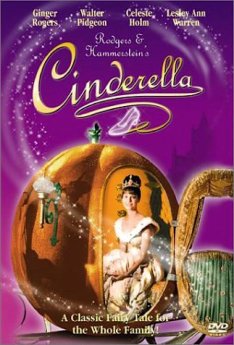
CinderellaThis clearly made-for-TV adaptation of Rodgers and Hammerstein’s Cinderella (the second of three, to date) is a rather weak affair, easily demonstrating why no one seems to remember it.
The story is almost a scene-for-scene recreation of Disney’s version at times, although considering the limited variation in adapting the story — unless one decides to get quite radical or flesh it out, that is — that’s forgivable. The cast are largely unmemorable, the exceptions (not for good reasons) being Stuart Damon, whose acting is poor but singing is fine, and Ginger Rogers, who is barely noticeable as the Queen, particularly as she doesn’t do what she was most famous for. Fair enough, she was in her 50s, but the only other reason for her presence is to provide a star name at the top of the cast list. And Celeste Holm I recognised from High Society, which is neither here nor there.

Dubin does the best he can with TV studio limitations, using colourful painterly backdrops and trying to find some variation in camera angles, but it’s largely as flat as the sets. The musical numbers are quite entertaining, if mostly insipid, not that any approach R&H’s best anyway. I couldn’t tell you much about any of them within a few hours, never mind longer.

Anyone combating the might of a Disney classic is going to struggle, but that doesn’t prevent a decent effort from being produced. Between a below par set of songs from Rodgers and Hammerstein and weak staging, this Cinderella doesn’t even come close to that.

2 out of 5

The World of Tomorrow (1998)

2009 #69a
Kerry Conran | 6 mins | Blu-ray | U

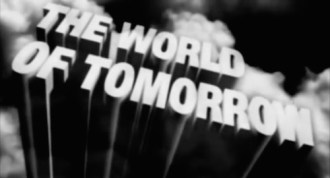
The World of TomorrowBefore Sky Captain, there was this: a six-minute reel, shot, edited and, er, special-effects-ed, by Conran on an amateur basis over four years, demonstrating the production techniques and storyline he had in mind for a feature-length homage / reimagining of ’40s cinema serials.

We’re used to incredibly impressive home-crafted effects-laden films these days, but keeping in mind this was finished 11 years ago, it’s quite impressive. Judged now, it’s clearly the very early days of such composited digital filmmaking, lacking some of the complexity and flair we now see. What it does still suggest is that, given a full budget, such an idea has potential, both in terms of the method and the retro-sci-fi ’40s-serial-style story. Certainly, in my opinion, it did produce a very entertaining film in exactly that vein.

In comparison to its big brother, nearly every shot is exactly duplicated in the final film. In fact, most don’t look much more primitive here. The resolution’s lower, it’s perhaps a bit jagged round the edges, and it’s in deliberately dirtied black and white rather than the glowing sepia-hued colour of the feature, but it shows the concept worked from the off.

The World of Tomorrow isn’t a great film in its own right — indeed, as the closing captions suggest, it’s really an extended trailer / proof of concept for something bigger. In the latter regard it shows all the requisite promise, and thankfully someone in the industry noticed too.

3 out of 5

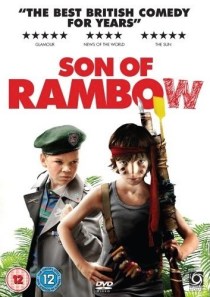
Son of Rambow (2007)

2009 #35
Garth Jennings | 92 mins | DVD | 12 / PG-13

Of late I’ve posted several reviews resorting to taking my notes and turning them into sentences — this is why I probably should’ve stuck to my old post-them-all-in-order method. It’s now about nine months since I watched Son of Rambow, and the chances of being able to construct a worthwhile assessment from a combination of notes and memory has long since passed. So, for hopefully the last time, I offer up a paragraphified version of my brief initial notes.

Son of Rambow is beautifully written and directed, both roles fulfilled by Garth Jennings, who was previously responsible for directing the surprisingly-good (to my eyes) Hitchhiker’s Guide to the Galaxy movie. In contrast to that effects-ridden intergalactic comedy, Son of Rambow initially seems like a relatively straightforward, perfectly pleasant little movie about two boys and their video camera. It’s partly this, but it also brings in subplots of what it means to be a family — on various levels — and the evils of over-zealous religious orders (always a favourite topic for me).

Every significant character is given at least one twist that adds an extra level to them, even those who seem to just serve a specific plot function, and most of the minor ones — right down to Will’s silent grandmother — are given their small moment to shine. Nice little touches in Jenning’s work abound, from the comic asides with Didier to Will’s fertile imagination realised through animation, or the post-credits snippet of dialogue.

The two pre-pubescent boys have to carry the film, but thankfully are up to the task (even if their names being Bill nd Will and one of the characters being called Will (the one that’s played by Bill) make remembering them outside of the film a bit of a minefield). They are never less than utterly believable in both writing and performance. Will Poulter (as Lee Carter, the more rebellious of the two) is exceptional, talented in a way that’s reminiscent of River Phoenix in Stand By Me. It’s no surprise that both have gone on to greater things. And by “greater” I really mean “other”. There are wonderful performances all round in fact — aside from the lads, Jessica Hynes is especially worthy of note, creating a powerful character in just a handful of scenes.

The shape of the story may be familiar (unlikely pair start off wary of each other but become best friends, eventually fall out when one exceeds himself, but realise the error of their ways to come back together in the nick of time) and the lessons learnt are hardly new (true friendship can conquer all), but it’s all put together with immense joy and skill, built around a charming concept, that it becomes far more than the sum of its parts.
Hilarious and touching in equal measure, you’d need a heart of stone to remain unmoved. A triumph.

5 out of 5

Son of Rambow placed 4th on my list of The Ten Best Films I Saw For the First Time in 2009, which can be read in full here.

Originally posted on 14th March 2010.

No Country for Old Men (2007)

2009 #5
Joel & Ethan Coen | 117 mins | DVD | 15 / R

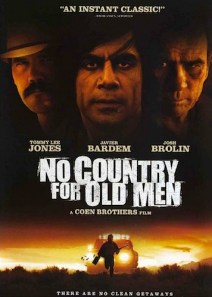
This review contains major spoilers.

When I saw No Country for Old Men, a new round of films were vying for the Best Picture Oscar. Now, as I finally post my review, a whole new load have been nominated, voted on, and await the final result. Sometimes I feel decidedly behind the times.
The first time I watched No Country for Old Men was in a screenwriting seminar. On R2 DVD (the format for said seminar) it runs one hour 57 minutes, but in the two-hour seminar we got through the whole film with plenty of pauses for discussion (of its narrative structure, with particular emphasis on the application of fate/chance/coincidence, if you’re interested). Obviously this entailed skipping chunks of the film to get to the end within the time. I was rather annoyed that our tutor hadn’t bothered to forewarn us this would be the subject of the seminar in such a way, because it meant I had no chance to see the film properly beforehand. Now, watching the film in full, I can clearly see the odd bit we skipped over, yet I don’t feel I missed anything terribly significant.

Cut short or no, it has an excellent use of no music — the Coens still create massive amounts of tension, numerous shocks, etc. It’s highly skilled direction and editing. There are a number of very good scenes along the way (even if the best remains somewhat dulled from constant repetition in the run up to the 2008 Oscars). And it all looks mighty pretty too, especially on Blu-ray (my re-watch format of choice here). The cinematography was probably my favourite part of the film.

As noted, it’s really about Fate, randomness, chance. Some clearly think this brilliant; I remain unconvinced. It lacks satisfaction. Maybe that’s real life — no, that is real life: random and lacking closure and satisfaction. But this isn’t real life, it’s a movie; and a movie with a near-fantasy (or, more accurately, horror) aspect too, in its unstoppable villain; so I think I want my proper tied-together plot, thank you very much, not a de facto hero who’s shot almost at random by a gang who have little to do with the story and a frequently irritating villain who exits the film fundamentally unscathed.

I’ve read one critic assert No Country for Old Men is the only worthy Best Picture winner of the past decade. I’ve seen another argue There Will Be Blood is the only genuine classic produced in the noughties. Any number of them have no doubt espoused similar such views. Critics, eh — always contradictory.

Anyway, No Country for Old Men: thoroughly unsatisfying,

4 out of 5

Originally posted on 5th March 2010.

There Will Be Blood (2007)

2009 #7
Paul Thomas Anderson | 152 mins | DVD | 15 / R

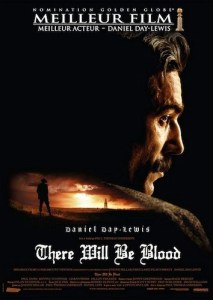
There Will Be BloodI used to consider myself a fan of Paul Thomas Anderson; however, I’ve come to the conclusion that I’m merely a fan of the film Magnolia. As I explained when I covered Boogie Nights, I love Magnolia, thoroughly dislike Punch-Drunk Love, and was ultimately uncertain about Boogie Nights. There Will Be Blood’s significant Oscar nominations and wins seem to have cemented it as Anderson’s most acclaimed work, but I wouldn’t consider myself a fan of this either.
That’s not to say it’s a bad film, but it is at times a baffling one. It makes minimal concessions to its audience from the very start, beginning with an extended montage that covers relatively vast tracts of time with virtually no dialogue, before segueing into a story that introduces and discards characters and events with little hint of their relevance, and eventually makes a huge leap forward for an equally impenetrable ending, all the while under- (or perhaps over-) scored with Jonny Greenwood’s disquieting music, sounding like the THX logo writ large. I can’t help but wonder if I missed something crucial along the way because, even after two and a half hours, I had no real idea what the film was about.

Leaving that aside, the film is technically excellent in just about every field. Daniel Day-Lewis easily deserved his Best Actor wins for his role as oil magnate Daniel Plainview, a performance so subtle that there initially seems little to it but which slowly peels away the layers to uncover much more. Anderson’s screenplay helps him along with an array of scenes written to textbook levels of perfection (almost literally: in a screenwriting class we studied in depth the scene where Plainview negotiates a land purchase from the Sunday family). Little Miss Sunshine’s Paul Dano delivers a superb supporting turn too, even if his casting as brothers Paul and Eli Sunday adds a level of confusion where there isn’t meant to be one (considering there was originally a different actor cast as Eli). Dillon Freasier also offers good, understated work as H.W., Plainview’s 11-year-old son.

Individual scenes are certainly well handled. The opening may offer little in the way of explanation, but with minimal dialogue, well-chosen images and events it expertly conveys Plainview’s rise to prominence and establishes his position without ever doing more than is necessary. The sequence with the burning oil derrick is visually stunning and, for me, the first point at which the discomforting score really worked (though it must be worth noting that Greenwood actually composed that cue for a different film). As already mentioned, many of the dialogue scenes are also exemplary, among them the much-quoted bowling alley finale. Anderson is capable of crafting moments of immense power, even if their cumulative effect is perhaps unclear.

It’s difficult to judge a film I have such conflicted feelings about, especially when its high critical consensus leaves me with a nagging feeling that, somewhere along the way, I missed something of vital importance. I’m not really a fan, and I’ll no longer call myself a fan of Paul Thomas Anderson, but his work is certainly interesting and definitely merits revisiting.

4 out of 5

Originally posted on 5th March 2010.

Michael Clayton (2007)

2009 #87
Tony Gilroy | 115 mins | DVD | 15 / R

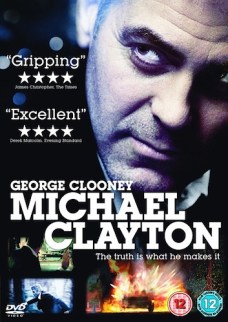
Michael ClaytonWhen Michael Clayton turned up among the contenders for 2008’s Best Picture Oscar I was a little surprised, because as far as I could recall I’d never heard of it. Then as I read about it a memory came floating back… a memory of a half-page (at best) review in Empire, of a George Clooney film that sounded like it should be good but was, they asserted, only worthy of three stars. As you’ve surely guessed, when I dug out this review it was indeed of Michael Clayton.
It is, I suppose, technically speaking, a thriller. That it’s not particularly thrilling doesn’t have to be a problem — this is the world of class action lawsuits, after all, which take years (decades sometimes, I imagine) of meetings and paperwork and ‘polite’ lawyer-arguing, and often writer-director Tony Gilroy seems to want to depict a moderately realistic version of this world. Clooney’s titular lead, for example, is effectively a middle-management dogsbody, albeit a highly talented one (so we’re told, anyway — the scenes of him doing his job don’t particularly convey this); but he’s certainly not some crusading young hotshot who is just gonna do what’s right, goddammit.

He does have the requisite seriously flawed personal life however, though Gilroy manages to make this feel fairly fresh. The latter is a big part of the film but feels unconnected to the main story… until the end, of course, when it all dovetails. Thankfully not in a cheesy “the bad guys kidnapped the kid” or “I have to do what’s right to get the girl” way, but rather as a means of motivating Clayton into doing… well, what’s right, more or less.

If this sounds more legal drama than legal thriller, it is. Where this comes unstuck is that Gilroy does seem to want it to be a legal thriller, and so uncomfortably squidged into the mix are a pair of surveillance experts/assassins and one of the least-tense car chases in movie history — 15 minutes in we see Clayton’s car blown up, with him safely on a hillside; the rest of the film takes place over the preceding days, eventually reaching that first night, where we see the bomb planted in Clayton’s car, and the assassins following him around trying to get signal to detonate it… and we might care, if we didn’t already know they don’t succeed until he’s wandered off up a hillside to cry over some horses.

The obvious point of comparison is Damages, the excellent TV series that also concerns such high-profile big-business lawsuits, but which pulls off every one of Michael Clayton’s facets with a higher degree of skill, interest and excitement. Company-sponsored murder sits believably in that world, but so does the characters’ personal life dilemmas and the court room (or, rather, pre-court room) battles between attorneys. And Damages sustains it for over 9 hours to boot, replete with cliffhangers and plot twists so far beyond what Clayton’s surprisingly straightforward (once you get down to it) story has to offer that Gilroy isn’t even dreaming of being that good.

Michael Clayton does have good bits, like the supporting parts played by Tilda Swinton and Tom Wilkinson, or any number of scenes or plot elements scattered around. What it falls short of doing is connecting it all up into a coherent whole: part realist legal/personal drama, part heightened Grisham-esque legal thriller, if it had settled on just one it might’ve been better.

3 out of 5

Michael Clayton is on BBC Two tonight, Friday 4th April 2014, at 11:05pm.

(Originally posted on 5th March 2010.)

Batman (1966)

2009 #47
Leslie H. Martinson | 100 mins | TV (HD) | U / PG

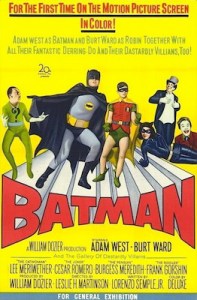
Batman (1966)Having only recently subjected myself to the full horror of Batman & Robin (though, based on the lack of review, it was before this blog began — that “recently” to me means “within the past four years” probably indicates why seeing ‘just’ 100 films in a year is a challenge), this spin-off from the ’60s Batman TV series remains the only significant cinematic outing for the Dark Knight to have escaped my scrutiny (well, unless you count Mask of the Phantasm, which we probably should). Except that’s (still) not entirely true: I once tried to watch it and gave up because it was dreadful. But the desire to be a completist — and an HD showing from Channel 4 — have led me to try again. Thank God I did, because it’s actually brilliant.

Some Bat-fans are immediately wondering what I’m on now, but I can assure you I watched it entirely sober. Batman has more than his fair share of over-serious fans and this film is anathema to them — it’s mad, camp, illogical, hilarious, vibrant, comic, comical… but all deliberately so. It perhaps goes on too long, perhaps pushes it too far at times… but then, if you’re on board with the concept and style, it’s pretty hard to criticise — it’s so ridiculous, and so aware that it’s ridiculous, that it goes beyond criticism.

In every respect, it has a real feel for what comics were like at the time — the vibrant colours, silliness, larger-than-life characters, nonsensical plots, plus there’s a nice line in risque humour, keeping the adults happy in what’s really a kid-focused film. The effect is akin to what Joel Schumacher wanted to do, only done with more rule-breaking conviction and, therefore, more success. It saves the series’ most famous element — the visual sound effects — for the climax, a submarine-set free-for-all to rival any other climactic mess/fight as Batman, Robin, the major villains and a bunch of sailors all end up floundering in the sea.

Talking of the series, was it this barmy? I don’t remember it being so ridiculous, but then I was young when I last watched it. There’s every chance kids young enough would take this completely seriously, and unquestionably enjoy it in that frame of mind, whereas those of us old enough to realise what’s going on — and, more importantly, old enough to get past the fact that it’s taken the moodiest, broodiest, angsty-teenager-friendly of superheroes and turned him into perhaps the campest ever — can enjoy it on all the levels the makers had in mind.

Batman is so many different things. These days it’s generally accepted that he’s The Dark Knight, a moody crimefighter lurking in the night to battle gangsters and unhinged supercriminals. But in the past he’s been so many other things, and this is just one facet. Those who dismiss it as missing the point of Batman, or any other such criticism of it not being Dark and Serious, are too caught up in our present perception of the character to see that it’s just another of his many sides. Is it a better film than The Dark Knight? No, of course it isn’t; and nor is it better than either of Burton’s Batman outings, nor Batman Begins… but then again, that’s personal preference.

Perhaps this demonstrates better than anything why Batman is one of the most enduringly popular superheroes, has one of the widest fanbases, has more graphic novels available than any other character ever: because, across all his forms, he has been treated in so many different ways by so many different people and for so many different people. You can’t really reconcile this as the same Batman and Joker who fought their way to the top end of the all-time box office pile 18 months ago, but nor were those the same characters who battled it out in 1989, or in thousands of pages of comics. In an age where we’re more obsessed with ‘canon’ and ‘continuity’ than ever (indeed, such concepts probably didn’t exist back when this Batman was being conceived), it’s oddly beautiful and so very freeing to imagine a character so unrestrained. It’s a glorious thing.

If you disagree — if you think Batman must always be dark, moody and deadly serious — well, fine; and you’ll be well catered for, because I doubt the film franchise is giving up that way any time soon (if ever). But as far as I’m concerned, to ignore the mad, frivolous and zany sides of the character — not to mention all the various other ones that could be described with equally unusual adjectives — is your loss.

4 out of 5

(Originally posted on 26th February 2010.)